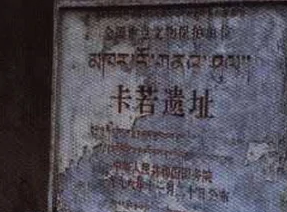
Karo means “castle” in Tibetan. Legend has it that in ancient times, a general named Da Da wanted to conquer this place, and the local people built a fort to resist. Although the fort was conquered and destroyed later, the name was retained. In 1978 and 1979, the Cultural Administration of Tibet Autonomous Region, together with relevant departments, carried out two large-scale excavations on the Karuo site. A total of 28 house sites, 2 roads, 3 stone walls, and 2 round stone platforms were cleared. There are 3 stone enclosures, 4 ash pits, 7,968 stone tools, 366 bone tools, more than 20,000 pieces of pottery, more than 50 decorative objects, as well as some corn and animal remains. The excavation results show that in the fertile and magical land at the source of the Lancang River, the Tibetan ancestors not only learned to manufacture various exquisite stone tools, but also rough textiles and sewn items as early as 4 to 5 thousand years ago. And also made painted pottery and decorations, built houses, and lived a settled life. This is of great value to the study of the early history of Tibet.
Karuowenhua Ruins
作者:
在