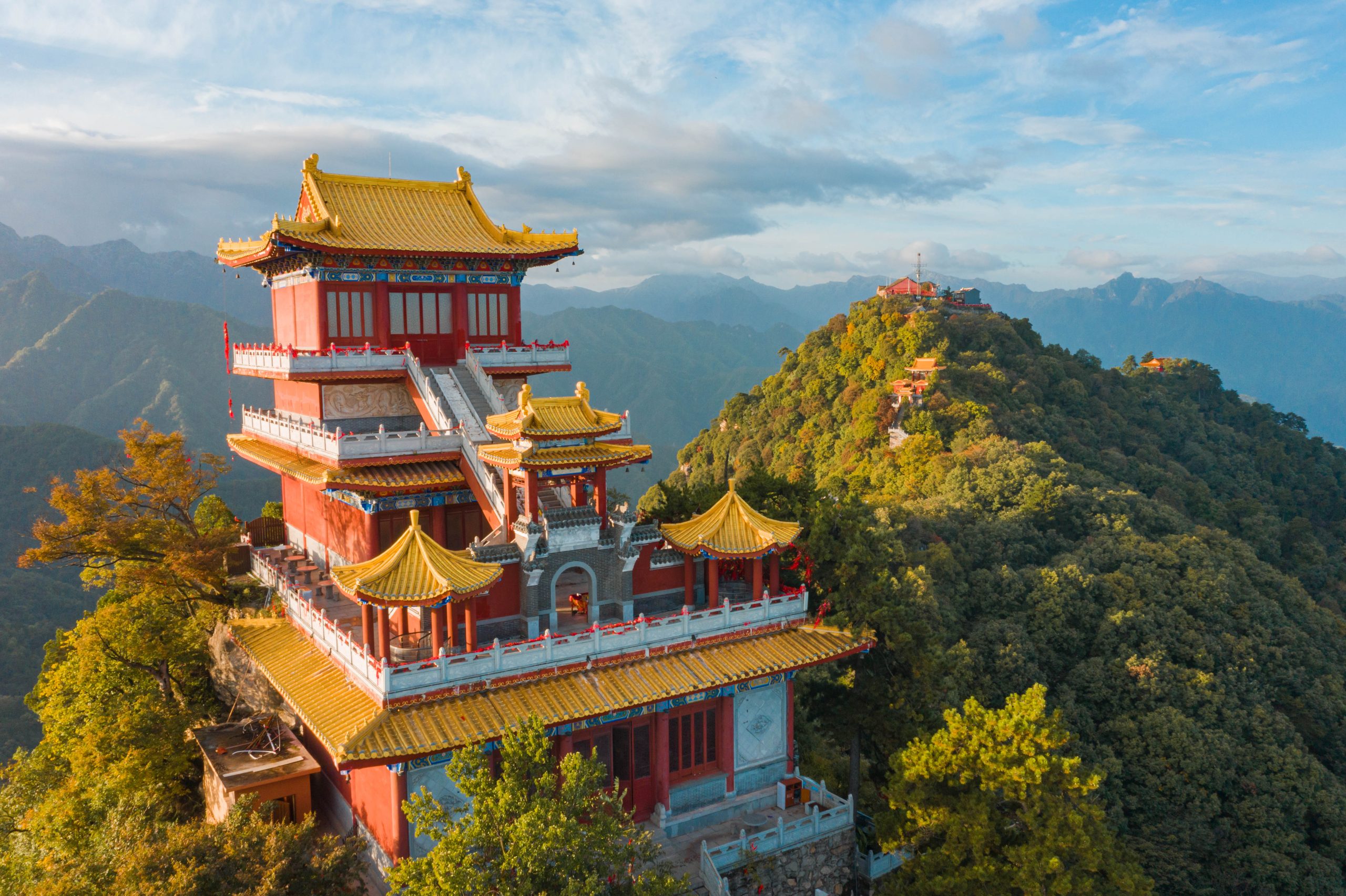
Zhongnanshan Nanwutai is located in the Zhongnan Mountain range, known for its rolling hills and long-standing reputation as a sacred Buddhist mountain and summer retreat. Historically called Taiyi Mountain, it’s celebrated as the “most picturesque area of Zhongnan.” The attraction features five peaks: Qingliang, Wenzhu, Xianshen, Lingying, and Guanyin. Since it lies south of the ancient Chang’an city, it earned the name Nanwutai (Southern Five Peaks). As one of the Buddhist sacred sites, this attraction features numerous temples, with over 40 large and small monasteries existing by the Ming and Qing dynasties. These temples of varying sizes were distributed across different platforms, arranged in orderly layouts with exquisite craftsmanship that captivated visitors. However, most mountain temples have been destroyed over time, with only a few remaining today including Guanyin Temple, Five-Buddha Hall, Yuanguang Temple, Xilin Temple, and Shengshou Temple. Among these, Shengshou Temple stands out for its long history and expansive grounds. Located on the northwestern hillside of the scenic area, about 1 km southwest of Wutai Township’s Taigoukou Village, it’s also called Ta’er Temple due to its location in Tasi Valley. The square, seven-story Shengshou Pagoda was built during the Sui Dynasty, standing 23m tall. Legend says Xi’an’s Big Wild Goose Pagoda was modeled after this structure, making it one of Xi’an’s earliest surviving Buddhist pagodas. Zhongnanshan Nanwutai boasts breathtaking natural scenery. From the foot of the mountain, the five peaks stand like a brush holder, appearing deceptively close. However, the 12.5 km hike from Zhugu Valley to Datai reveals endless wonders – winding paths through layered mountains, breathtaking cliffs, and stunning rock formations. Marvel at the ribbon-like Liushui Stone Waterfall, the solitary Sendeng Peak, the crouching Rhinoceros Rock, the sky-piercing Guanyin Platform, the pillar-like Lingying Platform, and the roaring Tiger Cliff. Each picturesque scene creates a veritable “museum of tectonic landforms.” The mountain is home to nearly a thousand plant species, including “living fossil” relic plants, ornamental treasures like the horse chestnut and magnolia, making it a vast botanical garden and a living root carving museum.
Zhongnanshan Nanwutai
作者:
在