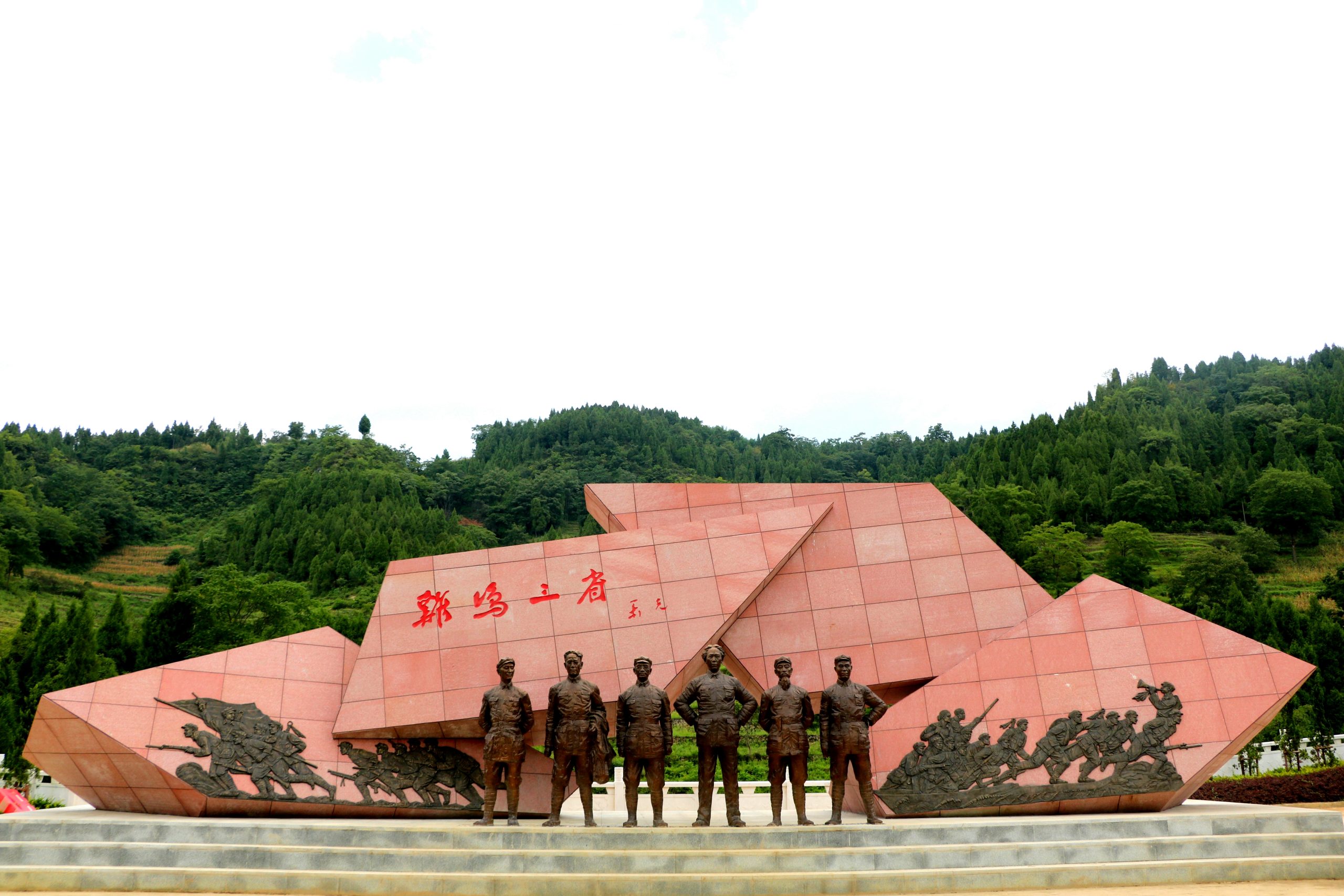
1. Jinxiu Jiangshan Square Jinxiu Jiangshan Square is a square where you can visit and rest. There are reliefs on both sides of the square. The right side of the square shows the scene of the Red Army coming to Bijie and the children of Bijie joining the Red Army. The left side shows the scene of the military and civilians being one family, the military and civilians being close, and the military and civilians supporting the army. The stone slab of the musical fountain in the middle of the relief quotes the famous sentence from “Qinyuanchun. Snow”. 2. The Rooster Singing Viewing Platform The Rooster Singing is the commanding height for viewing the canyon scenery. It is located on the cliff bank of the Eagle Rock in the Attraction. The design adopts the shape of a rooster. The function integrates commercial services, canyon viewing experience, and tourist distribution. The chicken body stands on the cliff bank, and the cock’s crown hangs above the canyon. The cock’s crown is made of transparent glass. You can not only see the scenery of Sichuan and Yunnan, but also enjoy the beauty of the Chishui River from a high place, naturally forming a 360° panoramic mode. Standing on it, you can have a panoramic view of the scenery of the three provinces of Yunnan, Guizhou and Sichuan, and experience the magic of “stepping on three provinces in one step” in the air. 3. Jiming Sansheng Monument The four characters Jiming Sansheng on the monument were written by General Xiao Ke, the commander of the Red 26th Army Corps, who passed through Bijie in 1995. The base of the monument is 19 meters long and wide, and 35.25 meters high, representing the date of the Jiming Sansheng Conference on February 5, 1935. The monument faces southeast and northwest, representing the journey of the Red Army’s Long March from Ruijin in southeast China to Huining in the northwest. The main body of the monument is composed of three fluttering flags. The top of the monument is a dazzling five-pointed star, which means that the Red Army’s Long March was victorious.
Jiming Sansheng Scenic Area
作者:
在