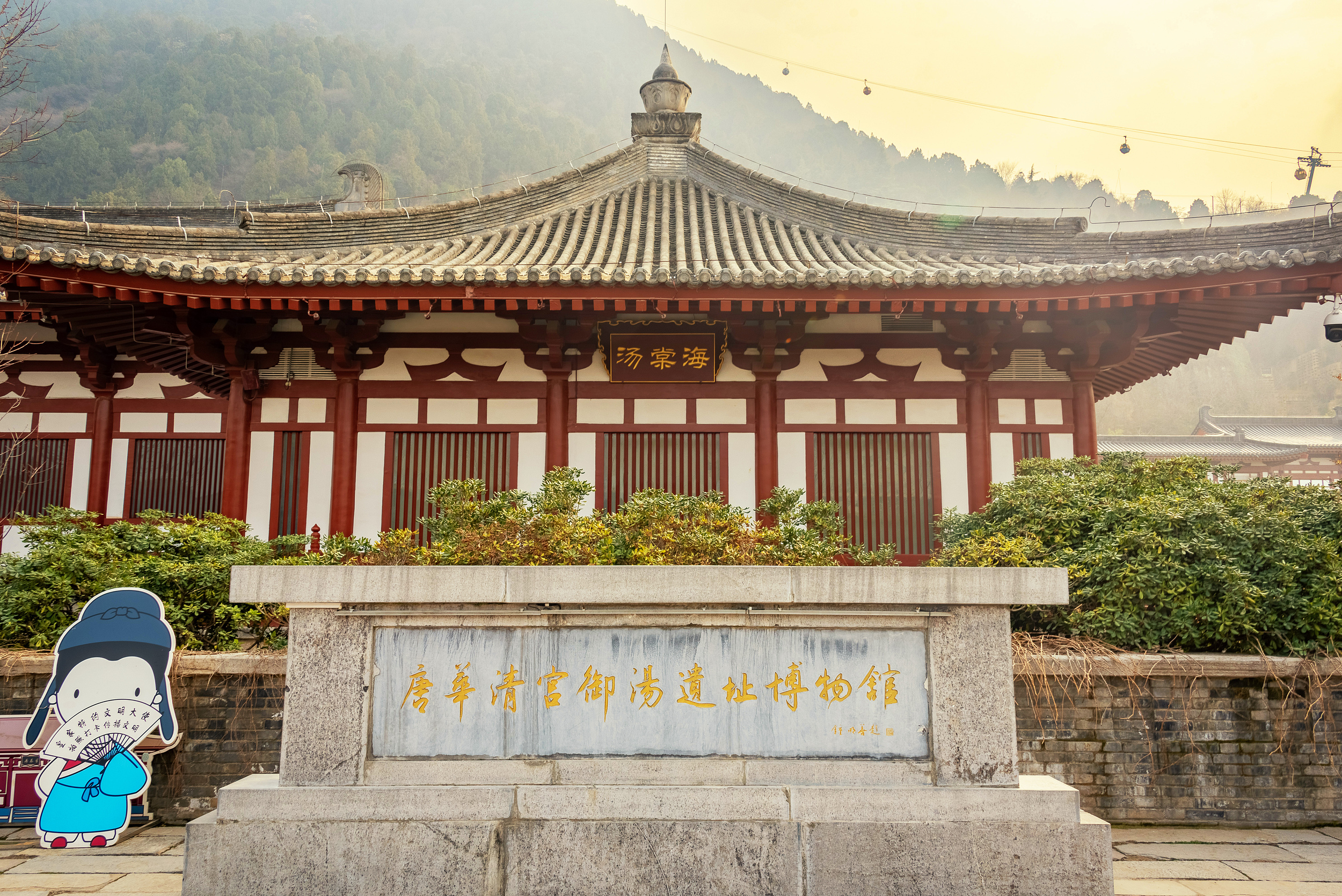
The full name of the Tang Imperial Hot Spring Site is the Tang Huaqing Palace Imperial Hot Spring Site Museum. It is one of the main attractions in the Huaqing Pool Attraction. The site was discovered in 1982. It is located in the north of Huaqing Pool, backed by Mount Li and facing Huaqing Pool. It is a hilly area overlooking the scenery of Huaqing Pool and bathing in the sunshine. At that time, archaeologists cleared out five groups of Tang Dynasty royal hot spring sites, including Xingchen Hot Spring, Lotus Hot Spring, Begonia Hot Spring, Prince Hot Spring, and Shangshi Hot Spring; in addition, there are more than 3,000 pieces of hot spring palace foundations, stone walls, palace column bases, lotus square bricks, round ceramic water pipes and other building materials. It is the only group of royal hot springs discovered in China so far. Entering the site area, it is the fascinating Concubine Pool, also known as Begonia Hot Spring. A square-shaped spire protection building was built here, which resembles the Xi’an Bell Tower. Begonia Hot Spring was built in 747 AD and was built by Emperor Xuanzong of the Tang Dynasty specifically for Yang Guifei. The pool wall is made of bluestone and is a two-story platform structure. There is a long stone in the pool that was prepared for Yang Guifei to bathe, with the Chinese character “Yang” engraved on it. Next to the east of the Guifei Pool is the imperial bath used by Emperor Xuanzong of Tang, also known as the Lotus Bath. There is a double lotus base inside, implying that they wish to be intertwined branches and forever be lotus flowers on the same pedestal.
Tang Dynasty Huaqing Palace Imperial Baths Site Museum
作者:
在