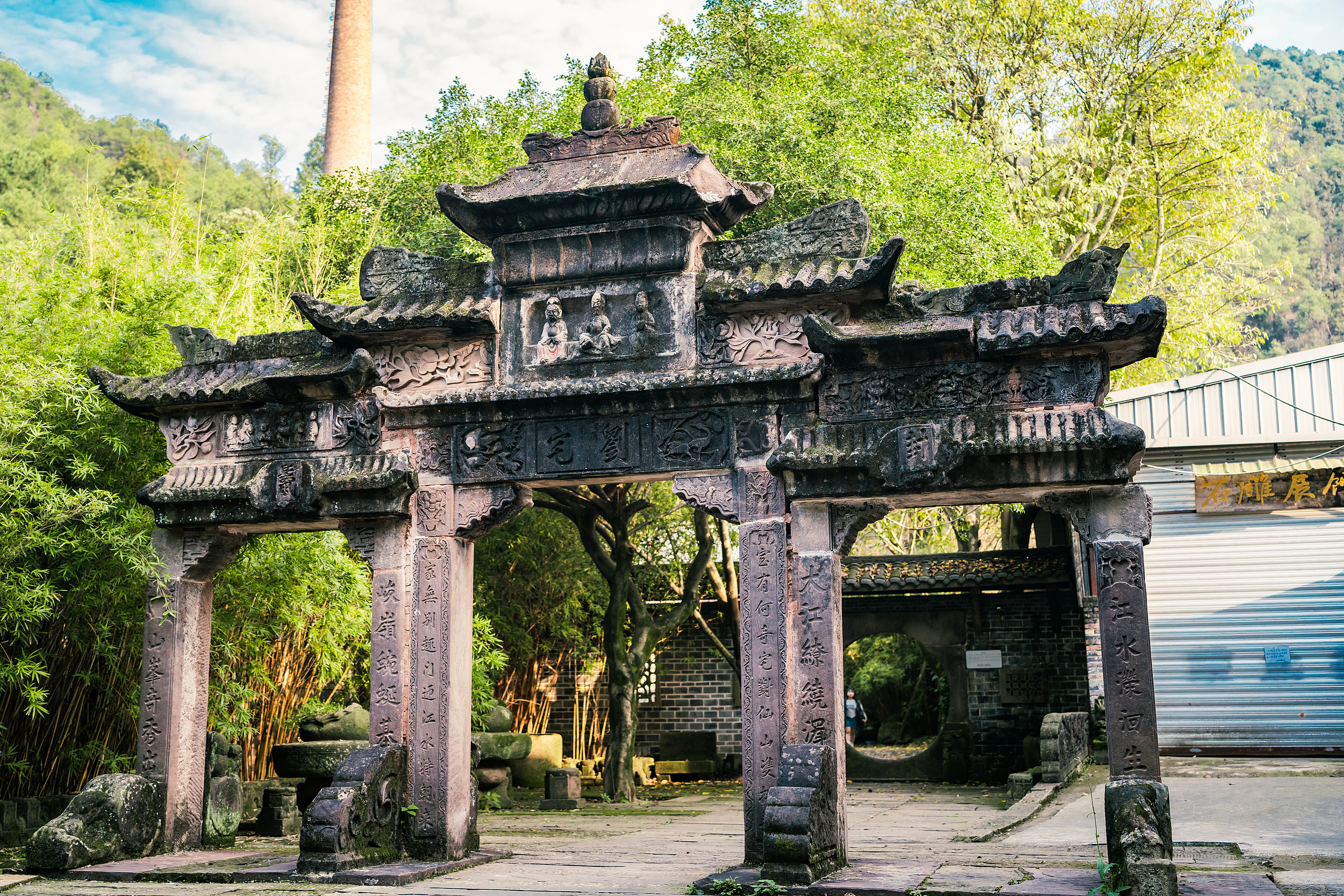
Dayuanxiang Museum is located in Tianfu Bowl Factory, Bishan District, Chongqing. Established on the foundation of a nearly 200-year-old rural industrial site and an extensive collection of ancient architectural components, it is a Chinese folk museum and the largest museum of ancient Bayu architectural elements in China. Its collection could restore hundreds of ancient Bayu residential compounds, earning it the nickname “Chongqing Ancestral Homes” Museum. The museum showcases over two decades of private collecting by Mr. Liu Jian, with tens of thousands of artifacts capable of reconstructing hundreds of ancient courtyards. Currently, it features seven exhibition halls: the Door Gods and Plaques Hall, Stone Carving Art Hall, Buddhist and Taoist Statues Hall, Premium Architectural Components Hall, Indoor Furniture and Wood Carving Hall, Ancestral Hall and Family Precepts Hall, and Ancestral Tablets Hall. Additionally, the museum houses over 20,000 Han Dynasty bricks, Cultural Revolution propaganda posters, porcelain, badges, as well as calligraphy, paintings, and contemporary art pieces like micro-carvings. Every wooden artifact here is verifiable, with intricate carvings rich in symbolism—ranging from auspicious motifs to mythological tales like “Abundance and Celebration,” “Bountiful Harvest,” “Dragon and Phoenix Bring Prosperity,” “Peace and Good Fortune,” and “Longevity Like Pine and Crane.” Artistically, the collection includes round carvings, reliefs, openwork carvings, and bold folk-style engravings. These unique architectural techniques and structures embody profound meanings related to culture, tradition, and national spirit, reflecting the wisdom and diligence of Bayu ancestors who blended local craftsmanship with new knowledge brought by migrants from other provinces. The wooden pieces, mostly made of cypress, range from grand courtyard gates and wall windows to delicate hanging flower gates, side doors, and lattice windows. Their exquisite craftsmanship exudes elegance and prosperity, revealing the cultural essence of local architecture. Through each decorative door and window, one can almost discern whether the original homeowner was an official, merchant, or scholar—each piece reflecting distinct aesthetic tastes, social status, and symbols of wealth.
Dayuanxiang Museum
作者:
在