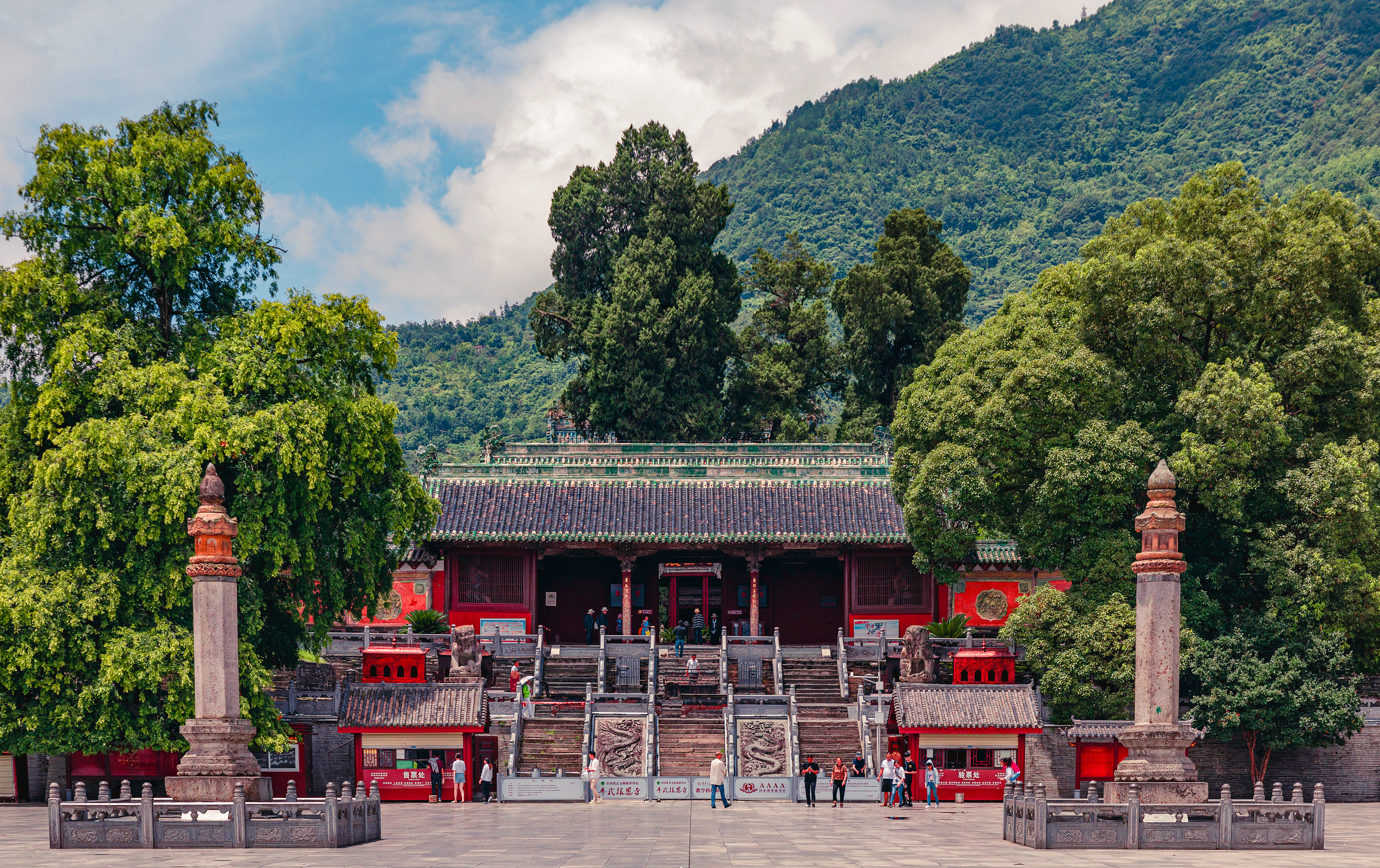
Bao’en Temple in Pingwu, fully named “The Imperially Built Bao’en Temple,” was constructed starting in 1440 (the 5th year of the Ming Zhengtong era) and completed in 1460 (the 4th year of the Ming Tianshun era). Covering an area of 27,888 m² with a building area of 3,518 m², it follows the traditional “Seven-Hall” monastery layout and was built using official architectural techniques from the “Treatise on Architectural Methods.” It is one of China’s best-preserved ancient wooden architectural complexes from the Ming Dynasty, designated as a national key cultural relic protection unit, a AAAA-level tourist attraction, and a teaching and research base for Tsinghua University’s School of Architecture. The temple’s “six wonders”—the revolving sutra library, thousand-armed Guanyin, myriad dragons supporting the roof, intricate bracket sets and mortise-tenon joints, Ming Dynasty murals, and exclusive use of nanmu wood—hold immense historical, artistic, scientific, and cultural value. They provide significant insights for modern archaeology, research, and the promotion of traditional virtues and gratitude.
Bao’en Temple, Pingwu
作者:
在