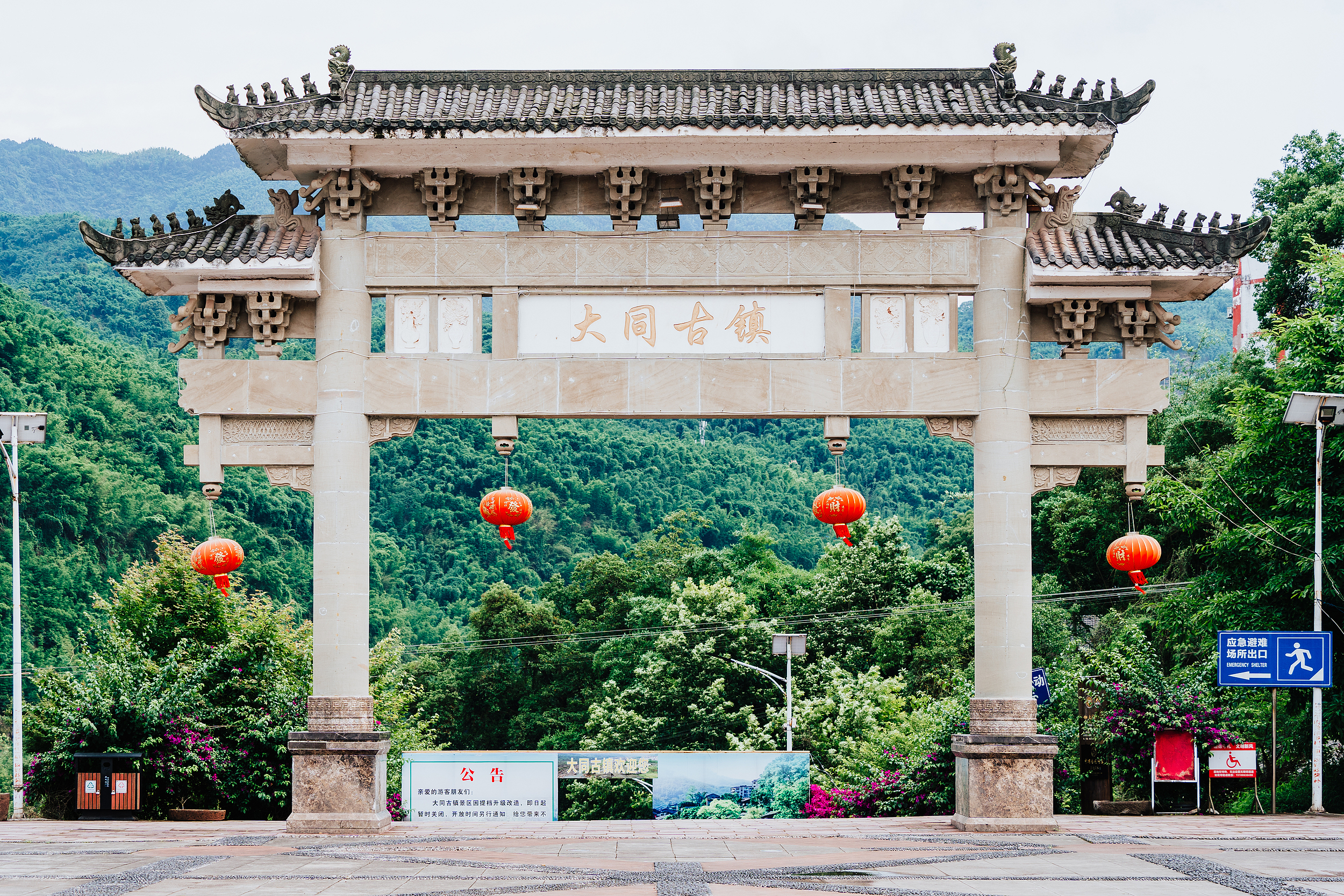
Datong Ancient Town is located on the Chishui River in Chishui City, Zunyi City, Guizhou Province. It can reach Chongqing, Wuhan and Shanghai via the Chishui River into the Yangtze River. Since ancient times, the commercial market has been prosperous, the army has been fighting for the army, the rich farming and reading culture, the honest villagers’ temperament, the guild halls built with donations from businessmen from all over the world, the mansion courtyards, the ancestral halls of famous families, and a set of sacrificial buildings that have been inherited. Water and forest constitute a harmonious and beautiful natural and human ecological environment, reflecting the historical features of the self-sufficient small-scale peasant economy era. The existing buildings in Datong Ancient Town were built in the late Ming and early Qing dynasties, consisting of ancient streets, ancient docks, ancient wells, ancient street houses, ancient dwellings, ancient temples, ancient guild halls, ancient monuments, ancient archways, etc. , the main hall, the apse, the stilted building, the cave and other buildings are scattered, carved beams and painted buildings; the ancient tombs, ancient monuments, ancient arches are rigorous in structure, painting, carving, calligraphy and writing are all available, and the historical and cultural heritage is profound. The houses in the ancient town take the street as the building, the vertical axis and the horizontal axis of the building are connected in series, and they are lined up in line with each other. The building materials are made of wood, fir skin, small green tiles, Danxia stone, bamboo and other natural and human-processed materials. The form, texture, color, irregular symmetry and other items constitute the formal beauty of the ancient town’s architectural art. Segmentation, scale of body, exaggeration of perspective, coordination of colors and opening and closing, rhythm, interspersed, etc. in the sequence combination of complementarity all have certain objective laws of traditional architecture, which give full play to the expressiveness and art of ancient architectural art. comprehensive ability.
Datong Ancient Town
作者:
在