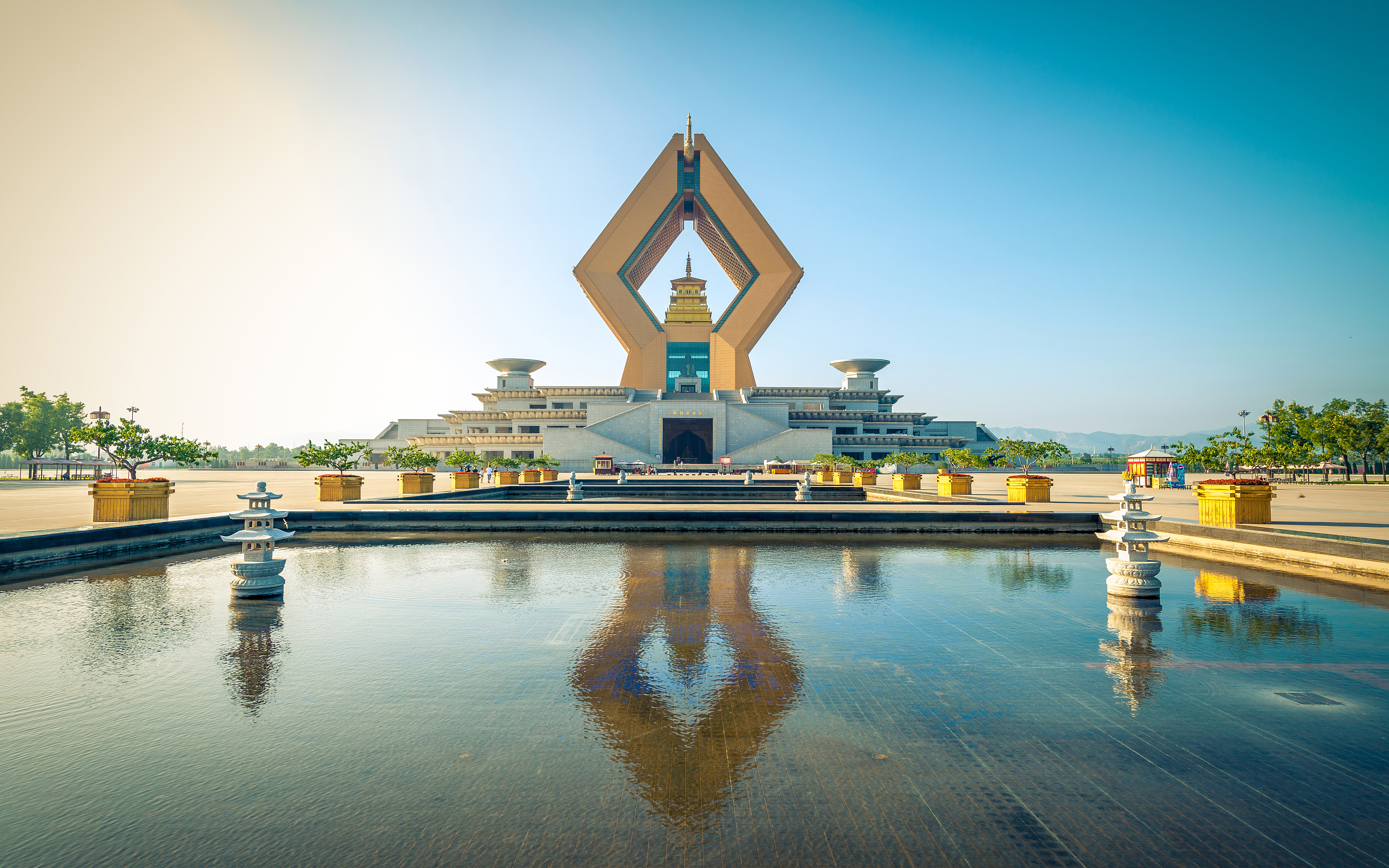
The Famen Cultural Scenic Area, located approx. 10 km north of Fufeng County in Baoji City, was first built during the late Eastern Han Dynasty. This Tang Dynasty “imperial temple” became a nationally revered Buddhist sanctuary as it enshrines the supreme Buddhist relic – the finger bone sarira of Sakyamuni Buddha. See it allFamen Cultural Scenic AreaAll treasures As a visitor, to see all the treasures of the Famen Cultural Scenic Area, you’ll need to explore three key sites: the underground palace and treasure hall at the original Famen Temple site, plus the Heshili Pagoda within the cultural area. The underground palace houses three “shadow relics” (jade replicas crafted to protect the true relics), the treasure hall displays artifacts offered by the Tang Dynasty imperial family, while the sacred Buddha’s finger relic (true body) is enshrined in the Heshili Pagoda on the eastern side of the cultural area. If you enter the attraction from the Mountain Gate Plaza on the western side of the cultural area, you’ll be greeted by the approx. 1 km-long Buddha Light Avenue. Flanked by ten towering golden Bodhisattva statues, this grand boulevard leads eastward to the He Shi Pagoda at its terminus. Sightseeing vehicles are available along the avenue. The Buddha’s finger bone relic is only displayed to the public on the 1st and 15th days of the lunar month, weekends, and major holidays. To the southwest of the cultural scenic area lies the Famen Temple and its treasure museum. Beneath the Zhen Shen Pagoda within the temple complex is the underground palace where the “Buddha’s finger relic” was discovered. Today, visitors can view three replica relics up close in the palace. After exploring the underground palace, you can wander through the serene temple grounds, which feature typical Tang Dynasty-style structures including the bell and drum towers, the Great Buddha Hall, and a liberation pond. The Treasure Hall houses hundreds of precious artifacts. In the adjacent Treasure Hall (also known as the museum), you’ll find exquisite artifacts unearthed from the underground palace. Marvel at hundreds of precious Buddhist offerings from the Tang imperial family – each piece is truly astonishing. Highlights include the eight-layered reliquary for housing Buddhist relics, the twelve-ringed monk’s staff, pure gold pagodas, white marble spirit altars, secret-color porcelain, and the emperor’s personal tea set. Some treasures are crafted from solid gold, while others showcase lost craftsmanship techniques, reflecting the immense wealth of the Tang Empire.
Famen Cultural Scenic Area
作者:
在