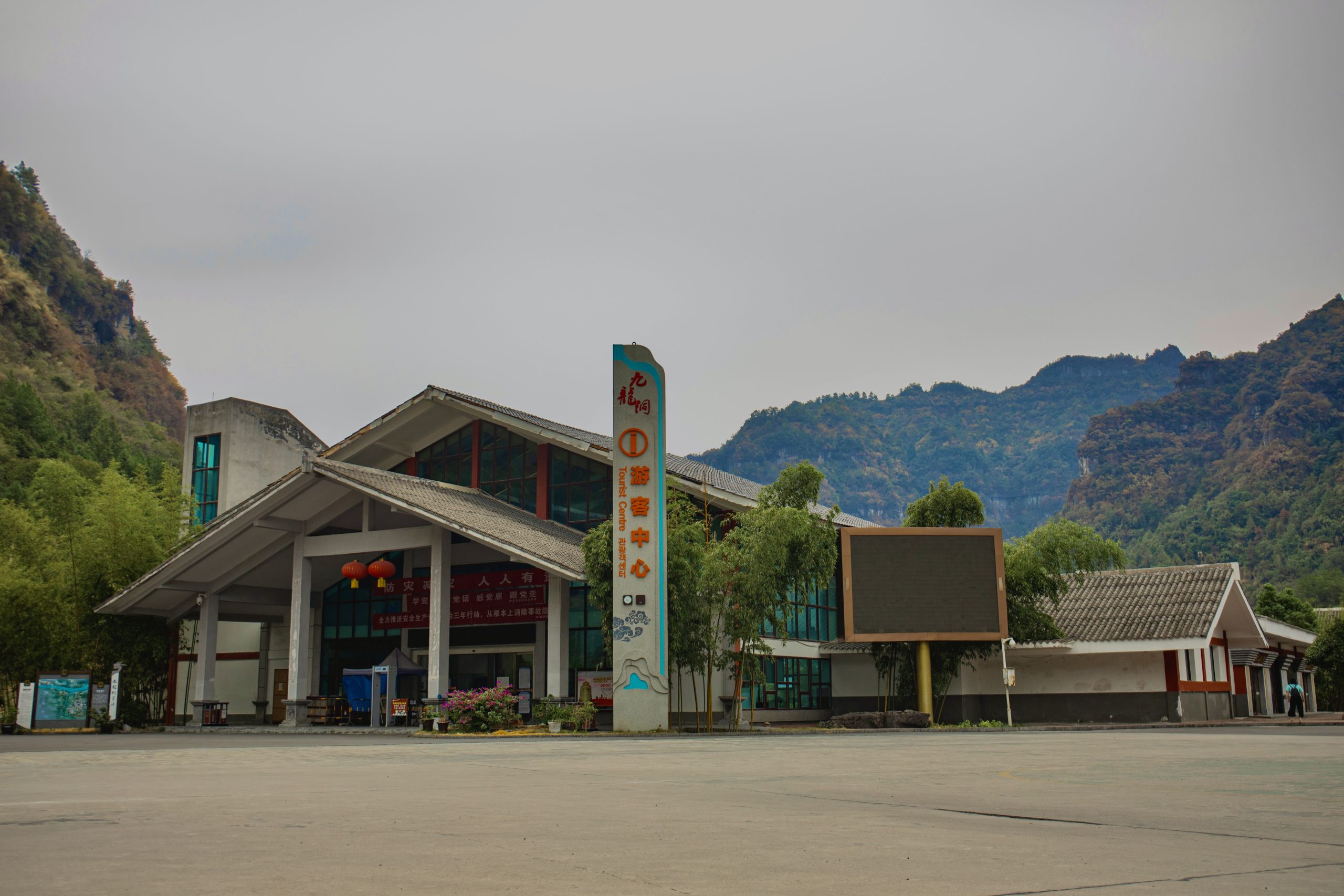
Tongren’s Jiu Long Dong is located 13 km southeast of Bijiang District in Tongren City, Guizhou Province. Nestled against the majestic Liulong Mountain and facing the scenic Jinjiang River, it is one of Guizhou’s first ten major attractions and a prime example of karst cave landscapes in Southwest China. The attraction centers around Jiu Long Dong, encompassing the Jinjiang River scenic belt, Liulong Mountain’s natural ecological area, and the cultural landscape of Guanyin Mountain. Covering approximately 80,000 square meters, it combines stunning cave formations, picturesque mountain and river views, and historical relics into one remarkable destination. Jiu Long Dong has a long history of development as an attraction. It was listed as a county-level scenic reserve in 1981, promoted as one of Guizhou’s top ten scenic spots in 1987, and included in the Dictionary of China’s Famous Scenic Sites. In 2004, it was approved by the State Council as a national key scenic area, solidifying its important position in China’s cave tourism. In recent years, the attraction has undergone closed upgrades, improved tourism infrastructure, added science education bases, and introduced smart guide systems, significantly enhancing the visitor experience. Jiu Long Dong is a large natural karst cave stretching 2,284 meters in length, divided into seven halls with four main halls and one celestial hall currently open to visitors. The cave features dense clusters of stone pillars, stalagmites, and stone curtains, forming over 40 classic views including “Two Monkeys Welcoming Guests,” “Nine Dragons Embracing the Pillar,” and “Inverted Lotus.” Among them, the “World’s First Pillar” stands impressively at 44.71 meters tall with a diameter of 16.4 meters. The cave also hides an underground river whose murmuring waters reflect off the stalactites, adding an extra layer of mystery. The outer area of the attraction features Liulong Mountain, renowned for its primeval forests and bamboo sea. The winding Jinjiang River, together with the cliffs of Guanyin Mountain and the canyon of Malongxi, forms a magnificent landscape integrating mountains, waters, and caves. Atop Guanyin Mountain stands the Lotus Temple, originally built during the Ming and Qing dynasties. Climbing to the summit rewards visitors with panoramic views of the Jinjiang River and the thrilling experience of the steep “A Strip of Sky” peak. Jiu Long Dong got its name from the folk legend “Nine Dragons Competing for the Cave”: It is said that six yellow dragons from Liu Long Mountain and three green dragons from Jin River fought over the cave, eventually turning into stone pillars and creating the spectacular “Nine Dragons Coiling the Pillar” scene. The stream at the mountain’s base was also named “Scolding Dragon Stream.” Visitors can explore the karst cave along the cliffside walkway or participate in interactive programs at the science education base to learn about the formation of karst landscapes.
Jiu Long Dong
作者:
在