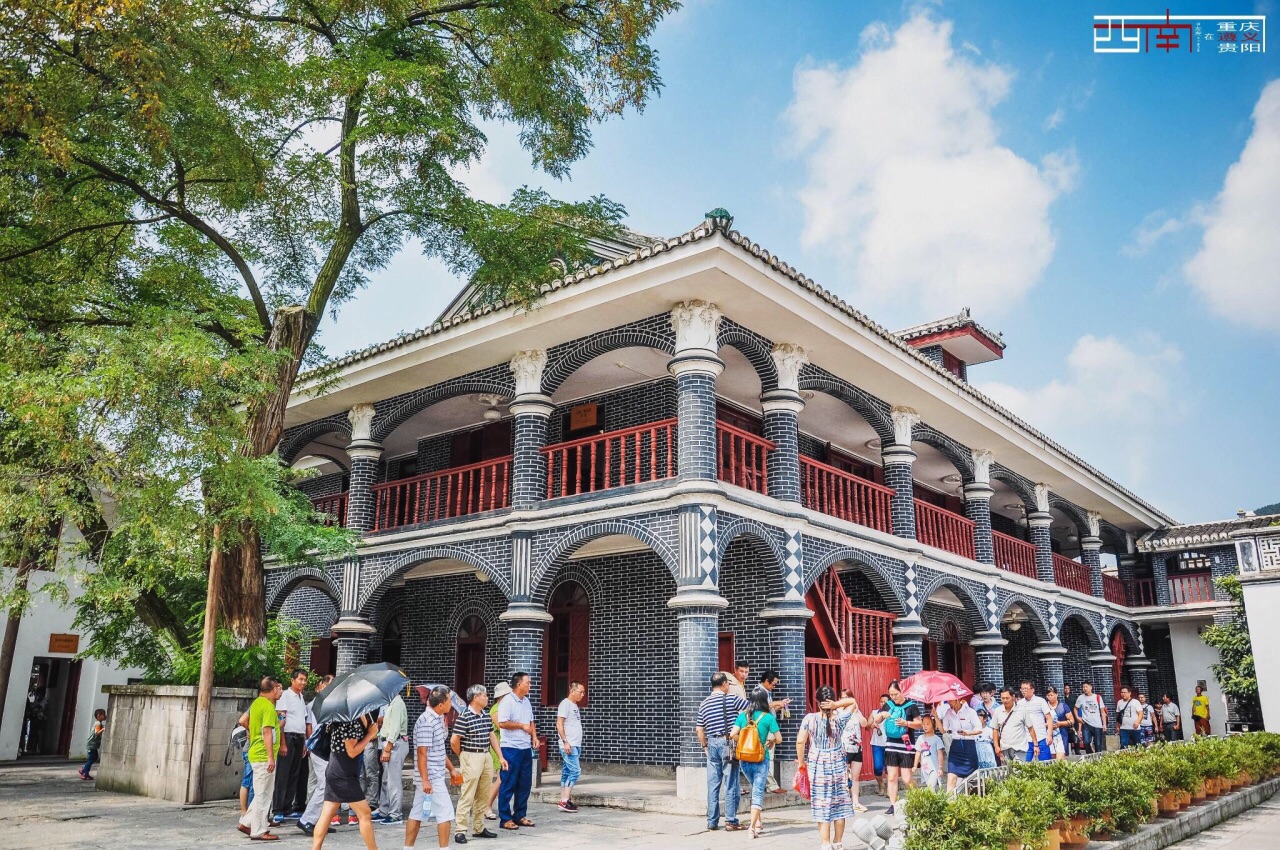
The Site of the Zunyi Conference was originally the private mansion of Bai Huizhang, a warlord and the Commander of the Second Division of the 25th Army of Guizhou Province. The site consists of the main building and a courtyard. It was here where Mao Zedong became the new leader of the Chinese Communist Party. The site contains a large number of historical images and texts as well as items that belonged to Communist revolutionaries.
归档: Attractions
-
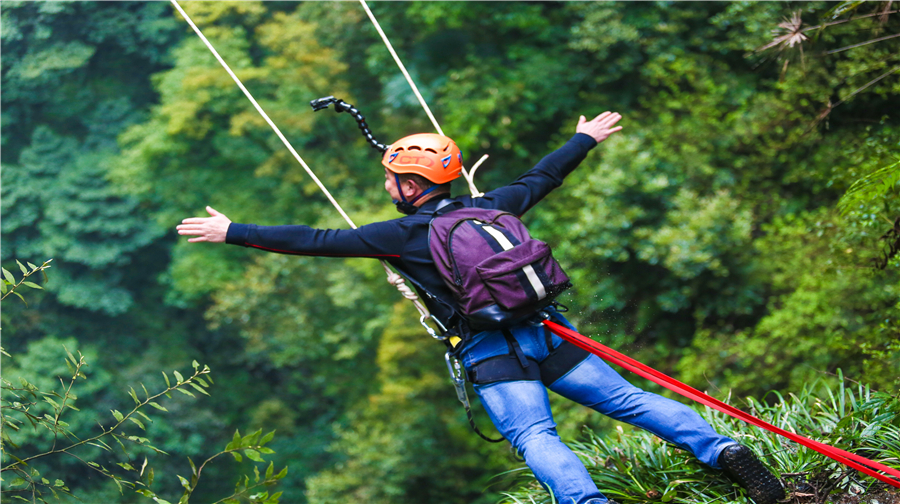
Hou’er Sinkhole Scenic Area
Hou’er Sinkhole Scenic Area is located in central Kaiyang County. The name “Hou’er”, which means monkey ear in Chinese, came from its shape for the resemblance. The scenic area enjoys a combination of a sinkhole, steep cliffs, underground rivers and hanging waterfalls, featuring marvelous, steep, mysterious and secluded views. Due to its outstanding size and depth, and the fantastic shape, Hou’er Sinkhole is regarded as a local geological wonder. The picturesque setting and unique views have made it an ideal place for recreation and leisure.
-
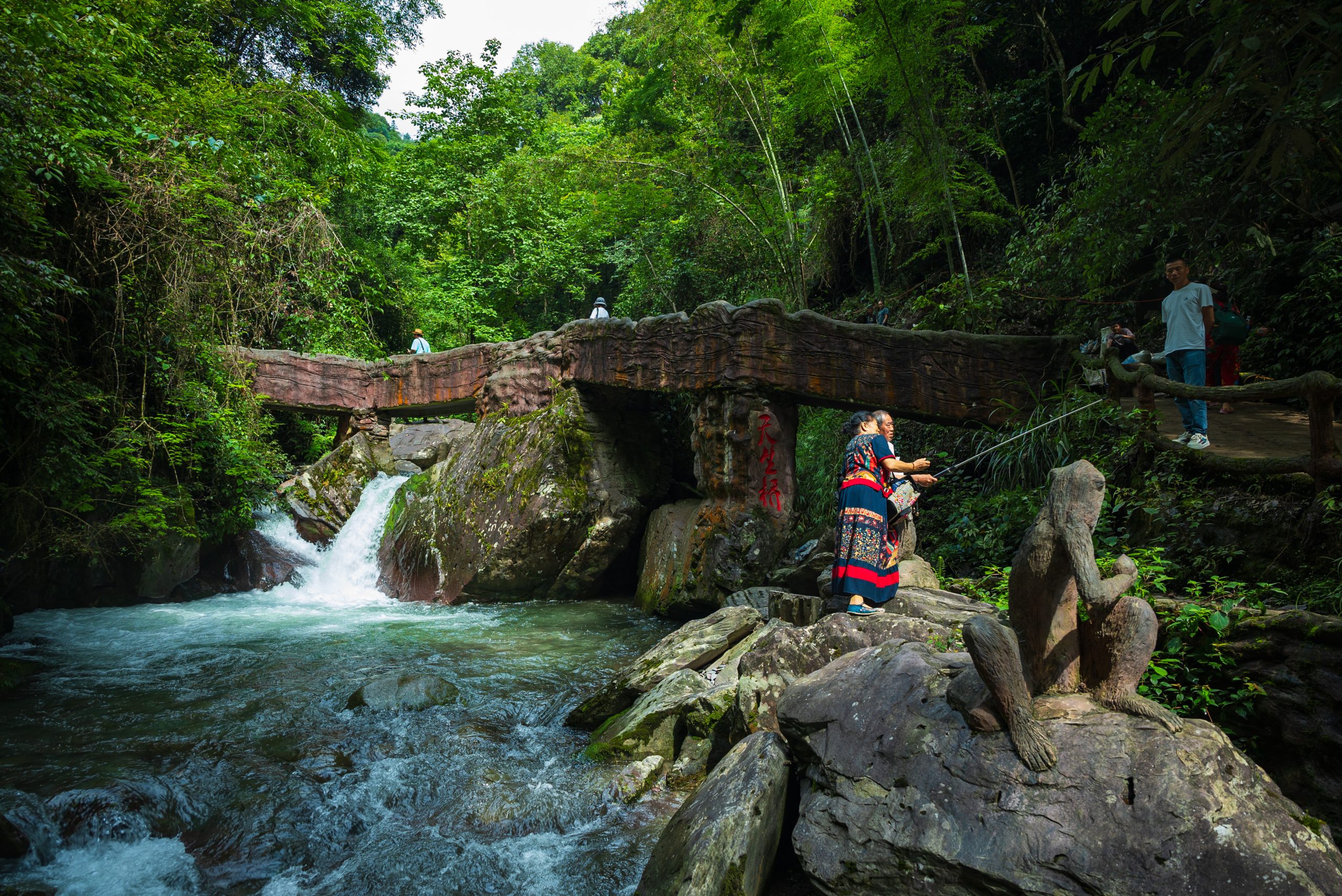
Yamugou Scenic Area
Yamugou Scenic Area is at the foot of Fanjing Mountain in Jiangkou County, Tongren City. Walking along the canyon, you can enjoy the beautiful scenery of streams and grass on the shoreside. The scenic area also includes a rural-style gallery, a shopping street and a Tujia-style park. Here, you can enjoy the original natural scenery and authentic Tujia culture.
-
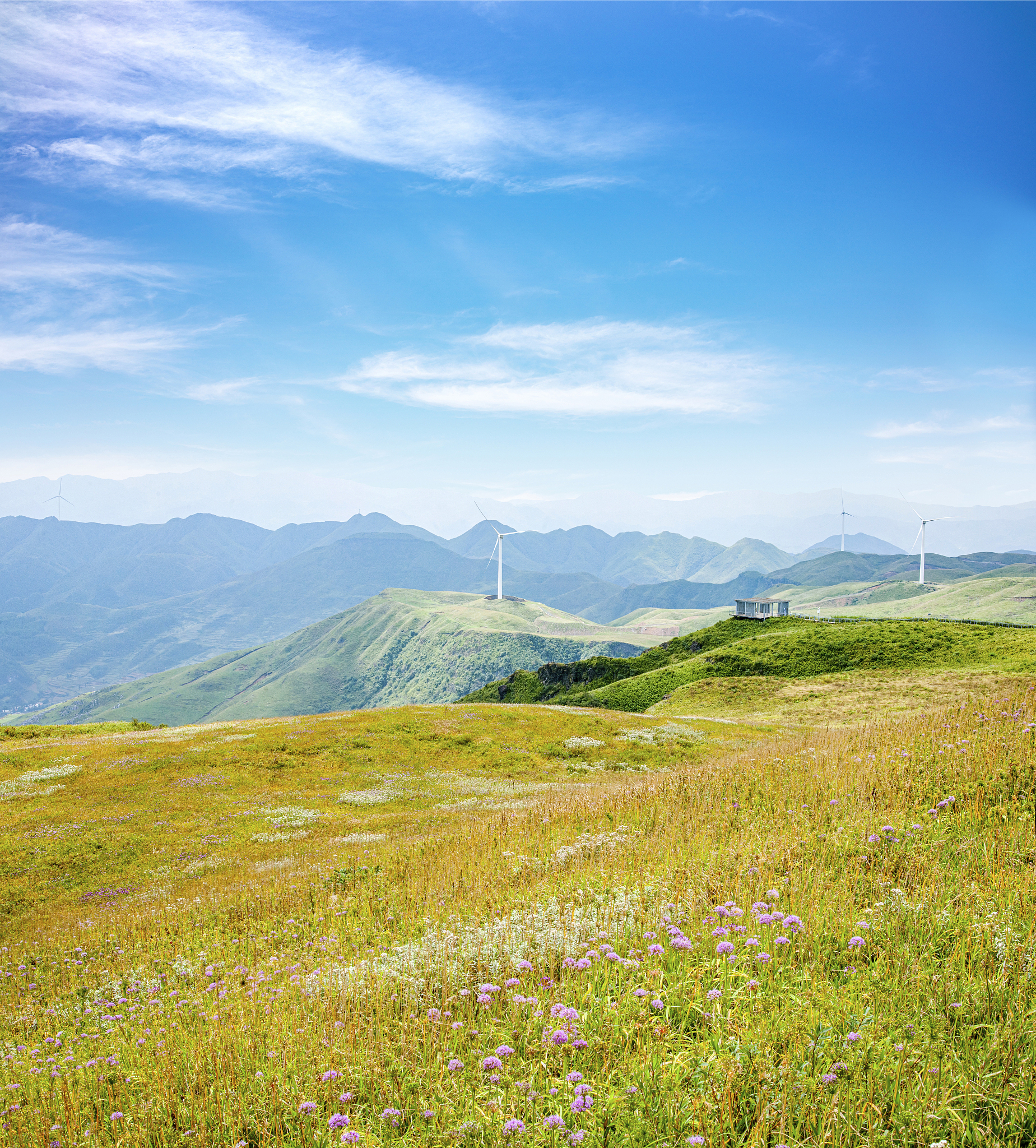
Ahsilisi Jiucaiping
Axilixi Chives Field is located in Hezhang County, Bijie City. It is also known as the Great Chives Field. It is one of the largest wild chive flower fields in the world and a wild chive flowers protection area. At the hill top of the Great Chieves Field, there is a plateau platform, which is covered with wild chives. Every August and September, the rolling hills are covered by masses of blooming wild chive flowers. Purple spherical flowers intersperse the green leaves. Looking from a distance, you can see a sea of flowers. It is absolutely enchanting and makes it hard for you to say goodbye.
-
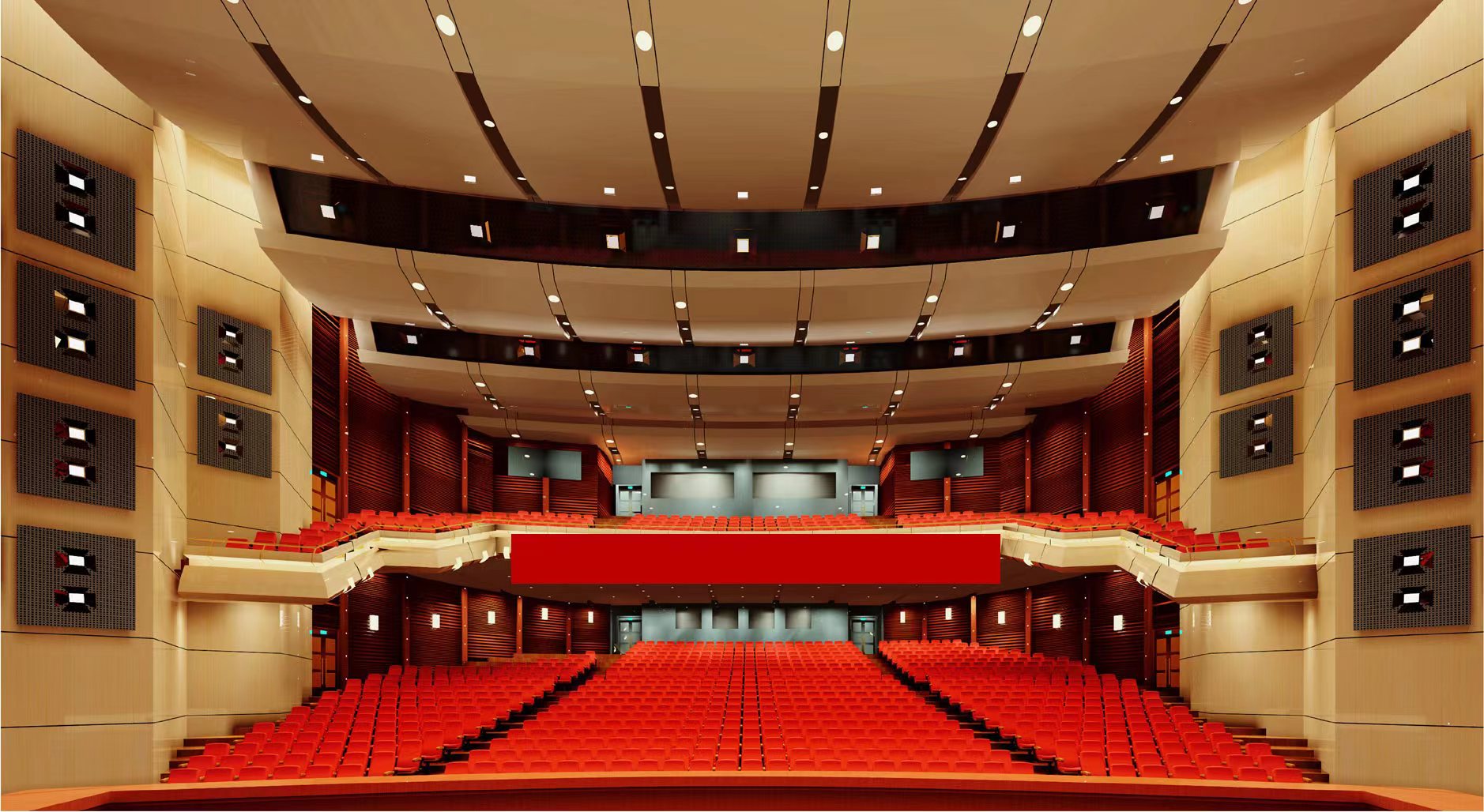
Guiyang Grand Theatre
Guiyang Grand Theater covers an area of 14,615 square meters and has a construction area of 36,376 square meters. Its exterior design is novel and unique, and its internal facilities are complete and diverse. It can accommodate 2,000 people at the same time. It is a comprehensive multifunctional theater with a large scale and high grade in the southwest region. The completion of Guiyang Grand Theater has built an excellent stage for colorful Guizhou. It is not only a beautiful building, but also an exciting piece of music, playing the triumphant song of colorful Guizhou going to the whole country and the world.
-
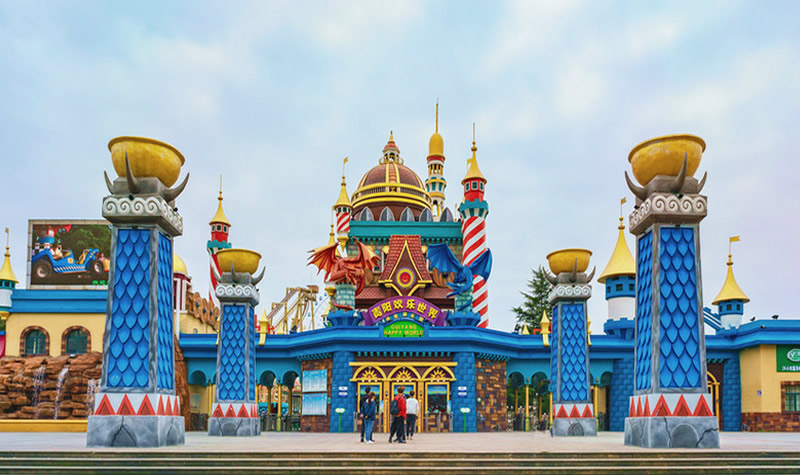
Guiyang Happy World
Guiyang Happy World is located in the northwest of the city. It was converted from the original Baiyun Park and is now an anime-themed amusement park. The park features many attractions, where you can experience thrilling rides such as roller coasters, as well as more relaxing rides like Ferris wheels. Hop on the 108-meter-high Ferris wheel to see the scenery, and then you can participate in family activities, 4D theater, and more!
-
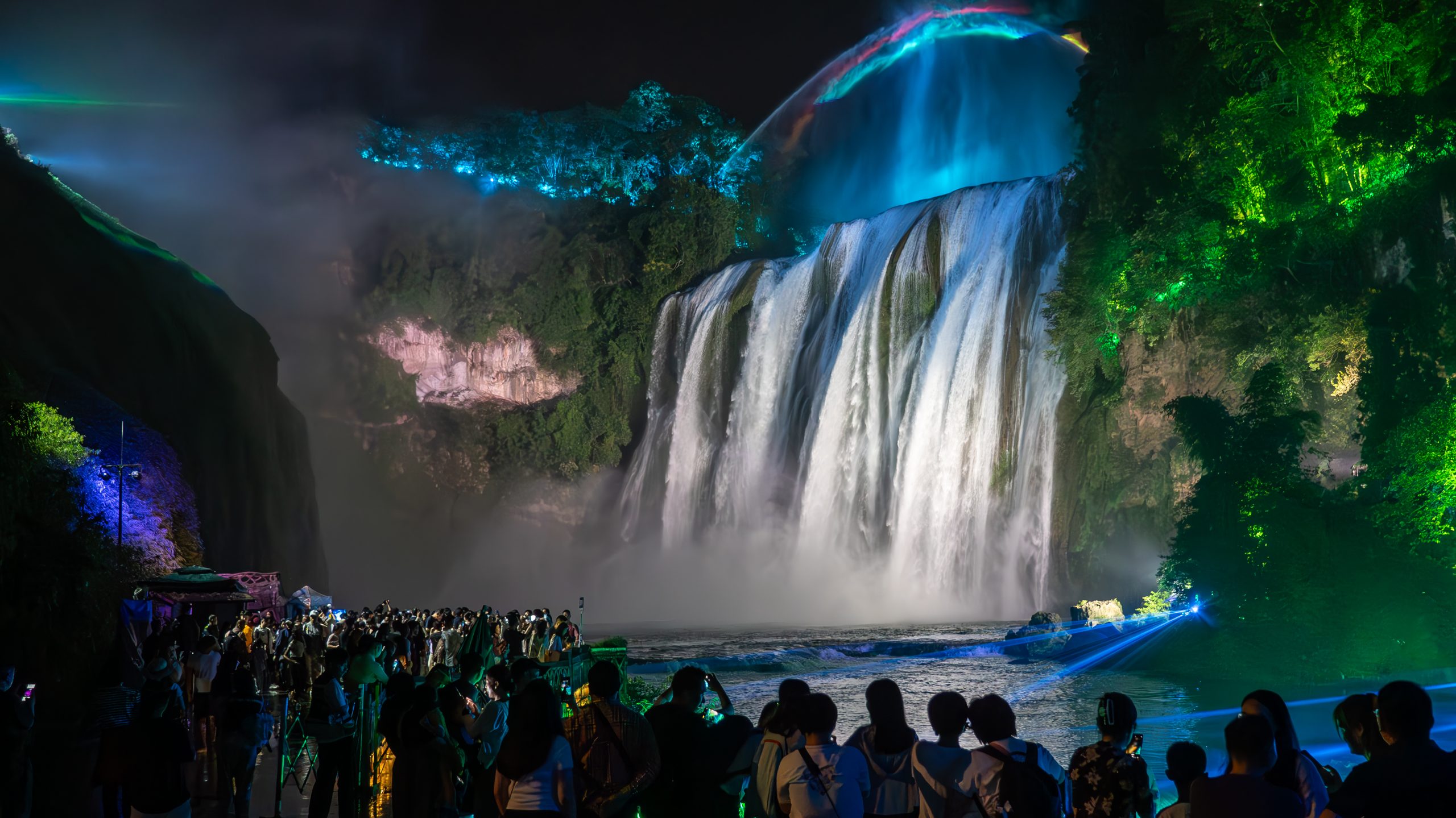
Huangguoshu Waterfall Night Tour
The night tour of Huangguoshu Waterfall is divided into 11 chapters, including Thousand Colors of Splendor, Dreams Weaving in the Clouds, Miracle of the Sun, Thousand Colors Reflecting in the Water (Clouds), Starry Sky Steps, Praying for Water with Divine Drums, Water and Moon Cave, All Things Glowing, Neon Rainbows in the Sky, and Water and Sky Become One Color. It leads tourists to appreciate the unique charm of Huangguoshu Waterfall at night.Among them, “The Miracle of the Sun” shows the worship and respect of the dragon by the Buyi people in Guanling area. The Buyi people in Guanling area believe that there are dragons in the mountains and in their homes. When building a house, they must “ask away” the dragon. After the house is built, a “welcoming dragon” ceremony is held. The Buyi people’s bronze “dragon treasure” is regarded as a divine object. It is often used as a guarantee by families without descendants with a large gift to pray for the birth of a boy. If a boy is born, it is regarded as a “dragon son”. In addition, dragon patterns are often seen on the clothes, headscarves and other items of Buyi women. This shows that the Buyi people worship the dragon totem.”Sacred Drums to Pray for Water” uses water screen projection to show the grand scene of the Buyi people’s water worship ceremony, performing blessing songs and dances, and drums, showing a magnificent national myth that interweaves fantasy and ethnic exoticism.”All Things Shine” presents all things in the water in a colorful way. The colors of nature are nurtured in the water, full of Unlimited vitality. Dazzling light suddenly appears in the water, and the emitted colors illuminate the woods, sky, all things and dust. The world is intoxicated in the praise of life and color at this moment, allowing all living beings to roam freely between heaven and earth.”Nine Heavens Neon” makes the fragments of the fairyland and totems float upstream in the river and finally rush towards the rolling and rushing Tianpu. Hidden in the last chapter of Tianpu, “Water and Sky Are One Color”, the drum sounds again and the rhythm of the music speeds up. The seven colors of red, orange, yellow, green, blue, and purple jump out of the waterfall seven times to wash the river valley, bringing seven levels of ecology: stars, thunder, wind and rain, clouds, plants, insects, birds and beasts to the mountains, rivers and land, and the world is full of vitality.
-
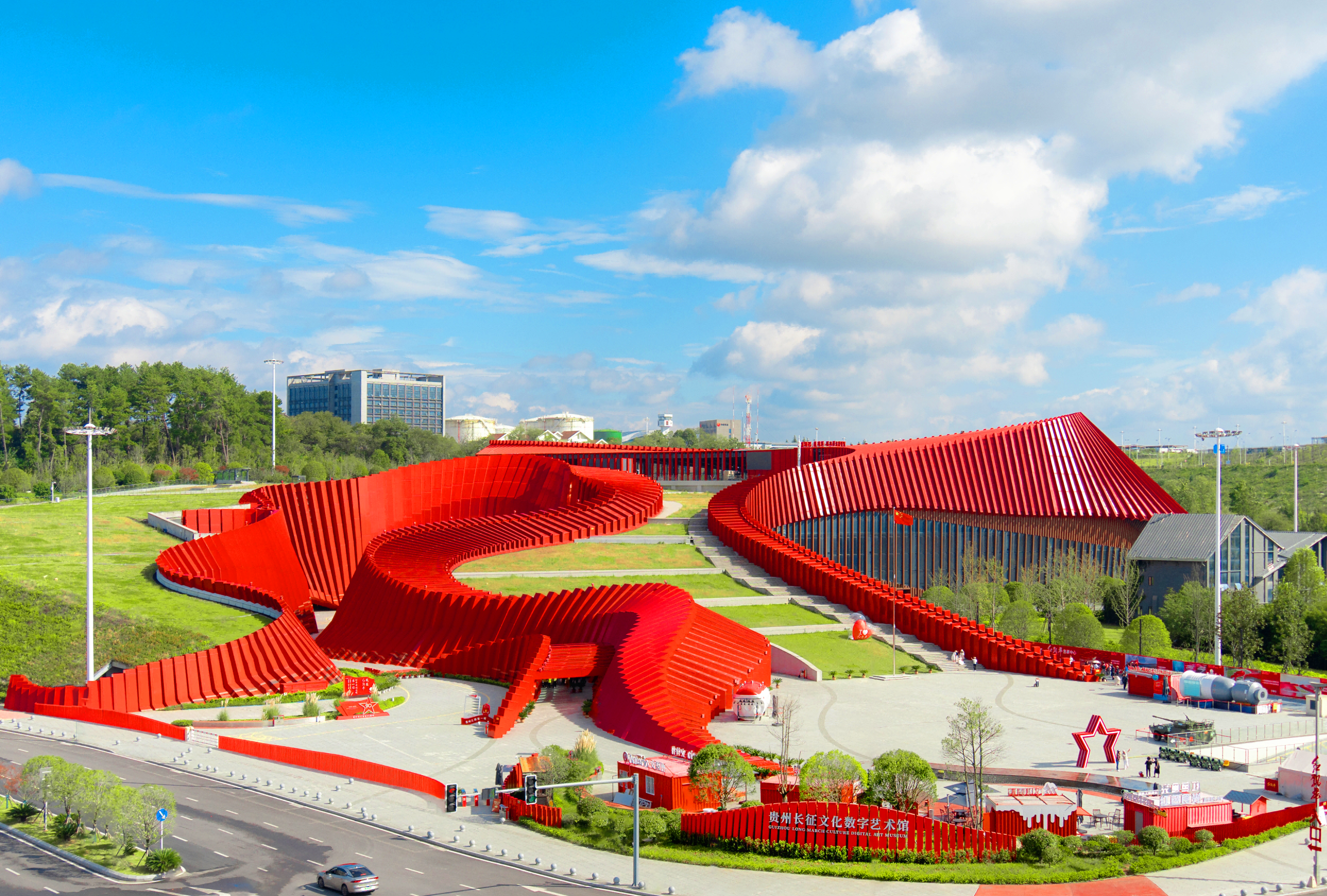
GuiZhou Long March Cultural Digital Art Museum (Red Ribbon)
The Guizhou Long March Cultural Digital Art Museum (Red Ribbon), as a key project in the Guizhou key construction area of the Long March National Cultural Park, takes “The soaring banner, the endless march” as its core theme, using the language of digital technology to tell the story of the Long March to the world and pass on the red legacy.The venue consists of two main parts: the immersive digital performance “Red Ribbon – The Great Expedition” and “Red Ribbon – Colorful Flight”. “Red Ribbon – The Great Expedition” is divided into six chapters: Unsung Heroes, Baptism by Fire, The Great Turn, The Long March, Victory Monument, and The New Long March of the New Era. It utilizes AI virtual interaction, full-dimensional mechanical movement, virtual reality technology, 3D sound fields, and other technological means to digitally recreate the Long March journey. Through the medium of “art + technology”, it vividly restores panoramic perspectives of the Red Army’s path, evoking emotional resonance among audiences and elevating spiritual faith through progressive, immersive, and panoramic experiences.The “Red Ribbon·Colorful Flight” experience allows audiences to feel as if they’re personally soaring over the magnificent landscapes of Guizhou. With a massive 20m-diameter LED dome screen, accompanied by panoramic sound and sensory effects, it delivers an awe-inspiring 5D feast for all senses.
-
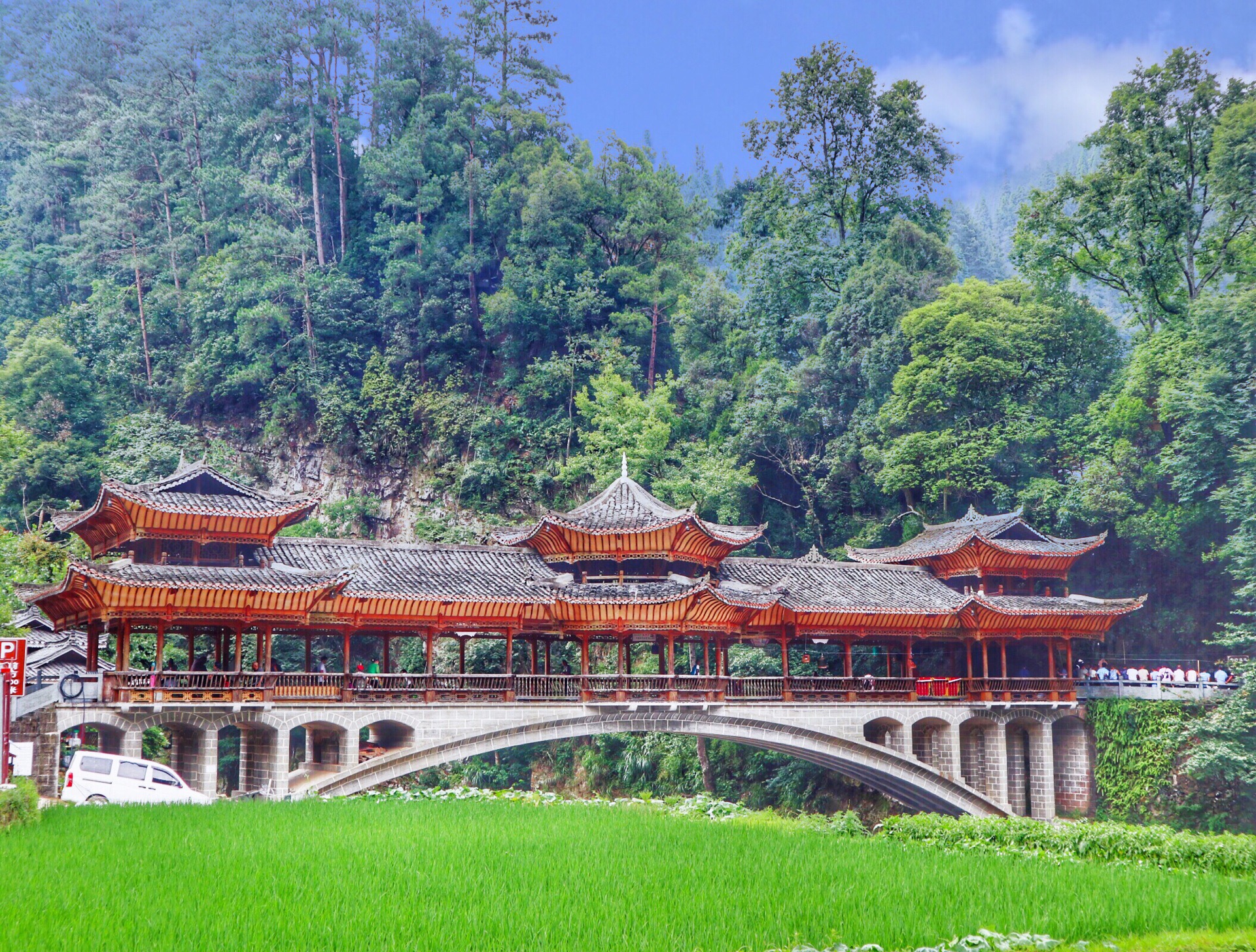
Langde Miao Village Scenic Area
Langde Miao Village is a Miao village, and the birthplace of Yang Daliu, the leader of the Miao uprising during the Qing Dynasty. The costumes of Miaomin in Langde Miao Village are characterized by long skirts, so they are also called “long skirt seedlings”. There are mountains and waters here, surrounded by mountains and surrounded by mountains. There is a small river flowing in front of the village. The ancient buildings of Langde Miao Village are listed as key cultural relics protection units in China.
-
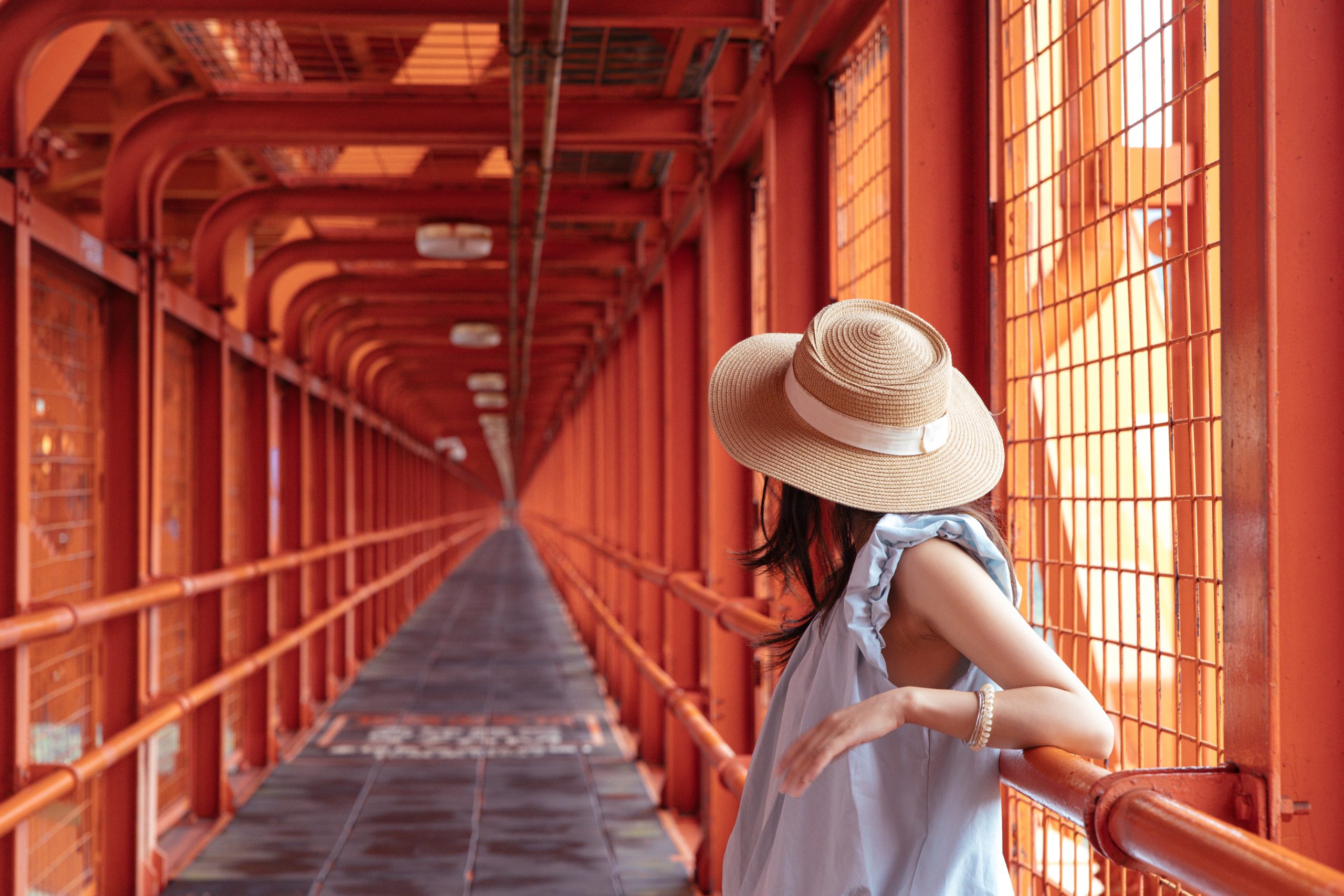
Huangguoshu Balinghe Bridge
The Baling River Bridge is located in the plateau and hilly area of Anshun City. It is the first super-large bridge across the Baling River Grand Canyon on the main line of the Hurui National Highway. The bridge is 1,560 meters long and is a single-span steel truss stiffening beam suspension bridge with a main span of 1,088 meters. The bridge deck is 370 meters high from the water surface of the Baling River. It is the highest technical bridge ever built in Guizhou.