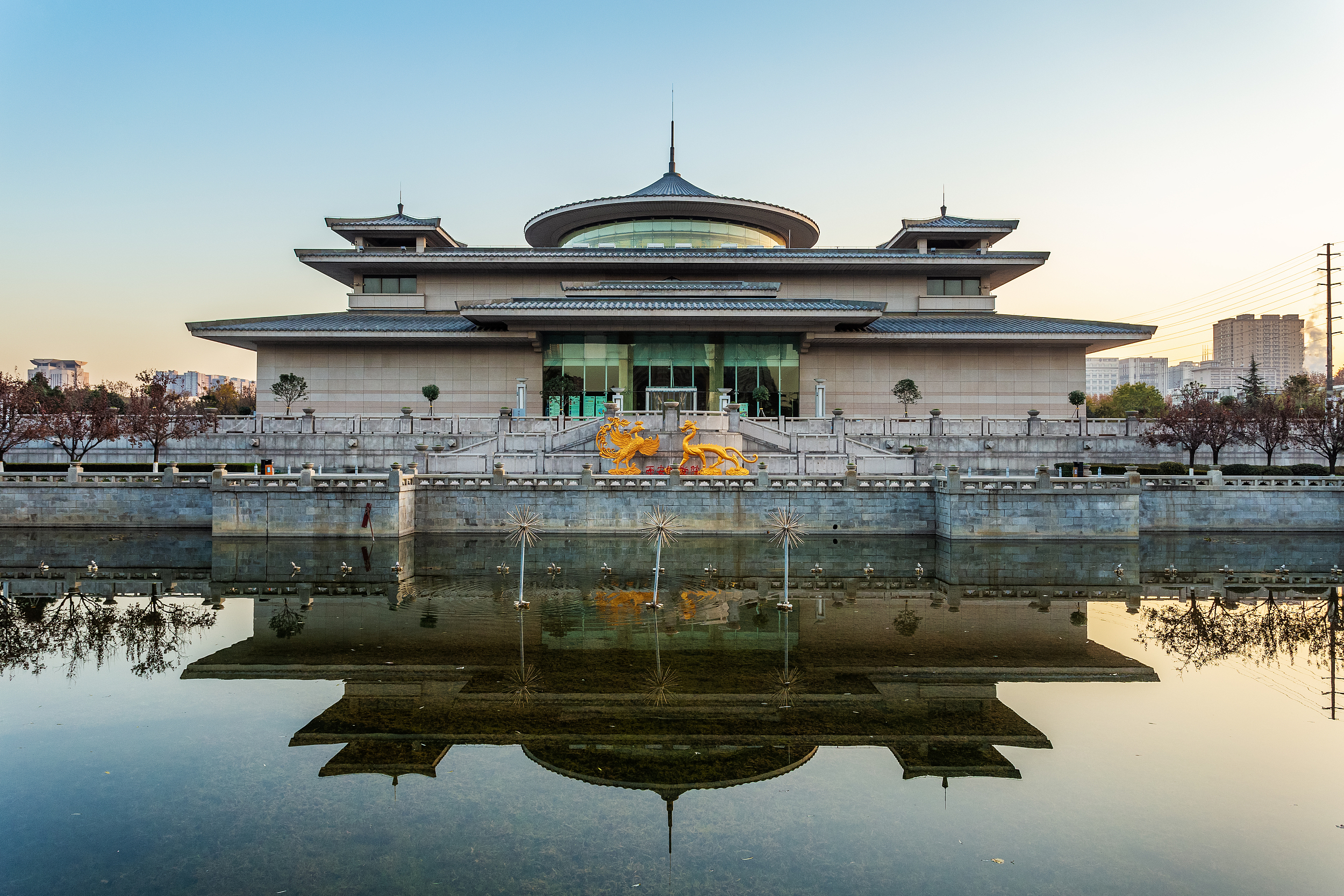
Xi’an Museum is a modern comprehensive museum built around the historic site of Jianfu Temple from the Tang Dynasty and its iconic structure, the Small Wild Goose Pagoda. It integrates cultural relic preservation, academic research, exhibition displays, public education, and garden leisure activities. The museum’s core area occupies the original site of Jianfu Temple, a royal monastery during the Tang Dynasty, with the well-preserved Small Wild Goose Pagoda serving as its distinctive landmark and spiritual center. The temple ruins and pagoda not only form the foundation of Xi’an Museum but also serve as its key outdoor historical exhibition area and visitor highlight. The main museum building, located north of the ancient temple site, creates a unique cultural space where “museum, pagoda, temple, and garden” harmoniously coexist, vividly showcasing Xi’an’s historical continuity from ancient times to the present. Xi’an Museum officially opened to the public on May 18, 2007. Established to comprehensively showcase the glorious history and brilliant culture of Xi’an (ancient Chang’an) as the capital of thirteen dynasties, it filled the gap of lacking a comprehensive urban history museum in Xi’an. Collection highlights: The museum houses approx. 130,000 precious artifacts from various historical periods of Xi’an, including over 10,000 nationally classified Grade III or above cultural relics. The collection spans from prehistoric times to the Ming and Qing dynasties, with particular emphasis on artifacts from the golden ages of the Zhou, Qin, Han, and Tang dynasties. Featured items include bronze ware, jade pieces, gold and silver objects, ceramics, murals, stone steles with epitaphs, and Buddhist statues, systematically showcasing the political, economic, cultural, social life, and foreign exchanges of ancient Chang’an. Main exhibition: The permanent exhibition “Ancient Capital Xi’an” traces the city’s development history through precious artifacts, models, charts, and multimedia displays. It chronologically presents Xi’an’s evolution and achievements as both a capital city (Zhou’s Fenghao, Qin’s Xianyang, Han’s Chang’an, Sui-Tang’s Chang’an) and a prefectural city (Song, Yuan, Ming, and Qing dynasties). Unique setting: The museum’s standout feature is its environment. Visitors can not only explore modern exhibition halls but also stroll through the expansive heritage park, which includes the Small Wild Goose Pagoda, the ancient architectural complex of Jianfu Temple (featuring structures like the Ming Dynasty bell tower housing a Jin Dynasty ancient bell), an ancient stone carving art exhibition area, and garden views. Here, they can immerse themselves in the charm of this thousand-year-old capital right at the historical site. The renowned “Morning Bell at Wild Goose Pagoda” view adds to its fame. World heritage site: As one of the key heritage sites in the “Silk Roads: the Routes Network of Chang’an-Tianshan Corridor” UNESCO World Heritage, the Small Wild Goose Pagoda and its surrounding Jianfu Temple historic area represent the core cultural value of Xi’an Museum. Function and positioning: The museum serves not only as a vital center for cultural relic collection, research, and exhibition, but also as an urban cultural park where citizens can relax and immerse themselves in history. It plays a significant role in social education and cultural exchange.
Xi’an Museum
作者:
在