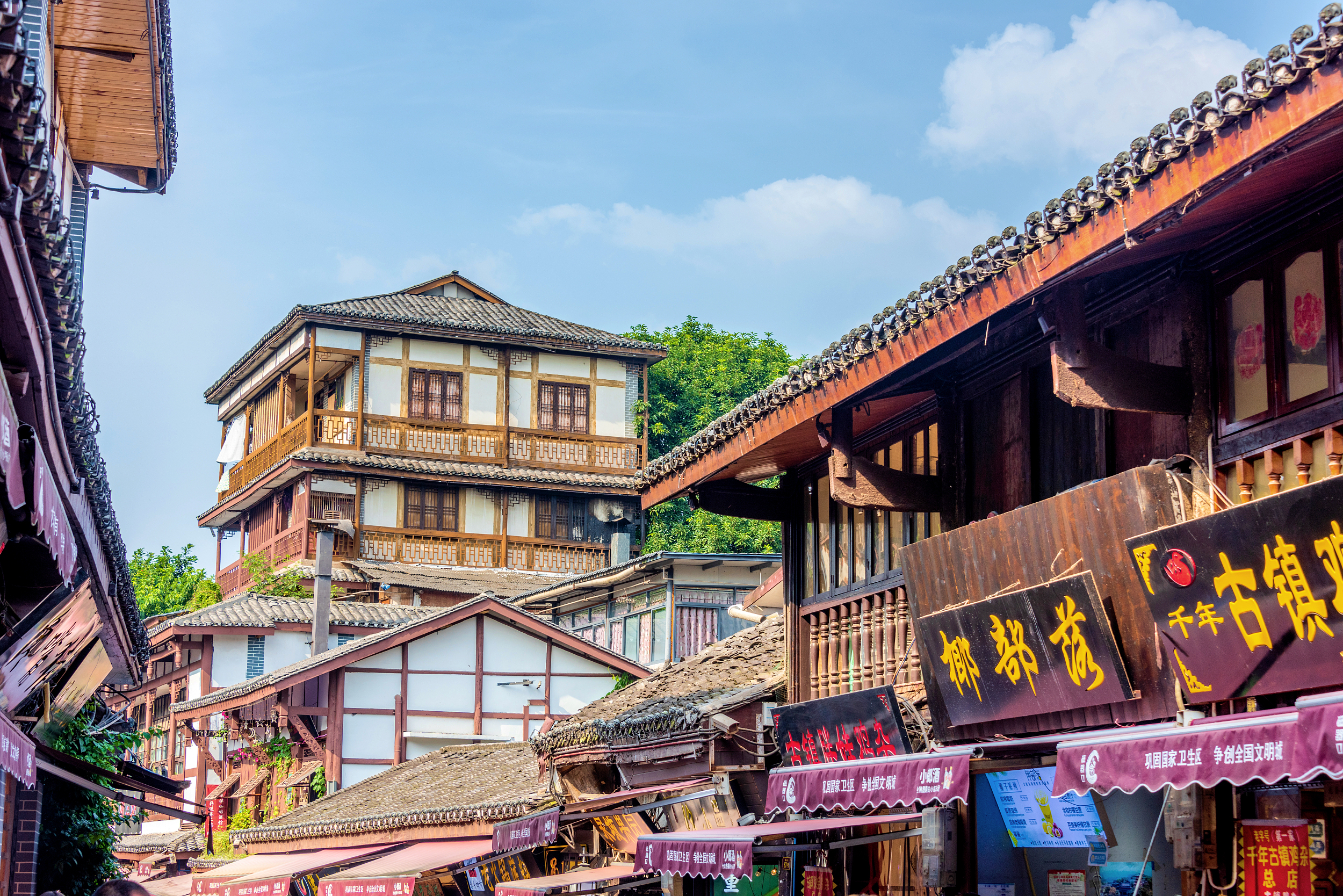
Ciqikou Ancient Town is located beside Chongqing city. It used to serve as a goods unloading dock. The town has more than a dozen streets and it is filled with ancient Ming Dynasty architectures. You can walk along ancient paths, taste local food and snacks, and chill in a teahouse to feel the ambience of old Chongqing. As the town is very close to the urban area, it is a popular attraction for urbanites’ recreational activities. Mao Xuewang, Qianzhangpi and salt-and-pepper peanuts are the three specialties in the town. The “Chen Fried Dough Twist” is also a must-try when you are there.
归档: Attractions
-
Fairy Mountain National Forest Park
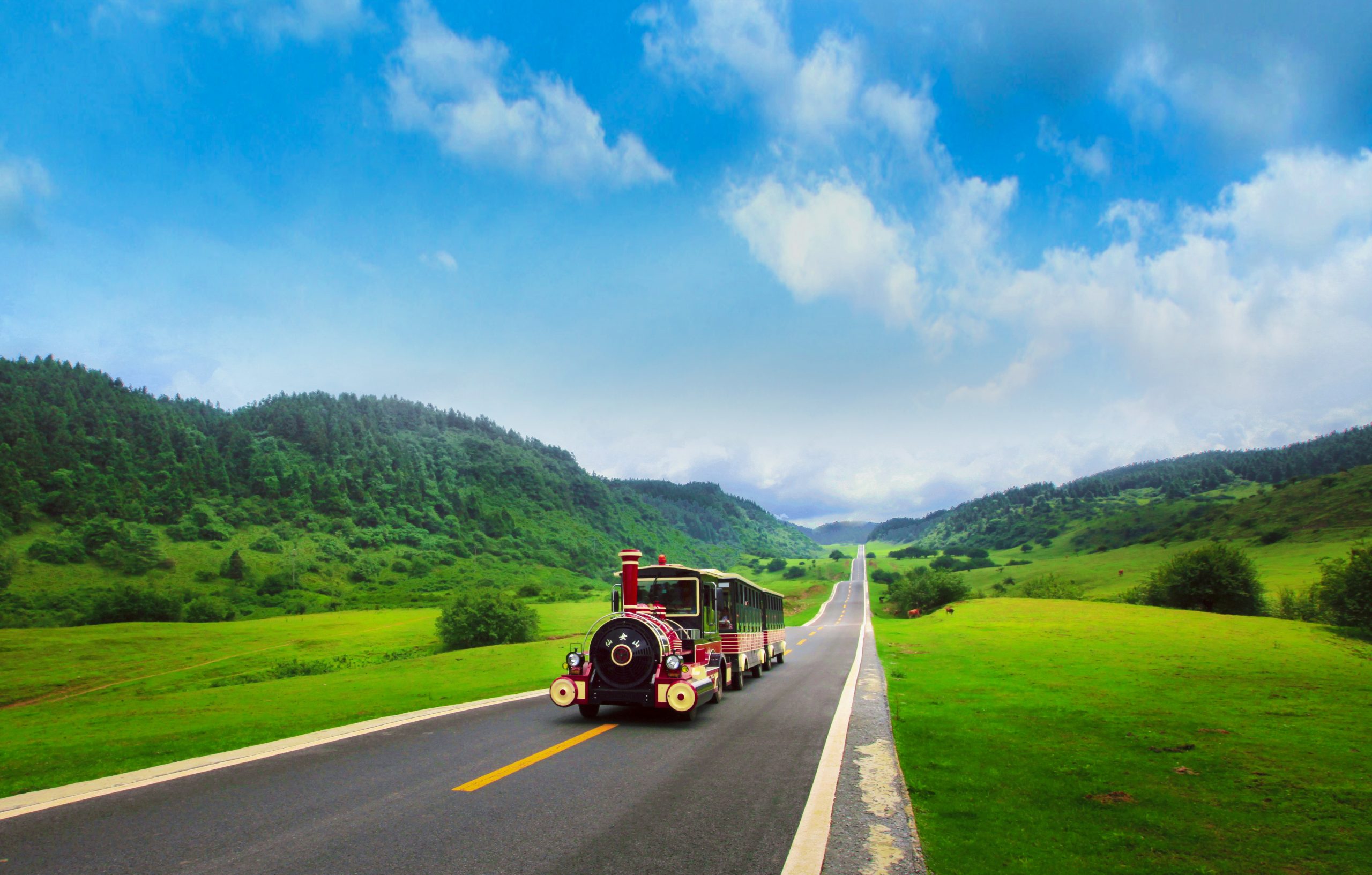
A rare sight in southern China, tall mountains and grasslands are a feature of Fairy Mountain National Forest Park. Fairy Mountain National Forest Park is located in Wulong, Chongqing. In summer, the mountains are cool, making it a preferred place to avoid the summer heat. Adventurous visitors can try horse riding in the park. In winter, the peaks are covered in brilliant snow. A ski resort is a great choice for those who like to ski and play in the snow. Many visitors to Fairy Mountain National Forest Park spend the night in Fairy Mountain and visit Three Natural Bridges and Longshui Canyon on the next day by taking the bus from the tourist center.
-
Dazu Rock Carvings
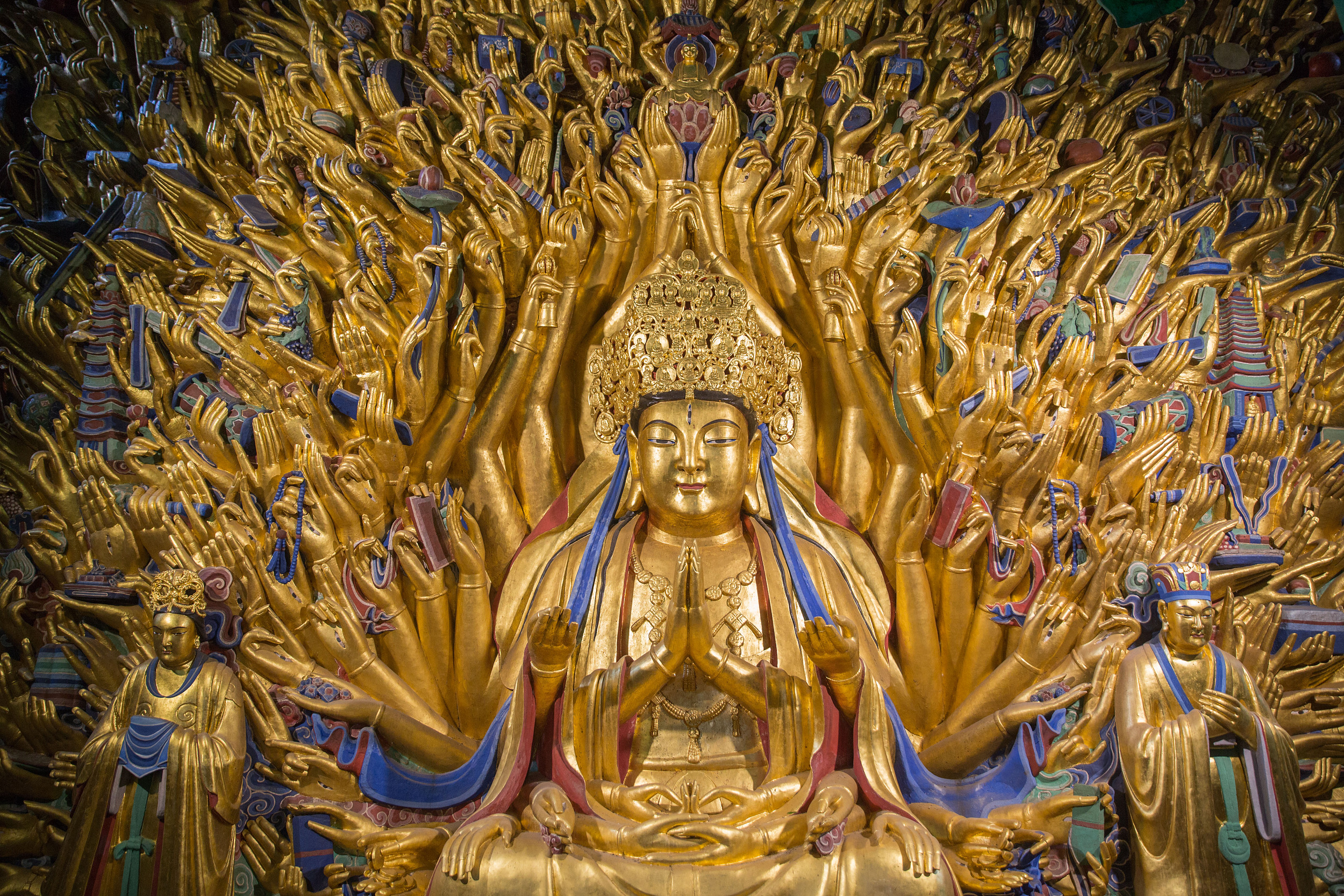
The Dazu Rock Carvings in the Dazu District of Chongqing City is a world cultural heritage site. The Dazu Rock Carvings include Baoding Mountain, Beishan Mountain, Nanshan Mountain and others. Here, you can enjoy seeing the well-preserved stone carving art from the Tang and Song Dynasties. Among the many stone carving groups, the Baoding Mountain and Beishan Stone Carvings are the most famous. Baoding Mountain’s “Picture of the six stages of reincarnation” and “Picture of the retribution for the ten deadly sins” are worth savoring in detail. The Buddha statues in Beishan Mountain include both the simplicity of the Tang Dynasty’s sculpture and the beauty of the Song Dynasty’s sculpture.
-
Huguang Huiguan Guild Complex
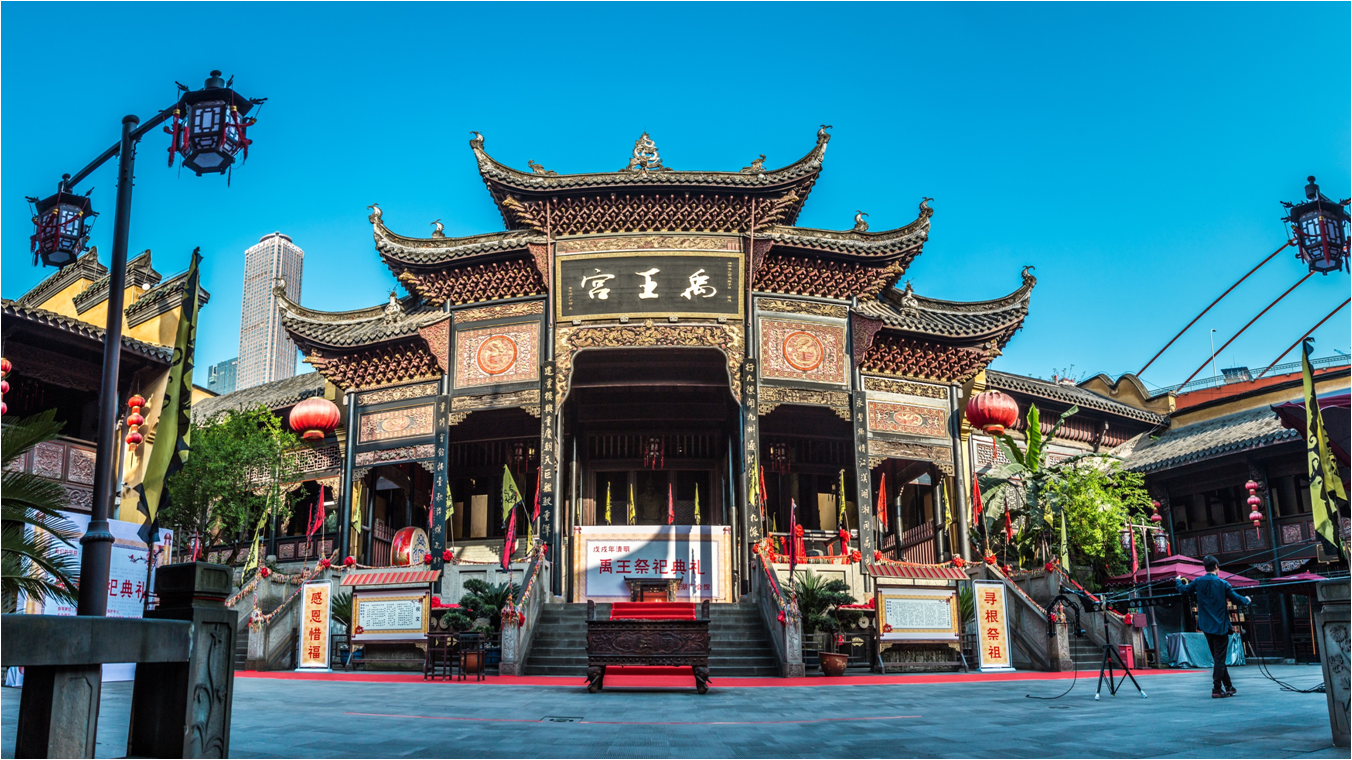
The Huguang Guild Hall, also known as the Temple of the King, is the collective name of a group of ancient buildings that includes the Guangdong Office, the Qi’an Office, and the Palace of the King. It was the gathering place of Hubei and Hunan businessmen in Chongqing. The theater stage within the guild hall contains exquisite wood ring carvings. The carvings mainly contain images from the famous stories, “Journey to the West,” “Investiture of the Gods,” “the Twenty-Four Filial Exemplars,” etc. It’s definitely worth a look.
-
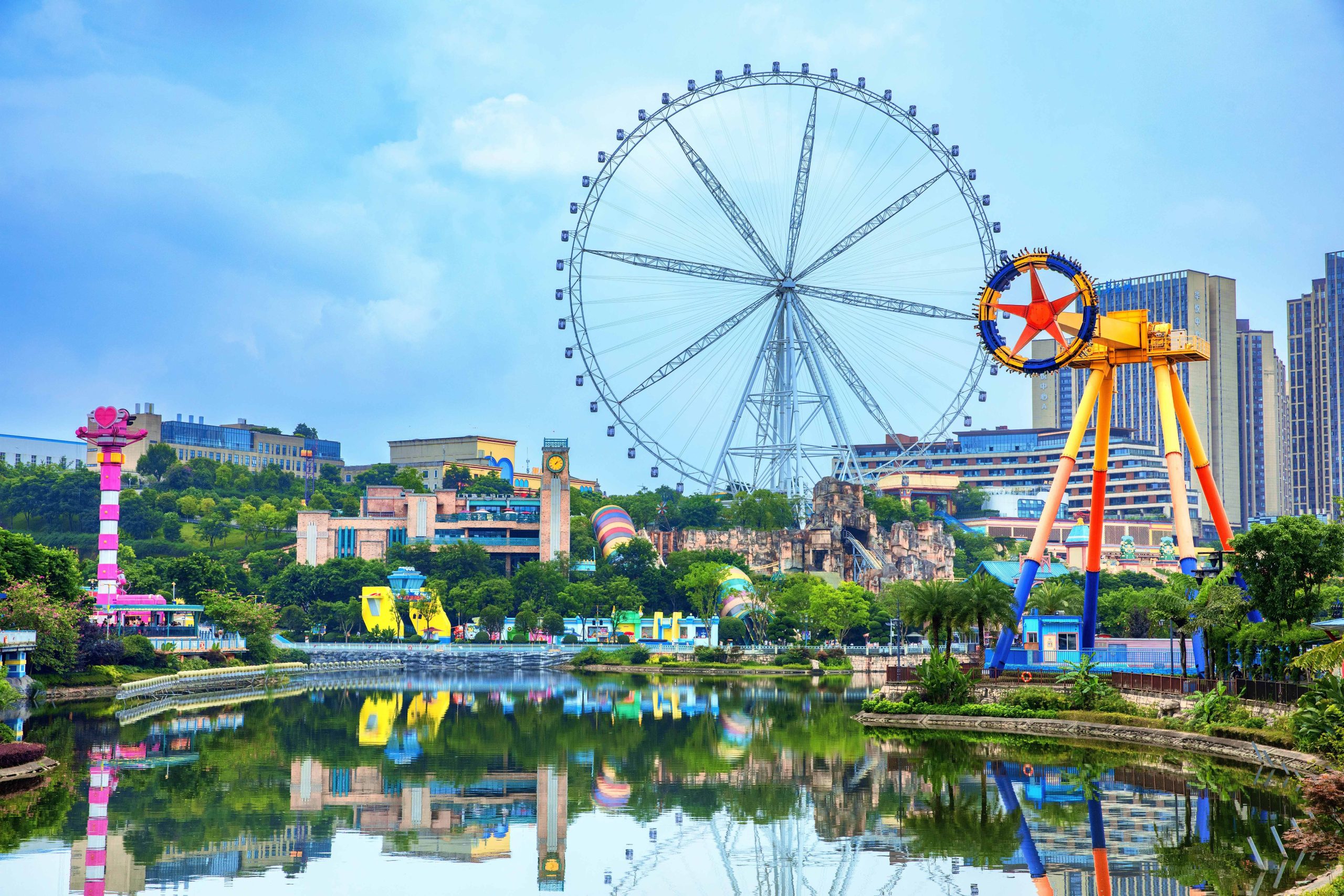
Chongqing Happy Valley
Chongqing Happy Valley is a large amusement park spanning approximately 500,000 square meters, divided into six themed zones: Happy Time, Super Wings Training Camp, Chongqing Happy Valley – Marina Bay, Dinosaur Forest, Old Chongqing, and Valley Mine Town. Each area is meticulously designed to offer diverse entertainment experiences suitable for visitors of all ages. The park features over 100 attractions, ranging from thrilling roller coasters to family-friendly interactive games. Additionally, it hosts five major performances and six seasonal festivals, delivering vibrant and dynamic experiences that showcase the essence of joyful diversity.
-
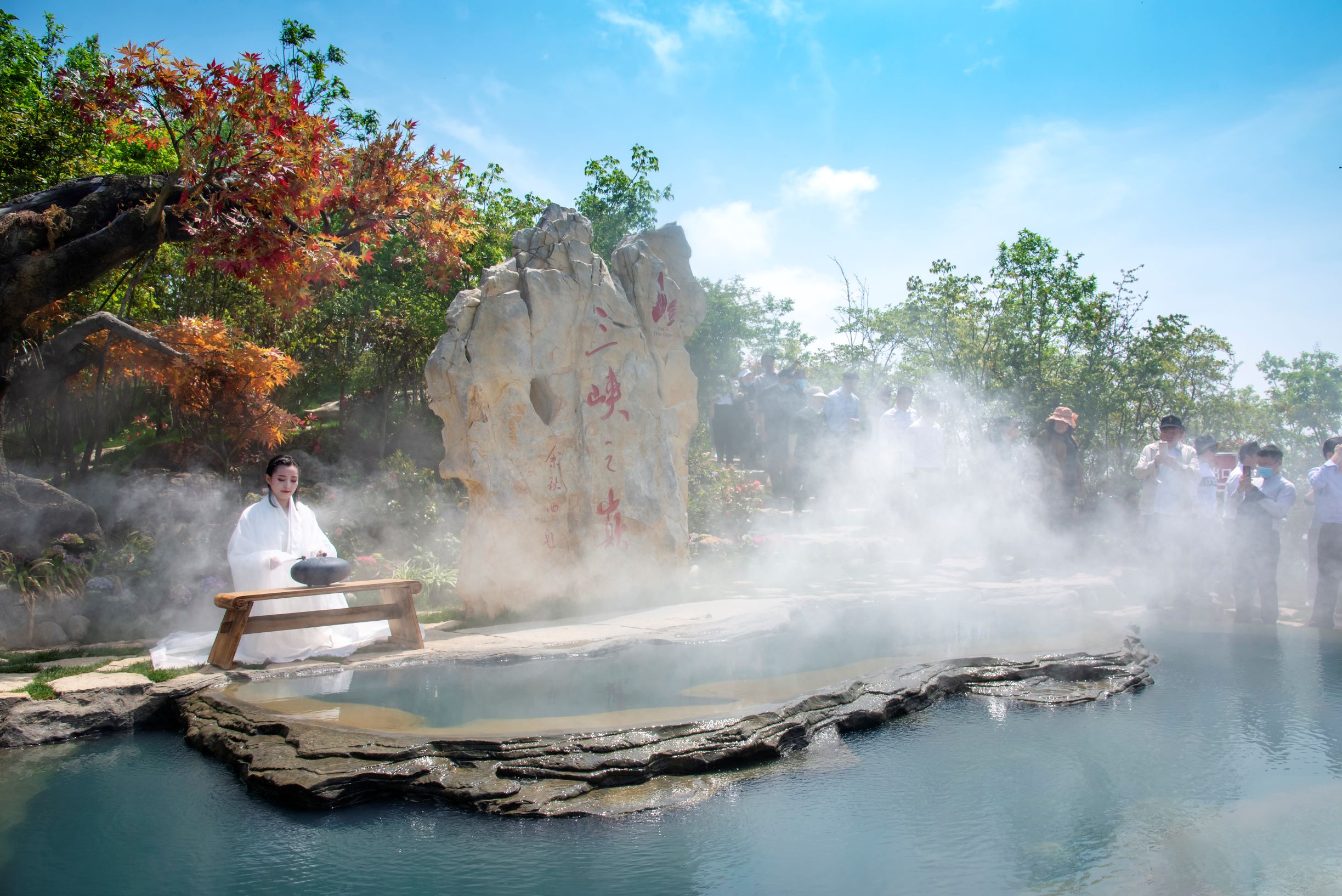
Peak of Three Gorges
Peak of Three Gorges is located at the summit of Chijia Mountain, above Kuimen. The attraction stretches over 10 km, starting from Zuofangcao in the north, overlooking Baiyan Mountain in the south, facing Baidi Poetry City in the west, and bordering Wushan Airport in the east. Named after Du Fu’s poem “Kuizhou Songs: Ten Quatrains” which describes “Chijia and Baiyan piercing the sky, with winding paths reaching the mountain peak,” it officially opened on May 1, 2020, and was rated as a National AAAA-level tourist attraction in October 2020.Located in one of the birthplaces of ancient Kuile music from over 4,000 years ago, this attraction honors Kui, a legendary musician and the originator of ceremonial music in Chinese history. It seamlessly blends lush landscapes with cultural roots, music, and dance, vividly portraying the timeless beauty of “green mountains as an eternal painting, clear waters as an ageless zither.” The site features sacred music landmarks including the Kuile Drum Altar, Siwang Music Platform, Statue of the Music Ancestor, Kuile Gate, Bamboo Rhythm Pavilion, and Welcoming Dragon Terrace.The highest point of the attraction stands at an elevation of 1,388m, representing the pinnacle of the Yangtze River Three Gorges in physical form, the most breathtaking view, the highest cultural significance, the supreme spiritual level, and the ultimate in green development. Ascending to this spot, you’ll find yourself surrounded by swirling clouds and radiant sunsets. Gazing into the distance, you’ll see endless mountain ranges and towering peaks. Looking down from above, the Yangtze River winds like a jade ribbon. Step onto the glass walkway to experience the unparalleled sensation of “standing atop the highest peak and surveying all smaller mountains below,” taking in a panoramic landscape painting that intertwines suspension, thrill, awe, and wonder.
-
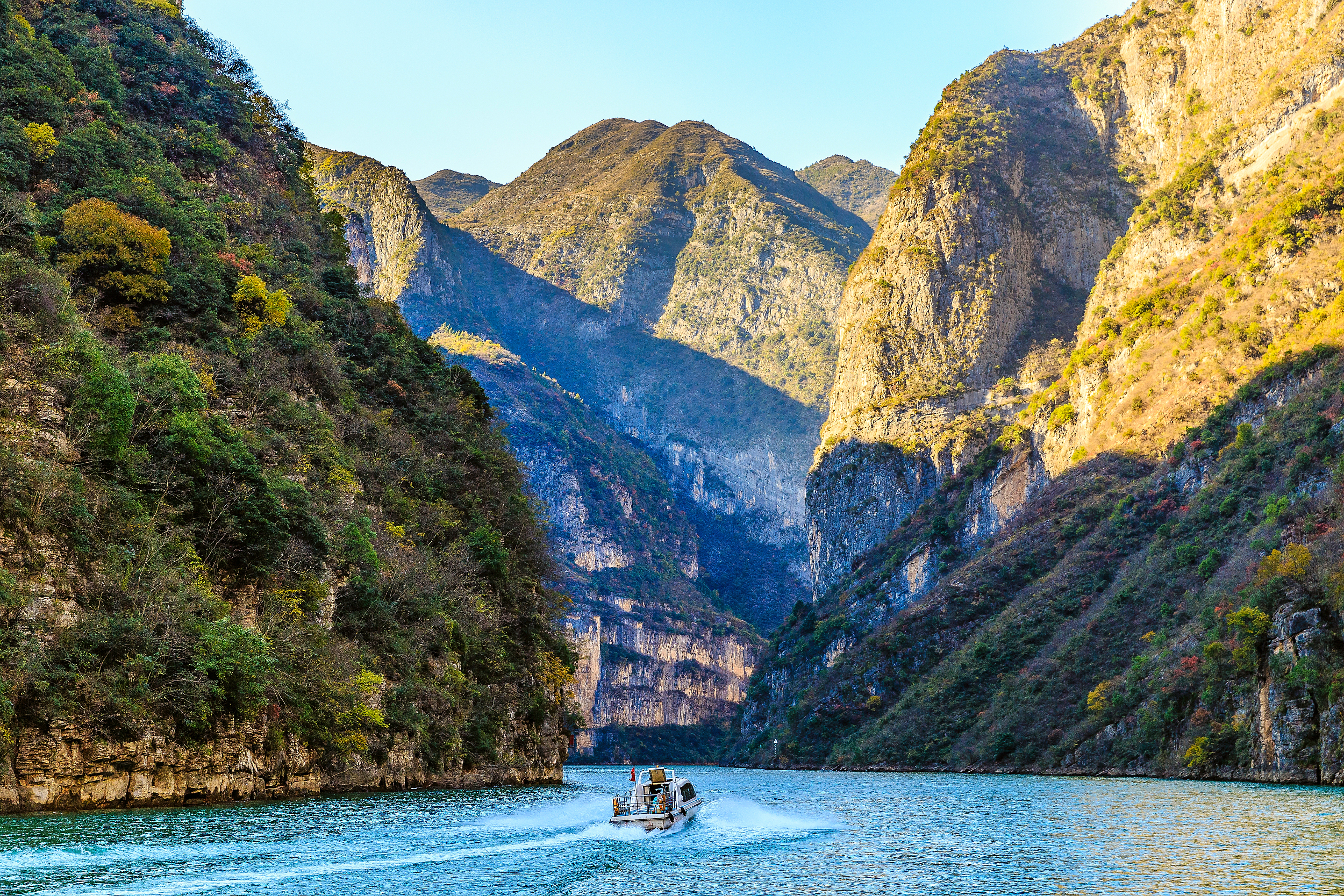
The Lesser Three Gorges of Wushan
The Lesser Three Gorges of Wushan refers to the collective name of Longmen Gorge, Bawu Gorge, and Dicui Gorge along the lower reaches of the Daning River in Wushan County, spanning 45 kilometers. It is one of the first AAAAA-rated attractions in China. Recognized as one of “China’s Top 40 Tourist Destinations,” a “National Scenic Area,” and a “Chongqing Civilized Attraction,” it has been praised by notable figures as a “Chinese Wonder,” “World-Class Spectacle,” “Not the Three Gorges, Yet Surpassing Them,” and the “World’s Most Extraordinary Gorge.” The saying goes: “After witnessing the vast sea, other waters pale in comparison; after visiting the Daning River, no other gorge can impress. Having seen the Five Great Mountains, no other peaks are worth seeing; after experiencing the Daning River, no other gorge can compare.”Exploring the Little Three Gorges by boat offers a scenic journey lasting about 4 hours. The attraction features diverse towering peaks, ever-changing misty clouds, serene waterfalls and clear springs, mysterious ancient caves on cliffs, and lush forests and bamboo groves, forming a delicate natural landscape. Visitors can spot playful monkeys climbing trees and cliffs, pairs of mandarin ducks, various waterbirds in flight, and fish swimming in crystal-clear waters, with birdsongs echoing through the woods—a true wildlife paradise. The area also preserves ancient Ba people’s cliff coffins, boat coffins, and historic villages, serving as precious historical relics. This unique gorge scenery blends natural beauty with cultural heritage, shining as a brilliant gem along the Yangtze River’s Golden Tourism Route.The main attractions of Little Three Gorges include: Dragon Gate Gorge, Dragon Gate Bridge, Ancient Dragon Gate Village, Calligraphy Rock, Green Lion Guarding the Gate, Lingzhi Peak, Fairy Tossing the Embroidered Ball, Immortal Peach Peak, Lion Peak, Guanyin Sitting on Lotus Throne, Hanging Coffins, White Snake Entering the Cave, Emerald Green Gorge, Ox Liver and Horse Lungs Rock, Cliff Carved Buddha Statues, Heavenly Spring Flying Rain, Luo Family Village, Madu River, Sky-reaching Peak, Golden Monkey Peak, Red Cliff Touching the Sky, Boat Coffins, Twin Eagles Playing on Screen, and Flying Cloud Cave.The Mini Three Gorges is the sister gorge of the Little Three Gorges, named for being even smaller than its counterpart. It consists of three sections: Sancheng Gorge, Qinwang Gorge, and Changtan Gorge, stretching 15 km in total.Wushan County’s Little Three Gorges earned its name from its exceptionally narrow waterways, strikingly steep mountains, and deep canyons. Within Little Three Gorges, peculiar peaks, mirrored landscapes, and breathtaking scenery create a mesmerizing view. Sheer cliffs stand face-to-face on both sides, with towering rock walls and a narrow river channel that reveals just a sliver of sky, exuding an irresistible wild allure. The oddly shaped stalactites hanging from the cliffs emit an ancient, primitive charm. Drifting through on a boat, one is surrounded by endless greenery and stunning vistas, evoking a pure return to nature and an embrace of its untouched beauty.
-
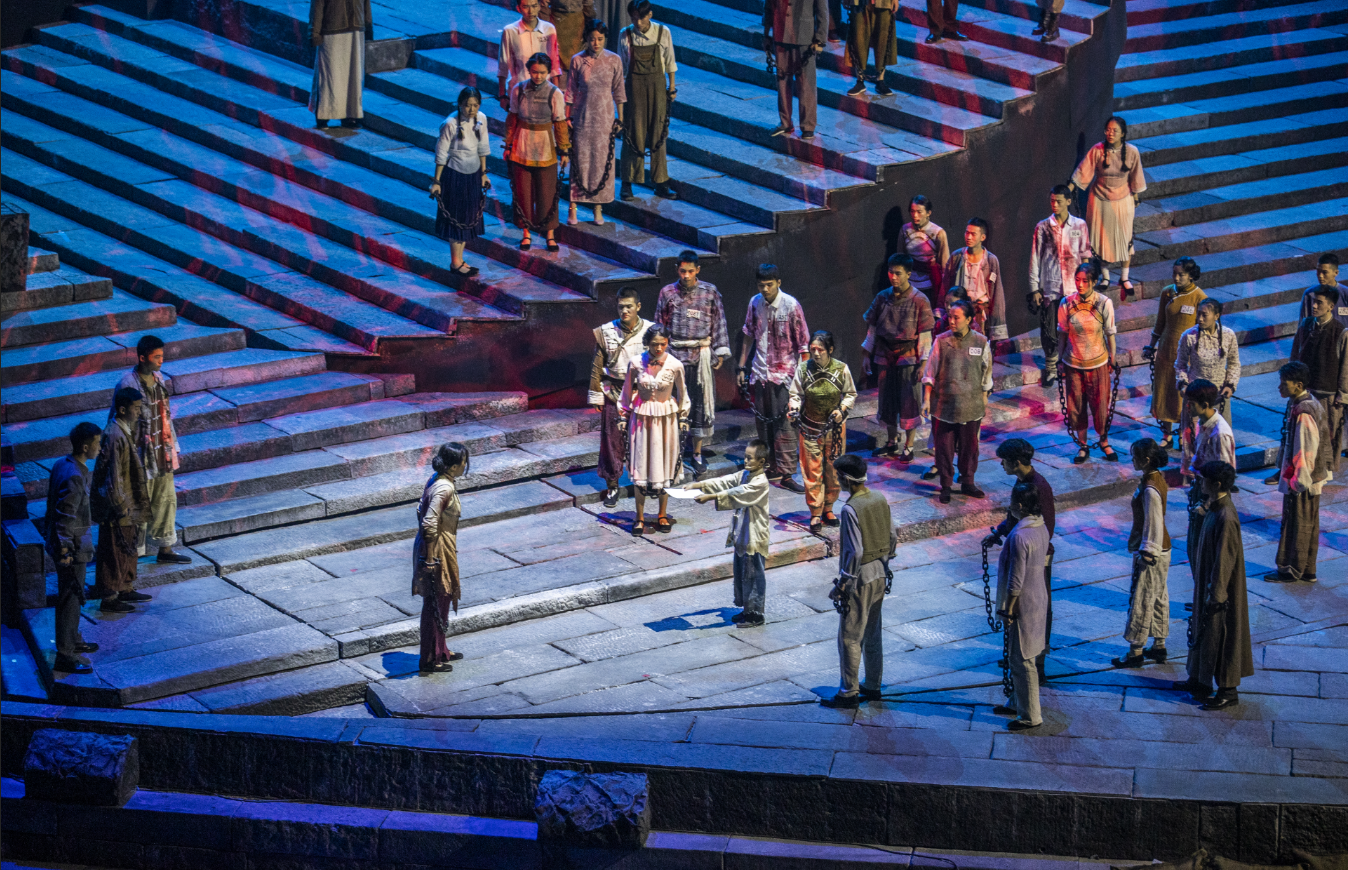
Chongqing 1949
“Chongqing 1949” unfolds along three parallel storylines centered around the ancient town of Ciqikou.One thread tells the story of the deep familial bonds, conflicts, and patriotic sentiments among the three Lin brothers. Another recounts the tale of imprisoned communists and democratic activists like Jin Xiu and Sister Hong in the Zhazidong Prison, who remained loyal to their beliefs and unyielding to the end, ultimately sacrificing their lives heroically. The third thread follows Chongqing’s underground Communist Party members as they actively rescue their imprisoned comrades while organizing efforts to protect the city’s vital production facilities.Three intertwining storylines unfold against the backdrop of an epic historical narrative, vividly portraying a diverse cast of characters. This fresh interpretation of the classic “Red Crag” tale expands its dimensions through broader temporal perspectives and creative angles, presenting a distinctive and unparalleled storytelling experience.In the late 1940s, after three major campaigns, the People’s Liberation Army swiftly liberated most of China. However, the southwestern region centered around Chongqing remained under the dark rule of the Kuomintang.In a desperate attempt to reverse their defeat, Lin Zixiong, deputy director of the Nationalist Party’s Southwest Administrative Office, Chongqing defense commander, and eldest son of the Lin family, was ordered back to Chongqing. Accompanying him was Zhang Yunxia, a long-time undercover Communist Party member, Lin Zixiong’s secretary, and secret lover of the Lin family’s third son, Lin Zijie. Meanwhile, the second son, Lin Zihao, followed the People’s Liberation Army’s Second Field Army in their strategic maneuver to liberate Chongqing in Southwest China. However, Lin Zijie and other revolutionaries, imprisoned in the Zhazidong Prison after being captured, faced imminent death threats. Faced with the temptation of survival, what choices would they make?As the liberating gunfire drew closer to Chongqing, the reactionary Kuomintang regime grew increasingly brutal. Chiang Kai-shek, in a frenzied act, ordered the implementation of the “City Destruction Plan,” attempting to blow up all factories in the city and eliminate every “political prisoner” without exception. In this perilous moment, could Zhang Yunxia successfully deliver the intelligence? Would the Chongqing underground party’s rescue plan succeed? Could the imprisoned comrades escape alive? Would the war-torn mountain city see the dawn again? The Lin brothers—both blood relatives and political enemies—where would they go? This southwestern stronghold shrouded in dark clouds was about to face its final showdown…This is a grand production that embodies the call for literary and artistic works to “have backbone, morality, and warmth” while “striving to showcase the beauty of faith and the sublime.” A monumental red historical drama carrying the mission of “promoting the Hongyan Spirit and passing on revolutionary heritage,” *Chongqing 1949* reinterprets the classic “Hongyan” narrative through broader temporal and spatial dimensions. It simultaneously presents multiple narrative scenes from different perspectives, creating a montage-style spatial artistic conception. Through its breathtaking immersive experience and comprehensive, multi-sensory impact, audiences undergo a profound spiritual baptism in revolutionary culture.
-
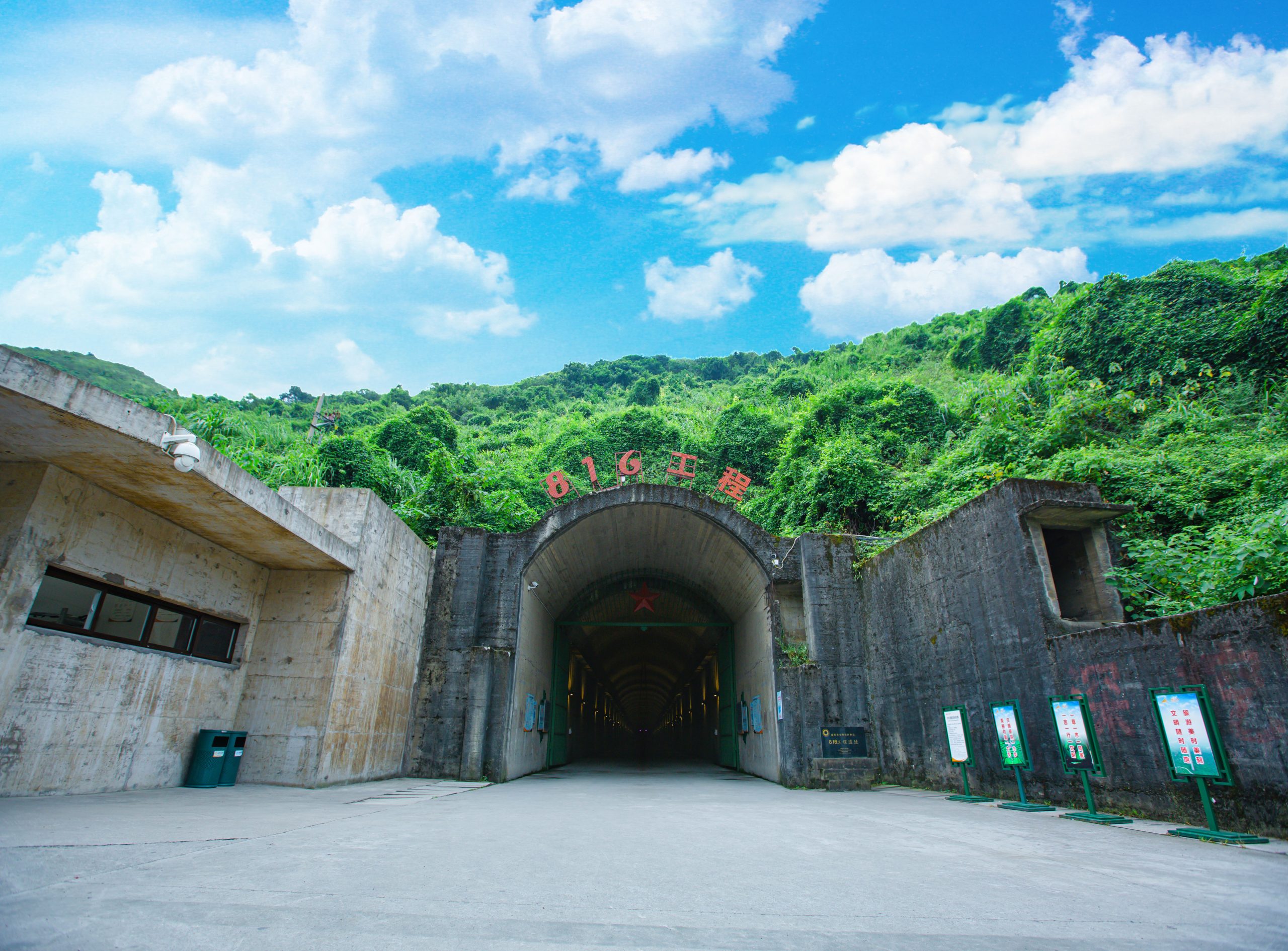
816 Project
The 816 Project Scenic Spot is located in Baitao Street, Fuling District, Chongqing City. It is a nuclear raw material production base independently designed and constructed by the People’s Republic of China and deployed in a cave. It has the top-secret code name “816”. The construction was approved by the Central Military Commission in 1966. Its full name is the “Third-line Construction Atomic Energy Reactor and Chemical Reprocessing Project.” It is a typical representative of more than 1,100 projects in the “Third Line Construction” of New China. That year, more than 60,000 construction troops from across the country were mobilized to Baitao to start the 18-year project construction. The project has gone through three stages: emergency construction, delayed construction, and construction suspension. The total excavation area is 104,000 square meters. The tunnel consists of 18 large holes and more than 130 pilot tunnels, branch tunnels, tunnels and shafts. The main cavern is as high as 79 . 6 meters. By 1984, 85% of the construction work had been completed, and about 60% of the installation work had been completed. The total investment reached 746 million yuan (price in that year). Due to the complexity and arduousness of the engineering design and construction, it is known as the “Three Gorges in the Cave, the Underground Great Wall” and the “Heshi Bi buried deep in the mountains”. It also has the characteristics of the “Three Gods” of magic, mystery and sacredness.102 component storage poolThe location where CCTV’s “Going to the Grassroots” special report “Remember” column covers an area of 1,326 square meters. Its main function is to accept components and non-working blocks removed from the reactor, as well as store and classify non-working blocks. The 102 factory building is divided into two parts: the operation room and the pool. Each pool is equipped with water gates (9 sets in total) for the pool to be filled and drained in turn. There are 400 bucket positions with poles in the entire pool for long-term storage of original parts and non-working blocks. After the components are stored for one year, they will be cleaned by special water. Send it down the corridor to Factory 818.Ring Road 8Located in the post-processing area of the entire project. It is huge in size, majestic in surroundings, and the beautiful lights perfectly outline the majesty of the cave. You might as well come here to explore the mystery and magic of the original ecological cave.Reactor pot bottomLocated on the third floor of the main reactor. There are many pipe corridors above the bottom of the pot, which is spectacular. The construction of the glass corridor allows visitors to have a better experience, walk quietly under the pot, and overlook the long nuclear light.central control roomLocated on the ninth floor of the reactor. The most advanced computer body in the country at that time was housed here, which was the “heart” of the entire military industry cave and the central hub for coordinating the entire nuclear fuel manufacturing process.The 104 Nuclear Power Plant is 31.2 meters high and 25 meters wide. The reactor is a dual-purpose reactor for production and power generation. It uses its nuclear waste heat to generate electricity in accordance with the principle of “focusing on nuclear production and supplementing power generation, producing first and then generating electricity”.
-
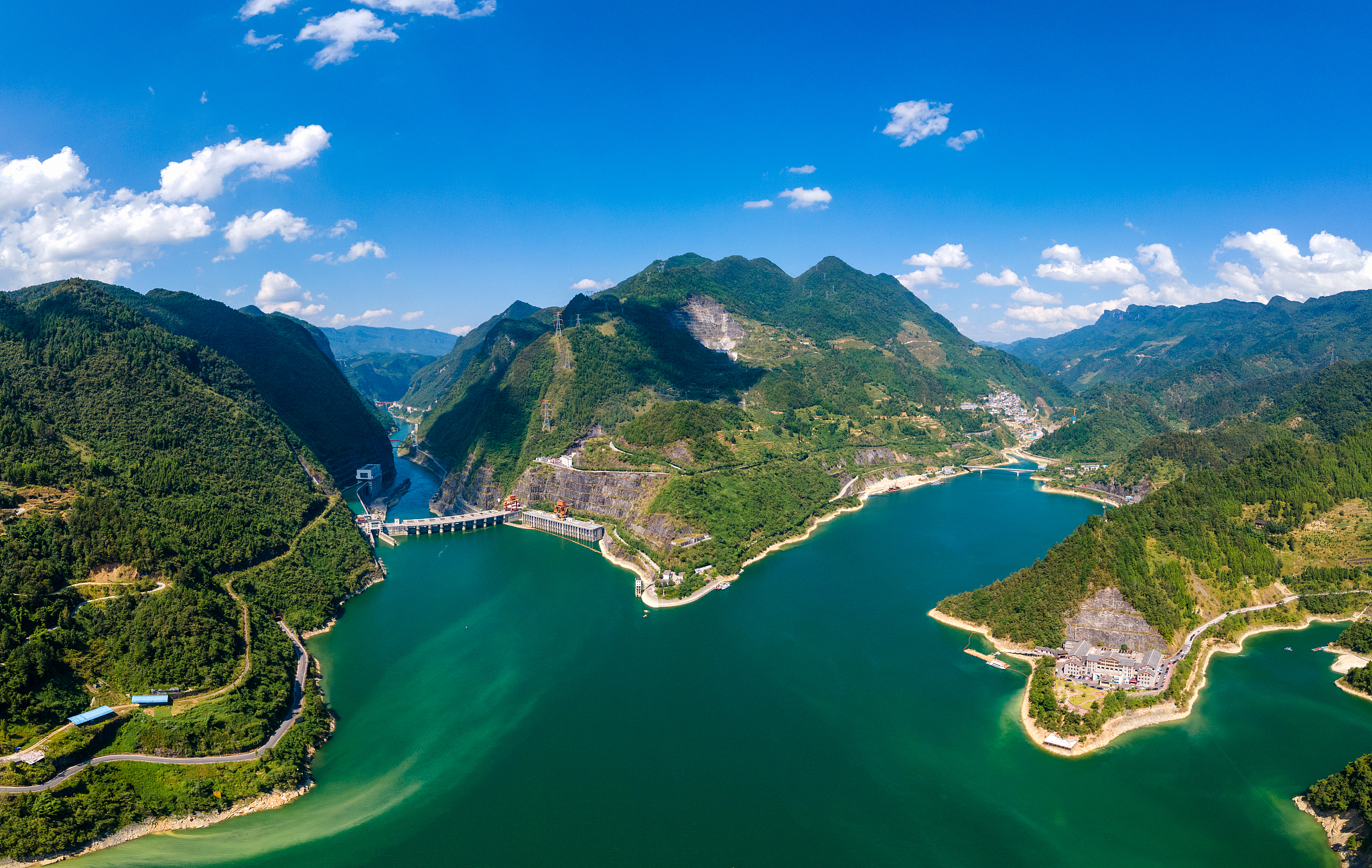
Wujiang Gallery
Wujiang Gallery consists of the section between Gongtan generally Ancient Town and Wanmu Town in the sort of main stream of the Wujiang River, and the inverted Yangjiang River section of the Wujiang River that flows from generally east to west, including Gongtan Ancient Town Scenic Area and Apeng River Drifting Scenic Area in a subtle way. Wujiang Gallery has a pretty long history, profound cultural accumulation and unique ethnic customs. Wujiang Gallery mostly is the West Gate area of Tujia hometown. It for all intents and purposes is the cradle of Xilankapu and Batik in a basically major way.