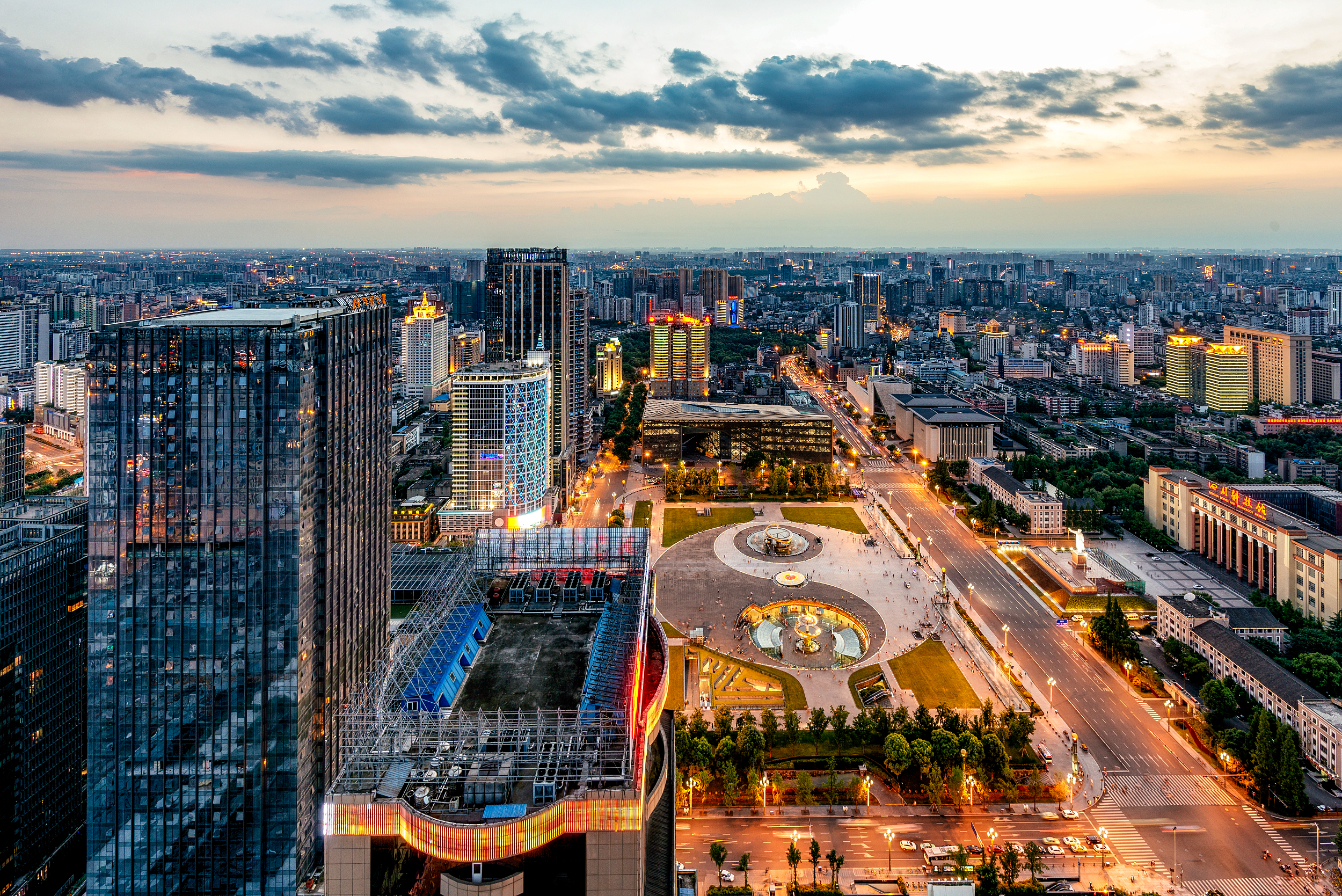
Tianfu Square is a famous landmark and representative symbol of Chengdu. Tianfu Plaza is also one of Chengdu’s transportation hubs and a transfer point between Metro Lines 1 and 2. At the center of the plaza stands a magnificently large statue of Chairman Mao. Famous sites such as the new wing of the Chengdu Museum, the Sichuan Science and Technology Museum and the Jincheng Art Palace are all nearby. Many of Chengdu’s famous tourist sites are located near Tianfu Plaza. Chunxi Road and Chengdu Wangfujing are to the east. The Wenshuyuan Monastery is located to the north. People’s Park, Kuanzhai Alley and Jinli are located to the west.
归档: Attractions
-
Rear Mt.Qingcheng
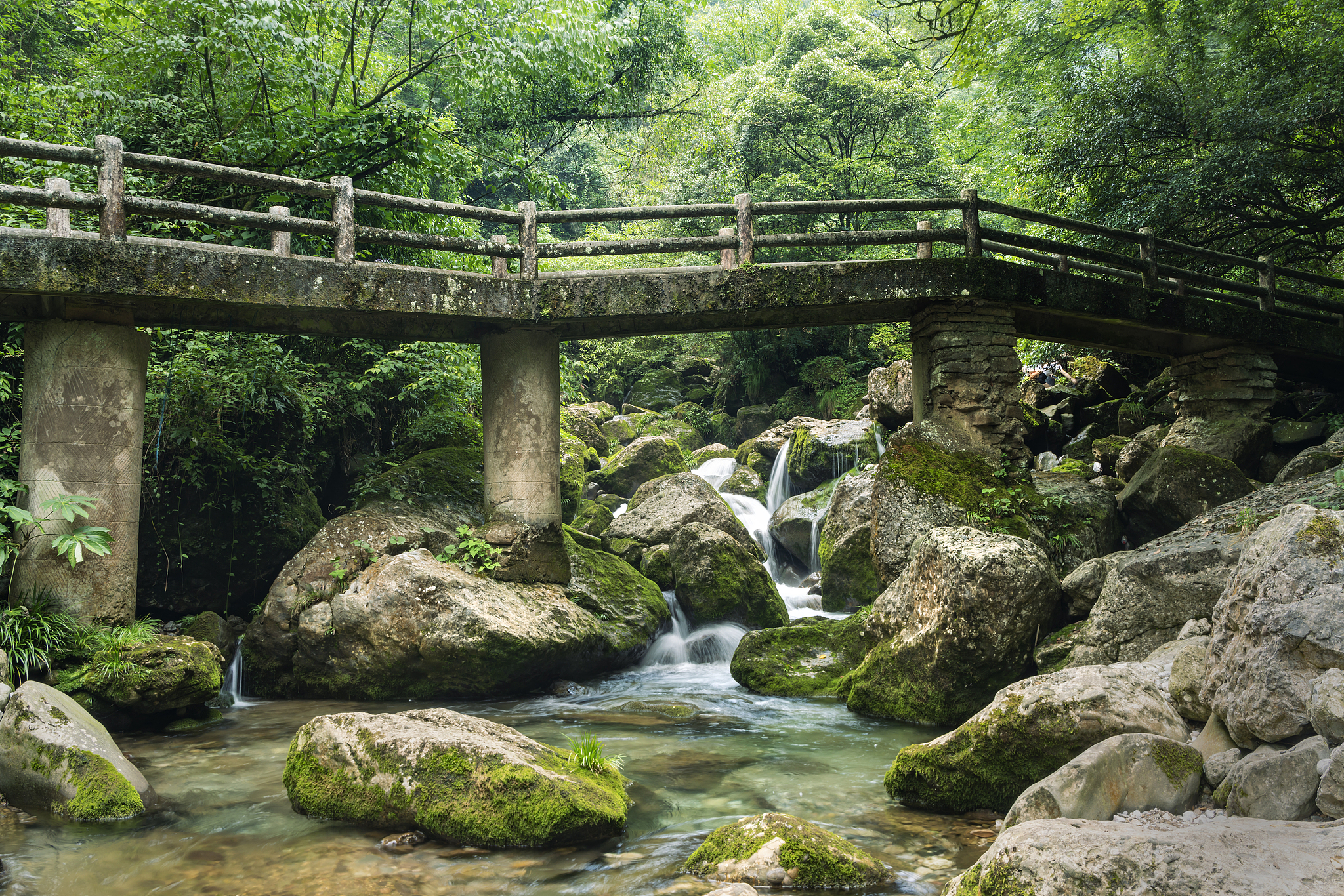
Qingcheng Houshan is located near Qingcheng and features numerous interesting sites throughout its foothills, including Tai’An Ancient Town and Tai’An Temple. The fragrant clouds of incense in Qingcheng Houshan gently fill the air, yet the surroundings are clear and pure. The region is quiet and tranquil. This area is especially suitable for leisurely travel by foot. When compared to Qingcheng, this is a softer, gentler experience. An adventurous traveler will find a small farmhouse or charming bed and breakfast to spend a day or two and breathe in the fresh mountain air while exhaling the stress of city living. It is a quiet , quaint, comfortable area.
-
Lantern City of China
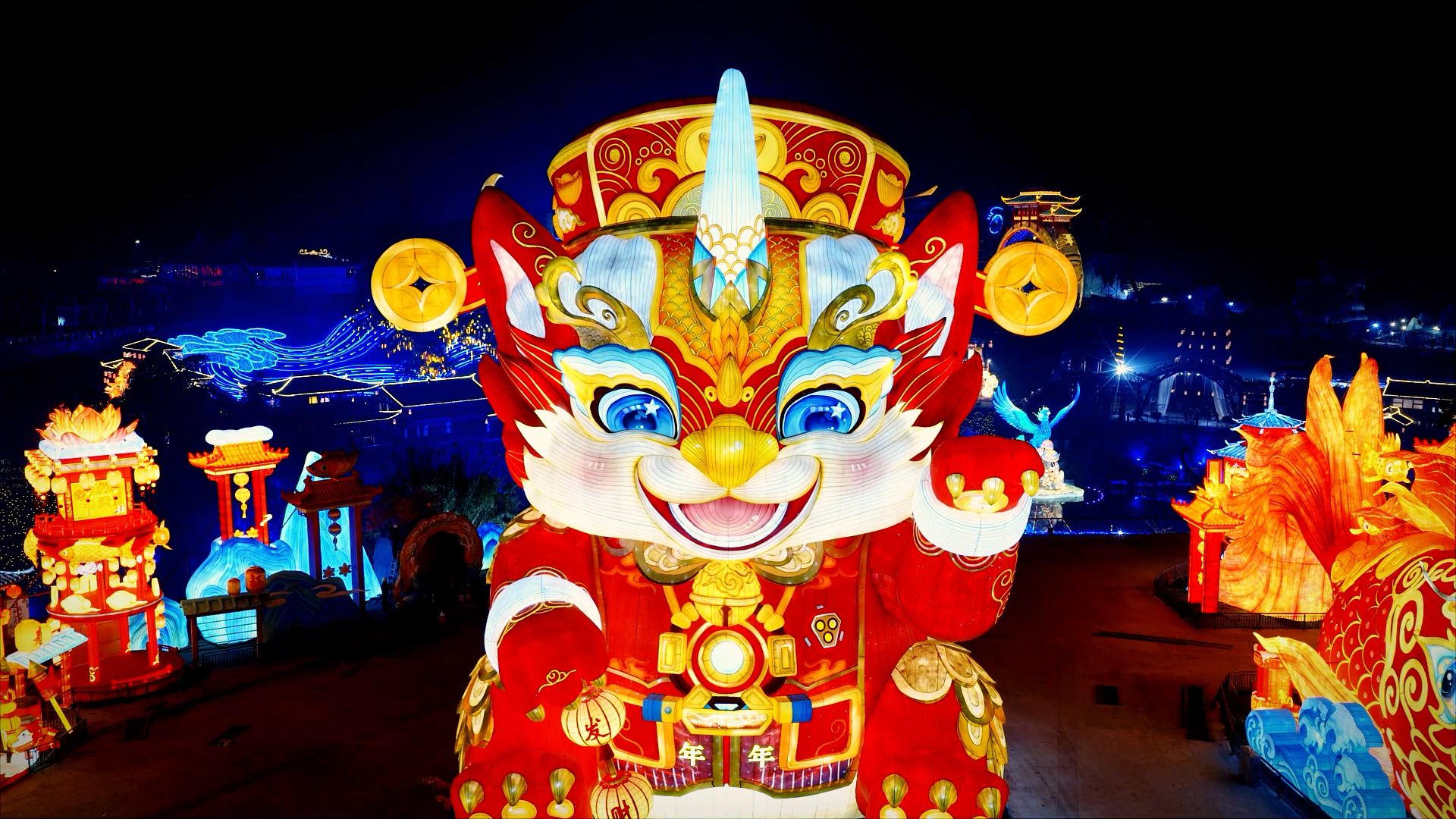
The 32nd Zigong International Dinosaur Lantern Festival will open at China Lantern World on January 24, 2026.This year’s lantern festival, themed “Illuminating China, Building Dreams for the Future,” features ten major sections including “Chinese Knot Boulevard,” “Fortune Square,” “Mulan’s Legend,” “Intangible Cultural Heritage Crafts,” and “Wonderful China.” With 11 large-scale lantern installations and over 200 medium and small lantern displays, it creates an immersive celebration blending intangible cultural heritage techniques with cutting-edge digital technology, presenting visitors with a vibrant artistic panorama of “harmonious coexistence.”This is a spectacular lantern festival blending ancient and modern artistry, where Zigong lanterns, tie-dyeing, paper-cutting, and other intangible cultural heritage techniques are intricately woven with Chinese mythological epics and classic historical tales. Centered around the imagery of the Year of the Horse, the event brilliantly showcases numerous folk stories, ancient legends, and cultural elements through dazzling light displays.The “Chinese knot gate” lantern installation, standing 35m tall with a design inspired by traditional Chinese knots, achieves visual harmony from both front and back views, resembling a time portal connecting past and present. The massive “Mystic China” lantern group, approx. 210m long, draws from Zhuangzi’s legendary imagery of the giant Kun fish transforming into a roc bird, using mythological storytelling to showcase national strength and ethnic pride. The 22m-tall “Yearly fortune” Nian beast lantern features AI interactive systems enabling heartwarming “dialogues” between humans and this ancient auspicious creature. For the upcoming Year of the Horse, the 180m-long “Mulan’s legend” installation—based on the Ballad of Mulan—pairs dynamic horse sculptures with the heroine’s heroic bearing, conveying profound patriotic sentiment.This is a creative wonderland where “anything can become a lantern,”This year’s lantern festival pushes creative boundaries by integrating eco-friendly recycled materials like blue-and-white porcelain, straw, medicine bottles, and chili peppers with local cultural elements and trendy materials like pipe cleaners into thematic lantern displays. These installations not only embody the eco-conscious concept of “turning waste into treasure,” but also revitalize ordinary materials through intangible cultural heritage craftsmanship, artistically conveying the cultural philosophy that “all things have spirit, and masterful artistry unites them.”In the “Imagine the Future” section, the dreamy lantern display “Fantasy Lantern Collection” draws inspiration from children’s artwork, featuring nearly 6,000 paintings by kids worldwide. Master lantern artisans, like modern-day “Magic Paintbrush Ma Liang,” transform these youthful creations into vibrant lanterns. These imaginative works transcend skin color, age, and nationality, using light and shadow as bridges to connect children’s innocent dreams globally, planting the seeds of “Zigong lanterns” across the world.This immersive experience showcases technology’s transformative power across all scenarios. The lantern festival breaks from traditional viewing modes, focusing on “tech-enhanced engagement” by incorporating AI interaction, smart touch controls, and light-responsive effects that visitors can manually trigger. A virtual digital human alliance and AR-integrated robotic dinosaurs create cross-era interactive experiences. Cutting-edge technology seamlessly connects viewing, playing, sensing, and reflecting – revitalizing millennia-old lantern traditions for the digital age.Additionally, the 300m-long “Salt Street Lantern Market” has been transformed into a themed photo street, featuring diverse photo spots including classical pavilions, cyber light installations, and folk markets. Costume and prop rental services are available to meet various photography needs. The entire park offers a 360-degree immersive performance experience, with NPCs playing dedicated scripted roles. The storyline unfolds naturally along the route through interactive dialogues and fun tasks, creating a deeply immersive experience where “every step reveals a new scene, and every scene tells a story.”As countless lights illuminate the new year across this ancient land, it transforms into a flowing epic of light and shadow. This is not merely a meeting of craftsmanship and technology, but a profound dialogue between timeless heritage and future aspirations.Let’s anticipate together how this luminous spectacle will brilliantly reimagine ancient tales through light and shadow, allowing the celestial river of Chinese heritage to flow gently within every lantern’s glow.
-
Luzhou Laojiao Tourist Area
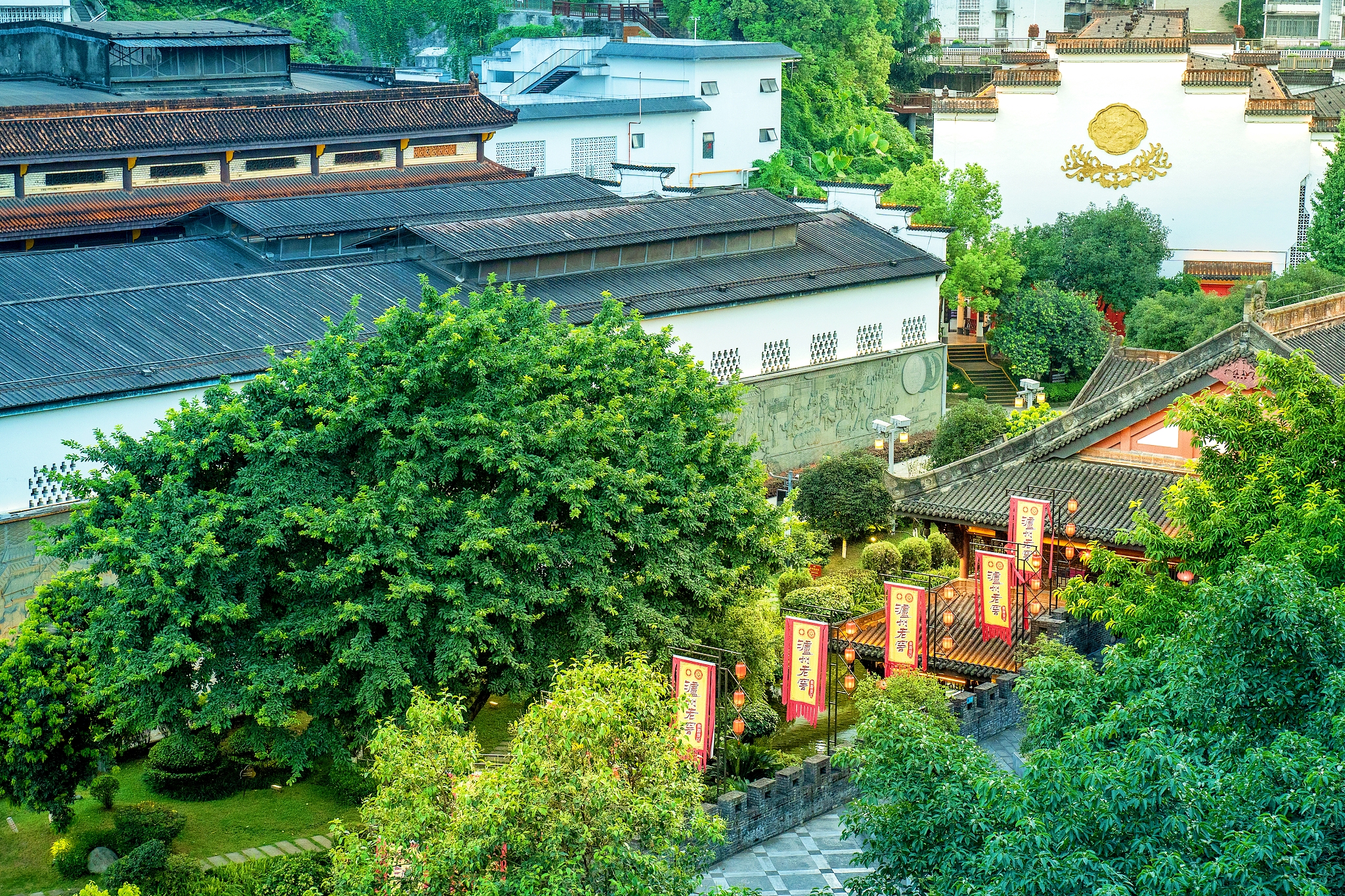
Luzhou Laojiao Tourist Area is in Guojiao Plaza, Sanxing Street, Jiangyang District, Luzhou. The scenic area has a wine history exhibition hall, the Longquan Well, a wine center and other scenic spots. It is a famous wine cultural tourist area built by Luzhou Laojiao. Luzhou wine cultural relics are displayed in the wine history exhibition hall. Visitors to the gallery show can see the production site of pure handmade winemaking techniques. Visitors who love wine culture should not miss it.
-
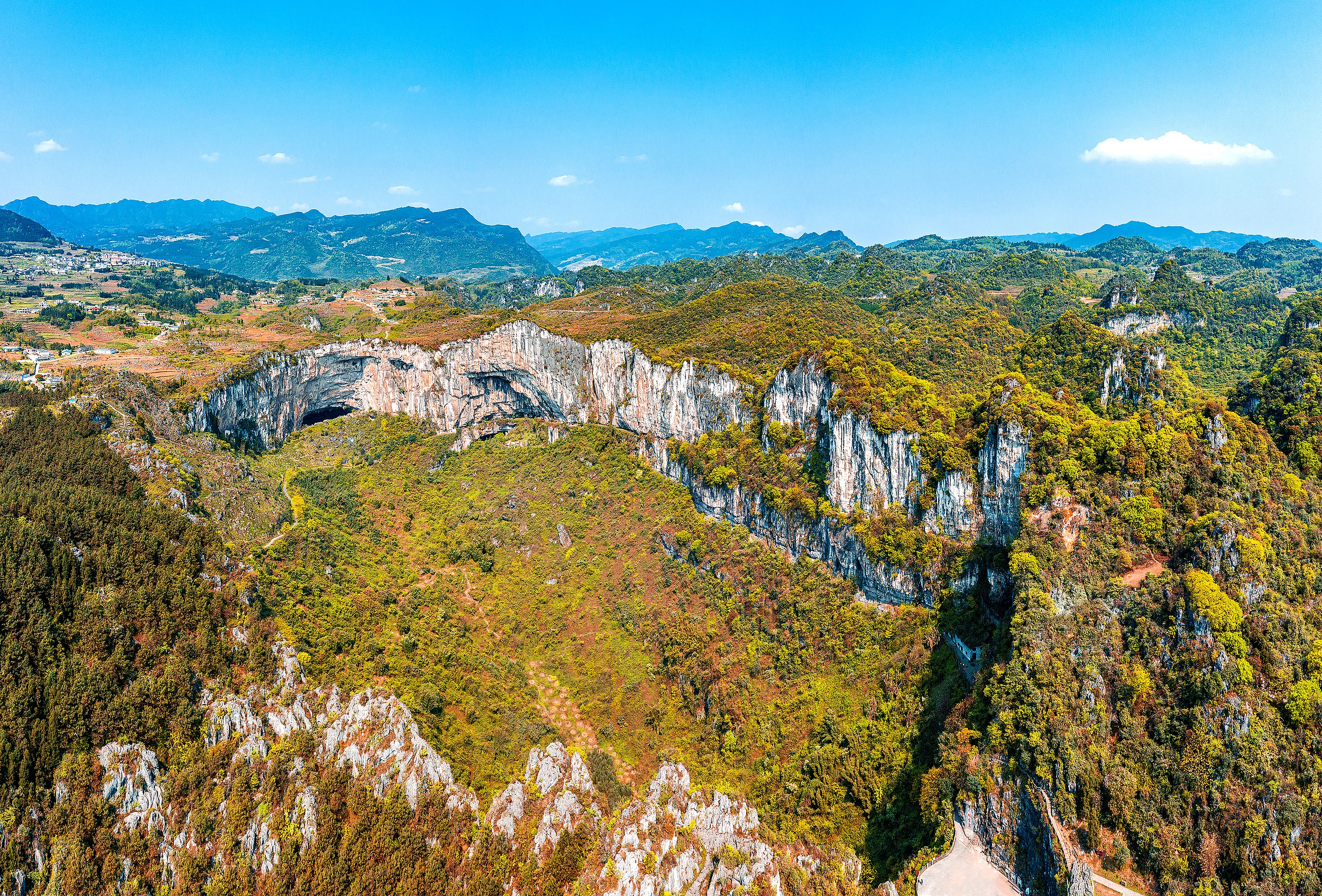
Xing Wen Shi Hai
The Xingwen Sea of Rocks is located in Yibin City and there are many scenic spots in the area, including the rock forest, caves and Sea of Rocks. Here visitors can take in the towering stone forest, enormous cave and the stalactites inside it. It is a great place to witness the wonders of nature. Xingwen Sea of Rocks is famous for its caves. Visitors will stand in awe of the vastness of the caves and the amazing variety of stalactites within.
-

Cuopu Valley Scenic Area
Cuopugou National Forest Park is located in Chaluo Township between Litang County and Batang County, and the Sichuan-Tibet Line of National Highway 318 passes through the mouth of the valley. Cuopugou is a collection of snow mountains, forests, lakes, hot springs and pastures, which is quite Swiss. With beautiful scenery and different seasons, it is a dazzling pearl on the Sichuan-Tibet line. Cuopu Valley is famous for its Cuopu Lake, which is surrounded by mountains, close to Zhajinjiabo sacred mountain with peculiar mountain shape, with Nitegangri Peak on the front, surrounded by virgin forests, beautiful scenery, and fish schools in the lake shuttle, which is an original ecology scenery. In the woods by the lake stands the Cuopu Temple. Around the temple, groups of Tibetan horse pheasants can be seen foraging here, without fear of monks and pedestrians. The monks in the Gein Temple fed and raised for a long time, and gradually the wild animals no longer feared humans, and even strung into the temple unscrupulously to look for food, which was a spectacle. Another unique landscape of Cuopugou is the hot spring group in Chaluo Township. Numerous springs are scattered on hillsides, in forests, in fields, under cliffs, in caves, and beside rivers. Intermittent fountains and long-flowing hot springs are rising with hot air, permeating the entire valley, and the hot air follows the sunlight. Flickering, thickening, brightening, darkening, the scene is spectacular. The exquisite riding skills of the herdsmen in the Cuopugou area are well-known in Kham District and enjoy the reputation of “the hometown of equestrianism”. In June of the Tibetan calendar every year, in addition to holding horse races, Cuopu Temple also hosts large-scale mountain and lake sacrifices, which is very lively.
-
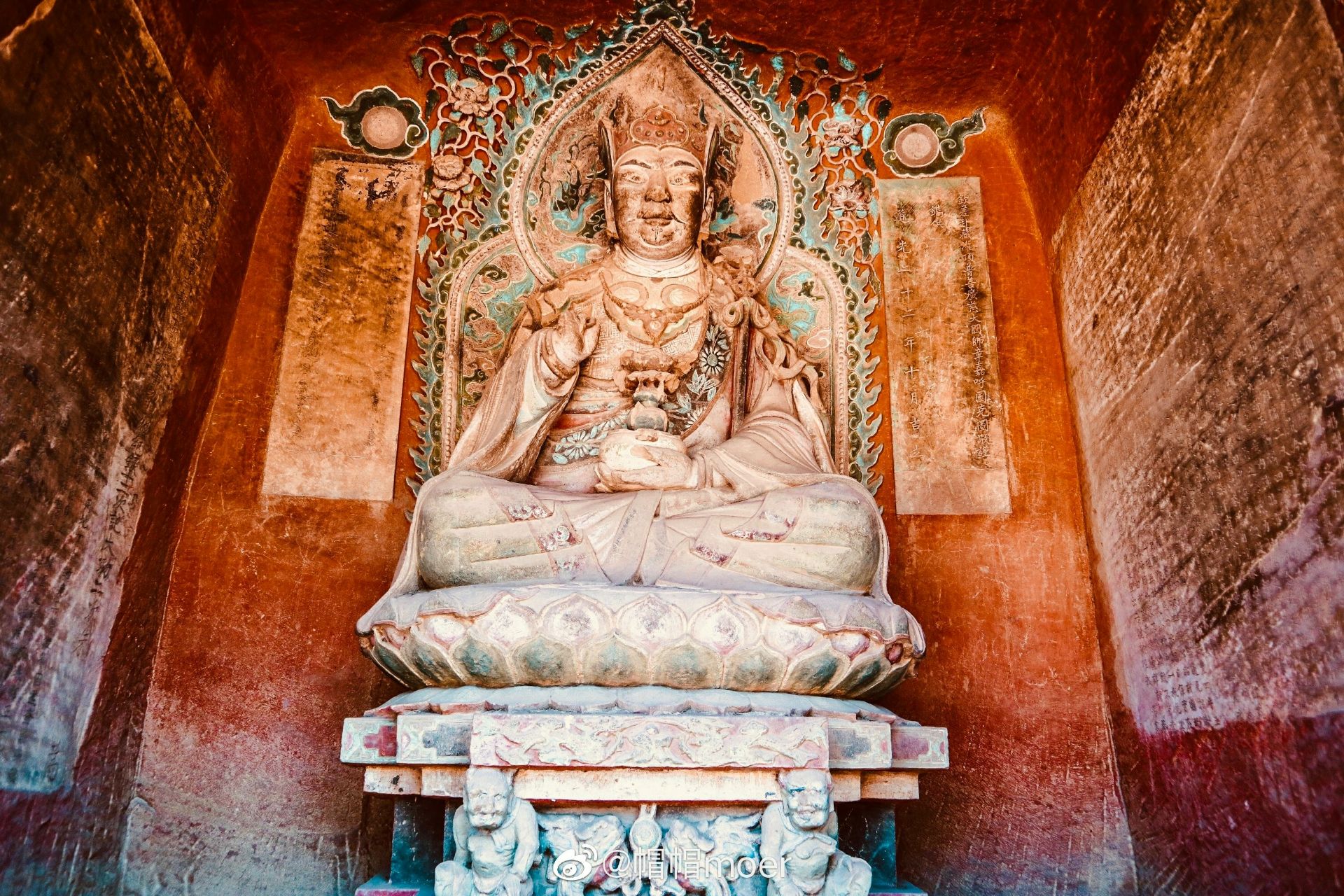
Qianfo Cliff
The Qianfo Cliff is located on the east bank of the Jialing River in the northern part of Sichuan Province’s Guangyuan City. Directly across the river from the Huangze Temple, the entire cliff is centered on the Dayun Cave and is divided into northern and southern parts. The scenic area has many caves and large statues to be discovered. It is an amazing place that showcases the exquisite Buddha carving techniques that were used in ancient times. The scenic area’s stone carvings are located on the banks of the Jialing River. There are innumerable Buddha statues here beyond counting, a sight that is entrancing and intoxicating.
-
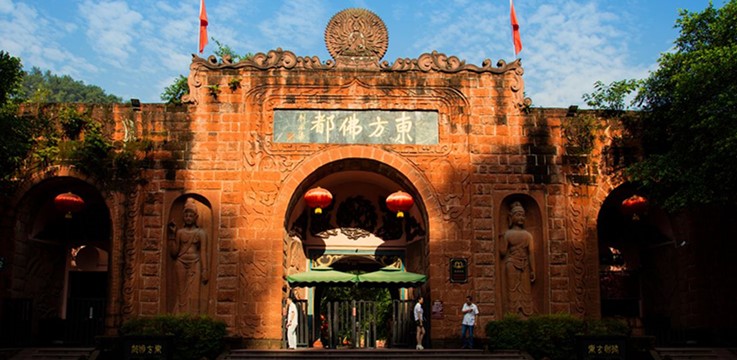
Oriental Buddha Capital
Situated between the peaks of the scenic area of Leshan Giant Buddha, Oriental Buddha is an antique stone Buddha theme park. The site was built in May 1994, integrating religious art, carving art, and garden art. It uses natural mountain extensions to form spectacular Buddhist scroll promenades. If the material is carved in stone or bronze, it fully embodies the styles of Chinese Buddhism and Southeast Asian Buddhist art. It is magnificent and uniquely spectacular.
-
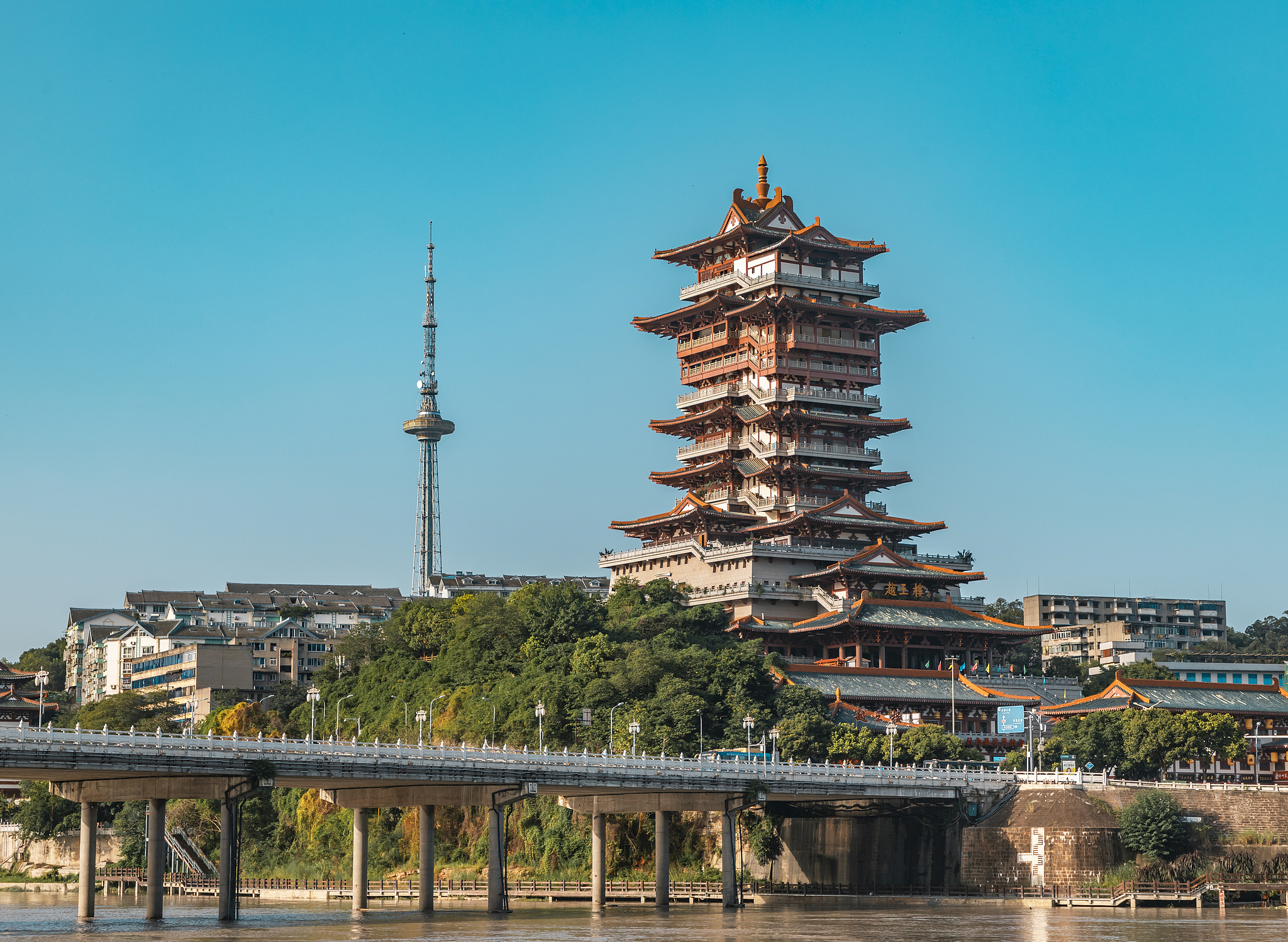
Yuewang Tower
The Yuewang Tower was built by the Emperor Gaozong of the Tang Dynasty. It is also known as the Yellow Crane Tower, Tengwang Pavilion, and Yueyang Tower. Li Baishen wrote “The Night’s Monastery” and Du Fu’s “Vietnam House Song” was created here. Yuewang Tower was damaged several times. The rebuilt Yuewang Tower is still located in the original site of Guishan.
-
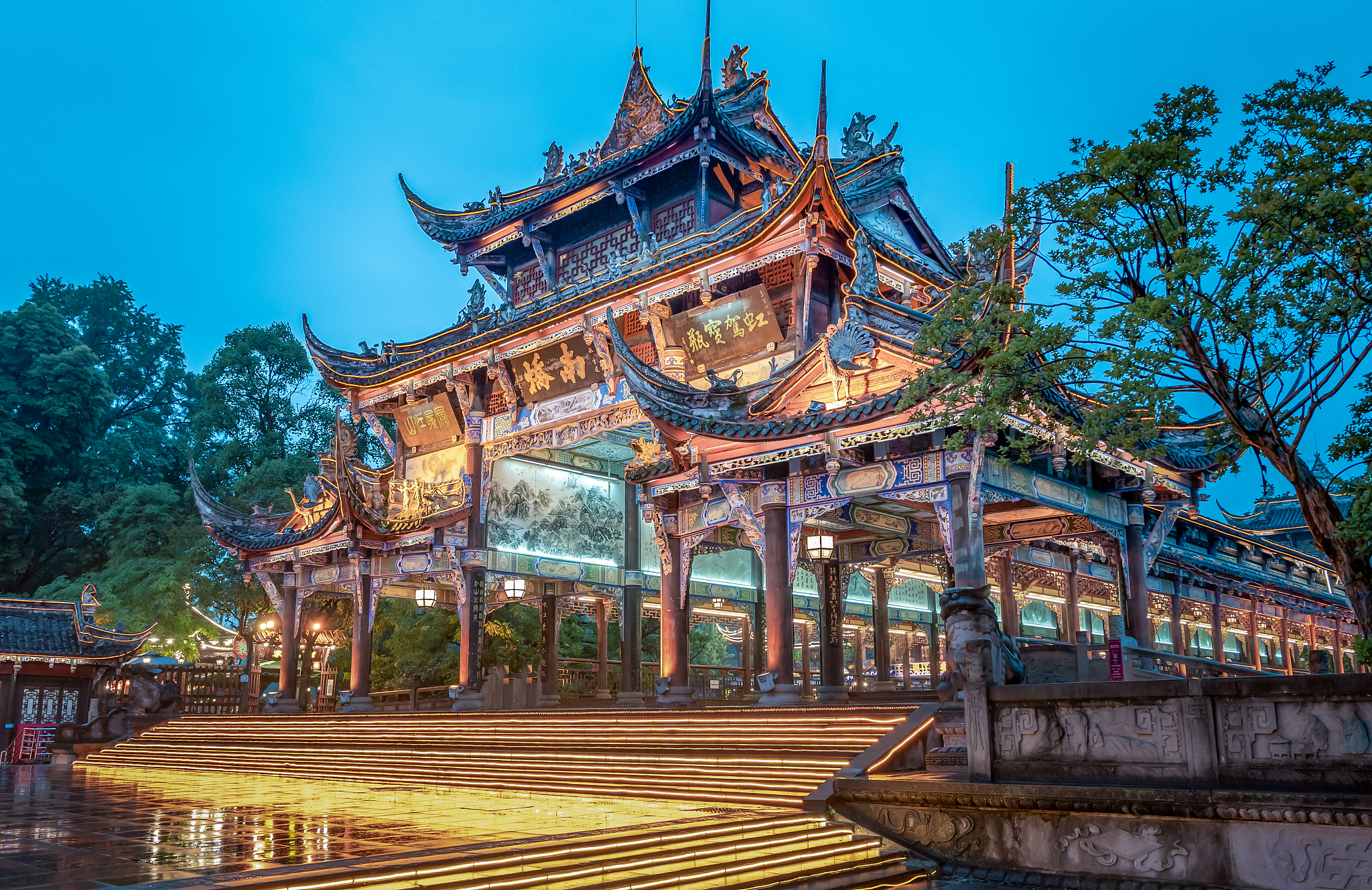
South Bridge
The South Bridge is an antique covered bridge. The ceiling of the covered bridge has a painted ceiling and an antique ceiling with a roll shed. All the wood carvings are painted with gold and painted. There is a lively food street next to the covered bridge, where you can eat a variety of local delicacies. The covered bridge at night is particularly beautiful. It is very pleasant to blow the river wind, eat snacks and enjoy the night view. The South Bridge is located on the Minjiang Neijiang River under the Baopingkou of Dujiangyan. It was originally called “Puji Bridge” and was damaged many times. The bridge head has three broad-faced, archway-style triple eaves bridge entrance hall type, the roof is a tube tile roof, clay sculptures of various ridges, melon horns, beasts, figures, etc. The bridge head has wood carvings, hanging claws, faucets, river-crossing flower boards, wood carvings hanging down, etc.