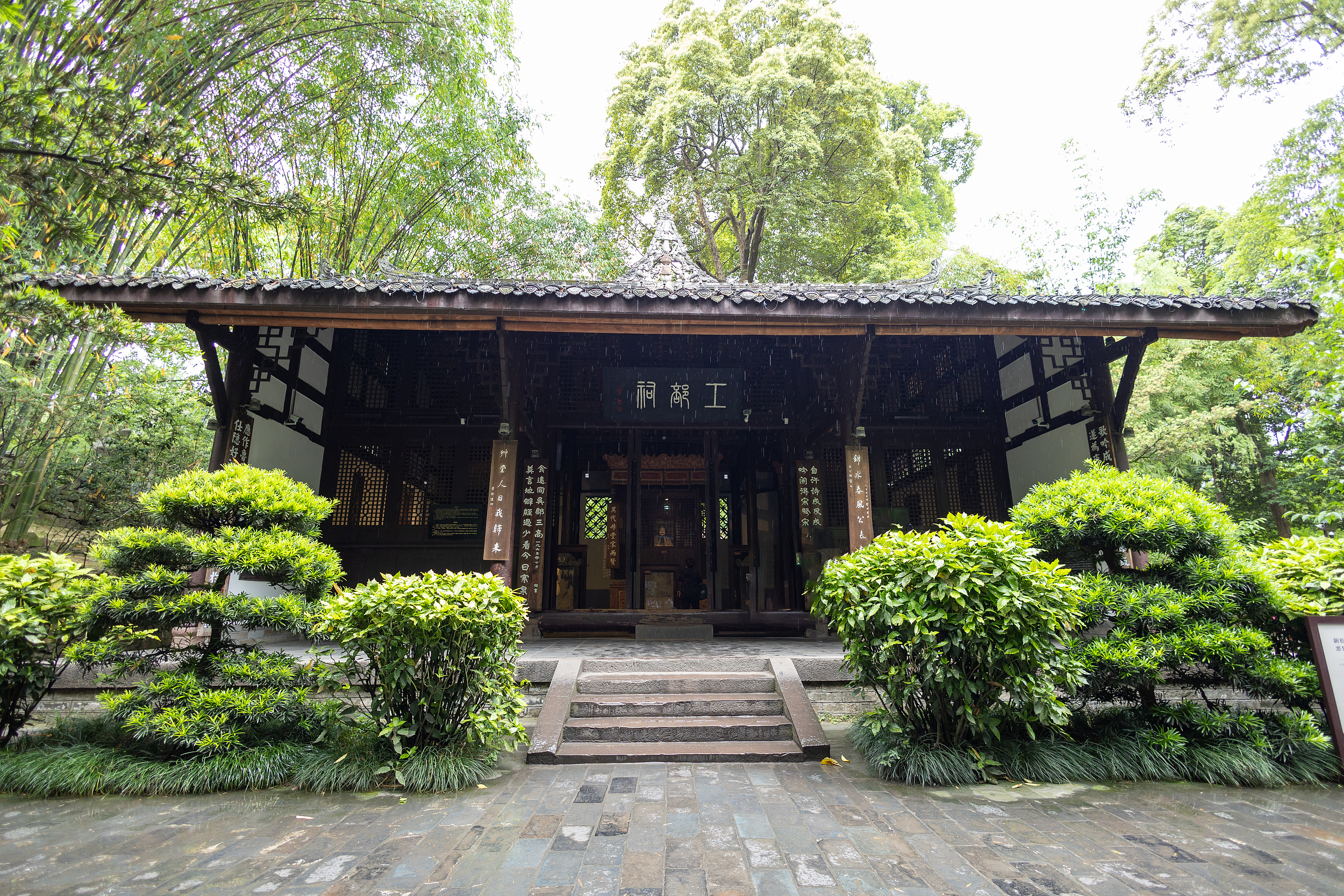
Gongbu Temple is located in Du Fu Thatched Cottage Museum in Chengdu. It is the last of the five main buildings and also an important one. Because Du Fu was recommended by Yan Wu as the inspector of Gongbu Yuanwailang when he was in Chengdu, later generations respectfully called him Du Gongbu and called the temple in his memory Gongbu Temple. In front of Gongbu Temple, there is a couplet written by He Shaoji of the Qing Dynasty: Jinshui Chunfeng Gong occupies it, and I will return to Caotang Renri on the day of my return. In Gongbu Temple, there is a shrine of Du Fu in the middle, and on the east and west sides are the Southern Song poet Lu You and the Northern Song poet Huang Tingjian. There are also two stone statues of Du Fu in the hall. The one in the middle is made by He Yudu of the Ming Dynasty and carved in the 30th year of Wanli (1602 AD). The stone carving depicts Du Fu with a plump figure and a graceful demeanor. The other is the “Poet Saint Du Shiyi Portrait” carved by Zhang Jun of the Qing Dynasty copying the Nanxun Hall. The stone statue of Du Gong has a gaunt face and deep eyes. The poet’s wandering and his worries about his country and people are fully expressed. In addition, there are two stone panoramic views of the Thatched Cottage in the hall, which were carved in the 50th year of Emperor Qianlong’s reign (1793 AD) and the 16th year of Emperor Jiaqing’s reign (1811 AD). The stone carvings clearly outline the style of the Thatched Cottage at that time.
归档: Attractions
-
Wuxuhai Scenic Area
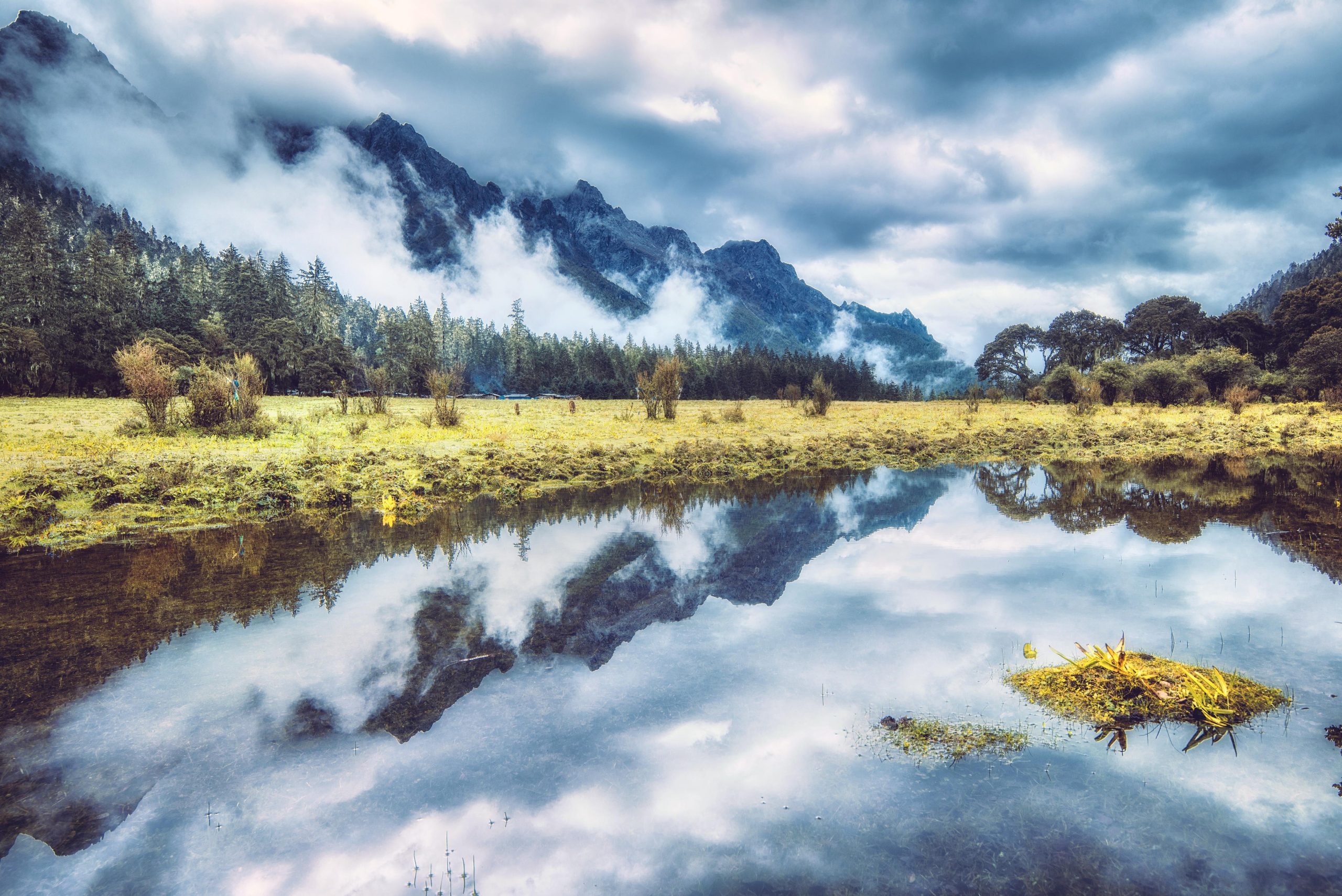
The main attractions of Wuxuhai include: Three Bridges, Chulongtan, Zhanlongtai, Foye Peak, Wuxu Tibetan Village, Zhenhai Stone, Twelve Sisters Peak, Lotus Peak, Wuxuhai Natural Park, and Riluku Grassland.”Wushuhai” means “glowing lake” in Tibetan. It is like a piece of jasper inlaid in the forests and mountains. The lake water changes to deep blue and green with the sky. Locals compare it to “a mirror for fairies to dress up”. The lake is surrounded by primitive forests and wide meadows. The lake water is turquoise and transparent, and the environment is quiet. The ancient trees are intertwined, the vines are entwined, and the azalea trees stretch out to the lake, making Wuxuhai look primitive and simple. In summer and autumn, hundreds of flowers are in full bloom, competing for beauty. Being in it, it feels like entering a fairyland.The lake is surrounded by high mountains. To the south are 12 rolling fairy peaks, shaped like fairies standing on one side, reflecting each other with Wuxuhai Lake. When the morning light is dewy and the mist is light, the lake is steaming, which is called “the fairy’s early cleanliness”; when the sun sets, the 12 fairy peaks are reflected in the lake, as if entering a fairyland, which is called “the fairy’s return to the palace”. The mountains are covered with snow in spring, autumn and winter, which is spectacular. The Zhaxi Purang Snow Mountain in the north is covered with snow all year round. Every sunrise, the golden light bathes the top, which is gorgeous and magnificent. The north and south lakesides are full of flowers and green fields, and the grassland in the north is still winding with water melted from the snow-capped mountains, like a brushstroke gently painted by a master painter. From the east and west lakeside to the middle of the mountain, there are vertical distributions of alpine mosses, rhododendron bushes, fir forests, larch, etc., and many rare animals are found in between. There are also waterfalls falling down the gully, drawing a rainbow in the sun, which gives tourists endless surprises. Tips: The best time to visit Wuxuhai is around the sixth lunar month. At this time, Wuxuhai has snow-capped mountains, lakes, forests, meadows and streams. It is known as the “mirror for fairies to dress up” and is a place many tourists yearn for. In addition, the fourth day of the sixth lunar month is the annual traditional folk festival in Jiulong County – the Sea Tour Festival.
-
Shenpugo Scenic Spot
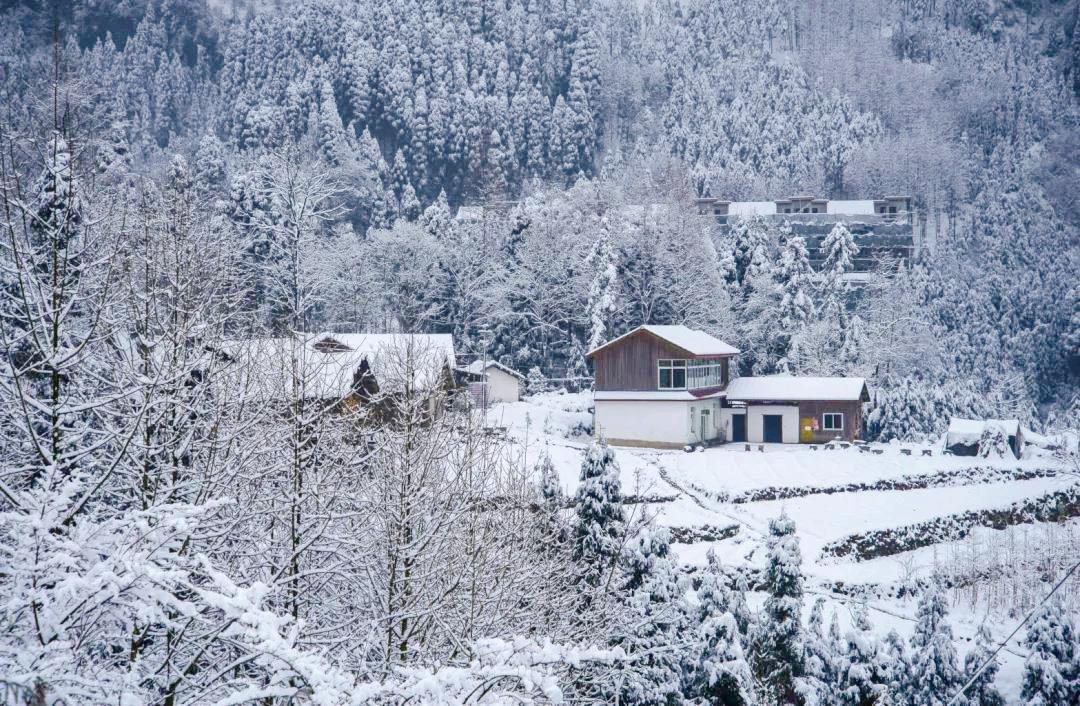
Shenpugou Attraction is located in Shimen Village, Yinghua Town, Shifang City. It is rich in vegetation, with ancient vines hanging in the stream and pine forests. The current Shenpugou was renamed from the former Wulonggou. The mouth of the gully is 1,280 meters above sea level and the tail of the gully is 1,580 meters above sea level. A stream runs through the gorge. There are five waterfalls of different sizes. In summer, the temperature is maintained at 21-23 degrees Celsius.
-
Nankan Grottoes
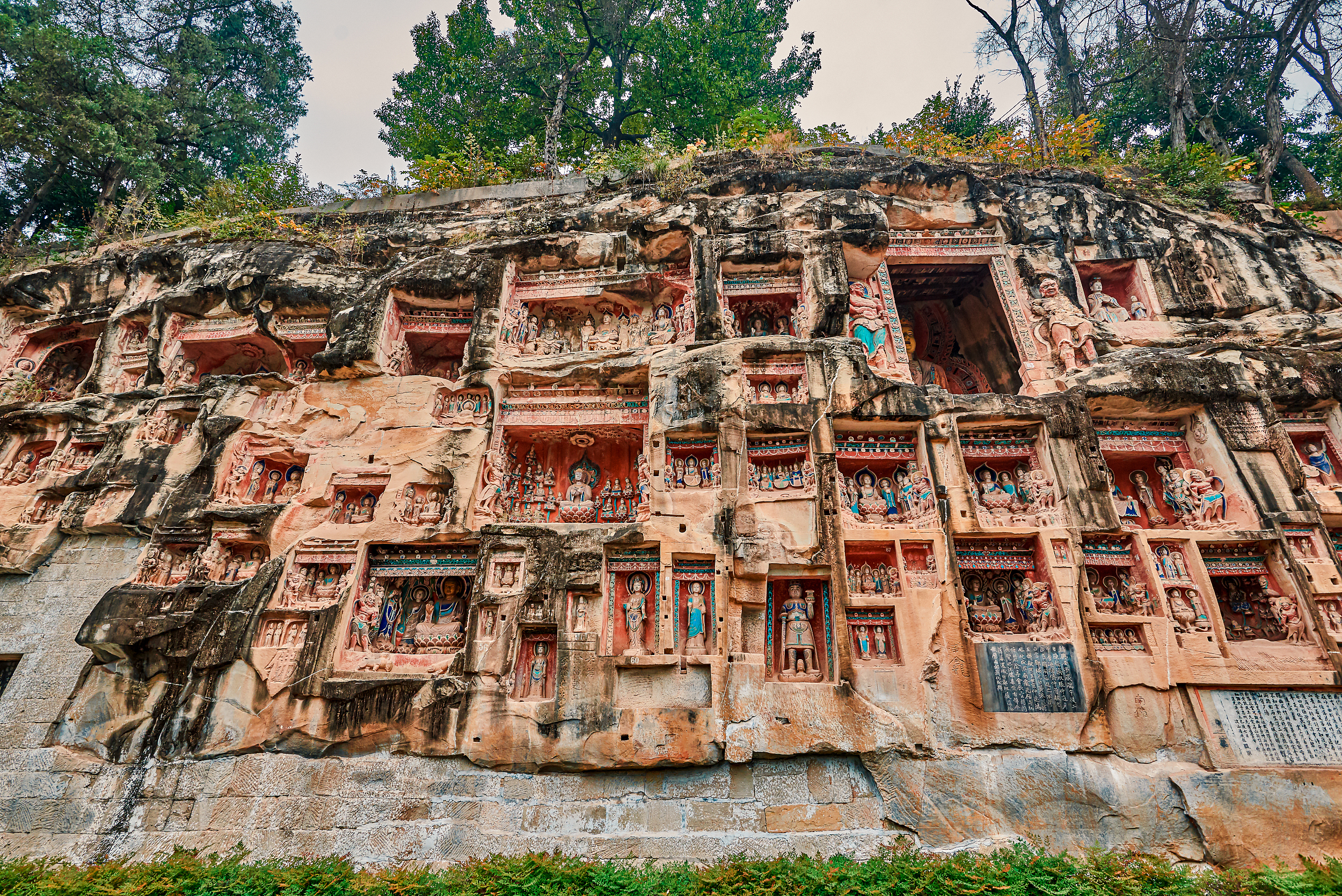
Nankan Grottoes, namely Nankan Cliff Statue in Bazhong, are located behind Nankanpo Mountain, one kilometer south of Bacheng. The rock wall is more than ten feet high and hundreds of feet long. It is square and sharp, with layers of niches and numerous Buddhas. Nankan statues were first created in the Southern and Northern Dynasties. With the continuous engraving of temples, a large-scale grotto group has been formed. The statues are exquisite and exquisite, with different postures, rich temperament, dignified and full, chic and elegant. They are the exquisite art of the ancient working people and the historical witness of the ancient culture of Bazhong. Nankan statues are religious art based on Buddhism. Most of the statues are works before and after the heyday of the Tang Dynasty, and a few are works from the Southern and Northern Dynasties, the Song Dynasty and modern times. The Nankan statues are quite distinct in character characteristics. The Bodhisattva statues are graceful, harmonious and vivid; the Hercules statues are majestic and powerful; the Flying Apsaras statues are beautiful, lively, exquisitely carved and strong in quality.
-
Yanjing River Scenic Area
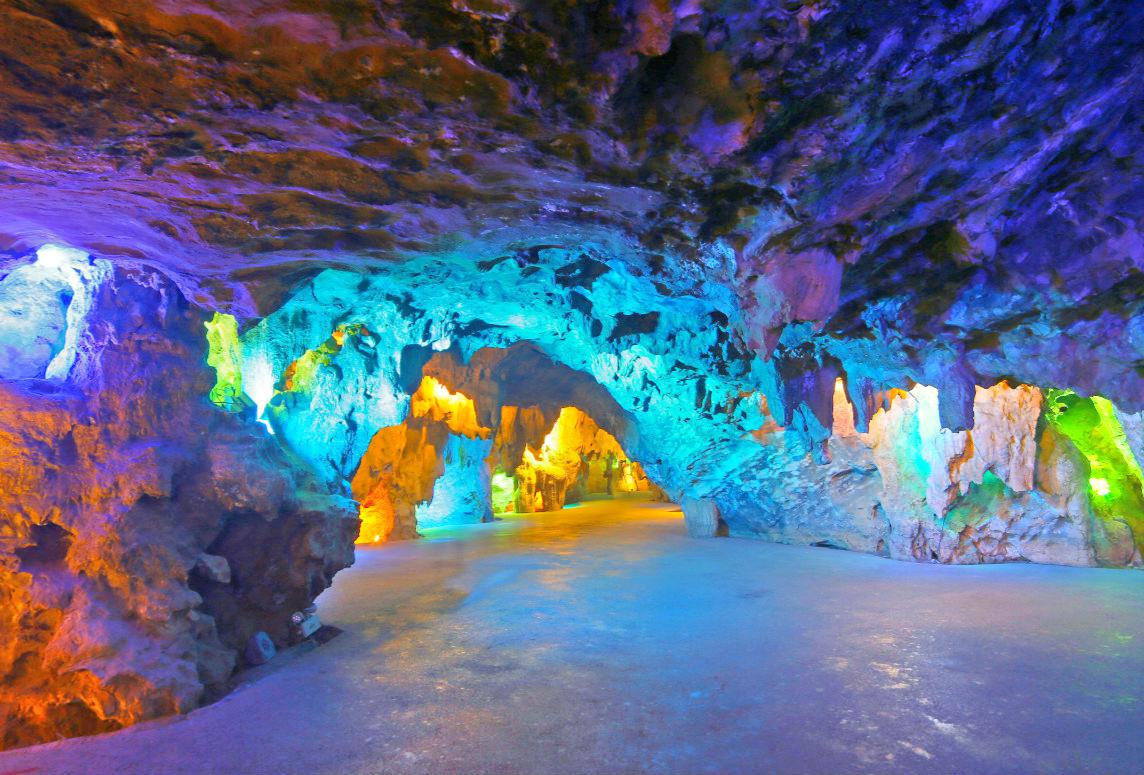
The Yanjing River Scenic Area is located in Gulin County, Sichuan, close to the famous historical and cultural towns of Taiping Town and Erlang Town. The Yanjing River Scenic Area is currently a representative bathing cave with rich landscapes in the Chishui River Basin. It has “secluded caves, strange rocks, gorgeous scenery, and gorges”. “show” characteristics.Yanjinghe Scenic Area, formerly known as Qinglong Cave, was formed in the Cretaceous period and has a history of hundreds of millions of years. The proven length of the cave in the Yanjing River Scenic Area is 6.6 kilometers, and the currently developed cave is 2.5 kilometers long. The landscape in the cave is rich, with lifelike stalactites of different shapes, stone waterfalls, stone ganoderma, stone corals, stone pillars, stone flowers and other wonders can be seen everywhere; the calcification pool is huge in area, as crystal clear as jade, and the clear water falls from the sky, forming a wonderland fairyland landscape, known as “Yellow Dragon in the Cave”; the view in the cave is broad. Four cave halls about 100 meters high are connected end to end. Each dome has its own characteristics. Some are like the vast night sky full of stars, and some are like the splash-ink landscapes written by traditional Chinese painting masters. It is eye-catching. The eyes are like a fairyland. The raging underground rivers, underground canyons and other strange landscapes in the cave are the most beautiful landscapes in the Yanjing River Scenic Area.
-
Diexi Haizi
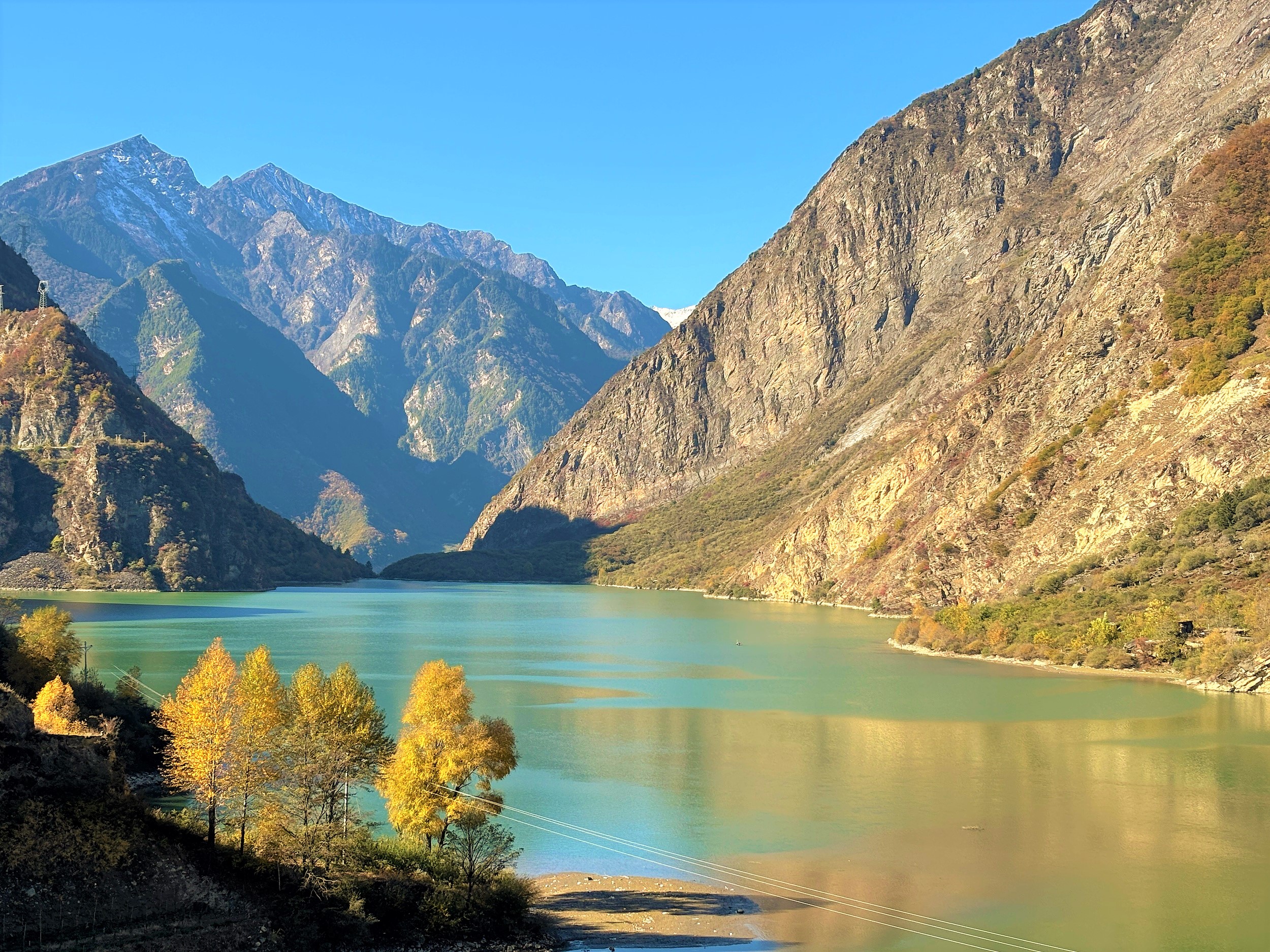
Diexi Lake is located in Maoxian County, Aba Tibetan and Qiang Autonomous Prefecture, where the Qiang people live. Diexi Lake is a barrier lake formed by an earthquake. Surrounded by mountains, the lakeshore is covered with green grass and the scenery is charming.
-
Cuoka Lake
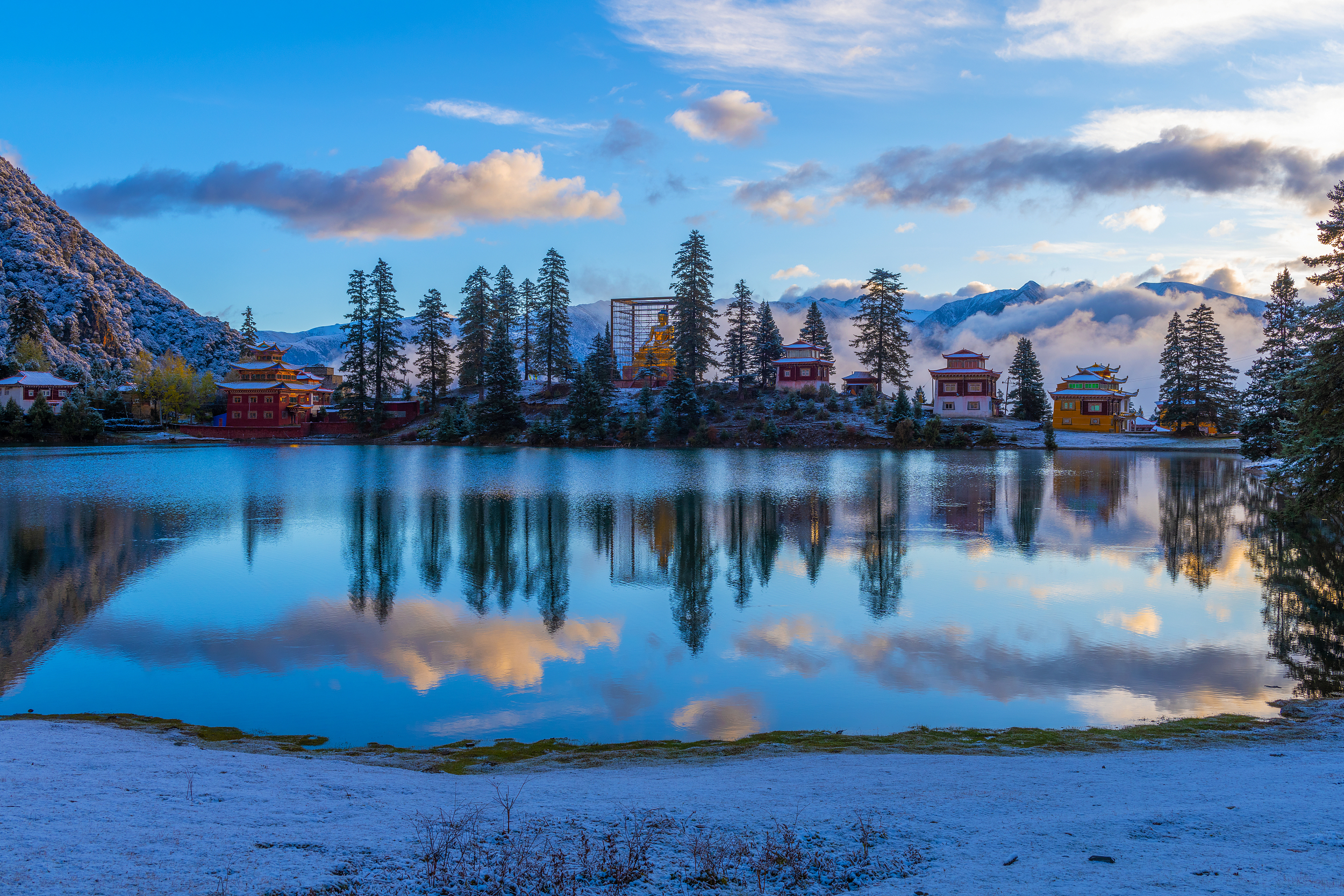
Cuoka Lake is located in Mari Township, Xinlong County, Ganzi Prefecture, Sichuan Province. This freshwater lake is hailed as a “fairyland on earth and a celestial pool in the heavens.” The lake lies peacefully in a mountain basin, facing lush forests and backed by verdant hills. Its emerald waters shimmer under the sunlight, creating a picturesque and delightful scenery. Lake features The crystal-clear lake water reveals stones and small fish several meters below the surface. The lake’s hues shift through countless shades of blue depending on light, clouds, and viewing angles – ranging from nearly transparent cobalt blue at midday to golden-rimmed sunset tones in the evening, and deep indigo on cloudy days, creating a mesmerizing spectrum of colors. Natural landscapes The mani stones and prayer flags by the lakeside add profound religious significance and cultural charm to this place. During summer, the surrounding alpine meadows burst with wildflowers, creating a vibrant ecological landscape. Cultural heritage By the lakeside stands the centuries-old Tshoka Monastery, a 700-year-old sacred site deeply revered by local Tibetan Buddhists. The temple’s weathered grandeur harmonizes with the lake’s natural beauty, offering travelers a place to contemplate the fusion of nature and culture.
-
Moxi Ancient Town
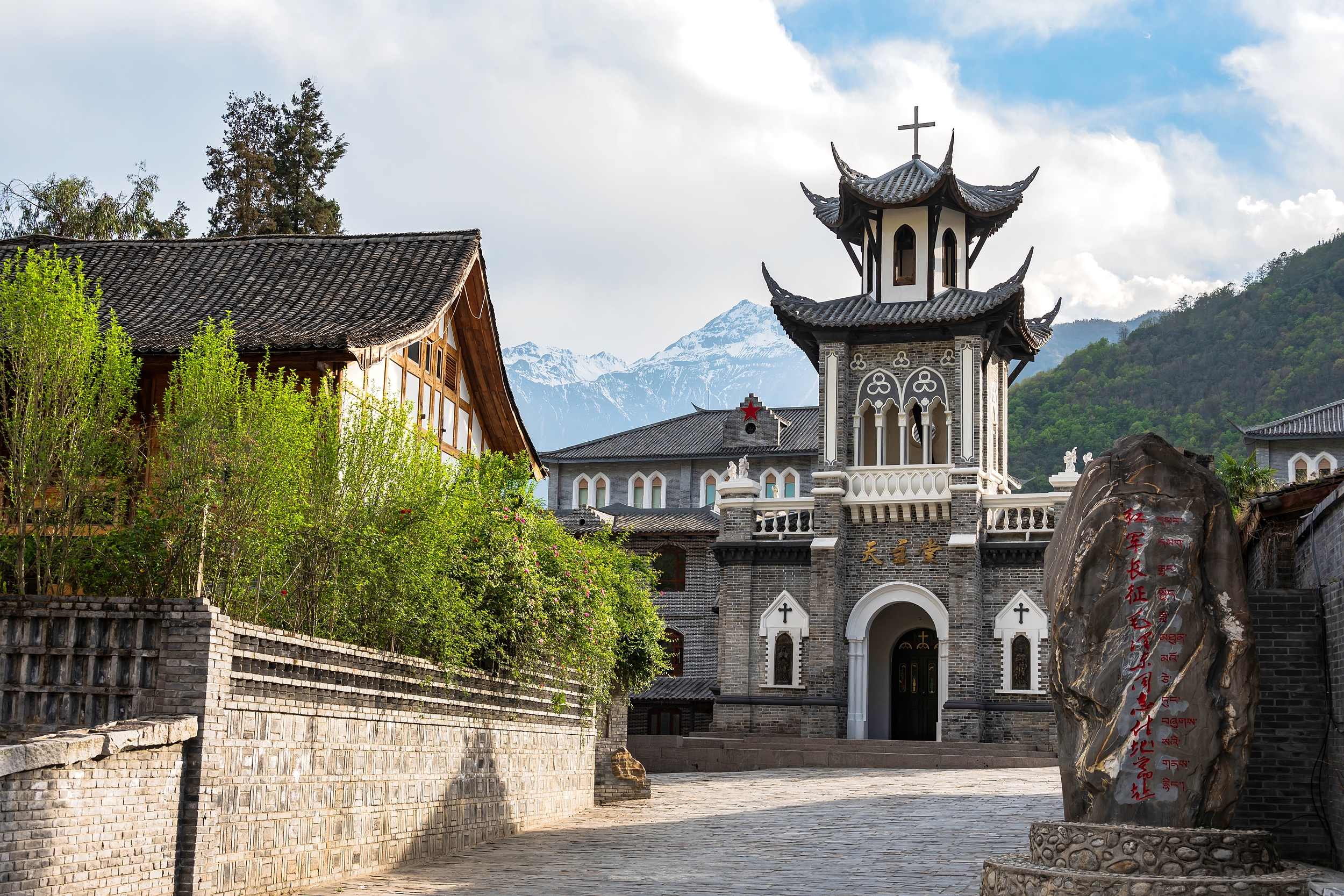
The ancient town of Moxi is located in the territory of Luding County, at the mouth of the Hailuogou Valley, and is a necessary place for entering the Hailuogou scenic spot. The historic town of Moxi has a long history. Since ancient times, it has been a home for many ethnic groups such as Han, Tibetan and Yi people. The town is full of ancient buildings from the Ming and Qing Dynasties, the Gothic church built here by French missionaries is unique.
-
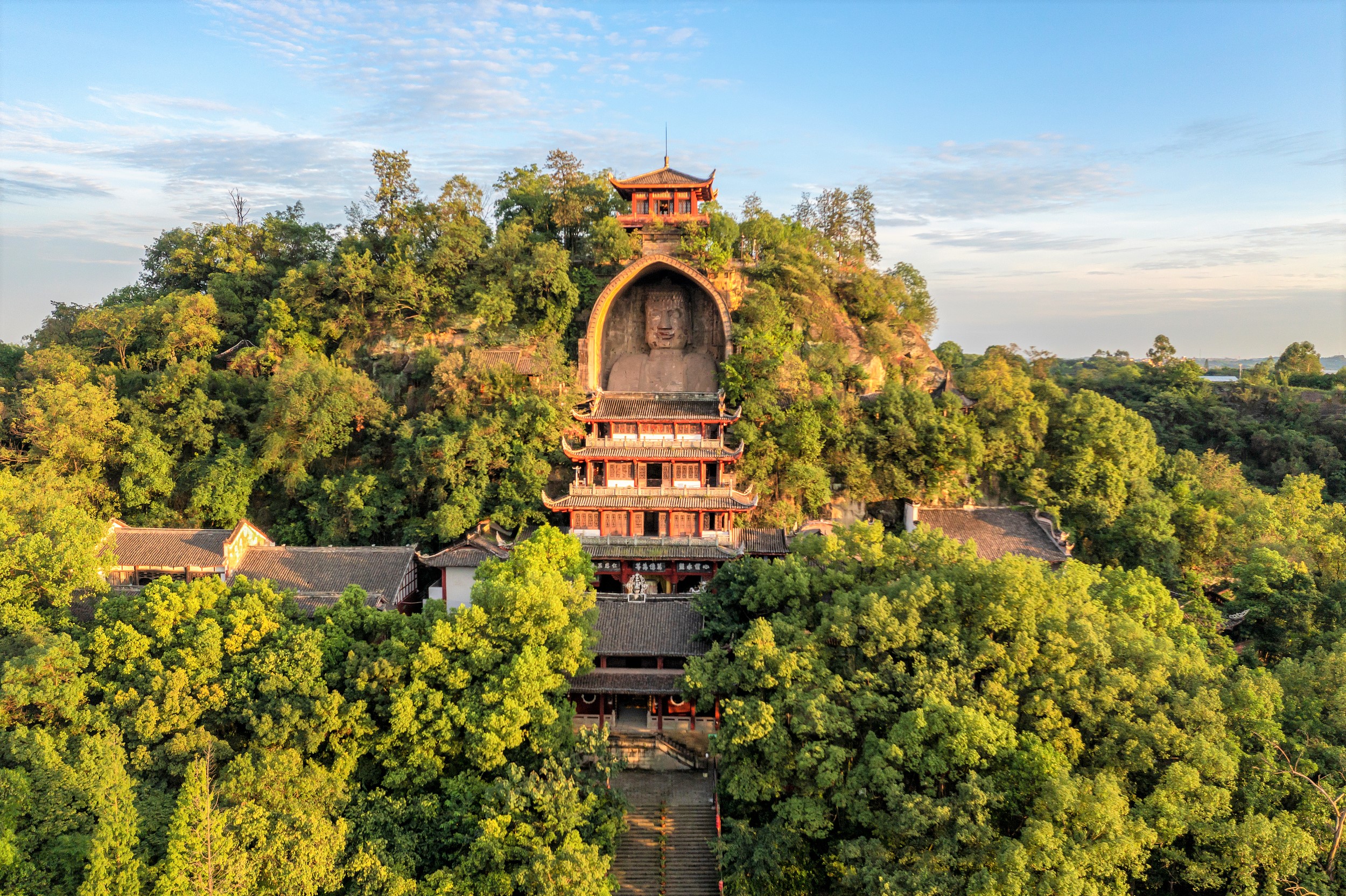
Giant Buddha in Rong County
The Giant Buddha is situated in the halfway up the hill in the suburb of Rong County, Sichuan Province. It is the second largest stone carving Buddha in China, following the Maitreya Buddha in Leshan. There are two arhats leaning against a fairy peach with one crossing his arms in front of the chest leisurely, while the other one faces the peach without emotion seemingly. These statues show their otherworldly appearance, remaining unmoved by fame and wealth. The layout of these statues is rarely seen in China, and deserves research and study. They have been included in Chinese Art Work Collection – Grotto Sculptures of Sichuan.
-
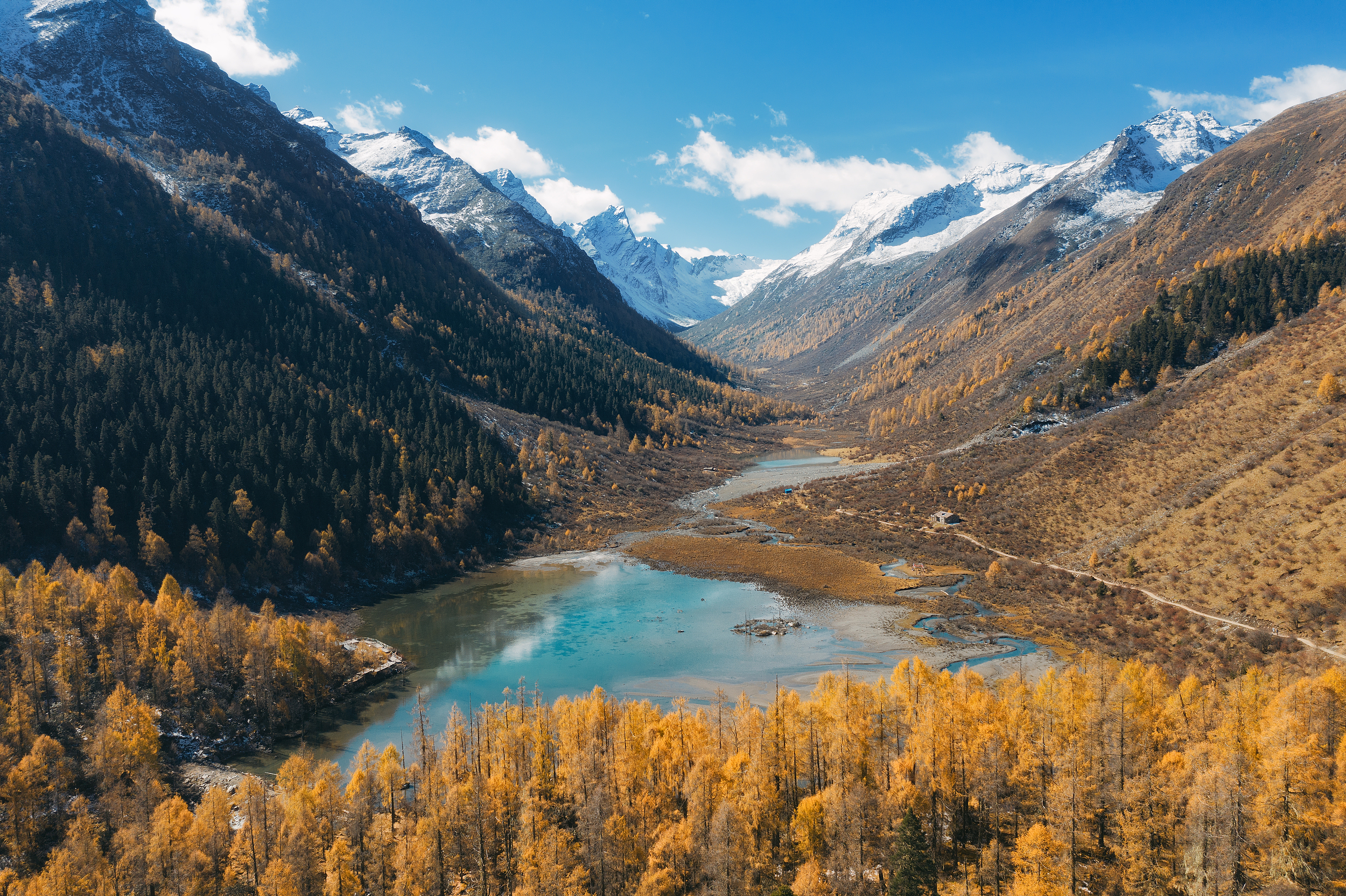
Majiagou Scenic Area
The mountains in Majiagou Scenic Spot are in the southwest direction. The terrain is high in the northwest and low in the southeast. The altitude of the mouth of the valley (mountain gate) is 3090 meters, and the altitude of the end of the valley (Moon Lake) is 3900 meters. There are several snow peaks above 5000 meters in the ditch. The tail has the development of modern glaciers, and the polar landform features are obvious. The main scenic spots in the scenic area are: Big and Small Brown Waterfall, Liulin Bay, Five-color Sea, Couple’s Dream Forest, Ruins of Ancient Post Station, Moon Lake, Snake River, Tai Chi Lotus, etc.