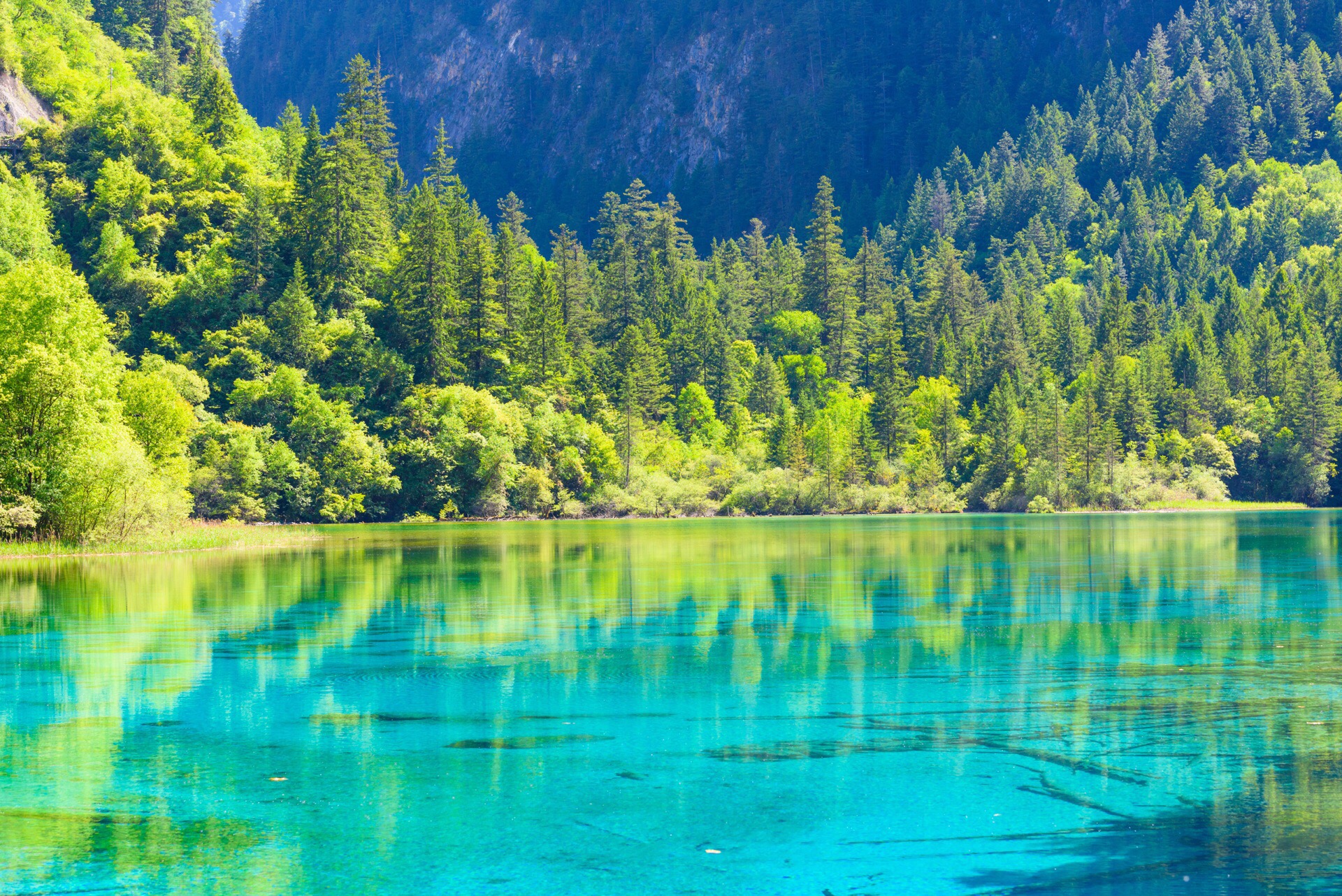
Jiuzhaigou National Park is located in Jiuzhaigou County of Ngawa Prefecture. With its towering snow-capped peaks, dense forests, and vibrantly colored pools and shoals, crystal-clear streams meander through the forests and shallows. Combined with Tibetan wooden houses, prayer flags, and the unique traditional customs of the Tibetan and Qiang ethnic groups, Jiuzhaigou National Park is often referred to as a “beautiful fairyland”. Jiuzhaigou National Park features a Y-shaped layout, consisting of three main valleys: Shuzheng Valley, Rize Valley, and Jiuzhaigou-Zechawa Valley, with a total length of over 50 km.The attraction is equipped with eco-friendly sightseeing vehicles that stop at designated stations. Visitors can wait at each station and conveniently tour various attractions within the site by taking the sightseeing vehicles.
归档: Attractions
-
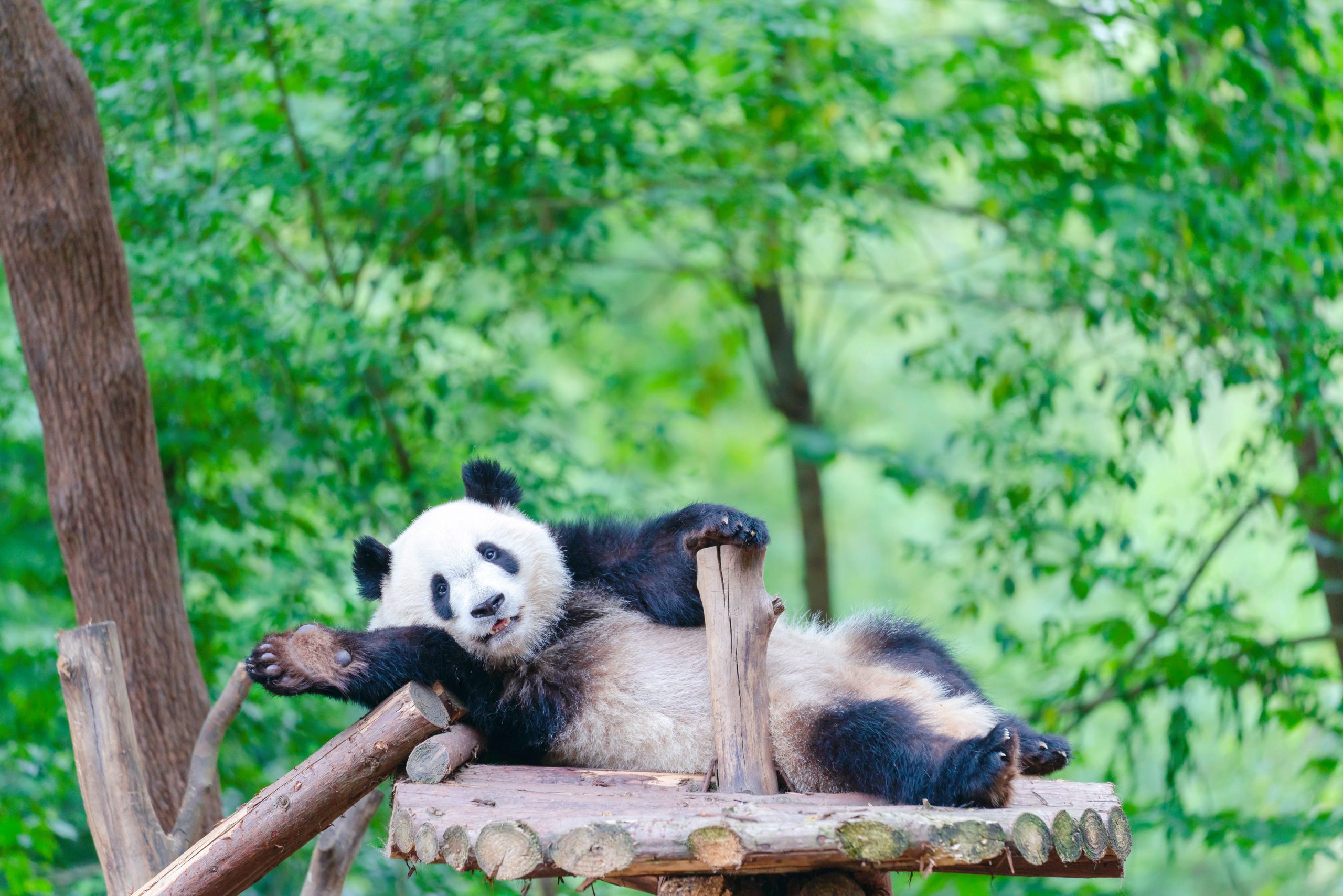
Chengdu Research Base of Giant Panda Breeding
Chengdu Research Base of Giant Panda Breeding is located in the northern suburbs of Chengdu, about 10 kilometers away from downtown Chengdu. The facility is famous for the protection and breeding of endangered wild animals that are unique to China. It simulates the natural habitat of the giant pandas, where there are lakes, lakes, streams, bamboo forests and lawns. The chance to come into close contact with the giant pandas is a highlight here. Visitors can have a close-up observation of the pandas’ living conditions. There is also a “Panda Villa”, which is a preserved area for the pandas to rest.
-
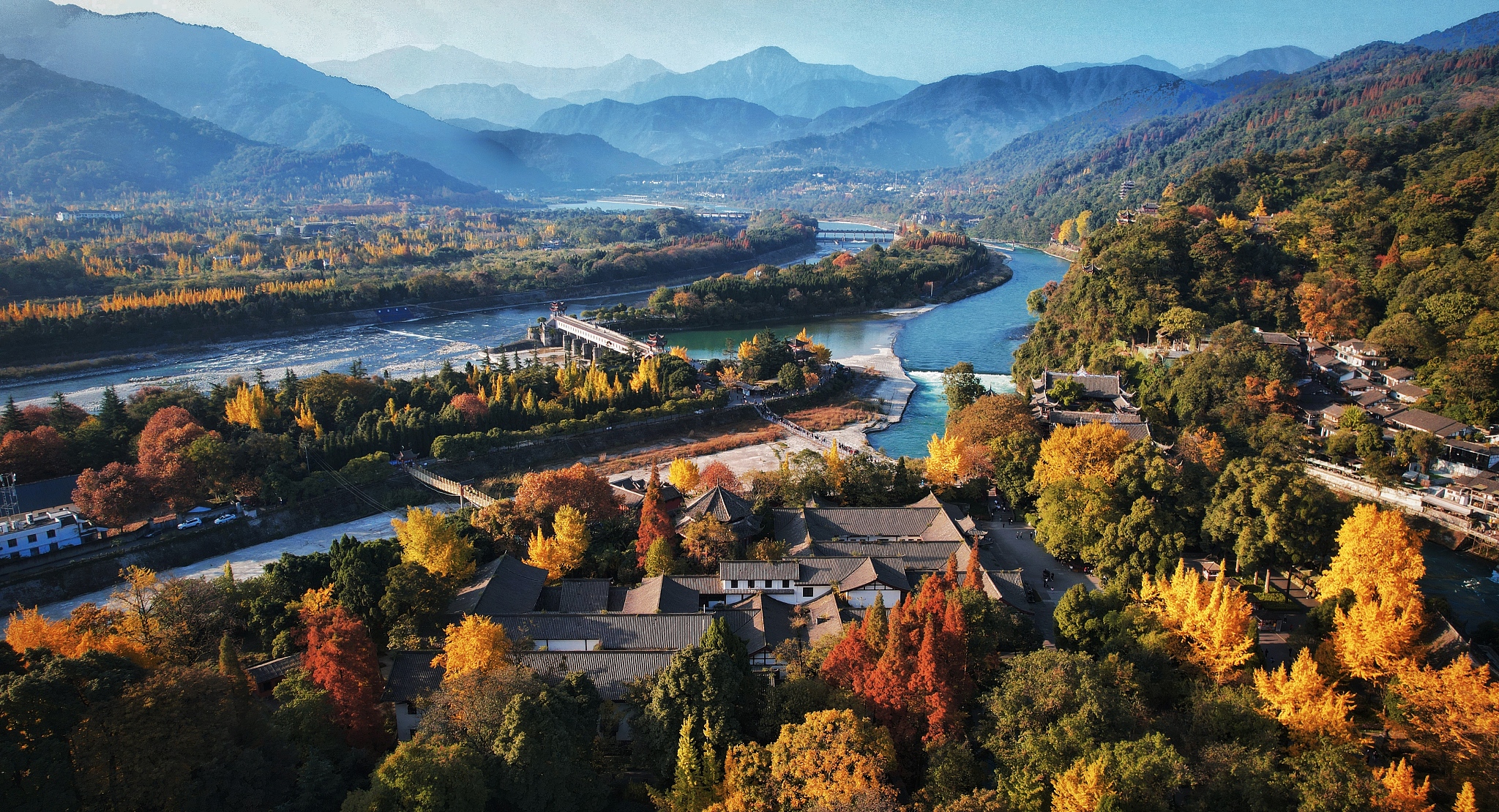
Dujiangyan Scenic Area
The Dujiangyan Irrigation System is located along the main branch of the Lancang River, west of Dujiangyan City. It was constructed in the Qin dynasty around 256 BC by Li Bing, Prefecture Chief of Shu County, and his son. It is one of the few ancient Chinese water conservancy projects that has remained preserved and intact. The project consists of three primary works—Yuzui Diverting Embankment, the Feishayan Spillway, and the Baopingkou Water Inlet, and two secondary works which include the Baizhangdi (the thousand-feet dam) and Renzidi (the y-shaped dam). They divide the Yongjiang River into an outer and an inner branch, the former of which is used to divert floods and the latter for irrigation. This has allowed the Western Sichuan plateau to become “the land of abundance” as we now know it.
-
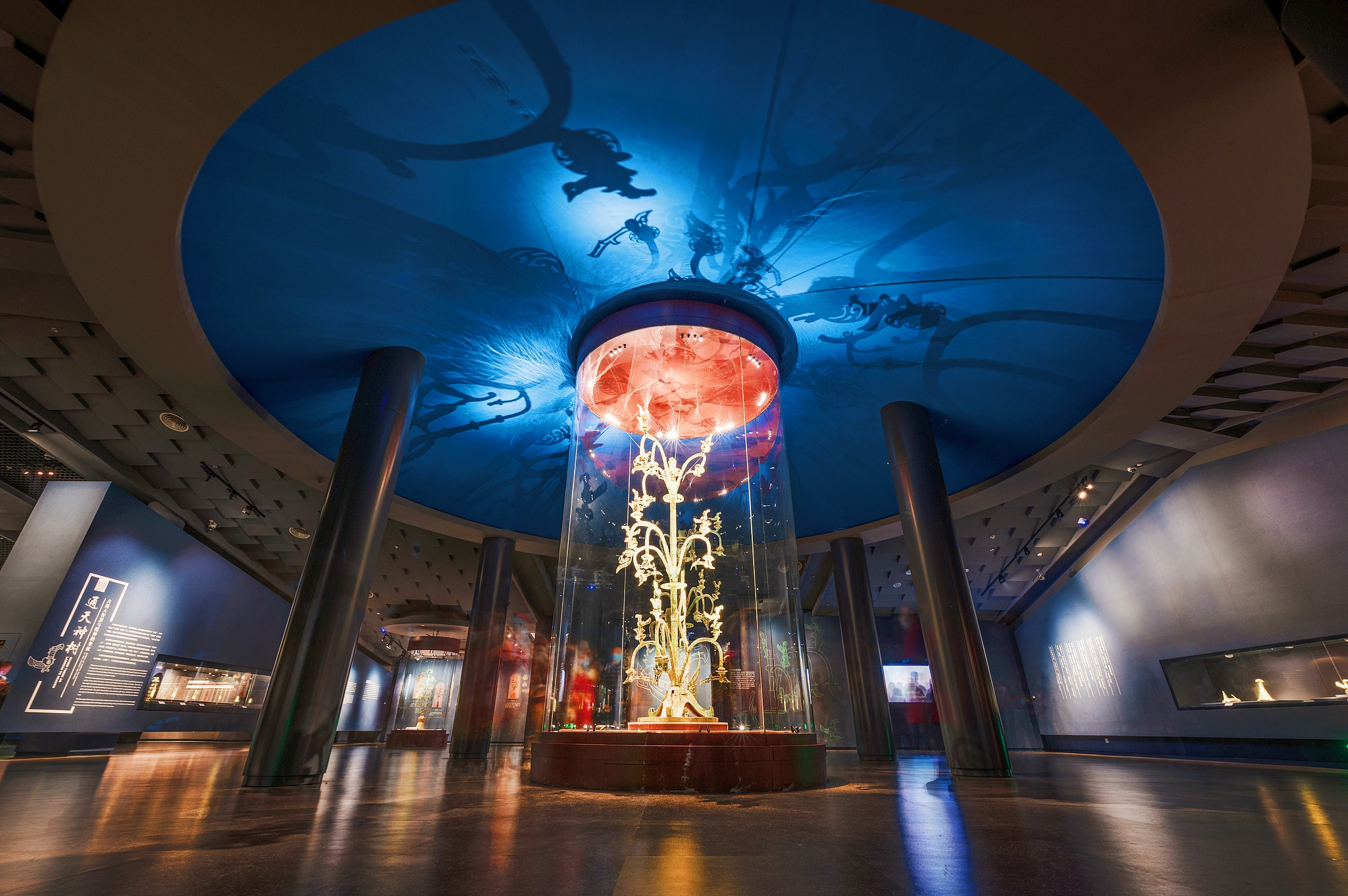
Sanxingdui Museum
The Sanxingdui Museum holds and displays over a thousand precious cultural relics in bronze, jade, gold, and ceramic, unearthed at the nearby Sanxingdui (“Three Stars Mound”) archaeological site. The Sanxingdui Archaeological Museum is quite large and comprises two independent exhibition areas. The first area is a general exhibition where you can see gold, copper, jade, stone, and ceramic cultural relics. The second area is the bronze exhibition, which houses all sorts of bronzeware that has been unearthed at the site.
-
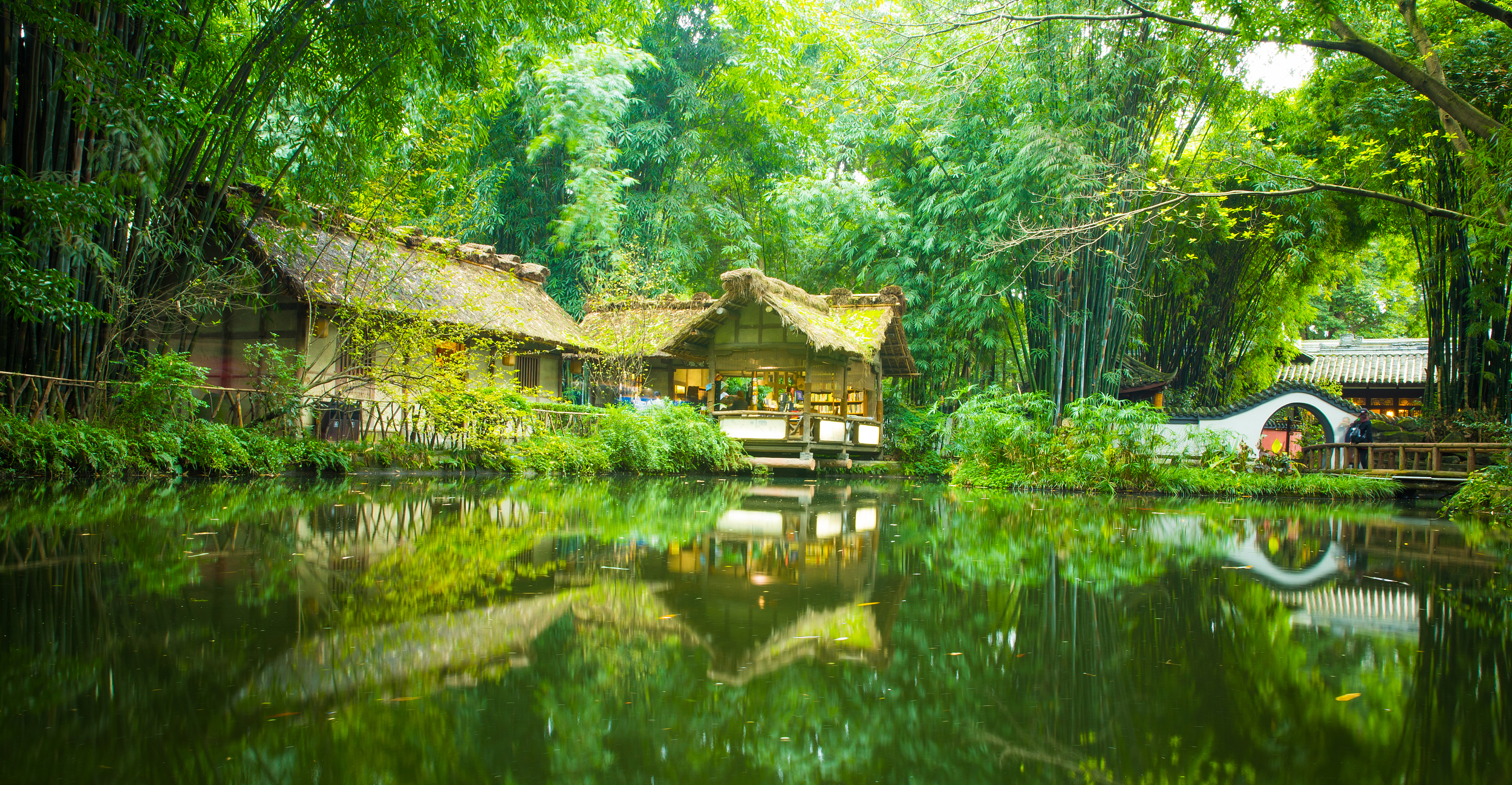
Chengdu Du Fu Thatched Cottage Museum
Du Fu Thatched Cottage is the former Chengdu residence of the famous Tang Dynasty poet Du Fu. Du Fu lived here for nearly four years. During his stay, he created hundreds of poems. This place is thus regarded as the “holy land” of Chinese literature. Today’s Du Fu Thatched Cottage has survived multiple dynasties and been restored many times. The most important architecture of the place is his former residence, the thatched house. This former residence was built with the architectural characteristics of the western Sichuan civilian residences.
-
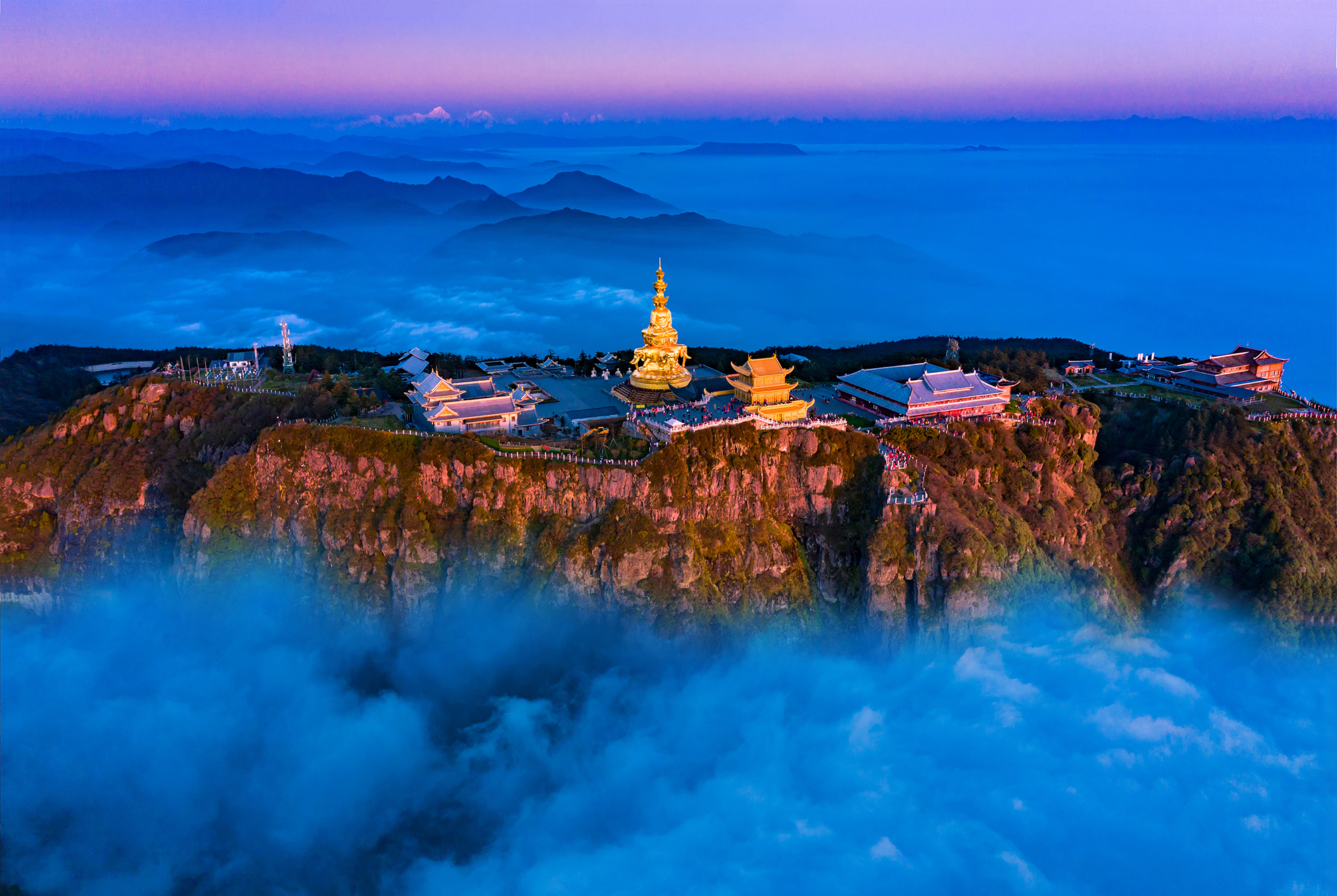
Mount Emei
Mount Emei is one of the four famous mountains of Chinese Buddhism, and it is also the temple of Samantabhadra Bodhisattva. There are numerous Buddhist monasteries in the mountains that combine to give this place a holy and serene atmosphere. The scenery in the mountains are beautiful. The four seasons each have their own characteristics. If you are lucky, you can see the sunrise and sea of clouds. Do note that the monkeys in Mount Emei are notoriously naughty. They are not afraid of people, and even take the initiative to ask tourists for food.
-
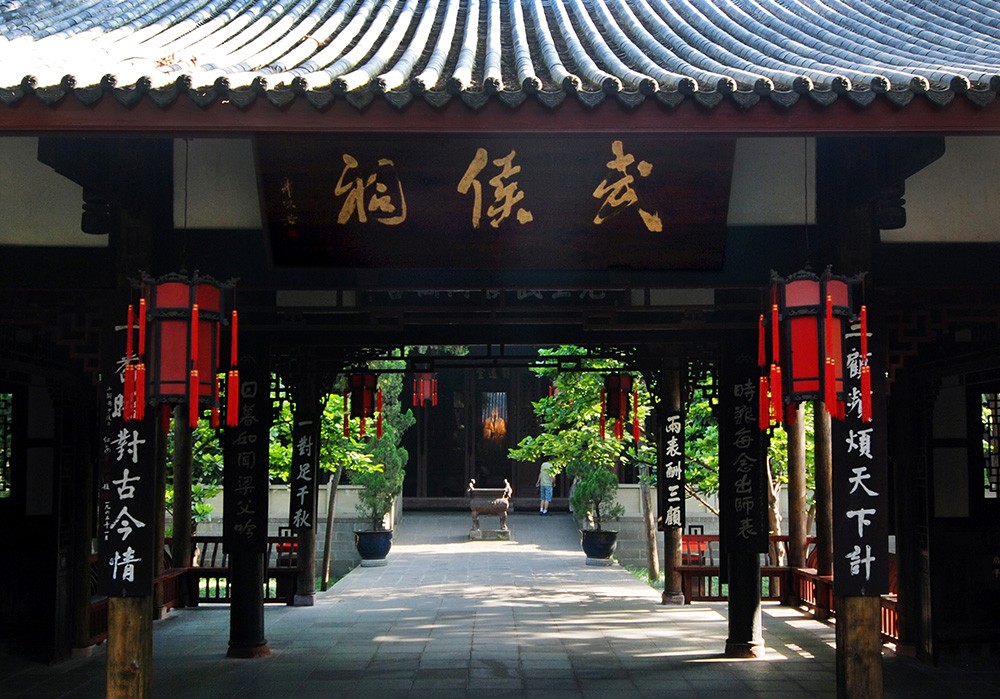
Chengdu Wuhou Shrine Museum
The Chengdu Wuhou Shrine Museum is a temple dedicated to honoring Shu Han heroes such as Liu Bei and Zhuge Liang. Its origins date back to 221 AD during the first year of the Zhangwu era under Emperor Zhaolie of Shu Han, when Liu Bei’s Hui Ling Mausoleum was constructed. The Han Zhaolie Temple was also built during the same period.Approx. around 500 AD during the Northern and Southern Dynasties period, the Wuhou Shrine was relocated from Chengdu’s “Shaocheng” to the vicinity of Hui Ling Mausoleum and Han Zhaolie Temple, maintaining this layout until the Ming Dynasty. In 1390 during the 23rd year of the Hongwu era, Zhu Chun, the Ming Prince of Shu, visited the Chengdu Wuhou Shrine Museum for worship. Citing that “monarch and subject should be united as one,” he merged Hui Ling Mausoleum, Han Zhaolie Temple, and Wuhou Shrine into a single complex. As Zhuge Liang’s influence among the common people surpassed that of Liu Bei, the site became colloquially known as “Wuhou Shrine.”The cultural relics area of the Chengdu Wuhou Shrine Museum mainly consists of the Hui Ling Mausoleum, Han Zhaolie Temple, Wuhou Shrine, and the Chengdu Wuhou Shrine Museum – Sanyi Temple, with the main structure being the Wuhou Shrine. The shrine is divided into the main gate, second gate, Liu Bei Hall, passage hall, Chengdu Wuhou Shrine Museum – Zhuge Liang Hall, and Chengdu Wuhou Shrine Museum – Sanyi Temple, all aligned along a central axis from south to north. The shrine houses 50 statues of Shu Han heroes including Liu Bei and Zhuge Liang, along with numerous stone inscriptions and plaques related to Zhuge Liang and Three Kingdoms culture.The famous “red wall and bamboo shadows” of Chengdu are located within the attraction. Don’t forget to take photos.The garden area of Chengdu Wuhou Shrine Museum, located on the west side of the shrine, features architectural structures such as the stone archway gate, three-arched gate, square pavilion, Jiexin Hall, and burial chamber. It is the only northern-style mausoleum complex in southwest China. The shrine is adjacent to Jinli Ancient Street (Jinli Folk Custom Area), making it convenient to visit both sites together.
-
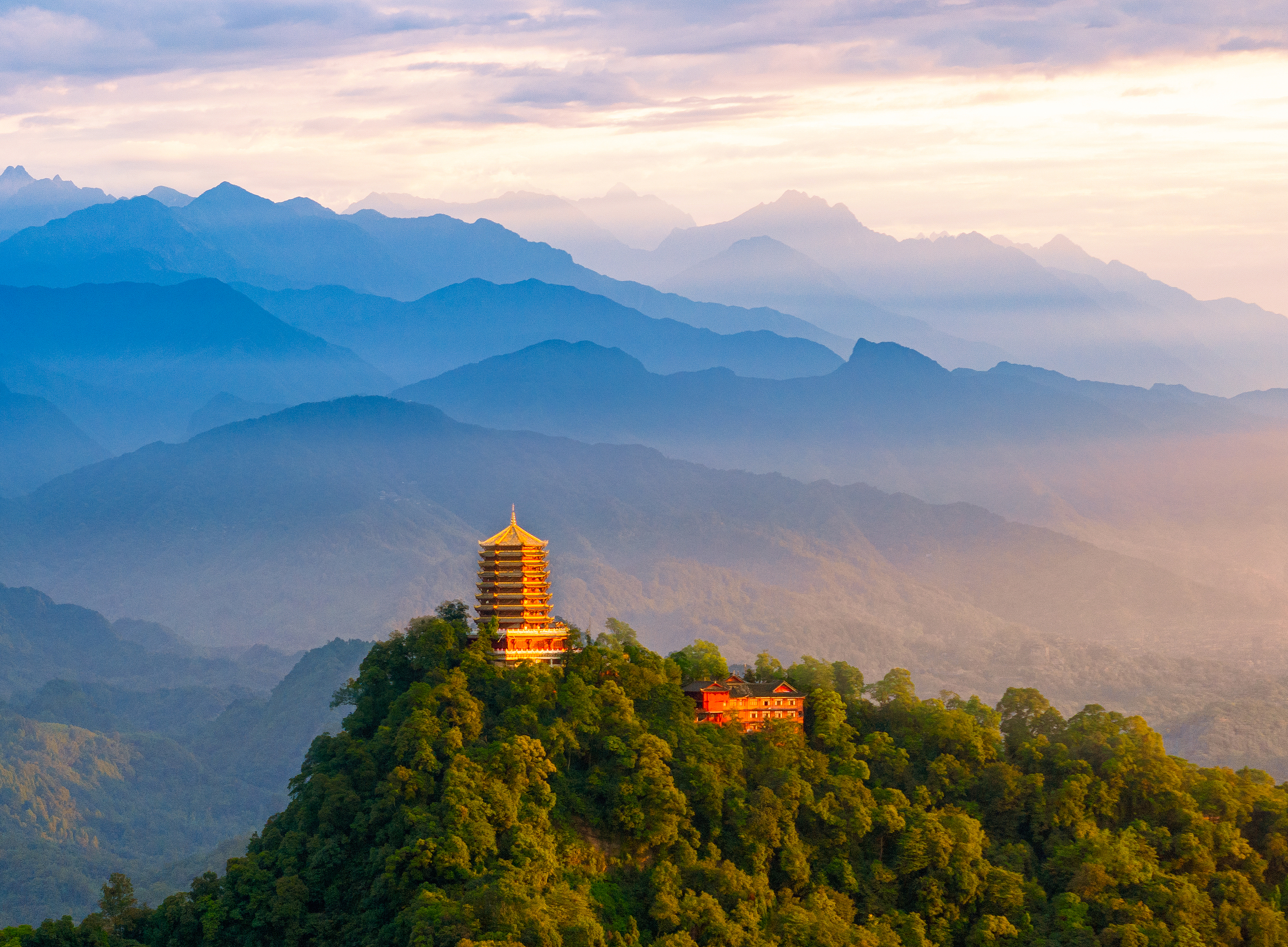
Mount Qingcheng
Qingcheng Mountain is dubbed as the “most quiet and secluded place in the world”. It is the birthplace of Taoism and there are many Taoist temples to explore there. Qingcheng Mountain is divided into two mountain areas: Qingcheng Front Mountain and Qingcheng Back Mountain. They require separate tickets. The Front Mountain is where Taoist culture and cultural relics are concentrated. When visitors talk about “Qingcheng Mountain”, they often refer to the front mountain; Qingcheng Back Mountain is known for its natural scenery making it a good place for vacation and leisure.
-
Leshan Giant Buddha
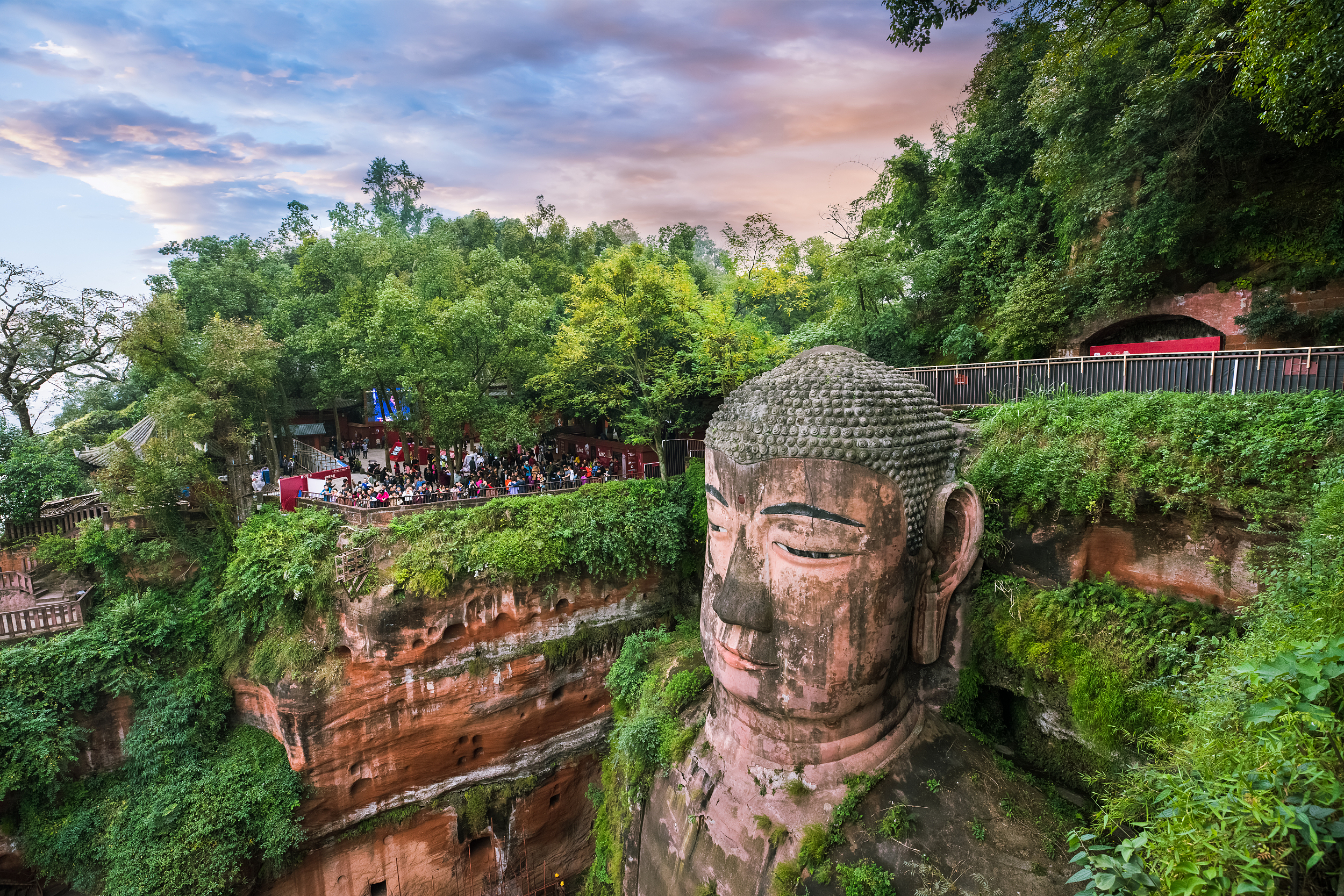
The Leshan Giant Buddha is located in Leshan, carved into the cliff of Lingyun Mountain’s Qixia Peak at the confluence of the Min River, Qingyi River, and Dadu River. Also known as the Lingyun Giant Buddha, it has been designated as a “World Cultural and Natural Heritage” site by UNESCO. The statue depicts a seated Maitreya Buddha and is considered a masterpiece of cliffside carving art from the Tang Dynasty.Admire the giant stone-carved seated Maitreya Buddha statueThe Leshan Giant Buddha was carved during the Tang Dynasty and took three generations of craftsmen 90 years to complete. This seated statue of Maitreya Buddha stands approximately 70 meters tall, making it a colossal stone-carved masterpiece. Marvel at the towering grandeur of the Leshan Giant Buddha and be amazed by how ancient artisans could create such an exquisite statue without modern large-scale tools.Pray for peace and good health.The Leshan Giant Buddha has always been a sacred Buddhist site. Standing before this colossal statue with hands pressed together in prayer, one can calmly offer blessings—for personal peace, family well-being, and friends’ health.Lingyun TempleLingyun Temple is a triple quadrangle architectural complex consisting of the Mahavira Hall and the Scripture Depository. The temple enjoys thriving incense offerings, with a continuous stream of visitors coming to pray for blessings. The temple’s landscaping is also well-maintained, featuring not only surrounding trees but also numerous potted plants. It’s an excellent place to experience Buddhist culture.Leshan Sleeping Buddha: Discovering the Reclining Buddha on the RiverOn the surface of the Qingyi River, several mountain peaks connect to form a striking resemblance to a reclining Buddha, complete with the head, body, and feet. The Sleeping Buddha lies on its back, creating a fascinating sight. The best spot to view the “Sleeping Buddha” is near the Yingchunmen Dock in the eastern part of Leshan’s ancient city.Tour Route:The popular tourist route involves taking the stairs to Lingyun Temple, then reaching the head of the Giant Buddha. Descend via the Nine-Bend Stack Path from the Buddha’s head to its feet, where you can take photos as souvenirs before climbing back up. Another way to experience the Buddha is by taking a boat tour, which allows you to admire the full panoramic view of the Giant Buddha from a distance.Walking tour: Experience the majestic grandeur of the giant Buddha up closeMost visitors have heard of the Leshan Giant Buddha and seen pictures of it. But when you actually approach and visit the Buddha in person, you can truly feel its towering grandeur and your own insignificance – just the Buddha’s foot alone can accommodate over a hundred people sitting around it. At the base of the Buddha, you can look up at its entire majestic form. Don’t forget to take photos to commemorate your visit.Boat tour: View the full panorama of the Leshan Giant Buddha from a distanceVisitors who want a closer view of the giant Buddha or have limited physical stamina can choose to admire it from a boat on the river. Gliding along the water, you’ll get a panoramic view of the Buddha, capture precious photos, and enjoy the scenic riverside landscape.1. Reasons for the construction of the Leshan Giant BuddhaLegend has it that in ancient times at the confluence of the Minjiang, Qingyi, and Dadu Rivers in Leshan, the water currents were extremely fierce, causing frequent shipwrecks. To tame the turbulent waters, Master Haitong gathered resources and manpower to carve the Leshan Giant Buddha. After its completion, the water flow miraculously calmed significantly, allowing ships to pass through safely.2. Leshan Giant Buddha closes eyes and sheds tearsIn 1962, after three years of natural disasters, corpses floated on the Min Mountains. At the time, people believed the Great Buddha couldn’t bear to witness this human tragedy and thus painfully closed its eyes while silently weeping. The scientific explanation is that the statue’s closed eyes were caused by acid rain, or more precisely, acid deposition. Acid rain can dissolve the hardened cement surface of non-metallic building materials, creating holes and cracks that damage structures.3. The official name of the Leshan Giant Buddha”The Leshan Giant Buddha” is actually a common name given by later generations to this giant Buddha located in Leshan, Sichuan Province. The true official name of this Tang Dynasty Buddha has remained a mystery. In fact, according to investigations by numerous experts, the true official name of this stone-carved statue known as the “Leshan Giant Buddha” should be: The Great Maitreya Stone Statue of Jiazhou Lingyun Temple.
-
Huanglong National Scenic Area
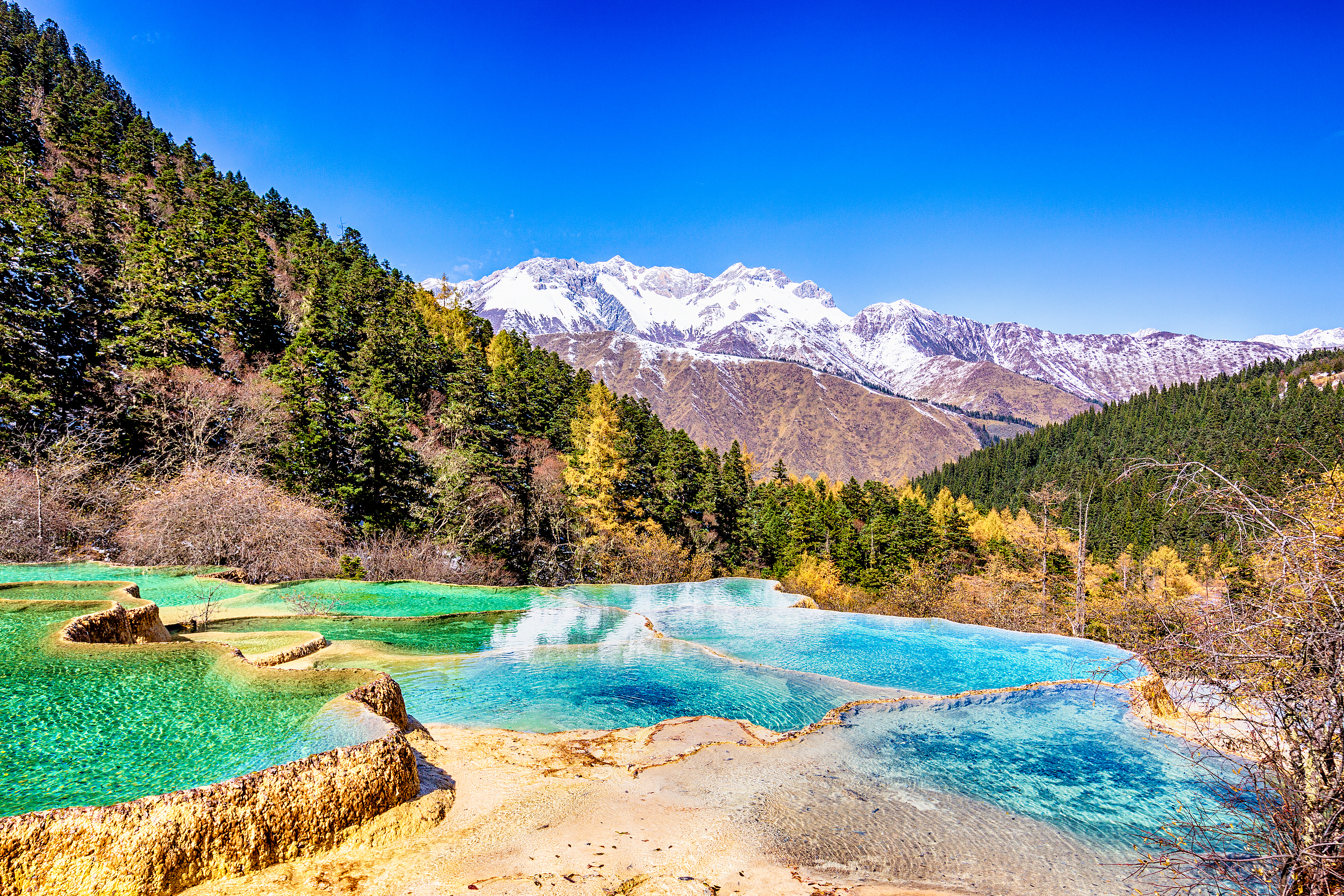
Huanglong National Scenic Area is a Attraction famous for its fantastic and beautiful calcified pools. The water in the numerous calcified pools in the Attraction is crystal clear and colorful and very beautiful. There are also many natural landscapes such as forests, canyons, snow-capped mountains and waterfalls in the Attraction. It is known as the “Fairyland on Earth”.Huanglong National Scenic Area is mainly divided into two parts, Huanglong Headquarters and Munigou. Huanglong Main Gou in Huanglong Headquarters is the main Attraction of Huanglong National Scenic Area, and is also the place generally referred to when talking about Attraction.The Attraction is located in Songpan County. The best time to visit here is in summer and autumn, when the lake is in its flood season, with a large pool area and beautiful scenery. In winter and early spring, the water volume is smaller, but the scenery is still good.