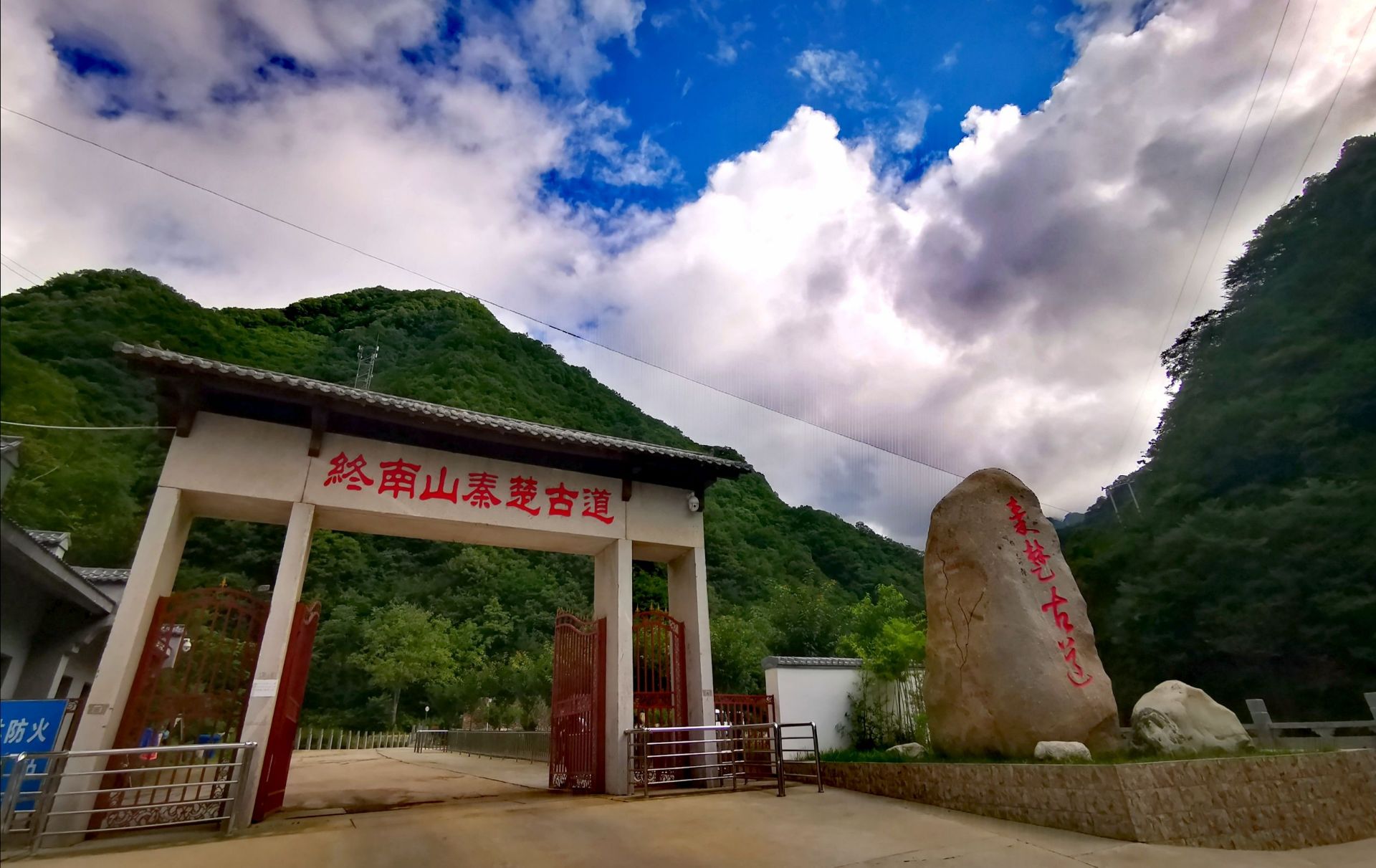
Qin and Chu Ancient Road is located in the foothills of Zhongnan Mountain in Qinfeng Village, Yingpan Town, Zhashui County, Shaanxi Province. The ancient road has a long history and was the main road from Qin to Chu during ancient times. Important goods such as silk and grains were traded, while military horses and chariots also passed through here. It was an important battleground. The ancient road crosses Zhongnan Mountain and is situated at a special spot on the north-south ridge of Qinling Ridge. There are many glacial remains, rhododendrons, pastures and exotic flowers along the road.
归档: Attractions
-
Xuejiazhai Revolutionary Site
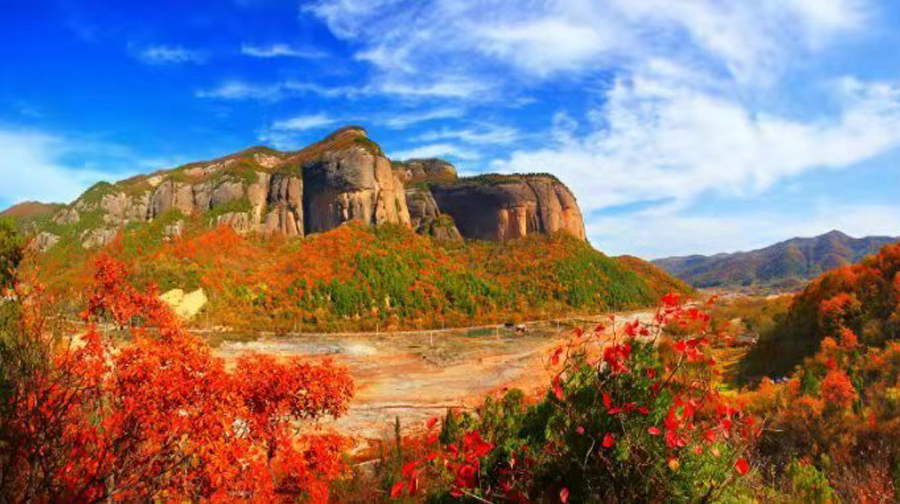
The Xuejiazhai Revolutionary Site is located in Zhaojin Town, Yao County, Shaanxi Province. It is the battle site of the Xuejiazhai Defense War, where the Chinese Workers’ and Peasants’ Red Army once stayed. It is located in Xiufanggou, Tianyu Village, about 5 kilometers east of the Zhaojin Town Government, Yaozhou District, Tongchuan City, Shaanxi Province. It is located at the southern end of the Qiaoshan Mountains, with an altitude of more than 1,600 meters (including the highest point of the Arrow Cliff). There are many mountains and dense forests here. The central area is a thousand-foot-high cliff, and the terrain is very steep. The village is shaped like a gourd, with cliffs on the east, south and west sides, and bushes on the hillside. You can’t see the village shape when you look up, and you can only see a grassy path when you look closely. The whole village has a magnificent trend, which is easy to defend and difficult to attack militarily.
-
Wordless Memorial Tablet
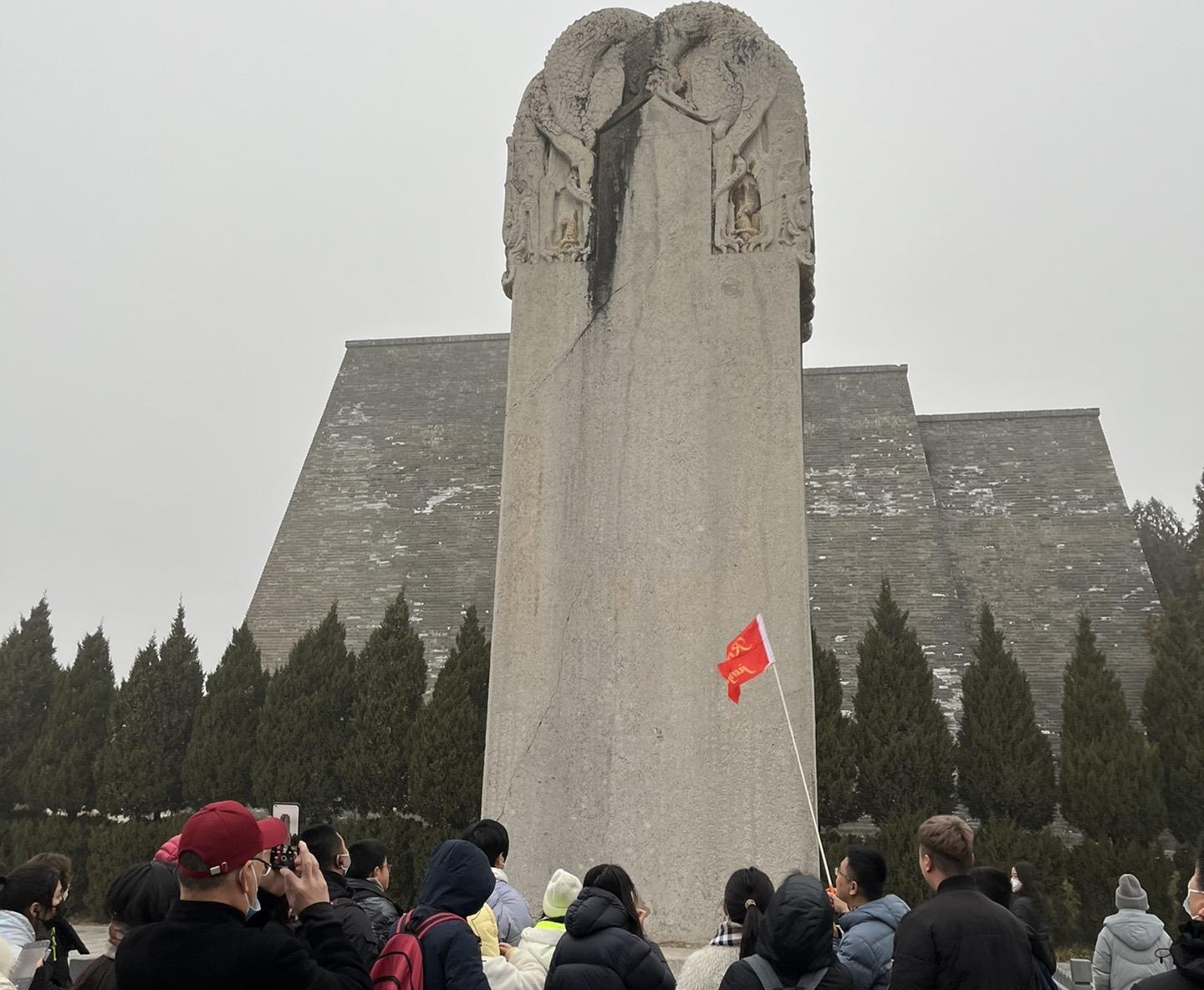
The inscriptionless stele in Gan County, China is located in the Qianling Mausoleum in Liangshan, 6 kilometers north of Gan County, Xianyang City, Shaanxi Province. It is part of the joint burial mausoleum of Emperor Gaozong of Tang, Li Zhi, and Empress Wu Zetian. This giant stone stele is carved from a whole piece of limestone. There are eight dragons carved on the top of the stele, and the body of the stele is decorated with cloud patterns and rising dragon patterns. There are lion and horse images engraved on the base of the stele. It has a magnificent shape and exquisite craftsmanship, representing the high level of stone carving art in the Tang Dynasty. As an inscription of a female emperor in Chinese history, its “wordless” feature has caused controversy for thousands of years. The mainstream view is that the 3,300 existing square marks on the stele prove that Wu Zetian had prepared the inscription before her death, but refused to engrave it because of the complicated political grievances between her mother and the successor, Emperor Zhongzong of Tang, Li Xian. After the Song and Jin Dynasties, the surface of the stele was gradually covered by inscriptions by tourists. There are 42 remaining texts, including the Khitan text “Travels of the Emperor’s Younger Brother, the Commander-in-Chief of the Great Jin Dynasty”, which has become a precious historical material for the study of minority languages. Today, this stone stele, which combines the essence of Tang Dynasty art with historical mysteries, stands opposite the “Shushengji Stele” on the west side that records Emperor Gaozong’s achievements, forming a unique cultural landscape of Qianling Mausoleum.
-
Manchuan Ancient Town
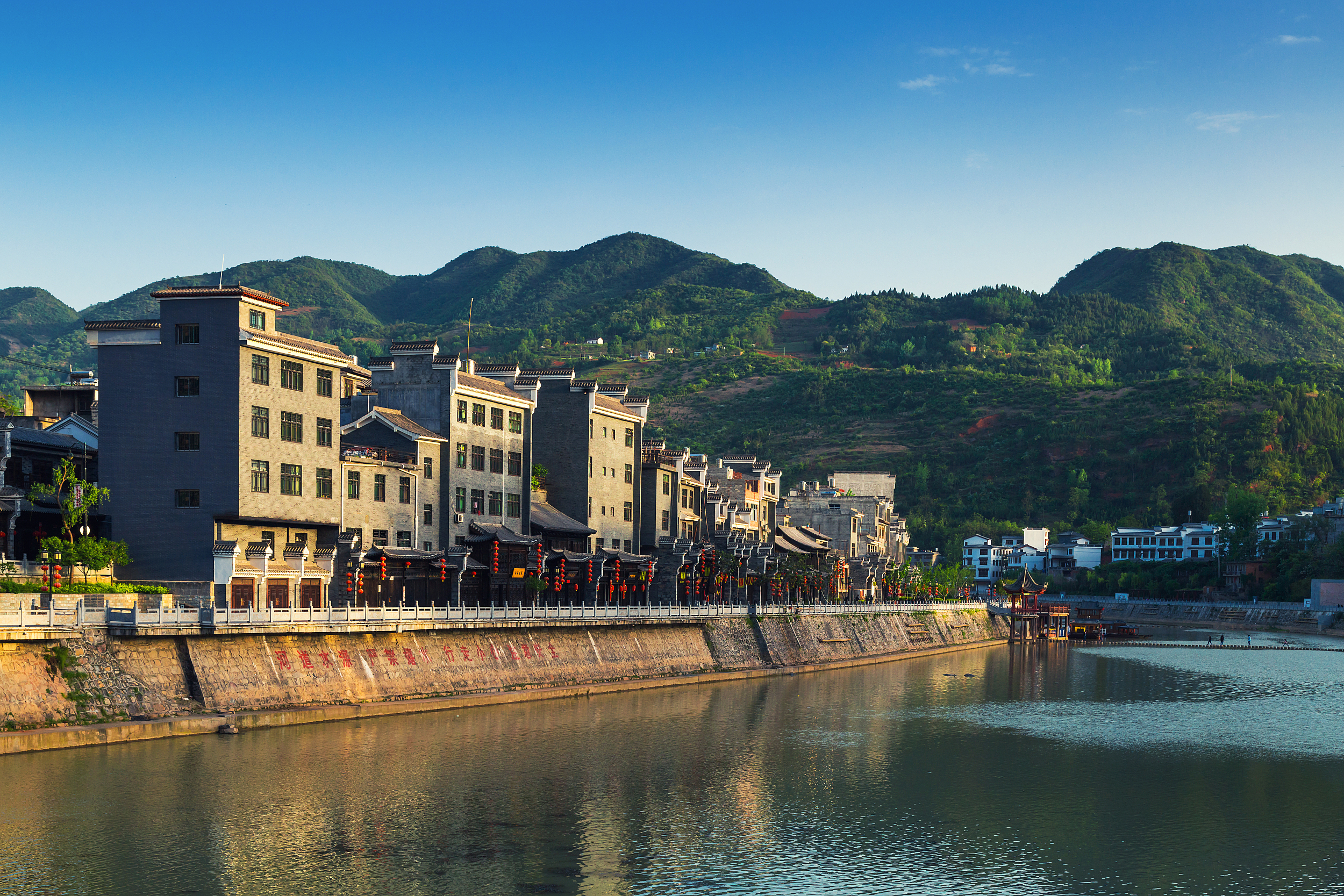
The ancient town of Manchuanguan is located in Manchuan Town, 70 kilometers southeast of Shanyang County, Shangluo. It is located at the confluence of Qianjin River and Jinjia River. Manchuanguan used to be the border of Qin and Chu, and it was fortified here in all dynasties, and now it is the border of Shaanxi and Hubei. Manchuan Pass has a long history. During the Spring and Autumn Period, it was the country of barbarians; during the Warring States Period, Chu to Fangcheng passed through here, and the boundary monument between Qin and Chu is still there; during the Southern Song Dynasty, this was a circuitous battlefield where the Song and Jin sides repeatedly fought; The built Chuangang Guild Hall, Hubei Guild Hall, Wuchang Guild Hall, Mule Gang Guild Hall, Wusheng Palace and other buildings are now listed as protected cultural relics. At the foot of the land ridge in Qiandianzi Village, Manchuan Town, there is a “Thousand Buddha Cave” in the mountain. It was built during the Yongchang Period of Wuzhou and Zhou Dynasty. Manchuanguan is surrounded by mountains and rivers, surrounded by mountains, with Cuiwei’s Longshan in the east, the majestic Falun Ridge in the north, the majestic Yunling in the southwest, and the Qianjin River and Jinjia River passing through it. The climate here is warm and humid, and it is rich in citrus, rice, sesame, and tung oil. Before the opening of the Longhai Railway, Manchuan was a flood and drought wharf, and it became one of the important distribution centers for material exchanges in Shaanxi, Hubei, Henan and Shu. The streets of Manchuan are long and narrow, all paved with stones. The houses on both sides are mostly made of wooden boards. The houses are small and exquisite. There is a layer of attic, painted gables, horns of dragons and phoenixes, and bright mirrors hanging on the ceiling. It is antique. There are daily gatherings in the streets and there are many shops, and the custom of “men go to the fields and women set up stalls” has been continued.
-
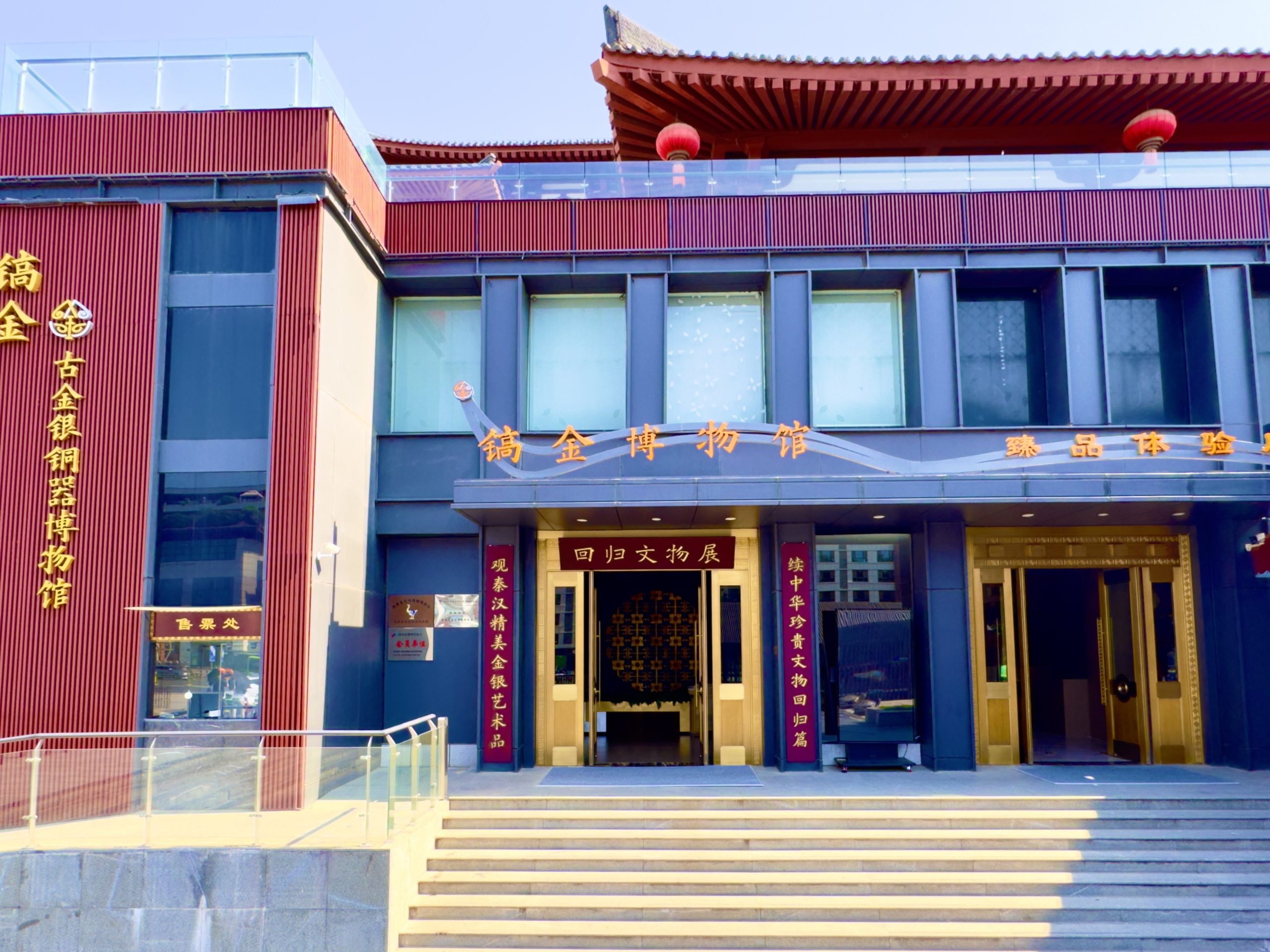
Xi’an Haojin Ancient Gold and Silver Copperware Museum
Xi’an Haojin Ancient Gold, Silver and Bronze Museum is a theme museum that displays gold, silver and bronze wares from the Warring States Period and the Han Dynasty. It is a special museum that displays ancient Chinese gold, silver and bronze wares and the craftsmanship culture. The museum collects hundreds of ancient gold, silver and bronze wares from the Spring and Autumn Period, the Warring States Period and even the Qin and Han Dynasties, covering all aspects of social life such as craft decorations, daily utensils, chariots and horses, weapons, gold and silver seals, and gold and silver currencies. It is colorful and magnificent. The beauty of gold and silver and the prosperity of humanities complement each other, using gold as a pen and literature as objects, providing us with valuable physical materials for studying and restoring ancient social life. The museum uses cultural relics to tell about Chinese craftsmanship and uses collections to record the beauty of China. The museum uses cultural relics to gather the production techniques of ancient Chinese gold and silver wares, such as gilding and silver, inlaying gold and silver, inlaying, engraving, hollowing, hammering, gold bead welding, filigree and other ancient techniques, as well as a rich variety of shapes and functions, artistic shapes, pattern decorations, and themes and scenes. They are eternally portrayed in the hands of skilled craftsmen, presenting the beauty of Chinese wares, the wonderful craftsmanship, and the richness of objects, and presenting a cultural feast for thousands of visitors. This is a relay supply station for absorbing cultural power and igniting cultural confidence. The eternal cultural context is passed down from generation to generation.
-
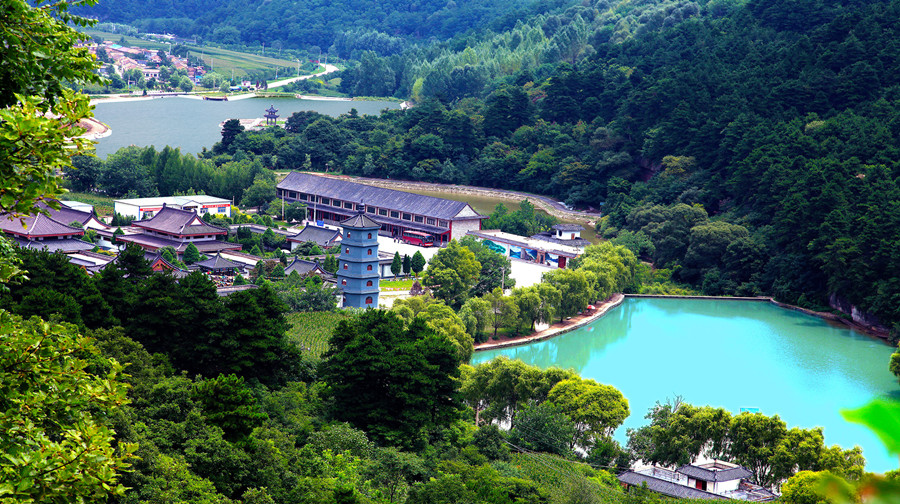
Yuhua Palace
Yuhua Palace Attraction is located in Yuhua Town, northwest of Tongchuan City. It was built in the seventh year of Wude (624 AD) of Emperor Gaozu of Tang Dynasty. It was once a summer palace in the west. After Emperor Gaozong of Tang Dynasty ascended the throne, Yuhua Palace was changed into a temple. In the fourth year of Xianqing (659 AD), the world-famous Master Xuanzang moved to Yuhua Temple with his disciples to translate Buddhist scriptures, and lived in Yuhua Temple for four years. In the first year of Linde (664 AD), he passed away in Suchengyuan of Yuhua Temple. Today, the palace and temple buildings of that year no longer exist, because it is surrounded by mountains and lush vegetation, and has become a summer resort for Residents in the Souvenir . The Yuhua Palace Attraction is lush with trees, and waterfalls and springs can be seen everywhere. There are also many pools and streams in the mountains with clear water quality. It is a good place for Residents in the Souvenir to visit the mountains. The scenery here varies throughout the year. In spring, wild flowers are everywhere in the mountains and fields. In summer, the temperature here is also high, and the thick shade of branches and leaves blocks the sunlight. In autumn, the mountains are full of red leaves. Every winter, an ice and snow festival is held here, where tourists can ski and skate. In the cold season of January and February, there will be exquisite ice sculptures in the Attraction for tourists to enjoy. There are hotels and farmhouses in the Attraction to provide accommodation and Dining services for tourists. In addition to appreciating the beauty of nature, tourists can also visit the Xuanzang Memorial Hall in the Attraction. This is a special museum for Master Xuanzang in recent years. The museum exhibits some cultural relics and Buddhist items unearthed from the Yuhua Palace. The Suchengyuan site in the Attraction is the site of the Sucheng Hall of the Yuhua Palace in the Tang Dynasty. It was renamed Suchengyuan during the Yuhua Temple period. It was also the place where Master Xuanzang stayed, reasoned about Buddhism, and passed away.
-
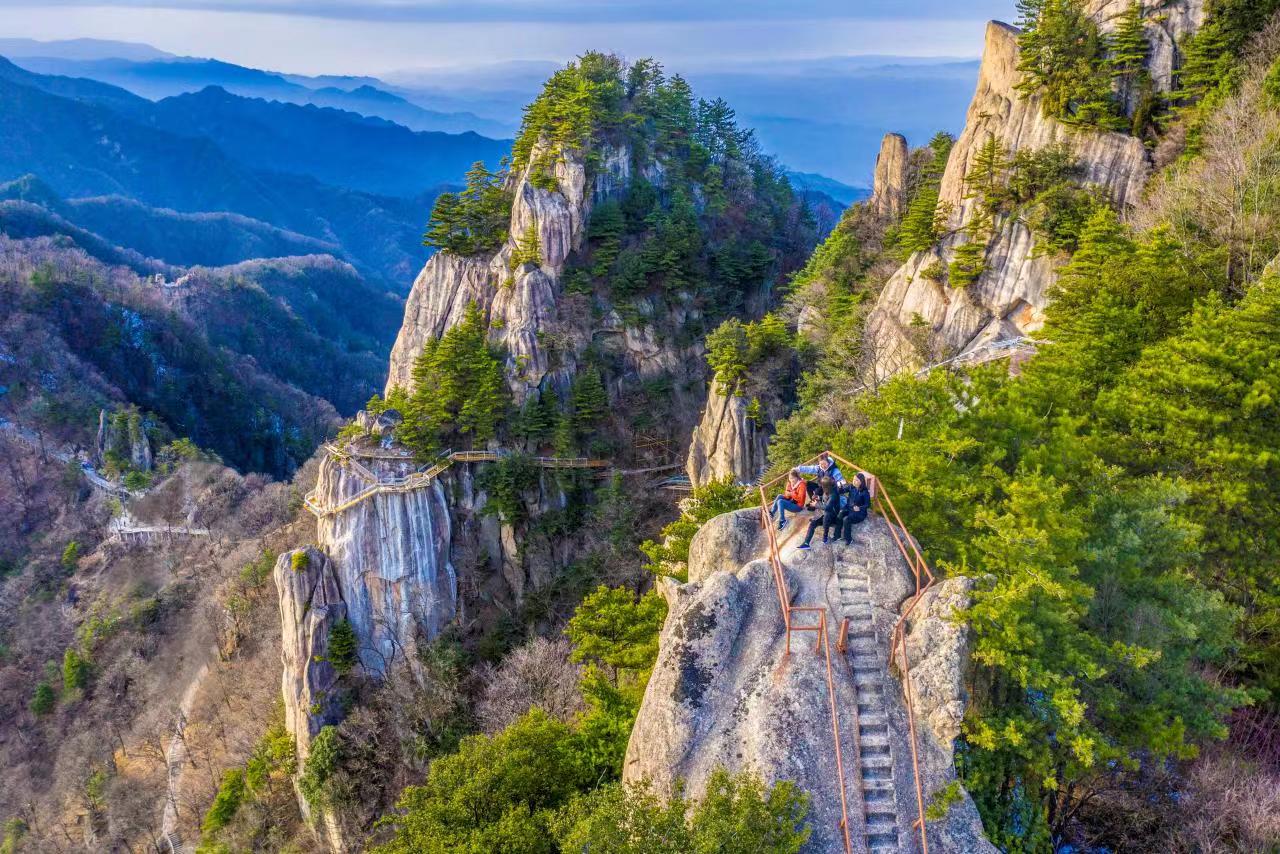
Jifeng Mountain
Jifeng Mountain is located in the northeast of Tiantai Mountain’s main peak scenic spot, southeast of Baoji urban area, 15 kilometers away from the urban area, and the main peak Yuanshi Tianzun Peak is 2014 meters above sea level. In ancient times, it was called “Chencang Mountain”, “Baoji Mountain”, or “Chicken Mountain”. Baoji’s place name is derived from this. Jifeng Mountain has many wonders, and there has always been a saying of “36 scenic spots”. The peaks are emerald green, and the mountains, rocks and pine set off each other, which are harmonious and unified; Su Shi, a famous poet in the Song Dynasty, climbed Jifeng Mountain and wrote a beautiful poem “Jifeng Yunxia is ancient, dragon palace is secluded”.
-
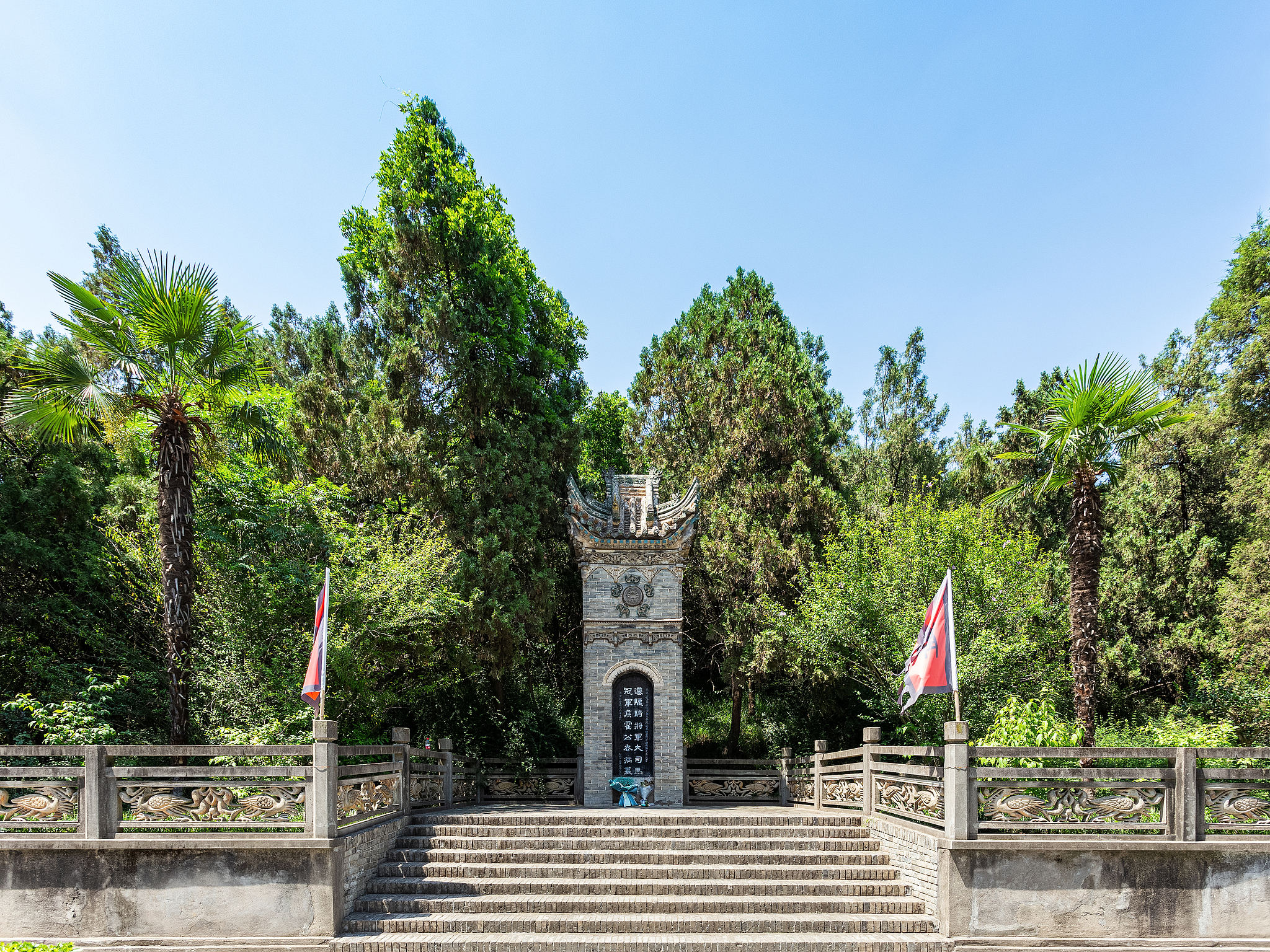
Tomb of Huo Qubing
The Maoling Museum – Huo Qubing Tomb is located approximately 15 kilometers northeast of Xingping City and about 1 kilometer northeast of Emperor Wu of Han’s Maoling Mausoleum. Huo Qubing died at the young age of 23. To commemorate his military achievements, Emperor Wu of Han built his tomb northeast of Maoling as a secondary burial site. According to records, the tomb of Huo Qubing at Maoling Museum was “built to resemble the Qilian Mountains,” intended to commemorate his outstanding military achievements in the Hexi Corridor and the Qilian Mountains region. In China, only generals who made great military contributions could have such a tomb built. It is said that after his death, Emperor Wu of Han was deeply saddened and mobilized the Xuanjia Army, arranging them in formation along Chang’an all the way to Huo Qubing’s tomb in Maoling. The Maoling Museum’s Tomb of Huo Qubing is surrounded by craggy rocks and verdant pines and cypresses, creating a secluded and tranquil mountain forest scene. At the east and west corners of the tomb, winding paths lead to the top. Huge stones are piled on the earthen mound, and stone figures and beasts are placed in front of the tomb. Among them, the “Horse Trampling the Xiongnu” is the main stone carving in front of the tomb, measuring 1.9 meters long and 1.68 meters high. Carved from grayish-white fine sandstone, the stone horse stands with its head held high, its long tail trailing on the ground. Beneath its belly is a carved image of a Xiongnu man, long-bearded, holding a bow and arrow, struggling with a furrowed brow. It is a representative monumental work. Because of this sculpture, the Maoling Museum – Huo Qubing Tomb is considered more popular than the tomb of his uncle, Wei Qing.
-
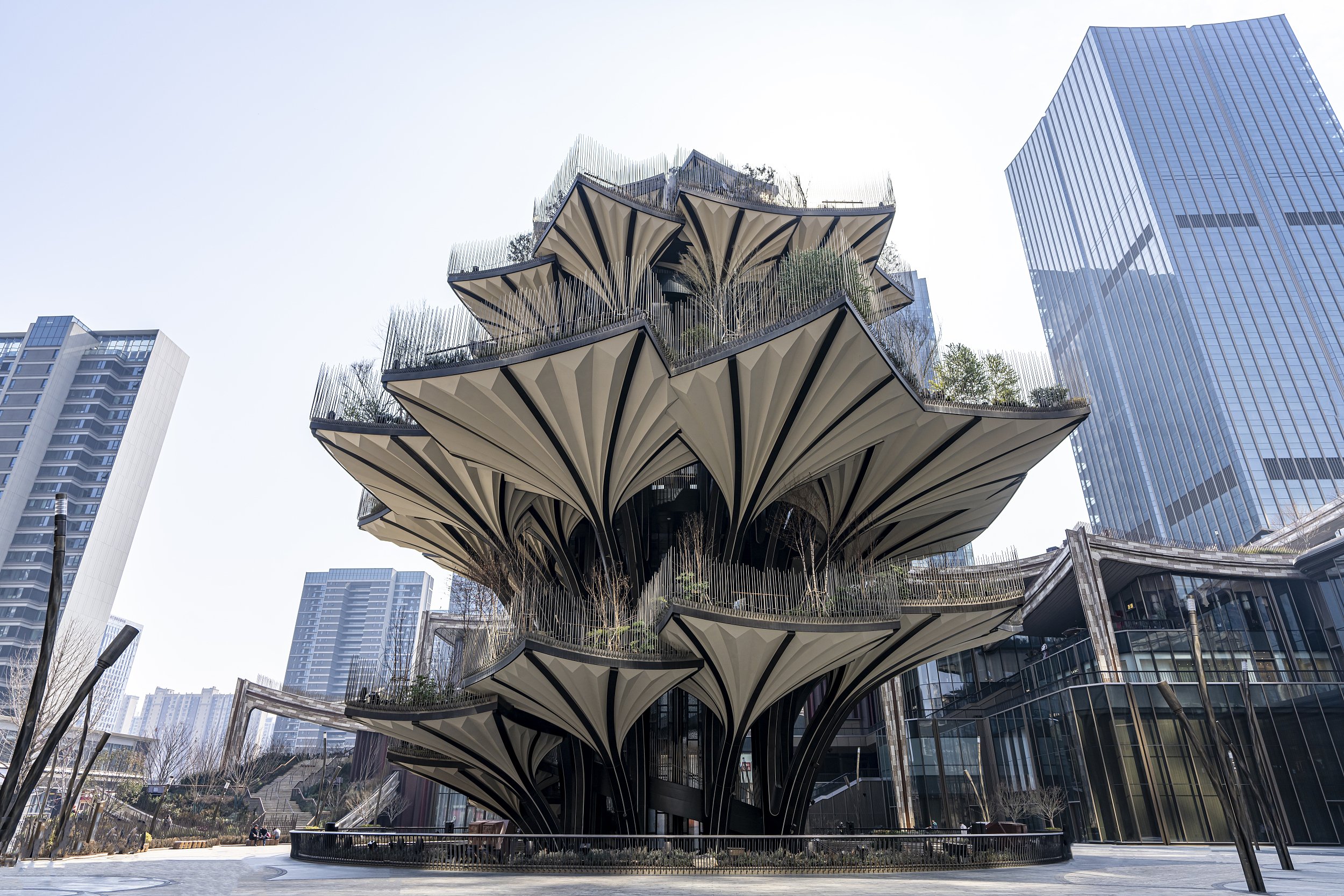
Xi’An Tree in Mixc
The “Tree of Life,” standing in the center of the MixC Plaza in Xi’an, is a rising new landmark in the ancient capital. Designed by Heatherwick Studio in the UK, the 57-meter-tall building is inspired by the thousand-year-old ginkgo tree planted by Emperor Taizong of Tang in the Guanyin Temple in Xi’an. It transforms the tree’s millennia-old vitality into a highly modern architectural language. The “Tree of Life” features 60 giant steel structural leaves that intertwine and spread like ginkgo leaves, supporting seven staggered platforms. From bottom to top, it presents seven ecological landscapes: dry grassland, arid desert, dry shrubland, temperate broad-leaved forest, mountain forest, alpine tundra, and temperate grassland, seemingly condensing the geographical features along the ancient Silk Road into a single entity. Strolling through it, visitors feel as if they are walking through a three-dimensional Silk Road garden, encountering completely different natural scenery on each level and experiencing ecological changes across time and space.
-
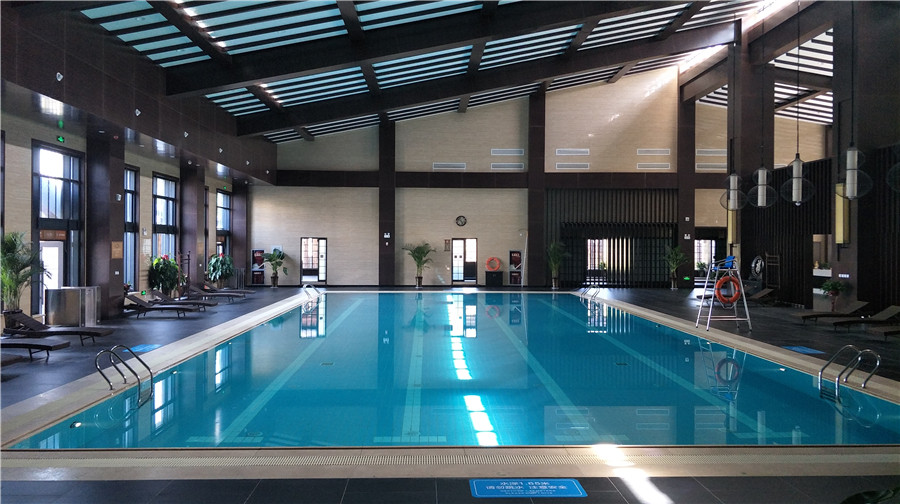
Shaanxi Workers Nursing Home
Shaanxi Industrial Therapy Hot Spring Garden is located in Lintong, a historical town in Xi’an. It is located at the foot of the Lishan Mountain, which is green all year round. It is only a 15-minute drive from the Terracotta Warriors and Horses of the Qin Shihuang Mausoleum and only 5 minutes from Huaqing Hot Spring. The outdoor hot spring area is divided into five major areas: Health Garden, Beauty and Skin Source, Special Health Garden, Refreshing and Quiet Area, and Natural Leisure Garden.