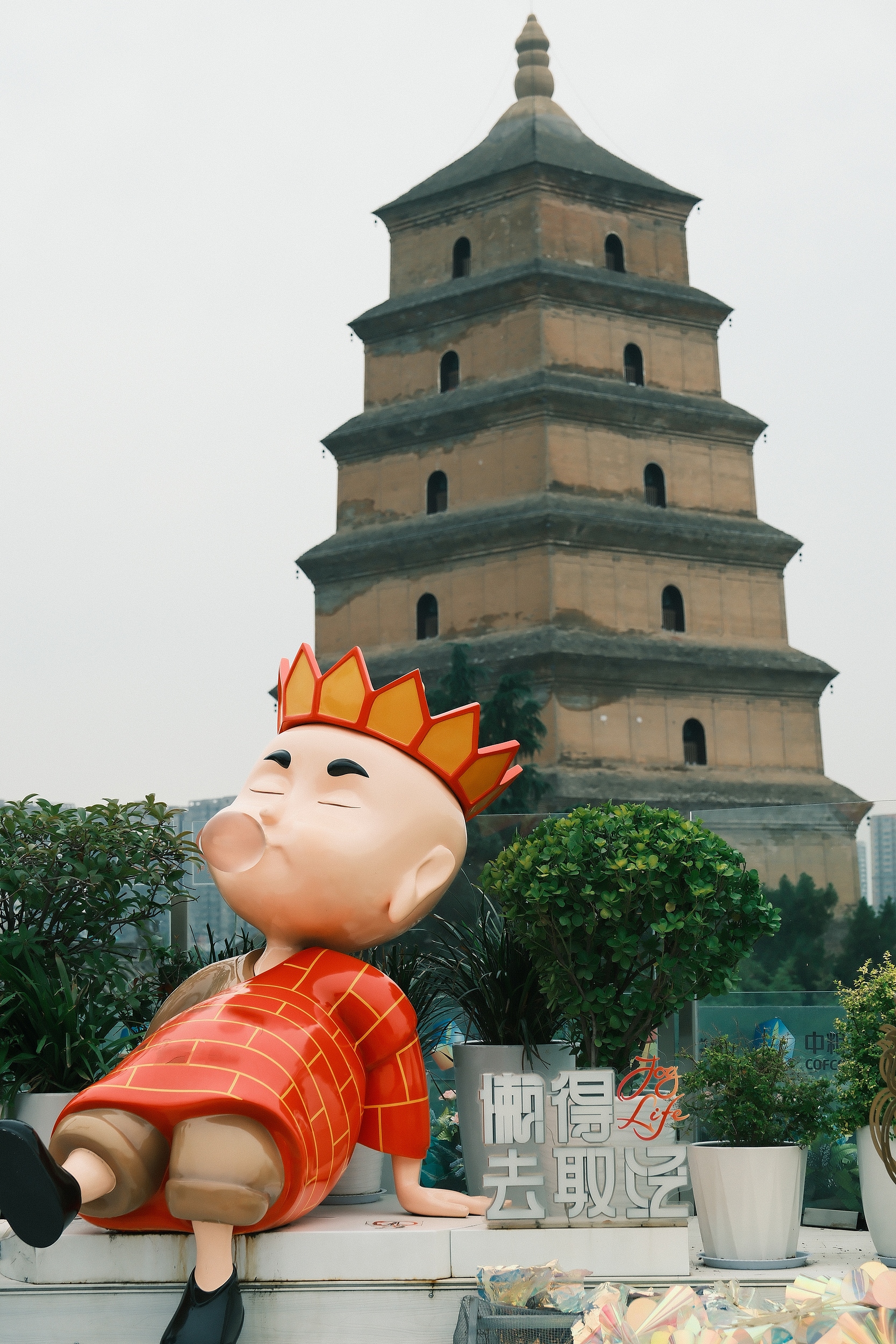
The viewing platform at Xi’an’s Qujiang Joy City is a prime tourist destination, combining modern design with natural beauty. Located in the heart of Xi’an’s Qujiang New District, it attracts numerous visitors and residents with its unique architectural style and prime location. The platform’s modern design ensures safety while maintaining unobstructed views, allowing visitors to fully appreciate the magnificent scenery of the Qujiang New District. During the day, visitors can overlook the rippling waters of Qujiang Lake and gaze upon the majestic Big Wild Goose Pagoda in the distance, immersing themselves in the fusion of ancient and modern elements of this historic and cultural city. At night, the city lights come ablaze, and the viewing platform becomes a perfect spot to admire the nightscape. The dazzling lights intersect with the skyline, creating a captivating scene. Nearby, within Joy City, guests can enjoy a wide range of dining, shopping, and entertainment options, allowing visitors to enjoy a variety of dining and shopping experiences to satisfy their every need while admiring the scenery.
归档: Attractions
-
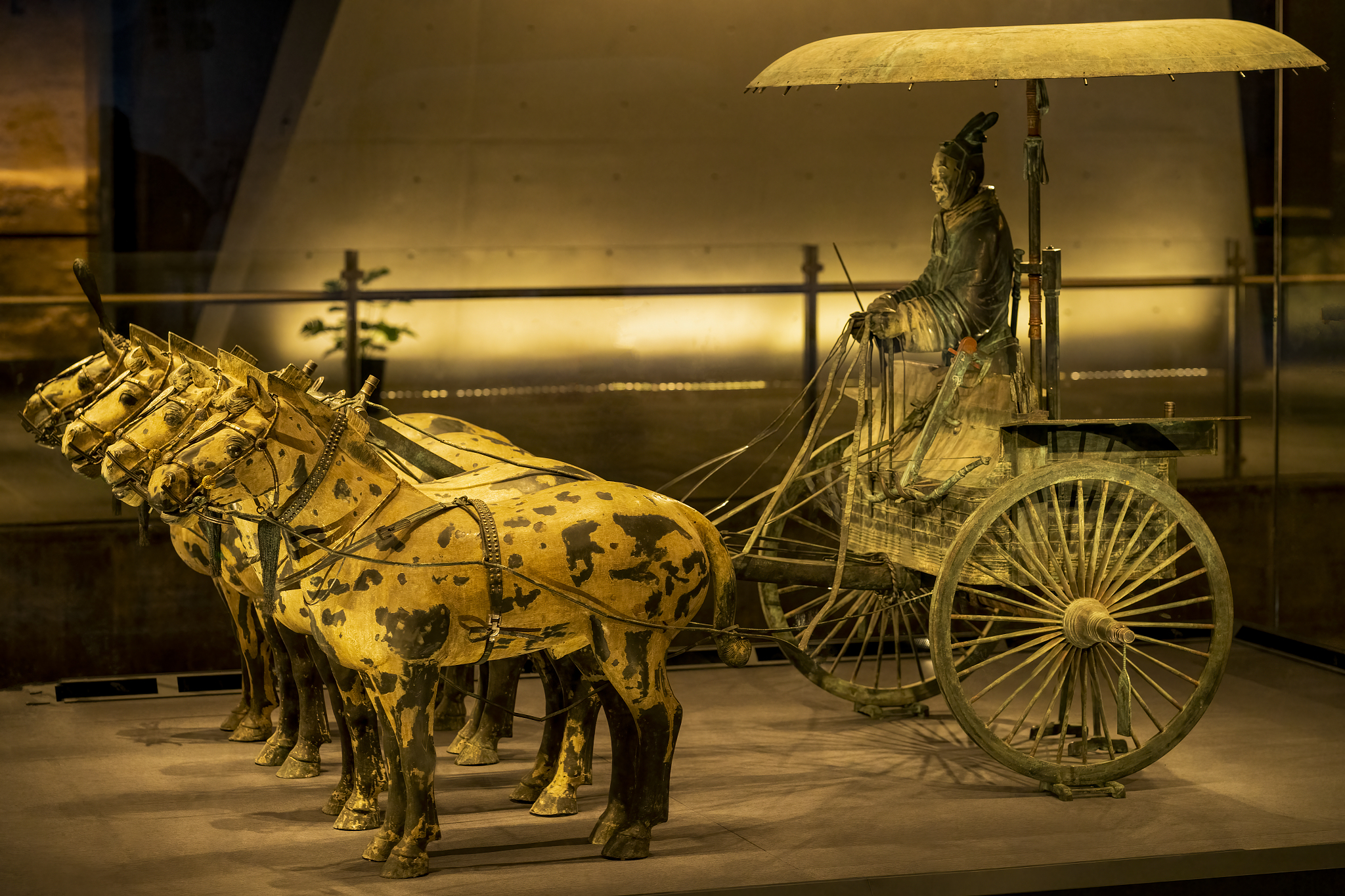
Bronze Chariot and Horse Exhibition Hall
The Bronze Chariot and Horse Exhibition Hall, located within the Qin Shi Huang Mausoleum Museum in Xi’an, Shaanxi Province, is a dedicated exhibition hall showcasing Qin Dynasty bronze chariot and horse artifacts. Drawing on the remains of these chariots and horses unearthed from the Mausoleum, the hall focuses on “restoring the craftsmanship and ritual culture of the Qin Dynasty.” Through the display of artifacts, scene reconstruction, and scientific interpretation, the hall serves as a crucial window into the Qin Dynasty’s craftsmanship and ancient ritual system, and a key location for understanding the Qin Shi Huang Mausoleum’s burial system. The centerpiece of the exhibition hall is the bronze chariot and horse, a precious artifact unearthed in 1980 from the west side of the Mausoleum. The hall features two distinct chariots and horses, each cast in a 1:2 scale, constructed entirely of bronze and adorned with gold and silver ornaments, demonstrating exquisite craftsmanship. Overall, the Bronze Chariot and Horse Exhibition Hall, through its combination of artifacts and interpretation, serves as a vital venue for showcasing Qin Dynasty civilization and conveying its historical value, making it a perfect venue for visitors interested in ancient history, cultural relics, and archaeology.
-
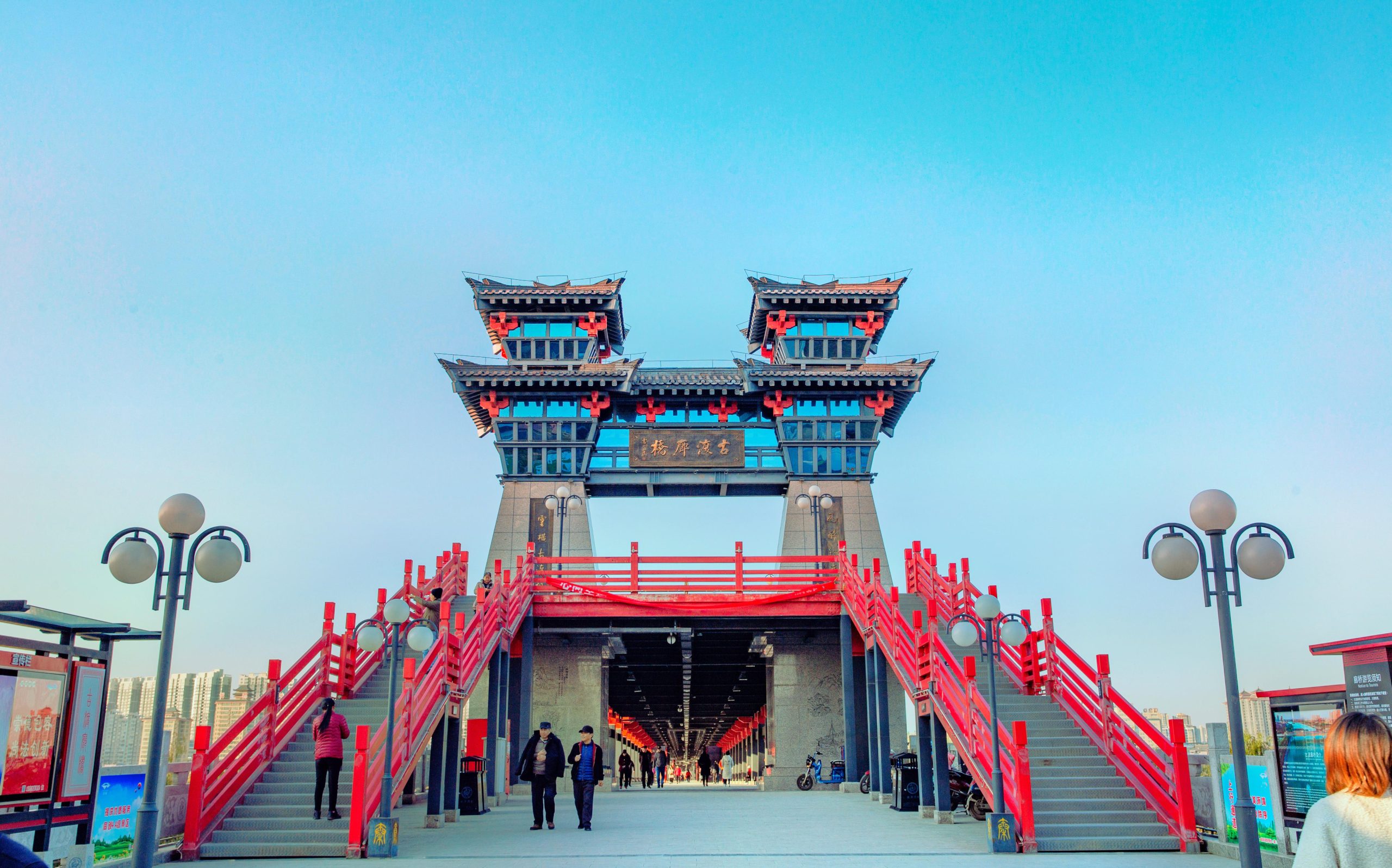
Xianyang Lake Scenic Area
The Xianyang Lake Scenic Area is located in the Xianyang urban area of the Wei River. It starts from Xiantong Road in the west and ends at the Weihe Longhai Railway Bridge in the east. It is 4.7 kilometers long, 600-800 meters wide, and covers an area of about 240 hectares. The construction of the Xianyang Lake project started in October 2004, and the dam was erected to store water in July 2005. It is mainly composed of water conservancy and flood control projects and ecological landscapes: the water conservancy and flood control project adopts a middle partition wall to divide the 500-meter-wide Weihe main channel. Second, the south side is the flood discharge channel, and the north side uses a rubber dam to store water to form a lake with an area of 124 hectares, which not only regulates the urban climate, but also improves the urban ecological environment, showing “a clear water runs through the ancient city, and the Wei River runs through the capital. A new look” scene. The ecological landscape takes the Weihe River as the main axis and takes the ancient Xianyang Qin and Han history and culture as the background. A belt-shaped green landscape area with a width of 50-180 meters has been constructed on both sides of the river. Scenic spots such as Qingwei Tower, Ancient Ferry Site, Weishui Evening, Shanglin Dawn, etc. complement each other, creating an urban ecological landscape that is harmonious and unified between man and nature, and showing the profound historical and cultural connotation of the ancient capital of Xianyang.
-
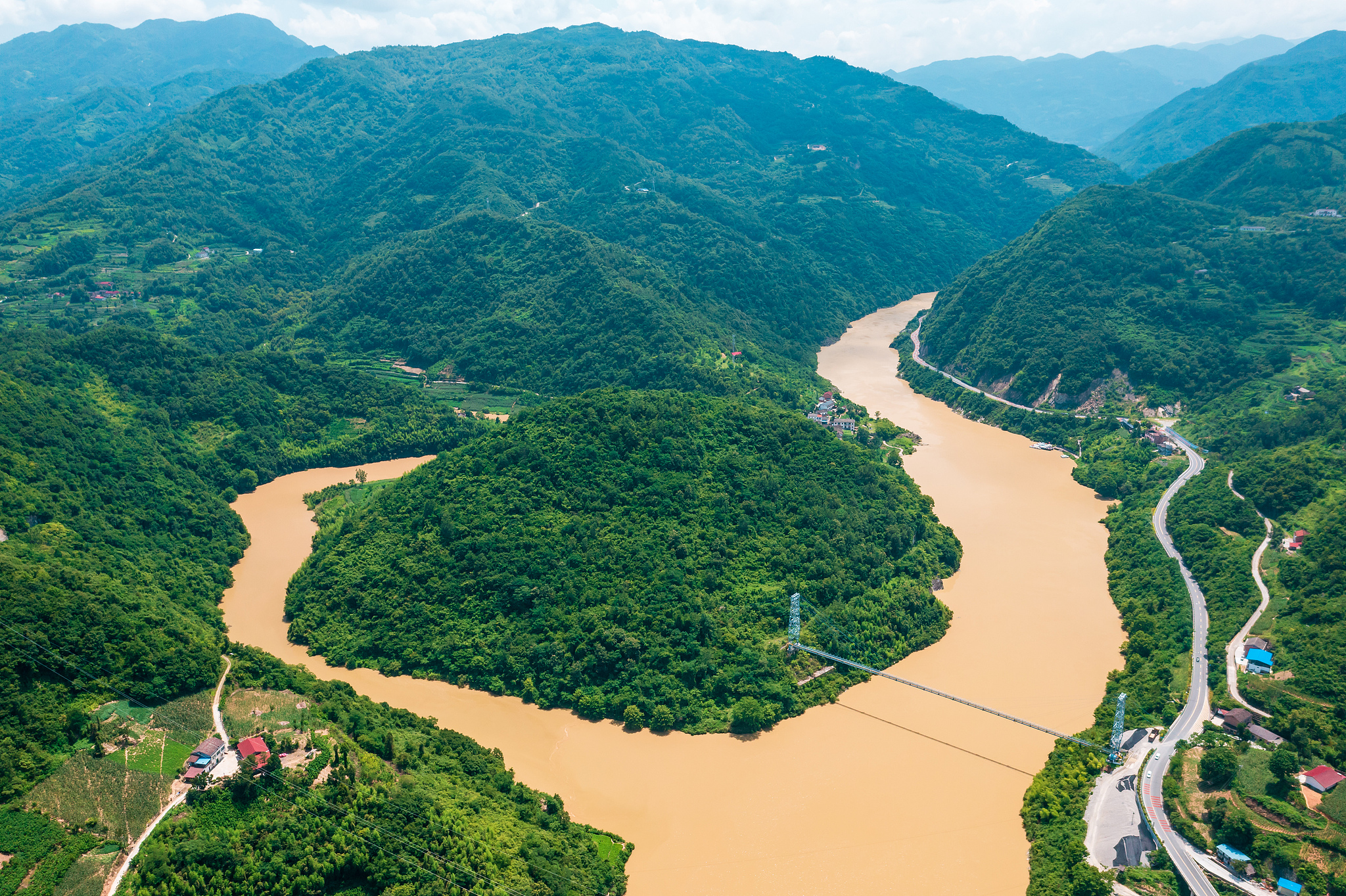
Han River Three Gorges
The Hanjiang Three Gorges is located in Shiquan County of Ankang City. The Han River is the ancient birthplace of the Chinese civilization and the origin point of the North-South Water Transfer Project. The Han River Three Gorges scenic area begins at the Lotus Ancient Ferry. In the middle of the scenic area, you’ll go past the Fenghuang (Pheonix) Gorge, Liuxi (Willow Creek) Gorge, and the Xiangbai (Fragrant Cedar) Gorge, before reaching the endpoint at the Xi River Guiyuan Scenic Area. As you travel by boat, you can enjoy the beauty of the Han River Three Gorges all around you. This area is sometimes also called the “Qinba Mountain Water Gallery” in honor of its artistic beauty.
-
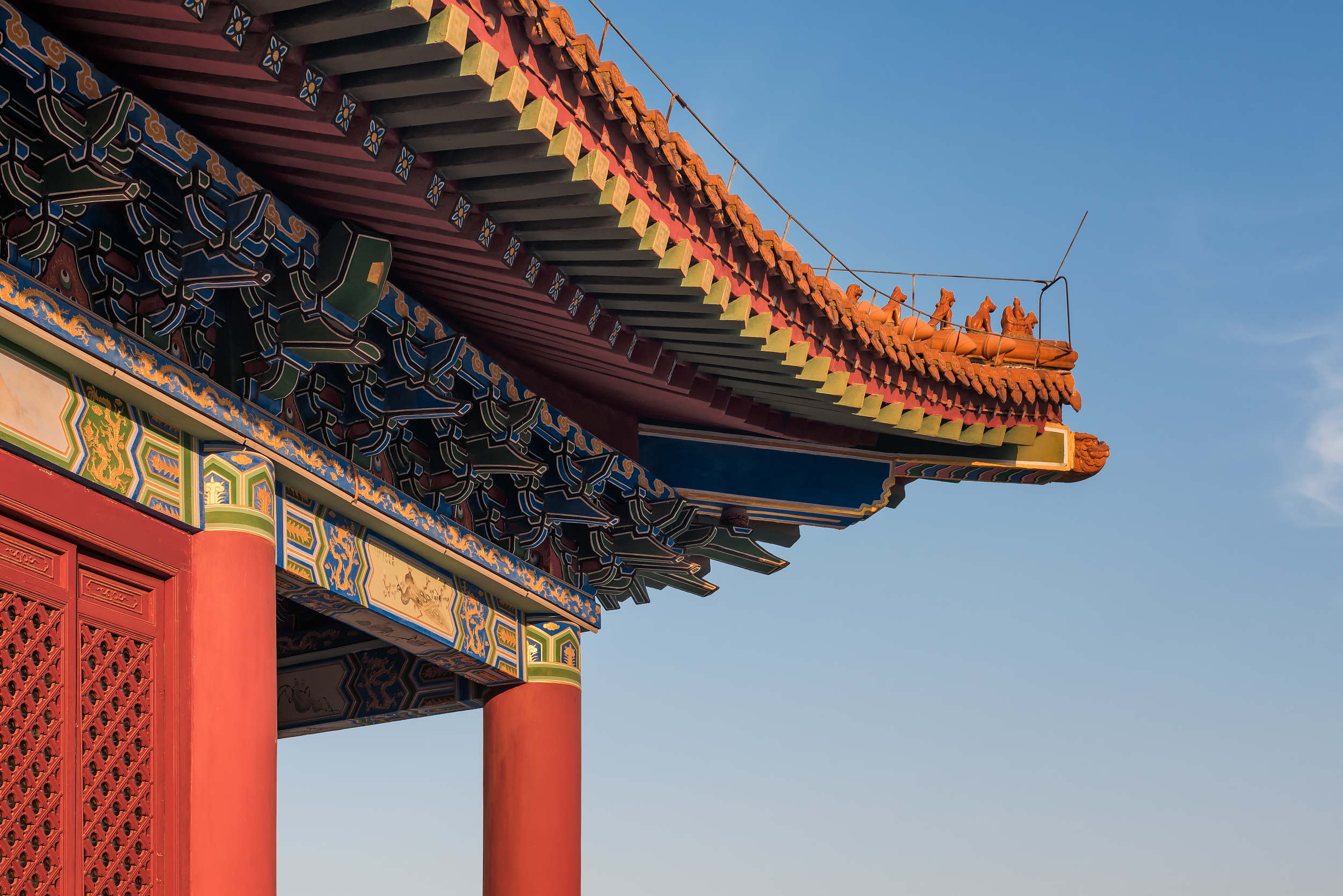
Louguantai National Forest Park
Located in Zhouzhi County, Louguantai National Forest Park is the place where Lao Tzu wrote the ” Morality Classics” and gave his disciples Han Gu Guan Ling Yin Xi to talk about the scriptures. There are many Taoist temples nearby, and the Taoist culture is rich. There are large bamboo forests in the park and is one of the few places in the northwest that can see bamboo forests. In the scenic area, a large piece of green bamboo is there to greet people. As a test base for “Nanzhu move northwards”, Louguantai enables visitors to see the rich bamboo from the south in the northwest. It has been the home of Taoist education since ancient times.
-
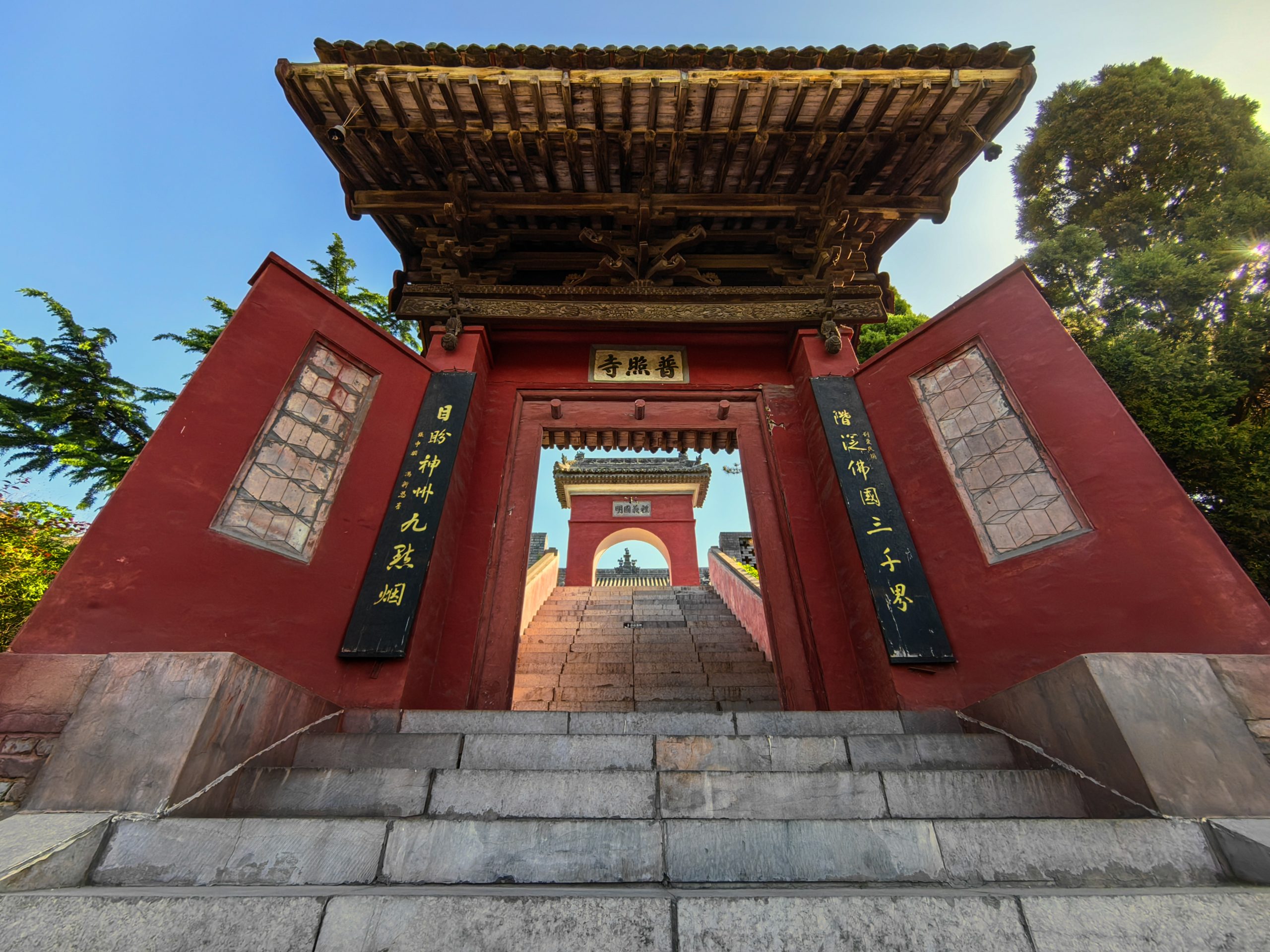
Puzhao Temple
Puzhao Temple is located to the west of the health center in Zancun Town, Hancheng City, Weinan City. It was built in the third year of Yuan Yanyou (1316). It is built at the southern end of the ancient fortress more than 10 meters high, overlooking the surrounding area. It is a landmark building of Hancheng during the Yuan Dynasty. Puzhao Temple, like Sima Qian’s tomb, was built on the mountain. Its main building, the Mahavira Hall, dates back to the Yuan Dynasty. The Buddhist niches inside are of high artistic value. The hall houses five colored statues of Sakyamuni Buddha, Manjusri Bodhisattva and Samantabhadra Bodhisattva, and disciples Ananda and Kasyapa, which were sculpted in the third year of the Yuan Dynasty Taiding Period (1326), as well as more than 130 caisson paintings from the Ming and Qing Dynasties. In addition to the Main Hall, there are also the Land God Temple, Guandi Temple, Jialan Hall, Dharma Protector Hall, Guanyin Cave, Zen Temple, etc. The appearance and window shape of the Main Hall look like a red yurt. The Buddha statues in the hall are exquisitely carved with clear lines, and the caisson on the upper part is painted with flowers, birds, insects, fish and figures, which are vivid and lifelike.
-
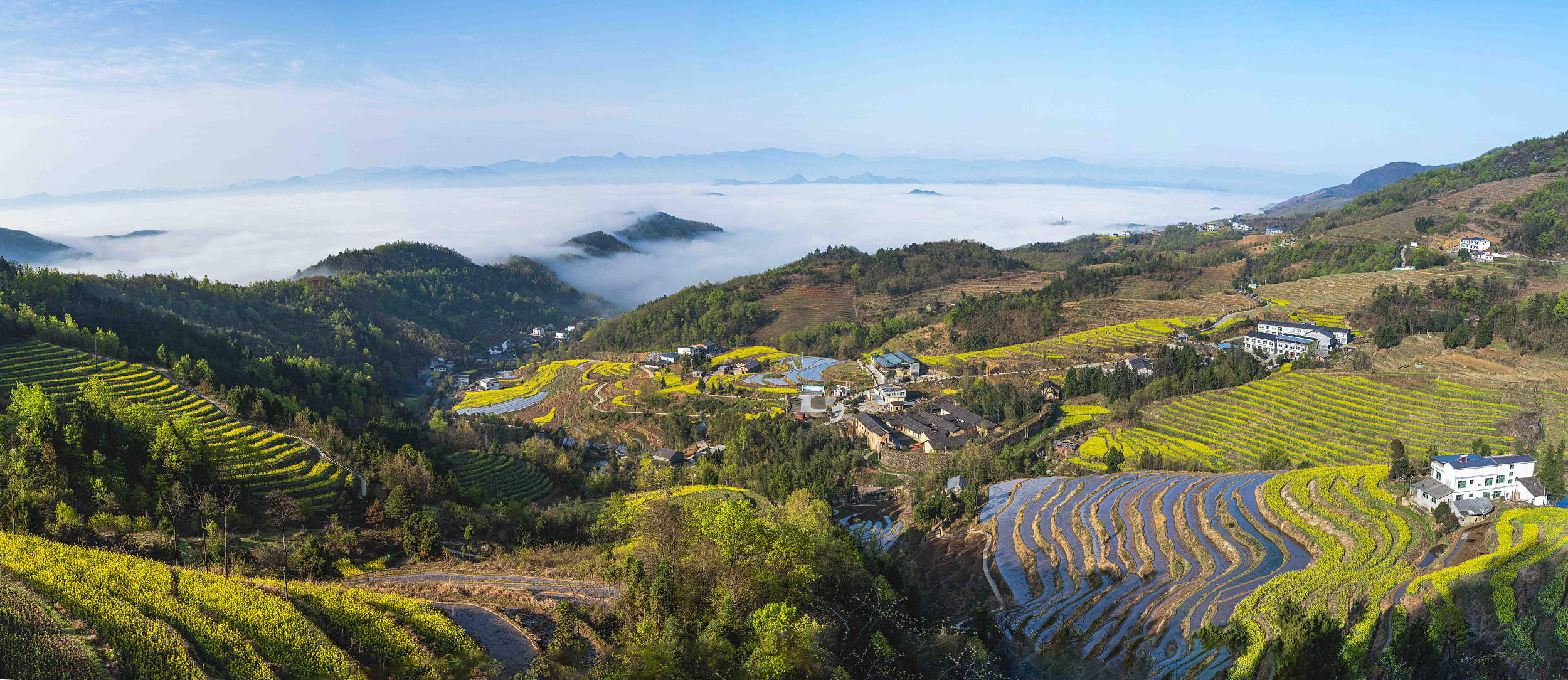
Fengyan Ancient Terraced Fields
The Fengyan Ancient Terraced Fields Scenic Area is located in Xuanwo Town, Hanyin County. It is an irrigation-type water conservancy scenic area, covering a contiguous area of over 12,000 mu (approximately 800 hectares). Dating back over 250 years, the scenic area covers 38.78 square kilometers and is currently the largest and best-preserved Qing Dynasty terraced field discovered in the Qinling-Bashan Mountains. In 2010, the Fengyan Ancient Terraced Fields were named one of the “Top Ten New Discoveries of the Third National Cultural Relics Census in Shaanxi Province.” In 2013, it was designated a provincial-level water conservancy scenic area by the Shaanxi Provincial Department of Water Resources, and in 2014, it was named one of “China’s Beautiful Countryside” by the Ministry of Agriculture.The Fengyan Ancient Terraced Fields are located in Huanglong Village, Yanping Village, and Cigou Village in Xuanwo Town, Hanyin County. Construction began in the Qing Dynasty, integrating mountains, water, fields, houses, villages, temples, and agriculture, and embodying a style that is “profound, elegant, unique, refreshing, and magnificent.” In 2010, it was listed as one of the top ten major cultural relics discoveries in Shaanxi Province.
-
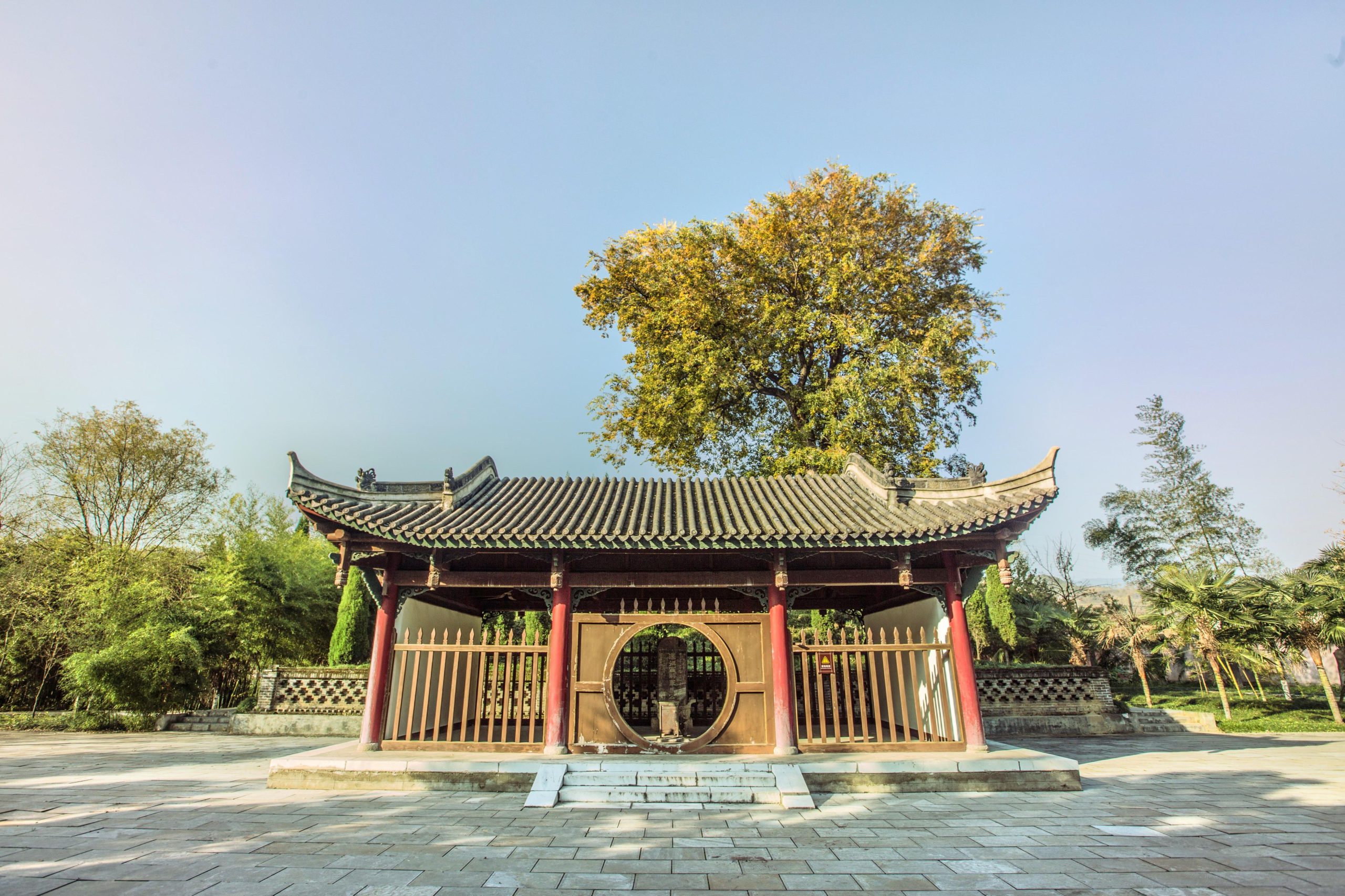
The Ma Chao Tomb Temple
The Ma Chao Tomb Temple is located in the Magong Temple Village of the west of Mian County, Hanzhong City, about a kilometer away from Wuhou Temple. Ma Chao is a famous officer from the Three Kingdoms period, positioned after Guan Yu and Zhang Fei. Due to his talent in martial arts, he also enjoyed the names of “Shenwei Tian General” and “Jin Ma Chao.” The temple still maintains three main halls, where there is a clay statue of Ma Chao, full of power and grandeur. His tomb is surrounded by green pines and cypresses, giving it an air of seclusion.
-
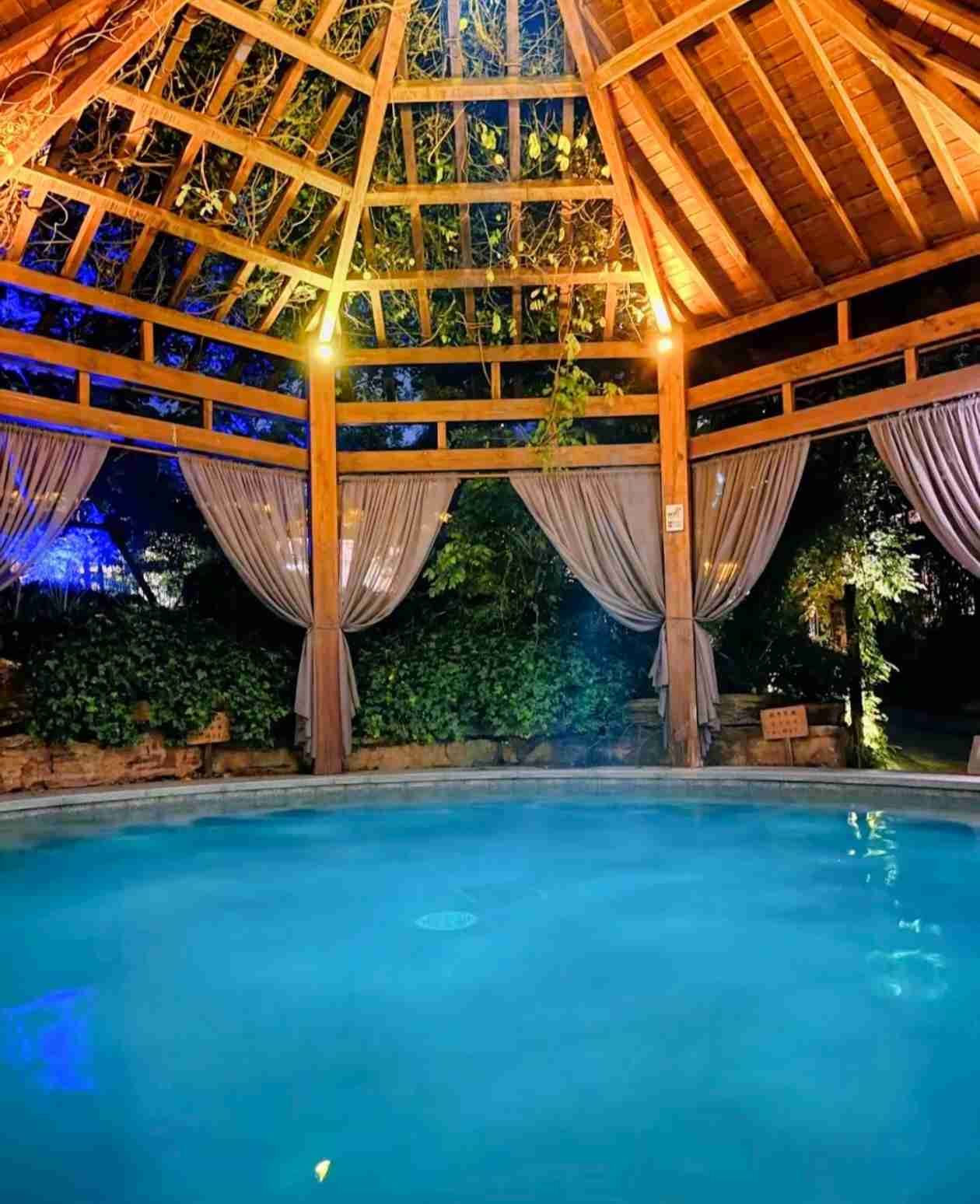
Baye 3000m Hot Spring
Baye 3000m Hot Spring is named after the hot spring well that goes 3000 meters underground. There are more than 15 hot spring pools indoors and outdoors, each with a different theme, including rose soup, ice and fire soup, orange soup, red wine soup, etc., with different functions, unique features, sizes and styles.
-
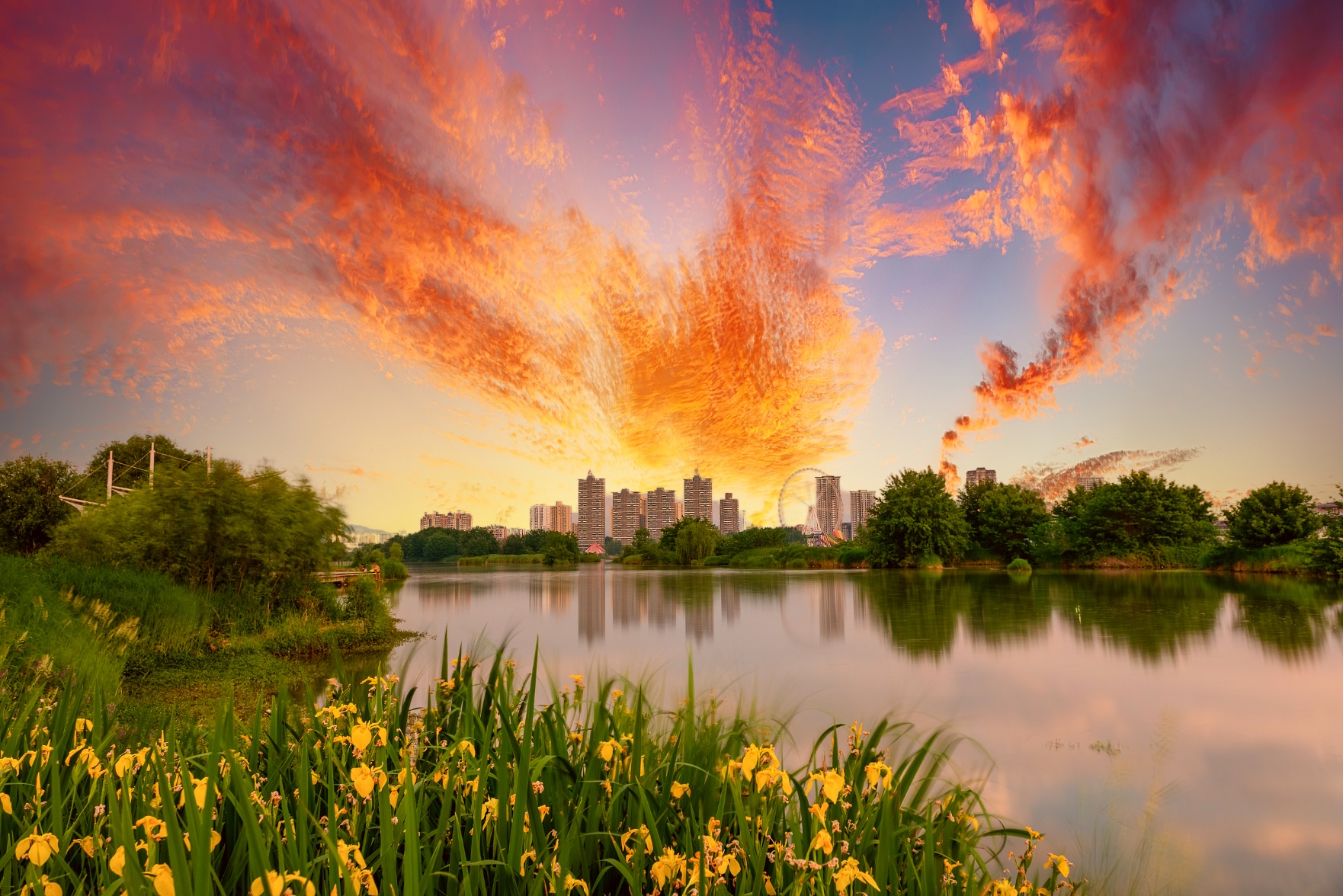
Hanjiang Wetland Park
Tianhan Wetland Park is located on the Han River in Hanzhong City and is a popular leisure destination for Hanzhong residents.