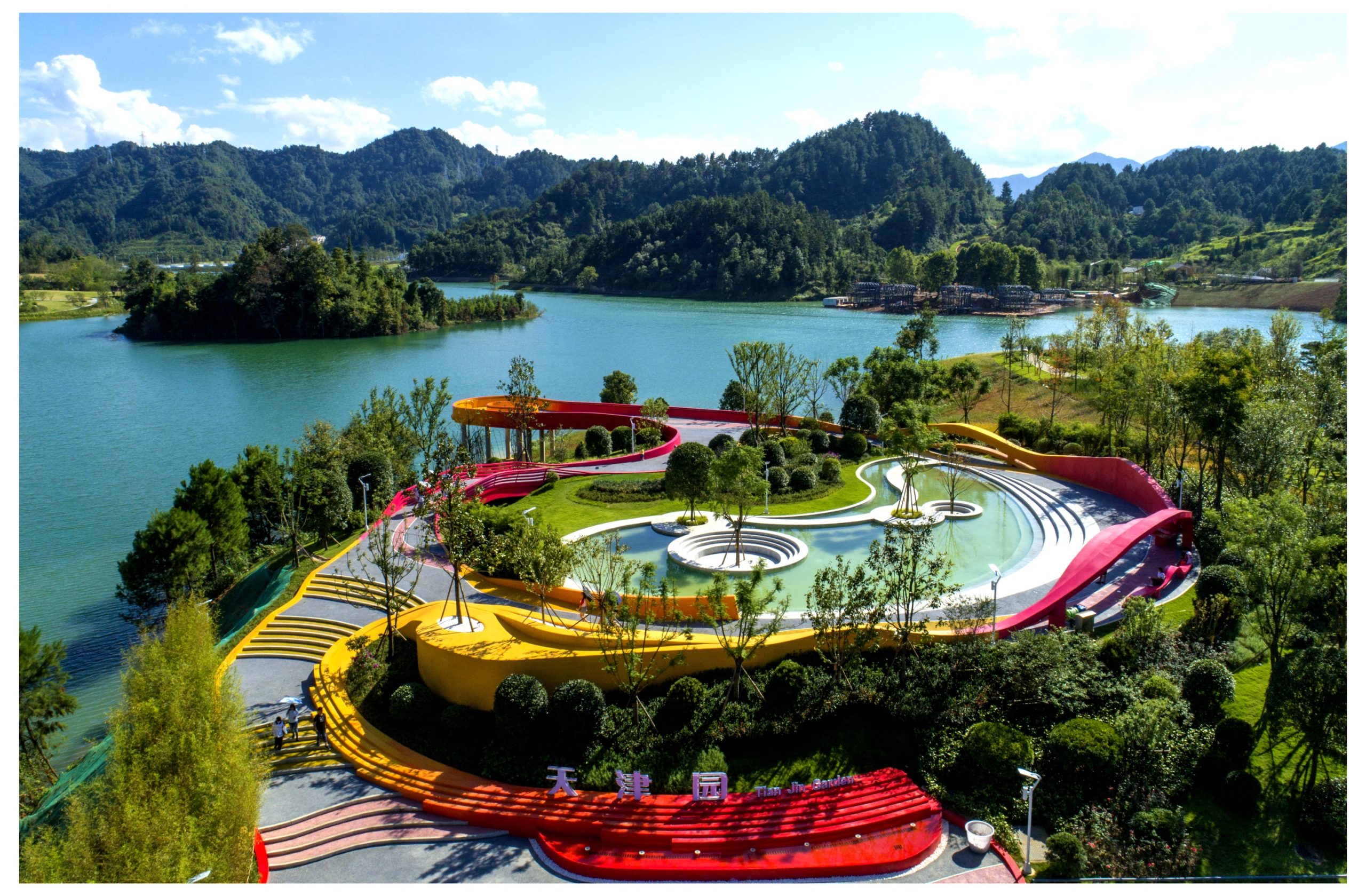
The 4th Green Expo was held in Duyun City, Qiannan Prefecture, Guizhou Province. This is the first time that the Green Expo has been held in western China, in a minority area, in a prefecture-level city, and in a plateau mountain area.The theme of the Green Expo is “People-oriented, building a green home together”. This year’s Green Expo revolves around the theme of “Greening the Chinese Dream and working together to achieve a well-off society”, with “Guishan Guishui, Green Expo Qiannan” as its image slogan, and strives to create a demonstration site for the construction of ecological civilization and the display of greening achievements in the context of the new era.The park has 56 exhibition gardens with a total area of 220,747 square meters. The landscape lake area consists of one island and two lakes, with four lakeside ecological wetlands and seven landscape bridges on the lake, including six bridges around the lake and one bridge across the lake. There are many waterfront landscape buildings such as pavilions, corridors, terraces, and docks along the lakeshore. The greening planning is based on the principle of “green + colorful”. Through measures such as greening, renewal, and color enhancement, the park has flowers and scenery in all seasons.
归档: Attractions
-
Mount Shuangru Scenic Area
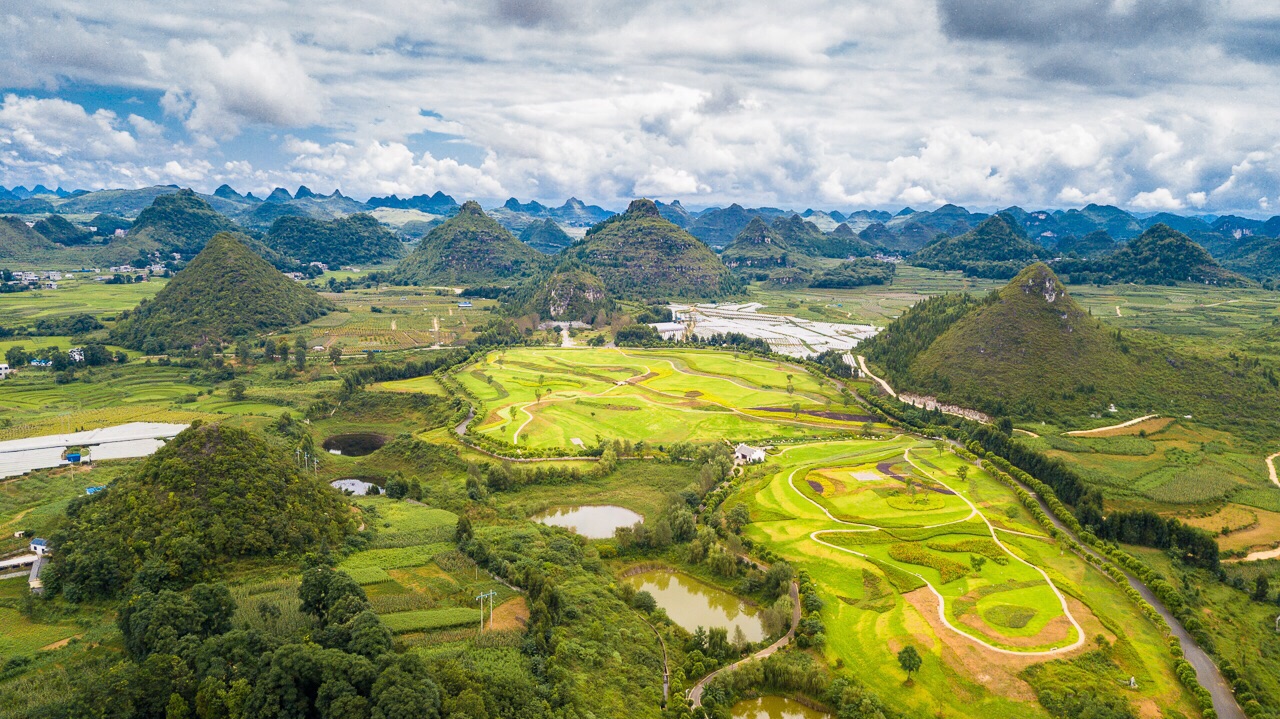
Mount Shuangru (Mt. Bosom) Scenic Area is located in Zhenfeng County’s Qianxinan in Guizhou Province. It is the symbol of Zhenfeng. The “Mount Bosom” moniker comes from its shape, resembling female breasts. Endless fertile farmlands span the foothills, which are irrigated by the Sancha River and is the breadbasket of the local people. The local Buyi people worship the mountain as the “Earth Mother.” Mount Bosom is a unique karst landscape and regarded as a gift from mother nature.
-
Water Cruise in Zhenyuan Old Town
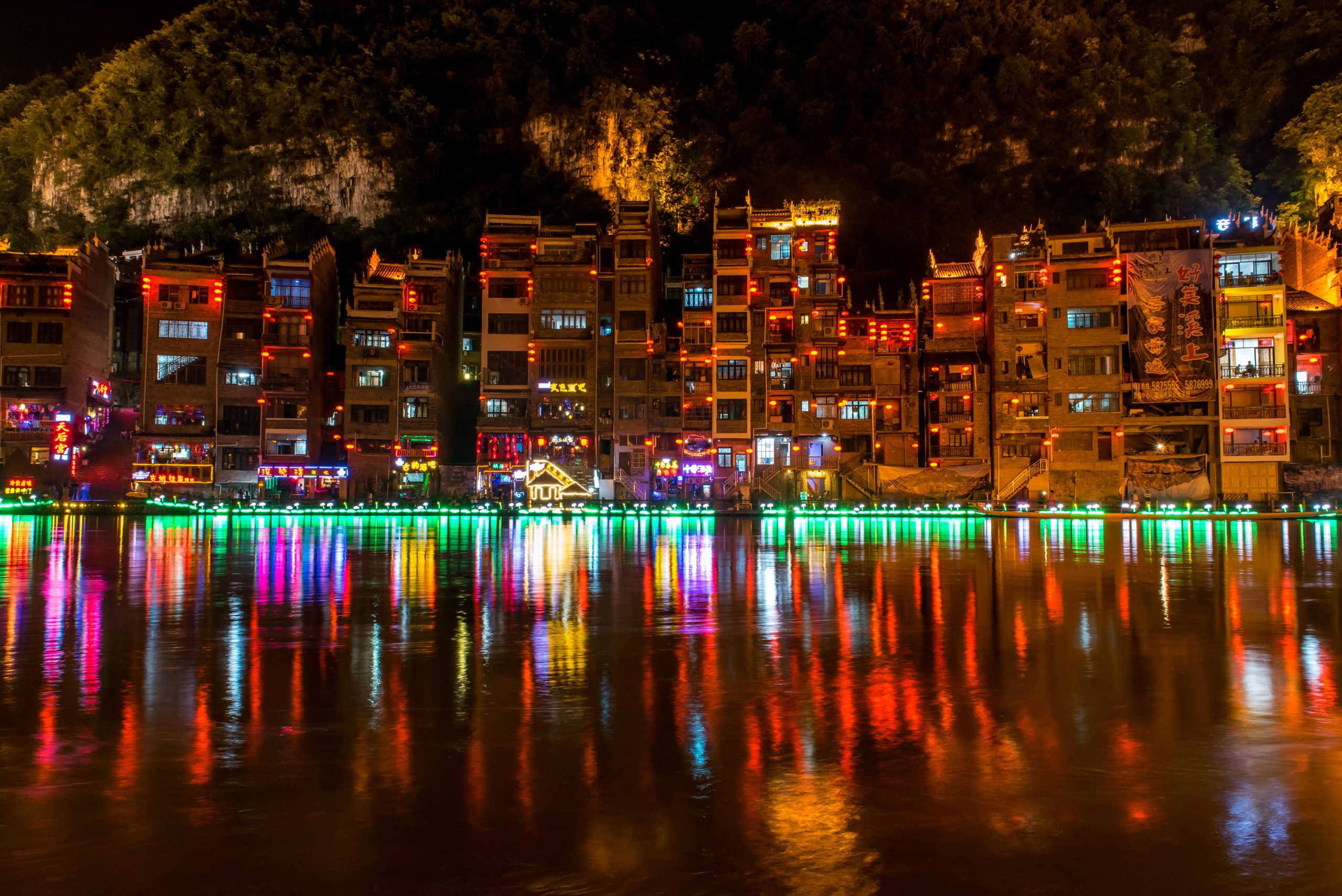
Zhenyuan County is located in the east of Guizhou Province and belongs to Qiandongnan Miao and Dong Autonomous Prefecture. The ancient yet beautiful winding Wuyang River flows between Fu Village and Wei Village, just like a Tai Chi pattern, while two large stone arch bridges cross the river like two strings linking the two villages. Since ancient times, Zhenyuan County had been an important courier station for merchants from Hunan Province. It was the only place where monks, envoys, and messengers from the capital, small towns on the southwestern border, Annam, Myanmar, Siam, and India could exchange letters, gifts, and goods. As a result, it has the reputation of being the “Southern Silk Road”.
-
Qingyan Ancient Town – Dingguang Gate
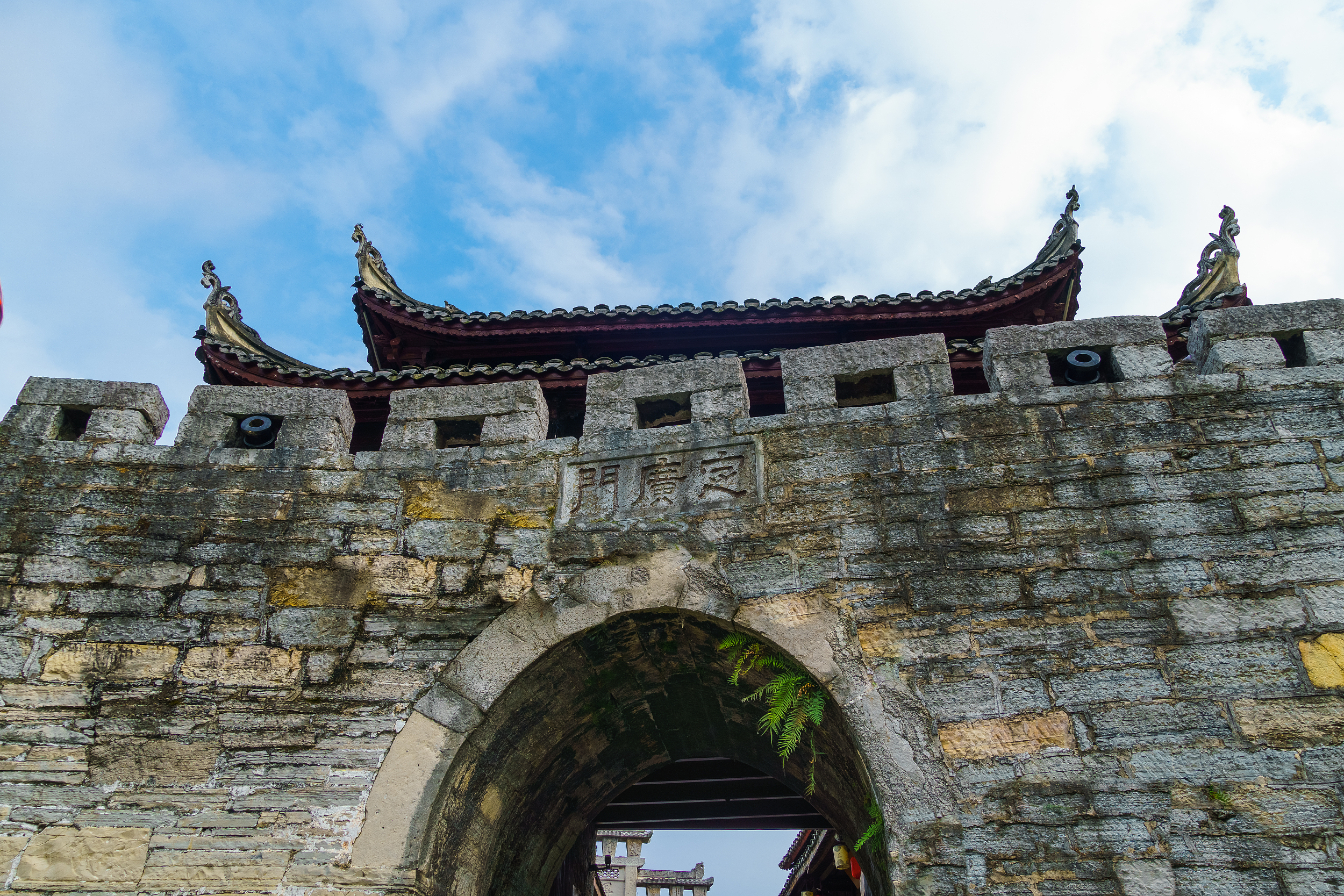
It was built during the Shunzhi period of the Qing Dynasty when Ban Yingshou expanded and renovated Qingyan City. The tower has a green tile roof. The current building was renovated later and a protective wall was added. There is a pond in front of Anguang Gate with lotus flowers in full bloom, which is a unique scenery.
-
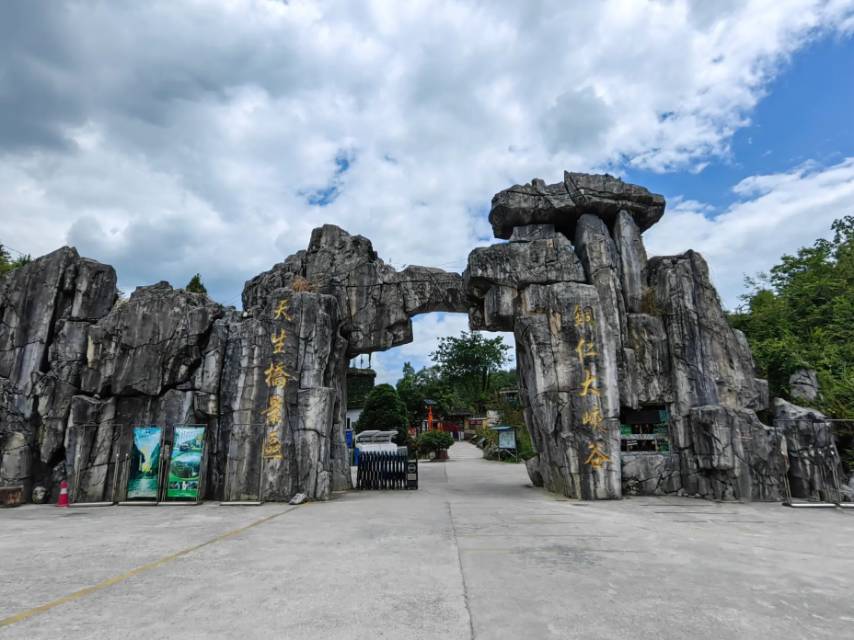
Bijiang Natural Bridge Scenic Area
Bijiang Natural Bridge Scenic Area is located in Chuanyu Town, not far from Tongren. The scenic area has deep valleys and clear lakes with beautiful Mandarin ducks. The Natural Bridge resembles an enormous beam that straddles the two banks. In ancient times, the river below was called the Daliang River. The area underneath is shaped like an inverse V. Visitors can take a boat ride along the beautiful scenery of both banks and feel as though they are traveling through a painting.
-
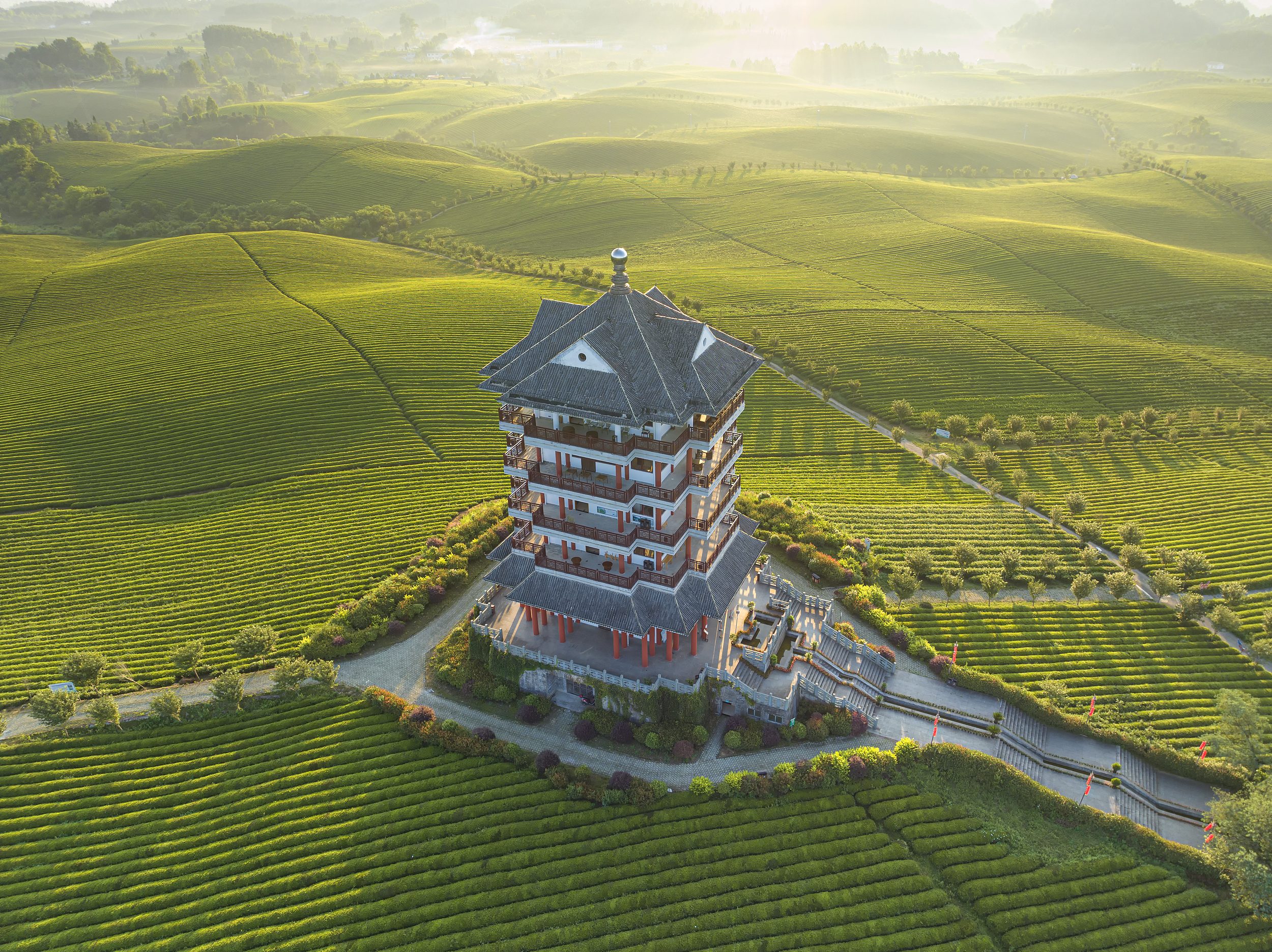
China Chahai Scenic Area
China Tea Sea Scenic Spot is a panoramic scenic spot, which mainly refers to the tea culture rural tourist area of Meitan County Hejinlong Ring Road (Waltaoba-Jinhua-Longfeng). The scenic spot has 43,000 mu of contiguous tea gardens, which can be called the largest tea sea in the world. The scenic spot has now built a tea sea maze, a hot spring resort, a China Tea Museum, an international mountain bike track, an animation theme park, an expansion training base and other projects. There is also a “Guanhai Building” in the core scenic area, where tourists can climb the building ring Looking at the scenery of the tea sea, it is magnificent and extraordinary.
-
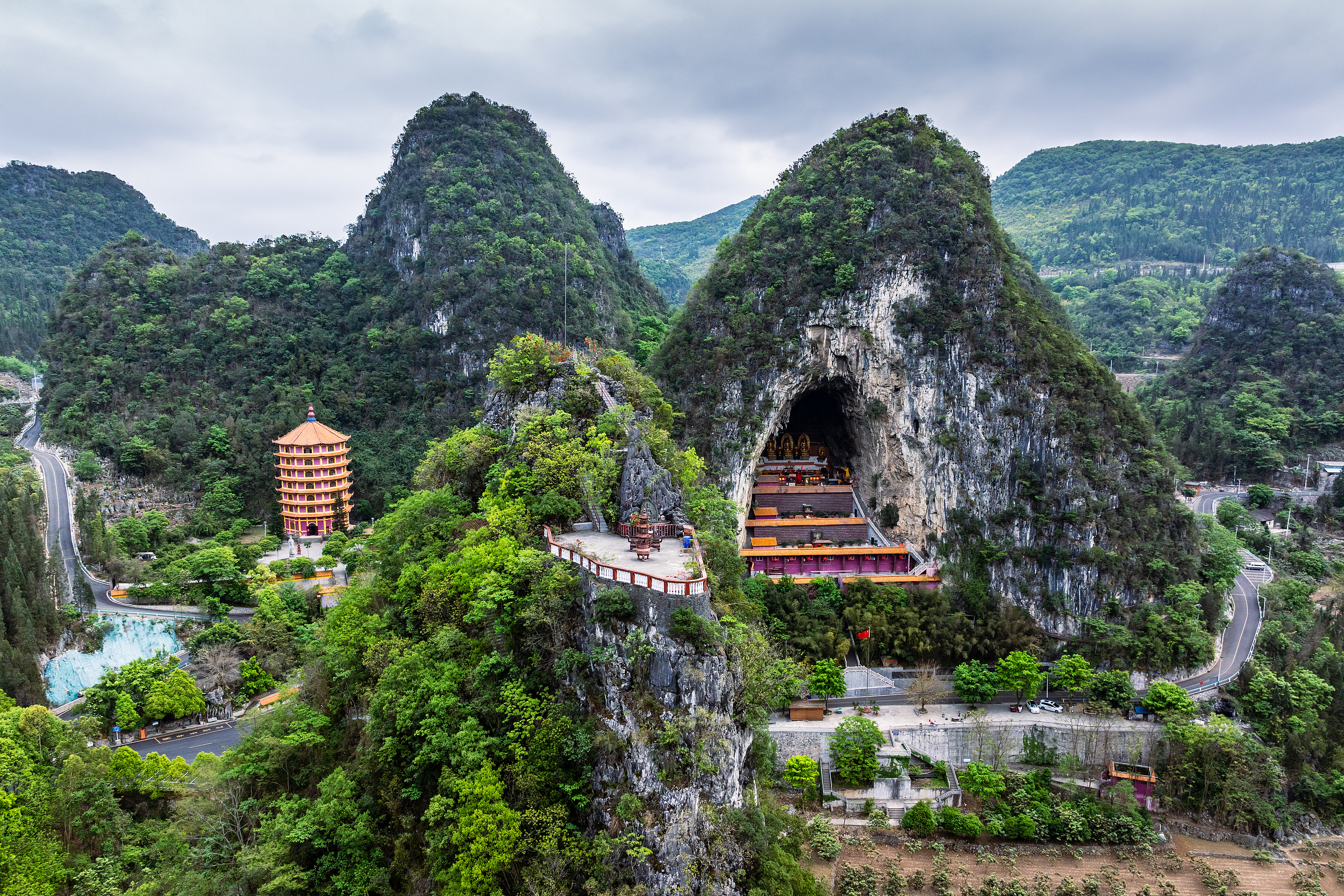
Wanfo Temple
Xingyi Wanfo Temple is located in the southeast of Xingyi City, more than ten kilometers away from the urban area. It is a landscape in the Wanfenglin Scenic Area of Xingyi City, Qianxinan Prefecture. It is integrated with the Wanfenglin Scenic Area, and is connected with the Nitang Stone Forest and Wanfeng Lake. It is a typical karst landform. Surrounded by beautiful green mountains, tall and straight strange rocks, and simple folk customs, it is a natural cave temple in China. Wanfo Temple was built during the Jiajing period of the Ming Dynasty. The cave is 126 meters wide and 82 meters high. The wonders in the cave are in various shapes and shapes, which can be called the essence of the cave. There are the Main Hall, Maitreya Hall, Guanyin Hall, Ksitigarbha Hall, Dizang Hall, and Guest Hall. There are more than ten monks in the temple. There are also thousands of small Buddha statues on the walls of the cave, which means that all Buddhas are worshipping the ancestor.
-
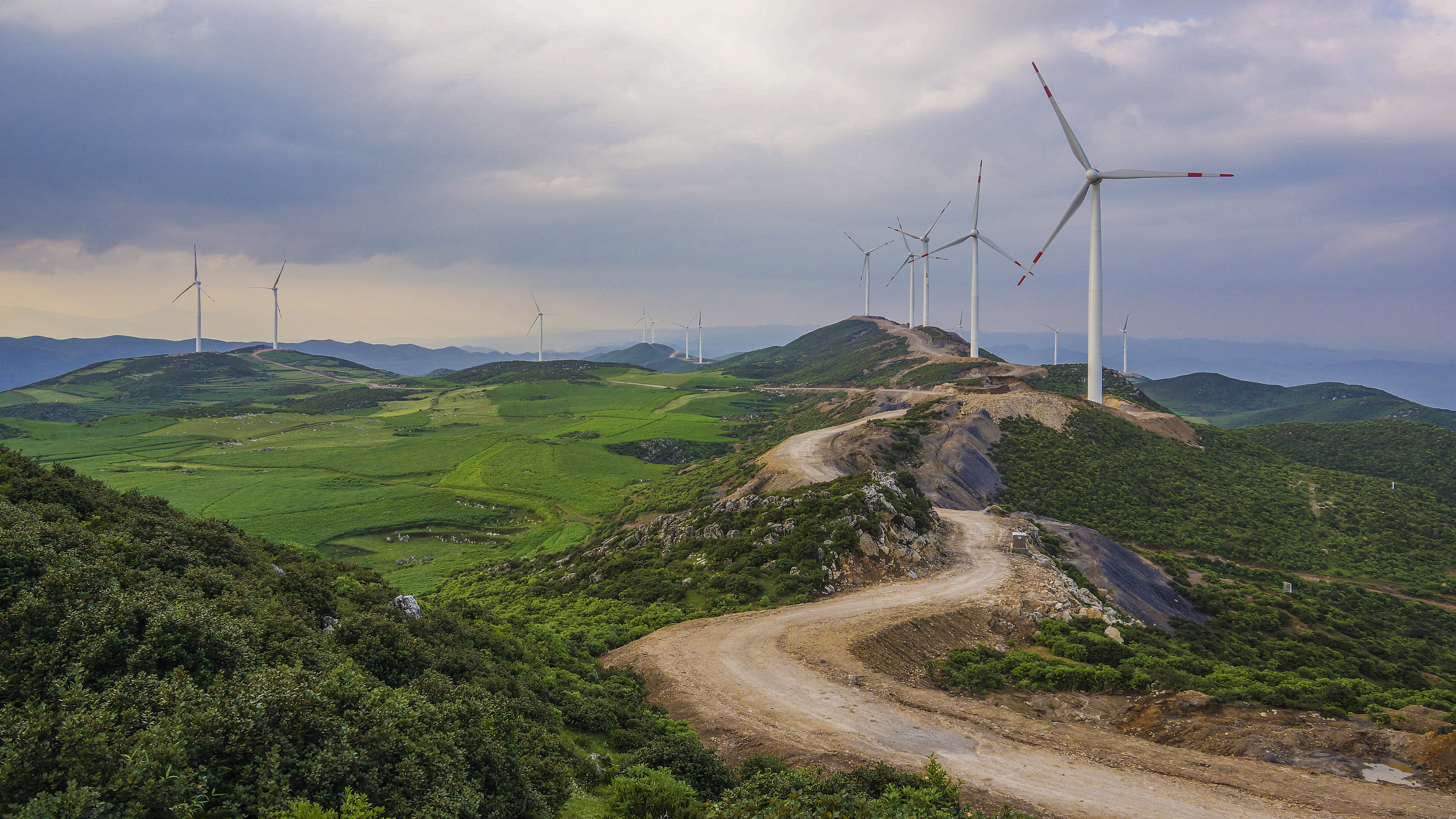
Baicao Fields
Baicaoping Tourist Area is about 20 kilometers away from the county seat of Weining Yi and Miao Autonomous County, with a total area of 26,700 hectares (about 400,000 mu). The uniqueness of Baicaoping lies in the ups and downs of the terrain and the fantasy of clouds, sky and fog. Standing on the Zu’an Mountain, the main peak of Baicaoping at an altitude of 2817 meters, looking at it, Baicao is like a huge green carpet rolled up by a hurricane, which is in line with the majestic atmosphere of “Wumeng Majestic”. Hundred lawns also have a soft side. Under the sunny sky, Hundred Lawns appear soft, quiet and distant. All kinds of weeds and wildflowers compete for beauty. In midsummer July, the blue and purple flowers of Yunnan Scutellaria scutellariae cover dozens of hillsides, and the entire mountain becomes blue-violet. The grassland has the poetic and picturesque meaning of “the sky is blue and the wild is boundless”, and it is a good place to spend summer and escape the heat and go sightseeing.
-
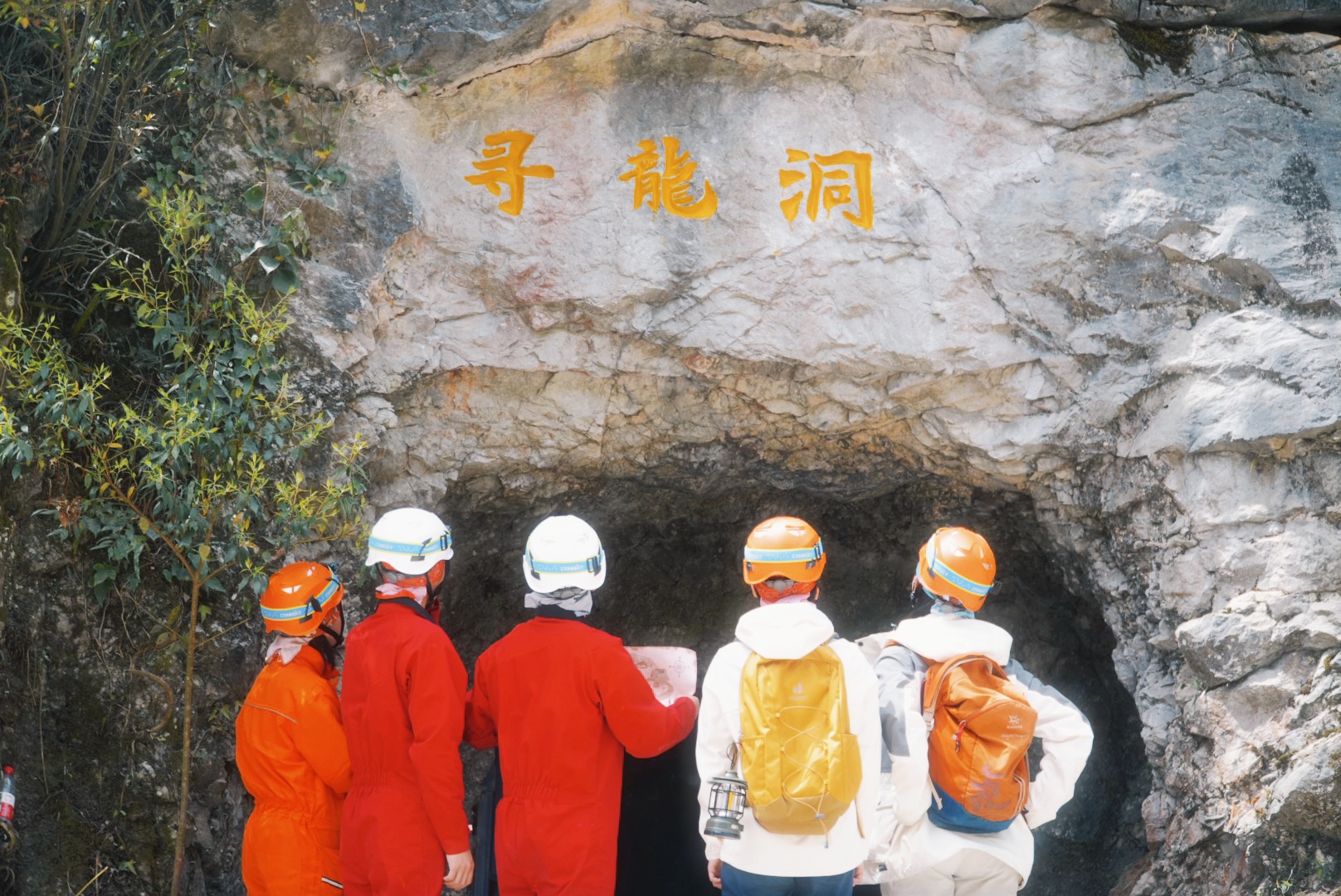
Xunlong Cave
Xunlong Cave: Embark on Your Underground Fantasy Adventure! Tired of the same old tourist spots? Craving some excitement? Head to Xunlong Cave for a thrilling underground adventure! “Xunlong Cave” is locatedDragon Palace in AnshunJust a 30-minute drive from Anshun West Station, this conveniently located destination boasts pristine karst caves. Xunlong Cave features a diverse array of views with its rugged rock formations, spacious cavern halls, and narrow winding paths—creating a mysterious underground labyrinth ready for your exploration. “Xunlong Cave” offers two cave exploration experiences to meet the needs of different visitors: Leisure caving (approx. 1.5 hrs): Perfect for first-time visitors to experience cave exploration. With guidance from professional coaches, you’ll comfortably discover the fascinating views of the cave and feel the mysterious charm of the underground world. Deep caving (approx. 3.5 hrs): Perfect for thrill-seeking visitors who want to venture into the heart of caves, explore uncharted territories, and experience an adrenaline rush. Before entering Xunlong Cave, our professional guide team will provide detailed pre-trip training at the camp. They’ll teach you how to properly wear personal safety equipment including helmets, headlamps, caving suits, and harnesses, while guiding you through essential cave safety knowledge. After completing this thorough training, you’ll be ready to embark on your “Xunlong” adventure under the leadership of our expert guides! “Xunlong Cave” is not just an adventure, but an unforgettable experience. Here, you can challenge yourself, push your limits, marvel at nature’s craftsmanship, and create truly unique memories.
-
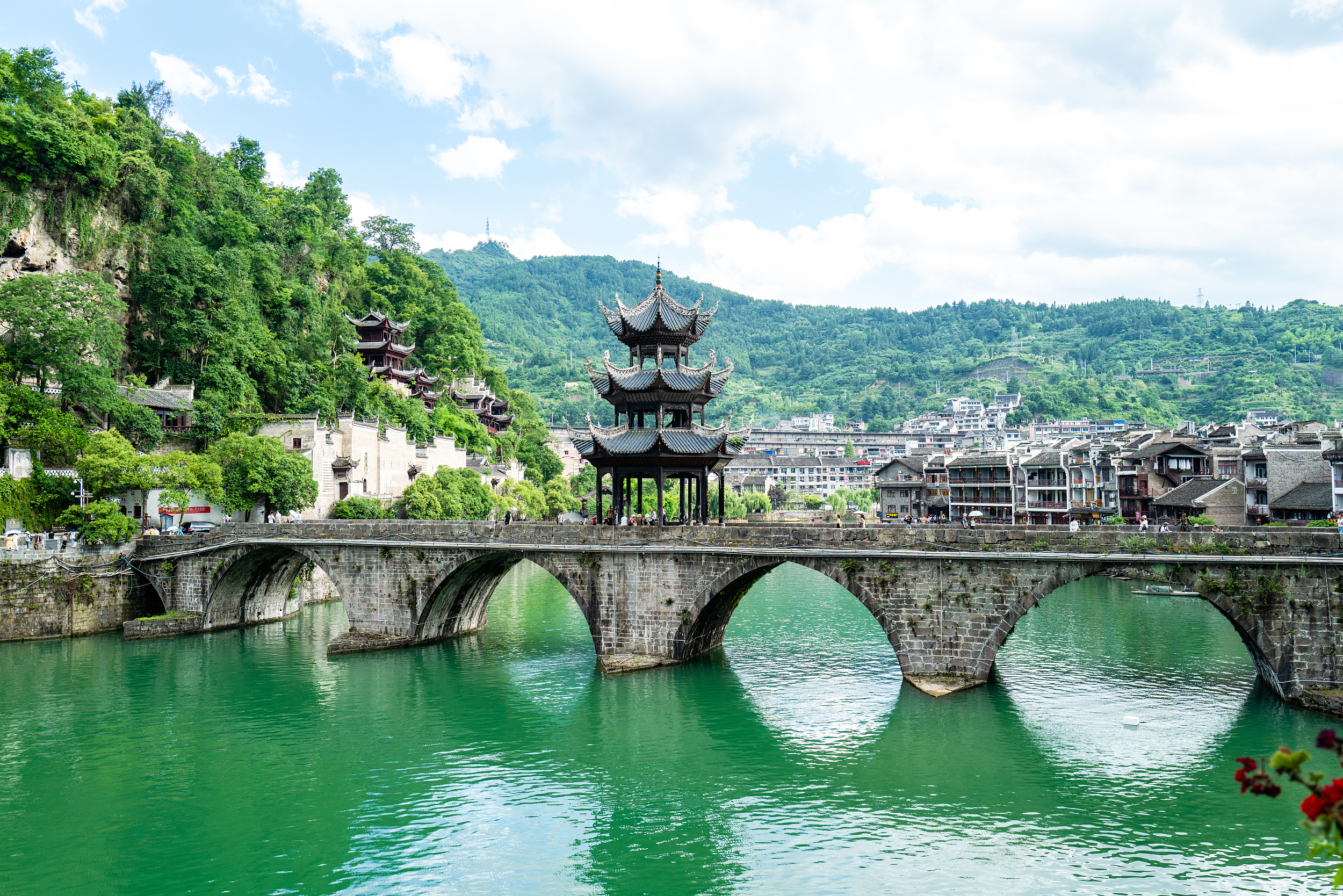
Zhusheng Bridge
Zhusheng Bridge is located in Zhonghe Mountain at the east of Zhenyuan County, Guizhou Province. It is also named Wuxi Bridge, and its construction began in the Hongwu Period during the Ming Dynasty. was built by Daya Tian, the premier of Zhengyuan County and Huitong He, the Magistratein of Zhengyuan County. Later, it was rebuilt in the Thirty-seven Year of Wanli (1609), and completed in the First Year of Chongzhen (1628), which totally had taken about 250 years. However, it had been kept rebuilding for several time due to the flash floods. Finally, in the First Year of Yongzheng in Qing Dynasty (1723), the latest restoration was completed successfully. And it was renamed as Zhusheng Bridge to celebrated the birthday of King Kangxi. Nowadays, it is intact basically by protection.