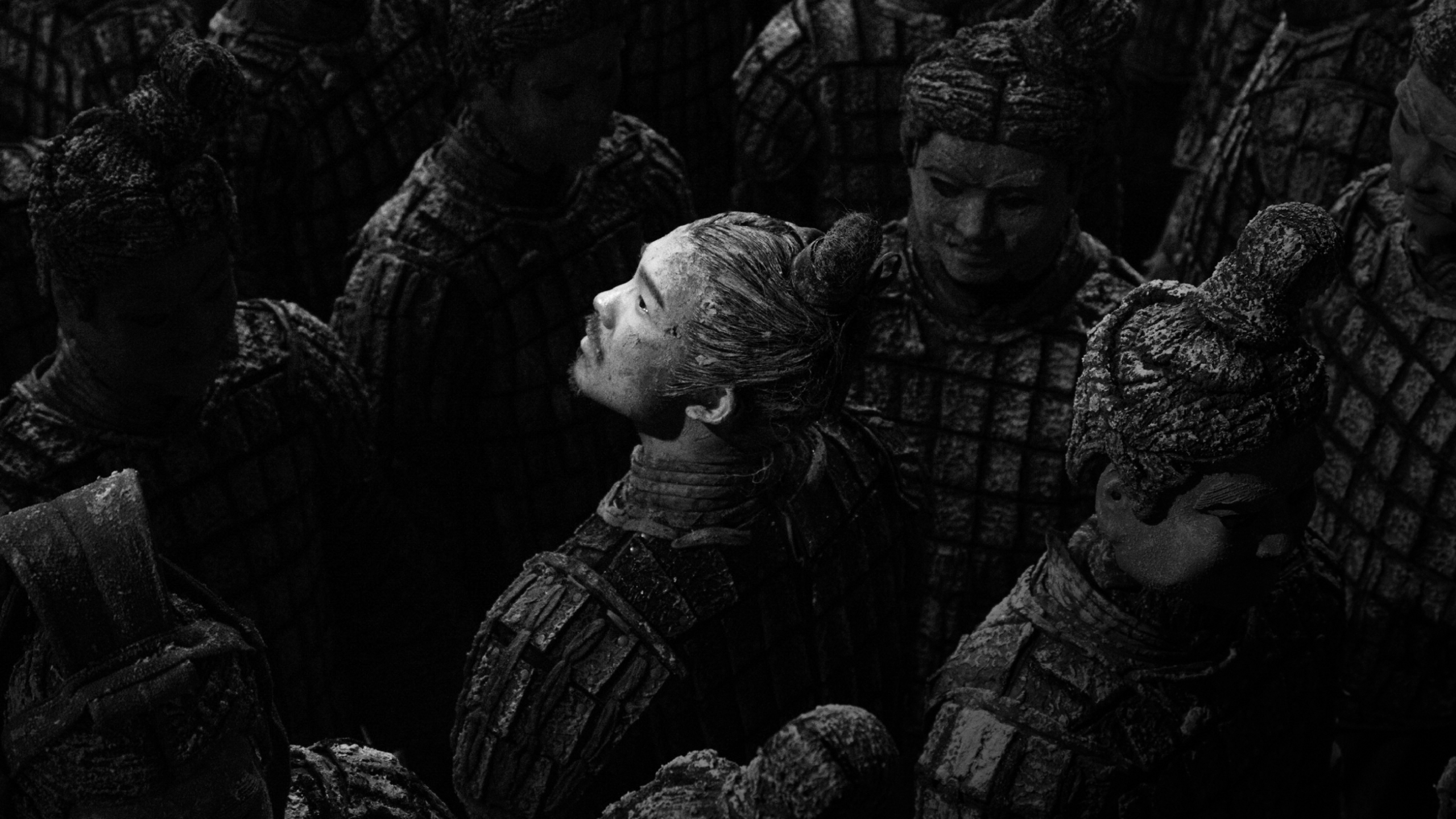
A prisoner of war named “Heifu” found salvation through his tile-making skills, as Qin law granted him the opportunity to earn citizenship through merit. While contributing to the construction of the royal capital, Heifu was ennobled for saving the emperor from an assassin’s blade. Marching to war for Qin’s vision of “eternal peace,” Heifu ultimately fell during the unification campaign, joining countless unnamed Qin soldiers immortalized as terracotta warriors guarding Chinese civilization. The unyielding tenacity of old Qin people, their reformist perseverance, and their vision of “uniting all under heaven” ultimately became the enduring spirit that has sustained the Chinese nation for millennia.
归档: Attractions
-
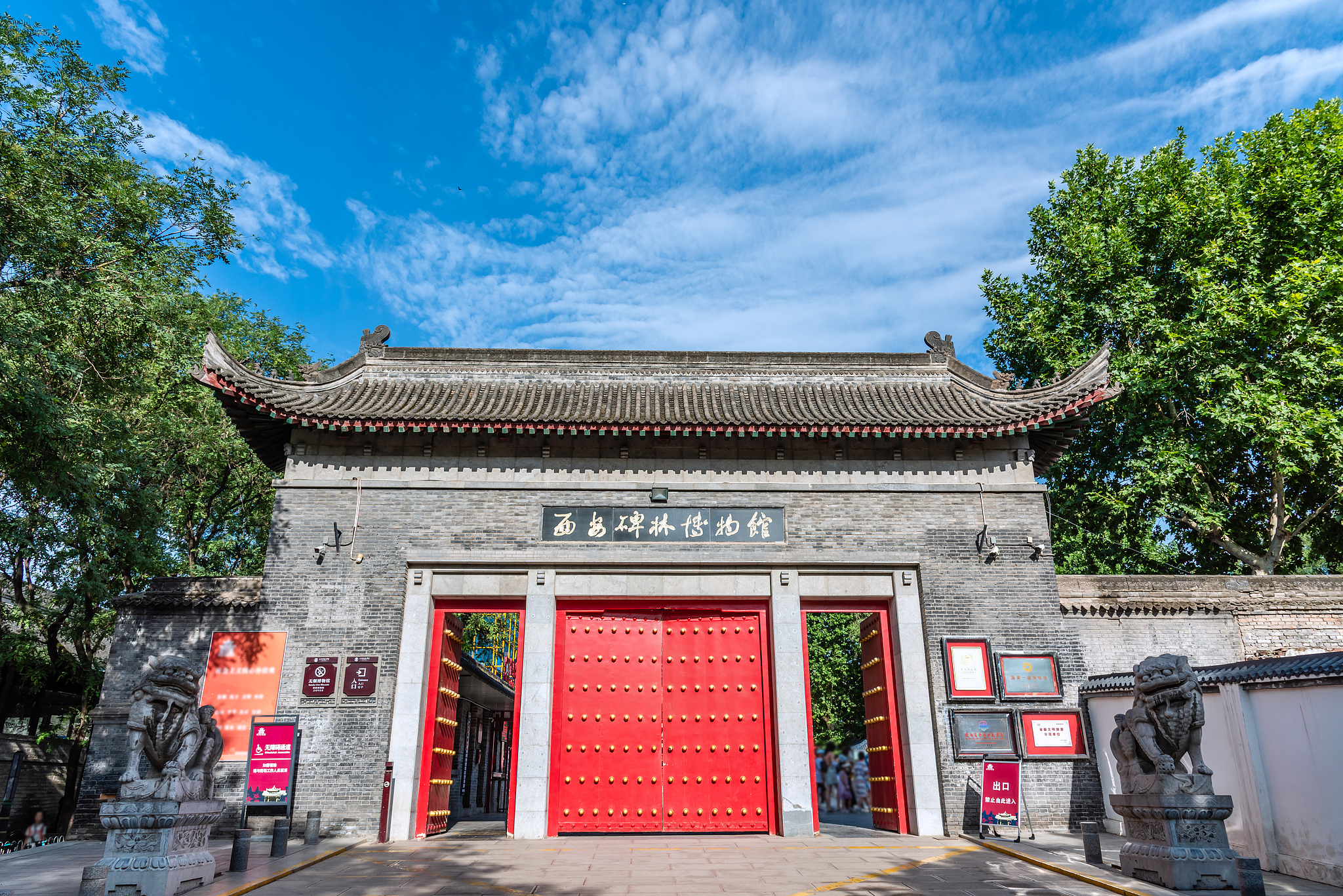
Xi’an Beilin Museum
Xi’an Beilin Museum is located near Wenchang Gate. The museum contains a forest of stone monuments, stone carvings, etc. Among them, the forest of stone monuments is composed of monuments and epitaphs from past dynasties. It is the highlight of the museum. In the Beilin Museum, you can admire inscriptions and epitaphs of different dynasties. The collection of inscriptions and epitaphs spans over 2,000 years.
-
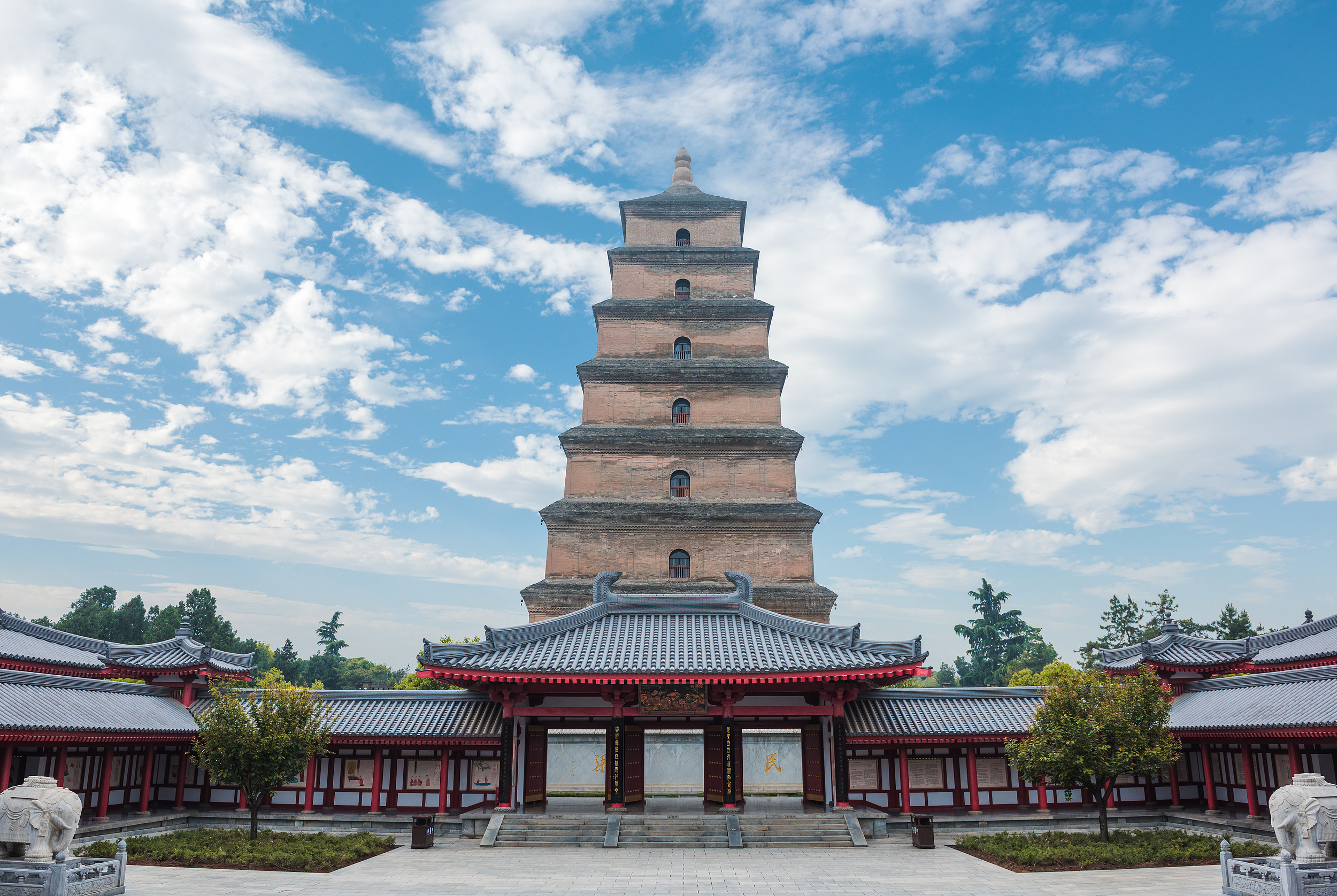
Giant Wild Goose Tower Cultural Leisure Scenic Area
The Big Wild Goose Pagoda Cultural and Leisure Scenic Area in Xi’an has become a famous tourist destination in Xi’an with its unique historical and cultural charm and rich leisure and entertainment elements. The Big Wild Goose Pagoda Cultural and Leisure Scenic Area is not only a tourist destination, but also a platform for cultural inheritance and exchange. Various cultural activities are sometimes held here, allowing tourists to feel the unique charm of Shaanxi’s regional culture while enjoying the beautiful scenery. It also attracts many literati, artists and cultural enthusiasts to participate, injecting new vitality and cultural connotations into the scenic area, allowing tourists to experience Shaanxi’s folk culture in all aspects. At the same time, there are many dining, shopping and leisure places around the scenic area, providing tourists with convenient services and rich leisure experiences, allowing people to enjoy the convenience and comfort of modern life while feeling the historical culture.
-
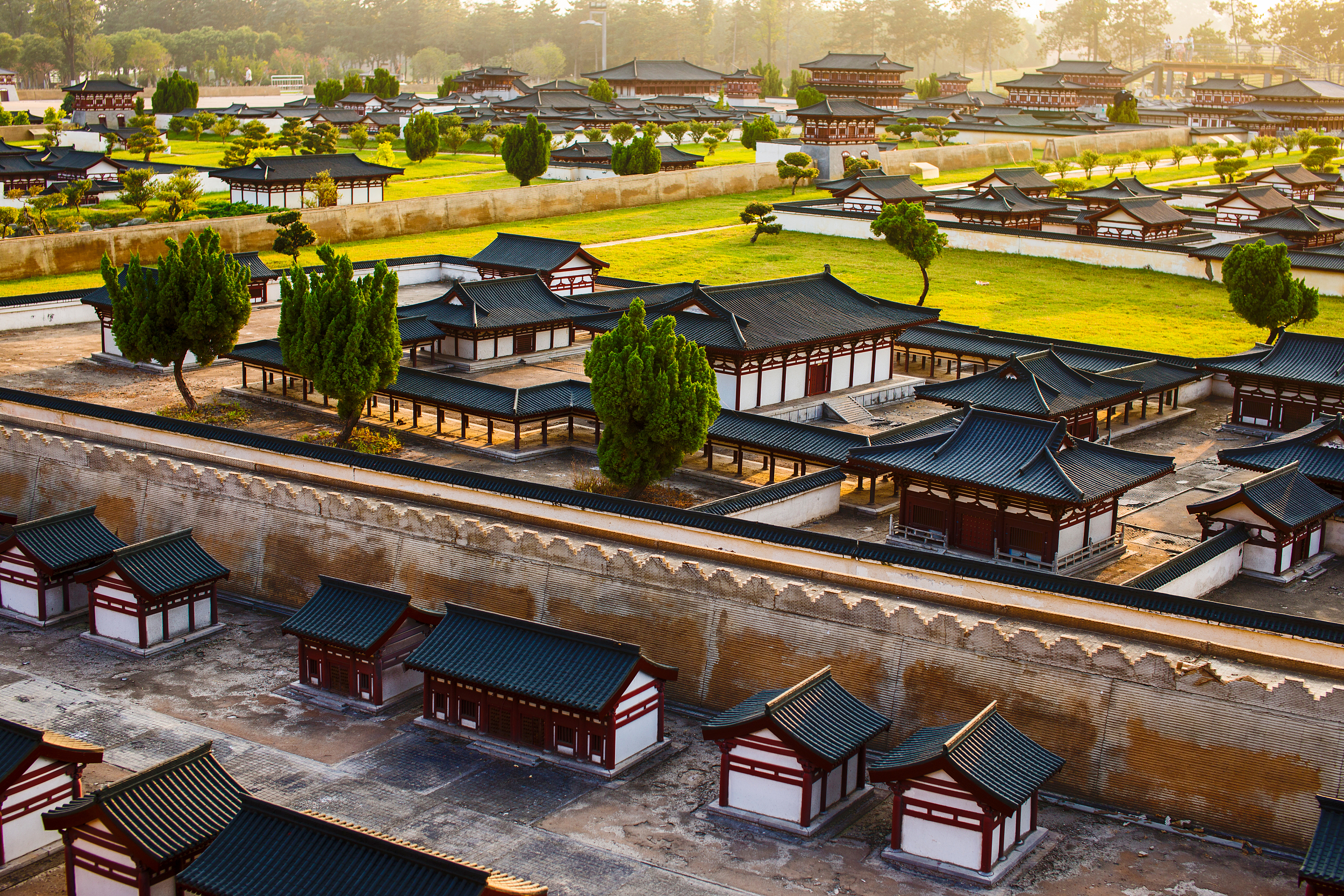
Daming Palace National Heritage Park
The Daming Palace, the grand imperial court of the Tang Empire, served as the political center and national symbol of the dynasty. As one of the “Three Great Palaces” (Daming Palace, Taiji Palace, and Xingqing Palace) in Chang’an, it was the largest and known as the “Eastern Palace.” From Emperor Gaozong’s reign onward, 17 Tang emperors conducted state affairs here for over 240 years. This magnificent architectural complex stood as one of the world’s most expansive palace compounds during its time.The lines from poet Wang Wei’s “Morning Court at Daming Palace in Response to Jia Sheren” – “The nine heavens’ gates swing open to reveal the palace; envoys from myriad nations bow before the imperial crown” – epitomize the grandeur of Tang Dynasty’s golden age, showcasing the empire’s majestic authority and the solemn magnificence of imperial ceremonies.The Daming Palace was first built in the 8th year of Emperor Taizong’s Zhenguan era (634 AD), covering an area of approx. 3.2 km². The entire palace complex can be divided into two main sections: the outer court for official assemblies and the inner court for residence and entertainment. The outer court centers around the Hanyuan Hall (outer court), Xuanzheng Hall (middle court), and Zichen Hall (inner court), while the inner court features the Taiye Pool along with over 30 auxiliary halls, pavilions, and observatories.The term “Daming” first appeared in the “Daming” chapter of “The Book of Songs: Greater Odes.” According to the “Mao Commentary,” it signifies: “King Wen possessed brilliant virtue, so Heaven again commanded King Wu. As King Wen and King Wu succeeded one another, their brilliant virtue daily grew more vast, hence the name Daming.” Like the name Weiyang Palace, which also originates from “The Book of Songs,” Daming Palace served as a self-motivating symbol inspired by the diligent governance and wisdom of the Zhou kings.The origin of Daming Palace is also associated with a fascinating legend. During its initial construction, an ancient bronze mirror was unearthed at the site. The renowned statesman Wei Zheng recognized it as the “Qin Mirror,” a national treasure once used by Emperor Qin Shi Huang to eliminate political dissidents. Legend claims this mirror could reveal a person’s internal organs with astonishing clarity. More significantly, it could distinguish loyal ministers from treacherous ones and predict the rise and fall of dynasties. After Daming Palace’s completion, the Qin Mirror was hung in the imperial court to ward off evil spirits, giving rise to the idiom “a bright mirror hung high” (symbolizing impartial justice). With this treasure safeguarding the palace, the atmosphere became one of supreme integrity and enlightenment—hence the name “Daming Palace” (Great Illumination Palace).On March 4, 1961, Daming Palace was designated by the State Council of the People’s Republic of China as one of the first batch of National Key Cultural Relics Protection Units. In 2010, Xi’an established Daming Palace National Heritage Park on the original site. On June 22, 2014, the Daming Palace ruins were successfully inscribed on the UNESCO World Heritage List as part of the “Silk Roads: the Routes Network of Chang’an-Tianshan Corridor.” On October 18, 2021, the Daming Palace ruins were selected among the “Top 100 Archaeological Discoveries of the Century.”The Daming Palace of the Tang Dynasty was a magnificent architectural complex in Chang’an city. The park is built on the ruins of Daming Palace, where visitors can see foundation remains of palaces like Hanyuan Hall and admire the restored miniature model of Daming Palace.The attraction has a south gate and an east gate, with the south gate serving as the main entrance where the visitor center is located. Visitors are recommended to enter through the south gate. The heritage park consists of both free and paid sections, with the paid area covering the core attractions including the Danfeng Gate Ruins Museum at Daming Palace National Heritage Park, Hanyuan Hall Ruins, Xuanzheng Hall, Zichen Hall Ruins, and the Daming Palace Ruins Museum.The Daming Palace National Heritage Park – Danfeng Gate served as the main southern entrance to the Daming Palace, facing the 176m-wide Danfeng Gate Avenue. North of the Danfeng Gate lies the central north-south axis of the palace complex, featuring structures like the Hanyuan Hall, Xuanzheng Hall, Zichen Hall, Penglai Hall, Hanliang Hall, and Xuanwu Hall. Most other palace buildings were arranged along this central axis. According to Yonglu historical records, the Daming Palace’s architectural layout progressed from Danfeng Gate to Hanyuan Hall and then to Zichen Hall further north – all three major structures were built atop hills. The front court area occupied the highest point of Longshou Mountain, with the terrain dropping sharply by several meters beyond this section toward the northern slopes.The Hanyuan Hall, Xuanzheng Hall, and Zichen Hall were the three main halls of Daming Palace, with Hanyuan Hall serving as the principal throne hall. Flanking the Xuanzheng Hall were two key government offices – the Secretariat and Chancellery – along with the Hongwen Academy and Hongshi Archives. Parallel to the central axis, two longitudinal streets ran east and west, created by aligned gateways piercing through three transverse palace walls.The northern side of Longshou Hill served as the rear court, featuring low-lying terrain where water from the Longshou Village canal was diverted to form a lake—Taiye Pool. The emperor’s sleeping quarters and auxiliary halls were mostly concentrated on the elevated grounds of Longshou Hill southeast of Taiye Pool, while the areas for handling state affairs and hosting banquets with officials were situated on the high ground southwest of the pool. The expansive, flat northern shore of Taiye Pool accommodated recreational facilities and auxiliary views, such as the Shicui Hall, Horse Racing Tower, and Cockfighting Platform. The Linde Hall, built approx. during the Linde era of Emperor Gaozong of Tang, stood on the elevated land west of Taiye Pool in northern Daming Palace. As previously mentioned, there were also over 30 other detached halls, pavilions, and viewing platforms in the vicinity.At the attraction, visitors can view the foundation ruins of major halls and the palace outlines recreated with light steel structures on these ruins. Inside the Daming Palace National Heritage Museum, you’ll see artifacts unearthed from the site, including royal utensils and vessels. In the northeast corner of the museum, there’s a 1:15 scale miniature model of Daming Palace where you can “walk” along its streets and immerse yourself in the grandeur of Tang Dynasty’s imperial palace.Inside the Danfeng Gate Museum at Daming Palace National Heritage Park near the south gate, the ruins of the gate tower from the original Danfeng Gate of Daming Palace National Heritage Park are preserved. This site represents one of the largest documented city gates in Chinese history.
-
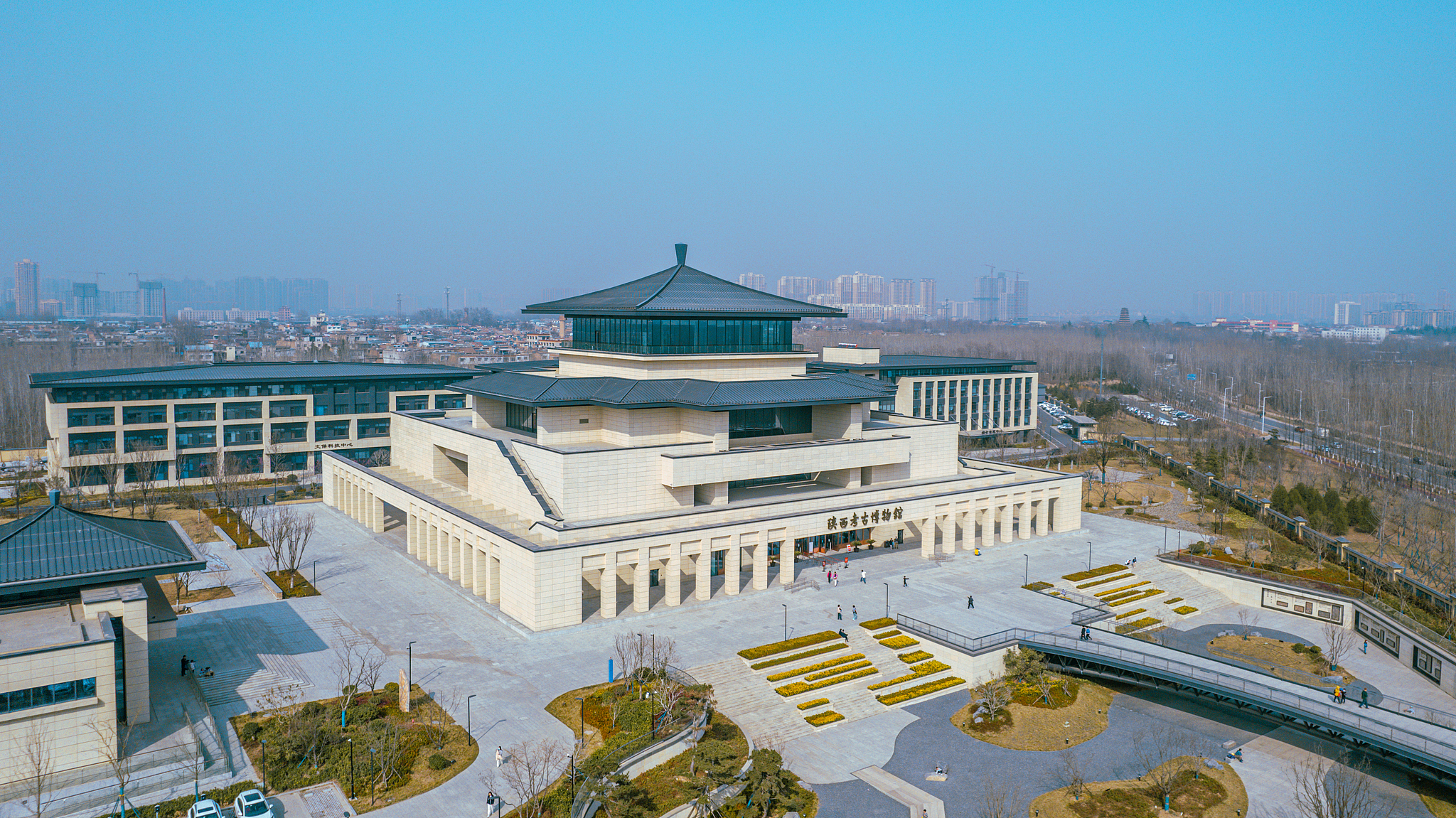
Shaanxi Archaeology Museum
The permanent exhibition of the Shaanxi Archaeological Museum is themed on “Archaeological Sacred Land Huazhang Shaanxi”, which is divided into four chapters: “Archaeological History”, “Cultural Genealogy”, “Archaeological Discovery” and “Cultural Preservation Technology”.
-
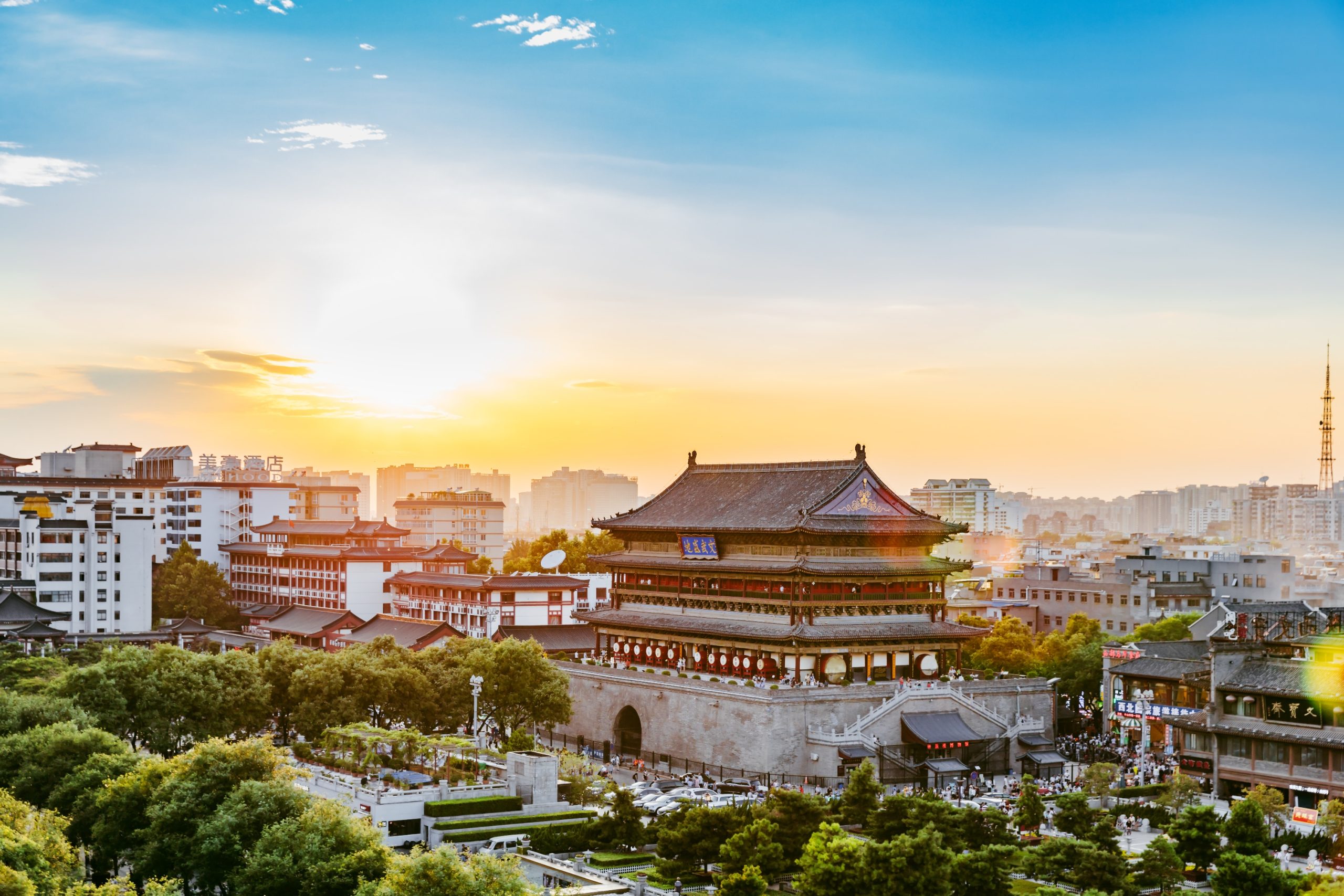
Xi’an Drum Tower
The Drum Tower in downtown Xi’an was built in the 13th year of Hongwu in the Ming Dynasty. It is over 600 years old. In ancient times, it was a time-keeping device. It is now one of the landmarks of the ancient city. On the south side of the Drum Tower, there is a plaque that says: “The Rich Land of Culture and Military”. This plaque, together with the “The First Gate of the World” plaque in Shanhaiguan, are known as the “twin plaques of China”. If you climb the Drum Tower, you can see a 1.8-meter-high drum. There are also 24 red drums engraved with 24 solar terms. They are very robust and impressive. To the north of the Drum Tower is theMuslim Quarter, which is a paradise for food enthusiasts.
-
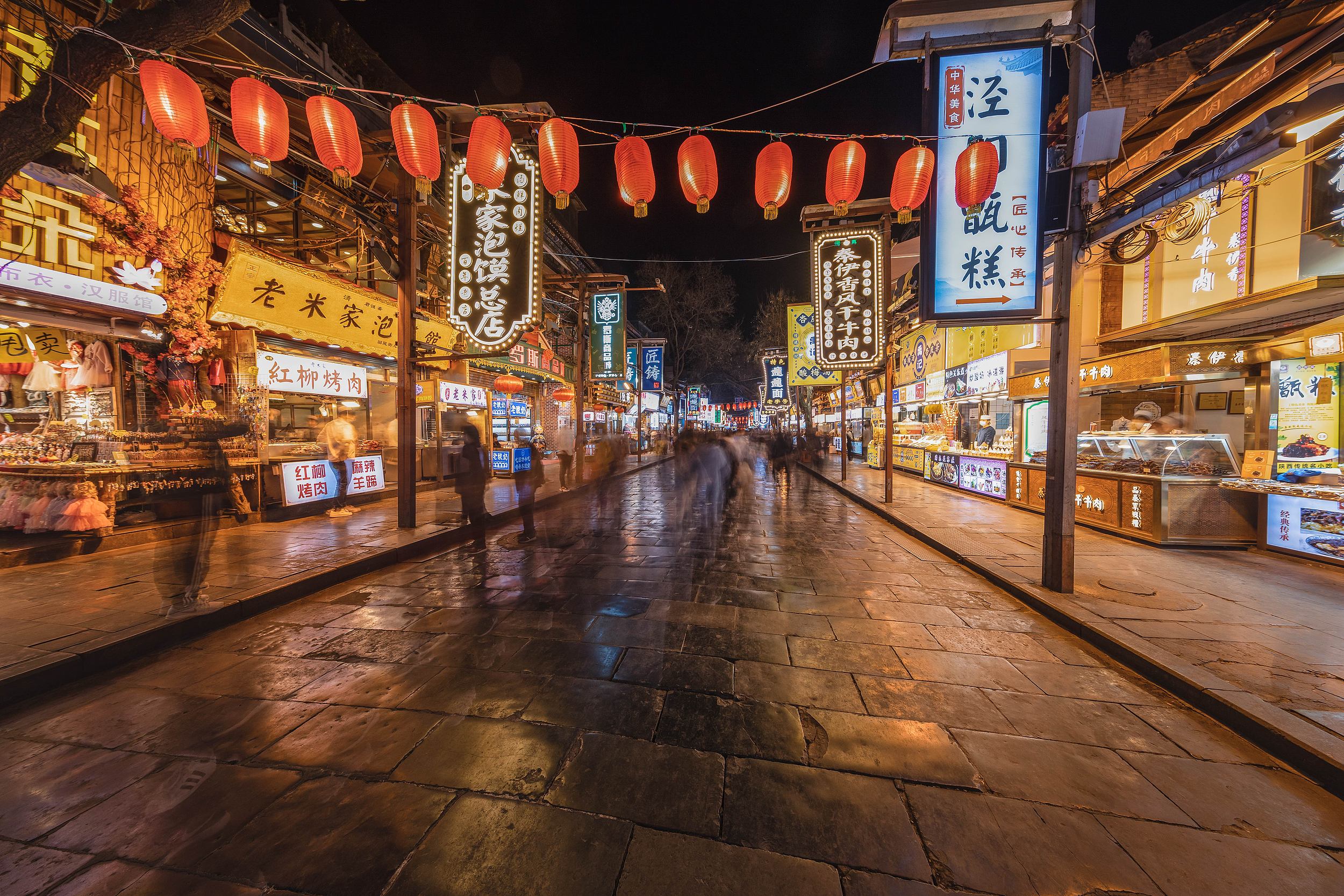
Xi’an Muslim Quarter
Huimin Street is an old Muslim neighborhood with a history dating back centuries ago. It has a distinct Muslim culture and a vibrant food culture, making it a paradise for food lovers. Huimin Street is not just a single street. It is a collective name for the whole Muslim District. It consists of Beiyuan Gate, North Guangji Street, Xiyangshi and Dapiyuan Street. It is also known as “Muslim Quarter” and “Fang Shang”. The district also houses a number of old local restaurants: Jia San Soup Buns and Lao Mi Jia Soaked Bread etc. You can also eat almost all of Xi’an delicacies here: various kebabs, bread and mutton soup, soup buns, spicy goat trotters, and cold skin noodles etc.
-
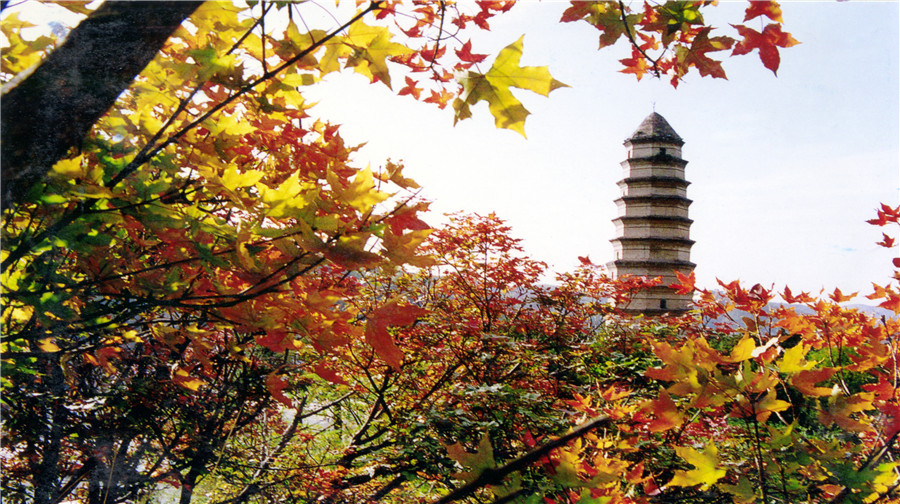
Baota Mountain
Baota Mountain in located in Yan’an city center. It is famous for its tall pagoda, which dates back to the Tang dynasty and was rebuilt during the Ming dynasty. First Beach Tourist Resort is situated on the Nanhai Peninsula in Maogang District, Maoming. The resort was named by the Chinese military general Li Desheng. Next to the pagoda there is a Ming dynasty iron clock, which was used by the Communist government to report the time and issue alerts.
-
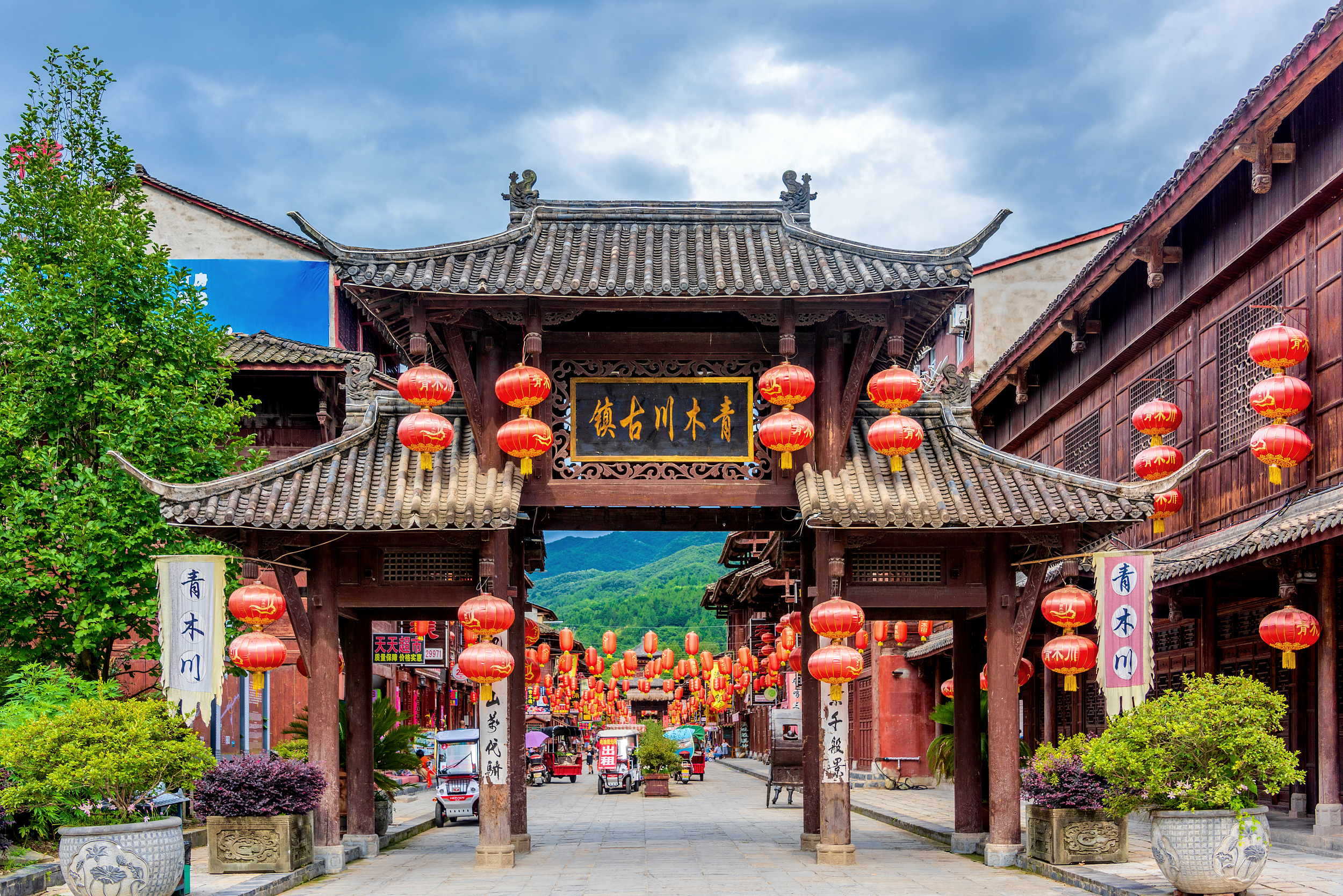
Qingmuchuan Ancient Town
Picturesque Qingmuchuan Ancient Town has a long history. The Qiang and Han people intermingled and lived peaceably together here. The area gradually prospered during the Ming dynasty, and most of the residences here were built during the Ming and Qing dynasties (1368-1912). A river cuts through the ancient town, and the people here live a carefree and leisurely life. The town’s Wei Family Mansion was built during the Republican Era (1912-1949), and the Qu, Wei, Zhao, and Tu ancestral halls were built during the Ming and Qing dynasties.
-
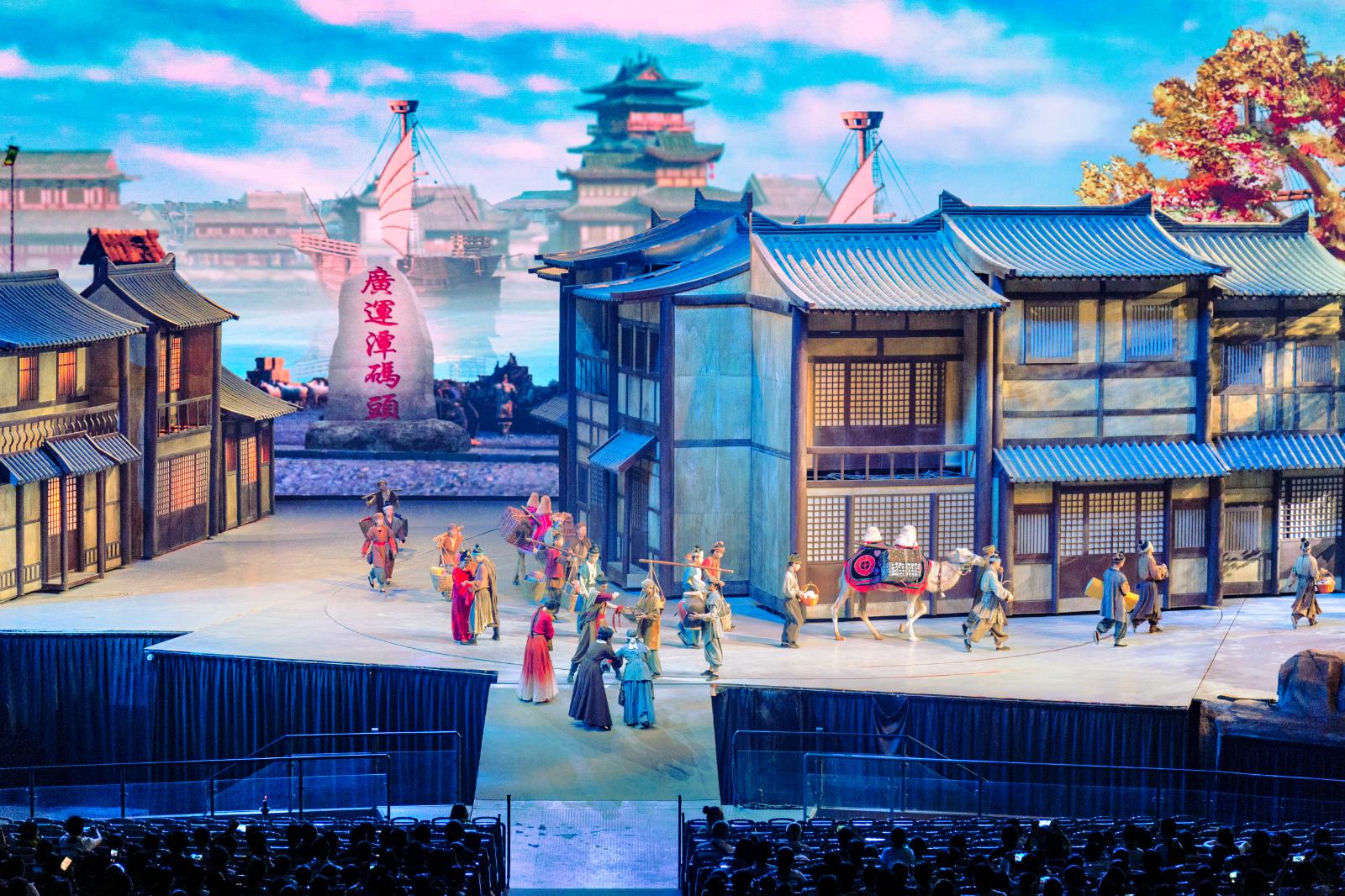
“Legend of the Camel Bell” show
The mobile live-action “Legend of the Camel Bell” show features the world’s first rotating audience platform, blending cutting-edge technology with the legendary history of the Silk Road camel routes. This spectacular production delivers an extraordinary visual experience and emotional impact, celebrating Xi’an’s glorious cultural heritage through inspiring storytelling.The Xi’an Huaxia Cultural Tourism Grand Theater, as the landmark building of the Huaxia Cultural Tourism Xi’an Resort project, is designed as a large ellipsoidal structure measuring 142m in length, 128m in width, and approx. 50m in height, with a capacity to accommodate 3,000 spectators simultaneously. At the center of the theater, a cleverly designed movable seating area breaks the world’s traditional single-stage performance model. Through rotating walkable stands, audiences are transported to optimal viewing positions, delivering an unprecedented audio-visual experience.The “Legend of the Camel Bell” show has become an outstanding representative of China’s presence under the global entertainment spotlight, serving as a shining example of the high artistic and technical standards in the world’s entertainment industry.The “Legend of the Camel Bell” show is a mobile immersive performance conceived, written, and directed by Xia Chunting, chairman of Huaxia Cultural Tourism Group. Centered on the Belt and Road theme, this production delves into Tang Dynasty traditions while retracing ancient caravan routes along the Silk Road, celebrating Xi’an’s glorious history through inspiring storytelling. The show unfolds through six captivating chapters: “Farewell Journey,” “Wolf Pack Peril,” “Exotic Encounters,” “Divine Blessing,” “Homecoming,” and “Golden Age of Huaxia.” Designed to be visually stunning, musically enchanting, and thoroughly entertaining, it presents universally appealing content that resonates with all audiences. The narrative begins with newlyweds parting ways as the husband joins a westward caravan. Audiences witness their harrowing journey through volcanoes, avalanches, sandstorms, and wolf attacks, followed by their triumphant return laden with goods – complete with a miraculous rainfall blessing at Bamyan and emotional reunion in Chang’an. Interwoven with vibrant depictions of foreign cultures, the performance delivers breathtaking, adrenaline-pumping, and joyous moments through 47 patented technologies, featuring 20 camels and 30 wolves in daring sequences. “Legend of the Camel Bell” transports you across majestic deserts, lets you hear the mystical chimes of Silk Road caravans, immerses you in exotic cultures, and echoes China’s millennial legacy through spectacular audiovisual storytelling.Act I: A Thousand-Mile FarewellThe old wharf of Guangyuntan connected Rome to the west and the Three Rivers to the east, standing as an indelible microcosm of the prosperous Tang Dynasty. Embarking on the Silk Road became a fervent pursuit for the bold men of Tang, where camel drivers endured hardships with unwavering determination. Fortunes were made and lives were lost along this ancient trade route—some achieved legendary wealth while others left their bones forever on the Silk Road, all contributing to the prosperity of their homeland and the glory of Tang. Through endless journeys and heartfelt farewells, with tears soaking robes as loved ones parted ways, the poignant emotions of Tang’s farewells are forever etched here.Act II: Peril on Wolf TrailThe Western Regions boast a myriad of breathtaking landscapes, with the Silk Road offering endless wonders along its path. As a crucial passage of this historic route, the area is steeped in mystery, where the witty tales of Afanti add charm to its intoxicating scenery. Yet the treacherous Wolf Pass remains an unavoidable trial for camel caravans. Undaunted by danger, the resilient caravan workers press forward against all odds—battling wolves, defying nature’s wrath, and enduring hardships so profound they’d move even monkeys to tears. Their legendary journeys through volcanic terrain, avalanches, bandit raids, and deadly deserts have left behind timeless stories of perseverance that continue to inspire generations.Act 3: Exotic CharmAfter enduring countless hardships, the camel caravan finally arrived in the flourishing ancient Rome. Many fellow caravans had already gathered in the streets, where bustling markets overflowed with silk, porcelain, and an array of dazzling goods. Gracefully dressed Roman maidens lured the camel drivers to an open-air stage with their enchanting dances. There, the drivers showcased their masterful Chinese martial arts and acrobatics alongside the extraordinary skills of blue-eyed gladiators—a perfect fusion of East and West that presented a spectacular display of unique Chinese charm in foreign lands.Act IV: Cleansing RainThe camel caravan, laden with goods and the joy of homecoming, arrived in Bamiyan where they fortuitously encountered the westward-bound Tang Dynasty monk Xuanzang and his entourage. Traveling together, both groups enjoyed delightful companionship. The cameleers took the opportunity to worship at the Bamiyan Caves, making vows before the Buddha for the caravan’s safe journey and praying for an early reunion with their families. As if blessed by heaven, a timely rain washed away the dust of travel, bringing good fortune for the homeward journey. With renewed confidence and joy, the caravan set forth cheerfully on their path.Act V: The Return of the GroomThe camel trails were the silk roads connecting Eurasia’s great prosperity, while the caravans served as wooden shuttles weaving bonds of friendship along these routes. Generation after generation of camel drivers risked their lives to tread these paths smooth, with their hometowns being the sweet dreams that guided their hearts homeward. Laden with harvests and hopes, joy and longing made the homebound camel bells ring especially clear. Xiu’er and her sisters waited year after year, day after day beneath the ancient trees at Baqiao Bridge, until one day—look! They came riding back…Act VI: The Golden Age of ChinaCamel caravans and horse caravans served as friendly envoys bridging nations across Eurasia. The Silk Road fostered international exchange, boosted economic growth and national strength across the continent, and strengthened diplomatic ties between countries. This golden age ushered in unprecedented prosperity during the Tang Dynasty’s glorious reign. Envoys from countless nations gathered in jubilant celebration of friendship and shared prosperity. The Tang emperor extended his blessings for the Silk Road’s continued flourishing and China’s enduring greatness.