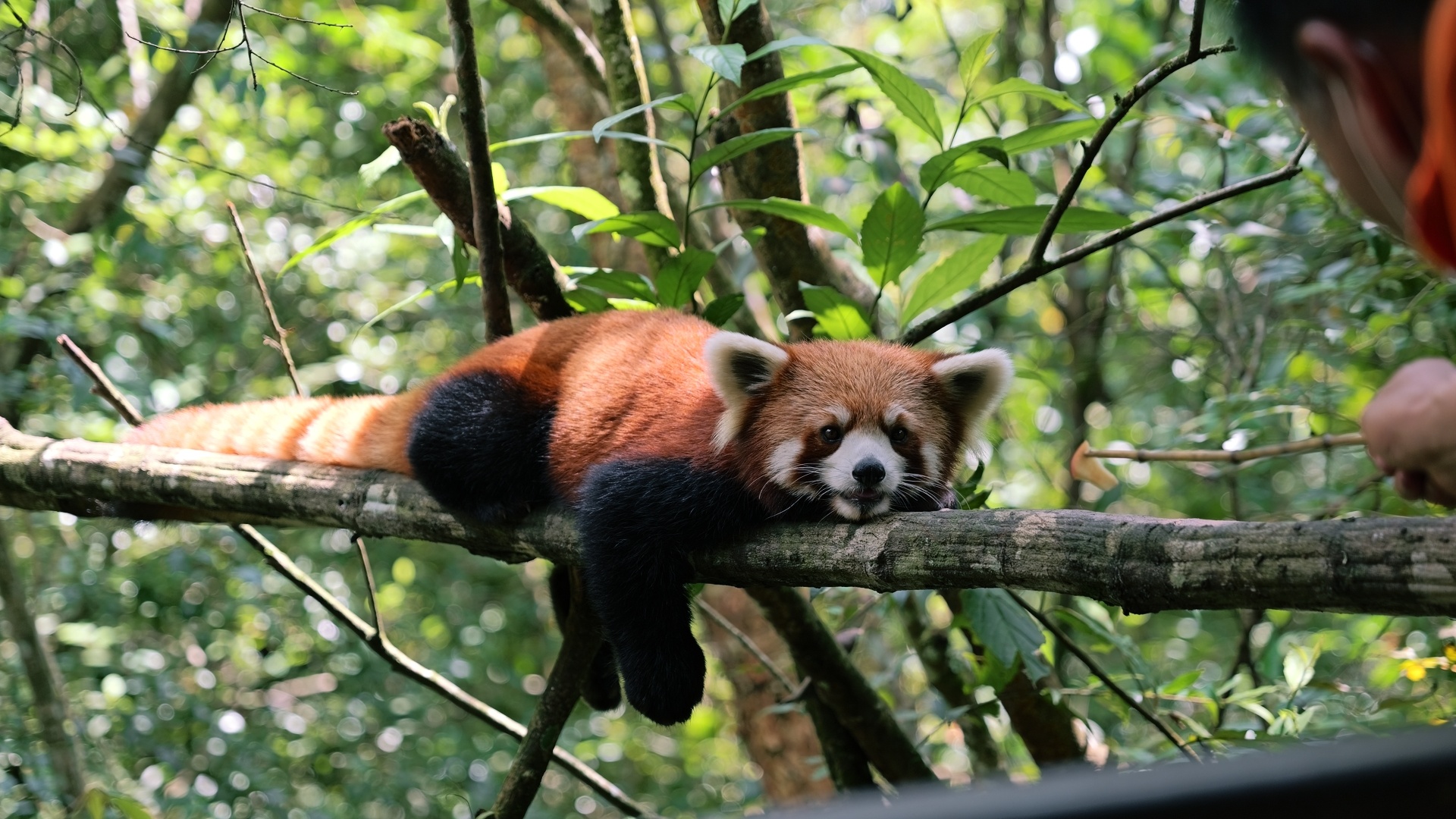
Pu’er Sun River Forest Park, located in the southeast of Simao District, Pu’er City, Yunnan Province, it is a forest park that integrates natural scenery, biodiversity and ecological protection. Pu’er Sun River Forest Park is not only a paradise for animals and plants, but also a great place for tourists to explore nature, observe wild animals up close and enjoy summer fun.The forest coverage rate in the park is extremely high, reaching 97.45%, which is one of the largest and most complete subtropical monsoon evergreen broad-leaved forests in China. The vegetation here is rich in variety. In this dense forest, ancient trees are towering, vigorous and upright, and vines are entwined, forming a vivid natural picture.Here is a paradise for wild animals, with more than 800 kinds of wild animals living in the park, visitors here have the opportunity to observe the life status of these rare animals at close range, and feel the fun of harmonious coexistence with nature.There are a number of ecological hiking trails in the park. Under the guidance of forest experiencers, tourists can go deep into the forest, explore the ecology, and feel the mystery and magnificence of nature.At the same time, there are also rich and colorful cultural activities in the park, such as ethnic festival activities, tea and coffee culture, dyeing, out-of-print woodcut experience, etc., you can experience the local ethnic and cultural characteristics.Welcom to Pu’er Sun River National Forest Park!
归档: Attractions
-
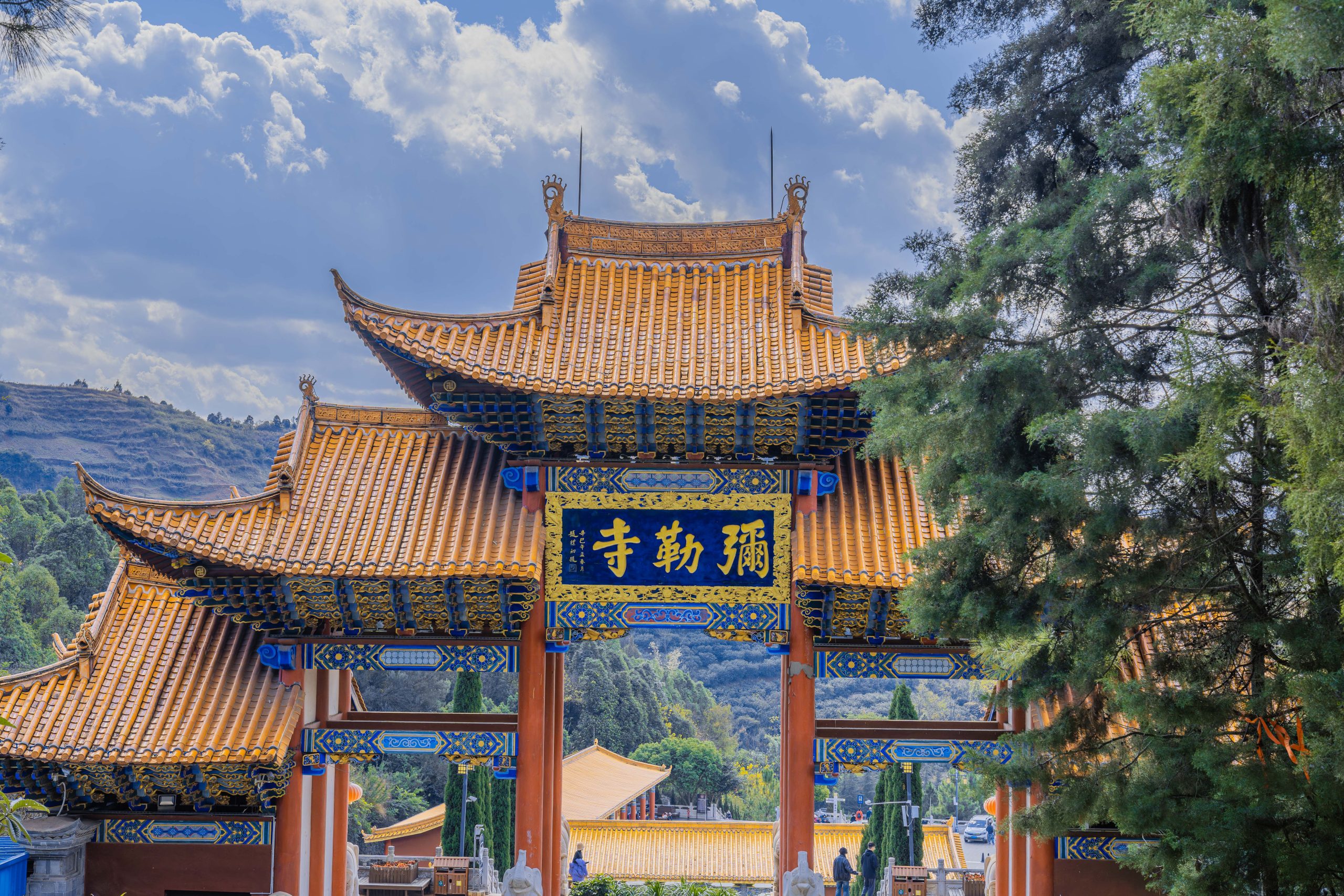
Mt. Jinping Scenic Resort
Jinping Mountain Scenic Area is located more than 10 kilometers north of Mile City. The mountains are full of spiritual energy and the trees are lush and green. From a distance, it looks like a giant Buddha sitting peacefully. Mile has been known as the blessed land of southern Yunnan since ancient times, and has the same name as the future Buddha “Maitreya”. Jinping Mountain has a thousand-year-old temple Maitreya Temple, where the main Buddha is Maitreya, so the city name, temple name, and Buddha name are the same. Maitreya Temple was built during the Tianqi period of the Ming Dynasty, rebuilt during the Qianlong period of the Qing Dynasty, and expanded and completed in 1999. It has five courtyards: Maitreya Buddha, Dayun Courtyard, Daxiong Hall, Tianwang Hall, and Dazhi Hall. It has the best Maitreya Bag Phase, Maitreya Qiangba Phase, Maitreya Immortal Light Phase, Maitreya Tianguan Phase, and Maitreya Thinking Phase.
-
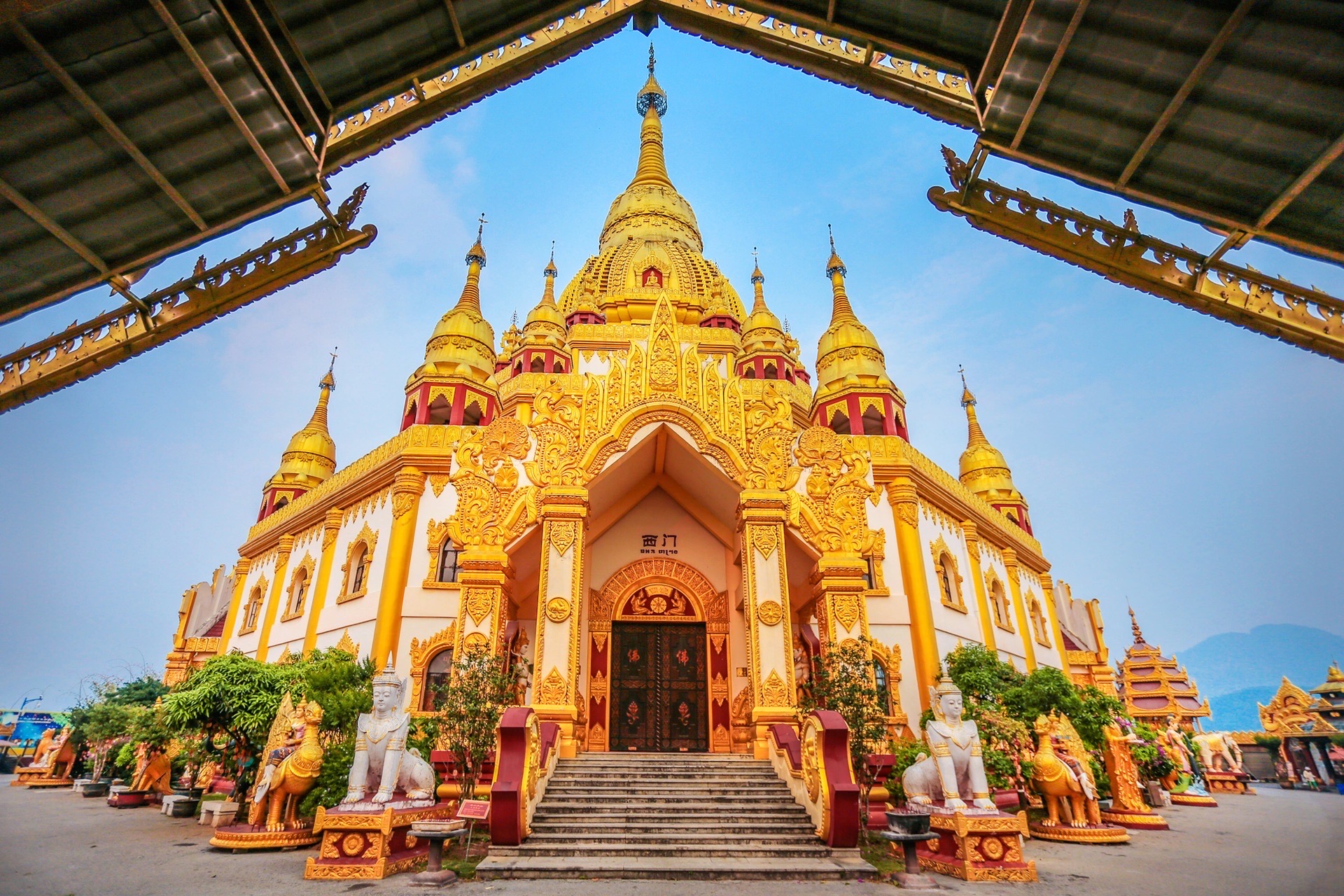
Meng Huan Shwedagon Pagoda
The pagoda is an octagonal, four-door, hollow Buddhist Pagoda with three hollow halls below. It features the architectural style of the Dai Palace in South Asia and has a profound national cultural meaning. The magnificent golden pagoda between the green mountains and waters is a landmark building in Mangshi and a sacred place for the Dai people living there.
-
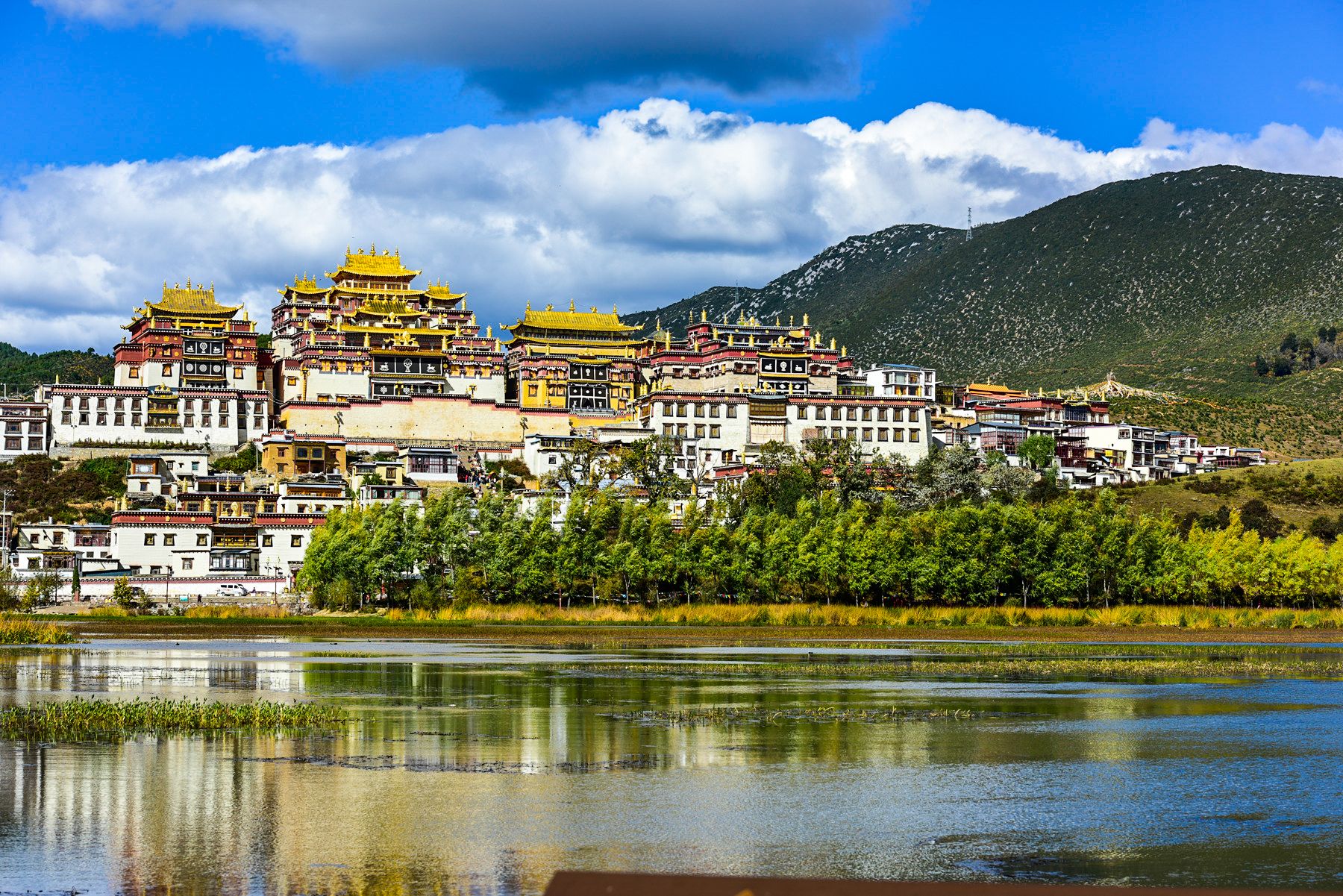
Songzanlin Scenic Spot
Sungtseling—or Ganden Sumtseling Monastery—is also known Guihuasi (Temple of Returning to Norms). It is a large Tibetan Buddhist monastery in Yunnan and is also one of the centers of the Gelug (Yellow) School of Buddhism. Built in 1679, the temple was given its name by the fifth Lama. Sungtseling is built into, around and on the mountainside. As it looks similar to the Potala Palace in Lhasa, it is sometimes affectionately called the Little Potala Palace. Because of the temple’s many cultural and religious treasures as used in Tibetan Buddhism, this site is absolutely worth a visit.
-
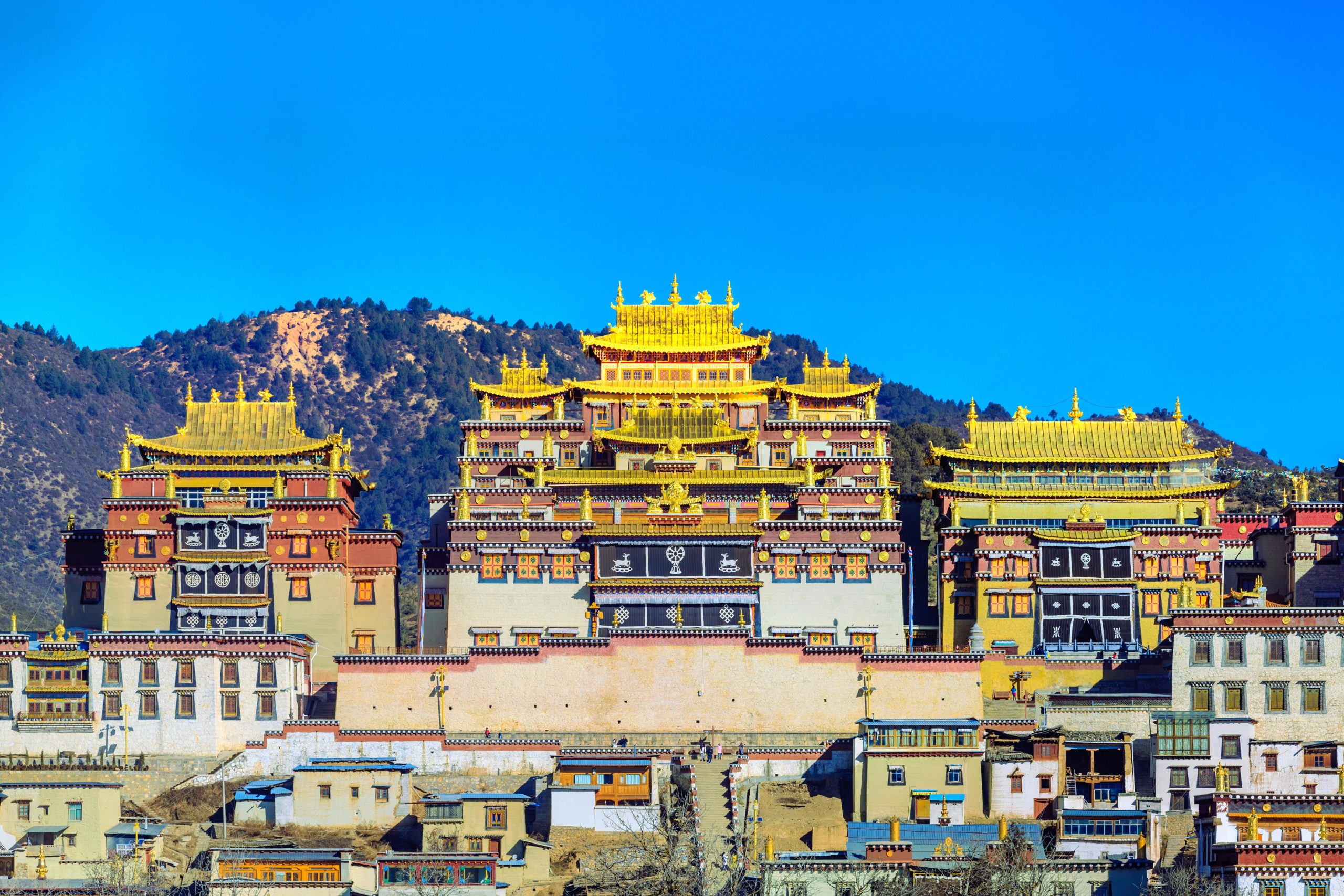
Ganden Sumtseling Monastery
Songzanlin Temple, also known as Guihua Temple, is located at the foot of Foping Mountain, 5 kilometers north of Shangri-La. It is not only the largest Tibetan Buddhist temple complex in Yunnan, but also the center of the Yellow Sect in northwestern Yunnan, known as the “Little Potala Palace”. The monastery is built on the mountain and looks like an ancient castle. Every year on the 29th day of the 11th lunar month, Tibetans hold the Gedong Festival, which is mainly based on “God Dance” (mask dance). The atmosphere is mysterious and warm.
-
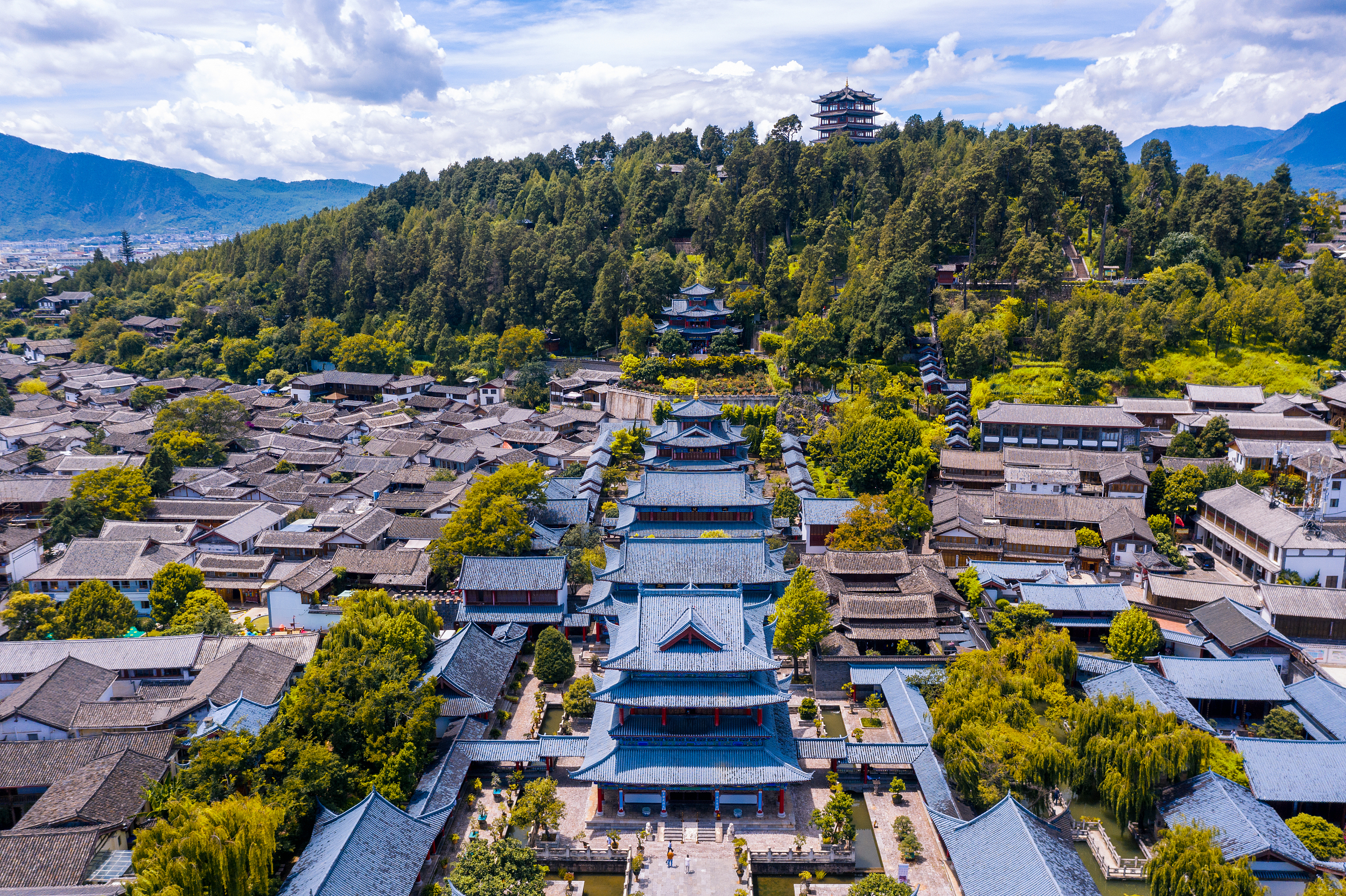
Mu Fu Mansion
Mufu Palace is located in the southern part of Lijiang Ancient City. It is the residence of Lijiang’s Tusi from ancient times. The architecture combines the style of the Central Plains of the Ming Dynasty with the techniques of the Bai and Naxi people. It is a splendid architectural arts garden. Nowadays, Mufu Palace is a landmark of the ancient city. It not only attracts numerous visitors to visit, but is also the production set for TV dramas “Legend of Mu Mansion” and “The King of Money”.
-
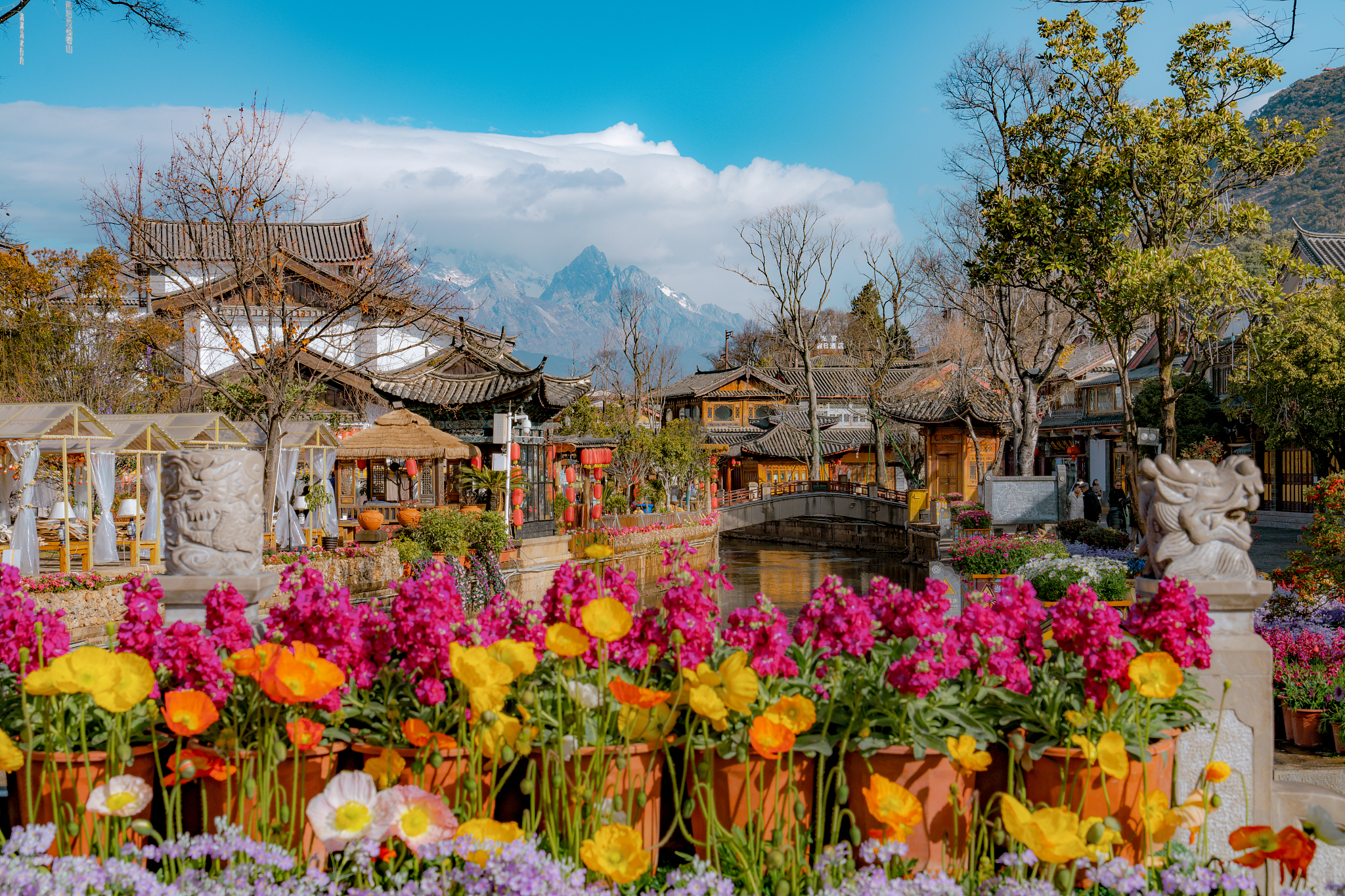
Old Town of Lijiang
The Lijiang Ancient City is a UNESCO World Heritage Site that has a history of over 800 years. It was an important stopover point in ancient times playing a very important role in the trading activities among Yunnan, China hinterland, Tibet, India and many other neighbouring Asian countries. The town is full of ancient wooden buildings, stone roads, and small bridges. It is the only old city built without a city wall. Standing in the city, you can see the Jade Dragon Snow Mountain. Several television series were also shot here. The former mansion of the Tusi people (Mu Mansion) and the Naxi ancient music performances should definitely be on your checklist.
-
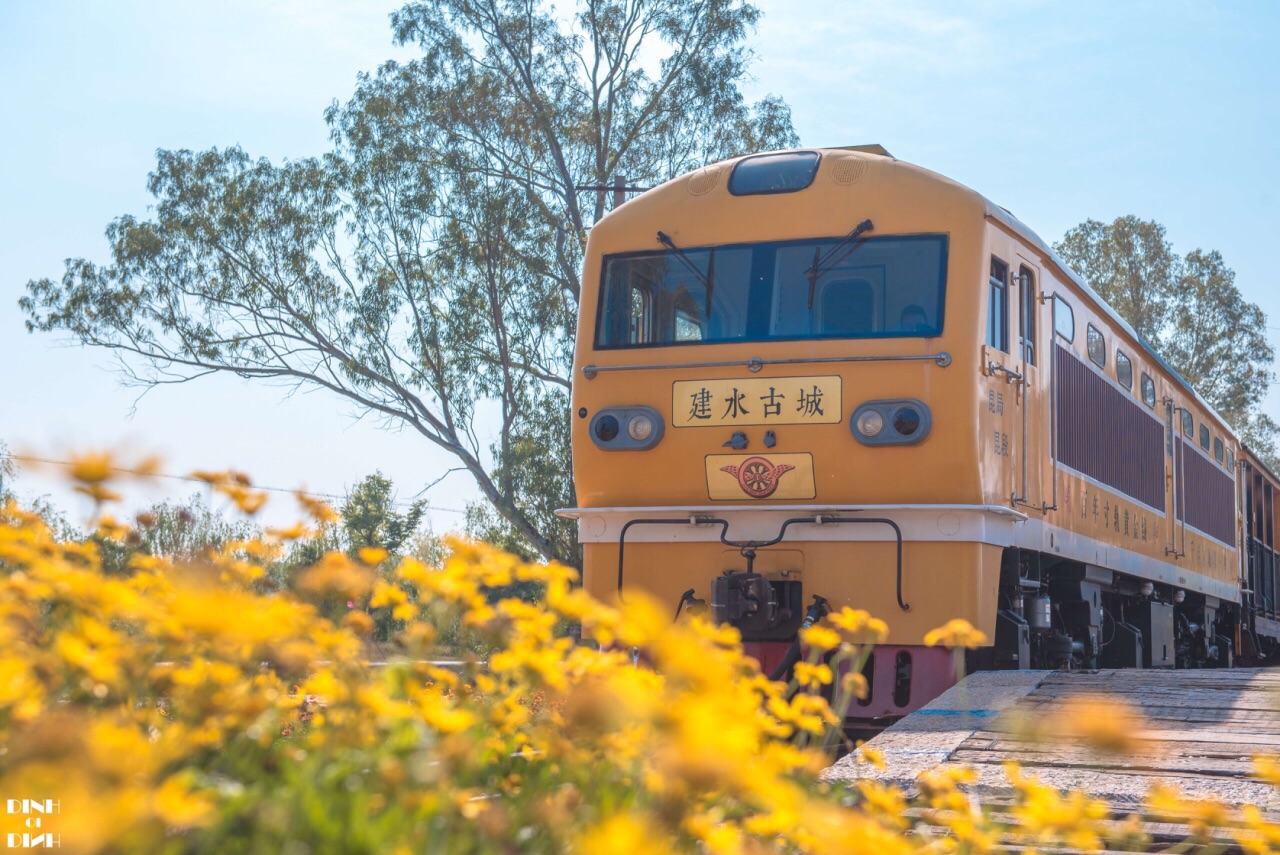
Jianshui Excursion Train
The Jianshui Excursion Train departs from Lin’an in Yunnan Province. The train station and train carriages are decorated in a historical style from the Nationalist era. The beautiful scenery changes with the seasons. In spring, visitors can enjoy fields of yellow canola flowers, while in summer rice seedlings erupt into a sea of green. The rice is harvested in autumn, while winter is the best time to view the rice paddies. The train stops at Shuanglong Bridge and Xianghui Bridge, which afford magnificent views over the surrounding area.
-
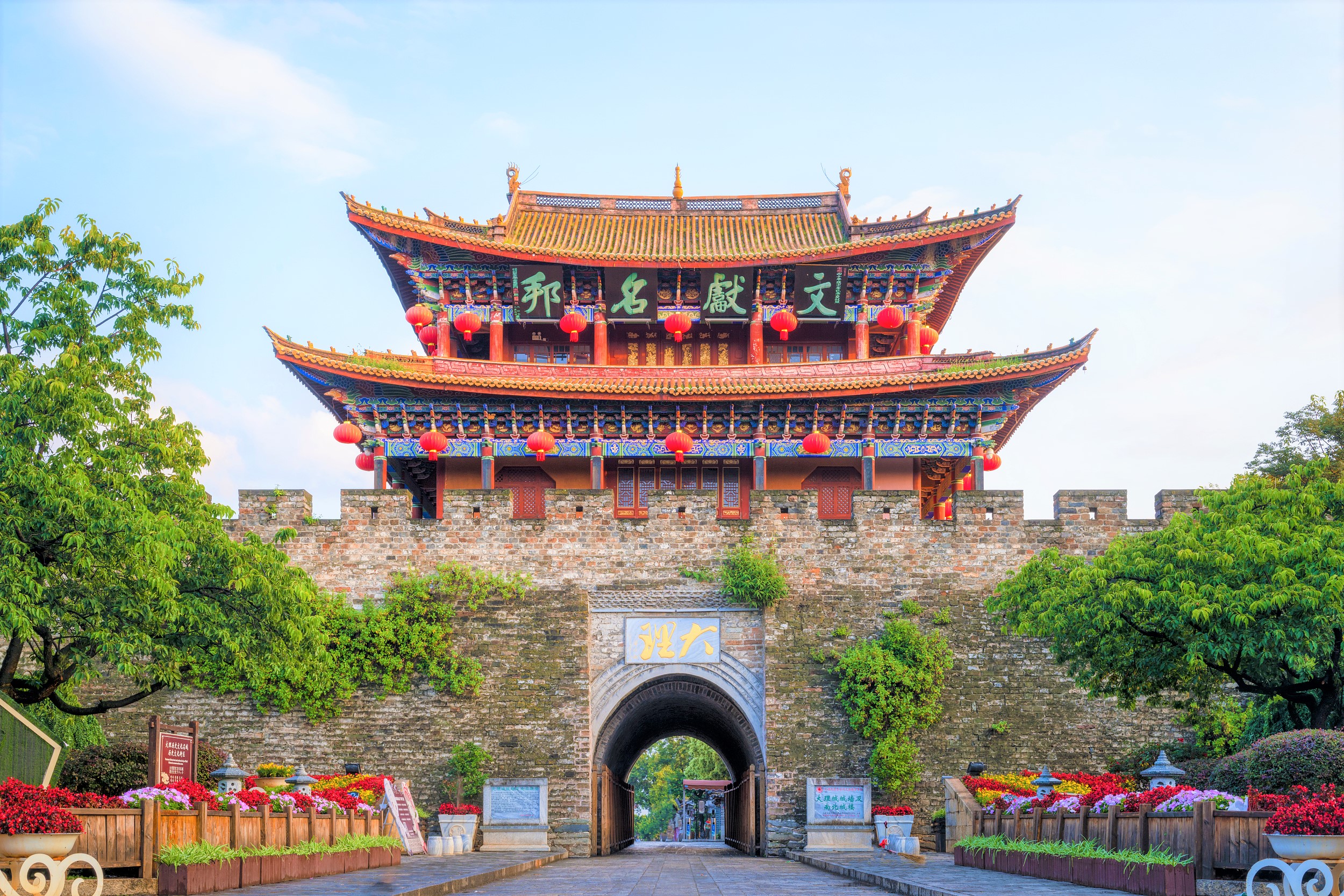
Dali Ancient City
Dali Ancient City lies at the foot of the picturesque Cangshan Mountain, serving as the former capital of the ancient Nanzhao and Dali kingdoms. This is a place made for living—locals follow the sun’s rhythm, tending to flowers and basking in sunlight during leisure hours. With its abundant sunshine and pleasant climate, it attracts countless visitors.In Dali Ancient City, you can spend your day strolling along Fuxing Road, a pedestrian street lined with shops selling local specialties like marble carvings, ethnic costumes, and regional snacks. Browse through the vibrant stores to discover unique handicrafts, and when you need a break, stop by the roadside eateries to sample authentic local flavors.At night, immerse yourself in the local vibe by joining the crowds at Foreigner Street and Renmin Road. This area boasts an array of unique bars and cozy cafes, with some venues featuring live performances by resident singers or impromptu acts from fellow travelers. The lively atmosphere is electric. Lose yourself between cocktails and music to discover your own unforgettable nightlife experience.
-
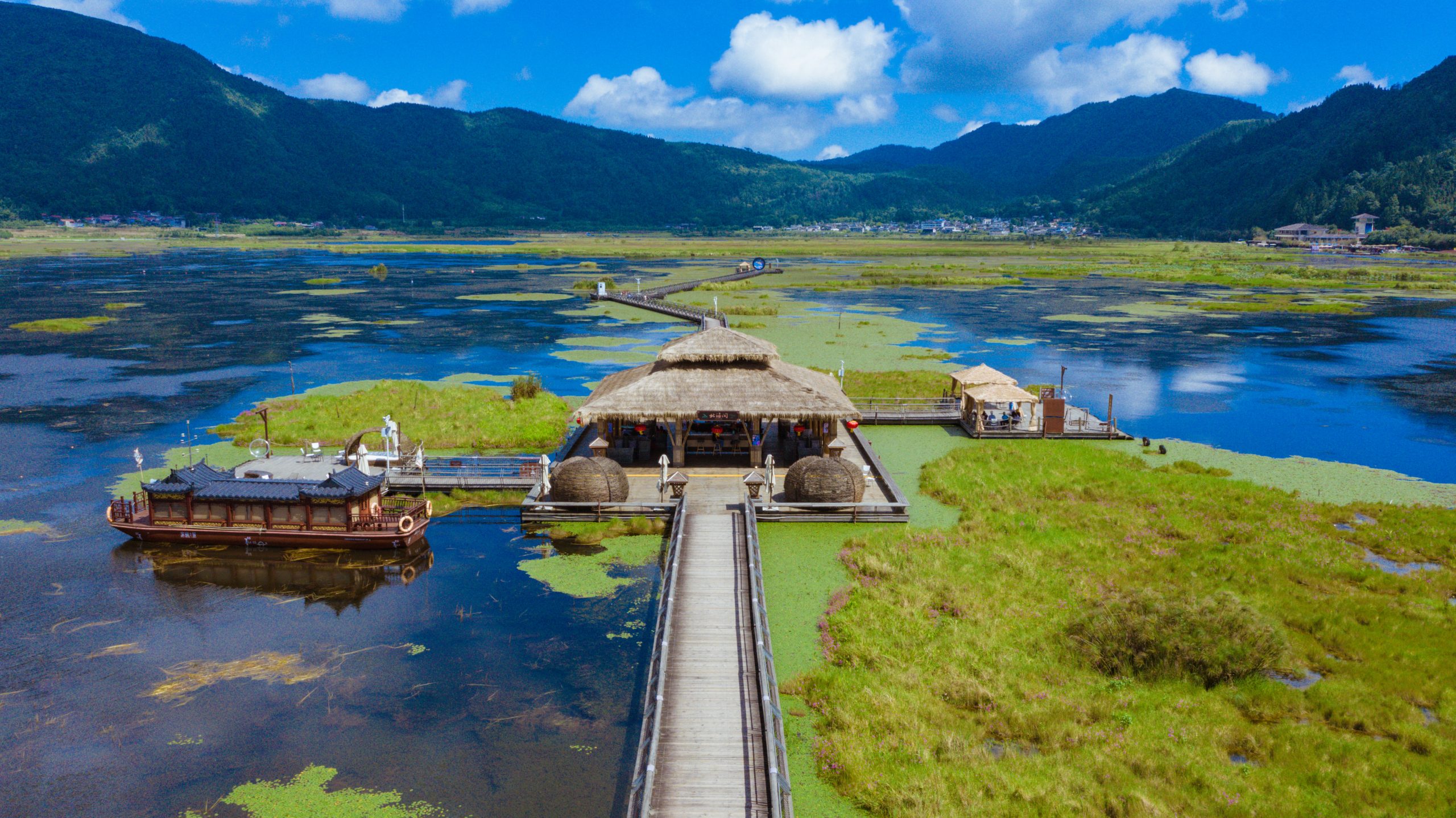
Beihai Wetland
Tengchong Beihai Wetland National AAAA-level attraction is located 12.5km northeast of Tengchong City, Yunnan Province. It is the only volcanic barrier lake floating carpet wetland in China. The attraction is surrounded by mountains. It is a subtropical volcanic rock barrier lake formed by the eruption of Cenozoic volcanoes 600,000 years ago. The nutrient-rich volcanic ash has nurtured a large area of meadows floating on the water, forming a colorful giant floating carpet on the water. The wetland is famous for its biodiversity due to its three-dimensional ecosystem composed of alpine forests, floating carpets on the water surface and barrier lakes. It is known as the “Kidney of the Earth” and “Gene Bank of Wetland Species”. More than 300 years ago, Xu Xiake, a traveler in the Ming Dynasty, visited here in person. In his “Yunnan Travel Diary”, he left a description of the magical landscape of Beihai Wetland: “The lake is as large as a thousand acres, with green weeds in the middle, and the bottom is like floating grass. There are also streams running through it, but they cannot rise.” The altitude here is 1,750 meters, with negative oxygen ions as high as 16,000/cubic centimeter, and PM2.5 less than 10 all year round. It is a world-recognized longevity and livable altitude zone. It is a good place for you to escape the heat and cold, enjoy beautiful scenery and fresh oxygen, and have a good vacation. You can take a small boat and bamboo raft to roam in the water, feel the company of fish, shrimps and birds, the breeze is gentle, the water is calm, and you are at ease. Here you can experience grass rafts, stepping on grass, stepping on fish, grilling fish, etc., and enjoy the fun of nature. There is a floating water plank road here, allowing you to get closer to many precious birds and exotic flowers and plants in the wetland, including the blue-headed duck known as the “giant panda among birds”, the “giant panda among plants” Brasenia schrenkiana and hundreds of other rare animals and plants, and experience the vivid fun of the natural classroom. Here, you can experience the unique four-season experience of “appreciating the romance of irises in spring”, “enjoying the coolness of the sea of clouds in summer”, “shooting the colorful sea of flowers in autumn”, and “watching the flock of migratory birds in winter”, and enjoy the beautiful encounter between the mountains and the sea in the Beihai Wetland.