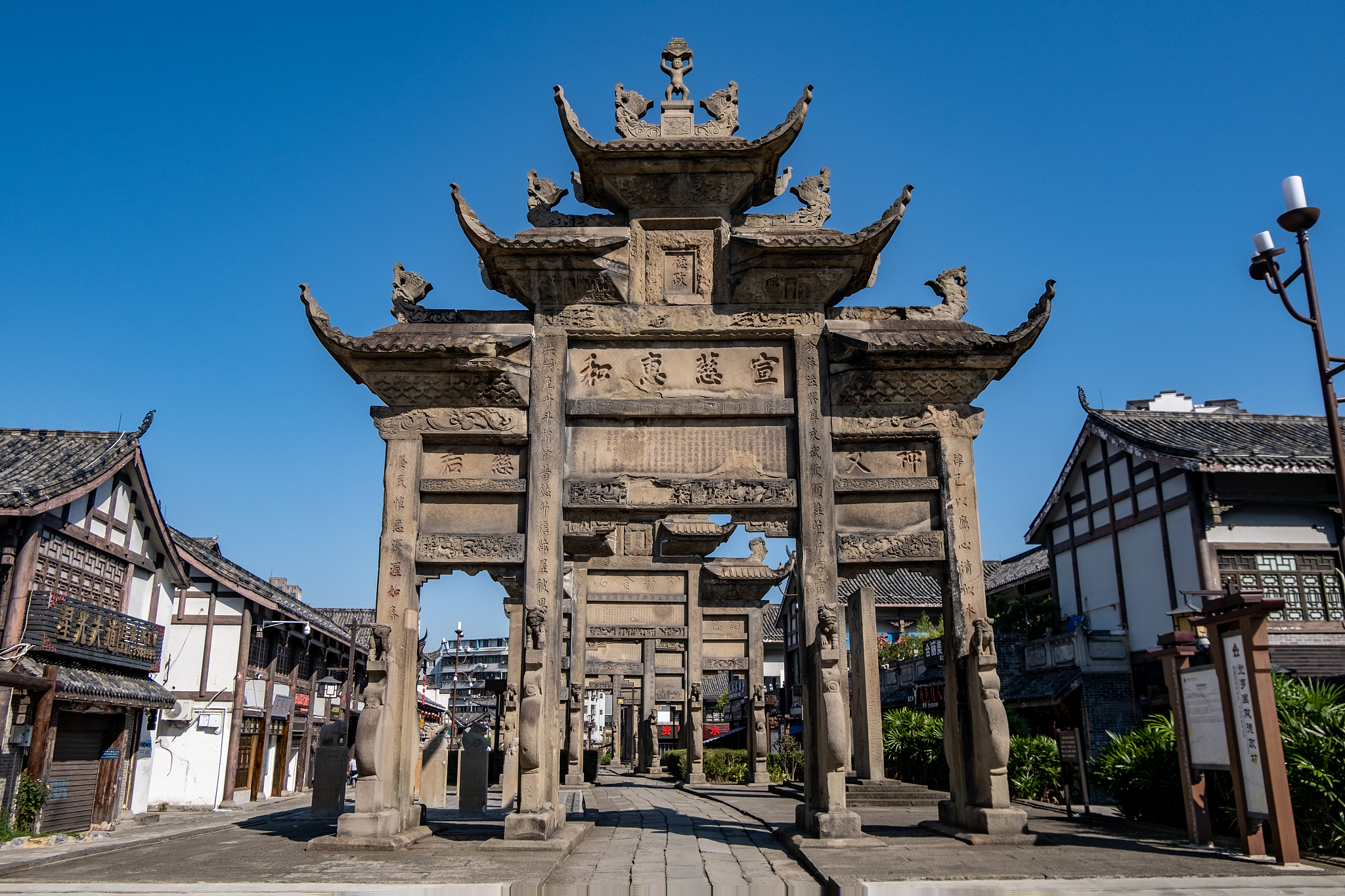
Nanguan Stone Archway Ancient Town is one of the first batch of national key cultural relics protection units. It is located on the millennium ancient post road between the south and north gates of Longchang County. It has a history of more than 500 years and is known as a “three-dimensional history book”.
归档: Attractions
-
Wannian Temple
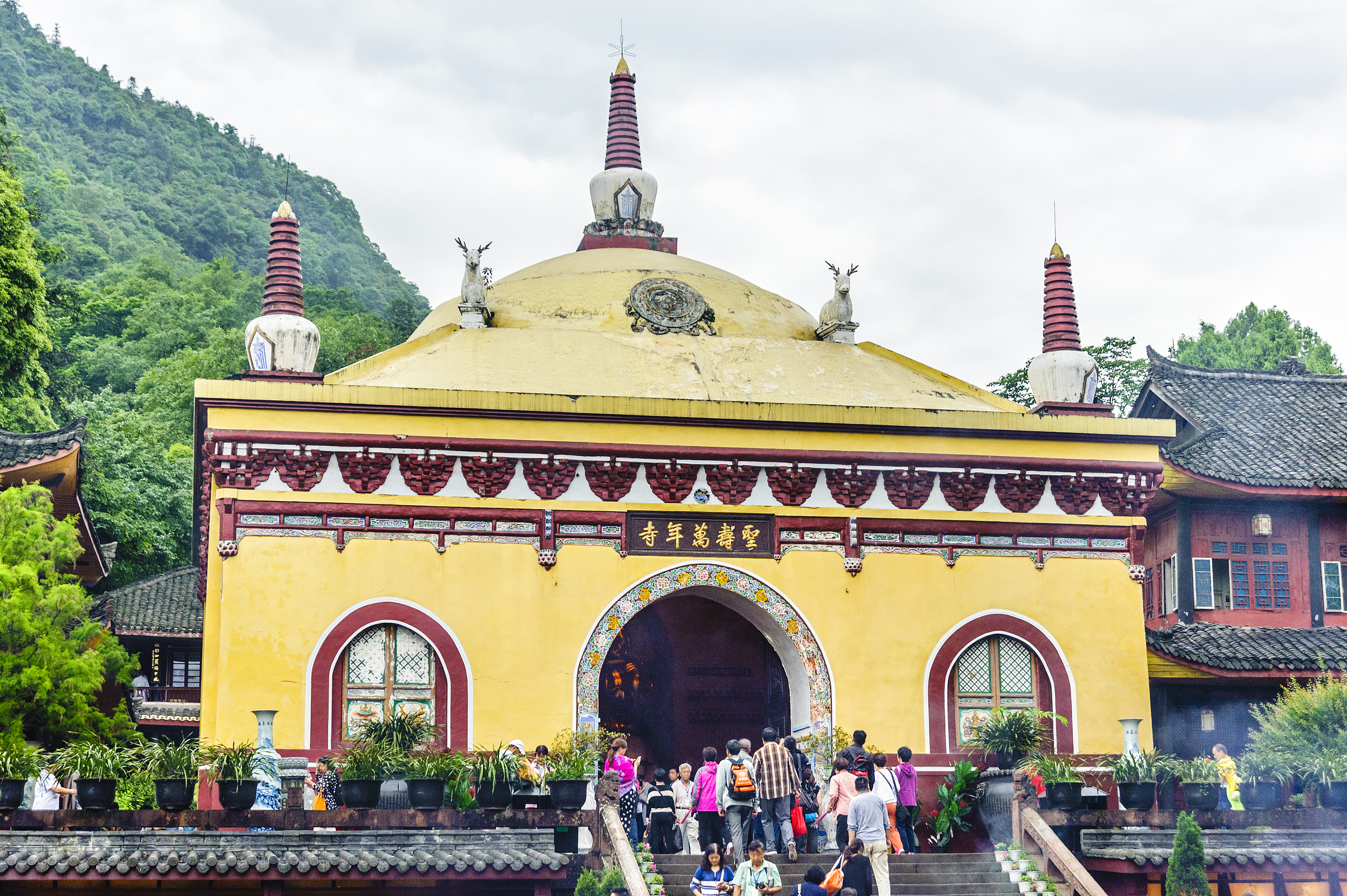
Wannian Temple is located in the heart of Emei Mountain. It is one of the eight temples of Mount Emei. It was built in the DongJin Dynasty and has a long history. It was originally named Puxian Temple. It was named “Shengshou Wannian Temple” during the Ming Dynasty. The Beamless Hall in the temple were made up of brick structures, were built by the Wanli Emperor for his mother’s birthday. In the “Xingyuan Building” in the temple, the Buddha’s Tooth, the Bayeux and the Wanli Golden Seal are the treasures that tourists definitly don‘t want to miss.
-
Gretchen Eye
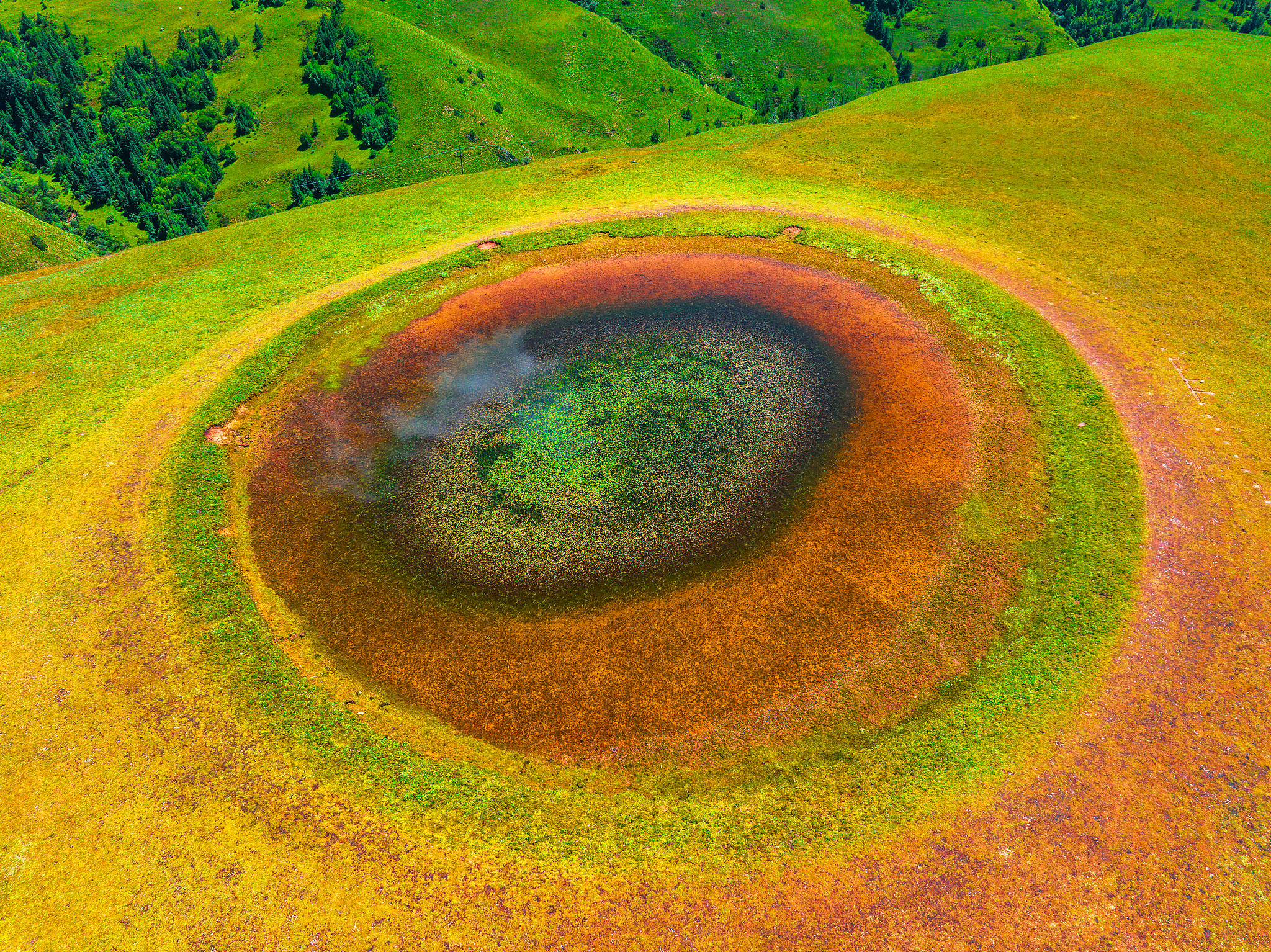
Along the Sichuan-Tibet Highway, there is a teardrop on the surface of the earth, lying quietly on the sacred mountain of Genyen. People call it the Eye of Genyen. On the grassland, there is a small puddle, reflecting the blue sky and white clouds, and embracing the peaks of Genyen. As a sacred mountain for Tibetans, Genyen Mountain has many small lakes and pools produced by geothermal hot springs. One of them seems to have a wonderful eye on the earth.
-

Hailuogou
Hailuogou Scenic Area blends natural beauty with rich historical, tea-horse trade, revolutionary, and folk cultures. This multifaceted destination offers sightseeing, leisure retreats, health recuperation, summer escapes, ecological exploration, scientific research, adventure activities, mountain climbing, and photography opportunities – forming a captivating stop along Sichuan’s western tourism circuit.The attraction originates from the eastern slope of Mount Gongga, with its main valley stretching approx. 30.7 km and covering an area of 220 sq km. Formed 16 million years ago, it features modern maritime glaciers. The entire area showcases vertical bioclimate zones with “four seasons in one valley,” including alpine snow peaks, glacial waterfalls, primeval forests, geothermal hot springs, red stone parks, and glacial forests. It is home to approx. 3,000 species of vascular plants and over 400 species of wildlife.
-
Sichuan Opera Show: Legendary Face-Changing
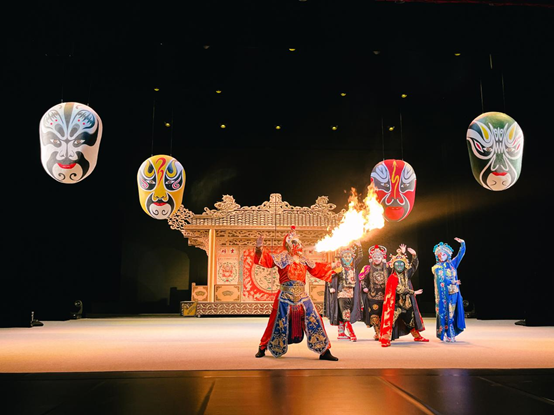
“Sichuan Opera Show – Legendary Face Changing” is the first large-scale stage play in the country that uses Sichuan opera elements as the main body, integrates acrobatics, dance, magic, etc., and uses modern sound, light and electricity technology and fashionable art means to showcase the customs and people of Chengdu.The performance takes Sichuan Opera as its core element. While maintaining the artistic characteristics of Sichuan Opera such as singing, reciting, sitting, fighting, and stunts, it innovatively incorporates other art forms such as acrobatics, dance, magic, and shadow puppetry. This strengthens the artistic tension of Sichuan Opera and enhances the shocking power of Sichuan Opera performances from multiple perspectives and angles. In particular, bold explorations have been made in the audio-visual and appreciation aspects of Sichuan Opera, making it suitable for all ages.”Sichuan Opera Show – Legendary Face Changing” uses the characters in the story as the main line to convey the development process of Sichuan Opera’s unique skill of face changing.The story takes place at the “Sanqinghui” venue in Chengdu, one of the birthplaces of Sichuan opera (now the location of the “Jinjiang Theater”). “Xiao Sanqing”, who loves Sichuan opera, practices diligently, and his master decides to accept Sanqing as his apprentice. The beautiful “Xiao Huanhua” falls in love with “Xiao Sanqing” and they fall in love with each other. The bullying “Ma Dashao” snatches “Xiao Huanhua” with a sword and orders someone to spit fire to burn “Xiao Sanqing”‘s face. “Xiao Sanqing” has to wear a mask on his face and wanders on the streets, but secretly practices the art of face-changing. In the end, he can change eight faces in one go and finally become a generation of face-changing king. “Xiao Huanhua” finally finds “Xiao Sanqing” after going through hardships, and the two join hands to make the Sichuan opera stage shine. One story and two characters condense the century-long journey of Sichuan opera people.The play won the Chengdu City’s Eighth Spiritual Civilization Construction “Five One Project” Play Award; in 2013, in the “First Sichuan Province Excellent Tourism Performance” and “Tourism Sichuan, Good Plays in a Row” popular tourism play selection organized by the Provincial Party Committee Propaganda Department, Provincial Department of Culture, and Provincial Tourism Bureau, it was rated first in “Sichuan Province Excellent Tourism Performance” and was also named a tourist performance (festival) favorite among tourists in “Tourism Sichuan, Good Plays in a Row”.
-
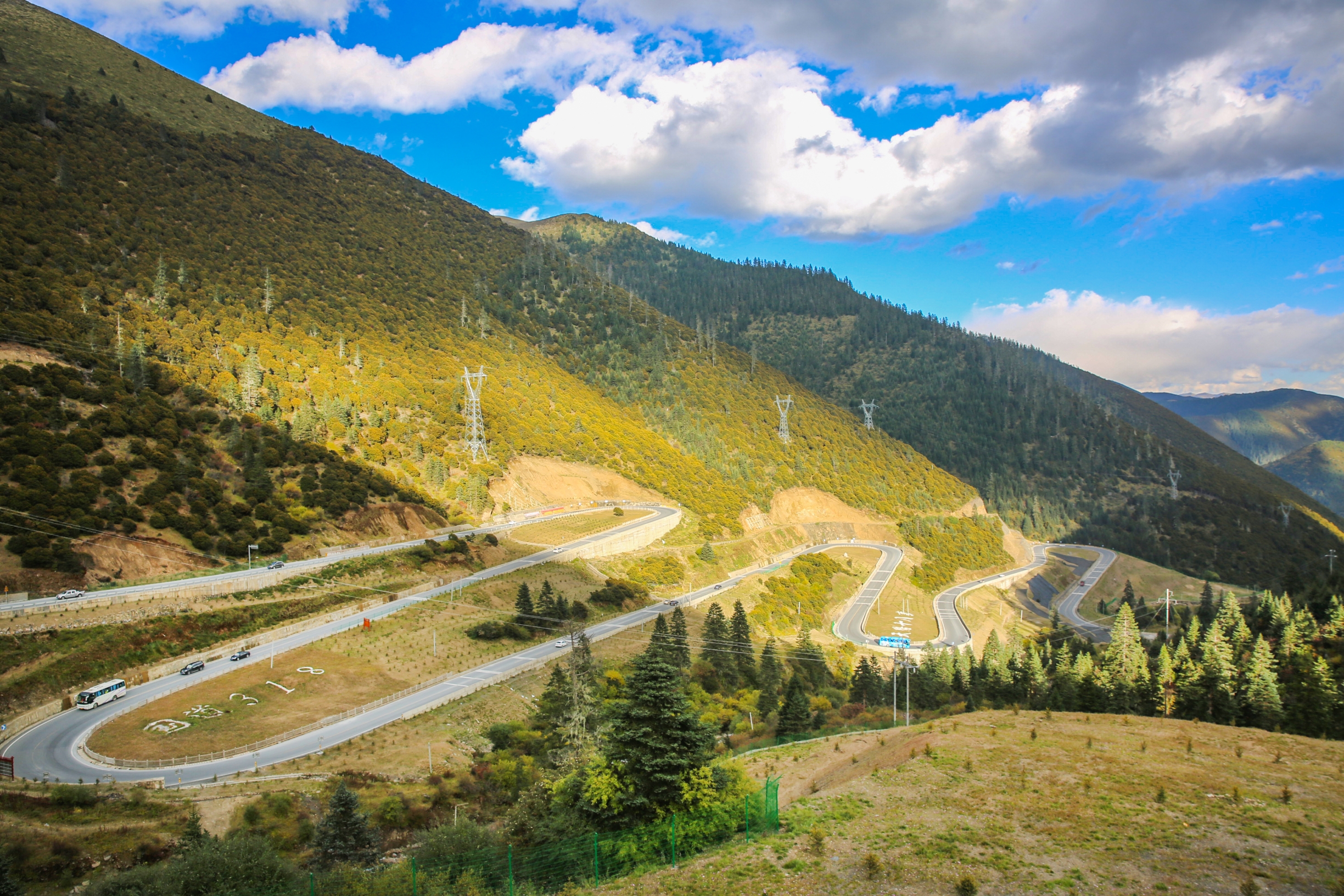
Heavenly Road Eighteen Bends Viewing Platform
The Eighteen Bends of the Sky Road is U-shaped, and there are three viewing platforms along the entire road section, where you can enjoy the spectacular road scenery.
-
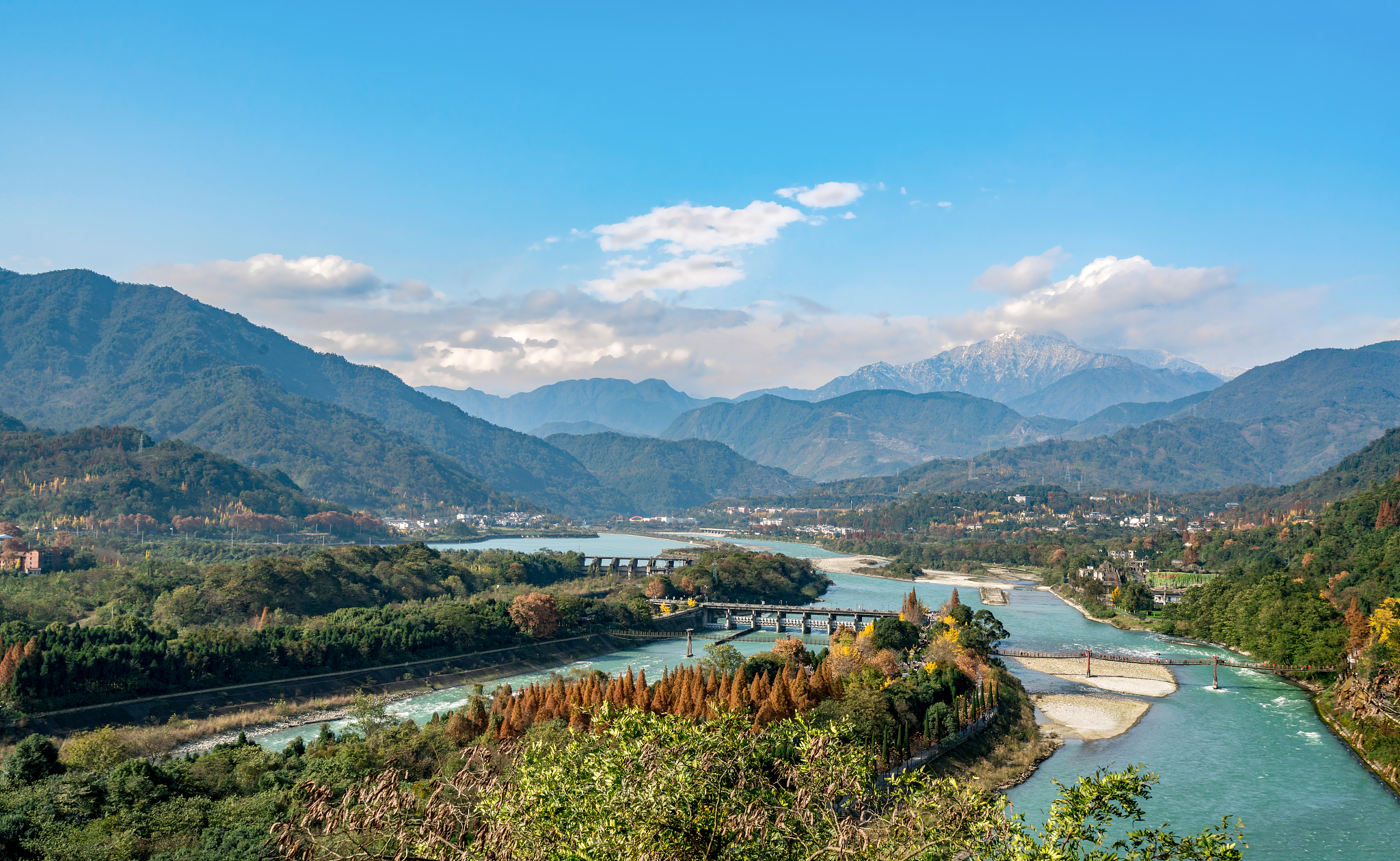
Dujiangyan Fish-mouth Water-dividing Dike
Dujiangyan fish-mouth dike is an important attraction in the Dujiangyan scenic area. The fish-mouth dike, also called” fish mouth”, is the most important part of the Dujiangyan water conservancy project. This is a fish mouth-shaped dam built with pebbles. Min River is divided into inner and outer rivers, and the inner river is used for irrigation while the outer river is used for flood discharge. This water project fully refelcts the wisdom of the our ancestors.
-
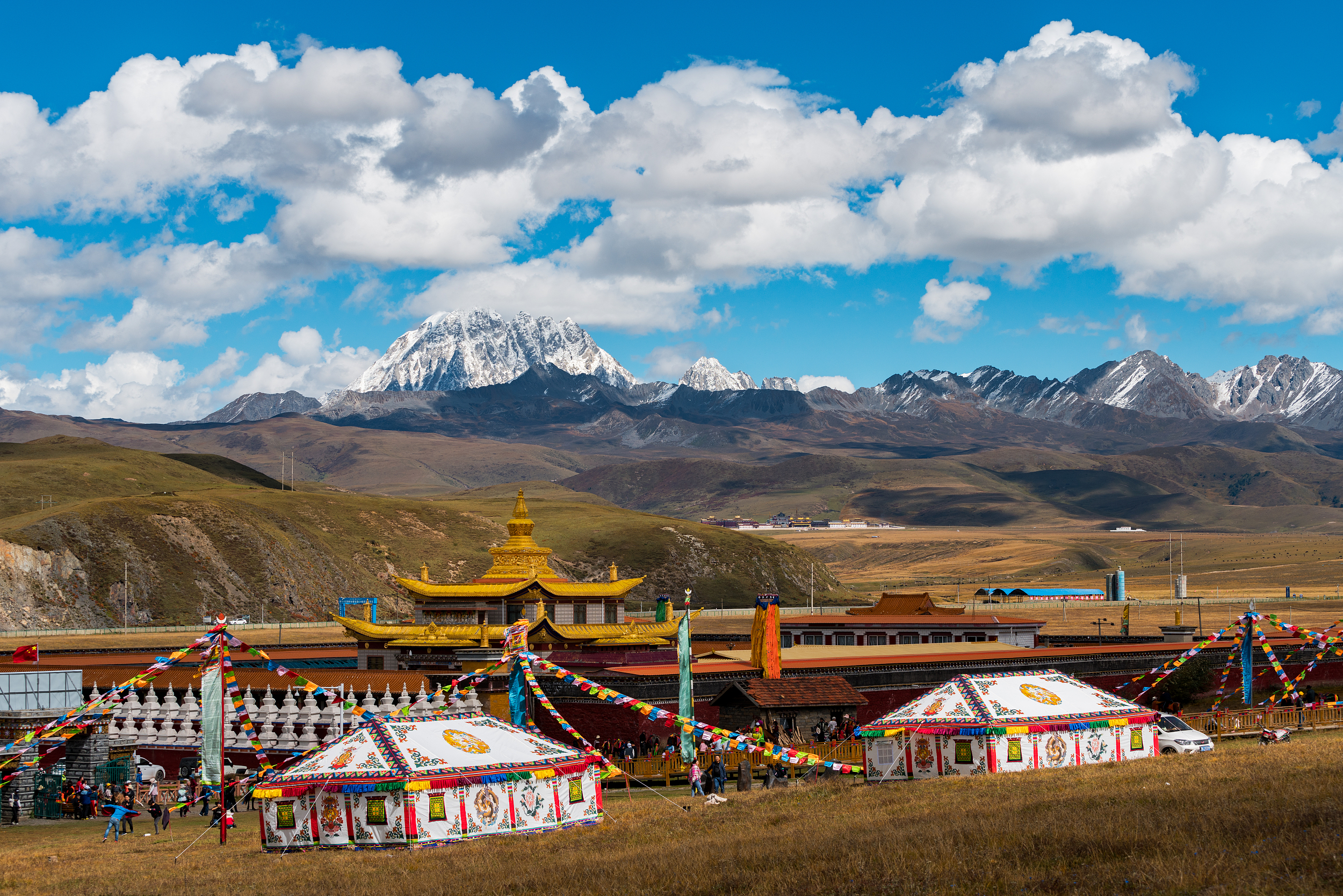
Tagong Grassland
Tagong Grassland is located 113 kilometers northwest of Kangding City, on both sides of the Sichuan-Tibet Highway. Tagong Tibetan language means: the place that the Bodhisattva likes. The Tagong grassland is backed by the famous Yala Mountain, with flat terrain, abundant water and grass, and flocks of cattle and sheep. There are Tagong Temple and Muya Golden Pagoda on the grassland, and herdsmen’s tents are scattered on the green grass, which is a harmonious plateau Tibetan scenery. Tagong Prairie Scenic Spot is based on the towering Yala Snow Mountain, rolling grasslands and the splendid “Muya Golden Pagoda” on the grassland. The scenic spot includes Tagong Temple, Tagong Temple Tallinn, Yala Snow Mountain and other attractions. Tagong Temple, known as the “Little Jokhang Temple”, is one of the pilgrimage sites for Tibetans in the Kham area. Yala Snow Mountain, also known as Yala Sacred Mountain, is one of the four sacred mountains in Tibet. Tagong Grassland holds 1-2 traditional horse races every year. At that time, herdsmen dressed in festive costumes gather in Tagong Grassland from all directions to celebrate the traditional festival. The horses galloped on the racecourse, and the thrilling horse performance burst into applause, cheers, and whistles, forming a sea of joy.
-
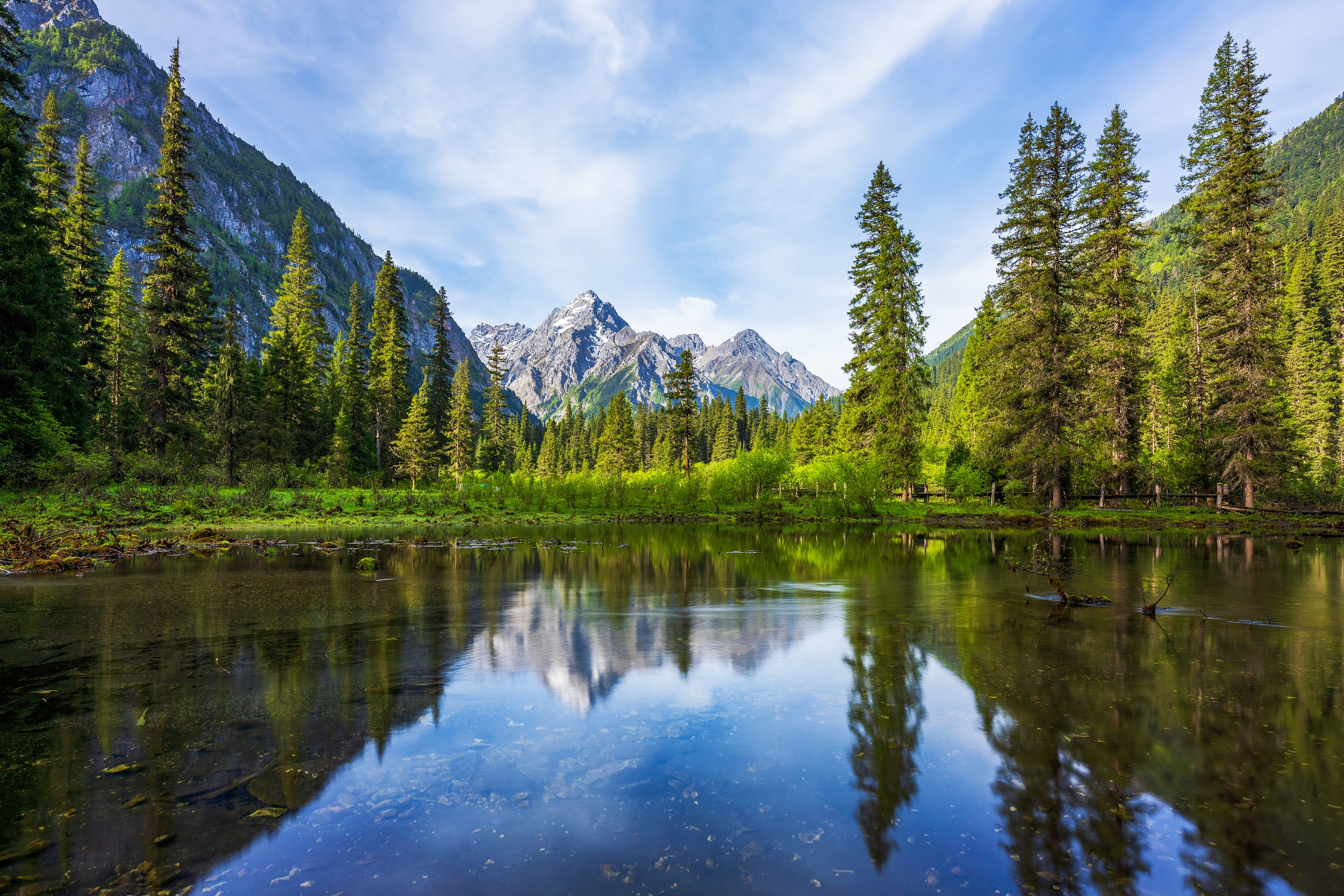
Wanglang National Nature Reserve
Wanglang Nature Reserve is located in Pingwu County, in the Hengduan Mountains of the Himalayas, and maintains a complete natural ecosystem. There are beautiful scenery in all seasons, you can enjoy snow in spring and winter; cool in summer, you can escape the heat; in autumn, the mountains are full of red leaves, which is very spectacular. Most tourists take sightseeing bus tours in the scenic area. Along the way, there are green trees, green mountains and green water, blue sky and white clouds. The plants in the scenic area are complex in composition and have ancient origins. You can find various Chinese herbal medicines, ornamental flowers and forest vegetables. In addition, there is an ancient and unique Baima ethnic group living around Wanglang, whose language, customs, history and culture are different from those of any other ethnic group. Tourists who have time may wish to go deep into the inn and experience the local customs.
-
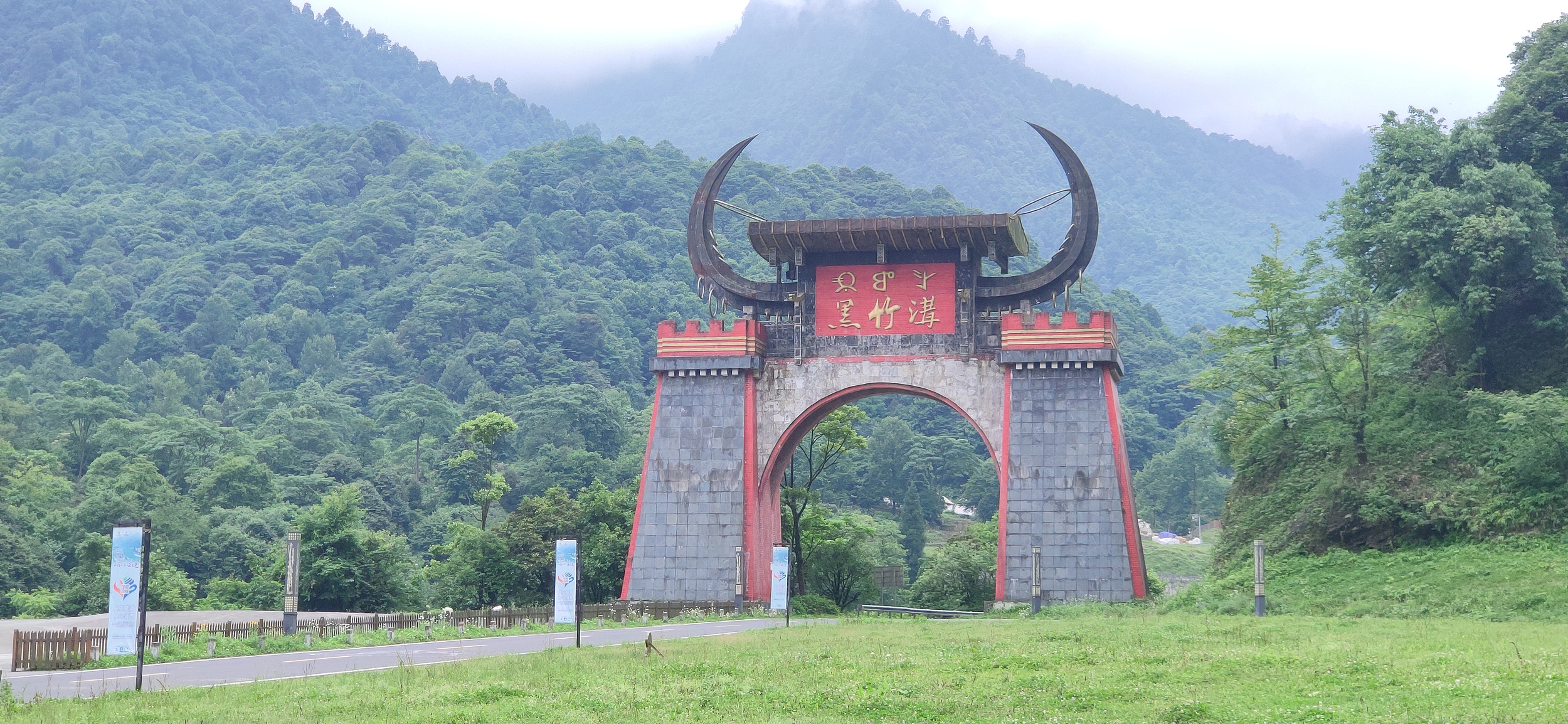
Heizhugou
Heizhugou is situated in the Yibian Yi Nationality Autonomous County in the southwest of Emei Mountain,which is the transitional zone between the Sichuan Basin and the western Sichuan Plateau. The ethnic customs here are quaint and colorful, and the cultural landscape and natural landscape are integrated as one. It is a humanistic attraction to explore the nature. There are two main attractions in the scenic spot: the primeval forest and the wetland park. The original forest has fresh air and lovely landscape. Wetland park is very large, if you are lucky, you can find natural hot springs inside.