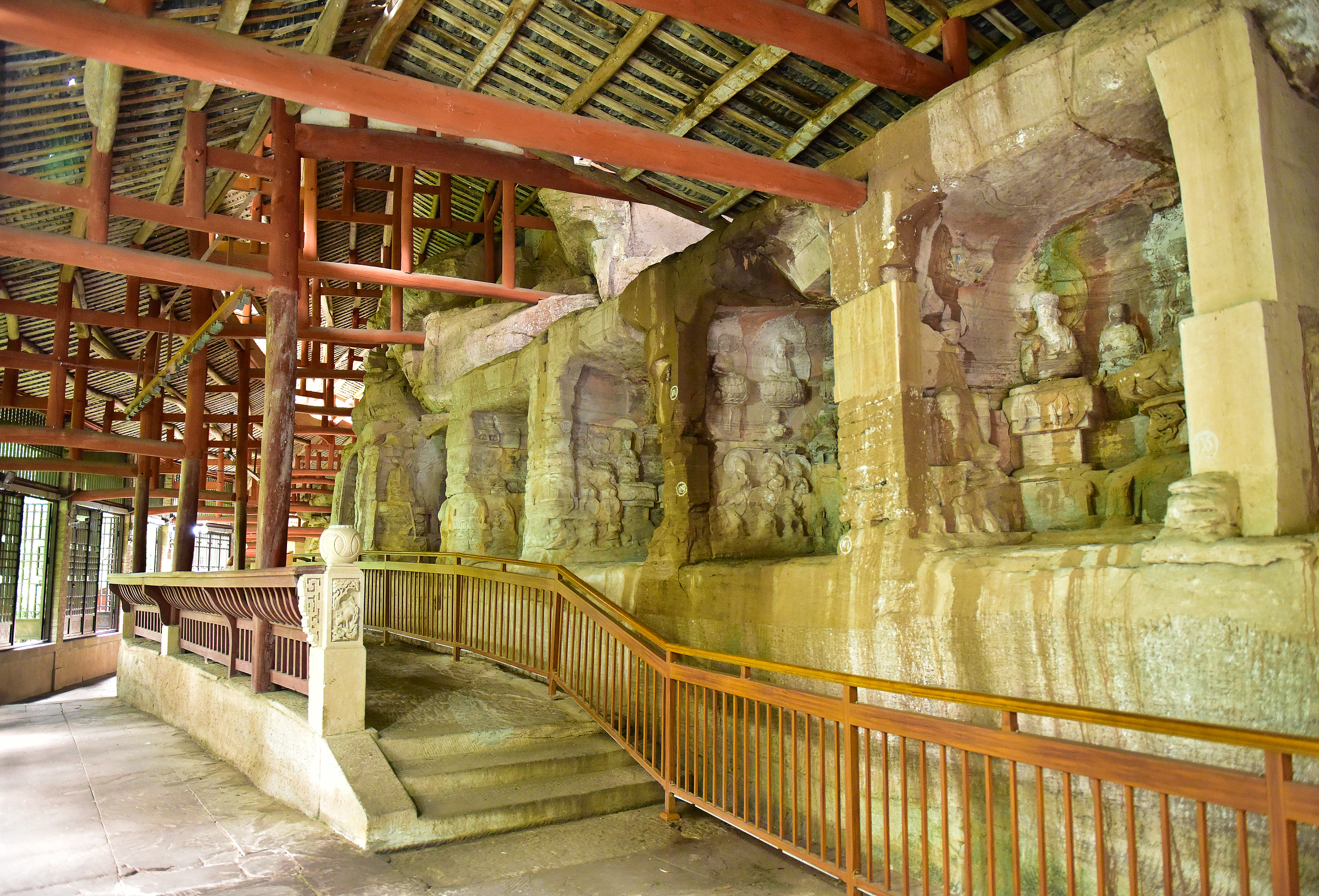
Beishan Stone Carving is located in the north of Dazu District on the North Mountain. With Dafowan as the center, it covers its surrounding Guanyin Slope, Buddha Ear Rock, North Tower Temple—a total of five places. The carvings are exquisite and skillful. Except for some inscriptions, tower blocks, and shallow niches, the rest are well preserved. These stone inscriptions were popular among the people at that time and were the product of secularization of Buddhism. Beishan Stone Carving is famous for its exquisite engraving, fine skills, and exquisite elegance. It shows the development and change of Chinese folk Buddhist belief and grotto art style from the end of the 9th century to the middle of the 12th century.
归档: Attractions
-
Yangtze River Three Gorges – Century Cruise
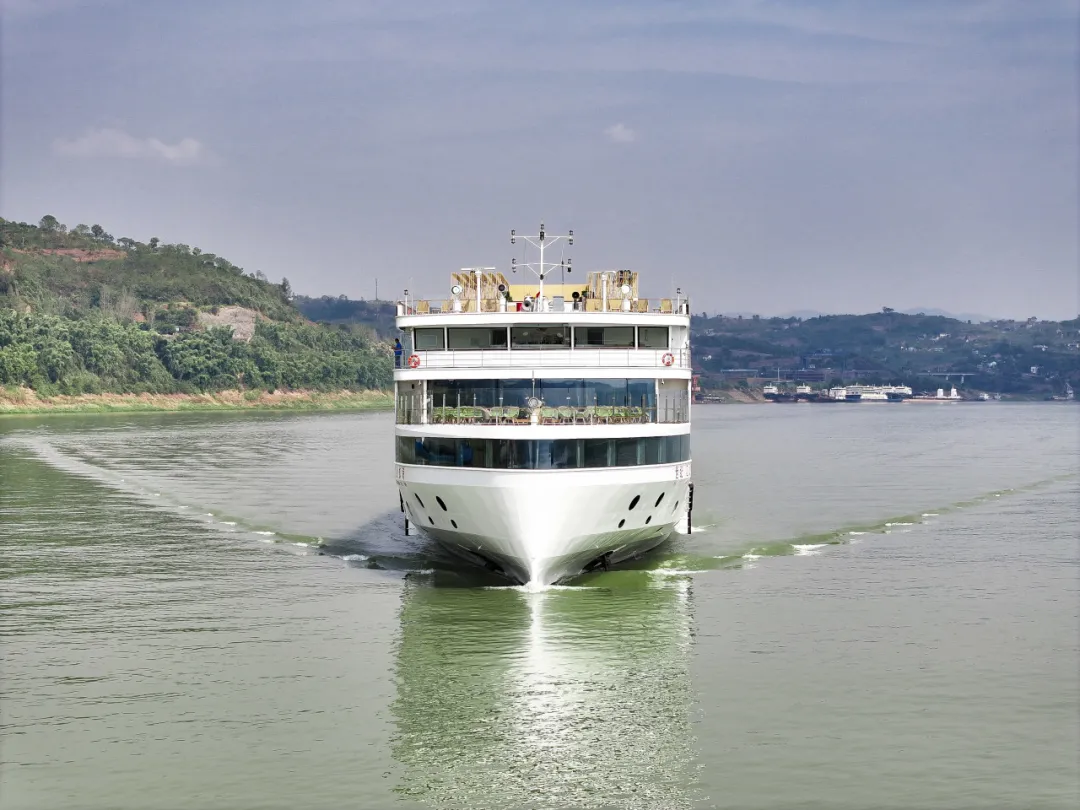
In 2013, the high-tech, silent and environmentally friendly inland river cruise ships – Century Legend and Century Myth were launched, becoming the shining new stars of the Yangtze River Three Gorges luxury cruise! The two luxury cruise ships used the core technologies of “electric propulsion” and “rudder-propeller integration” of Century Cruise Industry, and made their maiden voyage on May 18, 2013! The cruise ship has a seven-story fully hollow lobby, an independent executive floor, a 3.7-meter-high pillar-free multi-functional entertainment hall, an indoor heated swimming pool leisure area, a stepped high-definition cinema, as well as public entertainment facilities such as a gym, a SPA massage room, and a children’s playroom.
-
Mount Fanjing
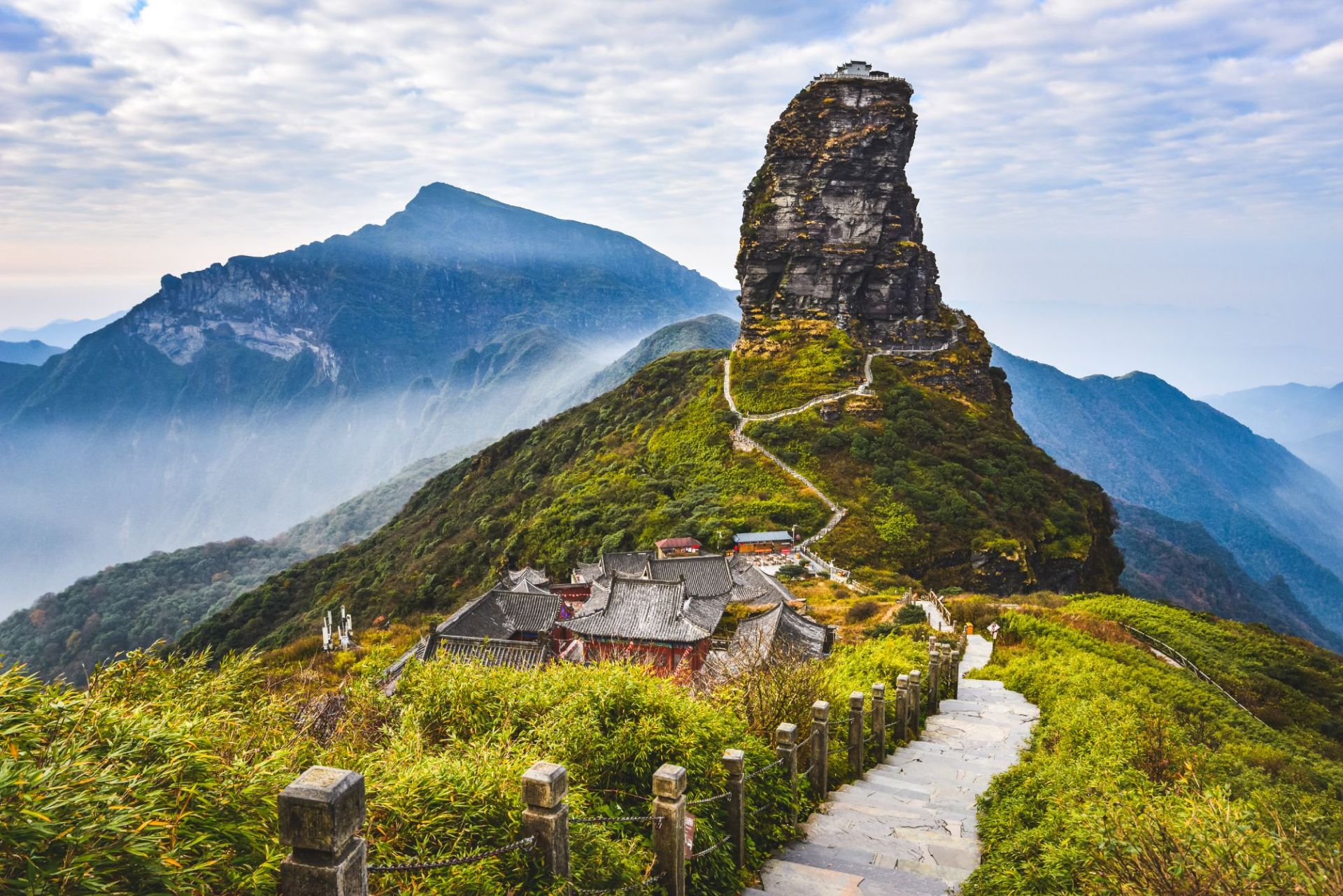
Mount Fanjing is located in Tongren Prefecture in northeastern Guizhou Province, standing at an elevation of 2,572m. As the main peak of the Wuling Mountain Range, it is a member of the UNESCO “Man and Biosphere” network, a World Natural Heritage site, and a national 5A-level tourist attraction. The Mount Fanjing Biosphere Reserve covers a total area of 428.63 square kilometers. The landscape is characterized by pristine wilderness, featuring majestic peaks, layered ridges, crisscrossing streams, and cascading waterfalls. Its iconic attractions include the Red Clouds Golden Summit, Moon Mirror Mountain, the 10,000m Sleeping Buddha, Mushroom Rock in the Mount Fanjing scenic area, the Ten Thousand Scrolls of Scriptures, Nine Dragon Pool, and Phoenix Mountain.Mount Fanjing, originally named “Three Mountain Valleys,” derives its name from “Pure Land of Brahma.” This sacred mountain boasts a long Buddhist history, with its origins tracing back to the Tang Dynasty and flourishing during the Ming Dynasty. Additionally, Mount Fanjing is home to abundant wildlife resources, including rare species such as the Guizhou golden monkey and dove trees.Mount Fanjing, the highest peak of the Wuling Mountain Range, stands majestically at the junction of Jiangkou, Yinjiang, and Songtao counties. Revered as the “ancestor of sacred mountains” since the early Ming Dynasty, this colossal peak reaches for the clouds as a renowned Buddhist sanctuary. Beyond its spiritual significance, Mount Fanjing transforms into a breathtaking canvas each fall when vast maple forests ignite in crimson hues, creating a striking contrast with its ancient temples. Visitors can admire this fiery spectacle from above via cable car or wander through trails enveloped by blazing foliage overhead and on both sides.Red Cloud Golden Summit stands as the heart of Mount Foshan. Atop its precipitous peak, two temples face each other in perfect symmetry, with two Buddha statues presiding over this sacred space. This extraordinary creation of boundless dharma realms represents the crowning achievement of the Southern Song Dynasty’s White Lotus Society in constructing a “Pure Land on Earth,” marking a miraculous milestone in the history of Buddhist development on sacred mountains.Take the shuttle from the attraction entrance to the cableway station. After riding the cableway up, walk straight to the top to see the famous “Mushroom Stone.” True to its name, this 10m-tall rock formation resembles a mushroom with a wide top and narrow base, standing majestically on the mountain for over 1 billion years. To its left is the Red Cloud Golden Summit, while the Old Golden Summit lies to the right—both offering breathtaking views.
-
Xijiang Qianhu Miao Village
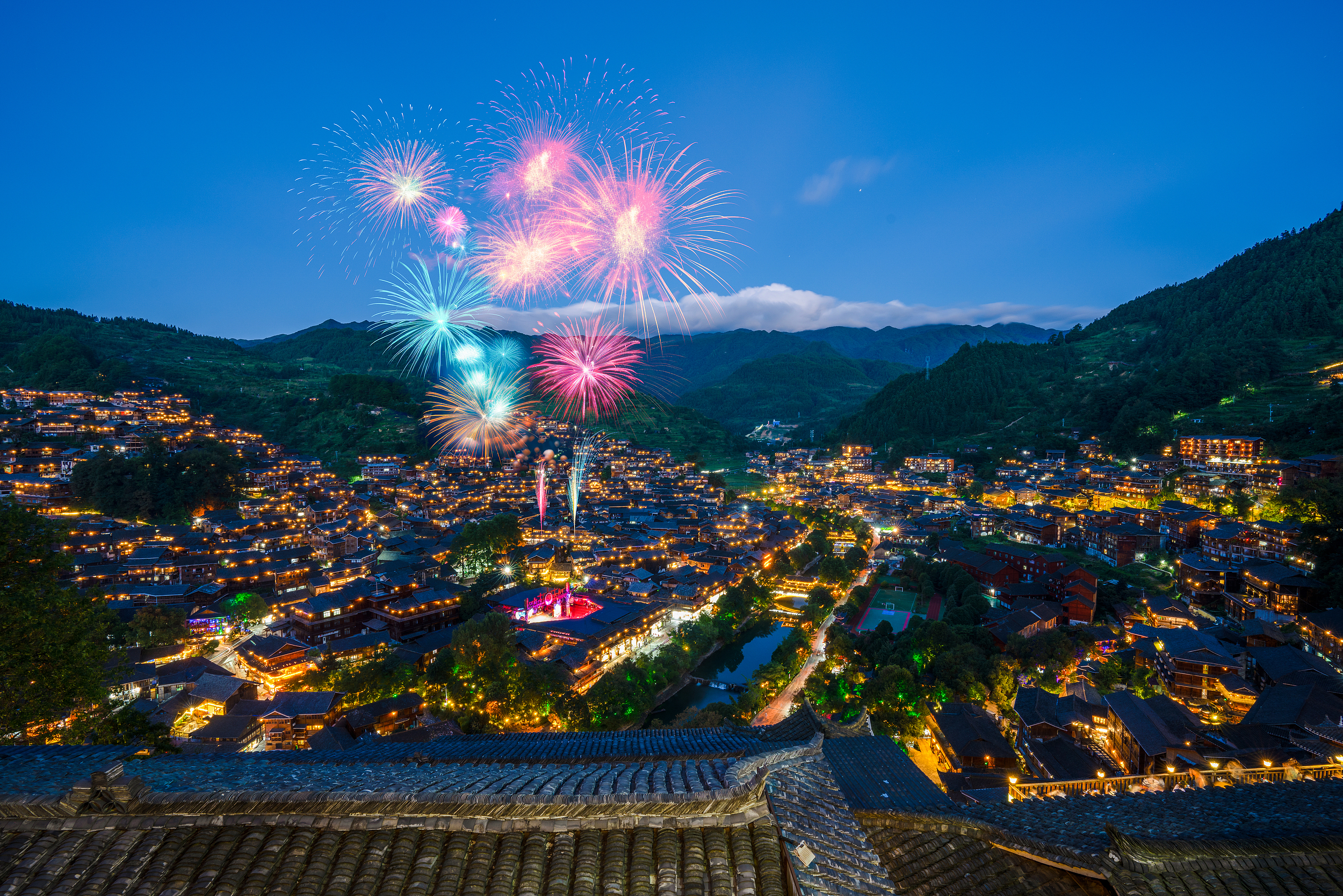
Xijiang Qianhu Miao Village consists of over a dozen natural villages built along the mountainside, inhabited by the “Xi” clan of the Miao ethnic group. The hills are covered with layered wooden stilt houses in earthy brown tones, nestled against emerald green mountains. The Baishui River divides the village in two—the riverside area (left side after entering through Xiaobei Gate for visitors) features a commercial pedestrian street, while the opposite bank (right side after entering through Xiaobei Gate for visitors) offers an observation deck with panoramic views of the village.Upon arriving at Xijiang Qianhu Miao Village, you’ll see a gate with the “Xijiang Qianhu Miao Village” plaque after exiting the parking lot. From this gate, it’s another 1.5 km to the village itself – you can either take an electric cart or walk. After covering this 1.5 km distance, you’ll encounter another similar gate with the same plaque near the parking area, which marks the official entrance to the village.Start with a welcoming drink before entering the village. The first sight is a bustling commercial pedestrian street filled with an array of Miao ethnic specialty goods. The highlight is undoubtedly the exquisite Miao silver jewelry. Nearby in Leishan County’s Dakou Township, Kongbai village is renowned as the “silversmith village,” where nearly every man masters the art of crafting intricate Miao silver ornaments.The performance venue in the pedestrian street area features Miao ethnic song and dance shows. You can also visit the Xijiang Miao Ethnic Museum and the Drum House (home of the Miao chieftain, where a bronze drum is enshrined). Alternatively, take a stroll along the Baishui River to see the wind-and-rain bridges with their protective roofs, or the low wooden plank bridges spanning the water.At the end of the village lies a pastoral landscape, rarely visited even during peak season. Cross the river to find the electric cart station heading to the viewpoint—take the short walk there, with several scenic overlooks along the way. Arrive at the viewpoint and wait for nightfall, when Xijiang’s grand spectacle begins. Thousands of lights flicker beneath the eaves of wooden stilt houses, dotting the darkness to outline the entire Miao village in the shape of an ox head. It’s astonishing to witness such radiant illumination from a mountain settlement. Return to the viewpoint at dawn as mist envelops the village, the first sunlight gilding the wooden houses while cooking smoke curls upward—a new day begins.In Miao villages, you’ll often spot Miao women with their hair coiled into topknots adorned with large flowers. But why just look when you can join in? Rent a set of traditional Miao attire and transform into a Miao maiden yourself—it’s a stunning look that’s especially popular among female travelers.Xijiang Qianhu Miao Village offers well-developed tourism facilities with no shortage of dining and lodging options. The must-try culinary experience is the long-table banquet. Local restaurants frequently ask visitors if they’d like to try this specialty – essentially extended tables arranged together to simulate the tradition. For the authentic experience, look for the outdoor version where dozens of tables connect in an impressively long line (sometimes too long to see from end to end). These genuine banquets typically occur during major festivals or when large tour groups visit – don’t miss this unique opportunity if you encounter one. The local cuisine in southeast Guizhou features distinctive sour flavors, with Miao village specialties including sour fish soup, pickled vegetables, and cured meats.
-
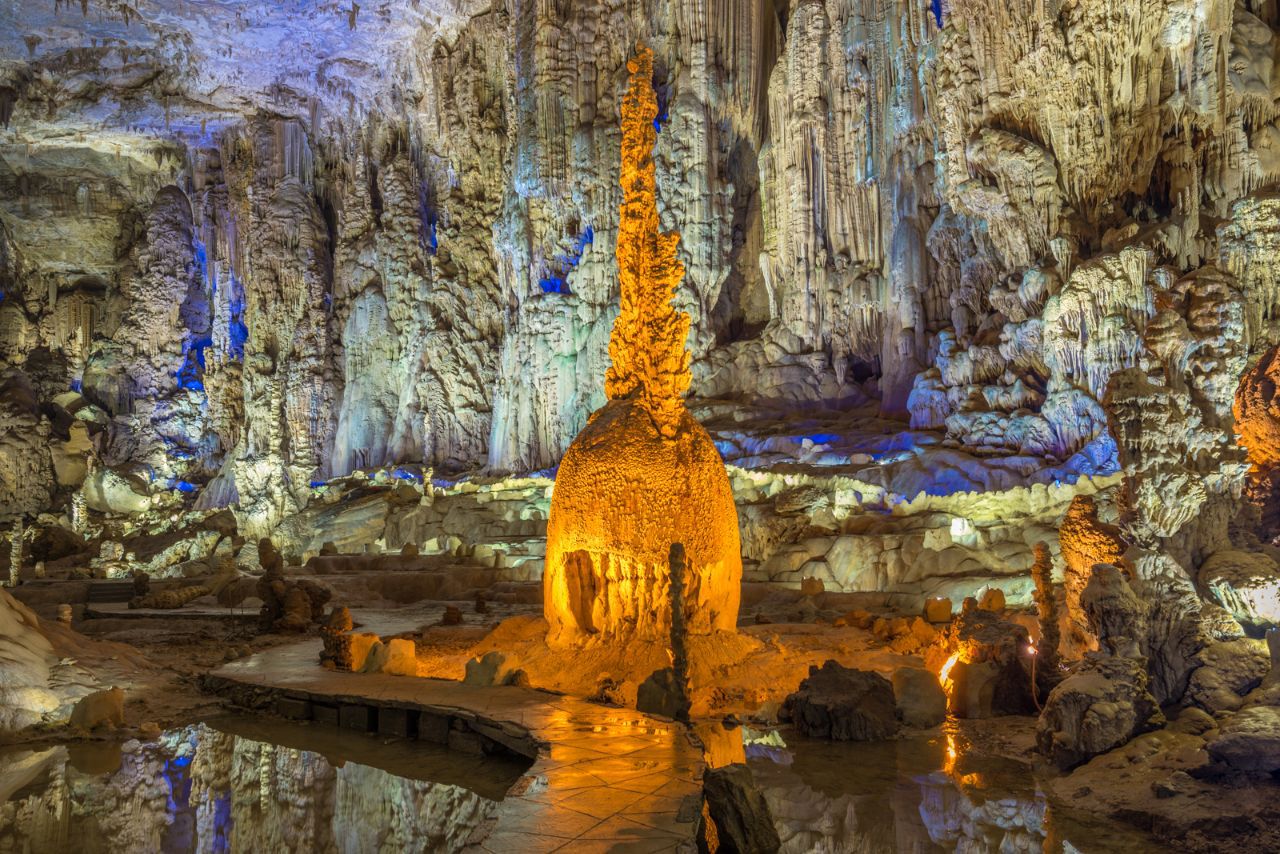
Zhijindong Cave
Located in Zhijin County, Bijie City, Guizhou Province, Zhijin Cave is a trove of precious cave resources, full of stalagmites and stone pillars of every form creating an incredibly varied karst cave setting. The sheer variety of stalactites here enchants the eyes. Entering the cave is like entering a multi-colored fantasy world, a breathtaking work of art by nature.
-
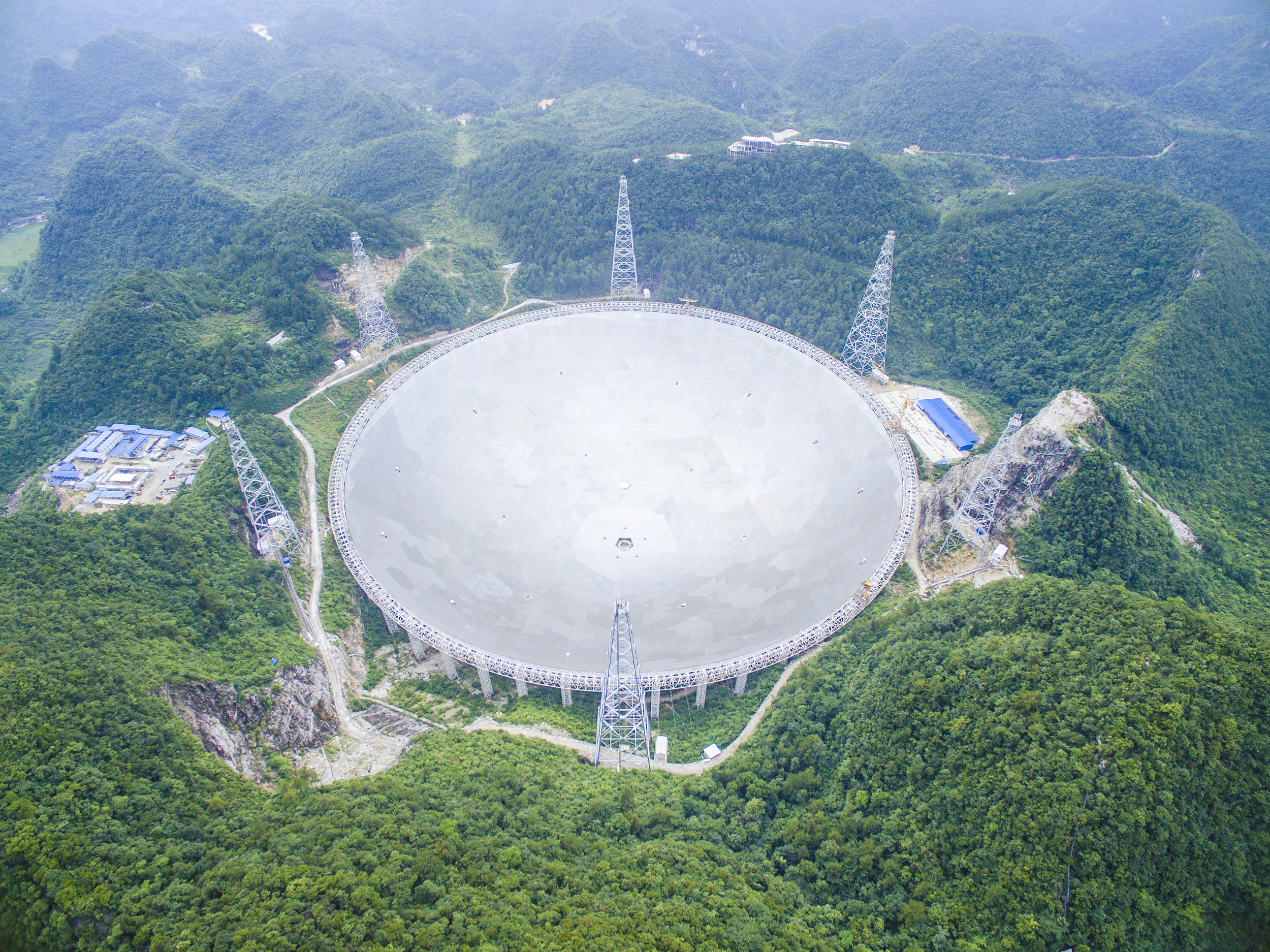
ChinaTianyan scenic Area
The Tianyan telescope is located in Pingtang County, Guizhou Province. In addition to the radio telescope, the visitor site also features a museum and a planetarium. A viewing platform provides a 360-degree view over the telescope, which is the size of nearly 30 soccer fields. You can also visit the Astronomical Experience Hall and Tianxiang Cinema to broaden your astronomical knowledge.
-
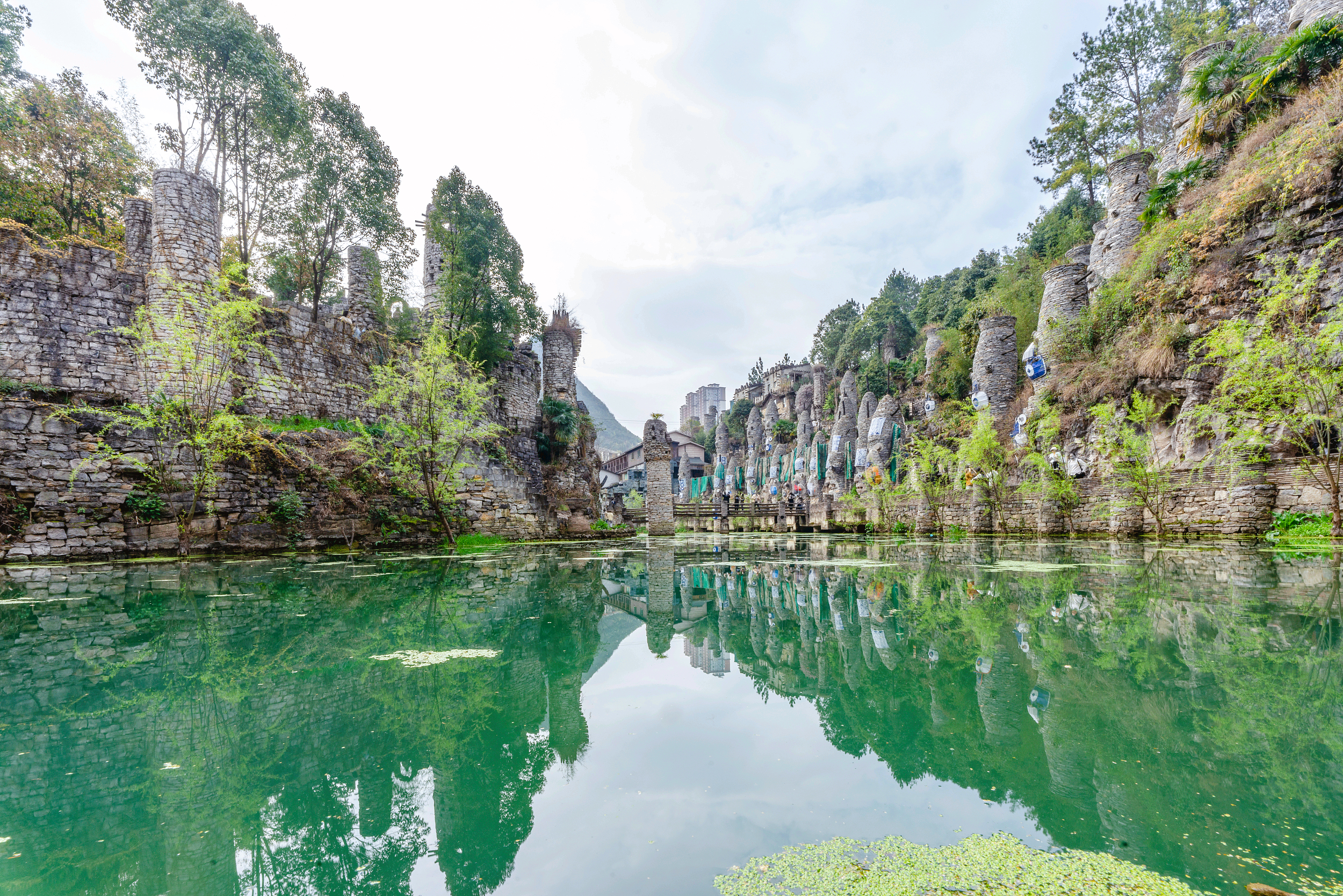
Yelang Valley
Huaxi Yelang Valley is located in a small canyon at the foot of the Cape Mountain in Huaxi University City, Gui’an New District. The opposite Cape Mountain is said to have been the residence of Queen Yelang’s successor to Jinzhusi. To this day, the ruins of the ancient Yelang Tun Fort are still preserved on the top of the mountain, and Yelang Valley is also named after it. The stone buildings, pottery art, sculptures and other characteristic buildings in Yelang Valley are mysterious and full of strong artistic atmosphere, which are worth seeing.
-
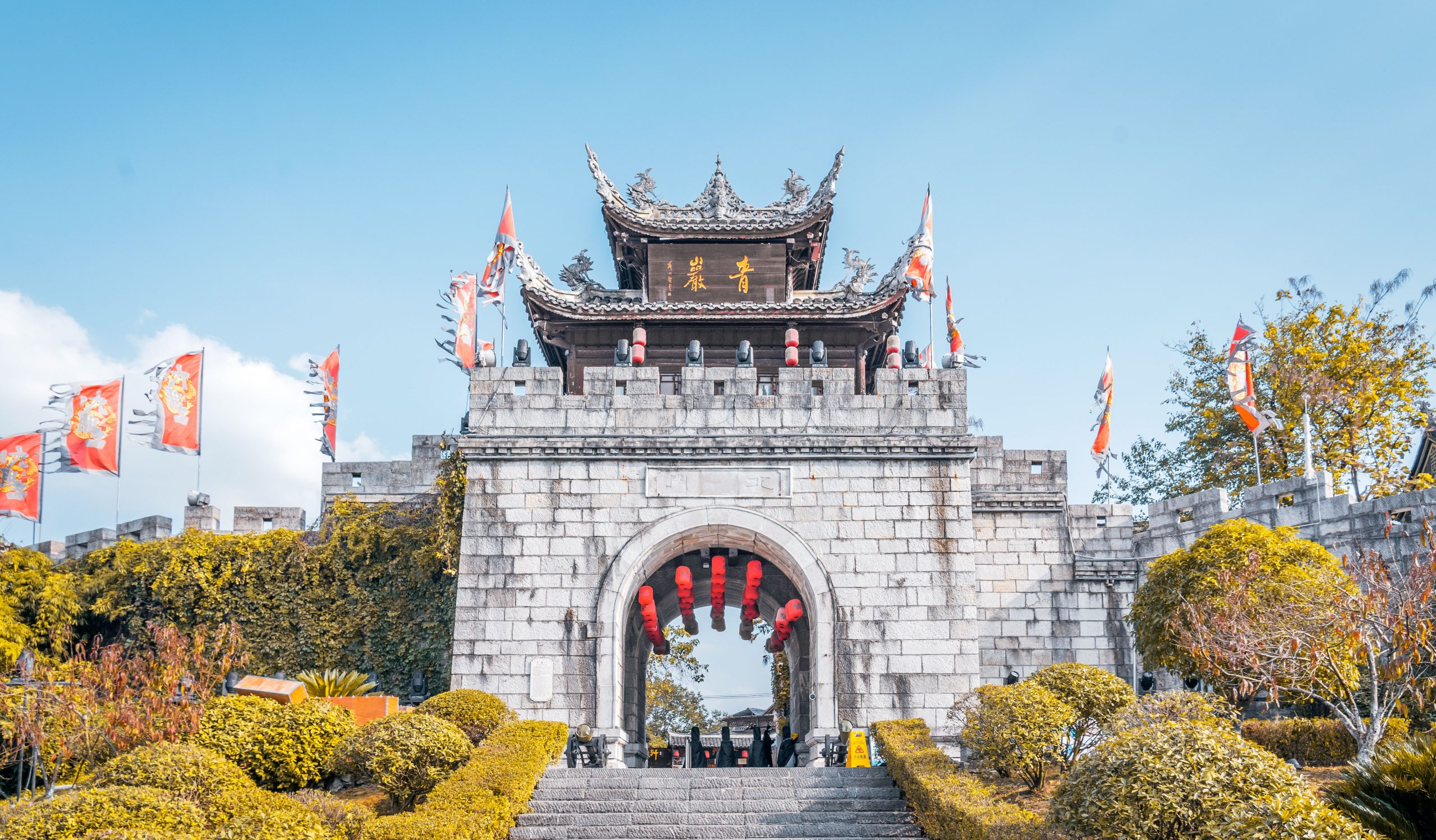
Qingyan Ancient Town
Qingyan Historic Town is located in Huaxi District, the southern suburb of Guiyang City. Together with Zhenyuan, Bingan and Longli, they are known as the four ancient towns of Guizhou. The historic town was built in the Ming Dynasty. It was once a military fortress. The town has preserved a large number of ancient buildings from the Ming and Qing Dynasties. It is also the shooting location for the movie “The Missing Gun”. You can take a walk on the Qingshiban Road in Qingyan Historic Town, look at the exquisite ancient architecture, and taste snacks such as the braised pork feet during your leisurely holiday.
-
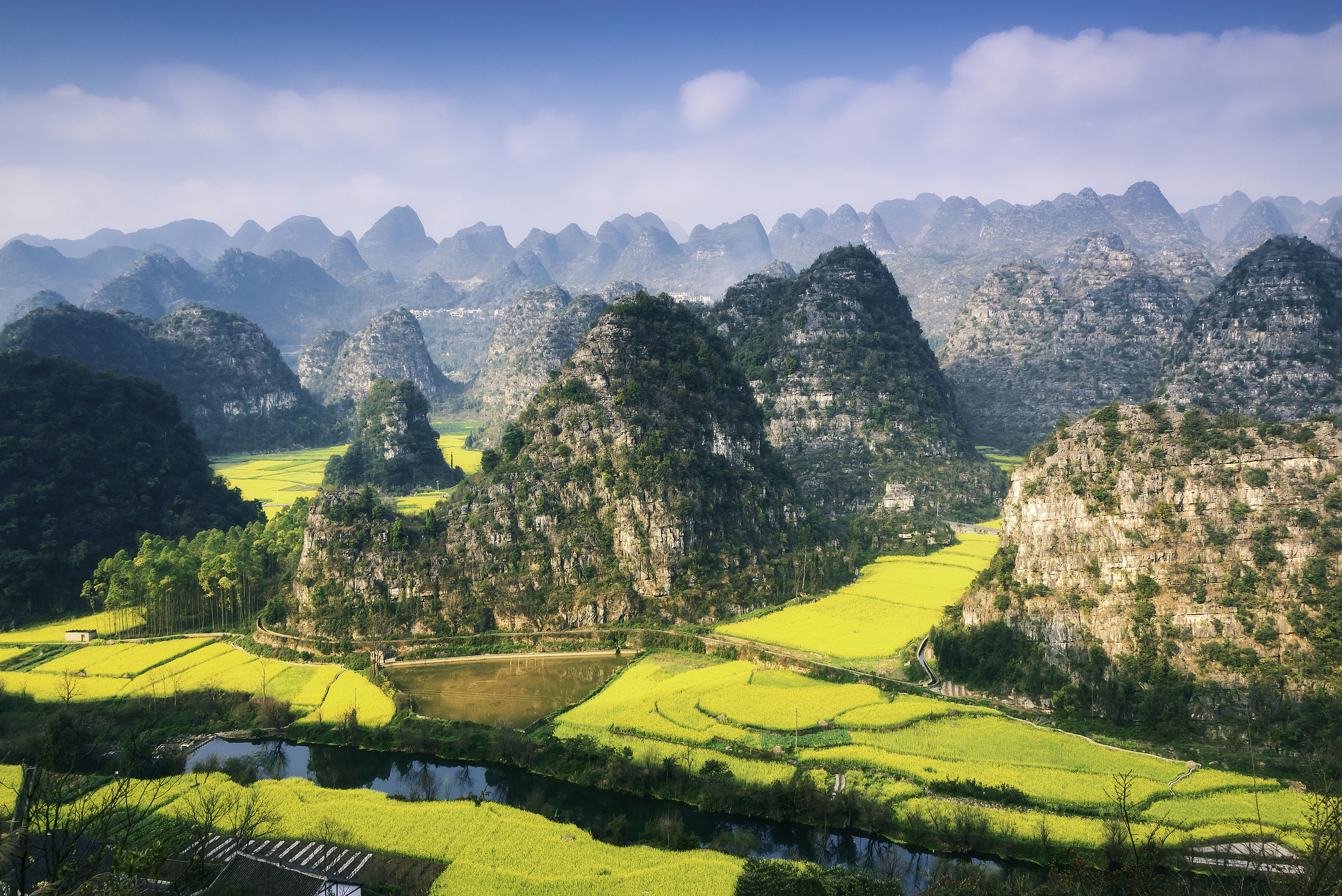
Wanfenglin Scenic Area
Wanfenglin Scenic Area is located in the southwest of Xingyi City, Guizhou Province, in the hinterland of Southwest Guizhou on the southeastern edge of the Yunnan-Guizhou Plateau, between 104 51′ and 104 58′ east longitude and 24 58′ and 25 42′ north latitude. The southern end borders Guangxi, the west reaches Sanjiangkou at the junction of Yunnan, Guangxi and Guizhou, and the north is connected to the main peak of Wumeng Mountain. The peak is 1,600 meters above sea level, with an average altitude of 1,200 meters. The forest coverage rate is 68.5%, and the total area is more than 2,000 square kilometers. It is a typical area for the development of conical karst peak forest landforms in the world. Wanfenglin has a pleasant climate, with an average annual temperature of 16-18 , no severe cold in winter and no scorching heat in summer. The average temperature in July is 21-26 . It is listed in the national summer resort city rankings and is an excellent leisure and tourism place in China.Wanfenglin Scenic Area is dominated by conical peak forests and peak clusters with Triassic strata rocks, among which are various geological relic landscapes such as karst caves, funnels, underground rivers, sinkholes and sedimentary strata. The peak clusters and peak forests are widely distributed, diverse in types, rich in form and well developed, which are extremely rare in China and even in the world. They are typical representatives of the conical karst landforms formed in the transition slope zone from the western Yunnan-Guizhou Plateau to the Guangxi hills, and are the “China Conical Karst Large Museum”.The scenic resource types of the scenic area are mainly natural landscapes such as pastoral scenery and strange peaks and mountains, supplemented by cultural landscapes such as ethnic minority villages. In terms of natural resources, according to the form of the peak forest, Wanfenglin is divided into karst isolated peaks, valley peak forests, karst cone peaks, blade-shaped stone peaks and other types, forming a magnificent and vast karst landscape, which is a typical representative of the cone-shaped karst landform landscape and has great geological research value; in terms of cultural resources, the long history of the Buyi people has accumulated a rich national culture. Whether it is their clothing, language, or living customs, they all contain a strong national cultural atmosphere. The “Eight Sounds Sitting Singing” which enjoys the reputation of “living fossil of sound” and “sound of nature” is the folk rap art passed down from generation to generation by the Buyi people. It has a history of more than a thousand years and has been rated as a “national intangible cultural heritage.”
-
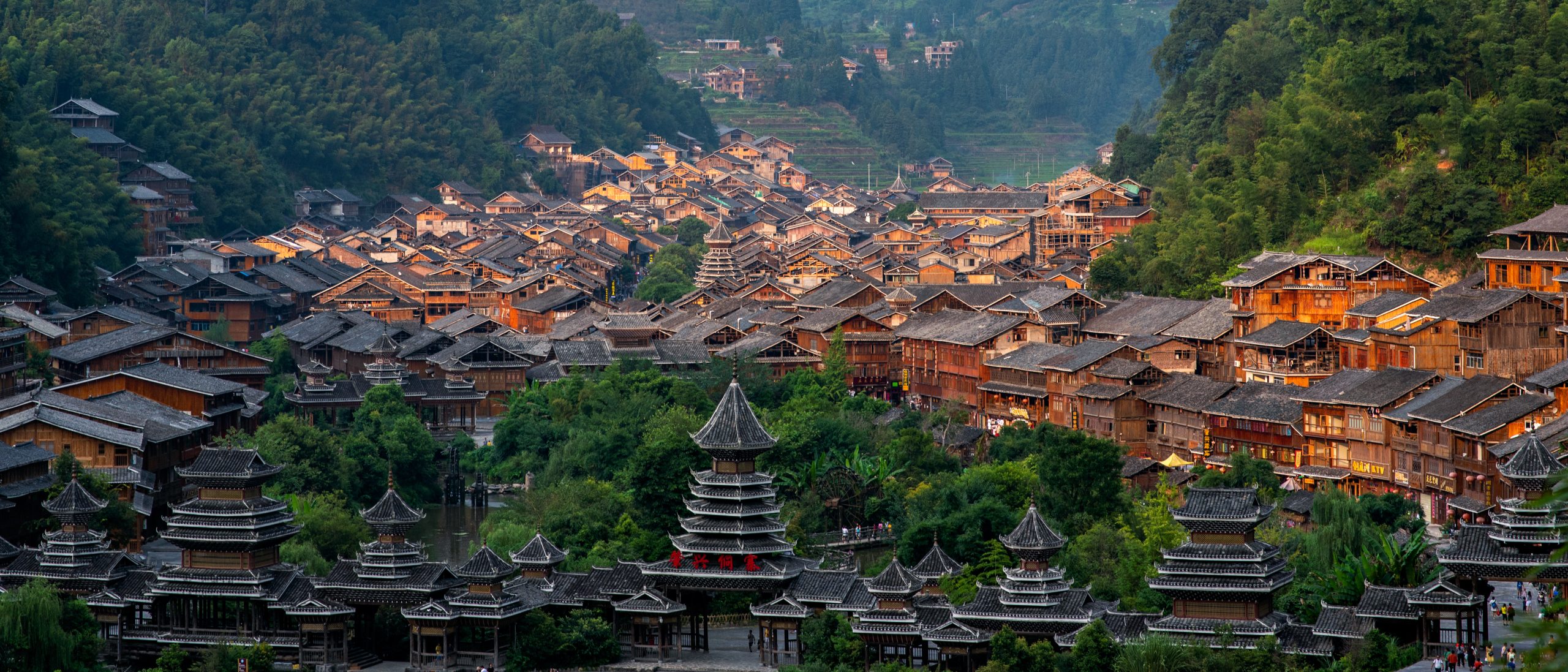
Zhaoxing Dong Village
Zhaoxing Village is a huge Yi village which was one of the sub-venues of the 2018 Spring Festival. The classic Yi style architecture in Zhaoxing Village is a popular attraction for visitors. There are six covered ‘wind and rain’ bridges each of which has a unique and beautiful shape. The blue tile roofs are simple yet practical. There are also a number of large wooden drum towers. The Yi cultural song and dance performances are a must-see for any visitor.