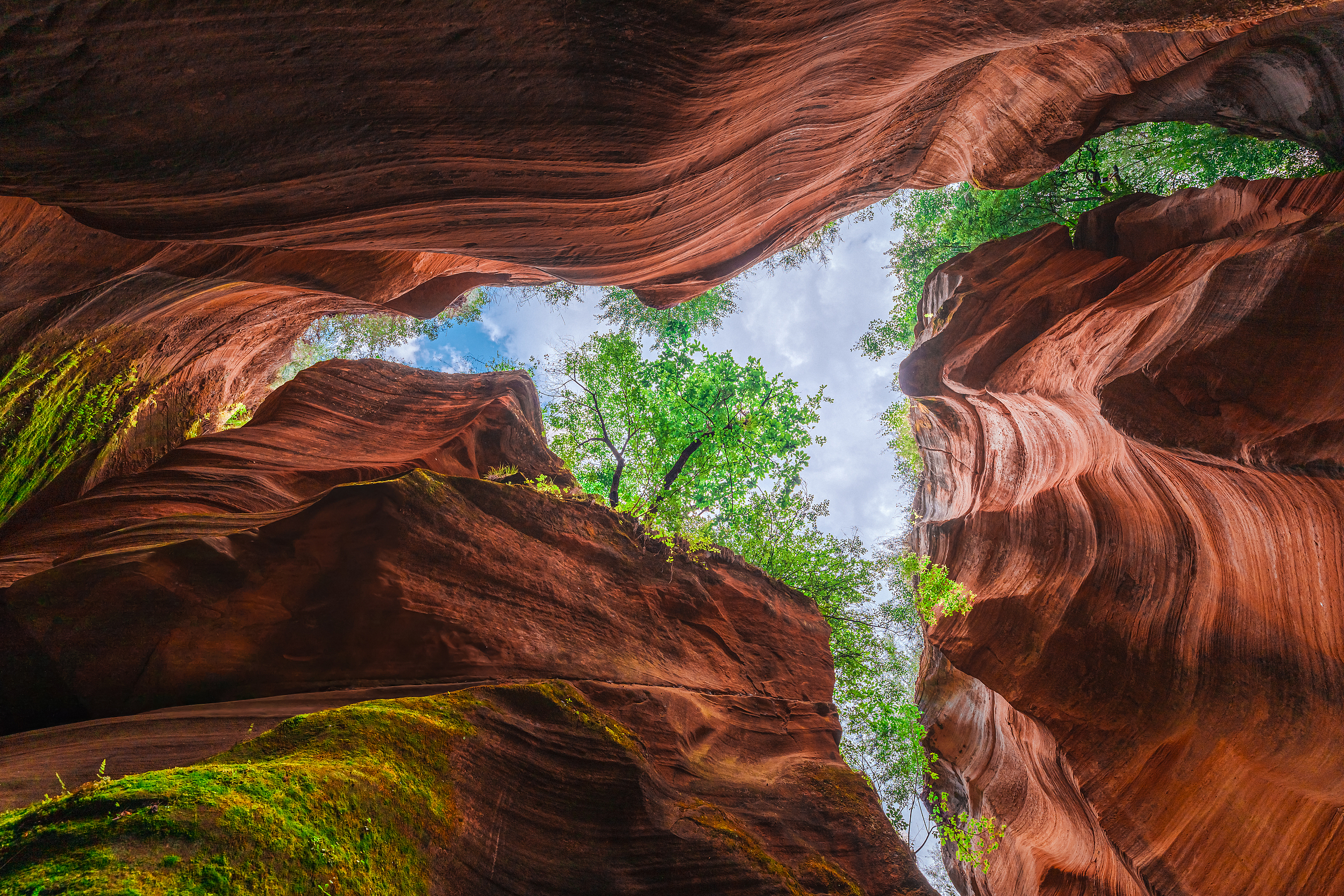
Ganquan Grand Canyon is located in Ganquan County, Shaanxi Province. It is composed of Huashugou, Huabaogou, Longbagou, Mudangou, Yixiantian and other scenic spots. Among them, the scenery of Huashugou is more brilliant. Hundreds of millions of years ago, a strong earthquake separated this loess mountain into a big crack, and after hundreds of years of rain erosion, such a canyon was slowly formed. The magical geology and landforms here are known as China’s “Antelope Canyon”, attracting countless photographers. When you walk into this magical canyon, the straight and staggered lines pass smoothly, the light and shadow are unpredictable, and the phantom is amazing, which makes people sincerely lament the uncanny craftsmanship of nature.
归档: Attractions
-
Xinghan Scenic Spot
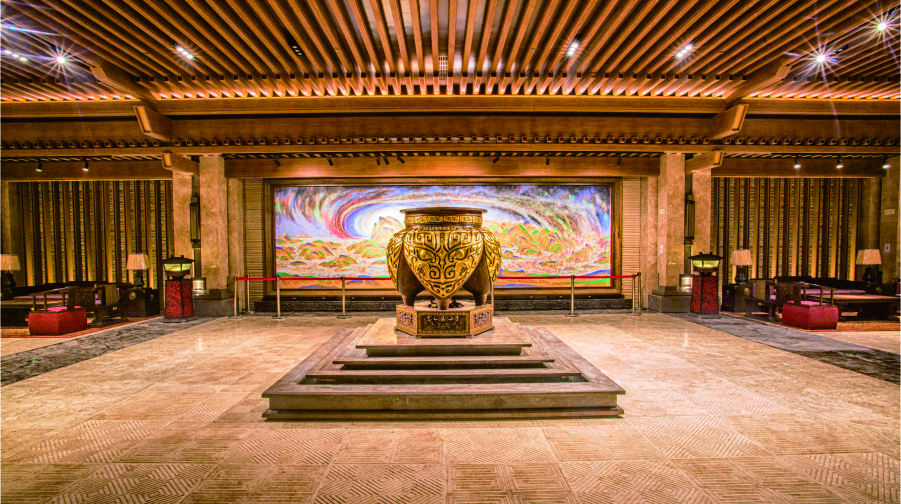
Xinghan Scenic SpotHanyuan LakeBuilt with the natural ecology of the Han River as its foundation and the essence of Han culture as its soul, this Han-themed cultural tourism resort recreates the historical splendor of the early Han dynasty. It integrates Han-style attractions, commercial streets, museums, hotels, dining, and performances to offer visitors an elegant, delightful, and joyful Han cultural experience. The large-scale water show “Legend of Tianhan,” directed by renowned director Sha Xiaolan, features over 200 performers in a spectacular aquatic production combining water projections, floating installations, synchronized formations, and innovative visual effects.Hanyuan LakeThe water stage comes alive with passionate performances, enhanced by modern high-tech elements including grand fountain displays, large-scale pyrotechnic effects, laser shows, and dynamic fan-shaped water screens – presenting visitors with a breathtaking legendary panorama of Han culture.
-
Qianling Mausoleum
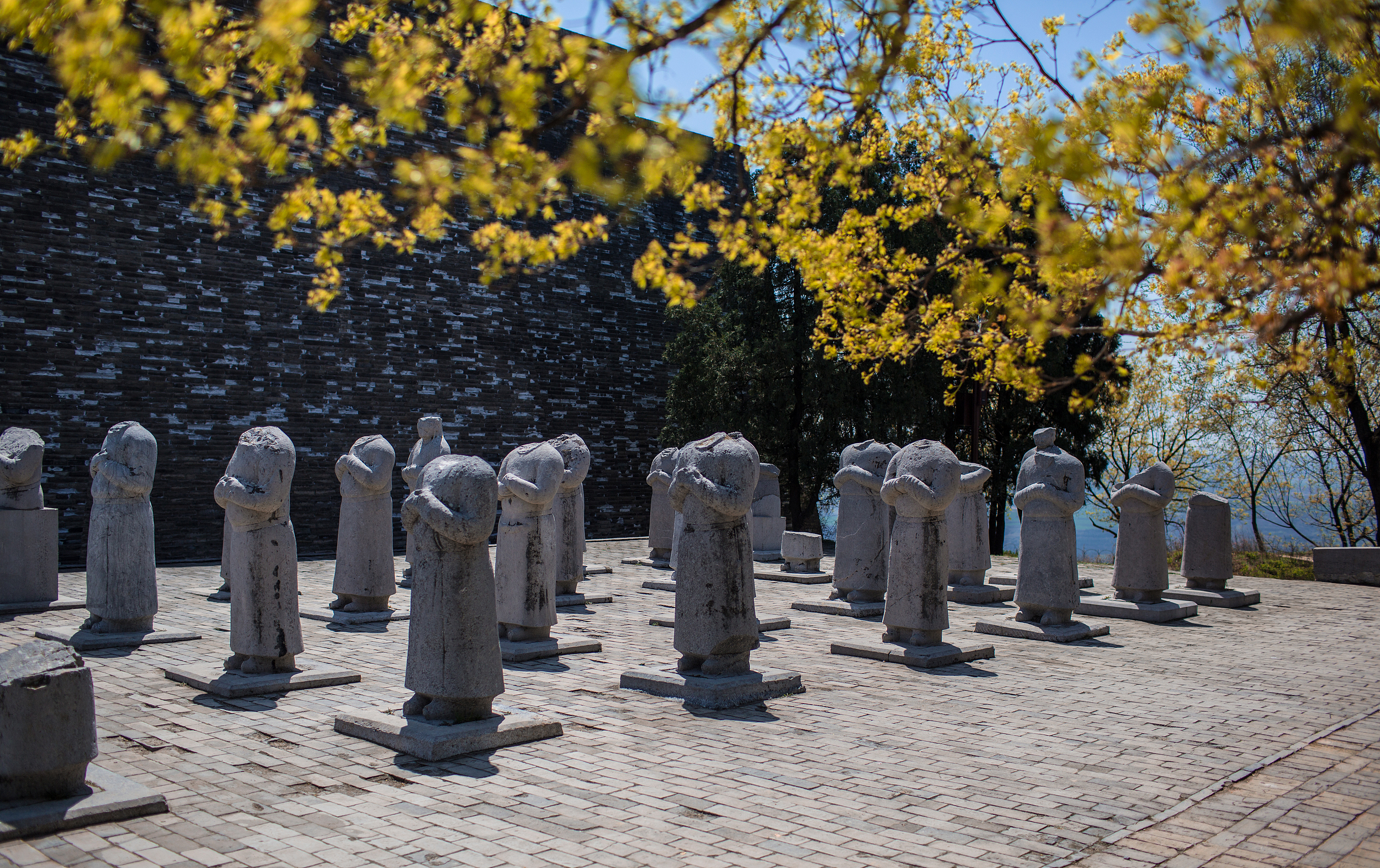
The Qinling Mausoleum was constructed in the year 684 and is one of the rare places in China – or even the world – where emperors from two dynasties and an imperial husband and wife are interred. Emperor Gaozong of Tang (Li Zhi) and his wife Wu Zetian, China’s only empress, are interred here. This mausoleum is also one of the few imperial tombs in China that has not been looted. The Qinling Mausoleum Scenic Area is quite large. In addition to the Qinling Mausoleum itself, it also contains many “companion tombs” (peizangmu) in which members of the imperial court and major ministers are buried. The tombs of Prince Zhanghuai, Crown Prince Yide, and Princess Yongtai are currently being excavated.
-
Huashan West Peak Cableway
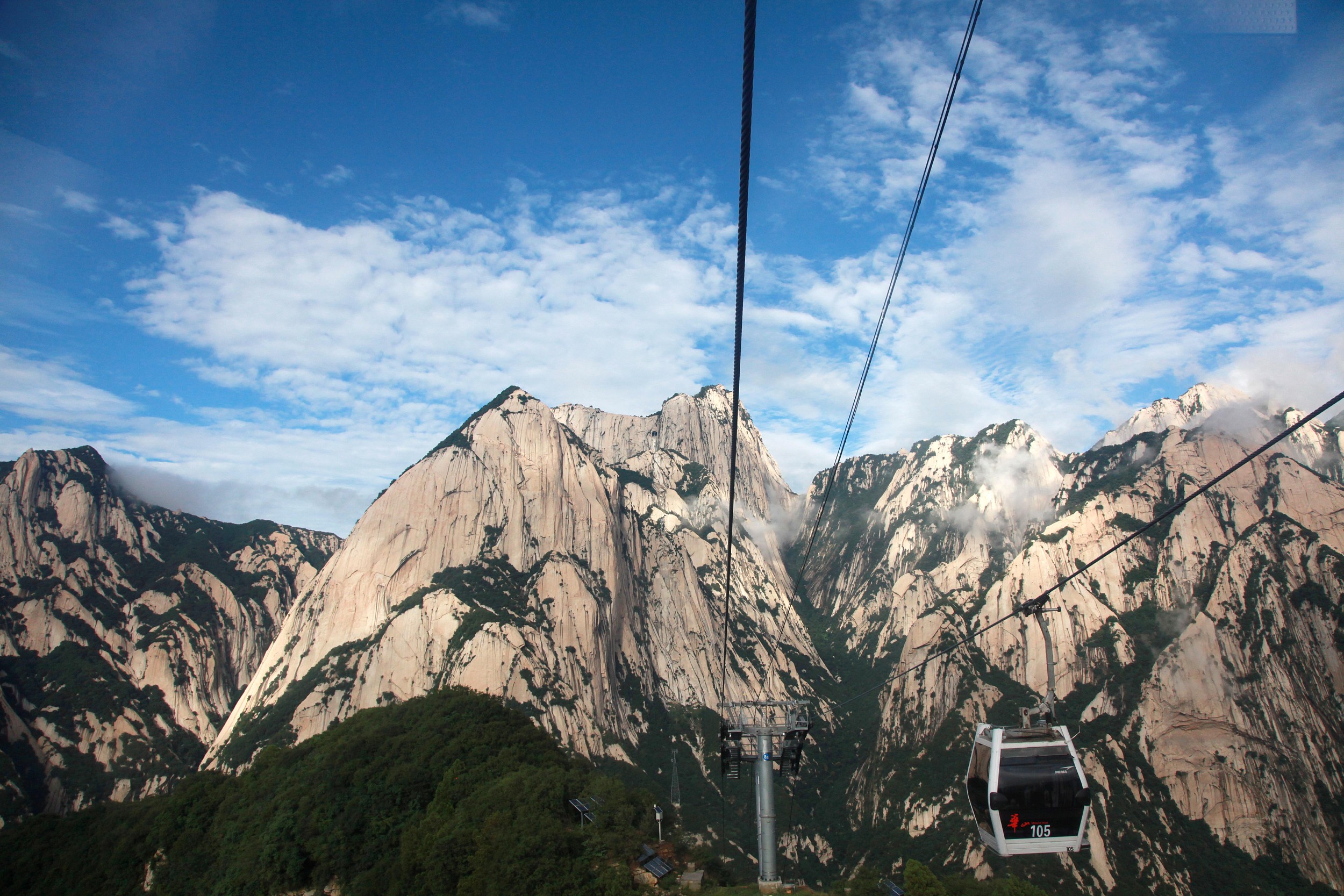
Huashan West Trail Road is a single-line circular cableway. The ropeway equipments were introduced from France and adopted a full digital automatic control system. The lower station of the cableway is located at the Donggoukou, the middle station is located in the Xianyu Baique Temple, and the upper station is located in the south side of Huashan West Peak. If you sit on a cable car, you are able to watch the overall beautiful scenery of Huashan.
-

The Mount Taibai National Forest Park
The Mount Taibai National Forest Park is located in Mei County, Shaanxi Province, situated atAt the northern foot of Mount Taibai, the highest peak of the Qinling MountainsIn-parkThe Mount Taibai National Forest ParkConfirmQinling MountainsThe main peak, standing at approx. 3,771.2m above sea level, boasts majestic and awe-inspiring terrain. The attraction features stunning natural scenery with perpetual snow atop the summit even in midsummer. Viewed from the Guanzhong Plain, its snow-capped grandeur presents “Taibai Snow in June”—one of the Eight Scenic Wonders of Guanzhong since ancient times. The park features a forest landscape as its main attraction, with majestic peaks, crystal-clear streams, and historical relics scattered throughout. Its towering mountain ranges pierce the clouds, making it a renowned tourist destination in Shaanxi. Due to the complex terrain within the attraction, the deeper areas are better suited for visitors who enjoy ecotourism or outdoor hiking enthusiasts. CrossingThe Mount Taibai National Forest ParkThere are multiple routes available, with the mountain climbing paths divided into the northern slope and southern slope, offering both cable car routes and hiking trails. Visitors must follow the developed climbing routes, especially hikers who should not venture off the main trail for exploration. This is to prevent getting lost in the mountains and because the reserve is home to numerous wild animals, including large predators, posing potential dangers to those who venture deep into the wilderness. One of the more conventional options is the hiking summit route, which takes approx. two days to complete, with overnight stays available atXiaowengong TempleStay overnight. 1-day tourThe Mount Taibai National Forest ParkMost itineraries return at “Heaven’s Circle and Earth’s Square,” which stands at 3,511m in elevation. Locals call this spot “3511,” one of China’s geographical north-south dividing points. The true summit ascent begins from here. The first day of the seventh lunar month marksThe Mount Taibai National Forest ParkDuring temple fairs, the mountain comes alive with bustling crowds of visitors both at its base and summit, creating an electrifying atmosphere.
-
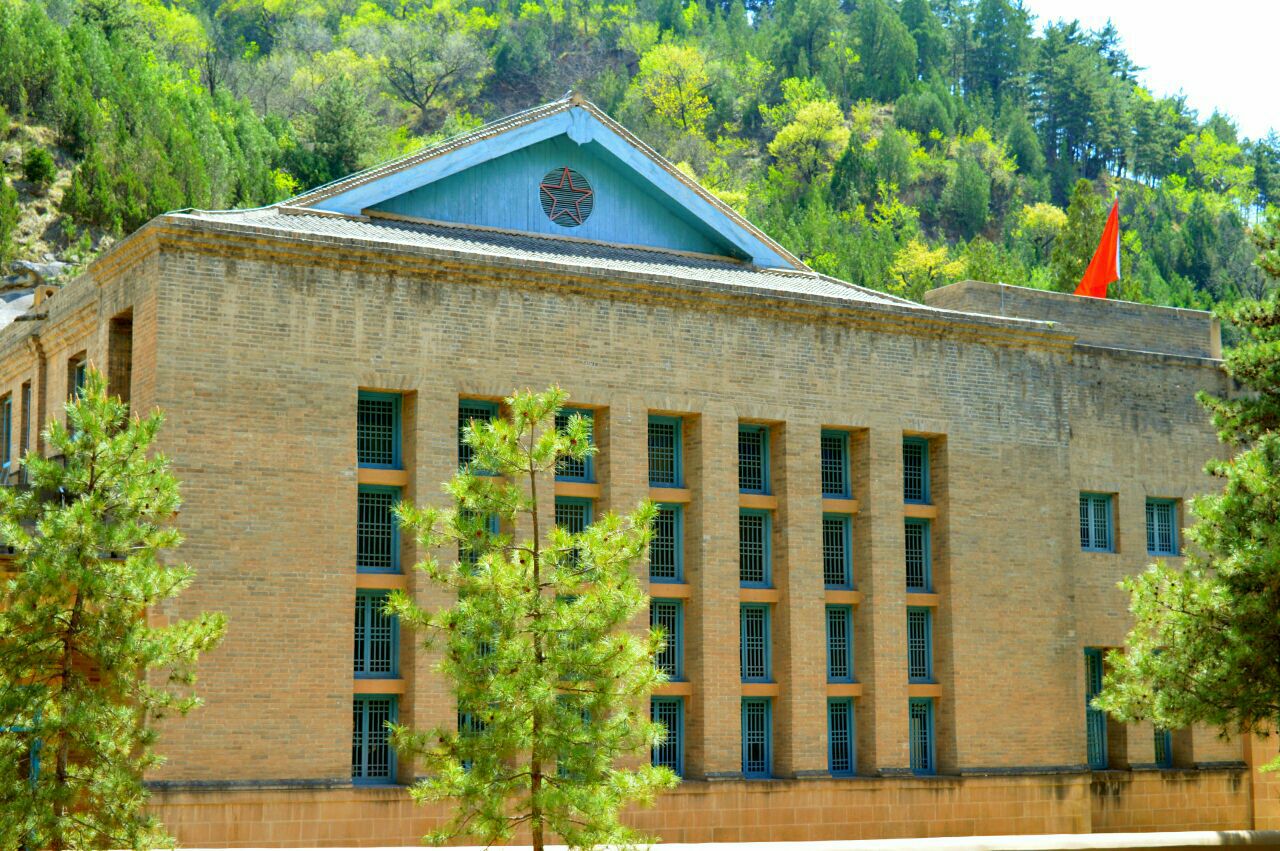
Yangjialing Revolutionary Site
Yangjialing Revolutionary Site is a place where the old generation of central-government leaders, such as Chairman Mao, lived in Yan’an for a long time. Yangjialing Revolutionary Site is divided into two parts, the south part and the north part along the road. The south side of the road is the central auditorium of the year. The north side of the road is the former residence of Mao Zedong, Zhu De, Zhou Enlai, Liu Shaoqi, and other central government leaders. The 7th National Congress of the Communist Party of China, which is of historical significance, was held in the central auditorium. At the meeting, Mao Zedong Thought was determined as the Party’s guiding ideology. In 1946, Mao Zedong met with the American journalist Anna Louise Strong here and proposed the famous theory that “All the reactionaries are paper tigers.”
-
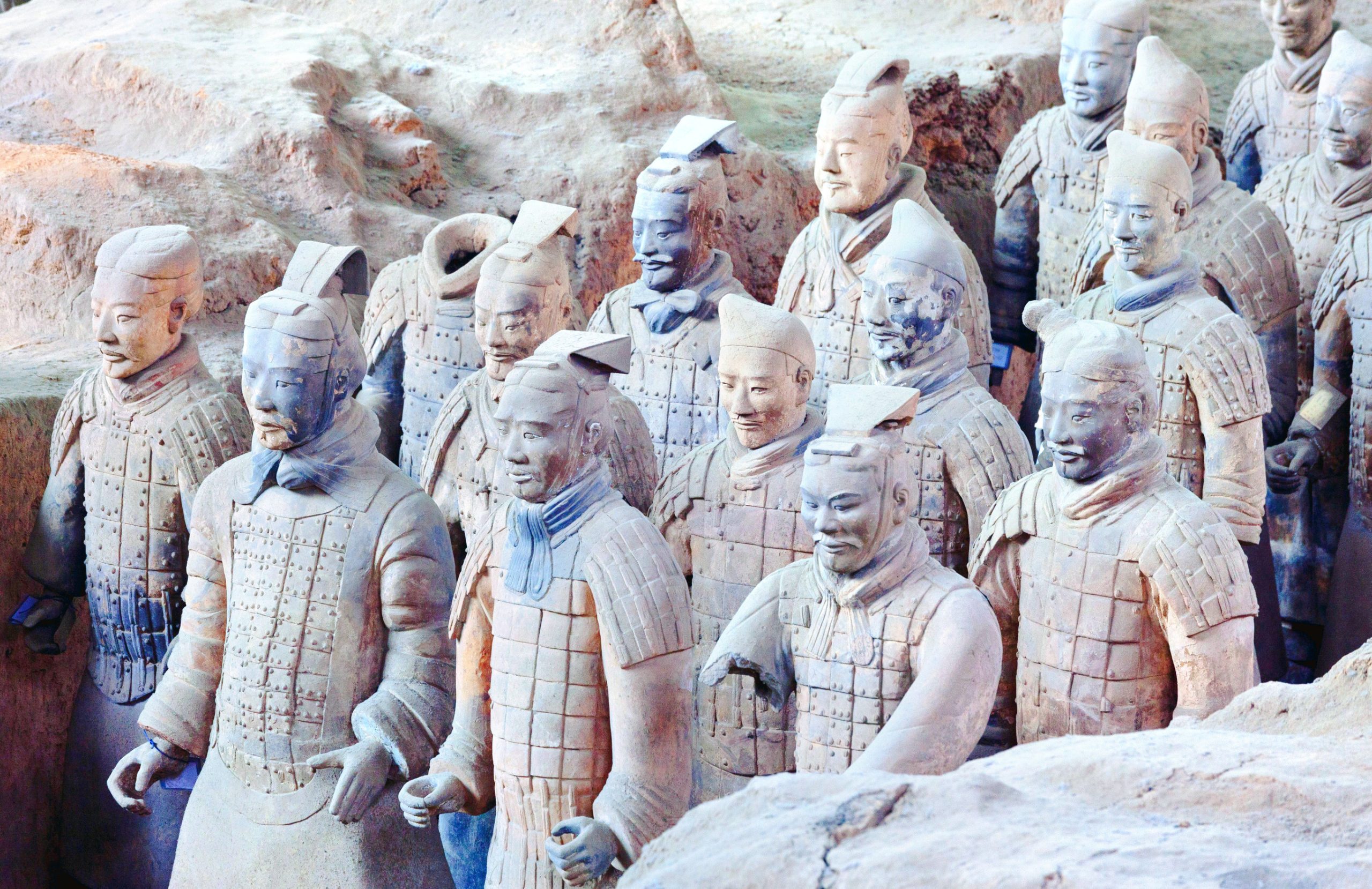
Emperor Qinshihuang’s Mausoleum Site Museum
Emperor Qinshihuang’s Mausoleum Site Museum, also known as the Terracotta Army, is located about 1.5 kilometers east of the Mausoleum of the First Qin Emperor and forms part of the extensive necropolis. There were more than a thousand terracotta soldiers unearthed here, each with a different facial expression. Standing before the massive underground army, you will feel the extraordinary might of the Qin Emperor that enabled him to unify six warring states two thousand years ago. The Qin Emperor Ying Zheng began building the mausoleum for himself at the age of 13. Nearly 720000 men and 38 years were required to complete this vast project.
-
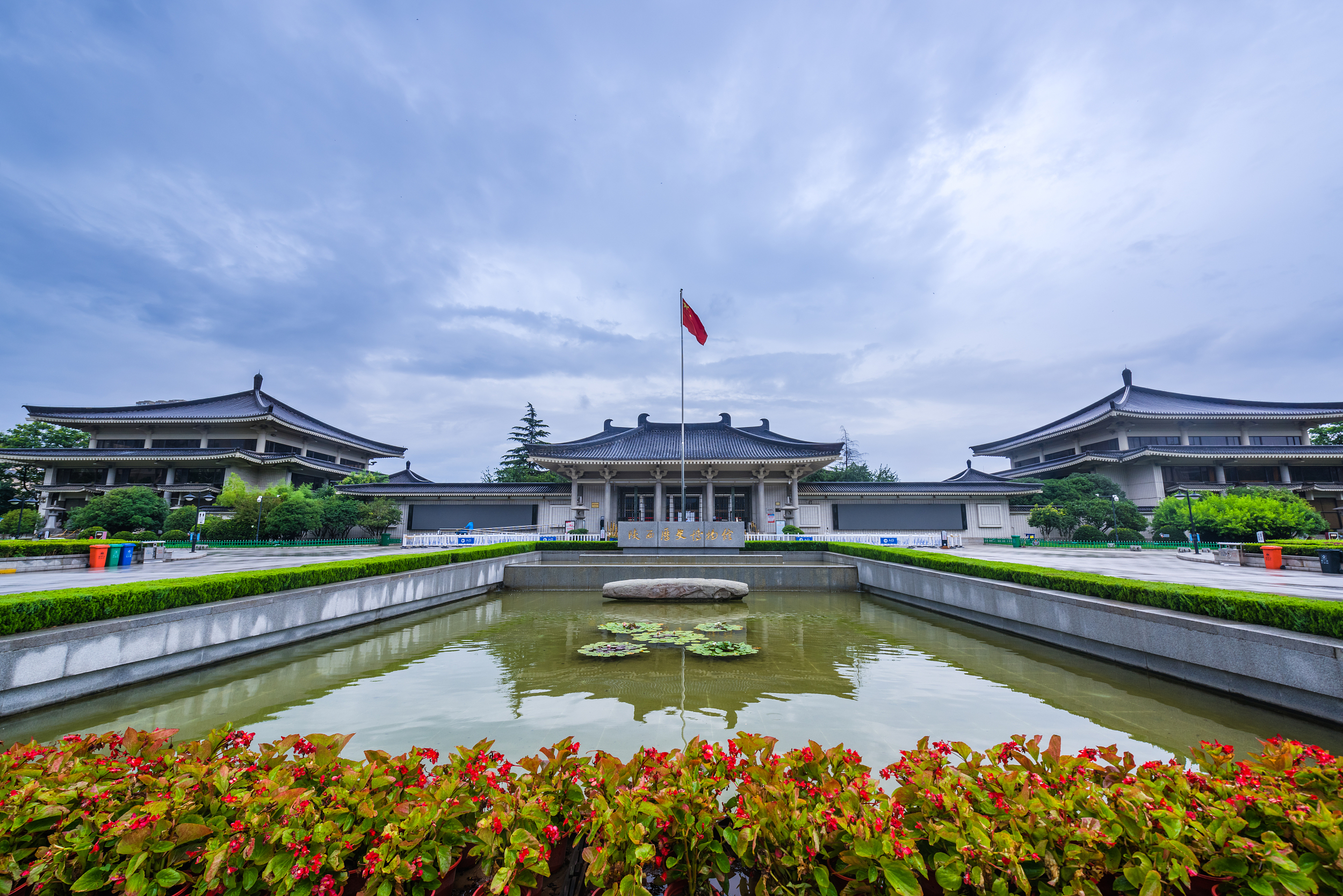
Shaanxi History Museum
History background:Shaanxi History Museum is located in the northwest of the Dayan Pagoda in Xi’an. It is one of the landmark attractions of Xi’an. The museum was planned in 1983, started in the summer of 1986, and officially opened on June 20, 1991. It was named Shaanxi History Museum. In 2016, Shaanxi History Museum was selected as “China’s 20th Century Architectural Heritage” by the Chinese Cultural Relics Society and the Chinese Architectural Society.Museum Features:Shaanxi History Museum is a large modern museum, and its completion marks a new milestone in the development of China’s museum industry. This museum is a Tang-style building complex with a “central hall and four corner towers”. The main and secondary buildings are well-organized, the heights are staggered, and the momentum is solemn. It integrates national traditions, local characteristics and the spirit of the times.The museum covers an area of 65,000 square meters, and houses more than 380,000 cultural relics ranging from simple stone tools used in the initial stage of ancient humans to various artifacts in social life before 1840, covering a time span of more than one million years. The cultural relics are not only numerous and diverse, but also of high quality and wide value. The collections in the museum are dazzling and exquisite. It is an art hall that showcases the history and culture of Shaanxi and ancient Chinese civilization, and is known as the “Pearl of the Ancient Capital, the Treasure House of China.”There are many treasures in the museum, including bronzes from the Shang and Zhou dynasties, pottery figurines from various dynasties, gold and silver utensils from the Han and Tang dynasties, and murals from Tang tombs. Most of them are treasures from the prosperous periods of the Han and Tang dynasties, and some of them are fine items that are prohibited from leaving the country.Collection treasures:There are three exhibition halls in the center of the museum. The first exhibition hall displays cultural relics from the prehistoric civilization of Lantian ape-man 1.15 million years ago to the Qin Dynasty; the second exhibition hall displays cultural relics from the Han Dynasty and the Wei, Jin, Southern and Northern Dynasties; and the third exhibition hall is mainly cultural relics from the prosperous Tang Dynasty. Each exhibition hall has its own treasure.There are special exhibition halls on the east and west sides of the central hall. On the west side, there is a “Special Exhibition of Tang Dynasty Treasures (Treasure Hall, Cultural Relics Unearthed in Hejiacun)”, where many fine gold and silver wares from the heyday of the Tang Dynasty were transferred to be exhibited. On the east side, there is a “Treasures of Tang Dynasty Murals Exhibition”, which exhibits a number of authentic Tang Dynasty tomb murals.The tripodThe tripod is placed in the first exhibition hall at the entrance of the museum, and it can be said to be the treasure of the first exhibition hall. The replica is placed here, and the original is kept in the warehouse. Inscription on the outer wall: The inscription “All under heaven is the king’s land; all the people are the king’s subjects” reflects the land ownership system in the Western Zhou Dynasty.There are four lines of inscriptions with 28 characters on the inner wall of the Yi Ding. The general meaning is: In early August of a certain year, Wang Jiang took back the land originally given to Shi Lu and gave it to Yi, who then made this tripod to commemorate it.Queen’s Seal:One of the treasures worth seeing in the second exhibition hall is the jade seal of the empress of the Han Dynasty, which is displayed separately. The seal is made of Xinjiang Hetian mutton-fat jade and is engraved with a Chihu, symbolizing royal power.Three-color camel figurines carrying music:This world-famous tri-color camel figurine carrying music is located in the third exhibition hall of Shaanxi History Museum. Its overall appearance and color are well preserved. There are seven men sitting on the camel’s back, holding different musical instruments in their hands. Among them, the figurine holding the clapboard is listening attentively, as if intoxicated by the wonderful music. The woman in the middle is performing, and the camel opens its mouth wide and looks up to the sky, as if it is also singing with its master.Gold-inlaid animal head agate cup:This cultural relic, located in the special exhibition “Tang Dynasty Relics Special Exhibition”, is one of the first 64 national treasures listed by the State Administration of Cultural Heritage that are never allowed to be exhibited abroad.There are also many other treasures such as black-glazed oil-drip bowls, green-glazed porcelain pots with handles, gilded silver bamboo-joint copper incense burners, gold bowls with mandarin duck and lotus petal patterns, and so on.
-
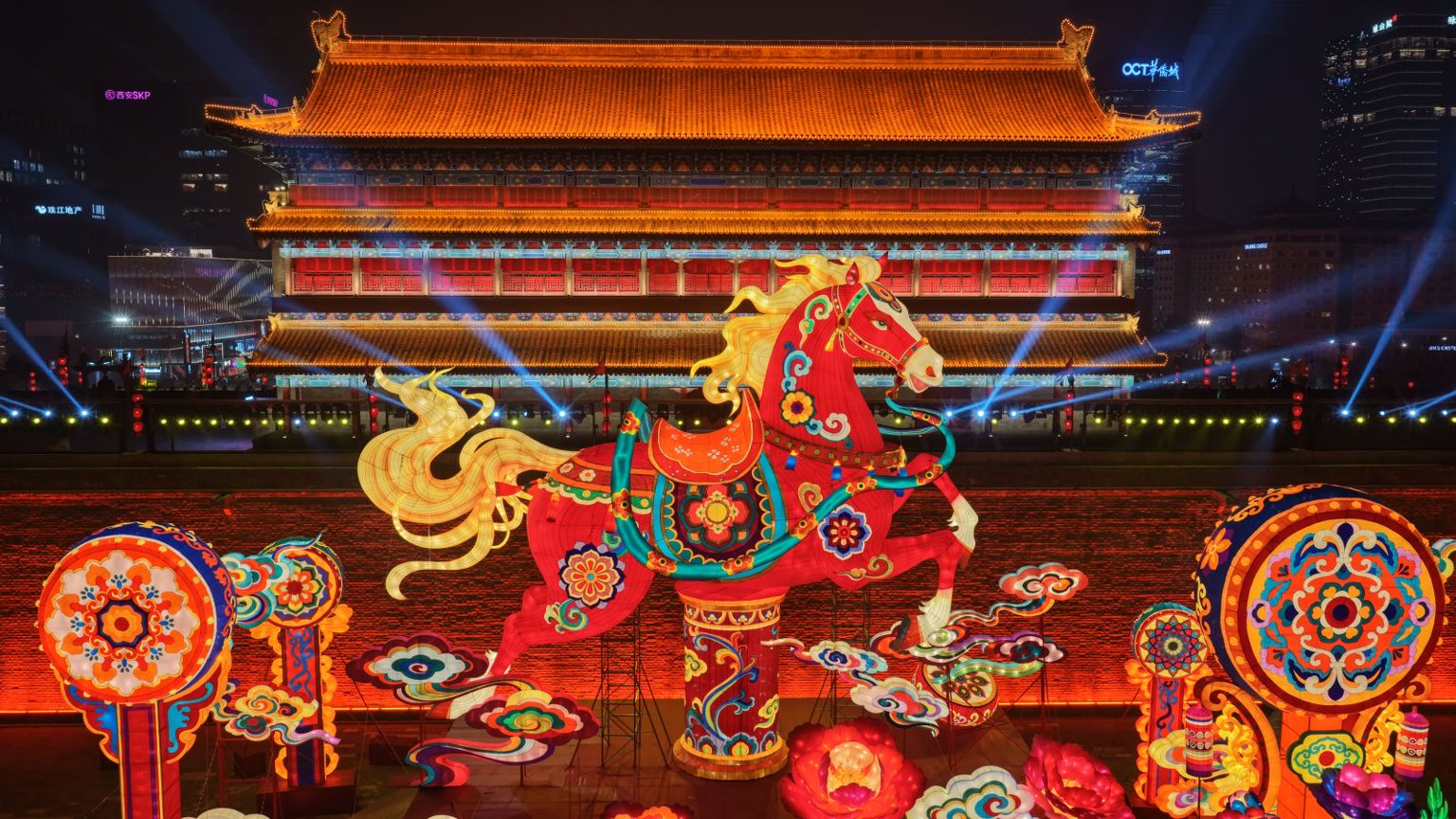
Xi’an City Wall
Xi’an City Wall is a landmark of this ancient city. The city walls that we see now were built in the early years of the Ming dynasty and they are now more than 600 years old. The walls were built on the foundations of the imperial city of the Tang Dynasty and they are formed together with a series of defensive installments such as moats and turrets. At present, Xi’an City Wall can be accessed by many city gates. Visitors can choose the nearest one to them. The South Gate is the visitor entrance of Xi’an City and is also the city gate with more tourists. Cycling on the ancient walls is a good experience. Riding on the wall overlooking the ancient capital of the thirteenth dynasty, you will have a feeling of travelling through time.
-
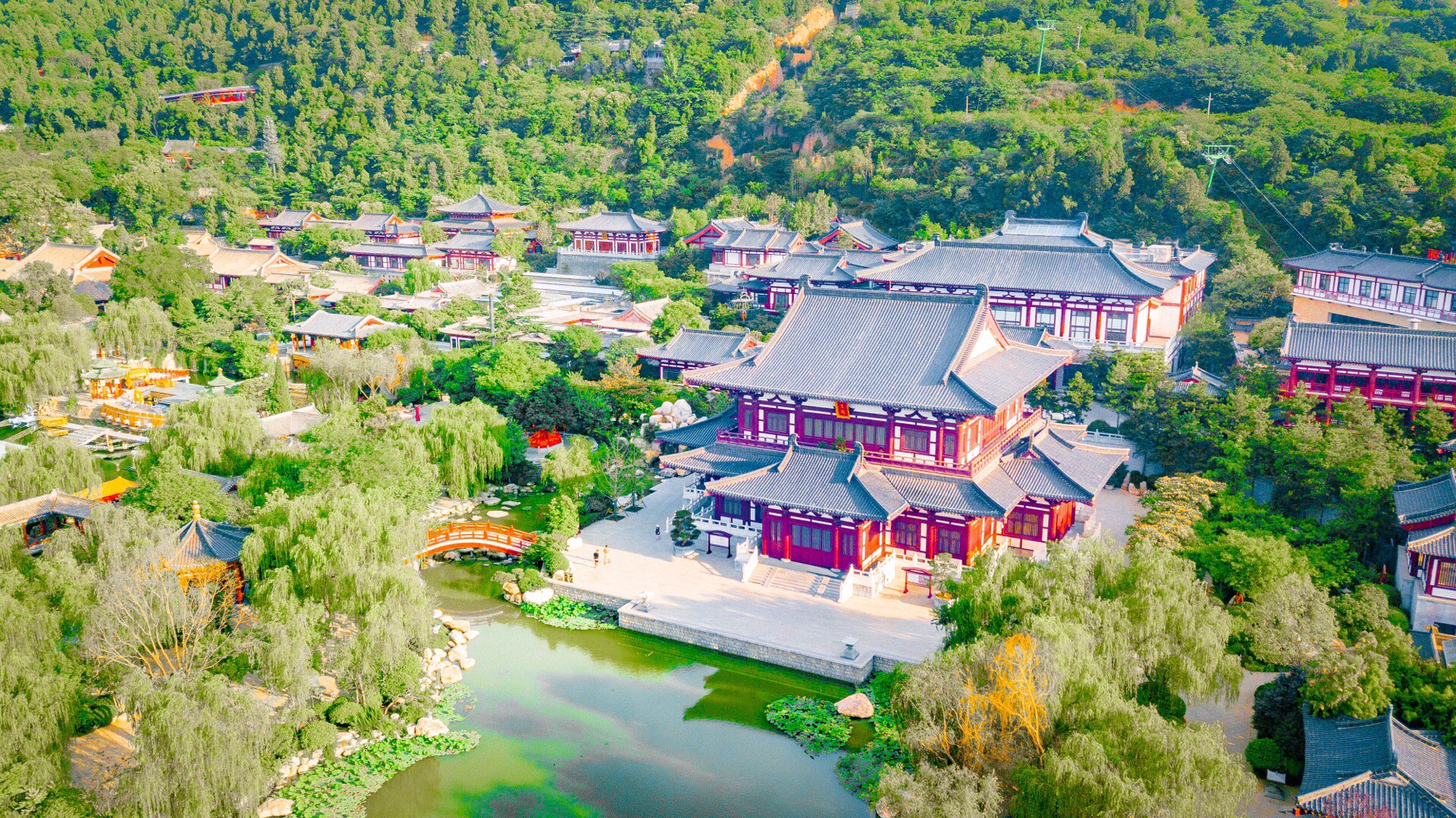
Huaqing Palace
Huaqing Palace attraction is located 30 km east of Xi’an, adjacent to the Terracotta Warriors. Renowned for its timeless hot spring resources and numerous historical events, it has become an iconic cultural tourism attraction of Tang Dynasty palaces in China.Palace scenic spotsHuaqing Palace boasts a long history, serving as an imperial retreat for emperors from the Zhou, Qin, Han, Sui, and Tang dynasties. The palace features cultural zones like the Tang Imperial Hot Spring Relics Museum, the Xi’an Incident site—Five-Room Hall, Nine Dragon Lake and Lotus Lake scenic areas, and the Tang Pear Garden Museum. Notable architectural complexes include Feishuang Hall, Wanshou Hall, Changsheng Hall, Huanyuan Garden, and Yuwang Hall.The stele of “hot spring ode”Mount Li hot springs, developed early and favored by emperors throughout history, enjoy the reputation of being “the imperial hot springs under heaven.” As far back as the Yangshao culture period 6,000 years ago, the ancient Jiangzhai people began utilizing these springs. With their profound cultural heritage spanning millennia, Mount Li hot springs represent an indispensable part of Chinese historical culture.The stele of hot spring ode in the attraction stands 154 cm tall, 72 cm wide, and 19 cm thick, featuring a coiled dragon design and a trapezoidal base. Engraved by Yuan Chang, the governor of Yongzhou during the Northern Wei Dynasty, the inscription reads, “The hot spring is nature’s prescription and the primordial healer of the universe. People from all nations and those suffering from ailments come with provisions to seek relief in its waters.” This stele is the earliest surviving written artifact at Huaqing Palace.Tang Imperial Hot Spring Relics MuseumThis is the site of the bathing pool described in the “Song of Everlasting Sorrow” where Yang Guifei emerged from her bath. After the An Lushan Rebellion, little remained of the original structure. In 1982, while constructing the “Guifei Pavilion,” the Lintong County Government accidentally discovered the ruins of a Tang Dynasty bathing pool. After excavation and restoration, the Huaqing Palace imperial hot spring ruins museum was established. This small yet exquisitely designed pool measures 3.6 meters east-west and 2.9 meters north-south, with an oval-like shape. The pool walls are entirely built with bluestone slabs, featuring a two-tiered terrace structure composed of 18 arched stone sections. Inside the pool lies a dedicated bathing stone for Yang Guifei, engraved with the character “Yang.” At the center of the pool bottom is a 10 cm diameter water inlet. A white marble lotus pedestal was unearthed here, connecting to both a showerhead above and ceramic water pipes below that linked to the main water source. Due to natural pressure, hot spring water would spray outward through the lotus showerhead, creating a mist effect remarkably similar to modern showers. Adjacent to the Guifei Pool to the east lies Emperor Xuanzong’s exclusive imperial hot spring. During the Tang Dynasty, the Nine Dragon Hall stood above this pool, featuring nine white jade-carved dragons spouting water outside. This pool’s surface resembles a realistic lotus shape, hence its alternate name “Lotus Pool.”Xi’an incident siteThe five-room hall at the Xi’an incident site in Huaqing Palace is where the Xi’an incident took place. To this day, the glass windows and walls of the five-room hall still bear bullet marks from the fierce battle during the military remonstrance. The desks, chairs, beds, sofas, tea sets, stoves, carpets, telephones, and other office items in each room are replicated and arranged according to their original appearance.Historical events:Beacon fire to deceive the feudal lordsIn 779 BC, King You of Zhou obtained the beautiful Bao Si, yet she never smiled. To solve this, the king conspired with the treacherous minister Guo Shifu and lit the beacon fires at the Huaqing Palace attraction. The feudal lords across the land saw the signals.Beacon fireHe quickly led his troops to rescue the king, but King You told the feudal lords, “I lit the beacon fires just to make my queen laugh,” upon which Bao Si burst into laughter. The feudal lords arrived valiantly but left resentfully. Seeing King You’s incompetence and the people’s discontent, the Quanrong tribe seized the opportunity to launch an attack. As the enemy troops approached the mountain, King You urgently raised the beacon fires.Beacon fireHe mobilized troops, but none of the feudal lords came to his rescue. King You fled with Bao Si toMount LiHe was later killed by the Quanrong tribe, leaving behind historical anecdotes such as “a smile worth a thousand gold,” “losing the kingdom for a smile,” and “playing with beacon fires to deceive the feudal lords.”And this beacon tower at Huaqing Palace attraction towers at an altitude of 913.6 m.Mount LiThe beacon tower at Huaqing Palace attraction on the first peak of Xixiu Ridge.Su Dongpo composing poetry at Mount LiDuring the Jiayou era of the Northern Song Dynasty, the Lishan hot springs, meticulously restored by Liu Ziyong and others, became breathtakingly beautiful, attracting crowds of visitors who composed poems and essays to express their nostalgia. Among the countless poetic works, the emerging literary giant Su Shi stood out with his masterpieces like “Lady of Guo’s night outing” and “Lishan” during his visit to the hot springs.Xi’an incidentThe Xi’an incident, also known as the “double-twelfth incident”. Zhang Xueliang and Yang Hucheng launched a mutiny at Huaqing Palace, detaining the then chairman of the Military Commission of the National Government.Performance itemsYou can watch a large-scale dance drama at the attraction.▲ The Song of Everlasting Sorrow is China’s first large-scale live historical dance drama created by Shaanxi Tourism Group. Based on Bai Juyi’s timeless poem of the same name, it fully utilizes the attraction’s resources and employs high-tech stage lighting to combine historical storytelling with live performances, recreating the love story of Emperor Li Longji and Yang Guifei at Huaqing Palace over 1,300 years ago.▲There is also the historical adaptation “12-12 Xi’an Incident,” which vividly and authentically recreates the lesser-known details of the “Xi’an Incident.”