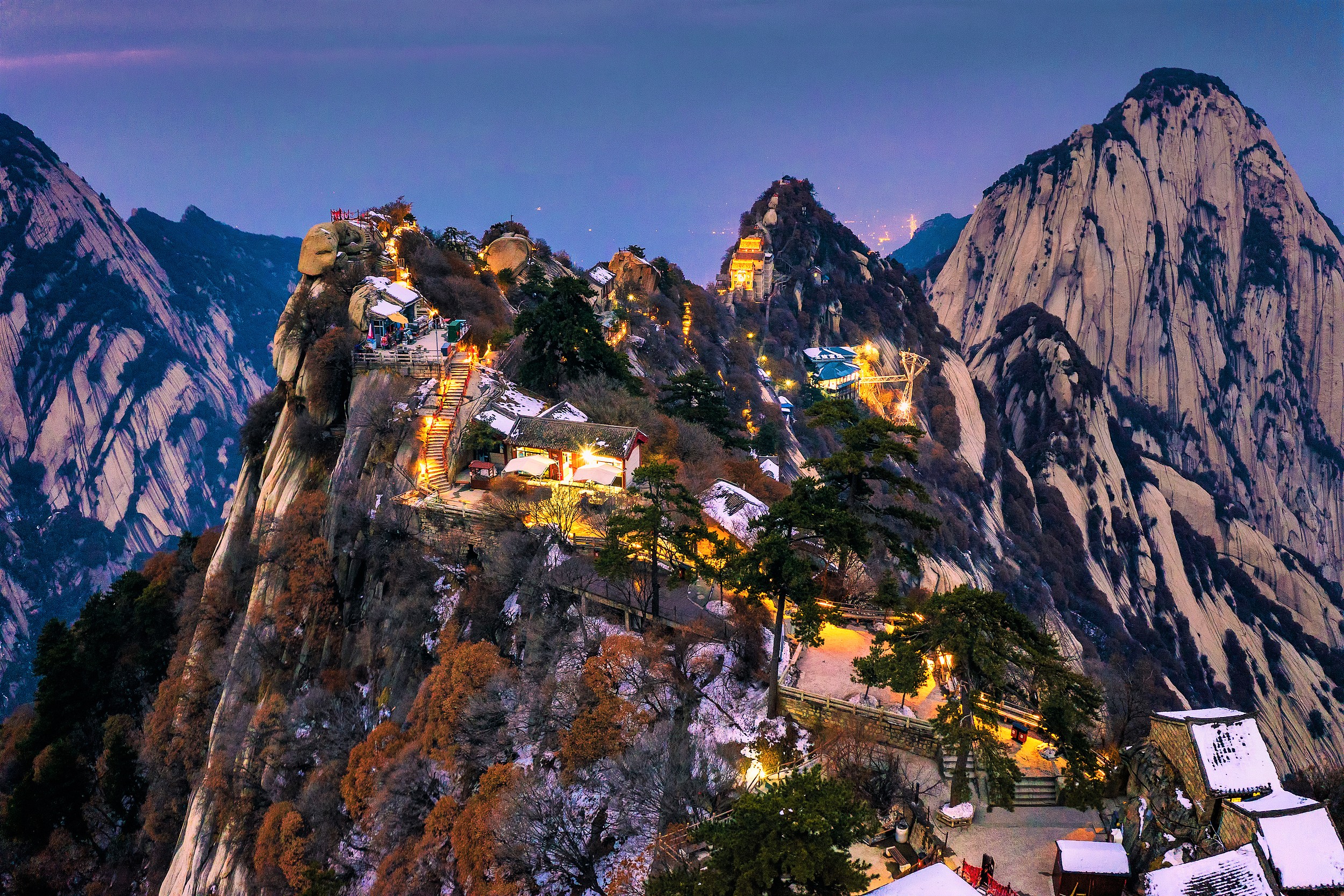
Mount Hua, formerly known as “Xiyue”, is one of the five famous mountains in China. It is located in Huayin City, Shaanxi Province. Huashan is also known as “Taihuashan”. It is the birthplace of Chinese civilization. The “Hua” in “Zhonghua” and “Huaxia” comes from Huashan. The words “strange and dangerous” are the essence of Huashan’s scenery. “Since ancient times, there has been only one road to Huashan” describes the steepness of Huashan. The Attraction has many thrilling attractions such as Changkong Plank Road, Kitesurfing, Qianchi Chuang, Baichi Gorge, Laojun Ligou, etc., which are carved out on the steep cliffs. Those who visit them in person will be amazed.Huashan Attraction covers a vast area, including the Main Peak Attraction, Xiyue Temple Attraction, Xianyu Attraction, etc. The Main Peak Attraction is the core Attraction of Huashan, including “Huashan One Road” and the five main peaks in the southeast, northwest, and center. Huashan in most people’s minds refers to the Main Peak Attraction.Five main peaksThe East Peak is about 2,100 meters above sea level and is named for its location in the east. There is a platform on the top of the peak, which is high and dangerous with a wide view. It is a good place to watch the sunrise. It is called Chaoyang Terrace, and the East Peak is also called Chaoyang Peak. The East Peak consists of four peaks, one main peak and three s-ervant peaks. The peak where Chaoyang Terrace is located is higher, the Yunv Peak is in the west, the Shilou Peak is in the east, and the Botai is in the south. There are more than dozens of landscapes on the East Peak. There is a natural stone pattern on the cliff on the side of the East Shilou Peak, which looks like a giant palm print. This is the Huayue Immortal Palm, which is listed as the first of the eight scenic spots in Guanzhong. The story of the giant spirit opening the mountain and guiding the river originated from this.The West Peak is about 2,000 meters above sea level. Because there is a huge rock on the top of the peak that looks like a lotus petal, ancient literati often called it Lotus Peak or Hibiscus Peak. Xu Xiake wrote in his “Diary of Traveling to Mount Taihua”: “There is a rock rising on the peak, and there are stone pieces covering it, like a lotus flower.” This stone must be referring to it. There are many landscapes on the West Peak, including Cuiyun Palace, Lotus Cave, Giant Spirit Foot, Axe-Split Stone, Sheshen Cliff, etc., and there are many beautiful myths and legends. Among them, the well-known story of Chenxiang splitting the mountain to save his mother is circulated here.The South Peak is over 2,100 meters above sea level and is the highest peak of Huashan. The ancients called it the “Head of Huashan”. On one side of the South Peak is a thousand-foot cliff, standing straight like a knife, and below is a deep ravine, which is separated from Sangong Mountain and Sanfeng Mountain. The South Peak consists of one peak and two peaks. The east side is called Songhui Peak, and the west side is Luoyan Peak. The origin of the name of Luoyan Peak is said to be because the migrating wild geese often land here to rest.The North Peak is about 1,600 meters above sea level, with cliffs on all sides, covered with clouds above and connected to the earth veins below. It stands tall and unique, and is also called Yuntai Peak because it looks like a cloud platform. Li Bai of the Tang Dynasty wrote in his poem “A Song of the Cloud Platform of Mount Xiyue to Complimentary Danqiuzi”: “Three peaks stand as if about to collapse, and the green cliffs and red valleys are high. The golden essence of the White Emperor mobilizes his vitality, and the stones become lotus flowers and the clouds become platforms.” The famous story of “Taking Huashan by Strategy” took place here. There are many landscapes on the mountain, including the Zhenwu Hall, Jiaogong Stone Chamber, Changchun Stone Chamber, and the place where Laojun hung the plow.The Middle Peak is the only way to the other four peaks. It is located in the middle of the East, West and South Peaks. The forests on the peak are lush and green, and the environment is quiet. There is a Taoist temple named Yunu Temple on the top of the peak. It is said that it was the place where Qin Mu Gong’s daughter Nong Yu cultivated herself in the Spring and Autumn Period, so it is also called Yunu Peak.Main landscape:There are more than 210 famous Attraction in Huashan. From ancient times to the present, countless literati and poets have left various classic poems here.SkywalkThe Changkong Plank Road is located on the east side of the Huashan South Peak. It was built by the master of the Huashan School, Taoist He Zhizhen of the Yuan Dynasty, who wanted to get away from the world and practice Taoism. He built it by inlaying stone piles on the cliffs and paving wooden boards. At the end of the plank road, you can see the “Hezu Cave” where Master He practiced self-cultivation. The road builders chiseled stone holes on the cliffs, wedged stone piles into the holes, and laid wooden boards about 40 cm wide between the stone piles. Visitors must stick to the cliff wall, pull the iron chain with their hands, step on the wooden boards, and move forward slowly sideways.Xiyue TempleXiyue Temple, also known as Huayue Temple, is a temple where emperors of all dynasties worshipped and offered sacrifices to Shaohao, the Great Emperor of Xiyue. It was first built during the Yuanguang period of Emperor Wu of the Han Dynasty (134-129 BC) at the entrance of Huangshengu (now Huangfuyu) at the foot of Huashan Mountain. It was moved to its current location during the reign of Emperor Huan of the Eastern Han Dynasty (147-167 AD) and renamed today. It was rebuilt many times during the Tang, Song, Ming and Qing dynasties.Canglong RidgeThe steps on Canglong Ridge are only 2 feet wide, with deep ravines on both sides, as steep as a knife. The height difference between the ridge and the top is about 500 meters, and the slope is more than 45 degrees. Looking at the green pines and white clouds in the distance and hearing the sound of the wind is dizzying.JinsuoguanJinsuoguan is one of the five passes of Huashan Mountain. It is built on a stone archway at the entrance of the three peaks. It is the throat of the Wuyun Peak to the four peaks of East, West, South and Center. There is no way to pass after the pass, so it is also called Tongtianmen. Taoists believe that Huashan is the fairyland of gods. Only after passing Tongtianmen can you enter the fairyland. Therefore, there is a folk song that “after passing Jinsuoguan, there is another world”.There has been only one road to Mount Huashan since ancient times”There has been only one road to Mount Hua since ancient times” refers to the “Huashan Valley” hiking trail, which includes various scenic spots along the Huashan hiking trail since ancient times. When connected together, it is what is commonly referred to as “There has been only one road to Mount Hua since ancient times.”How to visitHuashan has two mountain gates (entrances): East Gate and West Gate (also known as Huashan Gate). Take the cable car up the mountain and go to the East Gate; if you climb the mountain on foot, enter from the West Gate. Huashan currently has two cable cars, the East and West Lines, which reach the North Peak and the West Peak respectively (please plan the climbing route in advance before purchasing the ticket and purchase the corresponding ticket type, and you cannot change it midway.).Route 1: Hiking routeThere has been only one road on Mount Huashan since ancient times. It is an ancient mountaineering road with a total length of 12.5 kilometers and 9,567 steps. It takes about 4 hours to hike from Yuquanyuan, through Wuli Pass, Shaluoping (night climbing), Qianchi Chuang, Baichi Gorge, etc. to the North Peak, and then start the tour from the North Peak.Route 2: “Up West and Down West”, a mountaineering route suitable for the Seniors and tourists with childrenThis route goes up the West Peak Cableway of Mount Huashan and down the West Peak Cableway, that is, going up from the west and down from the west. The whole route takes a relatively short time, about 4 hours, and is also more energy-saving, making it more friendly to the Seniors and tourists with children.Route 3: “Up West and Down North”, a one-day mountaineering route chosen by 80% of touristsThis route goes up by cable car from the West Peak of Mount Huashan and down by cable car from the North Peak, that is, going up from the west and down from the north. The entire route is a classic one-day tour route, which takes about 6 hours. You can visit all the attractions without backtracking. Most tourists choose this route because this road almost goes straight down, which is easier and faster than the uphill road.Route 4: “North up and north down”, a time-saving, economical and panoramic mountaineering routeThis route goes up by cable car at the North Peak of Huashan and down by cable car at the North Peak, that is, going up from the north and down from the north. The whole route is a relatively low-cost cable car mountaineering route. If your sightseeing time is limited, you can choose this route and visit the North Peak, which has the Memorial Pavilion, Ear-Crushing Cliff, Canglong Ridge, Huashan Sword Contest Monument, panoramic Huashan and other attractions.
归档: Attractions
-
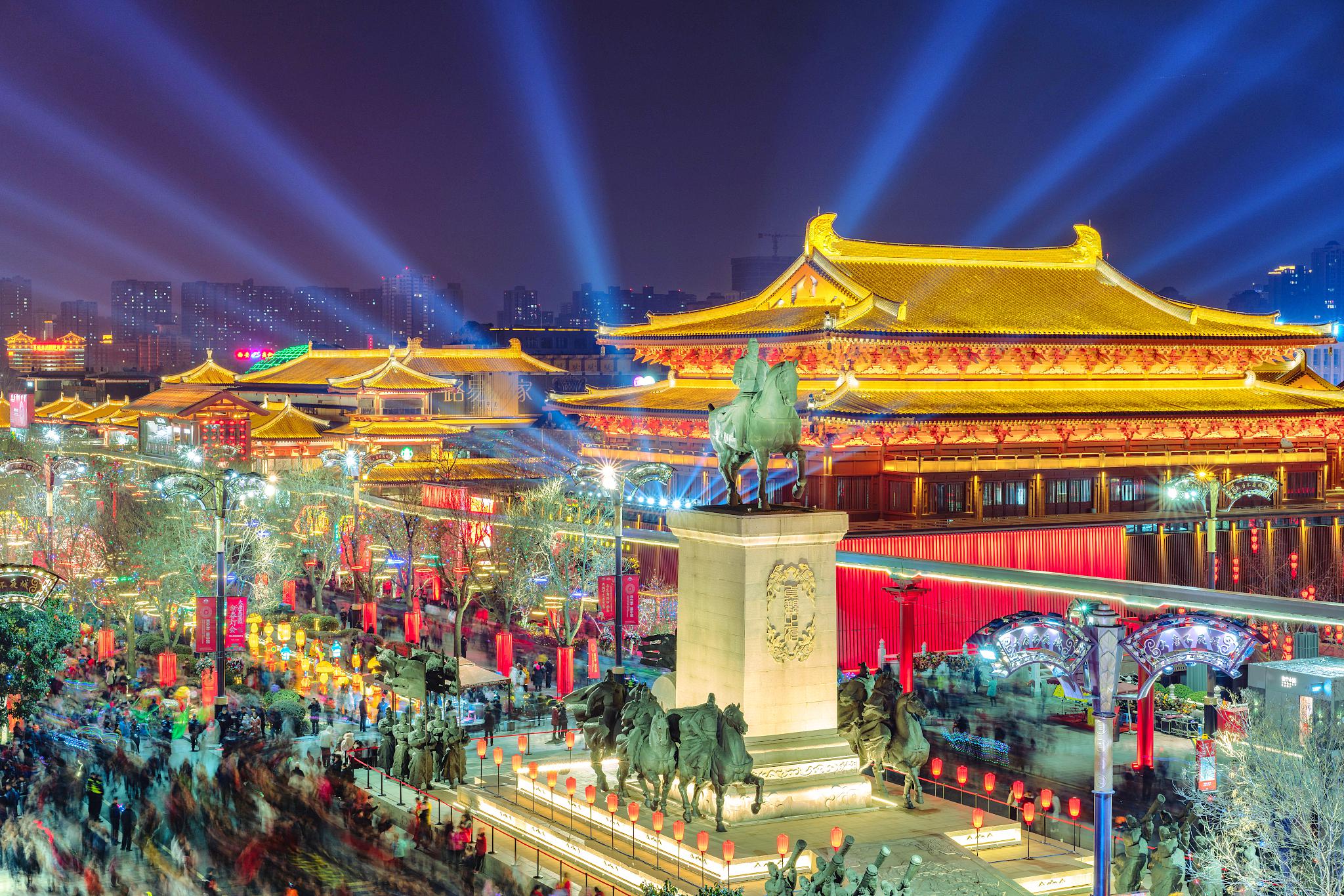
Grand Tang Mall
Grand Tang Mall is located between the Big Wild Goose Pagoda and Tang Paradise, full of Tang stylistic elements. Grand Tang Mall’s Central Axis View Avenue is a 1,500-meter central and sculptured pedestrian street that runs from the north and south. It is surrounded by nine groups of themed groups such as the emperor, historical figures, heroic stories, and classic works of art, offering three-dimensional representations of the Tang Dynasty’s supremacy in the fields of religion, art, science and technology and to highlight the great country.
-
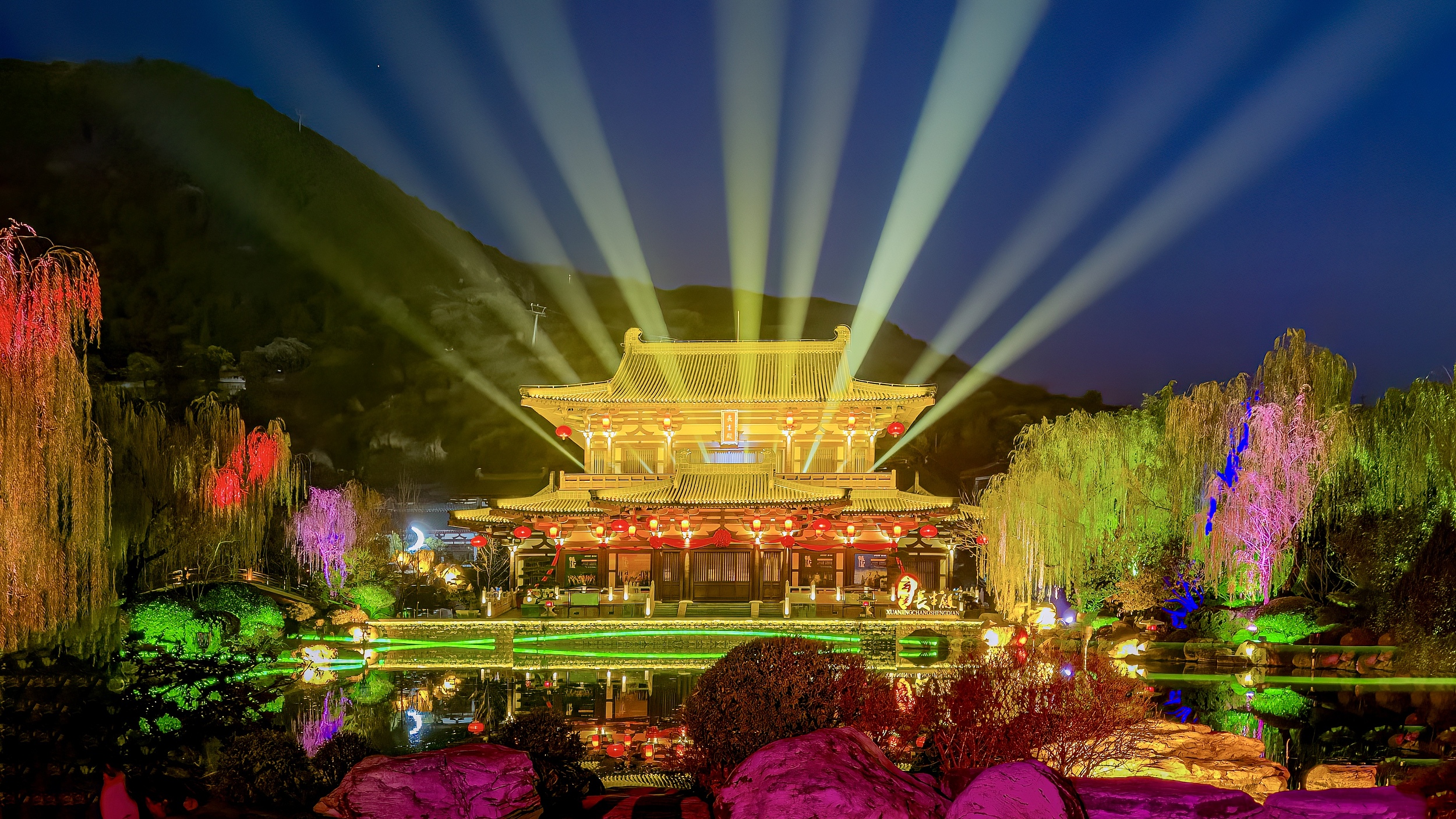
Song of Everlasting Sorrow
“The Song of Everlasting Sorrow” is a historical drama adapted from the poem of the famous Tang Dynasty poet Bai Juyi. The drama describes the love story between Emperor Tang Xuanzong and his concubine Yang Guifei during the Tang Dynasty. The performance venue is in Huaqing Palace, a famous scenic spot in Xi’an, and the famous Mount Li serves as the background of the performance. By means of mountain and river scenes, classic music and dance, narrative poem, high-tech lighting, acoustics and special effects, “Song of Everlasting Sorrow” gives the audience a chance to travel back in time to appreciate the love that happened at the foot of Mount Li and the bank of Huaqing pool 1000 years ago, and experience the culture of the flourishing Tang Dynasty.
-
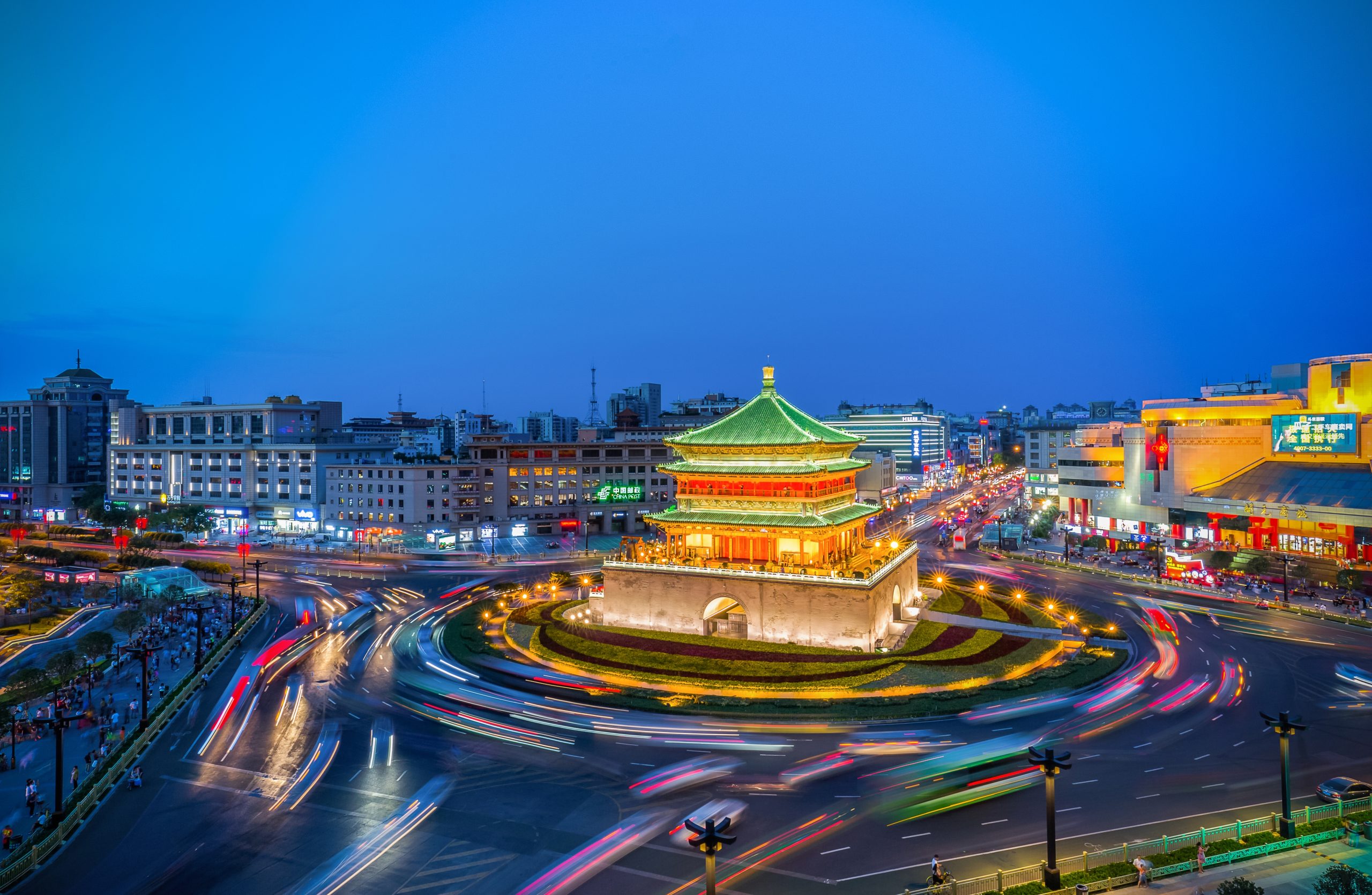
Xi’an Bell Tower
Xi’an Bell Tower is one of China’s largest and best-preserved bell towers, originally built in the 17th year of the Hongwu era during the Ming Dynasty (1384 AD). Located at the heart of Xi’an, this iconic landmark serves as the central point from which four major streets radiate east, south, west, and north, each connecting to the corresponding gates of Xi’an’s ancient city walls.Xi’an’s Drum Tower was originally located on Guangji Street in the west. As the city center shifted eastward, during the 10th year of Emperor Shenzong’s Wanli era in the Ming Dynasty (1582), the Bell Tower was relocated to its current position east of the Drum Tower.The Bell Tower showcases a typical Ming Dynasty architectural style, featuring a square brick-and-stone base at the bottom and a triple-eaved pyramidal roof structure at the top, covered with dark green glazed tiles and gilded with real gold foil. Each side of the base has a central arched gateway approximately 6 meters high, which originally interconnected to serve as passageways for the intersection of East, South, West, and North Streets, allowing pedestrian and vehicular traffic. Today, the gateways are sealed off, with a traffic roundabout built around the tower and an underground pedestrian passageway for public use.The entrance to the Bell Tower is inside this underground passage, with a spiral staircase leading up. Inside the tower, there is a replica of the “Jingyun Bell.” The original was cast in the second year of Emperor Ruizong of Tang’s Jingyun era (711 AD) and is now housed in the Xi’an Beilin Museum.Standing atop the Bell Tower, you can see the four main streets extending east, south, west, and north. Surrounding the tower lies Xi’an’s bustling commercial district, with the Drum Tower nearby.Visitors can enjoy wonderful ancient-style performances while visiting the Bell Tower, with 6 daily shows. Check the official website for specific performance times. Between the Bell Tower and Drum Tower lies the Bell and Drum Tower Square, featuring a musical fountain.
-
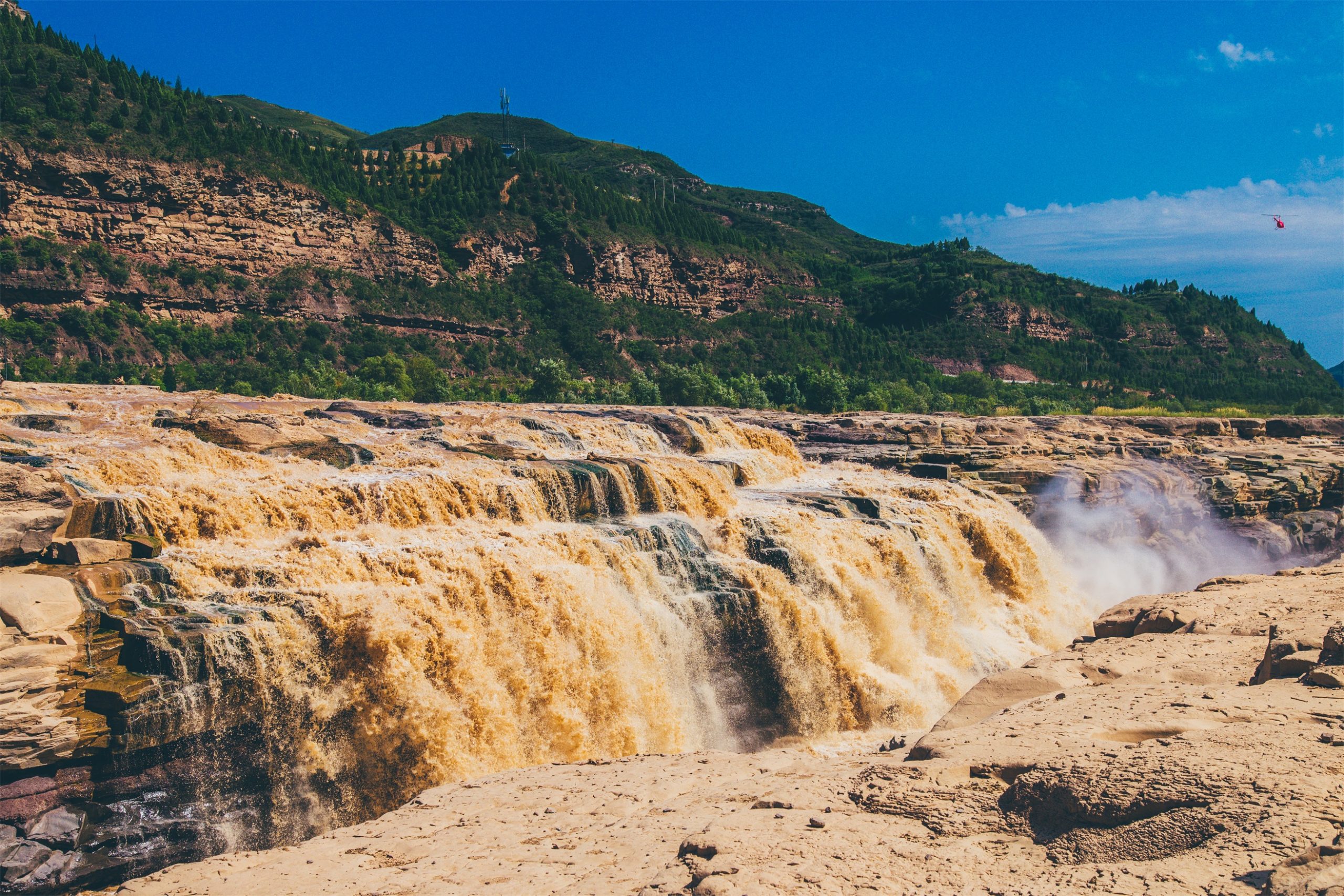
Hukou Waterfall tourist area of the Yellow River
The Yellow River Hukou Waterfall is located in the channel of the Yellow River where it passes through the Qin Jin Grand Canyon. To the east of the falls is Shanxi’s Linfen region, and to the west of the falls is Yichuan County, Yan’an, Shaanxi Province. The section of the falls in Shaanxi is located 35 kilometers east of Yichuan County, Yan’an. Because the Yellow River carries so much sediment, this is one of the few places on earth you can see a yellow waterfall. The scenery of Hukou Waterfall changes through each of the four seasons.
-
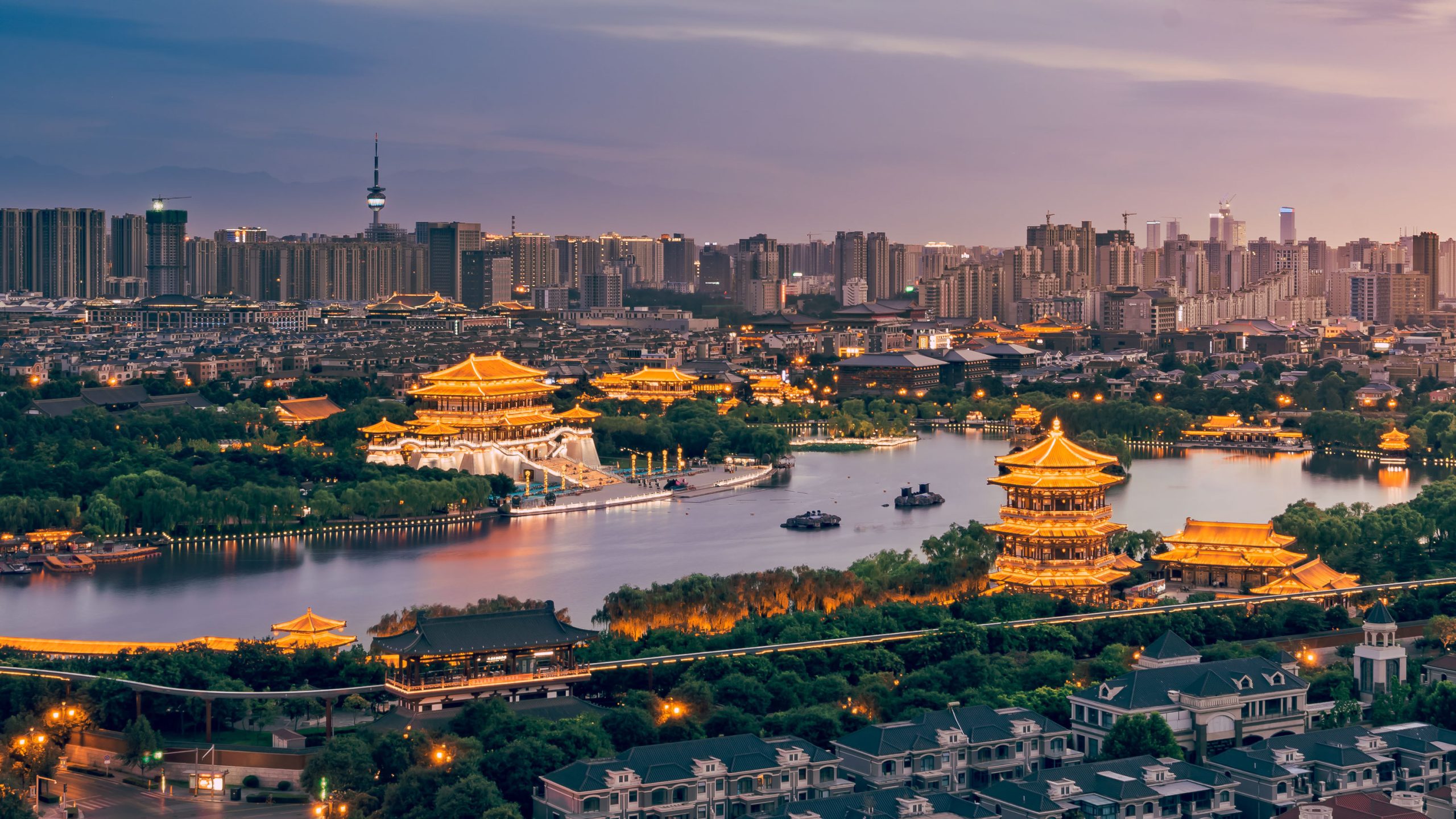
Tang Paradise
Tang Paradise, a national 5A attraction, is located in Qujiang New District in the south of Xi’an City, not far away from the Big Wild Goose Pagoda. It covers an area of 998 acres, including 300 acres of water area, 440 acres of green space, and a construction area of nearly 100,000 square meters. The overall planning and architectural design of the park’s architecture is by Mr. Zhang Jinqiu, an academician of the Chinese Academy of Engineering, and the garden landscape design is by Mr. Hiroshi Akiyama, a Japanese garden master. It is a large-scale cultural theme heritage park that comprehensively displays the style of the prosperous Tang Dynasty. Since its official opening to the outside world on April 11, 2005 (the third day of the third lunar month), it has been committed to creating high-quality, high-standard brand tourist attractions.Tang Paradise aims to build “a garden of history, a garden of spirit, a garden of nature, a garden of humanity, and a garden of art”. It specially invited more than ten Tang historians, Tang poems, Tang paintings, etc. from the China Tang Dynasty Literature Society. An expert group composed of Tang construction experts, doctoral supervisors, researchers and tourism experts re-excavated and sorted out the historical and cultural content of Tang Paradise, re-planned and positioned the entire garden landscape, and divided into fourteen ares including the imperial cultural area, female Cultural area, poetry culture area, imperial examination culture area, tea culture area, song and dance culture area, food culture area, folk culture area, diplomatic culture area, Buddhist culture area, Taoism culture area, children’s play area, gate landscape culture area and water show performance area, fully reproduce the splendid civilization of the Tang Dynasty. There are more than 20 scenic spots such as Ziyun Tower, Ladies Pavilion, Lu Yu Tea House, Apricot Garden, Caixia Corridor, Qujiang Drinking, Beauty Walk, Tang Poetry Gorge, Dogwood Terrace, etc. It displays the Tang Dynasty’s dazzling spiritual outlook and splendid and unparalleled culture and art. It is known as a tourist attraction that “shocks the Chinese people and amazes the world”.The theme performance of the attraction is the large-scale water dance light and shadow show “Chasing Dreams of the Tang Dynasty”, and you can take a boat trip to the dreamy holy land; the large-scale super-dimensional situation dance drama “Dreams of the Tang Dynasty” is majestic and dreamlike; the palace Yan music of the Tang Dynasty “Drums” performs Dongcang drum music, an intangible cultural heritage of mankind, as well as high-quality cultural tourism activities such as the New Year Festival, Shangsi Festival, and Qujiang Flower Moon Banquet. Brands and projects. The multiple Complimentary attractions and exciting performances every day are a warm invitation from the Tang Dynasty royal family to tourists, allowing them to experience the sacred and grandeur of royal culture in a shocking way.As a theme heritage park with excellent quality, full of personality and rich cultural connotation, Tang Paradise is a cultural window for Xi’an to show the world the ancient historical heritage of Chang’an and the prosperous Tang Dynasty, and a cultural gateway to attract the world to understand China…
-
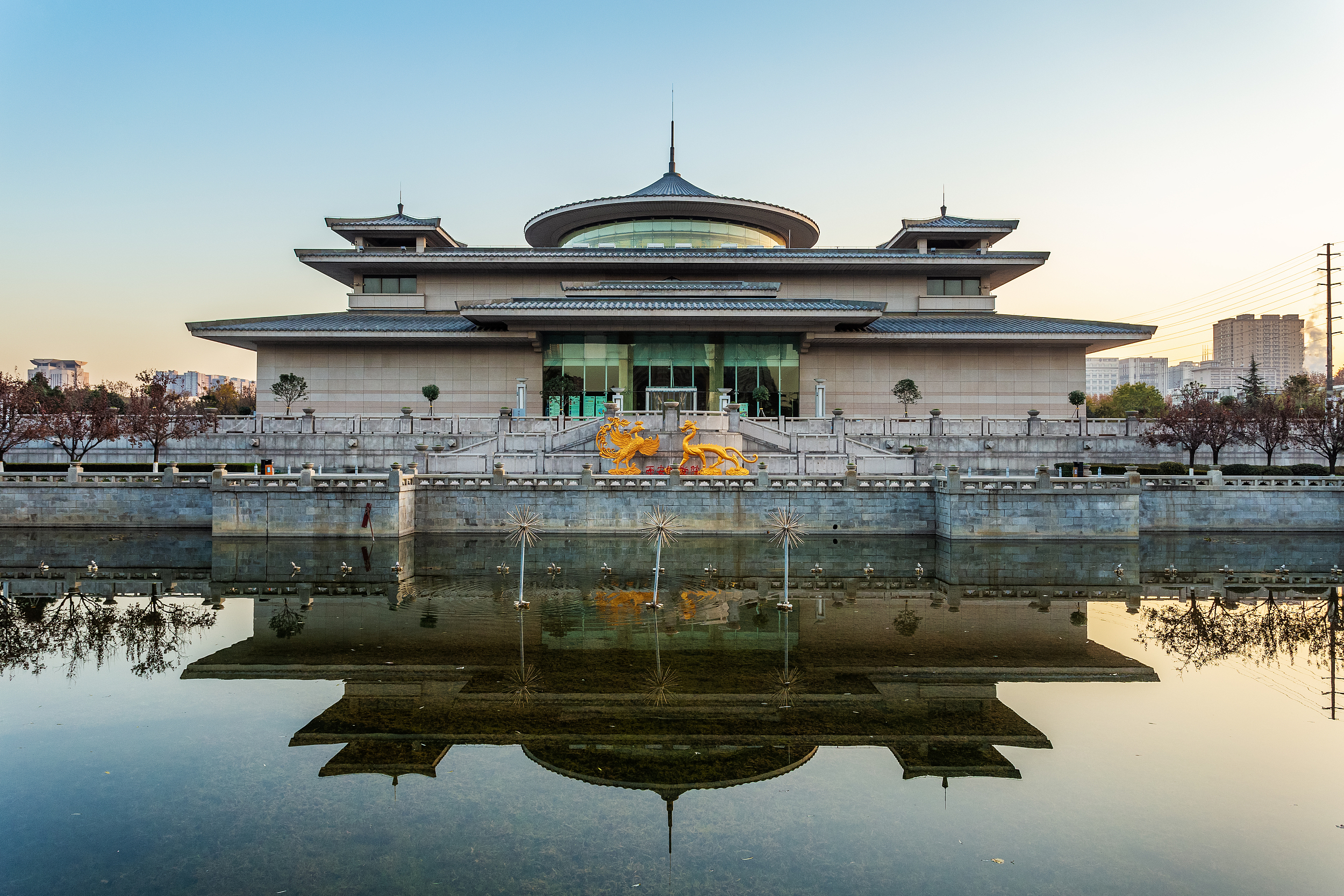
Xi’an Museum
Xi’an Museum is a modern comprehensive museum built around the historic site of Jianfu Temple from the Tang Dynasty and its iconic structure, the Small Wild Goose Pagoda. It integrates cultural relic preservation, academic research, exhibition displays, public education, and garden leisure activities. The museum’s core area occupies the original site of Jianfu Temple, a royal monastery during the Tang Dynasty, with the well-preserved Small Wild Goose Pagoda serving as its distinctive landmark and spiritual center. The temple ruins and pagoda not only form the foundation of Xi’an Museum but also serve as its key outdoor historical exhibition area and visitor highlight. The main museum building, located north of the ancient temple site, creates a unique cultural space where “museum, pagoda, temple, and garden” harmoniously coexist, vividly showcasing Xi’an’s historical continuity from ancient times to the present. Xi’an Museum officially opened to the public on May 18, 2007. Established to comprehensively showcase the glorious history and brilliant culture of Xi’an (ancient Chang’an) as the capital of thirteen dynasties, it filled the gap of lacking a comprehensive urban history museum in Xi’an. Collection highlights: The museum houses approx. 130,000 precious artifacts from various historical periods of Xi’an, including over 10,000 nationally classified Grade III or above cultural relics. The collection spans from prehistoric times to the Ming and Qing dynasties, with particular emphasis on artifacts from the golden ages of the Zhou, Qin, Han, and Tang dynasties. Featured items include bronze ware, jade pieces, gold and silver objects, ceramics, murals, stone steles with epitaphs, and Buddhist statues, systematically showcasing the political, economic, cultural, social life, and foreign exchanges of ancient Chang’an. Main exhibition: The permanent exhibition “Ancient Capital Xi’an” traces the city’s development history through precious artifacts, models, charts, and multimedia displays. It chronologically presents Xi’an’s evolution and achievements as both a capital city (Zhou’s Fenghao, Qin’s Xianyang, Han’s Chang’an, Sui-Tang’s Chang’an) and a prefectural city (Song, Yuan, Ming, and Qing dynasties). Unique setting: The museum’s standout feature is its environment. Visitors can not only explore modern exhibition halls but also stroll through the expansive heritage park, which includes the Small Wild Goose Pagoda, the ancient architectural complex of Jianfu Temple (featuring structures like the Ming Dynasty bell tower housing a Jin Dynasty ancient bell), an ancient stone carving art exhibition area, and garden views. Here, they can immerse themselves in the charm of this thousand-year-old capital right at the historical site. The renowned “Morning Bell at Wild Goose Pagoda” view adds to its fame. World heritage site: As one of the key heritage sites in the “Silk Roads: the Routes Network of Chang’an-Tianshan Corridor” UNESCO World Heritage, the Small Wild Goose Pagoda and its surrounding Jianfu Temple historic area represent the core cultural value of Xi’an Museum. Function and positioning: The museum serves not only as a vital center for cultural relic collection, research, and exhibition, but also as an urban cultural park where citizens can relax and immerse themselves in history. It plays a significant role in social education and cultural exchange.
-
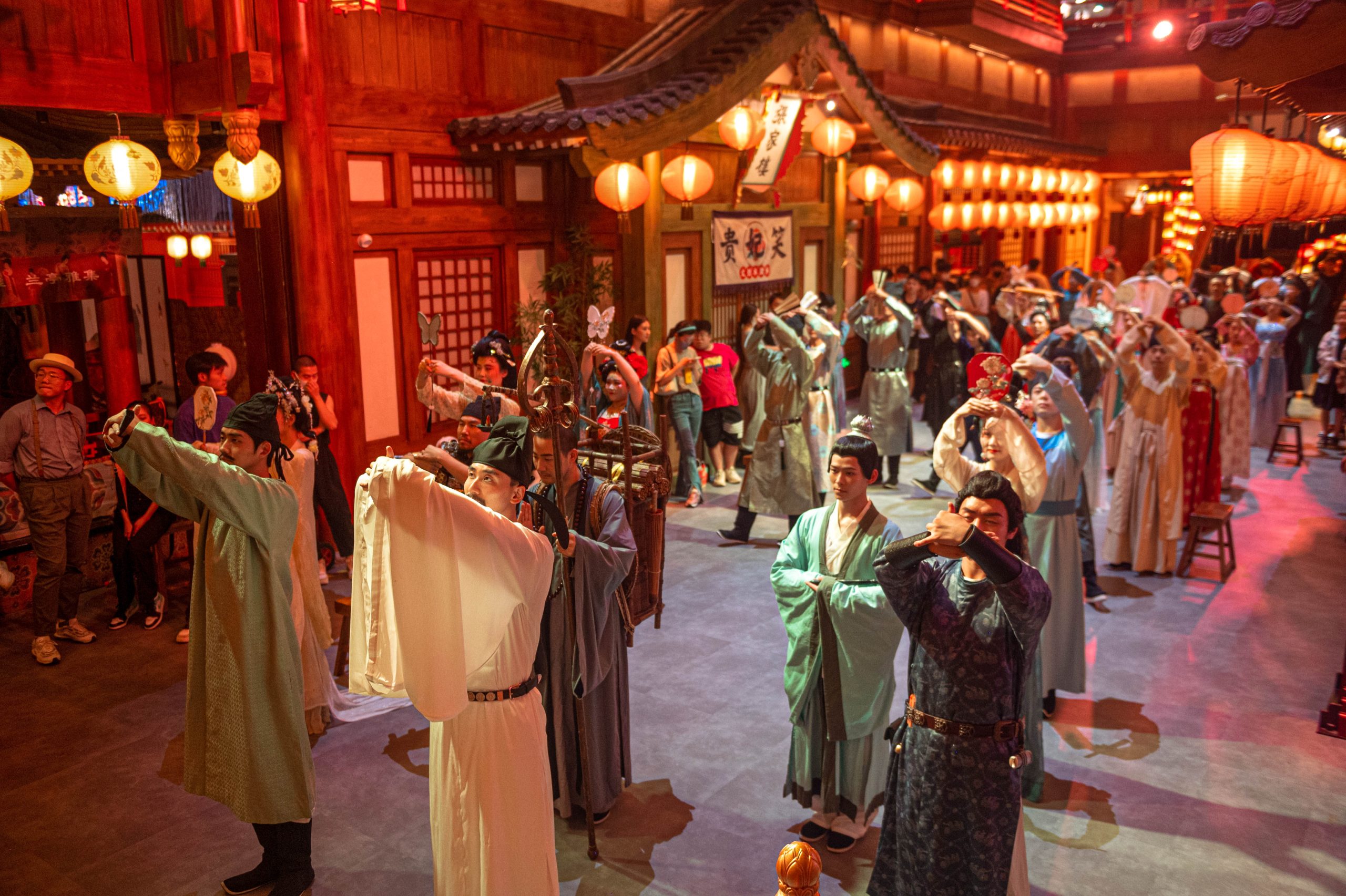
The Longest Day in Chang’an Theme Block
The Longest Day in Chang’an Theme Block is based on the culture of Tang Shijing culture, with the IP of the series “The Longest Day in Chang’an” as the theme, and with immersive experience as the core, in architecture, soft decoration, coins, characters, clothing, language, music Tang-style packaging in fields such as stories etc. At the same time, around the in-depth immersive story experience, supporting catering, cultural and creative, performing arts and other business content are set up to create an overall Tang space play, Tang-style market experience, themed immersive interaction, and Tang music, song and dance performances, cultural social leisure, etc. are integrated into the cultural experience of the whole Tang market.
-
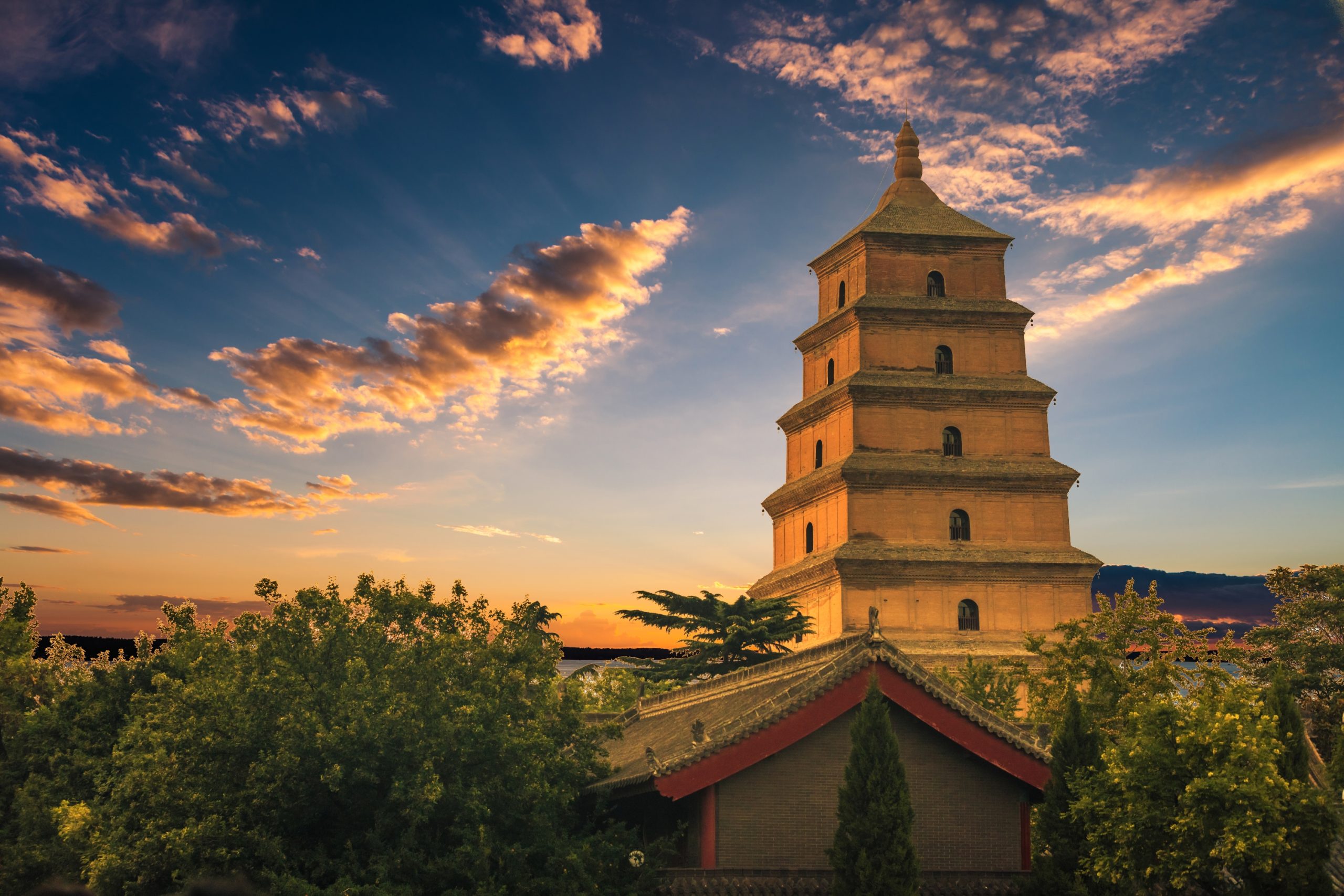
Big Wild Goose Pagoda
The Big Wild Goose Pagoda is located in the Da Ci’en Temple in the southern part of the city. The Da Ci’en Temple was a magnificent royal temple in Chang’an during the Tang Dynasty. It was built during the reign of Emperor Taizong of the Tang Dynasty by Crown Prince Li Zhi in memory of his mother, Empress Wende, and was first abboted by Master Xuanzang, who had returned from his journey to the West to seek Buddhist scriptures. During this period, the master supervised the construction of the Dayan Pagoda.Master Xuanzang translated Buddhist scriptures and promoted Buddhism in Da Ci’en Temple for 11 years, and founded the “Appearance-Only School” of Buddhism, making Da Ci’en Temple the ancestral temple of the Appearance-Only School (also known as the “Faxiang School”). During this period, the master personally supervised the construction of the Dayan Pagoda to enshrine the scriptures, statues and relics brought back from India.The current Da Ci’en Temple was built in the Ming Dynasty on the basis of the original temple “West Pagoda Courtyard”, and most of the existing halls are buildings from the Qing Dynasty. The main buildings on the central axis of the temple are the Great Hall, the Dharma Hall, the Dayan Pagoda, and the Xuanzang Tripitaka Courtyard. Among them, the Buddha’s relics enshrined in the Big Wild Goose Pagoda and the parietal bones of Master Xuanzang are respectively enshrined in the Xuanzang Tripitaka Courtyard, which are the “treasures of the temple” of Da Ci’en Temple.To the east of the central axis of the temple is the Pagoda Garden. Within the garden are nine stupas housing the relics of nine eminent monks of the temple since the Qing Dynasty.There are squares to the south and north of Da Ci’en Temple. There are also Shaanxi History Museum and Tang Paradise Souvenir .
-
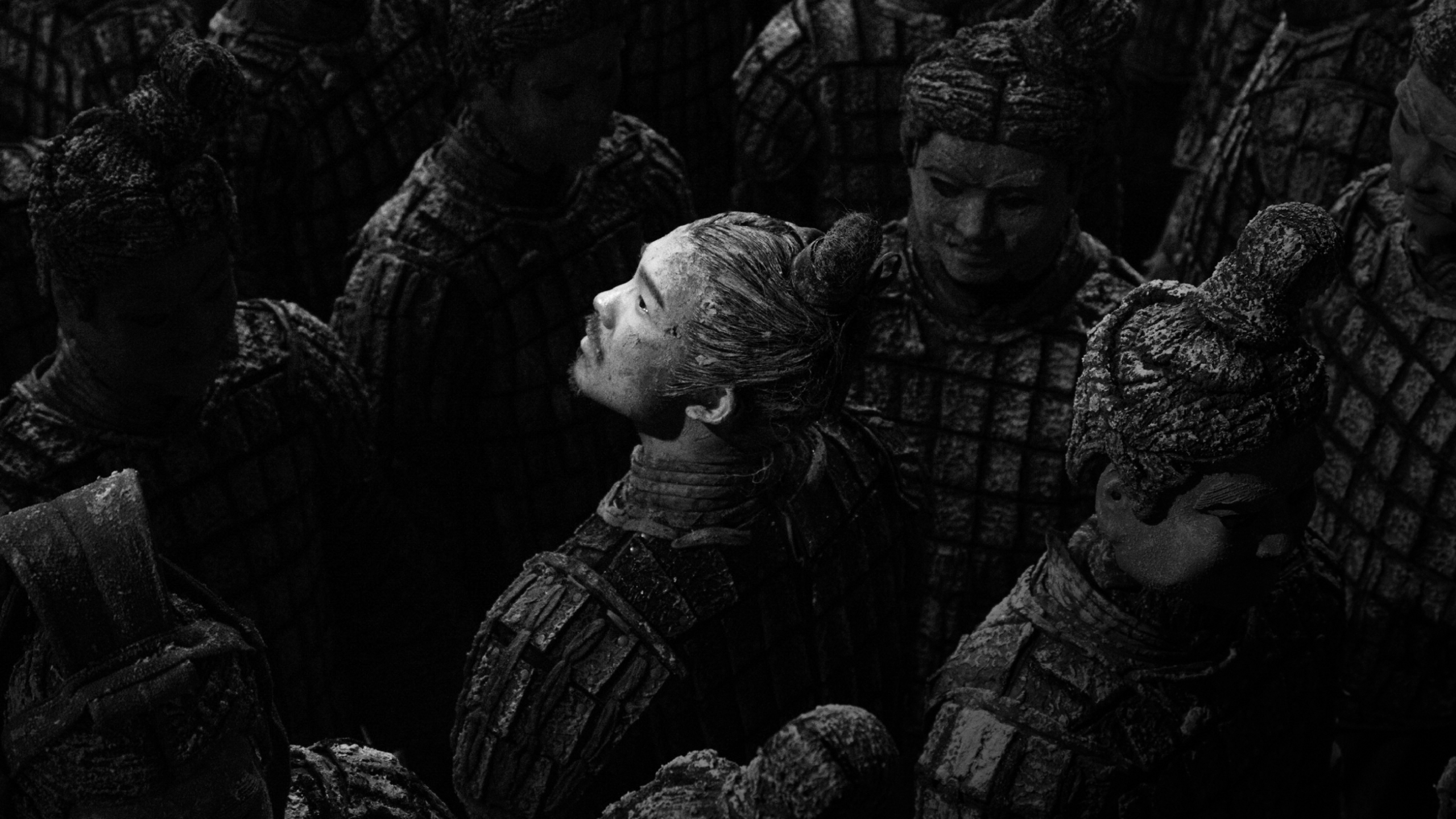
THE GREAT QIN
A prisoner of war named “Heifu” found salvation through his tile-making skills, as Qin law granted him the opportunity to earn citizenship through merit. While contributing to the construction of the royal capital, Heifu was ennobled for saving the emperor from an assassin’s blade. Marching to war for Qin’s vision of “eternal peace,” Heifu ultimately fell during the unification campaign, joining countless unnamed Qin soldiers immortalized as terracotta warriors guarding Chinese civilization. The unyielding tenacity of old Qin people, their reformist perseverance, and their vision of “uniting all under heaven” ultimately became the enduring spirit that has sustained the Chinese nation for millennia.