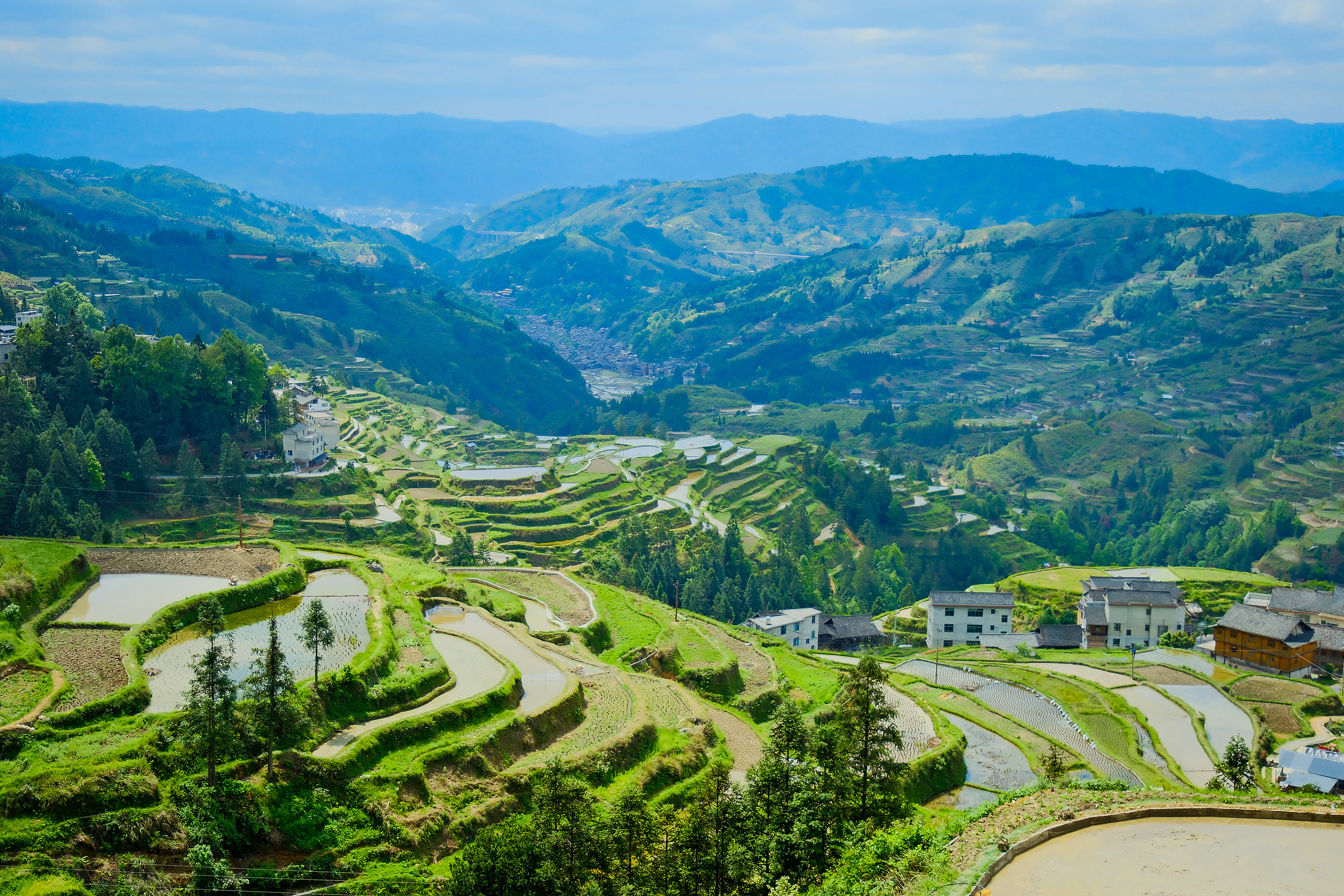
Tang’an Rice Terraces is located in Liping County, southeastern Guizhou. Due to the layers of shapes, it is very beautiful and is used as a tourist attraction for tourists to watch locally.
归档: Attractions
-
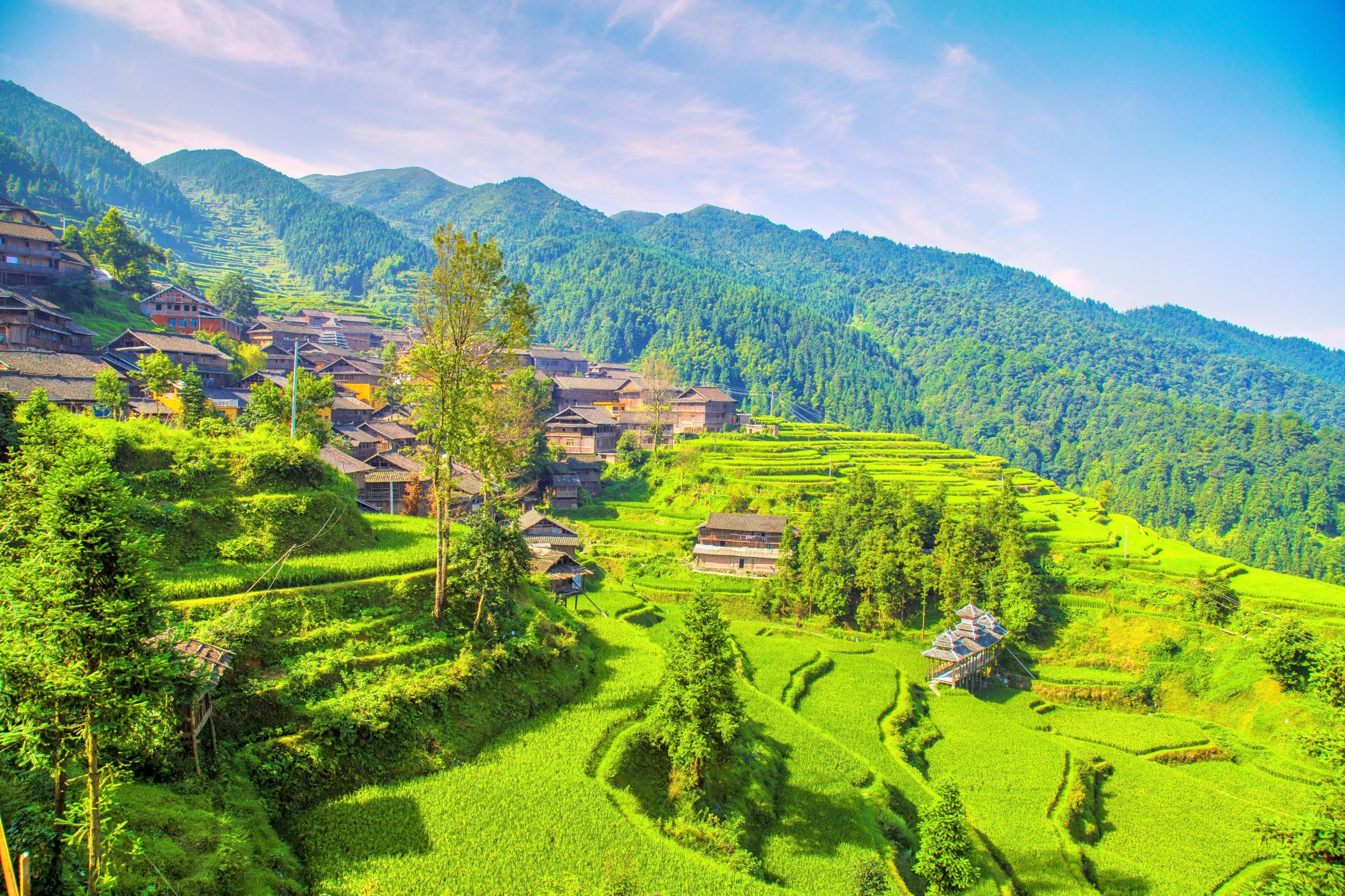
Tang An Dong Village
Tang’an Village is surrounded by green hills, ridges and peaks, ridges and valleys, and terraced fields. The dwellings on the mountainside stand on the mountain, hanging their feet in the air. in Apple pie order. The drum tower in the village is the mascot of the village, which can hold the soul of the Dong family. The Drum Tower, the Opera Tower and Geping form a trinity, showing the characteristics of a Dong village. The village extends in all directions, with winding paths. The channels in the village are all covered with bluestone slabs. The Drum Tower, Opera Tower, Diaojiaolou dwellings, stone road, ancient tombs, ancient scoop wells, and simple and elegant objects such as water mills, stone buckets, spinning wheels, etc. in Tang’an Dong Village, every corner contains objects with profound cultural connotations of the Dong nationality. . There are village gates at the intersections out of the stockade, and the auxiliary facilities in the stockade include Heliang, barns, water mills, stone oil press rooms, fish ponds, well pavilions, sacrificial ponds and other buildings, all of which have their unique characteristics. cultural personality. In the middle of the stockade, there is also a cemetery with more than ten tombs, most of which were built in the Qing Dynasty. The natural scenery, quaint architecture and folk customs of Tang’an Dong Village, all the natural and cultural heritage here are part of the eco-museum, and any object may become the historical record of the community and people’s past. As a Dong cultural community and a cultural body, Tang’an radiates the entire Liudong area. Tang An phenomenon is a process of harmonious development between man and nature. The conservation and construction of this living eco-museum, as well as the heritage protection of the entire community, will surely bring great prospects to the tourism industry.
-
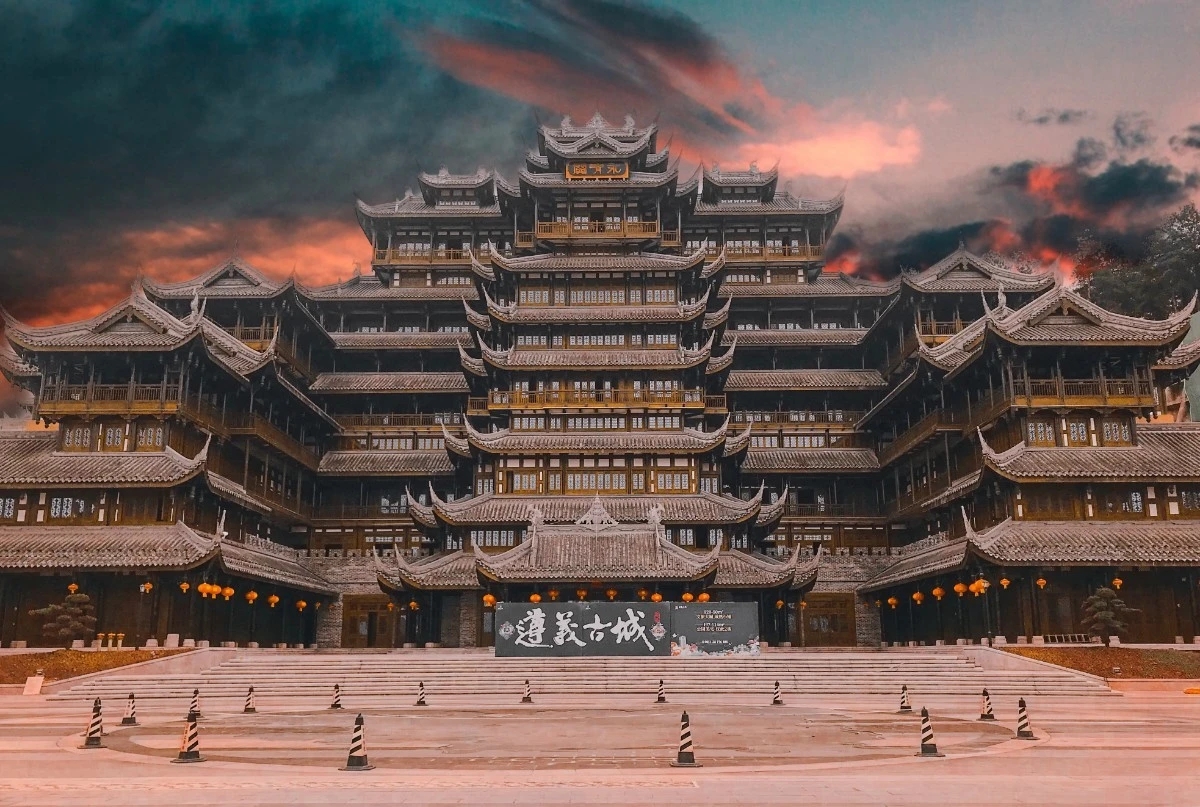
Zunyi Ancient City
Zunyi Ancient City Project is located on Huichuan Avenue, Huichuan District, Zunyi City. The project has a total investment of nearly 1.5 billion, a total construction area of 181,770 square meters, and an investment area of about 131,500 square meters. Unified planning, unified construction, unified foreign investment and operation management by Yuou Group, it is a key project for investment promotion and government support in Huichuan District. The ancient city is centered on 9 business formats including cultural and creative entertainment, boutique hotels, children’s entertainment, life and leisure, brand collection, special catering, mountaintop paradise, red cultural tourism, and intangible cultural heritage exhibitions. It is a large-scale integrated cultural performance, leisure and entertainment Culture, business and tourism complex.
-
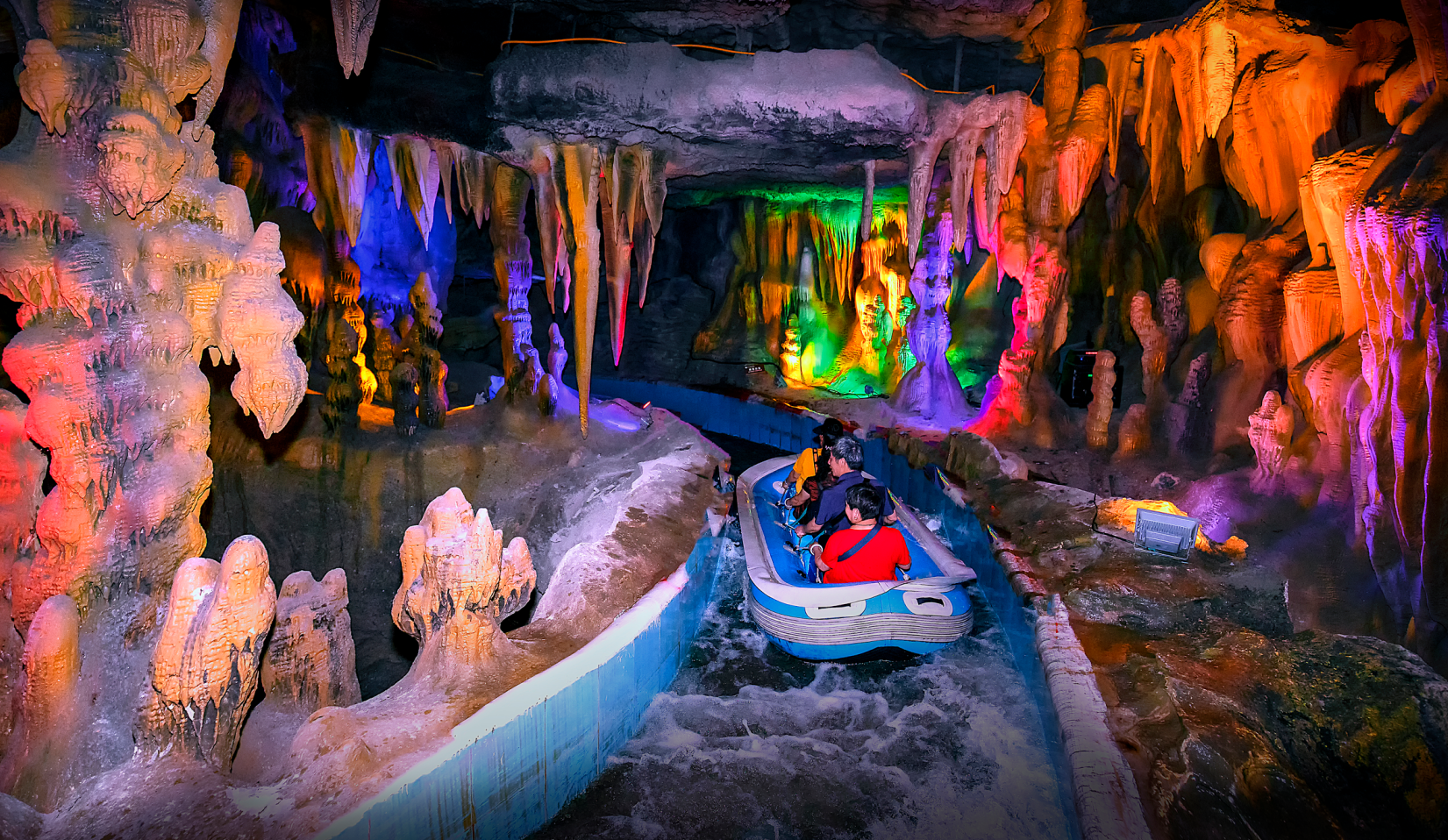
Guizhou Nine Fairy Tourism Scenic Area
Jiuxian Tourist Attraction in Guizhou is located in Guanling, Guizhou. It is divided into two functional areas: cave sightseeing and water-friendly entertainment. The cave scenic Attraction is Jiuxian Cave Heaven, which is a typical underground karst erosion style. It consists of 1 world-famous view, 7 major scenic spots, and 36 characteristic landscapes. Jiuxian Cave Heaven, a karst Attraction, is a typical underground karst erosion style. Jiuxian Cave Heaven was in a stable terrestrial coastal environment in the Sinian Period 700 million years ago. From the Cambrian Period 500 million years ago to the Triassic Period 200 million years ago, it has repeatedly experienced four sea immersions and retreats. In the Jurassic Period 190 million years ago, the crust in this area rose and became a continental folding belt, laying the foundation for its geological structure. Since then, these carbonate-based geological structures have formed many magical karsts, rift valleys, and funnels under the long-term dissolution of surface and groundwater. The stalactites, stalagmites, and stone forests in the cave are peculiar in shape. Jiuxian Cave Heaven is a young cave.In the water entertainment area, there is the Jiuxian Cave Rafting, which has the largest drop, sharp turns and amazing scenery in the country, as well as the Jiuxian Water World (a cave tsunami with an area of 8,000 square meters), Jiutian Yaochi and a parent-child paradise.
-
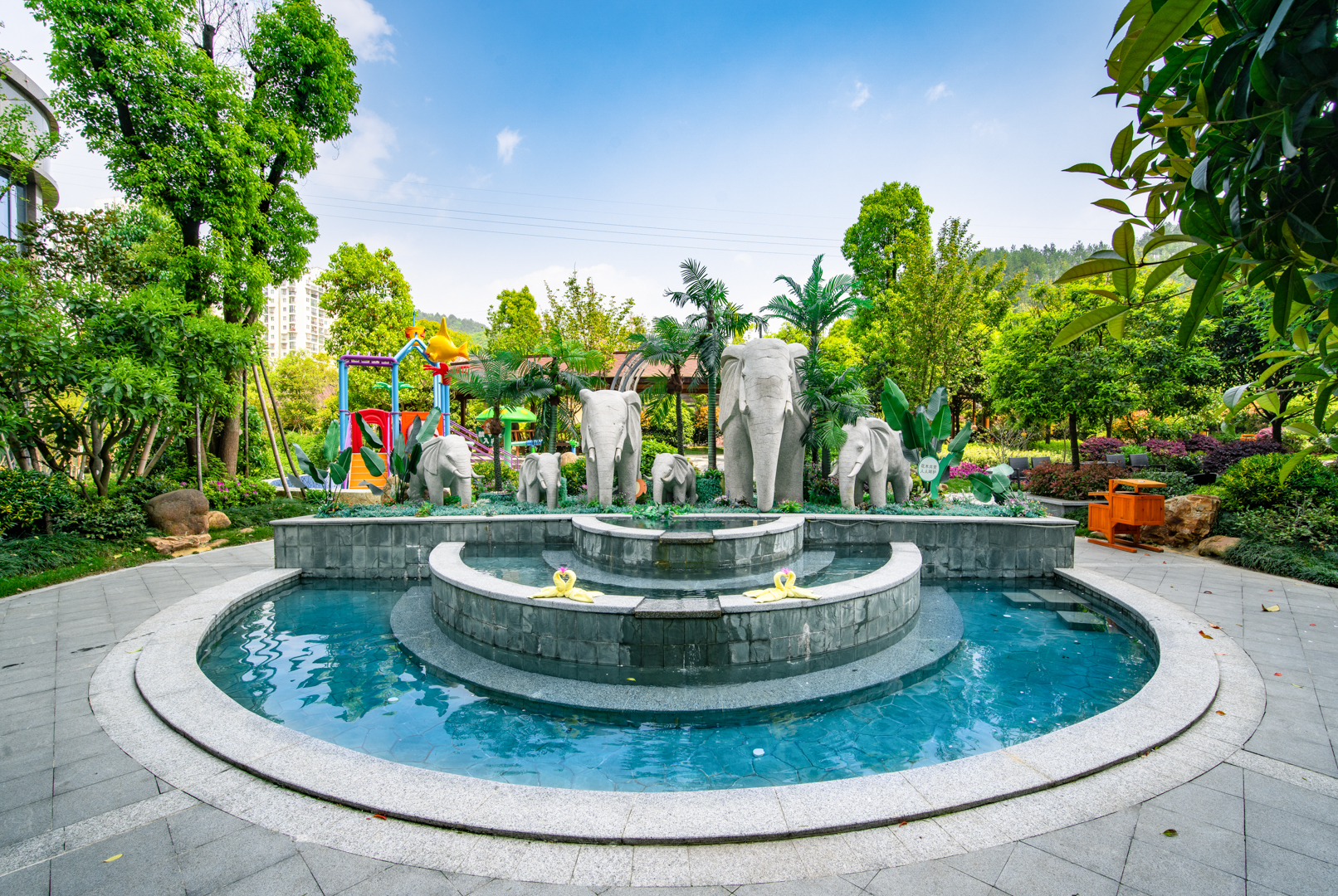
Wanxiang Hot Springs
Located in the Wanxiang Hot Spring Holiday Resort, Wanxiang Hot Spring is a hot spring health complex that integrates hot spring health and tourism. The Wanxiang Hot Spring water is collected from the deep underground hot water layer and the temperature is suitable. The Wanxiang Hot Springs are mainly divided into four sections, such as the hot spring hotel and the hot spring center. The internal environment is great and the facilities are perfect. The hot springs are divided into indoor and outdoor areas, and there are outdoor soups, flower soups, wine soups, etc. Further, there are slides and hot springs for children, as well as lounges, theaters, fitness rooms and so on.
-
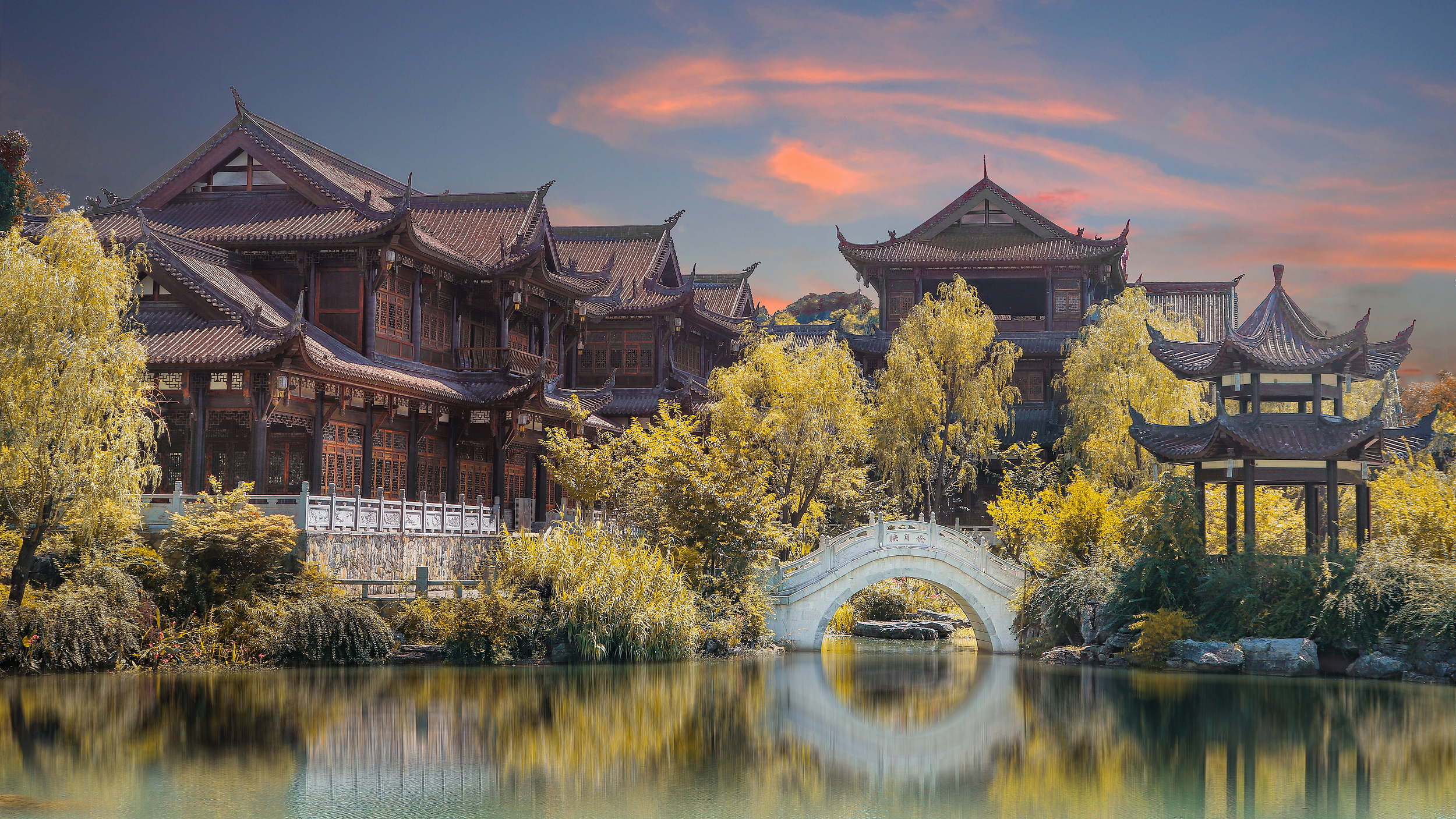
Pingyuan Ancient Town
Pingyuan Ancient Town in Zhijin County, Bijie City, Guizhou Province, referred to as “Zhijin Pingyuan Ancient Town” or “Pingyuan Ancient Town”, was rated as the second of the “Top Ten New Landmarks of Guizhou Tourism” at the Guizhou Tourism Development Conference in 2019. It is named after the ancient name of Zhijin, “Pingyuan”. As a part of the ancient city of Zhijin, Pingyuan Ancient Town is seamlessly connected to the ancient city of Zhijin. Relying on the humanistic history of “Baozhen’s hometown, Dongtian Zhijin”, with the cultural positioning of “lotus leaf lotus city, misty rain ancient town”, it seeks inspiration from local architectural characteristics, ethnic customs and beautiful mountains and waters, and presents it from the perspective of reproducing history and returning to nature.
-
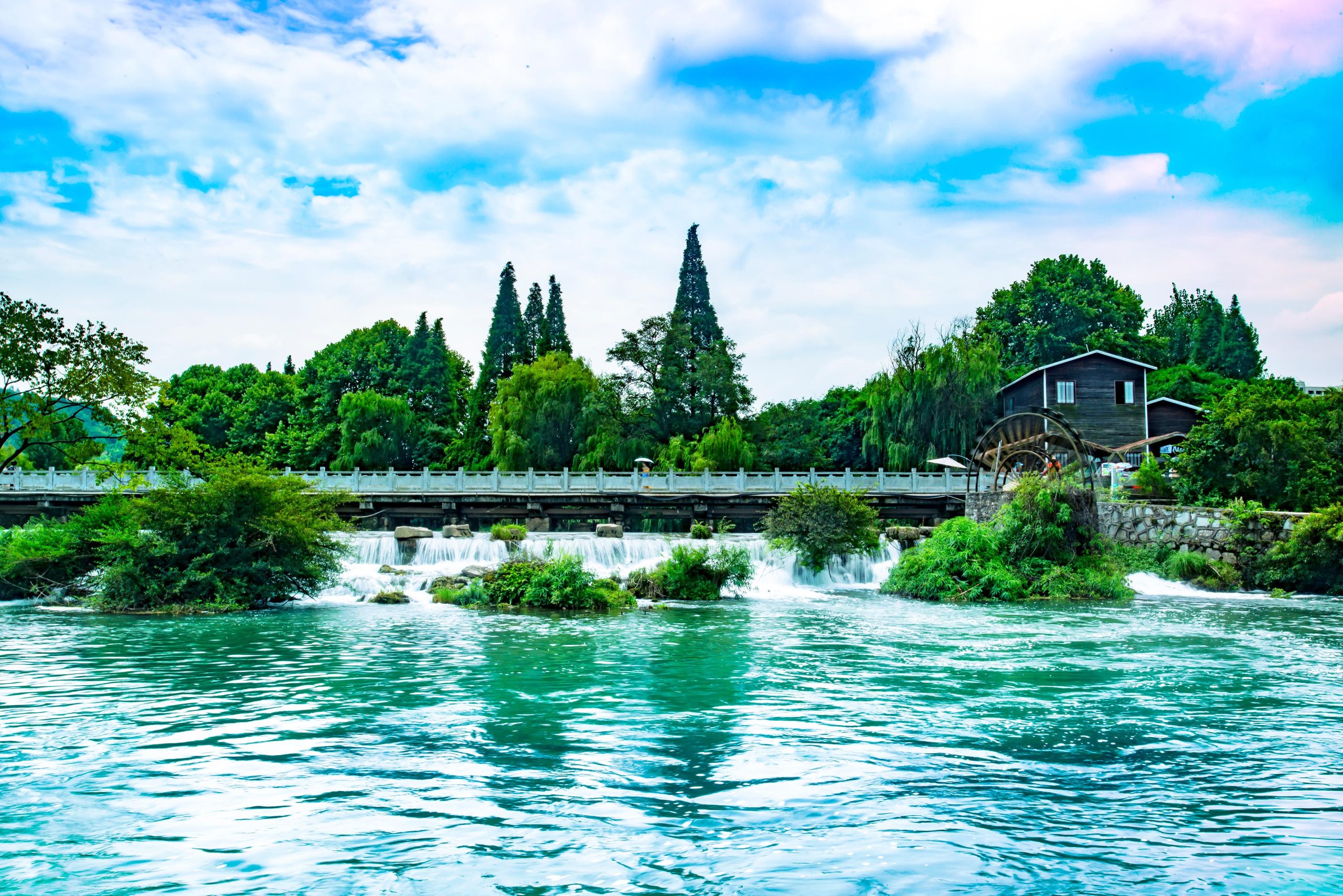
Huaxi Park
Located in Guiyang, Huaxi Park is a natural landscape park with a long history. The park is beautiful throughout the year, especially the spring, when all kinds of flowers bloom. In the fall, fallen leaves from Chinese parasol trees pave the road golden. The Baibu bridge on top of the Huaxi river is also a beautiful site. Here in Huaxi Park, you can just take a walk, rent a boat, or look afar from of the hills. The park also offers bike rentals.
-
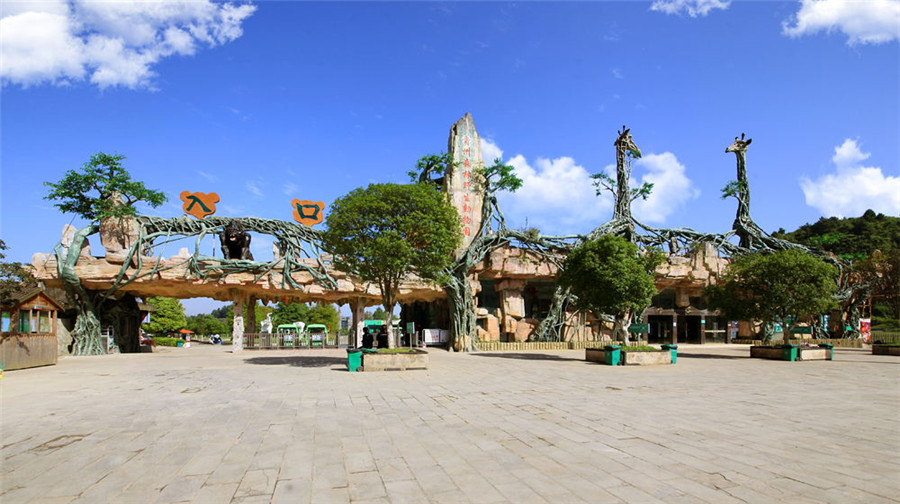
Guizhou Wildlife Park
Guizhou wildlife park is located in Zhazuo town in the northern suburbs of Guiyang, surrounded by forests and beautiful scenery. The park features both enclosed and free-range areas where visitors can see various animals, including rare species such as Siberian tigers, South China tigers, crocodiles, monitor lizards, red pandas, chimpanzees and white tigers.The zoo features diverse karst landforms including gentle slopes, mountain hollows, wide valleys, peaks, stone forests, and caves. It is divided into several areas: the rare animal zone, large animal free-range zone, bird park, and science education center.Note: The specific animals are subject to the attraction’s actual display on the day of your visit.
-
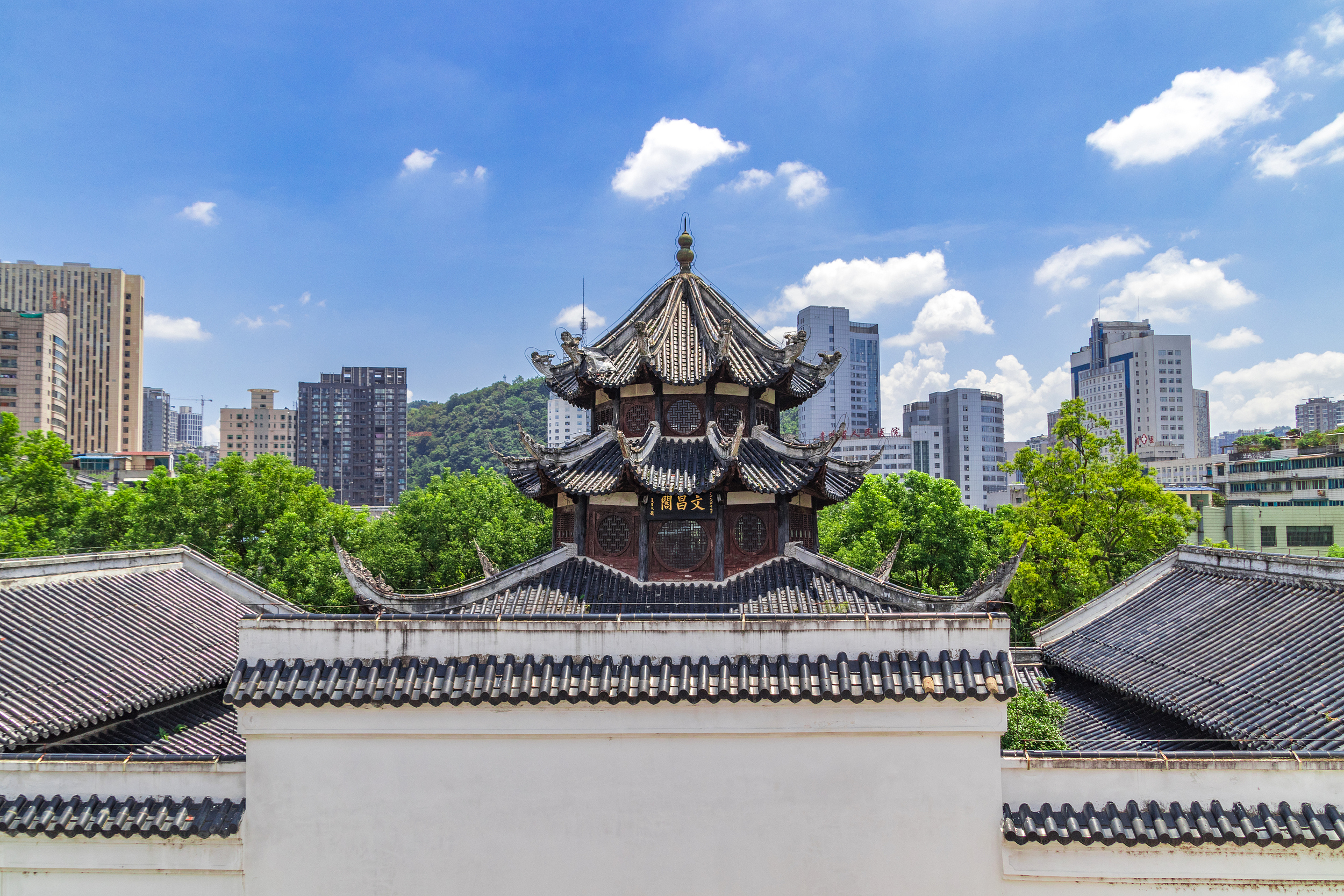
Wenchang Pavilion
Wenchang Pavilion is located in the old east gate site in Guiyang city. It is a three-story pagoda-shaped building. Because the corners of the cabinet buildings are all even-numbered equal angles, the Wenchang Pavilion with nine corners has become a unique and ancient building that is as famous as the Jiaxiu Building. Wenchang Pavilion is located on the wide and tall East Gate Yuecheng. The building is simple and majestic. There are side halls on both sides of the attic. The front is the fasting room connecting the side halls. There are 9 corrugated woods on the second and third floors of the pavilion, 9 corners on the roof, 54 columns and 81 beams, all of which are multiples of 9. In ancient times, “9” usually represented high power and high rank. The ingenuity is evident. Although Wenchang Pavilion is no longer a Taoist place, but a teahouse for locals, this classic and special ancient building is still worth visiting for tourists who like history and architecture.
-
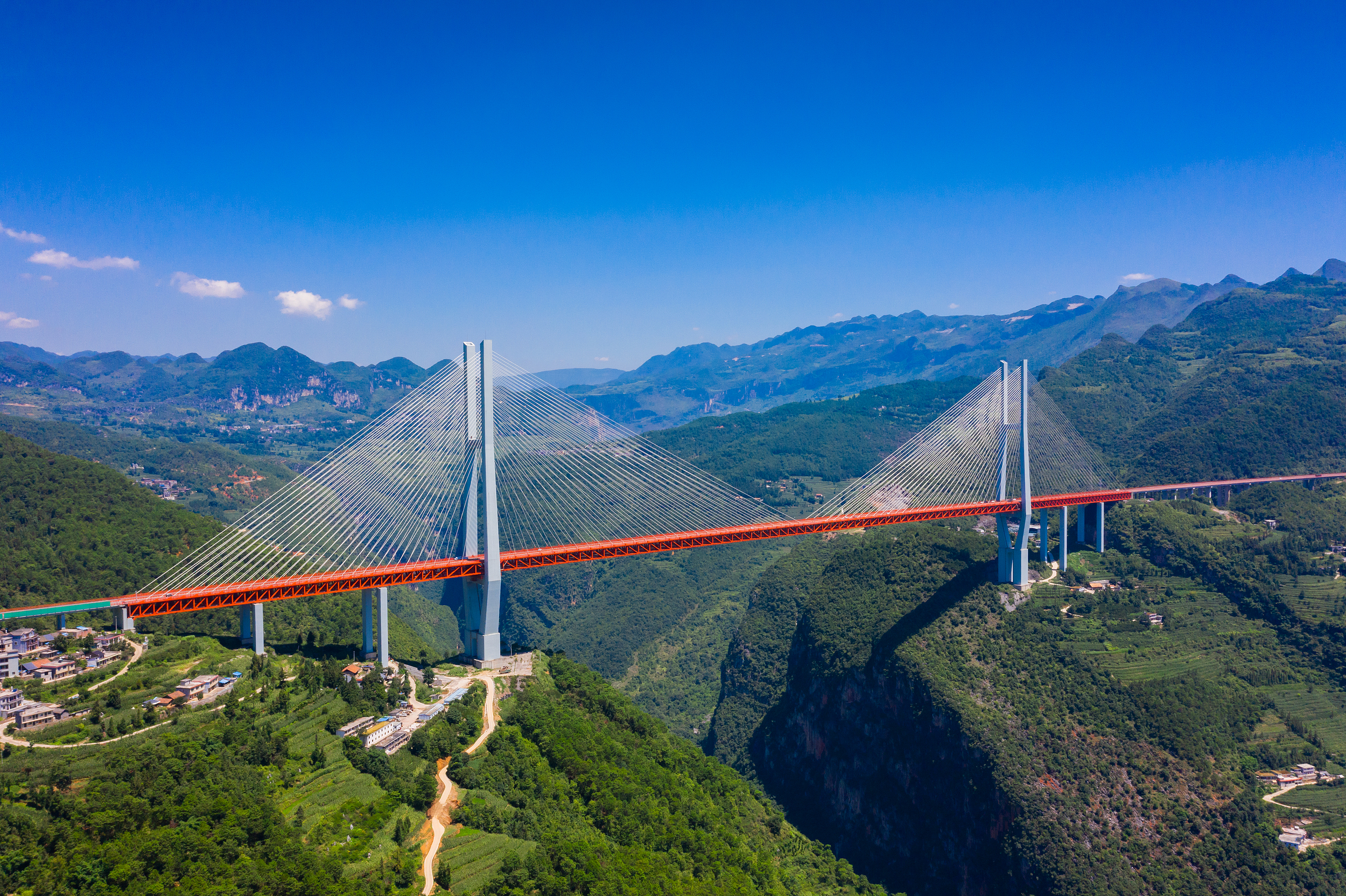
Beipanjiang Bridge
Beipanjiang Bridge is located at the junction of Duge Town, Shuicheng County, Liupanshui City, Guizhou Province, and Poli Township, Xuanwei City, Yunnan Province. one. Construction of the bridge started in 2013 and officially opened to traffic on December 29, 2016, with a two-way four-lane design. After the bridge was completed, many drivers came here just to appreciate the majesty and majesty of the bridge.