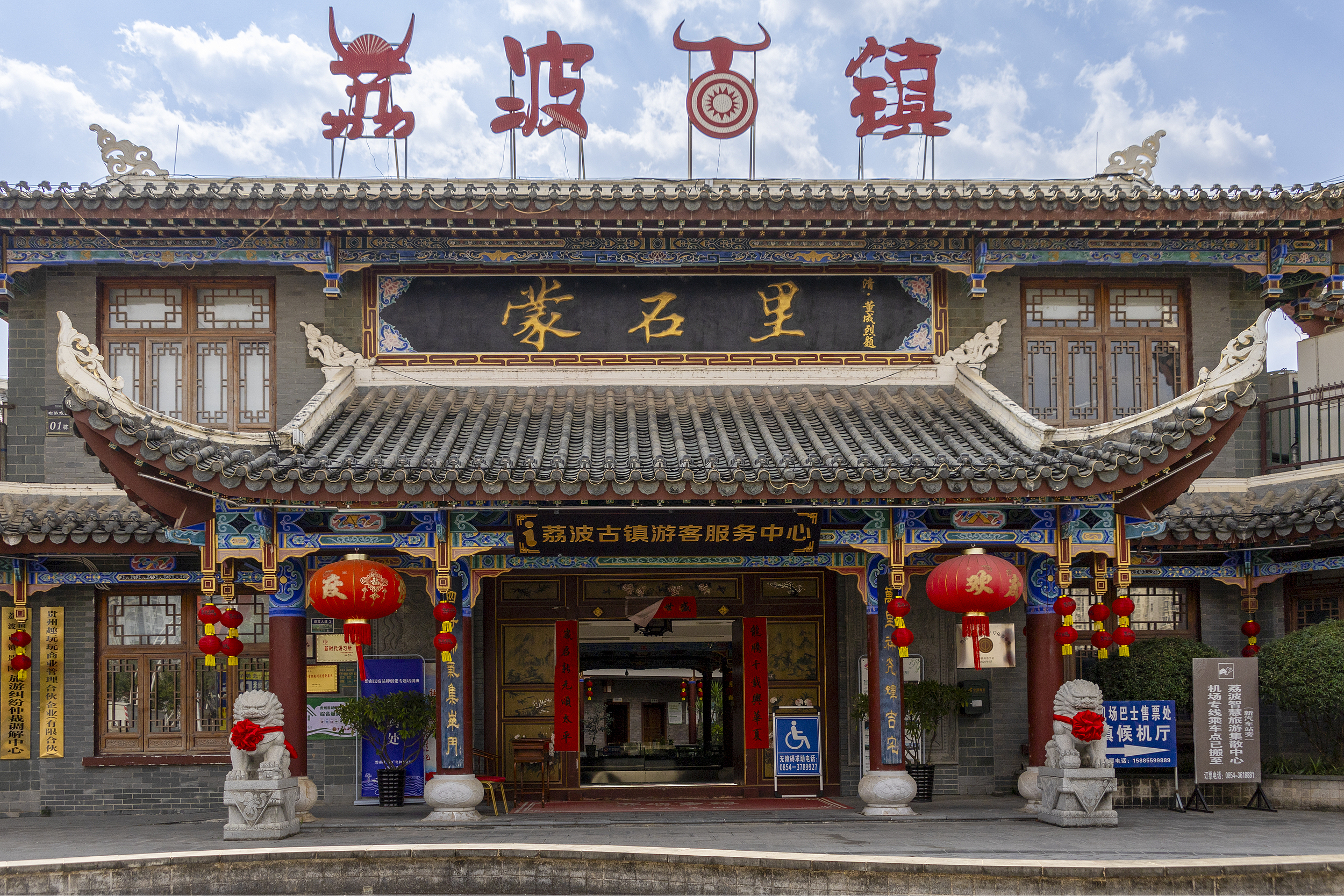
Libo Ancient Town is a comprehensive attraction featuring 320 businesses including accommodations, dining, bars, and souvenir shops, with 176 core establishments such as Light and Shadow Canvas, intangible cultural heritage creative stores, and HuaZhu·Mulanshi. The town has successfully developed projects like the “Yi Er Shan Market,” a Guizhou-themed nighttime cultural market, and the intangible cultural heritage internet-famous street night tour, creating five major nighttime consumption scenes: entertainment, sightseeing, shopping, dining, and lodging.
归档: Attractions
-
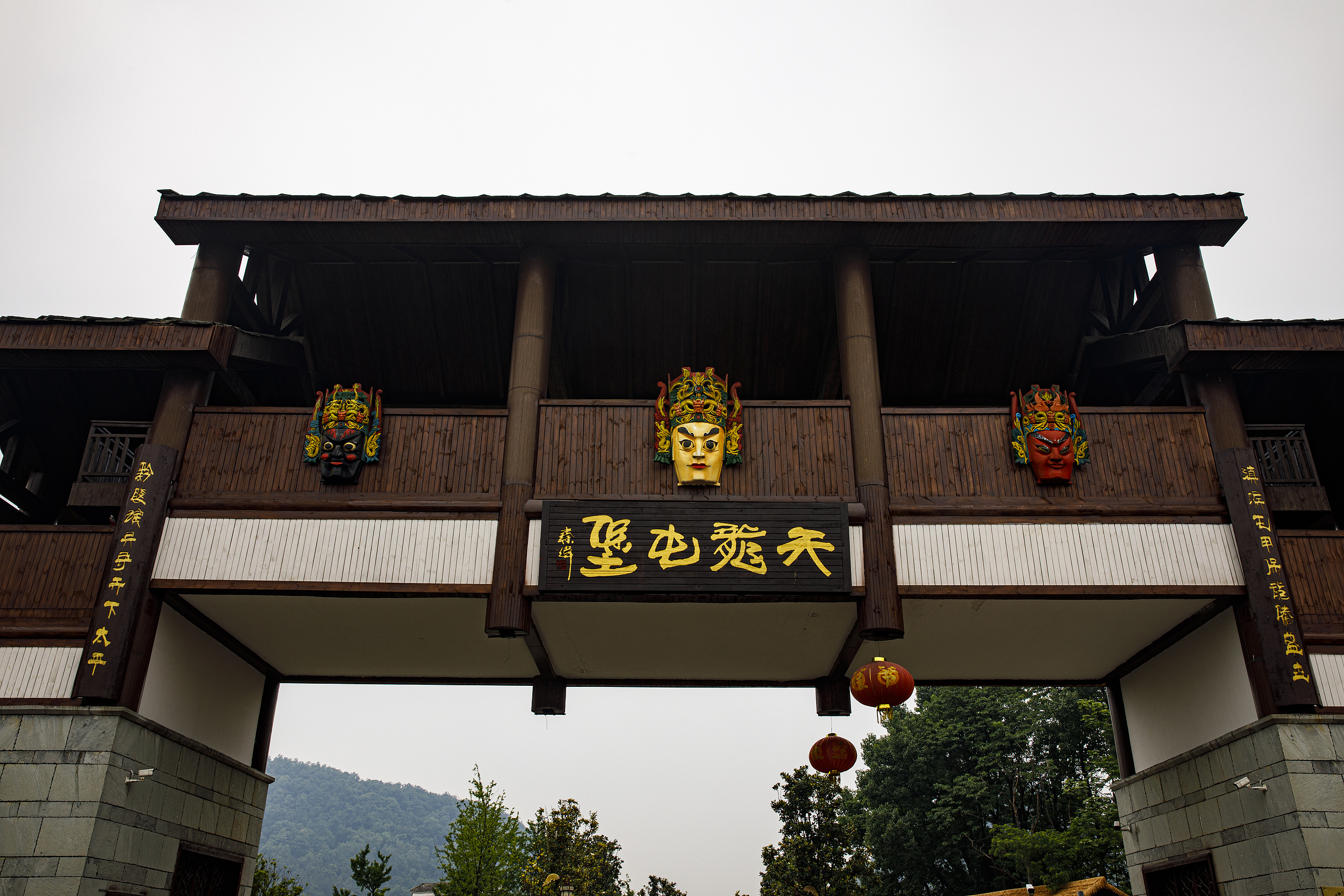
Tianlong Tunpu
Tianlong Tunpu is located in Pingba District, Anshun City, in western Guizhou Province, deep in the karst mountains between the Tiantai and Longyan mountain ranges, 72 km from Guiyang. Situated at a strategic gateway to Yunnan, the Tunpu people’s dialect, clothing, architecture, and customs differ markedly from surrounding villages. This unique Han Chinese cultural phenomenon is known as “Tunpu culture,” with Tianlong Tunpu being one of its most representative examples. During the Yuan Dynasty, it was an important post station on the historic Shunyuan Ancient Postal Route, then called “Fanlong Post.” In the early Ming Dynasty, Zhu Yuanzhang stationed troops here from Jiangsu and Zhejiang. In the early 20th century, local scholars renamed it…Tianlong Tunbao”.
-
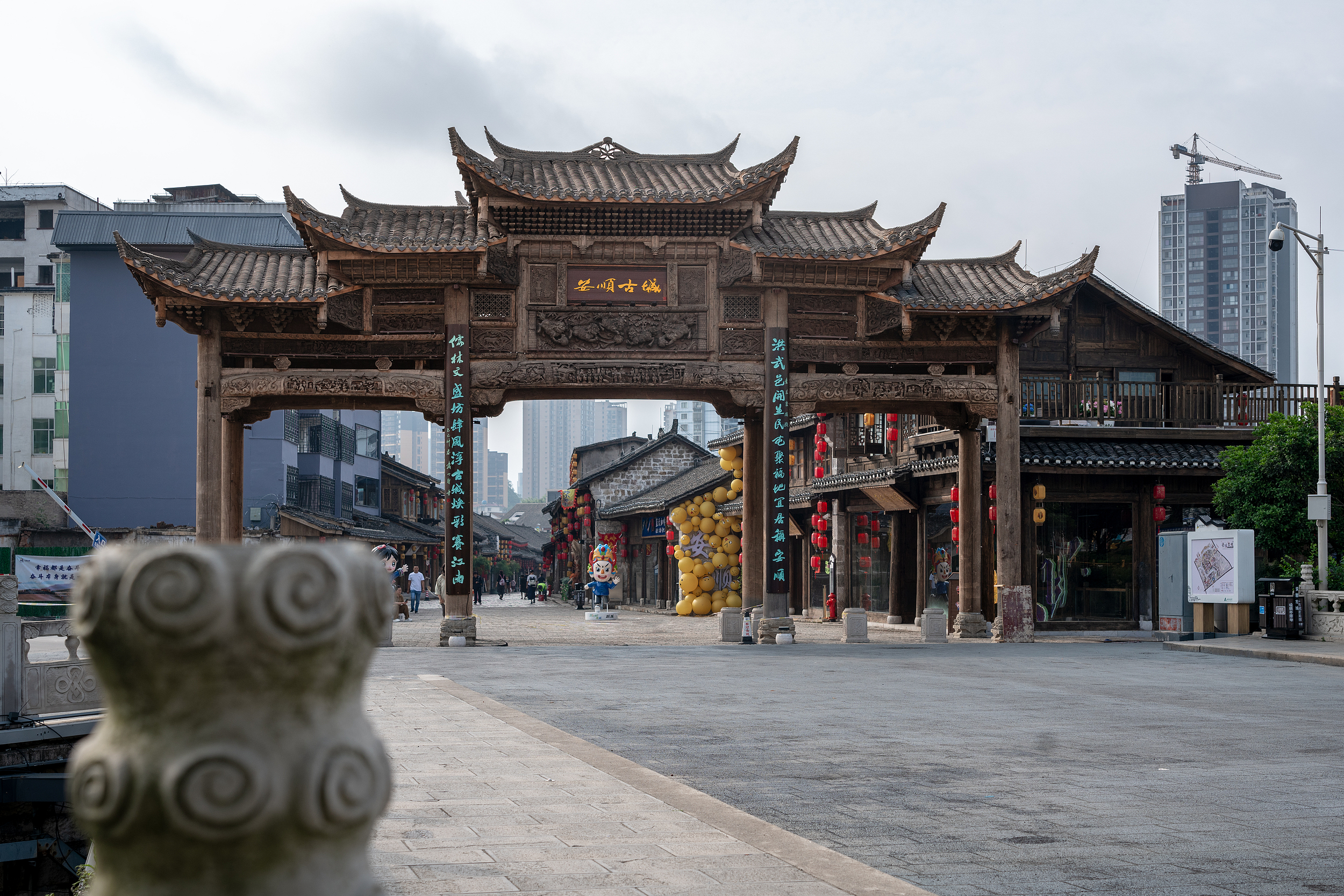
Anshun Ancient City Historical and Cultural District
Anshun Ancient City Historical and Cultural District is an area full of historical charm and cultural heritage. As an important cultural landmark in Anshun City, the Ancient City Historical and Cultural District not only displays rich historical relics, but also provides a platform for tourists to explore local traditional culture. Anshun Ancient City has a long history, dating back to the Ming and Qing Dynasties. A large number of ancient buildings, including traditional houses, temples, shops and guild halls, are preserved in the district, which are famous for their unique Qianzhong style. The architectural style of blue tiles, white walls, carved beams and painted buildings reflects the exquisite skills and aesthetic taste of ancient craftsmen. Walking in the streets and alleys of the ancient city, tourists can feel the strong historical atmosphere and cultural charm. The layout of the district still maintains the traditional pattern of the ancient city, and the criss-crossing alleys and wide streets form a vivid urban picture. This was once a place where merchants gathered, and the prosperous commercial activities injected vitality into the ancient city. Today, the shops and stalls in the district continue to operate traditional handicrafts, local specialties and food, providing tourists with a rich shopping and tasting experience.
-
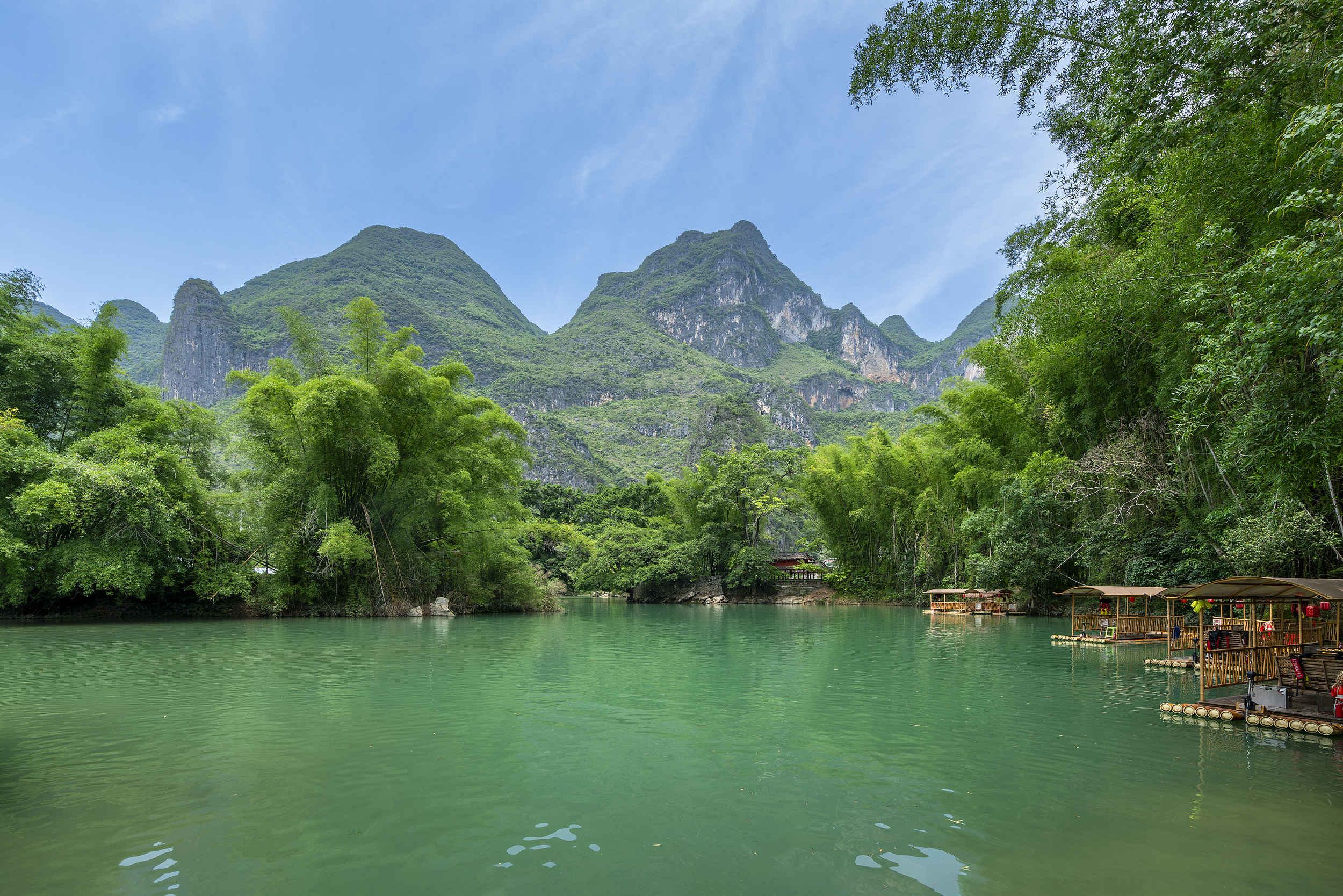
Daxiaojing Scenic Area
Daxingjing Provincial Scenic Spot is located in the slope area transitioning from the southern edge of the Yunnan-Guizhou Plateau to the hills of Guangxi, within the territory of Dongdang Township, Luodian County. It is 23 kilometers away from the county seat and 8 kilometers away from the township government, with convenient transportation. The scenic area is mainly distributed in clusters, surrounded by mountains, covering an area of 38.3 square kilometers. The main landscapes in the northeast are Tiankeng and karst caves, and the west is represented by original ecological plants, hanging coffins and stone forests; there are also historical and cultural landscapes such as Dajing Buyi Village and Gutunbao in the scenic area.
-
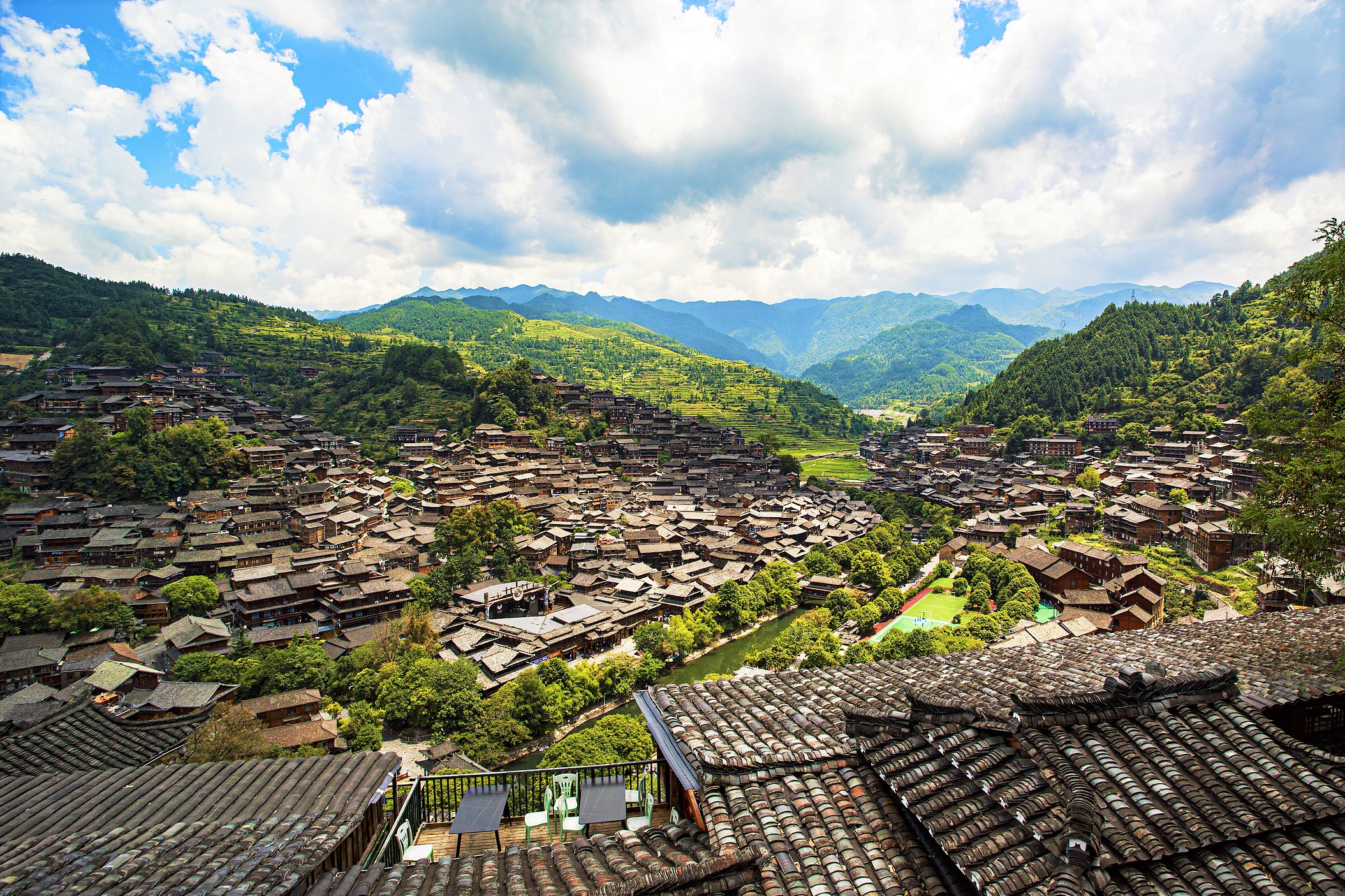
Xijiang Thousand Household Miao Village Scenic Area-Viewing Platform
Located in the mountains of Guizhou, the viewing platform is an ideal location to enjoy the panoramic view of the Miao village. The viewing platform provides a wide view. The Baishui River is like a jade belt around the waist, dividing the Xijiang Qianhu Miao Village into two. The village is built on a 70-degree high slope, which is spectacular. At night, thousands of lights are brightly lit, which makes people sigh. The entire Xijiang Qianhu Miao Village is like a beautiful painting, which makes people linger. You can also overlook the layout of the entire Miao village. The layers of stilt houses are built on the mountain, showing a unique architectural style and a harmonious natural environment. At dawn, the Miao village is like a fairyland with clouds and mist; and when night falls, the lights are brilliant and the village presents a dazzling scene. The viewing platform is not only an ideal place for photography enthusiasts, but also a window for tourists to experience the Miao culture and natural beauty. The tranquility and magnificence here make people linger, and it is the perfect starting point to experience the Miao customs and natural charm.
-
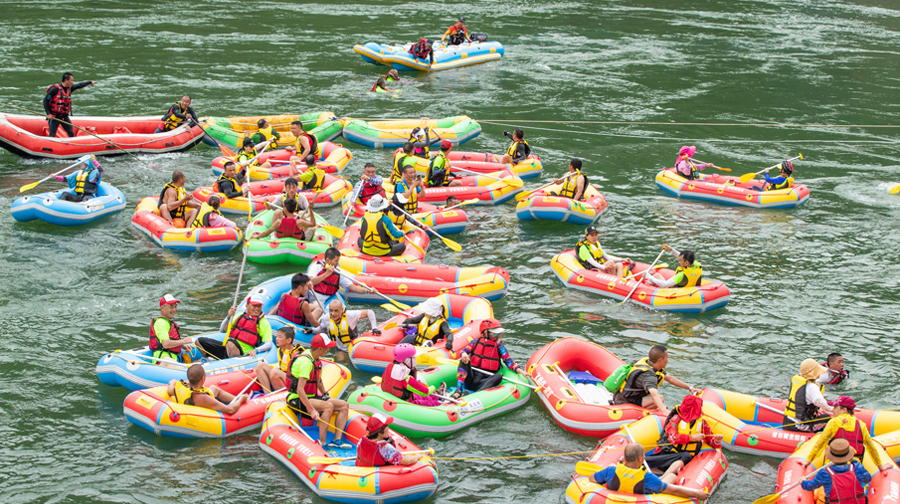
Flying Fish Valley Rafting
Feiyugu Rafting is located in the core production area of Chinese Maotai-flavor liquor, on the Tongzi River section, the boundary river between Xishui County and Renhuai City. The whole course is 11 kilometers, the river is wide, and it goes from slow to fast. It is a rare large river rafting in China. The natural environment on both sides is beautiful, the scenery is pleasant, there are flocks of egrets, the water is clear and the blue and green are intertwined. Mountains, deep valleys, caves, shoals, and waterfalls are intertwined. The rapids and flying boats are like dragons entering the water, refreshing and people are in the painting. The first half is gentle and open, and the second half is passionate and exciting. It is suitable for all ages and enjoys a 2.5-hour golden rafting experience.Feiyugu Rafting is located in the center of Chishui River Valley Tourism Highway. There are 13 4A and 5A Attraction Souvenir 1.5 hours’ drive. Maotai Distillery, Xijiu Distillery and Langjiu Distillery are all within 1 hour’s drive. The rafting starts on May 1st and ends on National Day. The highway is unobstructed and the transportation is convenient. It is a popular place for tourists to escape the summer heat and play in the water.
-
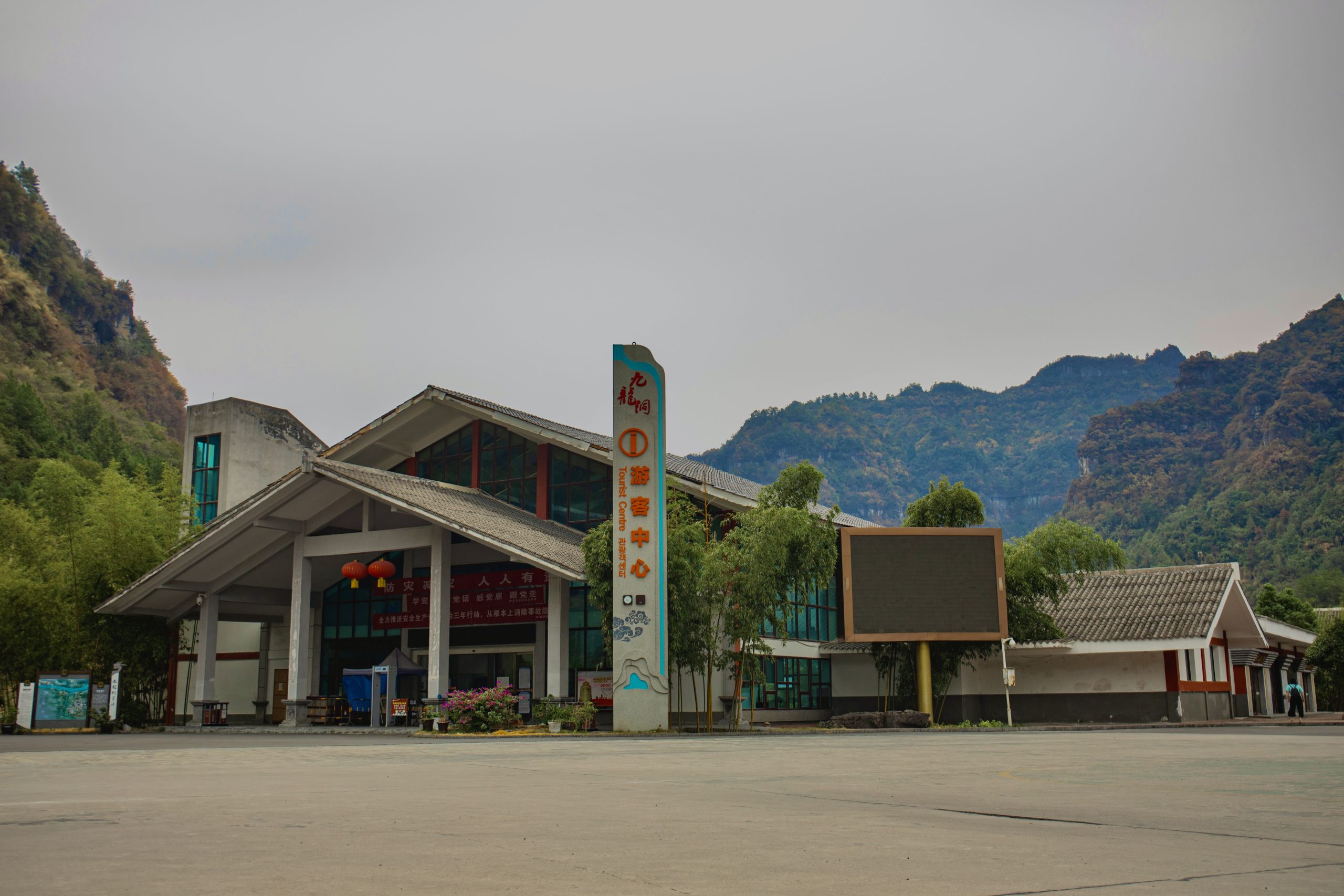
Jiu Long Dong
Tongren’s Jiu Long Dong is located 13 km southeast of Bijiang District in Tongren City, Guizhou Province. Nestled against the majestic Liulong Mountain and facing the scenic Jinjiang River, it is one of Guizhou’s first ten major attractions and a prime example of karst cave landscapes in Southwest China. The attraction centers around Jiu Long Dong, encompassing the Jinjiang River scenic belt, Liulong Mountain’s natural ecological area, and the cultural landscape of Guanyin Mountain. Covering approximately 80,000 square meters, it combines stunning cave formations, picturesque mountain and river views, and historical relics into one remarkable destination. Jiu Long Dong has a long history of development as an attraction. It was listed as a county-level scenic reserve in 1981, promoted as one of Guizhou’s top ten scenic spots in 1987, and included in the Dictionary of China’s Famous Scenic Sites. In 2004, it was approved by the State Council as a national key scenic area, solidifying its important position in China’s cave tourism. In recent years, the attraction has undergone closed upgrades, improved tourism infrastructure, added science education bases, and introduced smart guide systems, significantly enhancing the visitor experience. Jiu Long Dong is a large natural karst cave stretching 2,284 meters in length, divided into seven halls with four main halls and one celestial hall currently open to visitors. The cave features dense clusters of stone pillars, stalagmites, and stone curtains, forming over 40 classic views including “Two Monkeys Welcoming Guests,” “Nine Dragons Embracing the Pillar,” and “Inverted Lotus.” Among them, the “World’s First Pillar” stands impressively at 44.71 meters tall with a diameter of 16.4 meters. The cave also hides an underground river whose murmuring waters reflect off the stalactites, adding an extra layer of mystery. The outer area of the attraction features Liulong Mountain, renowned for its primeval forests and bamboo sea. The winding Jinjiang River, together with the cliffs of Guanyin Mountain and the canyon of Malongxi, forms a magnificent landscape integrating mountains, waters, and caves. Atop Guanyin Mountain stands the Lotus Temple, originally built during the Ming and Qing dynasties. Climbing to the summit rewards visitors with panoramic views of the Jinjiang River and the thrilling experience of the steep “A Strip of Sky” peak. Jiu Long Dong got its name from the folk legend “Nine Dragons Competing for the Cave”: It is said that six yellow dragons from Liu Long Mountain and three green dragons from Jin River fought over the cave, eventually turning into stone pillars and creating the spectacular “Nine Dragons Coiling the Pillar” scene. The stream at the mountain’s base was also named “Scolding Dragon Stream.” Visitors can explore the karst cave along the cliffside walkway or participate in interactive programs at the science education base to learn about the formation of karst landscapes.
-

Luobei River Rafting
Luobei River is located in Guiding, Guizhou. It was originally named Luobai River. According to the legend of the Buyi people, the Milky Way in the sky fell to the earth and hundreds of rivers merged into Luobei River (Luobai River).The total length of the rafting is 12.48 km. The water is fast, turbulent, mighty and extremely exciting. In addition, a professional rescue team in the industry is also equipped to ensure that the rafting is safe at every step while being exciting.
-
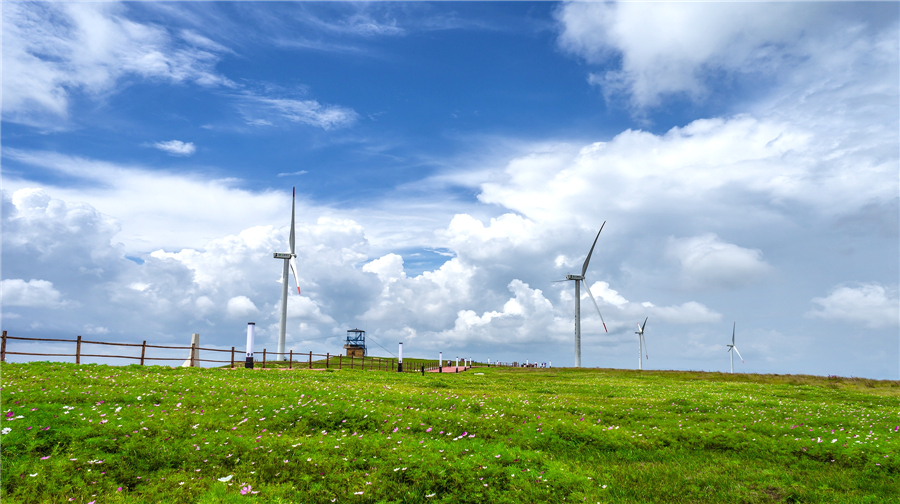
Longli Oil Painting Prairie
The unique plateau grassland of Longli Oil Painting Prairie is an undulating open grassland with flat terrain and clear skyline. It is located in the Yunnan-Guizhou Plateau with an altitude of 1,500-1,700 meters. The total area of the grassland is more than 90,000 mu, consisting of more than 10 large and small lawns, including 9 lawns of more than 1,000 mu and the largest Liangshanping area of 12,000 mu. In addition to the 10,000 mu grassland, the grassland is all original grass vegetation, and there are hundreds of mu of precious species such as white azalea.On Malangping, you can see the sea of clouds and the sunrise; on the top of Baiquan Mountain, you can see the lights of Guiyang from afar. Galloping on the grassland, you can enjoy the scenery of the plateau grassland. Including Liangshanping, Wangzhaiping, Malangping, Gulangping, Wuliping and other high mountains, the green grass is endless, and herds of cattle and sheep are scattered on the grassland. On the high mountain grassland, you can enjoy horseback riding, camping, barbecue and other tourist areas suitable for all ages. The Miao customs here are full of unique, simple and rich emotions, which are very attractive.
-
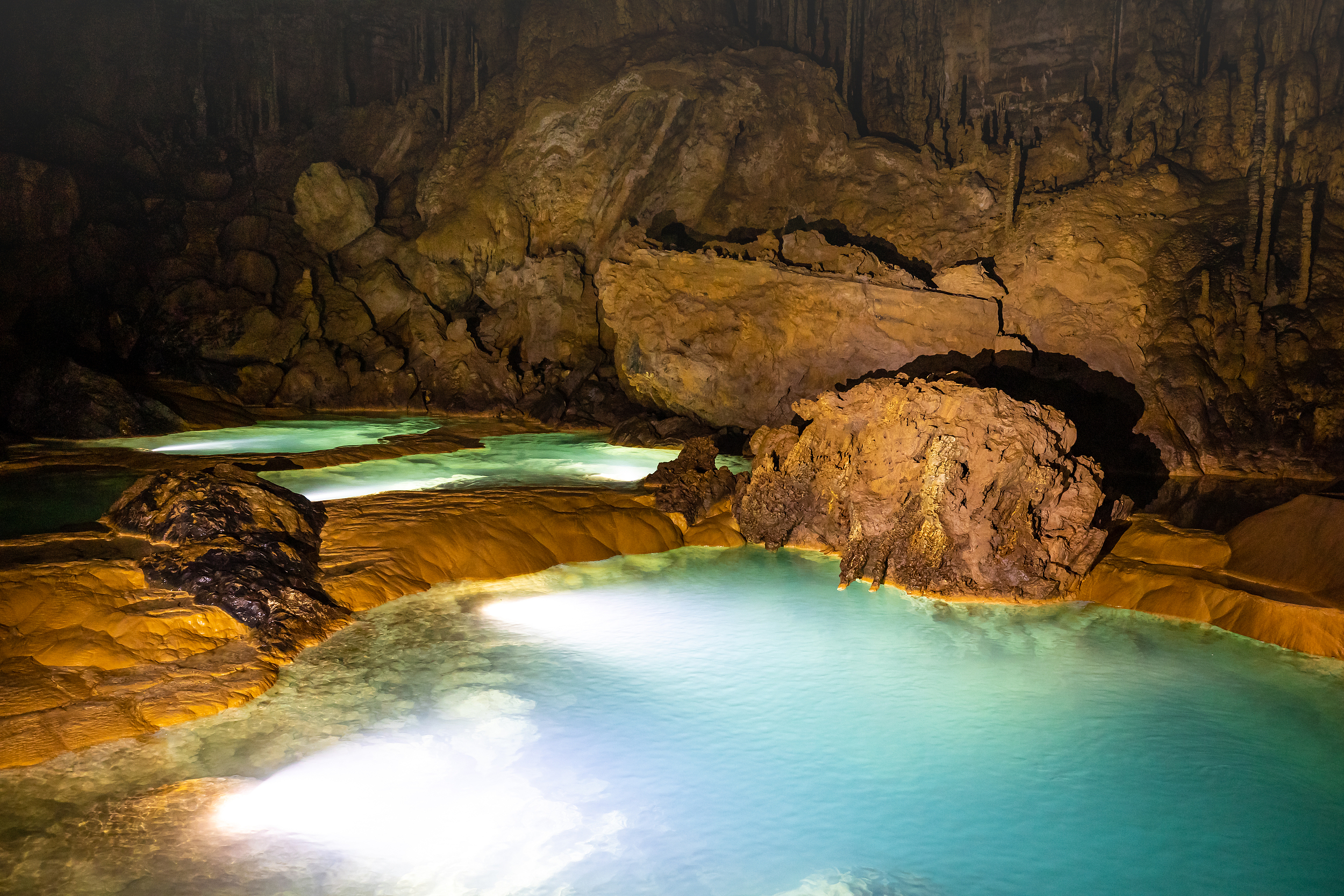
Qingzhen Shilong Cave
located in Guanguyou Village, Maige Township, Qingzhen City, Guizhou ProvinceQingzhen Shilong CaveThe adventure project is an underground cave system rich in geological mysteries and unique natural views. As an emerging travel adventure activity,Qingzhen Shilong CaveIts mysterious and spectacular underground world has captivated countless explorers and photographers. According to National Geographic China Issue 741,Qingzhen Shilong CaveThe cave has long maintained a relatively pristine and untouched state.