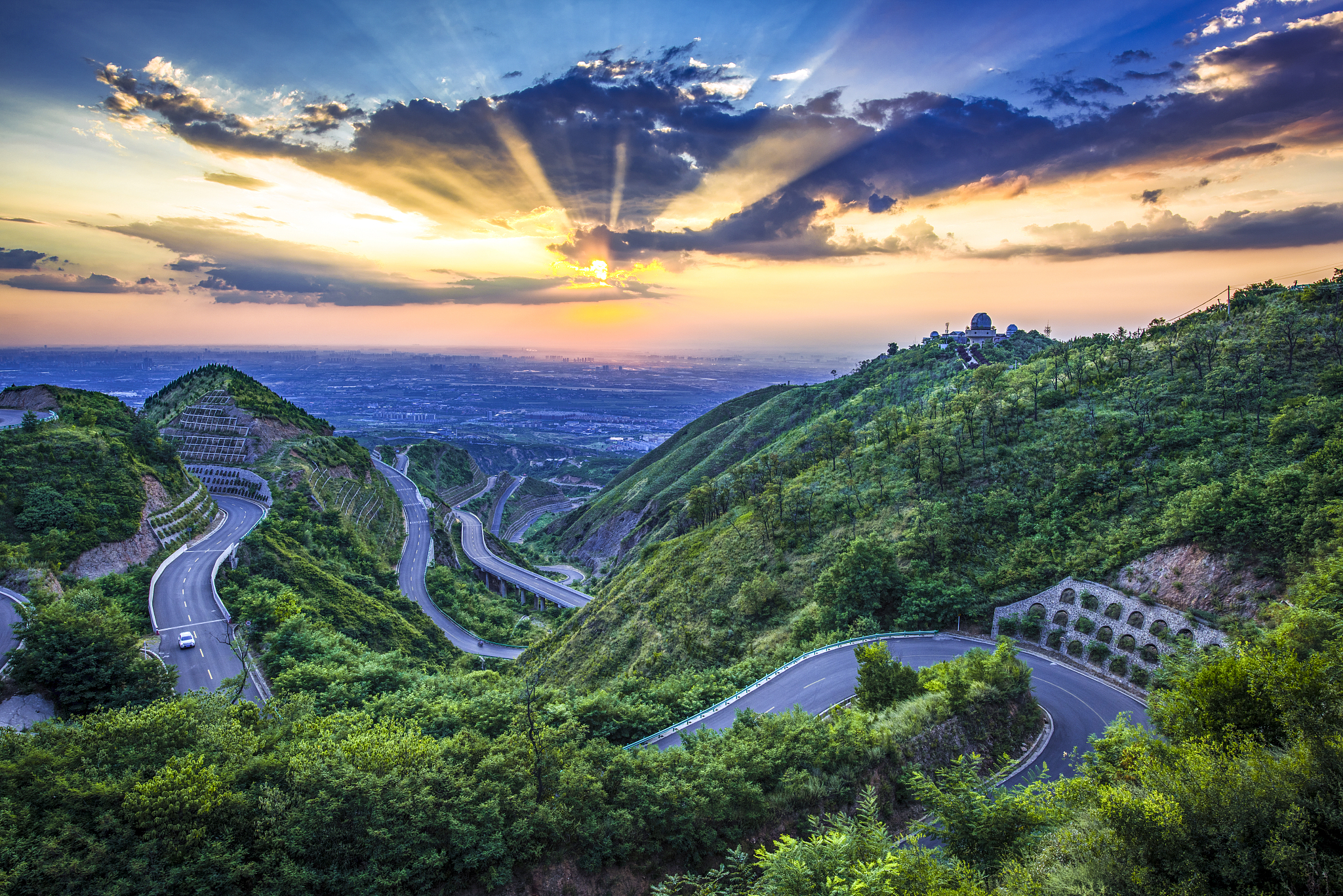
The events of “Fooling the Lords,” a famous story from Chinese history, took place on this mountain. The mountain is divided into the eastern and western ridges. The main sights lie along the western ridge, and include the Beacon Tower in the story “Fooling the Lords,” and the Bingjian Pavilion commemorating the Xi’an Incident. The Beacon Tower lies at the mountain peak, and is therefore the highest scenic spot on the mountain. The Bingjian Pavilion is where Chiang Kaishek was discovered hiding during the Xi’an Incident of 1936. At the foot of Lishan lies the famous Huaqing Pool. The view looking down over Huaqing Pool from the Sunset Pavilion on the mountain at dusk is known as “Sunset at Lishan,” and is one of the famous sights within the Hangu Pass.
归档: Attractions
-

Nanniwan
At present, the large terraced fields reclaimed in the past in Nanniwan, the exhibition hall of the large-scale production movement in Naniwan, the Jiulong Spring and the monument to the martyrs are available for tourists to visit.
-
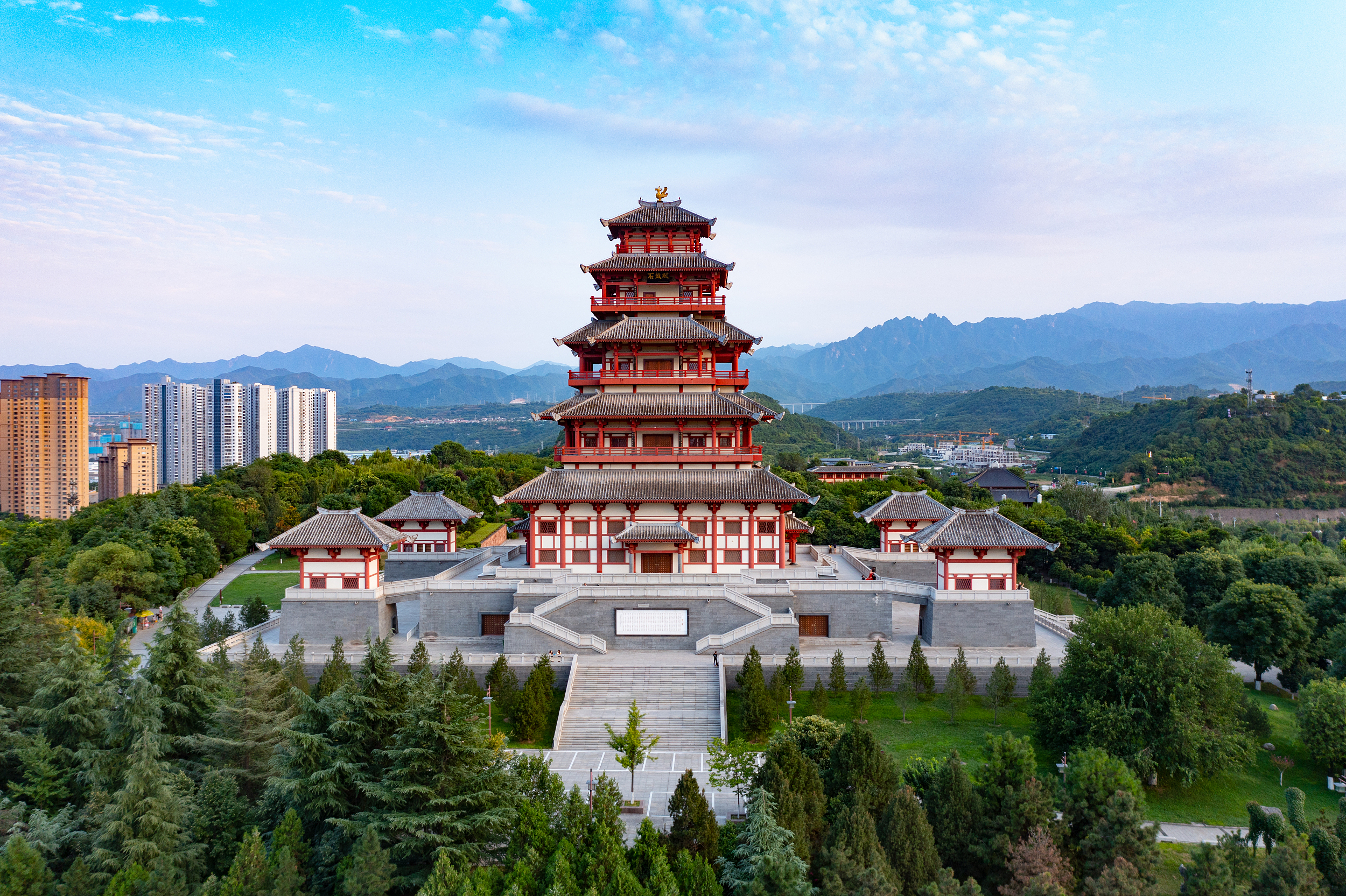
Zhonghua Shigu Garden
The Chinese Stone Drum Garden is located on Shigu Mountain in Baoji City, where the “First Antiquities of China” is built. It is on the verge of Weihe River, Yinxiang River in the east, and Tiantai Mountain National Forest Park in the south. It is a cultural and ecological park that integrates “site protection, bronze ware exhibition, stone drum culture exhibition, garden sightseeing, archaeological research and leisure and entertainment”.
-
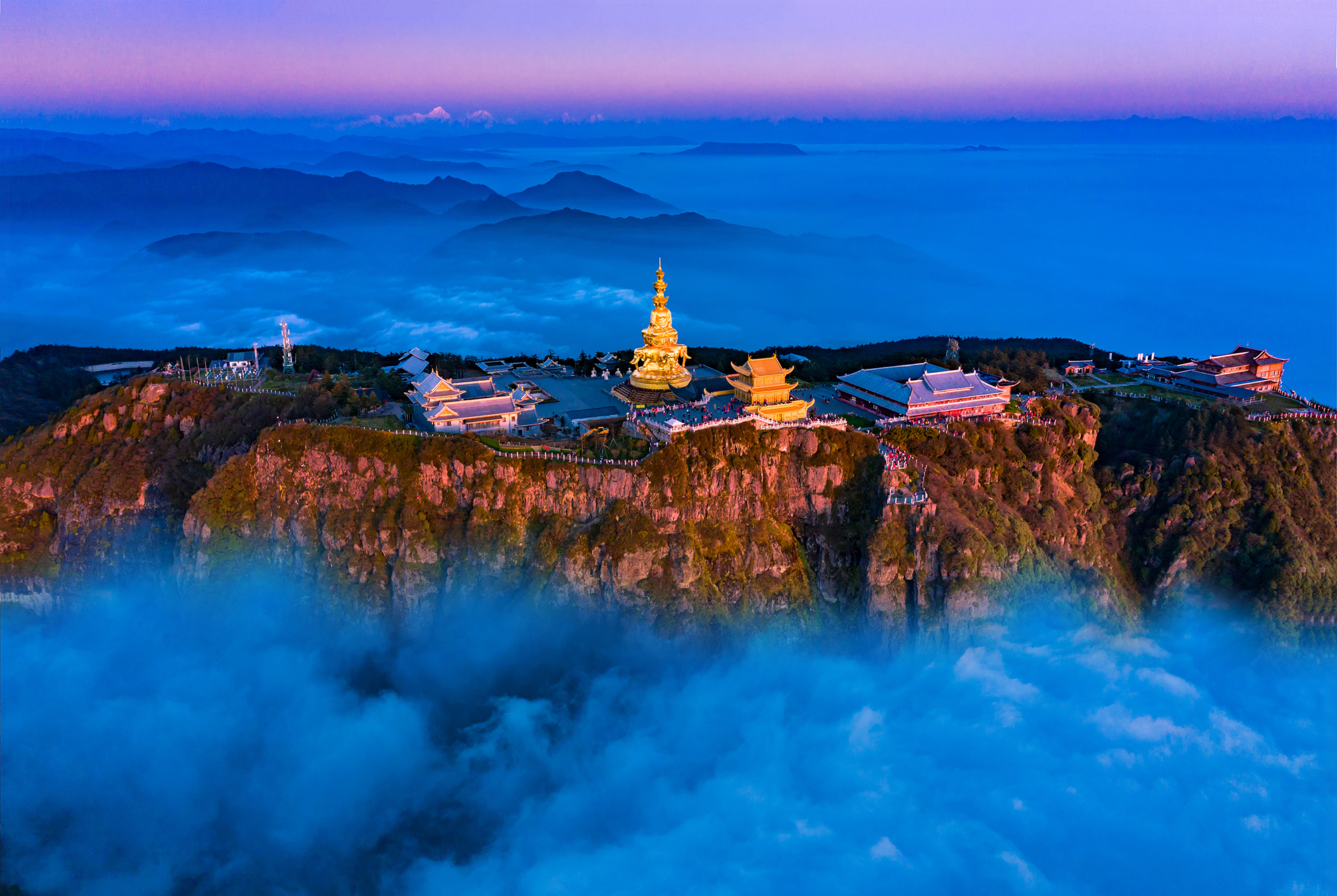
Mount Emei
Mount Emei is one of the four famous mountains of Chinese Buddhism, and it is also the temple of Samantabhadra Bodhisattva. There are numerous Buddhist monasteries in the mountains that combine to give this place a holy and serene atmosphere. The scenery in the mountains are beautiful. The four seasons each have their own characteristics. If you are lucky, you can see the sunrise and sea of clouds. Do note that the monkeys in Mount Emei are notoriously naughty. They are not afraid of people, and even take the initiative to ask tourists for food.
-
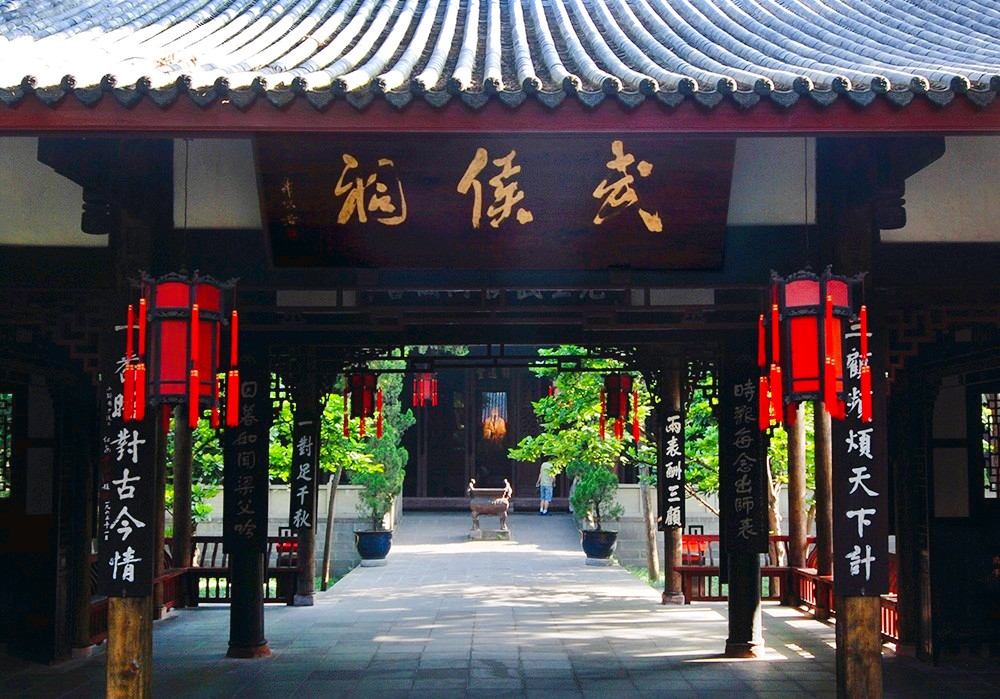
Chengdu Wuhou Shrine Museum
Wuhou Shrine commemorates Zhuge Liang, the prime minister of the Shu Kingdom during the Three Kingdoms Period. When it was first constructed, it was adjacent to Liu Bei’s Han Zhao Lie Temple, but It was later incorporated into the Han Zhao Lie Temple during the Ming Dynasty and became a rare temple in China that commemorates both a ruler and his subordinates in the same compound. The cultural relics area is composed of the Huiling Mausoleum, Han Zhaolie Temple, Wuhou Temple, and Sanyi Temple. The main building is Wuhou Temple, which enshrines Liu Bei, Zhuge Liang, and other heroes of the Shu-Han Kingdom. Chengdu’s famous landscape “Red Wall and Shadows of Bamboo” is also in the scenic area. Do take some photos when you are there!
-
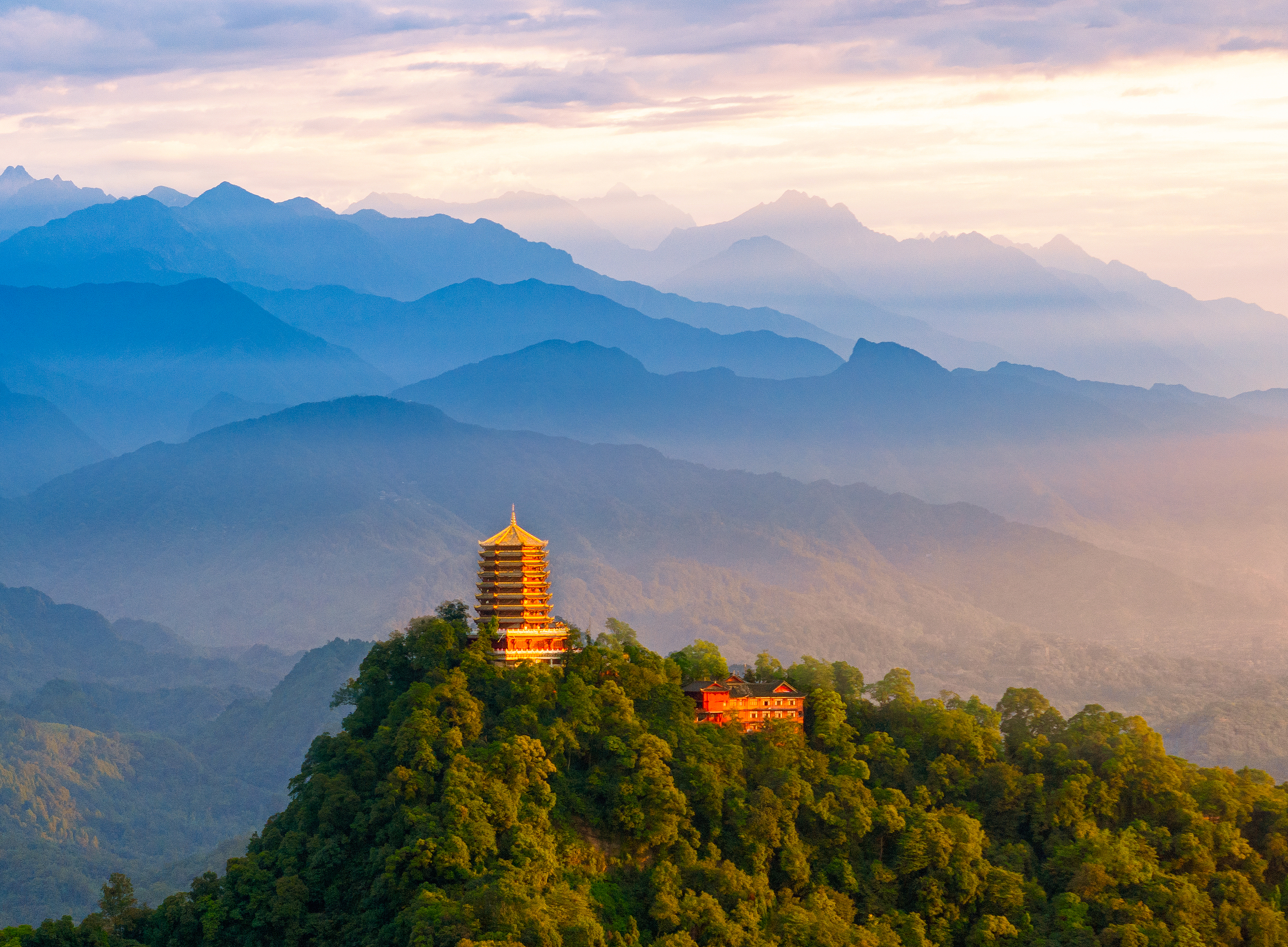
Mount Qingcheng
Qingcheng Mountain is dubbed as the “most quiet and secluded place in the world”. It is the birthplace of Taoism and there are many Taoist temples to explore there. Qingcheng Mountain is divided into two mountain areas: Qingcheng Front Mountain and Qingcheng Back Mountain. They require separate tickets. The Front Mountain is where Taoist culture and cultural relics are concentrated. When visitors talk about “Qingcheng Mountain”, they often refer to the front mountain; Qingcheng Back Mountain is known for its natural scenery making it a good place for vacation and leisure.
-
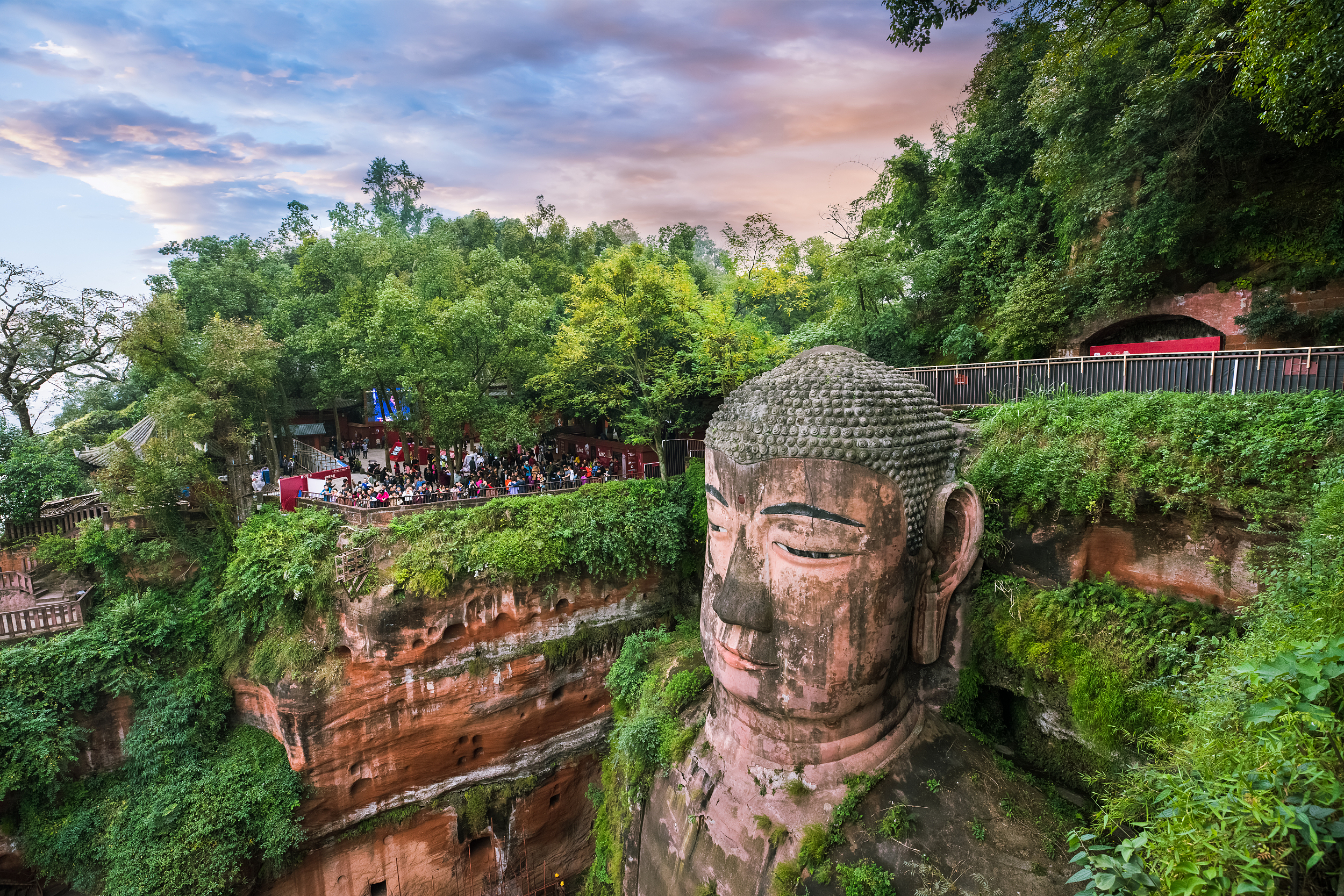
Leshan Giant Buddha
The Leshan Giant Buddha is located in Leshan, carved into the cliff of Lingyun Mountain’s Qixia Peak at the confluence of the Min River, Qingyi River, and Dadu River. Also known as the Lingyun Giant Buddha, it has been designated as a “World Cultural and Natural Heritage” site by UNESCO. The statue depicts a seated Maitreya Buddha and is considered a masterpiece of cliffside carving art from the Tang Dynasty.Admire the giant stone-carved seated Maitreya Buddha statueThe Leshan Giant Buddha was carved during the Tang Dynasty and took three generations of craftsmen 90 years to complete. This seated statue of Maitreya Buddha stands approximately 70 meters tall, making it a colossal stone-carved masterpiece. Marvel at the towering grandeur of the Leshan Giant Buddha and be amazed by how ancient artisans could create such an exquisite statue without modern large-scale tools.Pray for peace and good health.The Leshan Giant Buddha has always been a sacred Buddhist site. Standing before this colossal statue with hands pressed together in prayer, one can calmly offer blessings—for personal peace, family well-being, and friends’ health.Lingyun TempleLingyun Temple is a triple quadrangle architectural complex consisting of the Mahavira Hall and the Scripture Depository. The temple enjoys thriving incense offerings, with a continuous stream of visitors coming to pray for blessings. The temple’s landscaping is also well-maintained, featuring not only surrounding trees but also numerous potted plants. It’s an excellent place to experience Buddhist culture.Leshan Sleeping Buddha: Discovering the Reclining Buddha on the RiverOn the surface of the Qingyi River, several mountain peaks connect to form a striking resemblance to a reclining Buddha, complete with the head, body, and feet. The Sleeping Buddha lies on its back, creating a fascinating sight. The best spot to view the “Sleeping Buddha” is near the Yingchunmen Dock in the eastern part of Leshan’s ancient city.Tour Route:The popular tourist route involves taking the stairs to Lingyun Temple, then reaching the head of the Giant Buddha. Descend via the Nine-Bend Stack Path from the Buddha’s head to its feet, where you can take photos as souvenirs before climbing back up. Another way to experience the Buddha is by taking a boat tour, which allows you to admire the full panoramic view of the Giant Buddha from a distance.Walking tour: Experience the majestic grandeur of the giant Buddha up closeMost visitors have heard of the Leshan Giant Buddha and seen pictures of it. But when you actually approach and visit the Buddha in person, you can truly feel its towering grandeur and your own insignificance – just the Buddha’s foot alone can accommodate over a hundred people sitting around it. At the base of the Buddha, you can look up at its entire majestic form. Don’t forget to take photos to commemorate your visit.Boat tour: View the full panorama of the Leshan Giant Buddha from a distanceVisitors who want a closer view of the giant Buddha or have limited physical stamina can choose to admire it from a boat on the river. Gliding along the water, you’ll get a panoramic view of the Buddha, capture precious photos, and enjoy the scenic riverside landscape.1. Reasons for the construction of the Leshan Giant BuddhaLegend has it that in ancient times at the confluence of the Minjiang, Qingyi, and Dadu Rivers in Leshan, the water currents were extremely fierce, causing frequent shipwrecks. To tame the turbulent waters, Master Haitong gathered resources and manpower to carve the Leshan Giant Buddha. After its completion, the water flow miraculously calmed significantly, allowing ships to pass through safely.2. Leshan Giant Buddha closes eyes and sheds tearsIn 1962, after three years of natural disasters, corpses floated on the Min Mountains. At the time, people believed the Great Buddha couldn’t bear to witness this human tragedy and thus painfully closed its eyes while silently weeping. The scientific explanation is that the statue’s closed eyes were caused by acid rain, or more precisely, acid deposition. Acid rain can dissolve the hardened cement surface of non-metallic building materials, creating holes and cracks that damage structures.3. The official name of the Leshan Giant Buddha”The Leshan Giant Buddha” is actually a common name given by later generations to this giant Buddha located in Leshan, Sichuan Province. The true official name of this Tang Dynasty Buddha has remained a mystery. In fact, according to investigations by numerous experts, the true official name of this stone-carved statue known as the “Leshan Giant Buddha” should be: The Great Maitreya Stone Statue of Jiazhou Lingyun Temple.
-
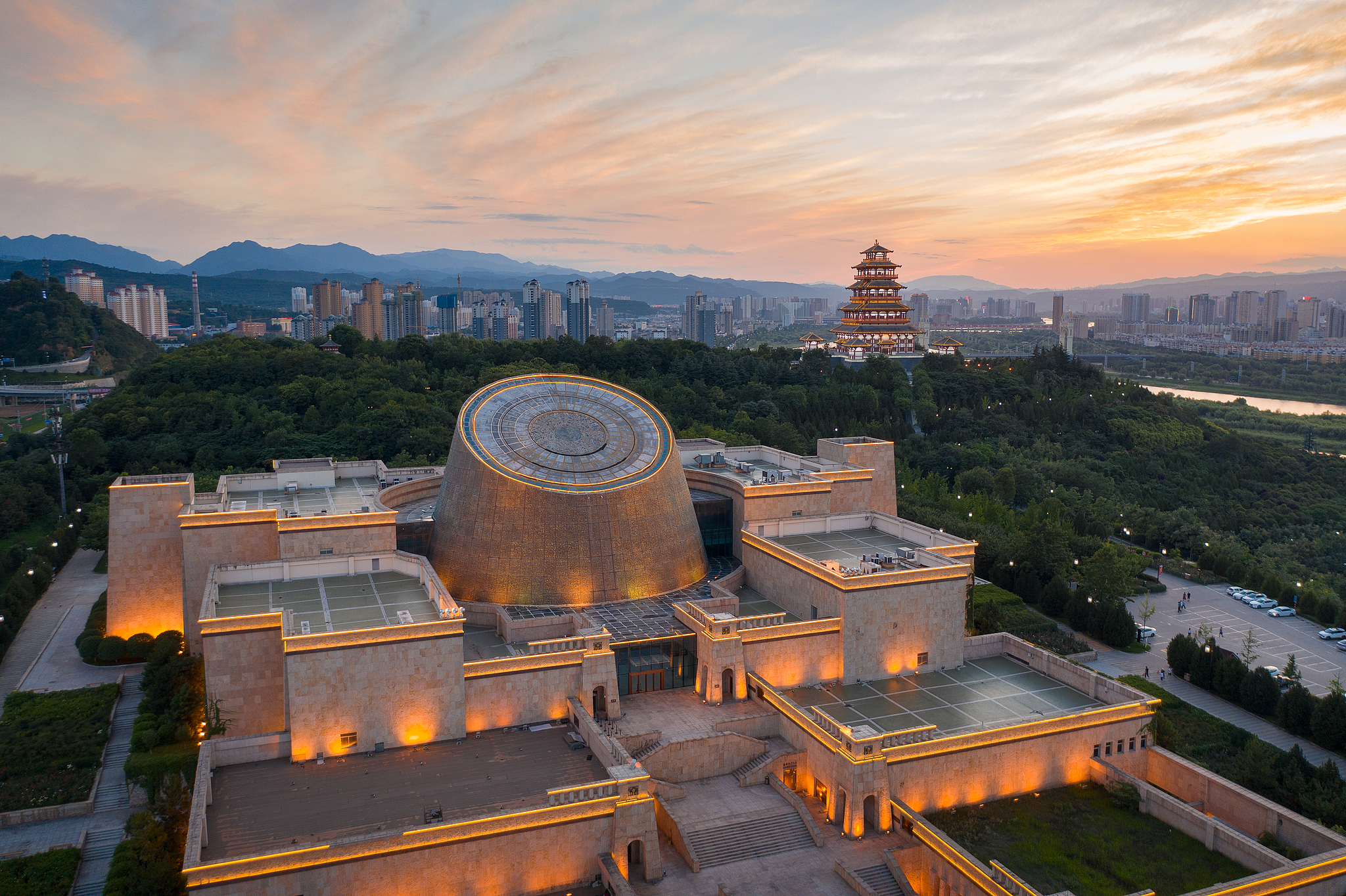
Baiji Bronze Ware Museum
The Baoji Bronzeware Museum is in the Chinese Shi-ku Garden of Baoji City, “the hometown of bronzeware.” The museum has four exhibition halls, and Halls 1 and 2 are the focuses of the tour. The museum displays high quality bronzeware, such as the Hu gui from the period of King Li of Zhou and the treasures of Qin Duke Bo. The He zun, which is inscribed with the words “Here in China I dwell,” is kept here.
-
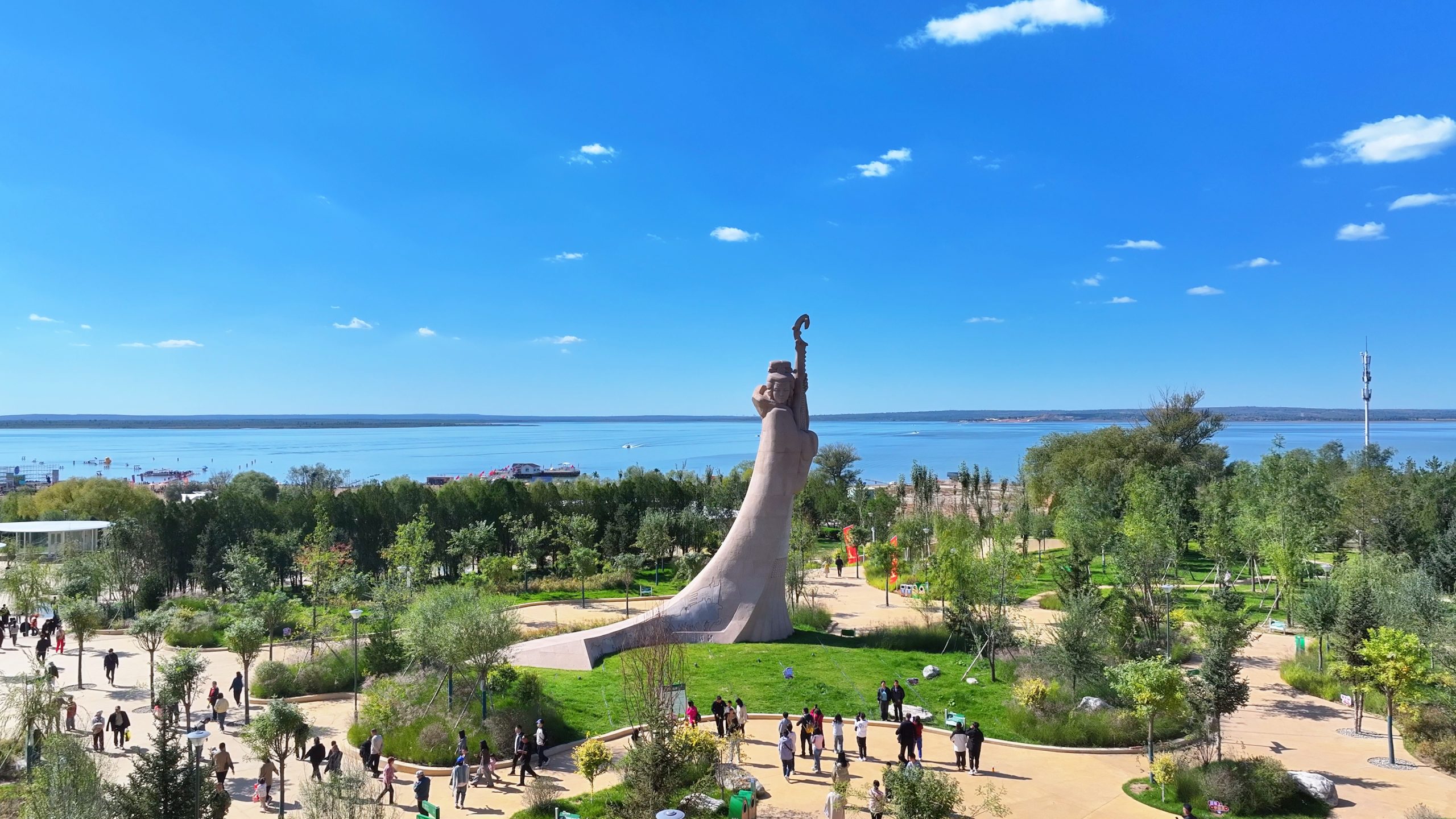
Hongjiannao Wetland
Hongjiannao Wetland is in the northeast corner of Erlingtu Town, Shenmu County, Yulin City. It is a large inland freshwater lake in Shaanxi Province and is known as the “Pearl in Sand Sea.” Visitors enjoy sunshine and watch gulls, geese and fish stocks in the lake of this picturesque wetland. On the southwest bank, there is a peninsula where you can find many wild psammophyte plants thriving in the sands. It’s a must-go spot.
-
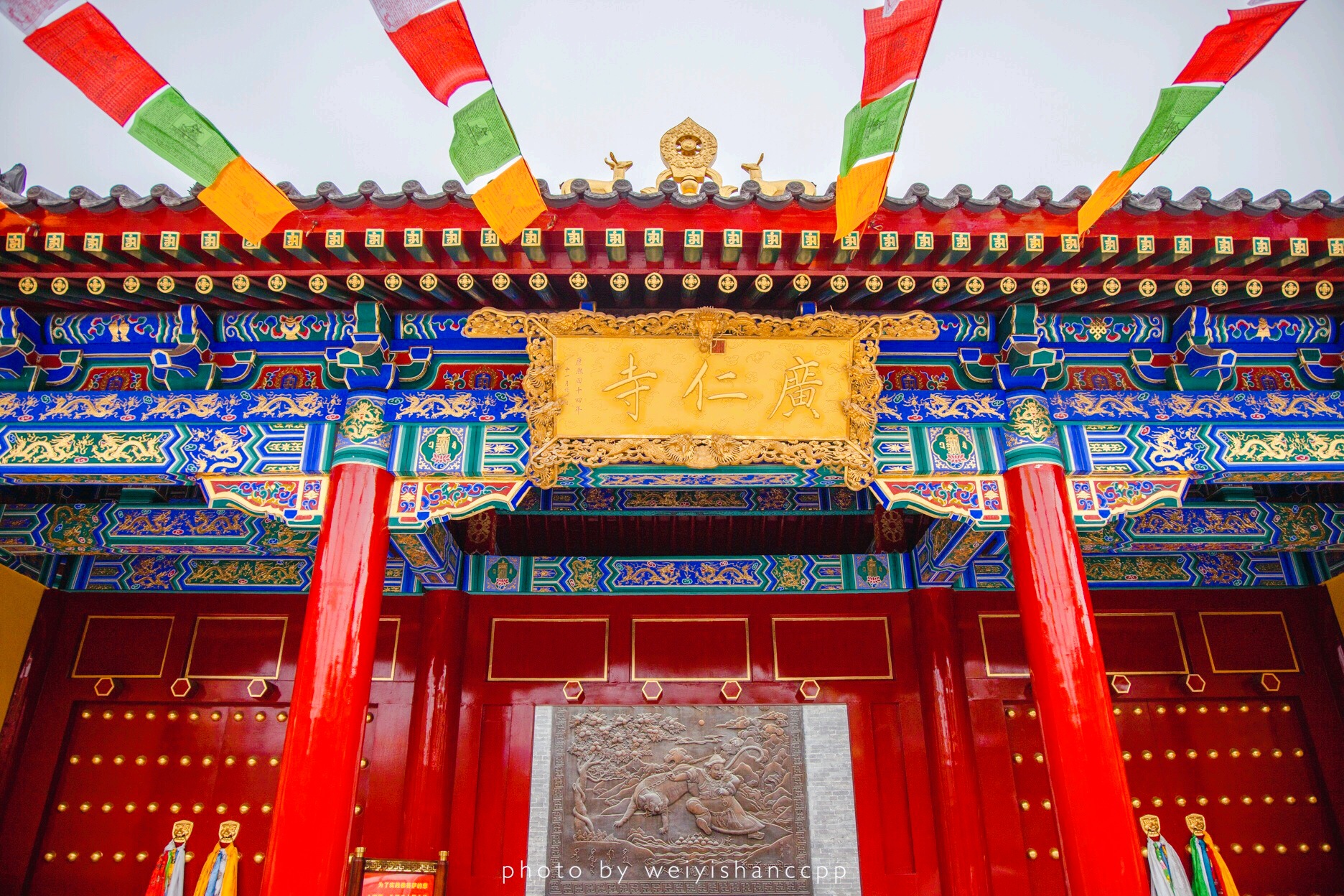
The Guangren Lama Temple
Guangren Temple in Xi’an is the only Tibetan Yellow Sect (Gelug sect) in Shaanxi. It was built in 1703 by Emperor Kangxi, the sage of the Qing Dynasty, and the plaque “Guangren Temple” was personally inscribed. After Guangren Temple was built, living Buddhas and Lamas from Tibet, Mongolia, Qinghai, Gansu and other regions all stayed at the temple to pay their respects when passing through Shaanxi. Guangren Temple is also the only main dojo of “Green Tara” in China. Green Tara is said to be the incarnation of Guanyin Bodhisattva in Lamaism. After entering the gate of Guangren Temple, there are buildings such as the Daxiong Hall, the Hall of Tibetan Scriptures, and the Triple Hall of the Fatang on the central axis. When you step into the Mahavira Hall, you will find that what is enshrined in the hall is not the common Sakyamuni Buddha statue, but a 2-meter-high gilded bronze statue of Tara, a majestic and exquisite gilt bronze statue. To the left of the green Tara is The statue of the goddess in wooden bun and the wooden giant light statue on the right are all cultural relics of the Tang Dynasty. The whole hall is surrounded by 40 prayer reels, full of Tibetan Buddhist monastery style. Although Guangren Temple is not big, there are many things to see. In addition to the Green Tara Buddha statue in the Mahavira Hall, you can also see the “Imperial Guangren Temple Stele” in the temple. The inscription on the inscription was written by Kangxi and recorded the process of building the temple; The original has been preserved for more than 300 years. The rice paper has turned yellow for a long time, but the handwriting is clear and dignified, and it is a masterpiece of calligraphy. In front of the second hall in the temple, you can see a white marble lotus jar, which is carved from a piece of white marble. The outside of the jar is carved with brocade, and the inside of the jar has an inscription in official script carved during the Qianlong period, commonly known as “Qianlong orchid jar”. In front of the scripture hall, there is also a “lotus throne carved from white marble”. Legend has it that the Buddha statue of Sakyamuni on the throne was brought to Tibet by Princess Wencheng. In addition, there are also a pair of Nanmu dragon lanterns presented to Guangren Temple by the Empress Dowager Cixi when she traveled west, the plaque of “Ciyun Xiyin” inscribed by Emperor Kangxi, the plaque of “Dharma Xiang solemn” inscribed by Cixi’s imperial inscription (hanging in the Thousand Buddhas Hall), There are a number of precious plaques such as the plaque of “Buddhist Holy Land” inscribed by Qianlong and the plaque of “Solemn Buddha Land” inscribed by Kang Youwei.