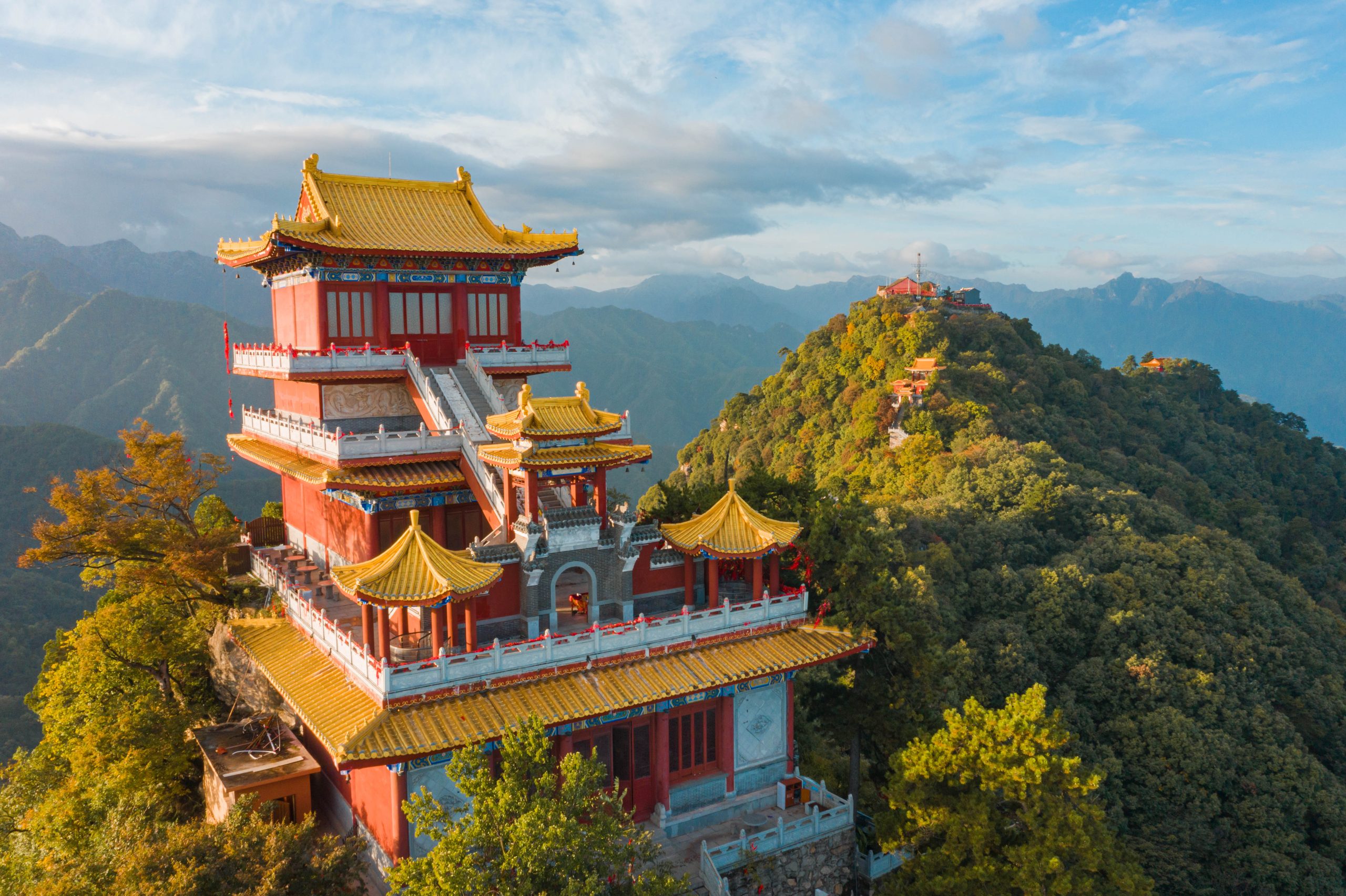
Zhongnanshan Nanwutai is located in the Zhongnan Mountain range, known for its rolling hills and long-standing reputation as a sacred Buddhist mountain and summer retreat. Historically called Taiyi Mountain, it’s celebrated as the “most picturesque area of Zhongnan.” The attraction features five peaks: Qingliang, Wenzhu, Xianshen, Lingying, and Guanyin. Since it lies south of the ancient Chang’an city, it earned the name Nanwutai (Southern Five Peaks). As one of the Buddhist sacred sites, this attraction features numerous temples, with over 40 large and small monasteries existing by the Ming and Qing dynasties. These temples of varying sizes were distributed across different platforms, arranged in orderly layouts with exquisite craftsmanship that captivated visitors. However, most mountain temples have been destroyed over time, with only a few remaining today including Guanyin Temple, Five-Buddha Hall, Yuanguang Temple, Xilin Temple, and Shengshou Temple. Among these, Shengshou Temple stands out for its long history and expansive grounds. Located on the northwestern hillside of the scenic area, about 1 km southwest of Wutai Township’s Taigoukou Village, it’s also called Ta’er Temple due to its location in Tasi Valley. The square, seven-story Shengshou Pagoda was built during the Sui Dynasty, standing 23m tall. Legend says Xi’an’s Big Wild Goose Pagoda was modeled after this structure, making it one of Xi’an’s earliest surviving Buddhist pagodas. Zhongnanshan Nanwutai boasts breathtaking natural scenery. From the foot of the mountain, the five peaks stand like a brush holder, appearing deceptively close. However, the 12.5 km hike from Zhugu Valley to Datai reveals endless wonders – winding paths through layered mountains, breathtaking cliffs, and stunning rock formations. Marvel at the ribbon-like Liushui Stone Waterfall, the solitary Sendeng Peak, the crouching Rhinoceros Rock, the sky-piercing Guanyin Platform, the pillar-like Lingying Platform, and the roaring Tiger Cliff. Each picturesque scene creates a veritable “museum of tectonic landforms.” The mountain is home to nearly a thousand plant species, including “living fossil” relic plants, ornamental treasures like the horse chestnut and magnolia, making it a vast botanical garden and a living root carving museum.
归档: Attractions
-
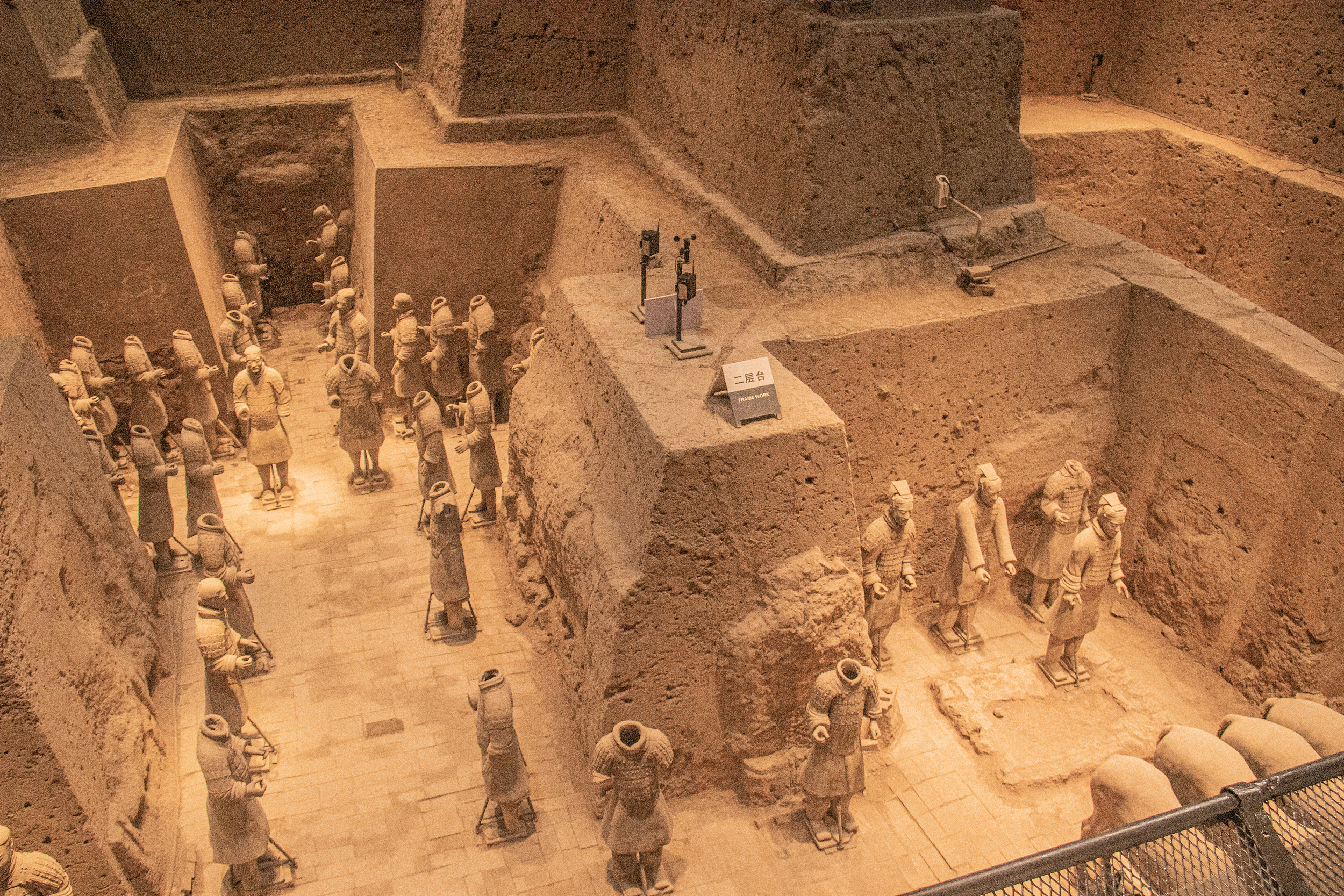
Terra-cotta Warriors Pit No.2
The Qin Shi Huang Terracotta Warriors and Horses Museum is also known as the Terracotta Warriors and Horses, or the Qin Terracotta Warriors and Horses. It is a burial pit of the Qin Shi Huang Mausoleum, and together with the Qin Shi Huang Mausoleum, it forms the Qin Shi Huang Mausoleum Museum.The Terracotta Army of Qin Shi Huang is known as the eighth wonder of the world. The more than 1,000 terracotta warriors unearthed here have different images and vivid expressions. They are a shining pearl in the history of ancient Chinese sculpture art and are hailed as “one of the great discoveries in the history of archaeology in the 20th century.”Historical backgroundQin Shi Huang started to build the mausoleum when he ascended the throne at the age of 13. It took nearly 720,000 people and 38 years to build. The mausoleum was not completed until Qin Shi Huang’s death. It took more than a year for Qin II Hu Hai to complete it.According to legend, Qin Shihuang spent countless manpower, material resources and financial resources to build an underground palace for himself, and the Terracotta Warriors were the guardians of the underground palace.The Terracotta Warriors and Horses of Qin Dynasty are a typical example of using figurines to represent human sacrifice. The reason why the Terracotta Warriors and Horses of Qin Dynasty reached such a high level in terms of scale and realism is not only due to the wisdom of the craftsmen, but also inseparable from the will of the emperor.In March 1974, farmers in Xiyang Village, Lintong District, Shaanxi Province accidentally discovered some fragments of terracotta warriors while digging a well. After more than a year of exploration and trial excavation by archaeologists, it was confirmed that it was a large pit of warriors and horses, which is the world-famous No. 1 Terracotta Warriors and Horses Pit.In April and May 1976, the No. 2 and No. 3 Terracotta Warriors and Horses Pit were discovered on both sides of the No. 1 Terracotta Warriors and Horses Pit. The size, shape and unearthed artifacts of each pit are different. Some scholars believe that the No. 3 pit is the headquarters of the No. 1 and No. 2 Terracotta Warriors and Horses Pit, which was called “military tent” in ancient times.The Qin Shihuang Terracotta Warriors and Horses Museum, built on the site of the Qin Terracotta Warriors and Horses Pits, was officially opened in 1979. The main attractions include the Qin Terracotta Warriors and Horses Pits No. 1, 2 and 3, the Bronze Chariot and Horse Exhibition Hall and related temporary exhibitions.Tour GuideThe museum ticket allows you to visit three terracotta warrior pits including Pit No. 1, the exhibition hall of unearthed cultural relics, the bronze chariot and horse exhibition hall, and the Mausoleum of Qin Shihuang. The terracotta warriors and horses unearthed here can be divided into generals, warriors, charioteers, etc. according to their different costumes, expressions, and hairstyles. Each terracotta warrior has a different face shape, hairstyle, body shape, and expression. The terracotta warriors and horses were originally painted, but due to later burning and soaking, most of them have peeled off and changed color.Pit No. 1The No. 1 Terracotta Warriors and Horses Pit in the Attraction was excavated earlier. The pit is about 230 meters long from east to west and about 62 meters wide from north to south. According to the arrangement density of the unearthed pottery figurines and horses, there are about 6,000 pottery figurines and horses buried in the No. 1 Terracotta Warriors and Horses Pit, as well as a large number of bronze weapons.Pit No. 1 is also the most stunning exhibition hall that has been put together so far. You can see a huge army of terracotta warriors standing in the pit, with various shapes. It is said that there are more than 30 types of beards. If you look closely, every soldier is lifelike, from armor to expression, from weapons to the lines on the palms, all of which are amazing.Pit 2 and Pit 3Pit No. 2 and Pit No. 3 are located on both sides of Pit No. 1. Like Pit No. 1, there are nearly 2,000 pottery figurines and horses of similar size to real people and horses. There are different types of soldiers, such as chariot soldiers, cavalry and infantry, arranged in an orderly manner. Although it is not as shocking as Pit No. 1, it is also worth seeing because each pit has different teams and functions.The terracotta warriors were created based on real life, with delicate artistic techniques. The figurines have different costumes and expressions, with distinct personalities and strong characteristics of the times. The bronze weapons unearthed in the pit include swords, halberds, spears, halberds, halberds, crossbows and a large number of arrowheads. Most of the weapons are still sharp after more than 2,000 years, indicating that the metallurgical technology was already very advanced at that time.
-
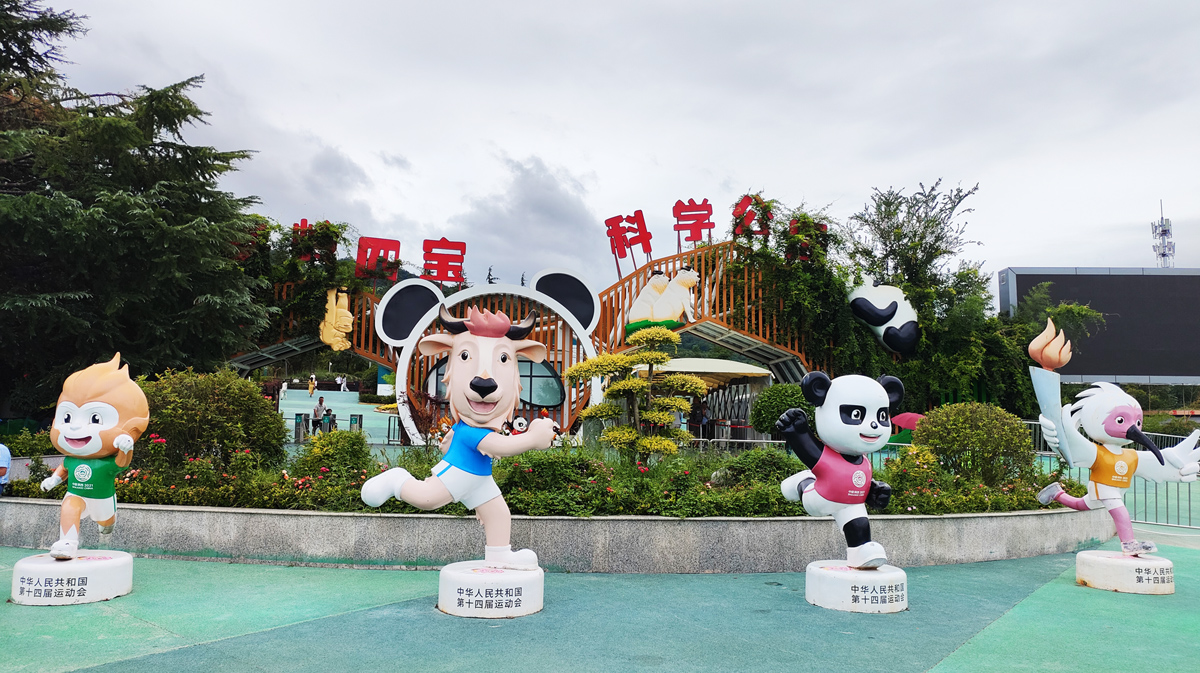
Qinling Four Rare Animals Science Park
Qinling Four Treasures Science Park is located to the west of Louguantai in Zhouzhi County, Xi’an. It is an important window to showcase the achievements of ecological civilization construction in Shaanxi Province, the biodiversity of Qinling Mountains, and the achievements of wildlife protection in Shaanxi Province. The park has promoted the Qinling giant panda cultural brand and become a new highlight of Shaanxi’s cultural tourism industry.
-
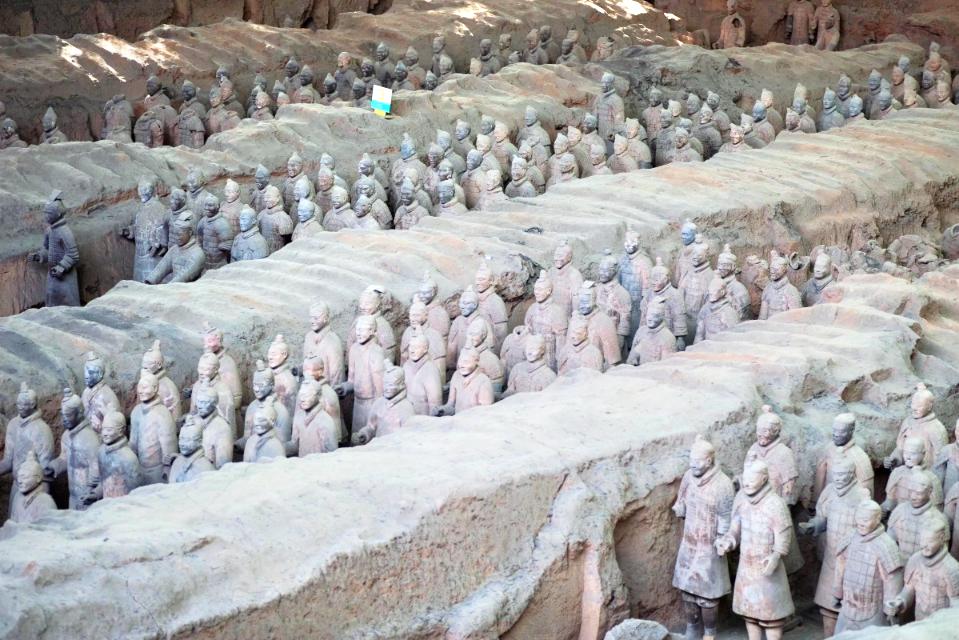
Terra-cotta Warriors Pit No.1
The pit of terracotta warriors and horses is located in the south of Xiyang Village, 1.5 kilometers east of the Mausoleum of Qin Shihuang. Three pits have been discovered, which are respectively compiled as No. 1, No. 2 and No. 3 Terracotta Warriors and Horses Pit. The three figurine pits cover an area of more than 20,000 square meters, and there are nearly 8,000 pottery figurines and horses that are similar in size to real people and real horses. There are different arms such as chariots, cavalry and infantry, arranged in an orderly manner. The terracotta figurines have different images and vivid expressions. They are a pearl in the history of ancient Chinese sculpture art and are known as “the eighth wonder of the world” and “one of the great discoveries in the archaeological history of the 20th century”. In March 1974, farmers in Xiyang Village, Lintong District accidentally discovered some fragments of pottery figurines while digging a well. After more than a year of exploration and trial excavation by archaeologists, it was confirmed that it was a large-scale terracotta warrior pit, that is, the No. 1 terracotta warrior pit. Pit No. 1 is 230 meters long from east to west, 62 meters wide from north to south, 4.5 to 6.5 meters deep from the current surface, and covers an area of 14,260 square meters. According to the calculation of the arrangement density of the unearthed pottery figurines and horses, about 6,000 pottery figurines, pottery horses and a large number of bronze weapons are buried in Pit No. 1.
-

Qujiang Polar Ocean Park
Come to Qujiang Polar Ocean Park to watch the endearing penguins, polar bears, and dolphin shows. Inside the park’s Aquarium you can enjoy watching the beautiful tropical fish, the alligator show, or the dugong show. The seafloor tunnel is the place from which to appreciate the marine organisms: you can wander around like you’re on the seabed. The park’s Polar Museum has two floors. On the first floor you can see way of life of animals underwater; on the second, you can observe animals that live on the land. Animals such as penguins, seals, and polar bears both swim in the water and come out to play on the land.
-
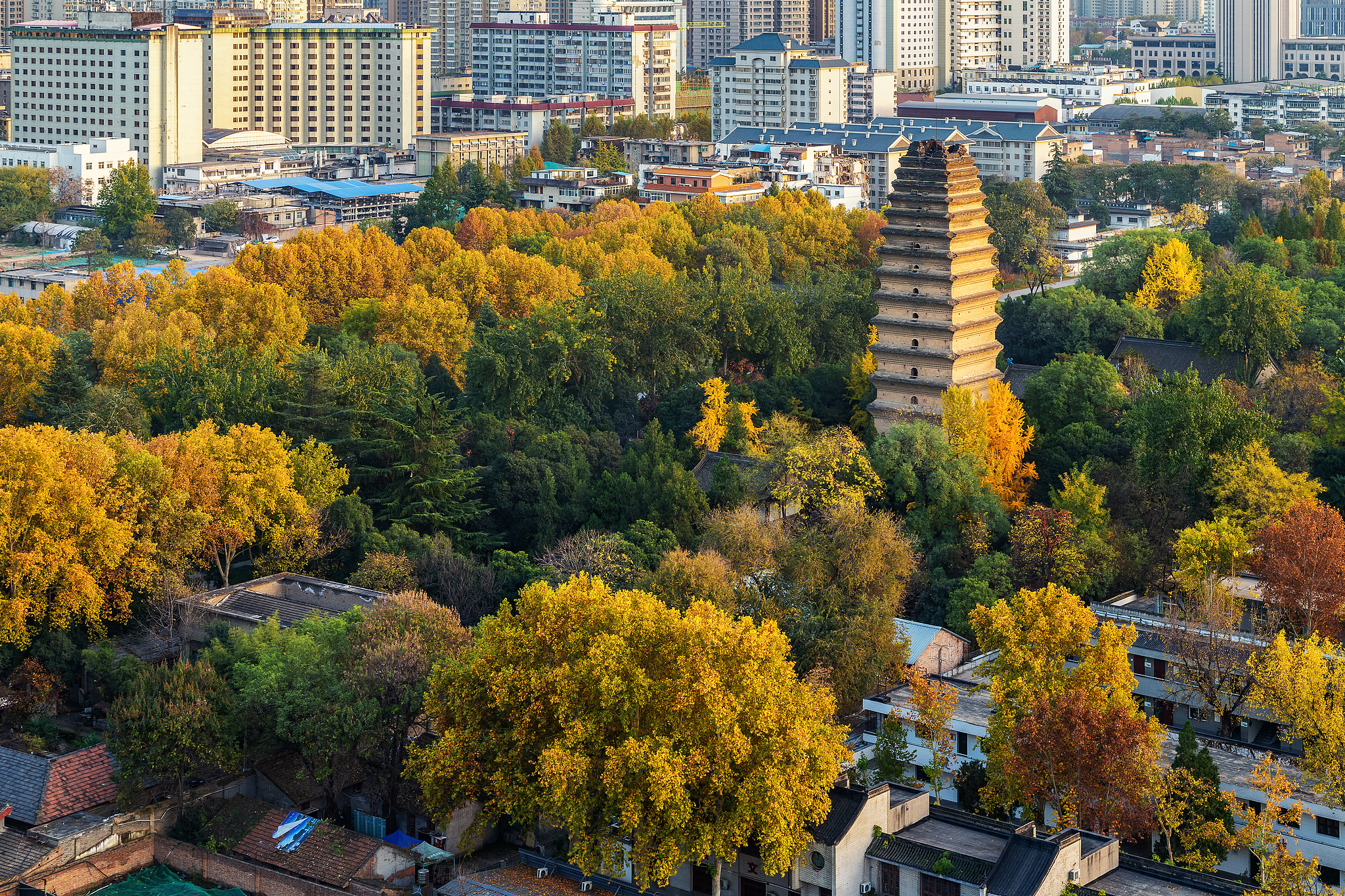
Small Wild Goose Pagoda Heritage Park
The site of Jianfu Temple within the Small Wild Goose Pagoda Heritage Park forms the core component and outdoor area of Xi’an Museum. It earned its name because its pagoda shape resembles the Giant Wild Goose Pagoda but is smaller. Compared to the bustle of the Giant Wild Goose Pagoda, this place offers much more tranquility. At the base of the pagoda, exquisite stone carvings from various dynasties are displayed outdoors, including Buddhist statues, stone lions, stone horses, and hitching posts—a must-see for visitors who appreciate folk artifacts. This multi-eaved brick pagoda originally had 15 stories but now stands with 13, reaching about 43.4 meters in height. With its elegant and slender silhouette and smooth contour lines, it is a classic example of Tang Dynasty square multi-eaved pagodas. As one of Xi’an’s important symbols of its ancient capital heritage, it holds the prestigious title of “Morning Bell at the Wild Goose Pagoda,” one of the “Eight Scenic Wonders of Guanzhong.” Jianfu Temple was originally built in 684 AD during the first year of Emperor Ruizong’s reign in the Tang Dynasty, initially dedicated to honoring Emperor Gaozong. Later, between 707–710 AD during Emperor Zhongzong’s reign, a pagoda was constructed within the temple to house Buddhist scriptures and statues brought back from India by the eminent monk Yijing.This is the tower named for its distinctive shape.Therefore, it is inseparable from the Jianfu Temple and serves as a physical witness to the temple’s former glory and a landmark structure. After enduring the vicissitudes of time, most of the Jianfu Temple’s halls and buildings no longer exist.But thisPrecious Tang Dynasty architectural relics have been preserved to this day.
-
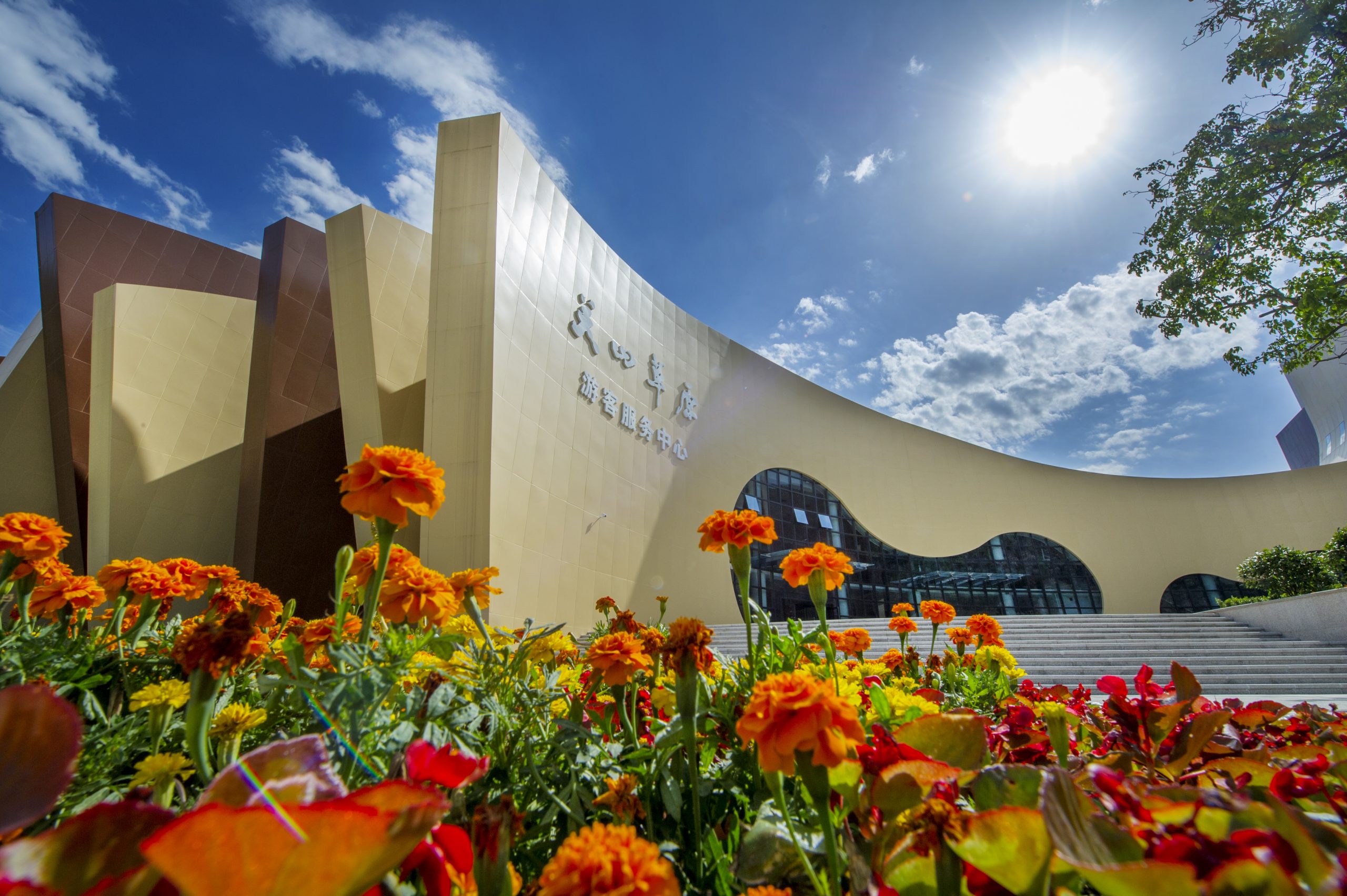
Guanshan Grasslands
The Guanshan Grasslands are located in Long County near Baoji City. The area is known for its beautiful alpine landscape with pristine forests, meadows, rivers, mountains, and valleys. The famous Han dynasty military leaders Wei Qing and Huo Qubing passed through here on their way to launch a campaign against the Xiongnu nomadic tribes.
-
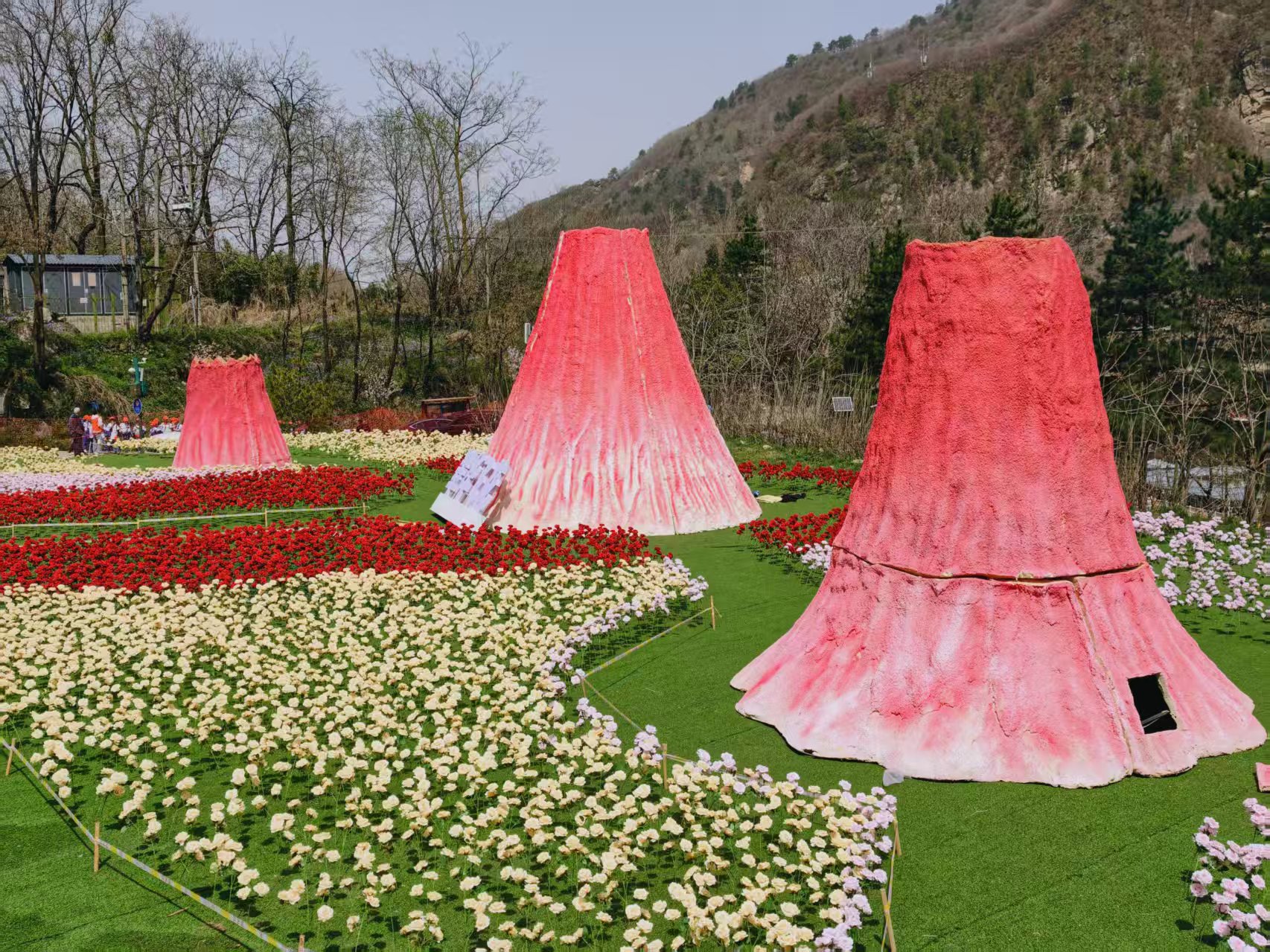
Cuihua Mountain·Qinling Zhongnanshan Unesco Global Geopark
Cuihua Mountain is located in the northern part of the Qinling mountain range, in the south of Xi’an. Here you can see steep cliffs and sharp peaks, boulders and caves, barrier lakes and other natural landscapes formed by landslides, hence it is known as the natural museum of landslides. Cuihua Mountain is made up of three scenic areas, Bishan Lake area, Heaven Lake area and Ruins of landslide area. Many successive generations of scholars have left behind multiple stone carvings.
-
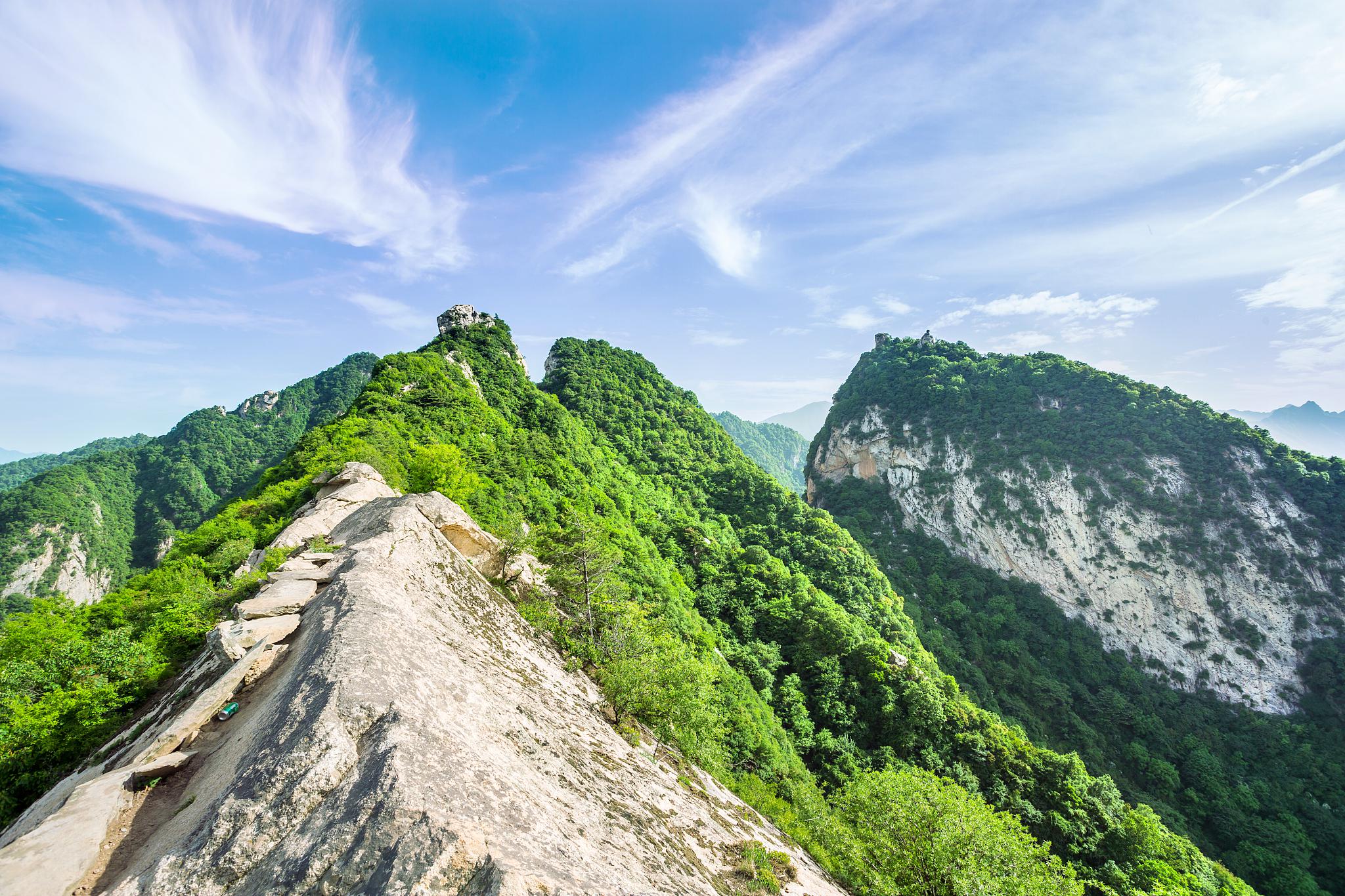
Zhongnan Mountain
Zhongnan Mountain belongs to a section of the Qinling Mountains, from Mei County in Baoji City to Lantian County in Xi’an City in the east. It consists of scenic spots such as Nanwutai, Cuihuashan and Louguantai. Zhongnanshan is the main truth of Taoism. The people who have read Mr. Jin Yong’s martial arts novels must remember the phrase “The end of the Nanshan Mountain, the tomb of the dead, the gods and heroes, and the extinction of the rivers and lakes”. Because of this, Zhongnanshan is even more mysterious. Many martial arts fans are also curious about it. They want to find the tomb of the dead and the Chongyang Palace in the book.
-
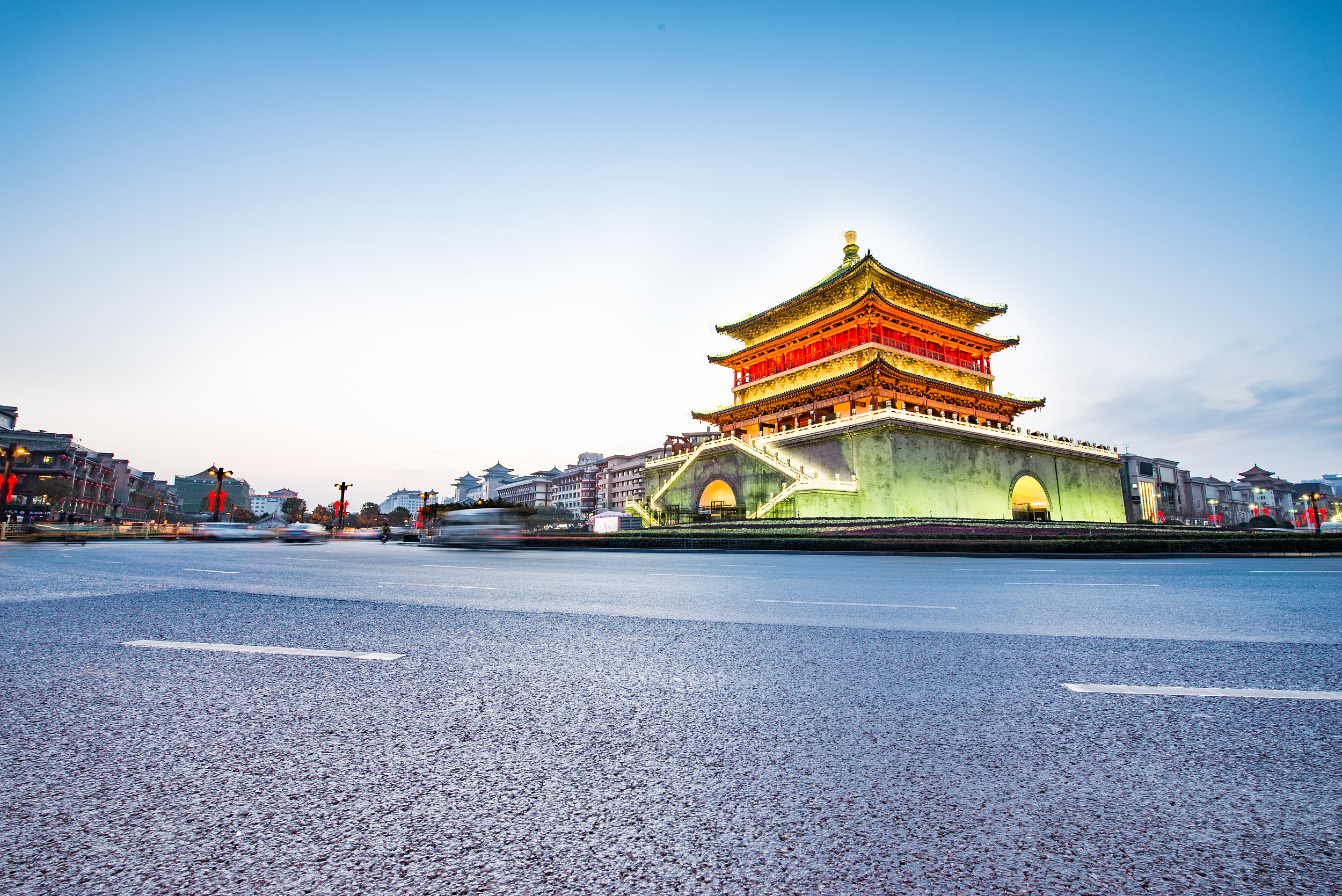
Bell Tower and Drum Tower Square
The Bell Tower and Drum Tower Square is located at the intersection of East, West, South and North Avenue. According to research, this was once the site of Shangshusheng (Department of State Affairs) during the Tang Dynasty. On the north side of the square, there are a number of prestigious and long-established shops; and under the square is the Century Golden Flower Mall. In addition, there is a musical fountain built on the Bell Tower.