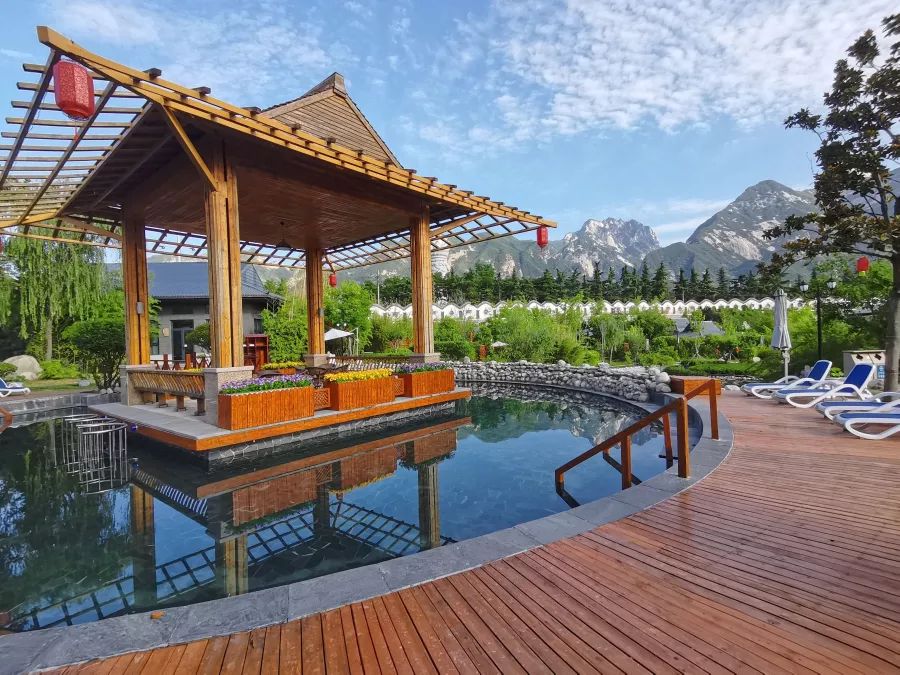
Shaanxi Dijian Nanshan (Huashan) Hot Spring is located in the national5ALevel Attraction——At the foot of Huashan Mountain, it is connected to Huayin City Huayue South Road in the east, Lianhuo Expressway in the north, and Huashan Ecological Plaza in the south. It has beautiful natural scenery, wide regional vision, and convenient road traffic. The hot spring is located at the foot of Huashan Mountain, on the north side of the tourist center, and only 100 meters away from Huashan High-speed Railway North Station.10The 800-li Qinchuan Plain forms a natural summer shelter, providing a unique sense of coolness that is not found anywhere else. In the evening, the mountain breeze blows, accompanied by the chirping of birds and insects. Wherever you look up, you can see the starry sky. The bartender Complimentary a glass of“rainbow”I prefer to call it“A Midsummer Night’s Dream”.set up28There are garden-style open-air natural hot spring pools, and the hot spring water comes from about1900rice, rich in minerals. To the south of the hotel, under the mountain view is2.9Ten thousand square meters of natural lake view. The outdoor hot spring area uses a large number of landscape plants to create an open-air hot spring pool that walks through the natural garden. The garden-style landscape is evergreen all year round and has flowers in three seasons. Flowers, fruit trees, original landscape stones, streams, waterfalls and hot spring water, Baolian Lantern sculptures, and Huashan Mountain range form a layered near, medium and far view, which is rich and natural, interesting and vivid.
归档: Attractions
-
Qin Xianyang Palace Site Museum
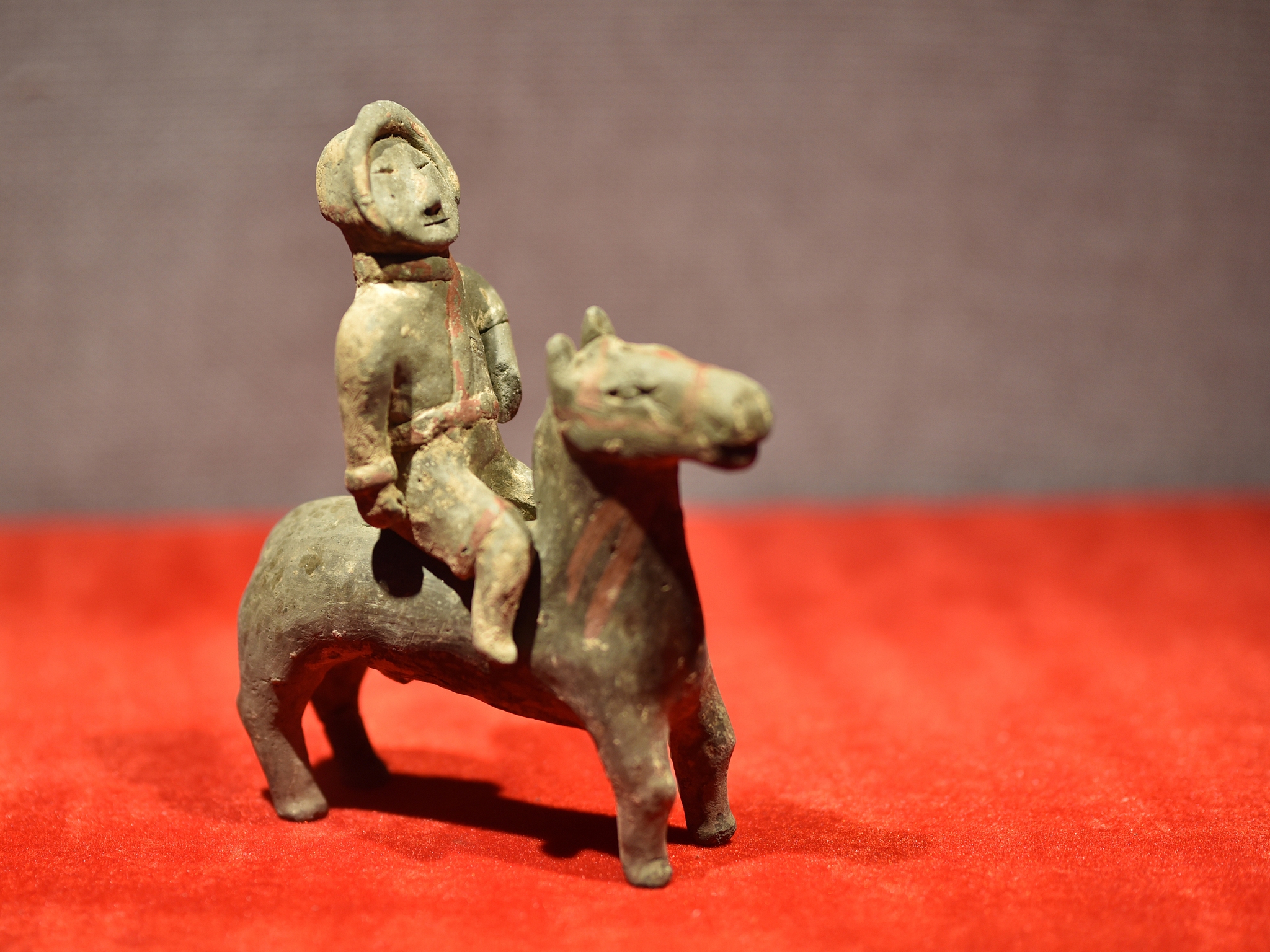
Qin Xianyang Palace Site Museum is located in the north of Niuyang Village, Yaodian Town, Weicheng District, Xianyang City, 13 kilometers away from Xianyang City. It is a cultural relics protection unit. The Qin Xianyang Palace Site Museum is a comprehensive site museum composed of cultural relic sites and historical sites. The Qin Xianyang Palace Ruins Museum is divided into three exhibition rooms: the first exhibition room mainly displays the sand table model of Qin Xianyang City, which concentrates on reflecting the magnificent scene of palaces, cities and gardens scattered around Xianyang and Guanzhong in the Qin Dynasty. The second exhibition room mainly introduces the archaeological excavation results of the Qin Xianyang city site, and displays some precious cultural relics from the palace site. The third Chen Daoshi mainly represents the sand table for the protection regulations of the Qin Xianyang Palace site.
-
Dingbian Salt Lake Scenic Area
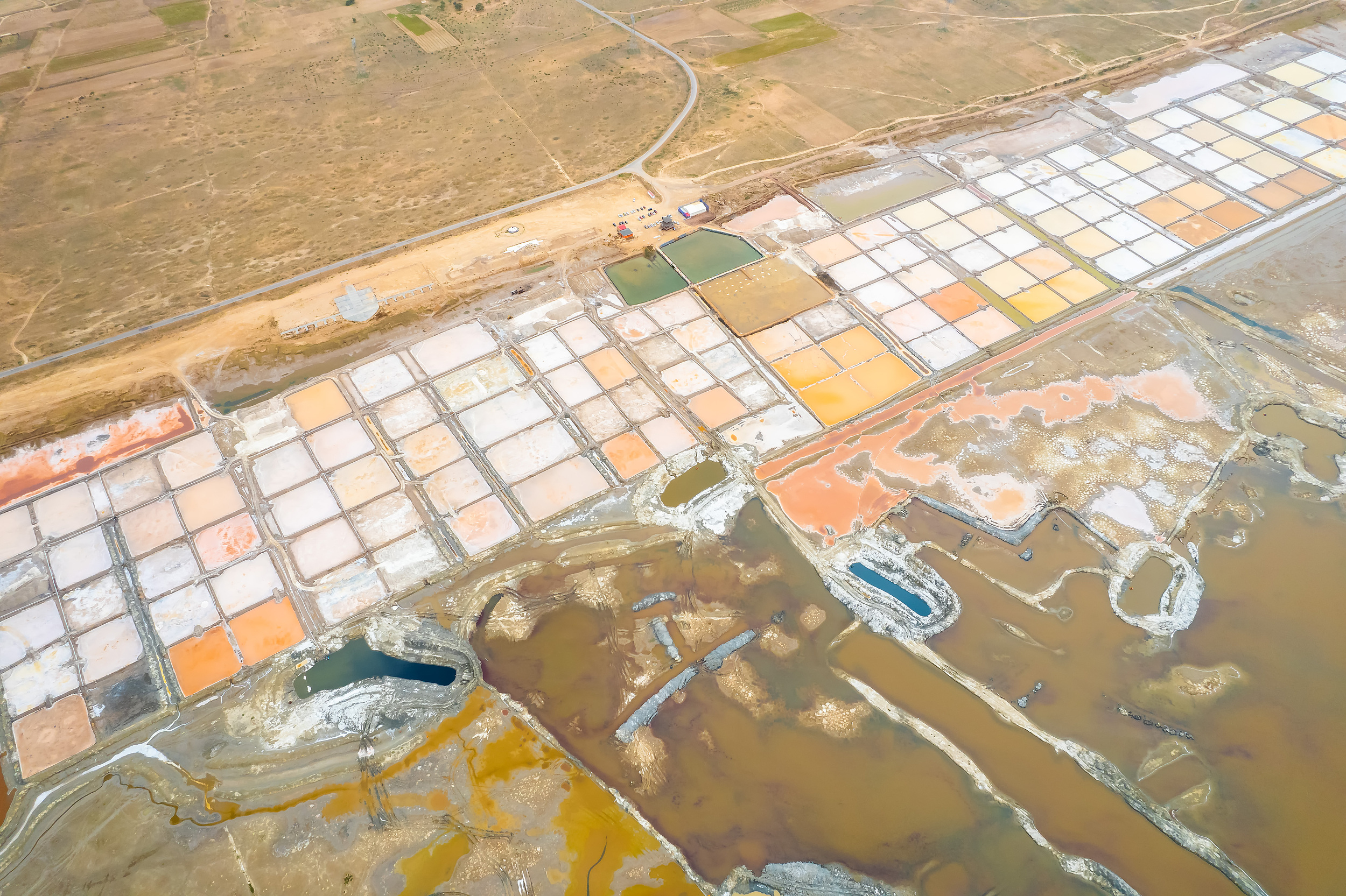
Dingbian Salt Lake Scenic Area is located in Dingbian County in the northwest of Shaanxi Province. It is the only lake salt producing area in Shaanxi Province.
-
Qujiang Flying Theater
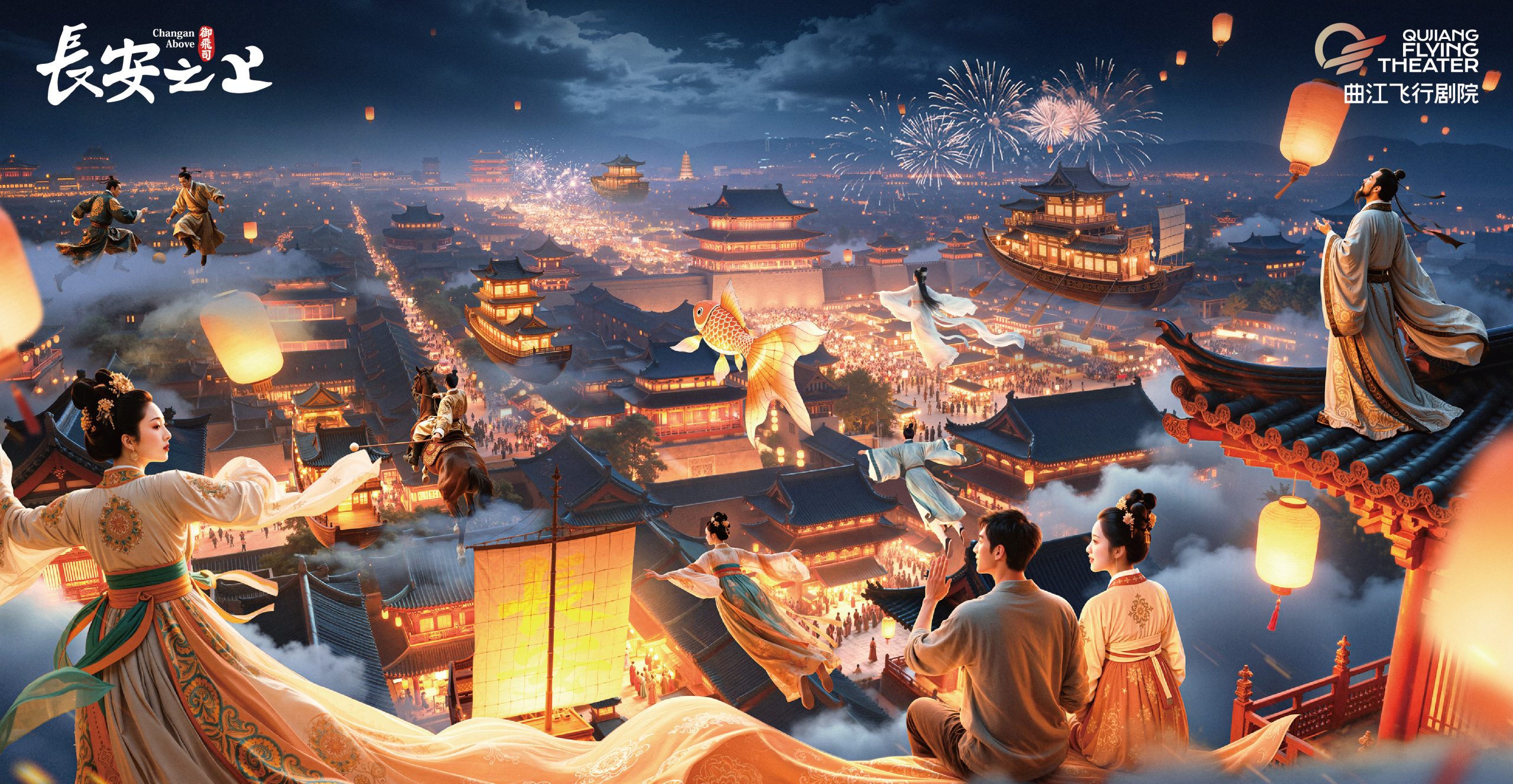
The Qujiang Flying Theater is a unique performance venue that combines the concept of flight with stage art. Boldly utilizing modern technology, it creates an immersive audiovisual environment, offering audiences a novel viewing experience.Here, you have the opportunity to enjoy various performances themed around “flight” or “the sky.” The shows may combine aerial stunts, panoramic screens, and multidimensional sound and light effects, creating an immersive and dynamic visual experience.For audiences seeking an alternative to traditional stage performances, the Qujiang Flying Theater offers an imaginative option. It blurs the boundaries of the stage, guiding viewers into an artistic space full of possibilities where they can experience the unique charm of art combined with technology.
-
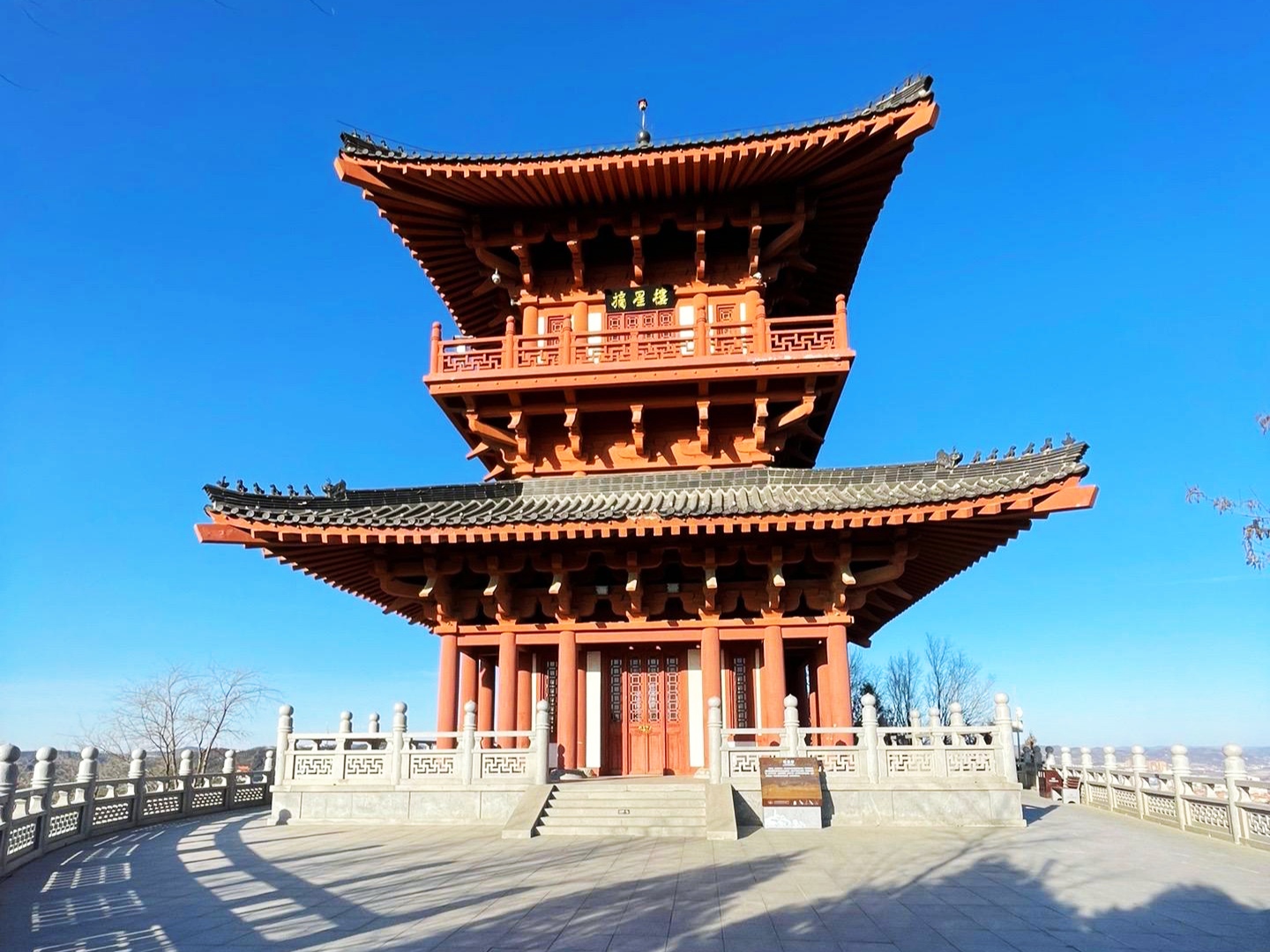
Qimin Mountain
Originally known as Wangkoutai, Zhaixing Tower was built by the renowned Northern Song general Fan Zhongyan during his garrison in Yanzhou to observe enemy activity and direct the war against the Western Xia. Located at the peak of Pagoda Mountain, the nighttime stars appear so close that they seem within reach, hence the name Zhaixing Tower. The original tower was destroyed, but it was rebuilt on its original site in 1987. Standing atop it, one can enjoy a panoramic view of the Sanchuan region, a truly captivating experience.
-
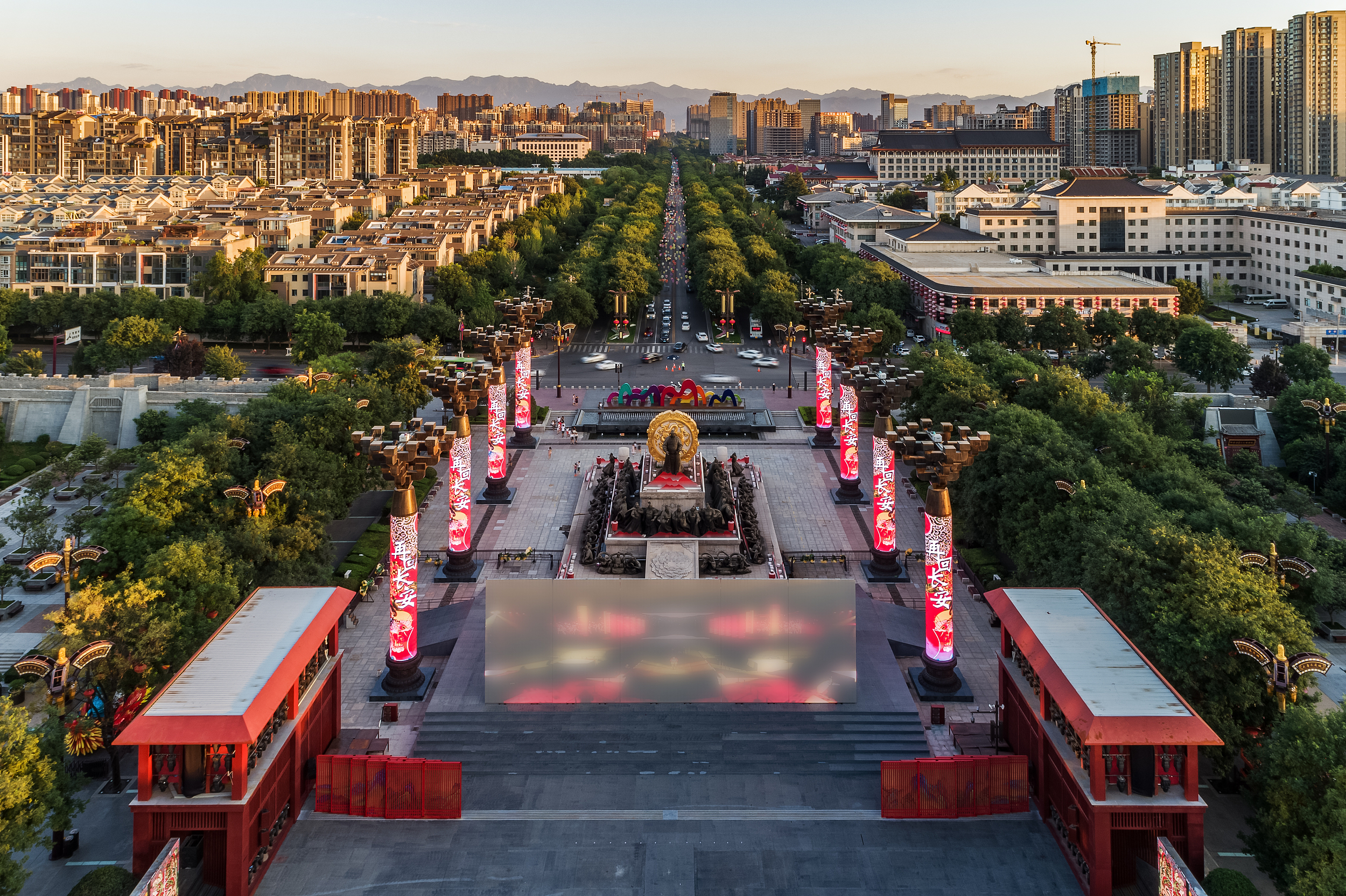
Kaiyuan Square
Kaiyuan Square, a key component of the Tang Dynasty City That Never Sleeps, is located on Yanta South Road in Xi’an, in front of the Qujiang Calligraphy and Painting Art Museum. Kaiyuan Square forms a north-south line with Big Wild Goose Pagoda North Square, Big Wild Goose Pagoda, Xuanzang Square, and the Tang Dynasty Figure Sculpture Gallery, forming a tightly connected north-south connection.Kaiyuan Square, named after the reign of Emperor Xuanzong of Tang, is historically known as the “Kaiyuan Prosperity,” a period widely recognized as China’s golden age. The “Zizhi Tongjian” records that during this period, “mountains and ravines abounded, plows and hoes were full, wine and food abounded, prices were low, commerce flourished, roads were smooth, and travel was safe.” Kaiyuan Square uses sculptures and text to showcase and explain the Kaiyuan Prosperity’s history, including science, culture, and foreign exchange.Unlike the gentler Xuanzang Square and the more freehand Zhenguan Square, Kaiyuan Square exudes a rich, celebratory atmosphere. The square boasts approximately 1,300 square meters of green space and features water features and fountains. In the center of the square, there is a sculpture with the theme of the Prosperous Kaiyuan Era and eight LED-lit dragon pillars, which fully demonstrate the grand celebration scene of the prosperous and splendor of the heyday of the Tang Dynasty, with the emperor and the people enjoying themselves together, and singing and dancing. It is a beautiful presence in the central landscape belt of the Tang Dynasty City That Never Sleeps.
-
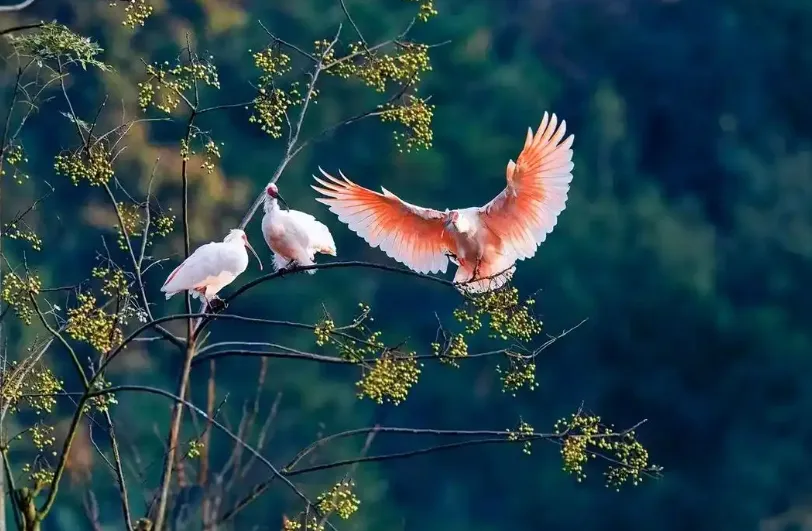
Crested Ibis Ecological Park
Yang CountyThe Crested Ibis Ecological Park is a Crested Ibis rescue, breeding and ecotourism Attraction integrating protection, scientific research, teaching, publicity and education. The park has more than 10,000 square meters of Crested Ibis breeding cages and large net cages for wild domestication, as well as a Crested Ibis Education Hall with complete functions.Visitors can experience and listen to the little-known and touching stories that happened during the process of the red-crowned crane’s re-protection.
-
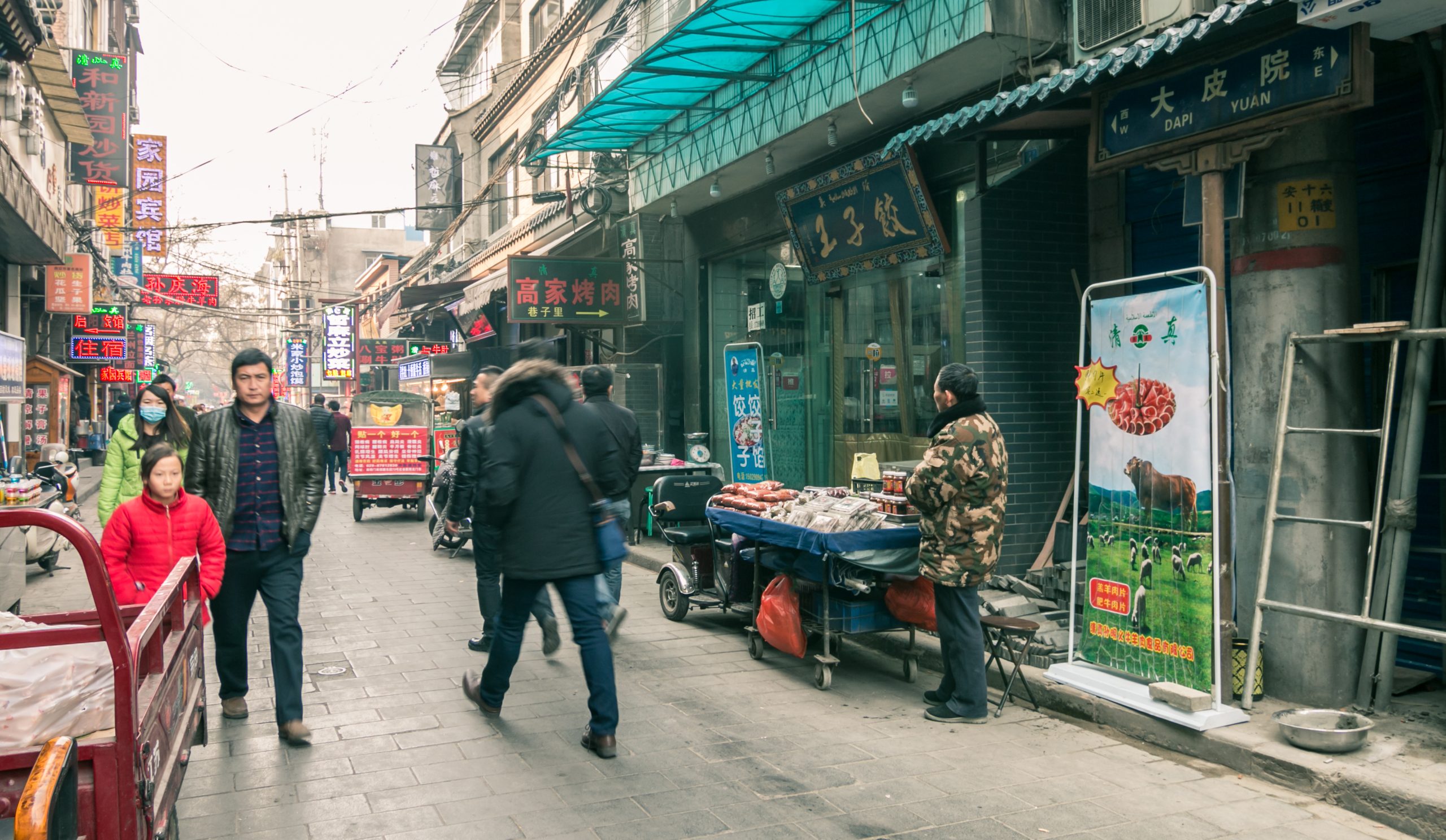
Dapiyuan
Dapiyuan is part of Huimin Street. It is located at the northern end of Beiyuanmen and the southern end of the Maixian Street. The western section is connected to the North Guangji Street and runs parallel to Xiyangshi in the south. Dapiyuan was built in the Ming Dynasty, and was named in Chinese after the silk business. It is bustling like a market, with many food and snack shops on the street. There are many kinds of foods such as mutton and steamed bread soup, hot pepper soup and oxtail casserole. There is also a mosque, the Great Mosque, built in the Ming Dynasty (1411). Due to years of disrepair, the North and South Halls and the Great Hall have collapsed. The current stone engraving fence, Paihang, Manla Building and Huguo Pavilion were rebuilt in 1985.
-
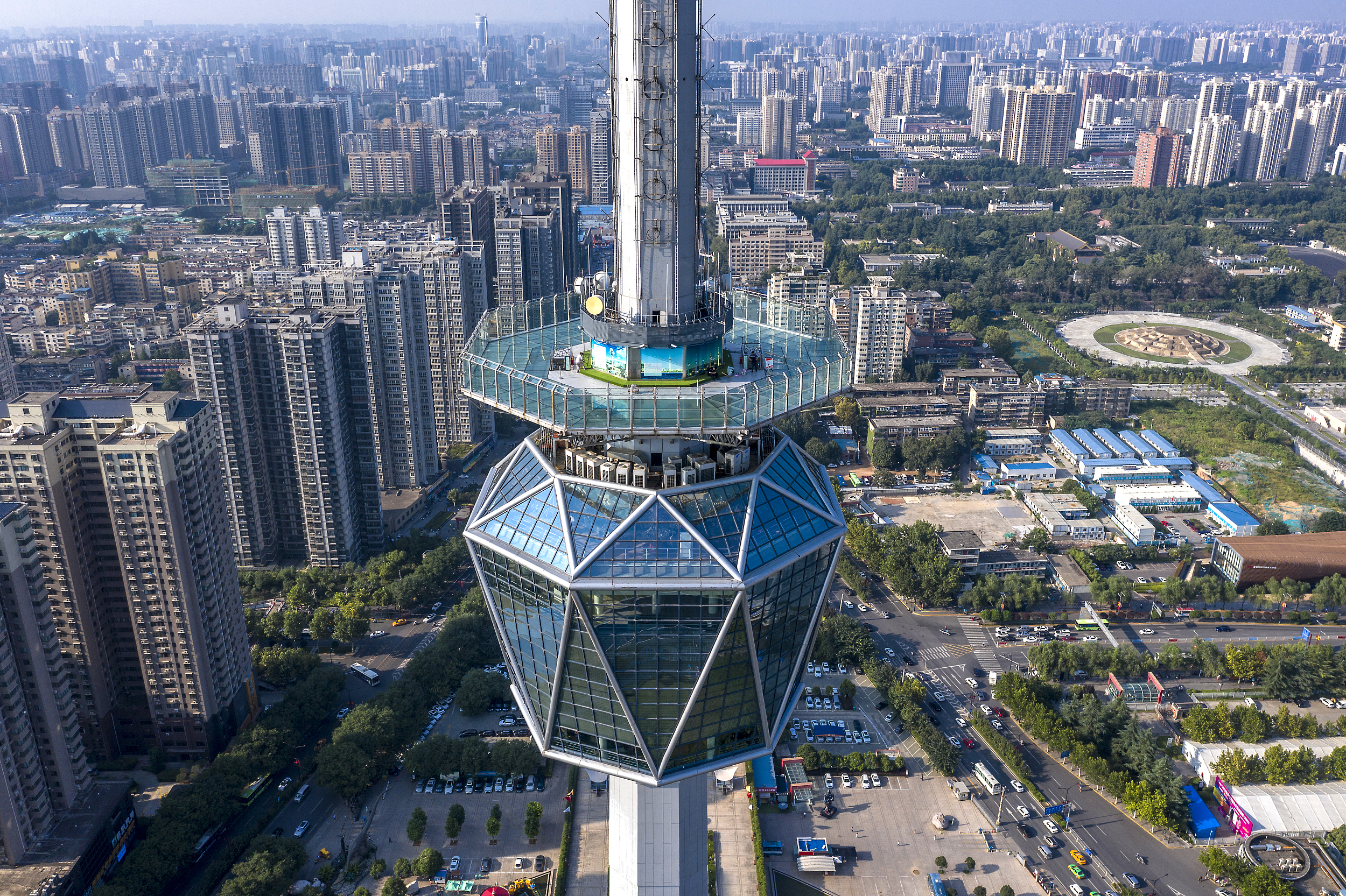
Shaanxi Radio and Television Tower
“Western Light” Shaanxi Radio and Television Tower is located at the south end of Chang’an South Road, the south end of Zhongmen’s Zhonglou and South Gate’s central axis. It faces the triangle of the Big and Small Wild Goose Pagoda and is adjacent to the Xi’an Qujiang International Convention and Exhibition Center. The whole tower is octagonal, the tower is like a palace lantern, and there is an octagonal tower on the tower (with a computer room and a high-altitude viewing hall, a rotating hall, etc.), hanging like a palace lantern.
-
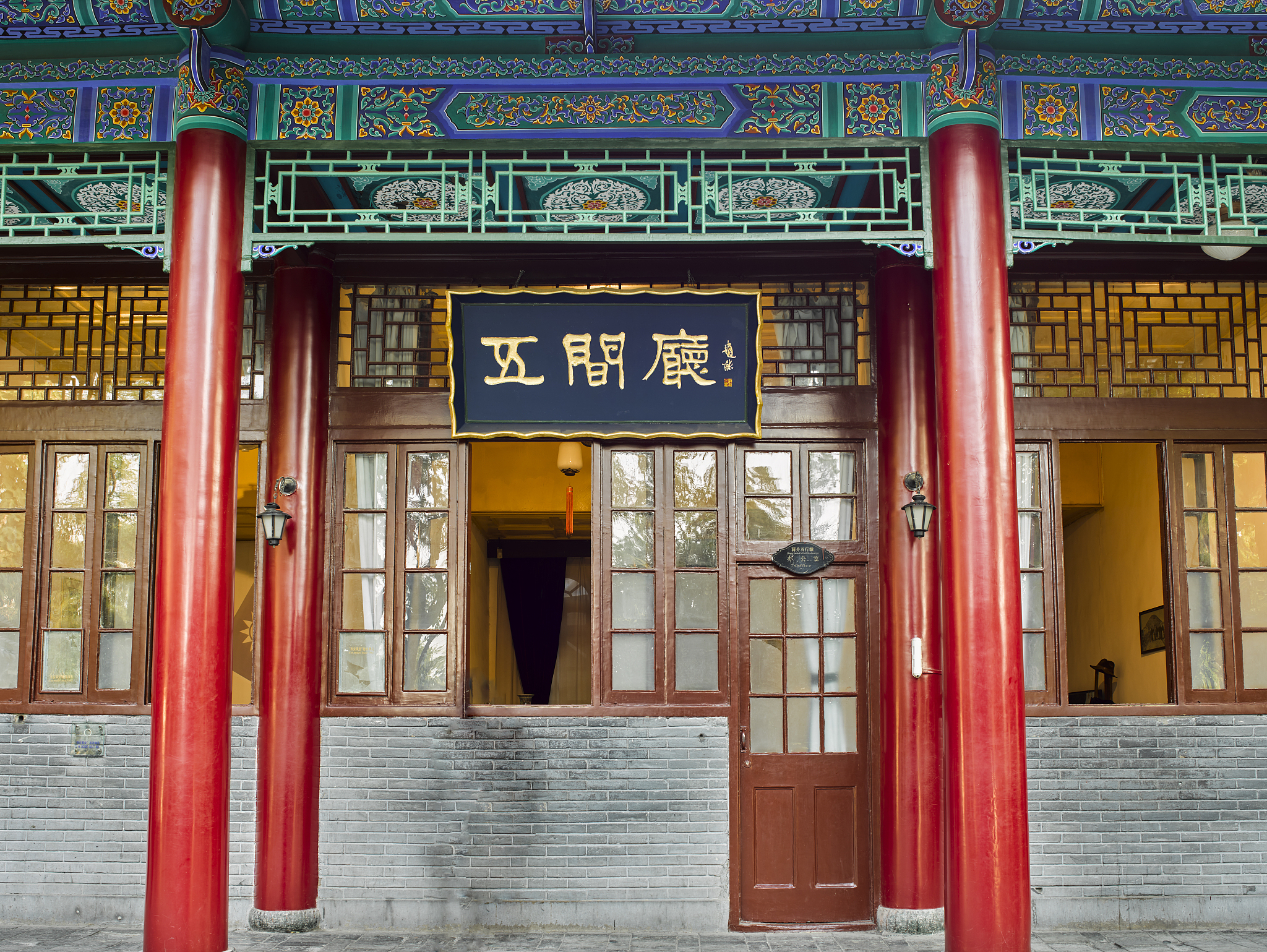
Five-Hall Scenic Spot
Wujian Hall is located in Huaqing Pool Scenic Area, Lintong, Xi’an. It was built in the late Qing Dynasty. It is a brick and wood structure hall. It is adjacent to Mount Li in the south and the lotus pond in the north. The courtyard is flat and the trees are lush. It is named Wujian Hall because it is connected by five single rooms.The glass windows and walls of Wujian Hall still retain the bullet marks from the fierce battle during the military remonstration. The tables, chairs, beds, sofas, tea sets, stoves, carpets, telephones, etc. used in the offices of each room are all reproduced and placed in their original appearance. The three halls next to Wujian Hall were where the guards and secretaries who followed Chiang lived at that time. There are also many bullet marks here.