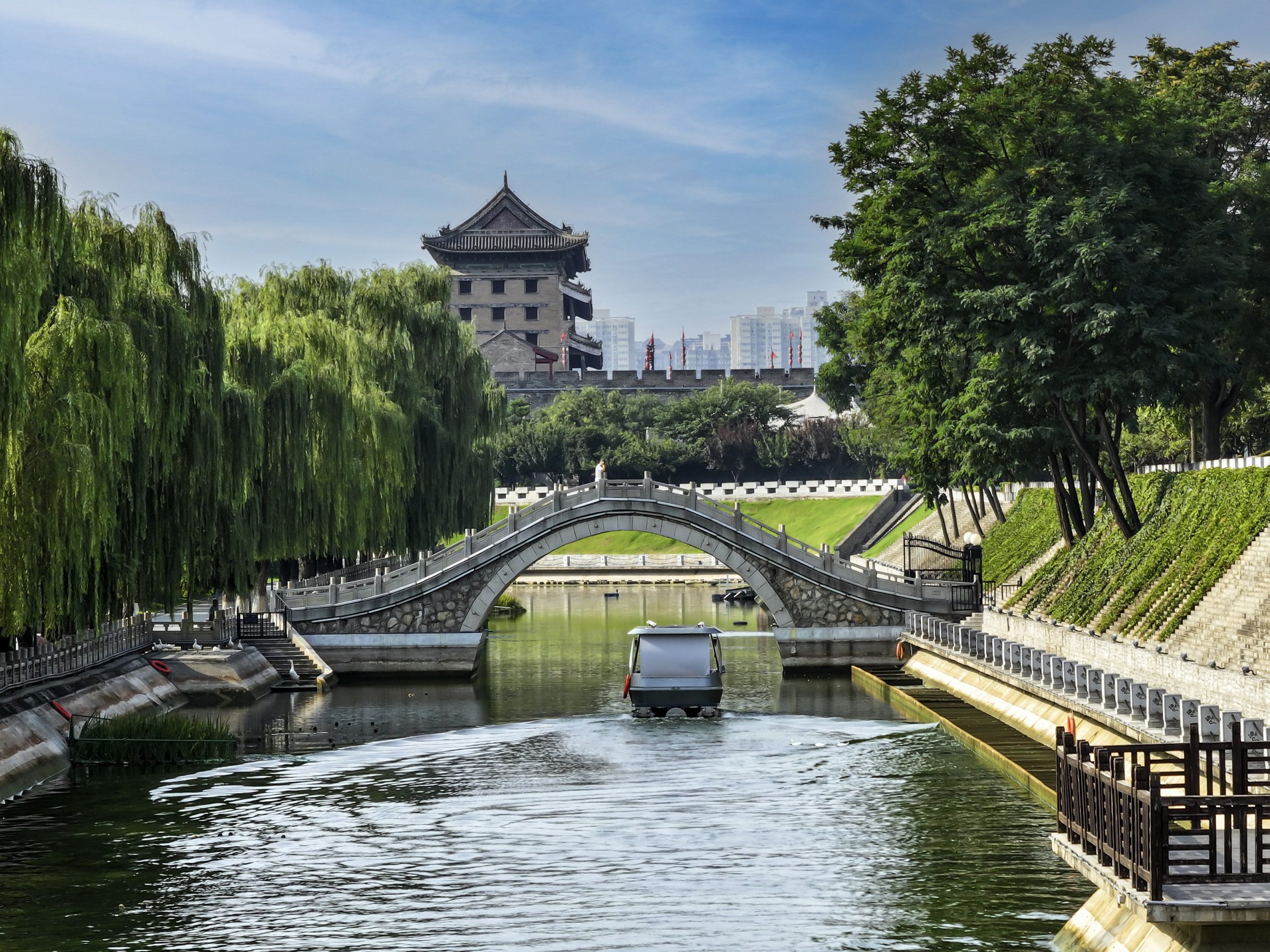
The Xi’an City Wall Moat Smart Sightseeing Boat is purely electric-driven, has zero emissions and is pollution-free. The boat can accommodate 8-10 people and can cruise autonomously according to a pre-planned route. During the journey, it uses millimeter-wave radar and lidar to monitor and perceive the surrounding 360-degree environment and waters. It not only travels safely and smoothly, but can also autonomously avoid obstacles. After the tour, the boat can return to the dock and dock on its own.
归档: Attractions
-
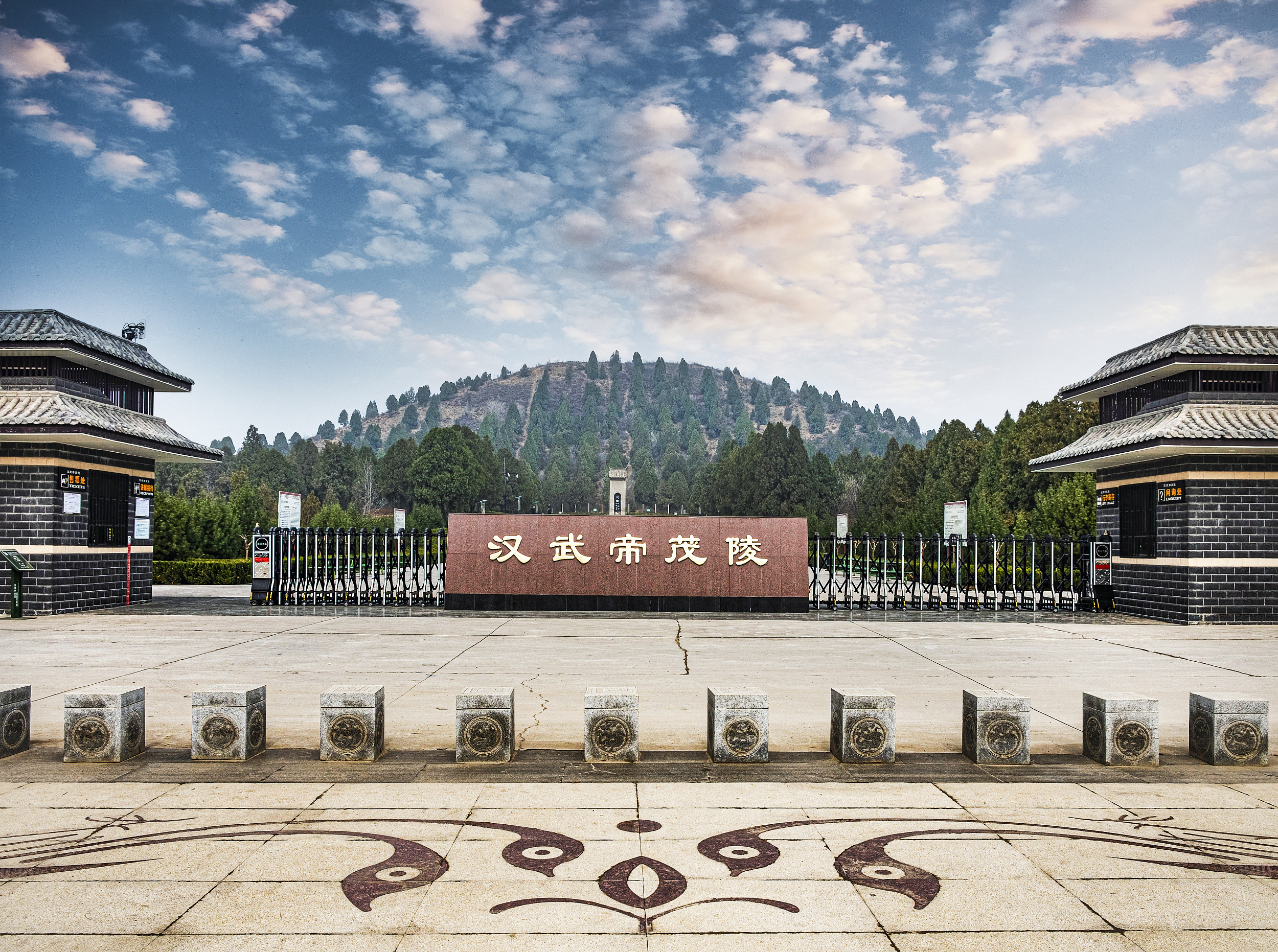
Maoling Mausoleum of Emperor Wu of Western Han
Maoling Mausoleum of Emperor Wu of Western Han is a historic imperial tomb attraction located in Xianyang, Shaanxi Province. As one of the most grand and well-preserved representatives of ancient Chinese imperial tombs, it serves as the final resting place of Emperor Wu of Han, Liu Che. This significant site not only provides crucial insights into Han Dynasty history but also offers visitors a window into the glorious culture of the Han era. Maoling Mausoleum of Emperor Wu of Western Han is renowned for its majestic tomb structure and abundant burial artifacts. Visitors can explore the tomb’s layout and learn about the burial customs and architectural styles of the Han Dynasty. The museum within the mausoleum displays numerous precious cultural relics, including gold and silver artifacts, pottery figurines, and stone carvings, which vividly recreate the social landscape and artistic achievements of the Han Dynasty. Through multimedia displays and interactive experiences, visitors can gain an in-depth understanding of Emperor Wu’s life and the political, economic, and cultural accomplishments of the Han Dynasty. Professional guided tour services help visitors better comprehend the historical stories behind the exhibits. Maoling Mausoleum of Emperor Wu of Western Han boasts seven “extremes”: First, its construction period was exceptionally long, spanning 53 years. Second, its scale was enormous, with over 400 identified burial pits discovered so far. Third, it contained an extraordinary number of burial objects—so many that by the time Emperor Wu was interred, the tomb could hold no more, as historical records state it was “unable to accommodate another item.” Fourth, its construction costs were astronomical, consuming one-third of the annual tax revenue during Emperor Wu’s reign. Fifth, the mausoleum’s surrounding city was remarkably prosperous. Sixth, the burial complex was vast, with dozens of distinctive satellite tombs. Seventh, the main mausoleum structure itself was exceptionally grand, standing out among the eleven imperial tombs of the Western Han Dynasty. As noted by renowned historian Wu Bolun with wit: Maoling Mausoleum of Emperor Wu was essentially an “over-the-limit construction project” of its time. Moreover, the natural surroundings of Maoling Mausoleum of Emperor Wu of Western Han are equally enchanting, with tree-lined paths and a tranquil atmosphere offering visitors an ideal place to unwind. Whether you’re a history enthusiast, cultural researcher, or family traveler, the mausoleum provides every visitor with an unforgettable cultural exploration experience.
-
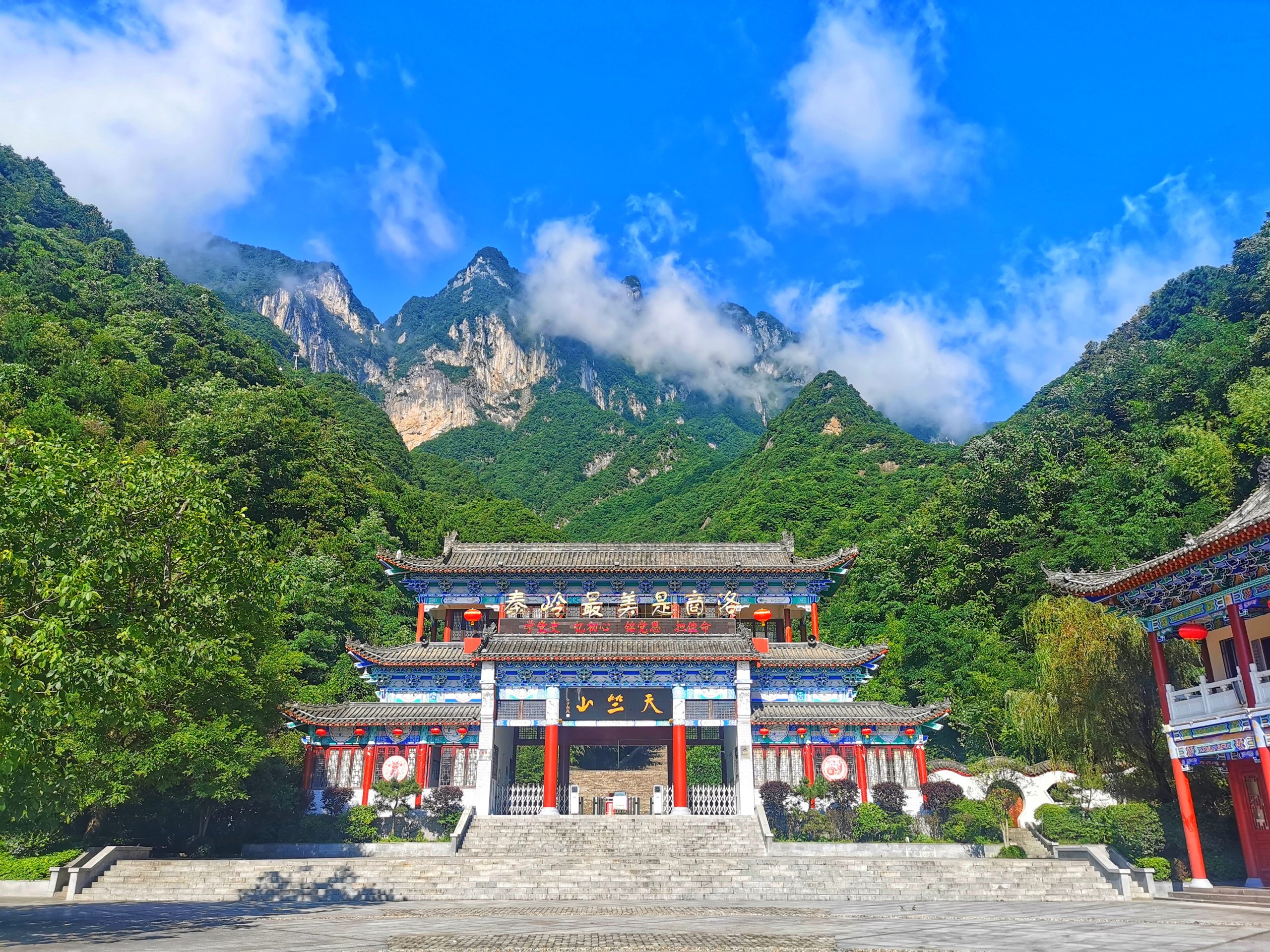
Qinling Tianzhu Mountain Ecological Culture Tourism Scenic Area
Shanyang County is located at the southern foot of the Qinling Mountains. It is bordered by Danfeng and Shangnan to the east, Zhen’an and Zhashui to the west, Yunxi of Hubei to the south, and Shangzhou to the north. Since ancient times, it has been an important channel “connecting Qin and Jin in the north and Wu and Chu in the south”. It is a major water and drought throat channel connecting the nine provinces of Shaanxi and Hubei.Tianzhu Mountain is located in the southeast of Shanyang County, 30 kilometers away from the county seat.Falcon RidgeFalcon Mountain is located in the middle of Falcon Mountain, with a total area of 42 square kilometers. Its main peak is 2,073.98 meters above sea level. It is the highest mountain in the Falcon Mountain System and a paradise on earth where the Qinling ecology and the long-standing religious culture are intertwined.Tianzhu Mountain has 7 peaks facing each other and 3 ridges. It is divided into four sections: the gate image area of Sengdaoguan, the comprehensive service area for tourists, the health resort area, and the forest sightseeing area. The walking tour line allows you to immerse yourself in the beauty of the Qinling ecology during the mountaineering process. The cable car can directly reach the core viewing area and tour the north line. After the tour, you can also visit Shao Yong’s enlightenment on the south line. If you choose to walk up and down the mountain, the total play time is about 4 to 6 hours. If you go up and down the mountain by cable car, the tour time is about 3 to 4 hours.Go up the mountain from Dongshan Gate, visit Baicao Valley, Tieqiao Forest, Musk Deer Valley, climb over Eighteen Bends, take a short rest at the Welcoming Pavilion, and after admiring the Thousand-foot Cliff, you can reach the upper station of the cable car and meet up with tourists taking the cable car.Going up from the upper station of the cable car, you will reach Xuantian Cave. Xuantian Cave is a man-made viewing tunnel. In the past, it was very difficult for people to climb Tianzhu Mountain. Until 2009, the 280-meter-long Xuantian Cave was opened, allowing tourists to save at least 2 hours of mountain walking.After exiting Xuantian Cave, the Fairy Island Yaotai of Tianzhu Mountain is not far ahead. Here is the Welcoming Immortal Pine Viewing Platform of Tianzhu Mountain. Qinling Mountains were called Nanshan Mountains before the Qin Dynasty, and were renamed Qinling Mountains after the establishment of the Qin State. People often say “May you be as blessed as the long-flowing water of the East China Sea, and as long-lived as the immortal pines of Nanshan Mountains”, which actually refers to the pine trees on the Qinling Mountains. The immortal pines of Tianzhu Mountain are scientifically known as “dragon blood trees”. They appeared in the Cretaceous dinosaur era and are known as living fossils among plants. They are listed as protected tree species by UNESCO.After seeing the Welcoming Pine, we can see the iconic landscape of Tianzhu Mountain, “Tianzhu Moxiao”. It is a huge naturally formed stone pillar, more than 300 meters high in the middle and more than 400 meters in circumference, shaped like a bamboo joint, with an ancient pine hanging upside down. This suddenly protruding giant granite, eroded by wind and frost, cracked and peeled off, was carved by nature into a giant Buddha finger that supports the sky. “Tianzhu Moxiao” has been known as one of the “Eight Scenic Spots of Fengyang” since the establishment of the county in the Western Jin Dynasty.Rest at Xindao Pavilion, pass by Tianzhu Lover, Shougui Cave, Niubi Cave, and Nanshe Teng, climb the Tongtian Cloud Ladder, and arrive at Nantianmen. Sing a song in the clouds at the Yunhai booth, walk through the Hongyun Corridor, and climb up Daobeiliang.Daobei Ridge is one of the iconic landscapes of Tianzhu Mountain. The entire ridge is like a knife cut, surrounded by abysses on three sides. Walking on the man-made plank road and looking to the side is terrifying.Lingyun Pavilion stands on Daobeiliang, facing the wind, proudly standing in the clouds, gazing at the clouds rising and falling, and the passage of time; below the pavilion, the peaks and valleys are deep, filled with clouds and mist, with twisted branches of green trees and hawks circling… This is also a very beautiful sunrise viewing point and cloud sea viewing point after rain in Tianzhu Mountain. Going up, we see the highest area of Tianzhu Mountain – Tianzhu Shengjing. Here is the highest landmark building in Tianzhu Mountain – Tianzhu Dading, with an altitude of 2073.98 meters, as well as the mountaintop wooden house built for forest protection, the Yunding Observation Tower and Yunding Square built after this upgrade, as well as the Lanyue Pavilion and Black Dragon Cave.Go west, here is the Tianzhu Mountain Buddhist and Taoist resort “Yungai Temple”, located at the highest peak of Tianzhu Mountain. Due to its high altitude, there are often fog and clouds covering the top all year round, so it is named Yungai Temple. Yungai Temple is the main place for external exchanges and gathering of Taoists and Taoist temples in Tianzhu Mountain. It is the office of Tianzhu Mountain Taoist Management Committee and Tianzhu Mountain Taoist Painting and Calligraphy Institute, and it is also one of the main palaces of the four Taoist temples in Tianzhu Mountain.Continuing westward from Yungai Temple, we will pass the Sleeping Buddha Pavilion, Shouyang Cave, and Xiunv Peak. The Chenglu Pan on Xiunv Peak is a 360-degree panoramic glass viewing platform.Continue down to Shuangfeng Temple, which is named after the “Xiunv Peak” and “Feishen Peak” on its south side. From Shuangfeng Temple, you can go to Shao Yong’s Enlightenment Line. This route takes about an hour to go back and forth, and you can experience the enlightenment journey of Shao Yong, a Neo-Confucianist in the Southern Song Dynasty. The sub-attractions you can see along this route include the Enlightenment Pavilion, the Observation Platform, the Stone Forest, the Wuji Cliff, and the Long Poetry Road.After finishing the above trip, return to the upper station and take the cable car down the mountain to the Tourist Service Center Square.
-
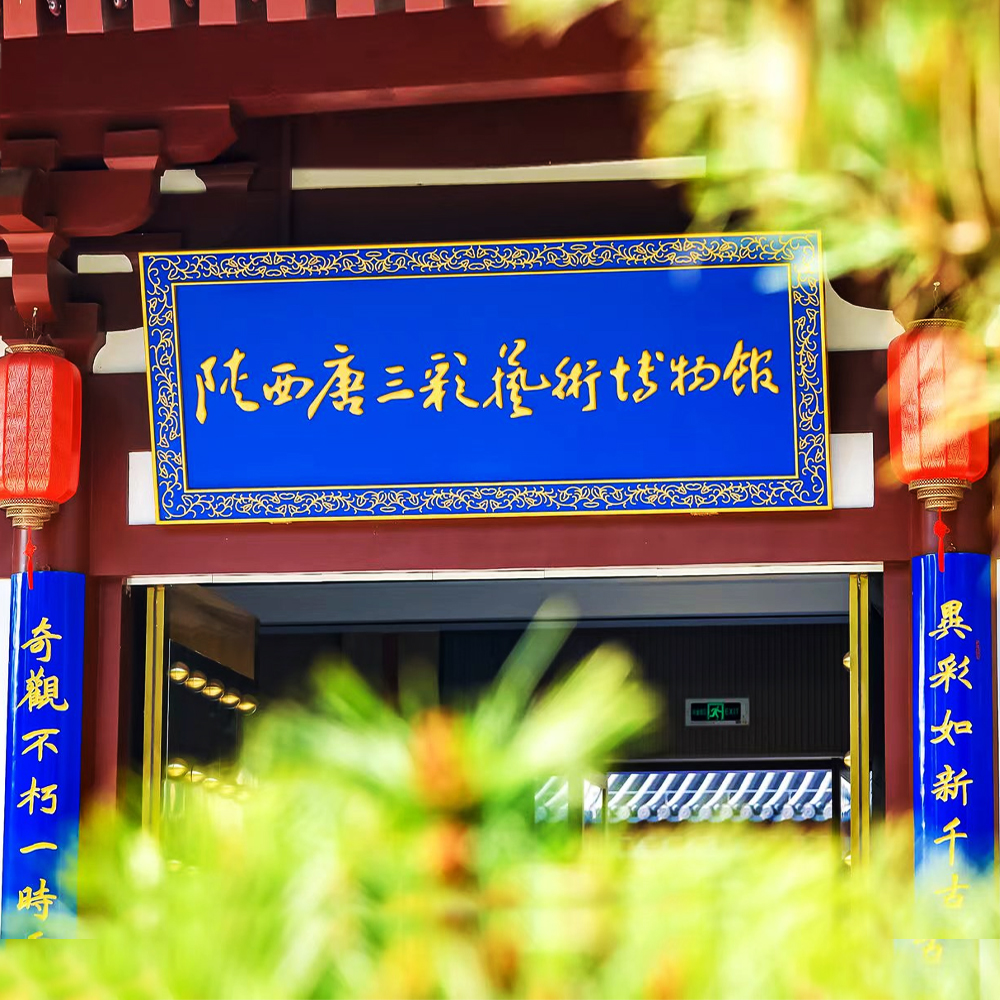
Shaanxi Tang Tricolor Pottery Art Museum
The Shaanxi Tang Tricolor Pottery Art Museum is a specialized museum dedicated to the collection, research, restoration, and exhibition of Tang tricolor pottery and painted pottery figurines. Located atInside the Nanxun Pavilion at Xingqing Palace ParkThe Shaanxi Tang Tricolor Pottery Art Museum covers a total construction area of 3,200 square meters with an exhibition space of 2,000 square meters. Currently, the museum houses over 3,600 Tang Dynasty artifacts, including more than 1,000 precious Tang tricolor pottery pieces, as well as over 2,000 painted pottery figurines, bronze mirrors, gold and silver artifacts from the Tang Dynasty. From its extensive collection, the museum has selected hundreds of exquisite artifacts for display. The permanent exhibition “Royal Gardens: Songs of Prosperity” presents…Xingqing PalaceThis thematic exhibition uses Tang tri-color pottery as its centerpiece to showcase the grandeur of Tang Dynasty court life. The museum halls employ innovative display techniques with exquisite layouts that vividly recreate the splendor of the High Tang era. Tang tricolor pottery is renowned worldwide for its vibrant colors and exquisite craftsmanship, reflecting the social landscape and cultural exchanges of the Tang Dynasty. Visitors can learn about the production techniques, artistic features, and significant role of Tang tricolor pottery in Tang society through the exhibits. In addition to static displays, the Shaanxi Tang Tricolor Pottery Art Museum regularly hosts art lectures and thematic exhibitions, offering visitors opportunities for in-depth learning and cultural exchange. The Shaanxi Tang Tricolor Pottery Art Museum is not just a museum showcasing Tang tricolor pottery art, but also a cultural space for exploring ancient art and experiencing cultural charm.
-
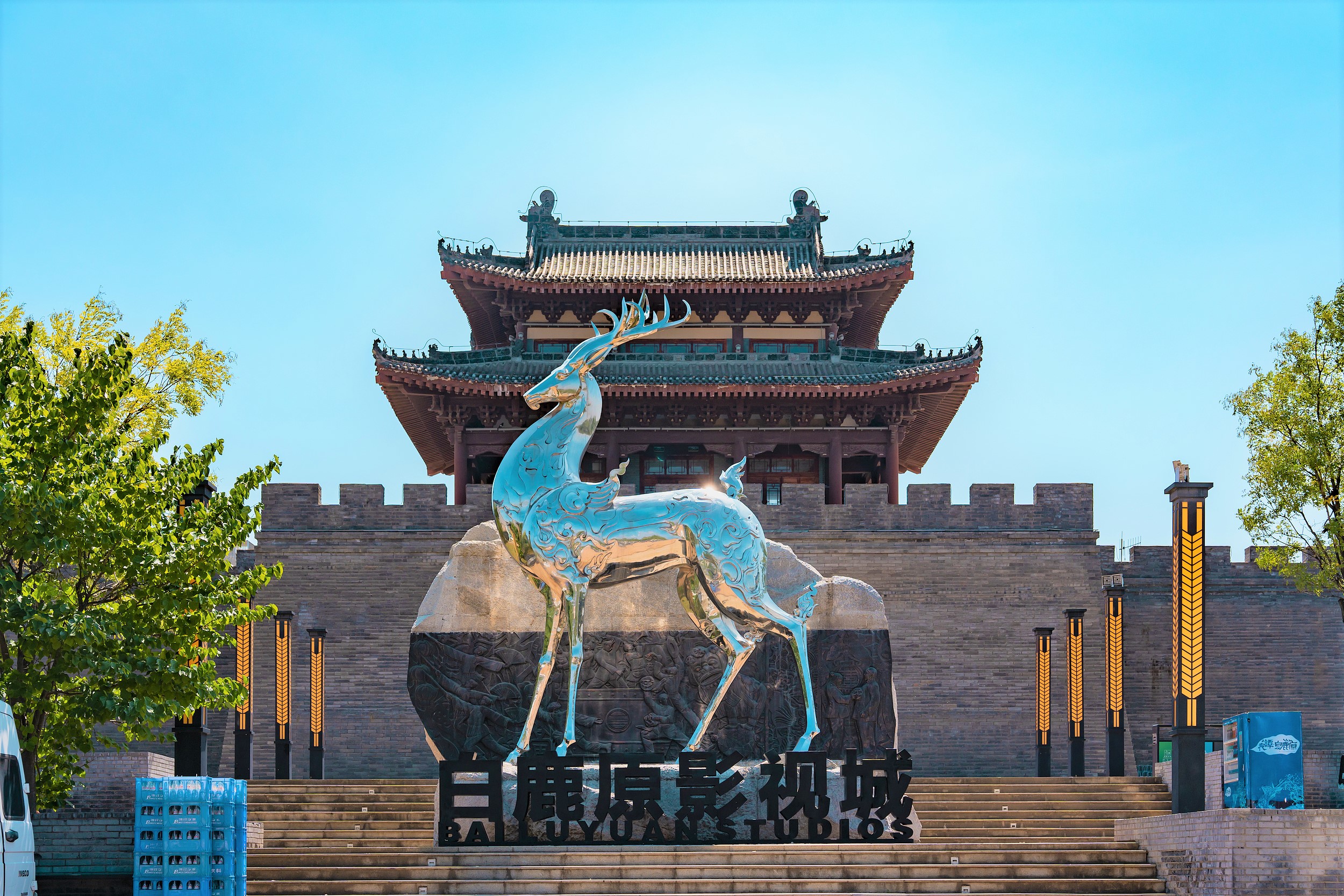
Bai Lu Yuan Studios
Bailuyuan Film and Television City is a large city built on the blueprint of the noval “Bailuyuan” (White Deer Plain) written by famous writer Chen Zhongshi. In Bailuyuan Film and Television City, visitors can learn about the authentic architecture, history and culture of Shaanxi. Visitors can also enjoy a variety of performances including “Two Tigers Keeping Changan” and “Guanzhong Earthquake”. In the City, many shooting sites of films and TV series were preserved to present a vivid demonstration of historical events happened in Shaanxi.
-
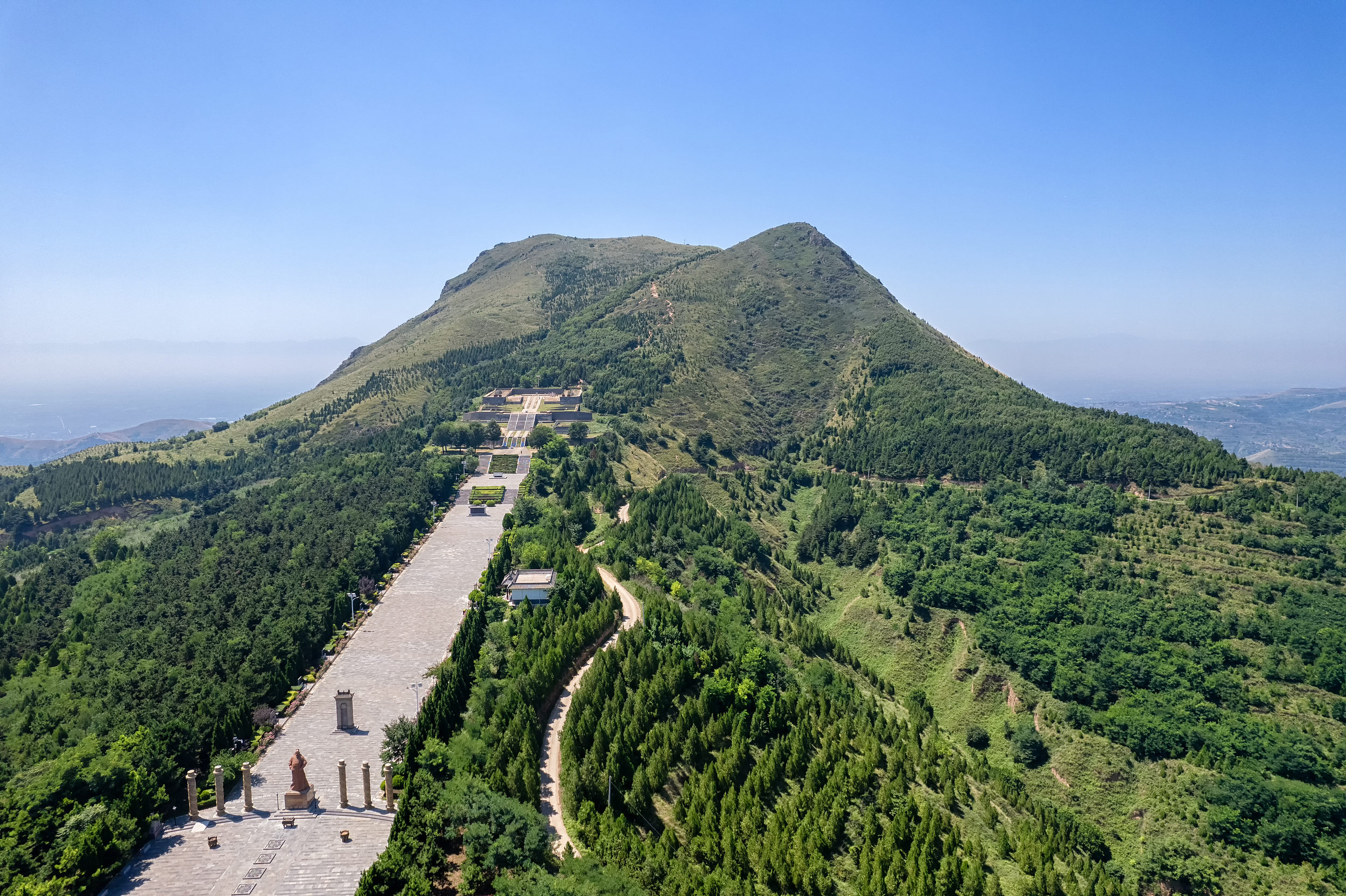
Zhao Mausoleum
Zhao Mausoleum is the tomb of Li Shimin, Emperor Taizong of Tang Dynasty. It is located on Jiuzong Mountain in the northeast of Liquan County, Xianyang. Zhao Mausoleum is one of the largest among the “Eighteen tombs of the Tang Dynasty” in Guanzhong, Shaanxi. The scenic spot is arranged along a central main road, with the memorial tablets of generals of the Tang Dynasty placed on both sides. After entering the gate, you will find that the terrain rises. There are four steps on the main road, with one building site on each step. The entire scenic spot is of great historical significance and value.
-
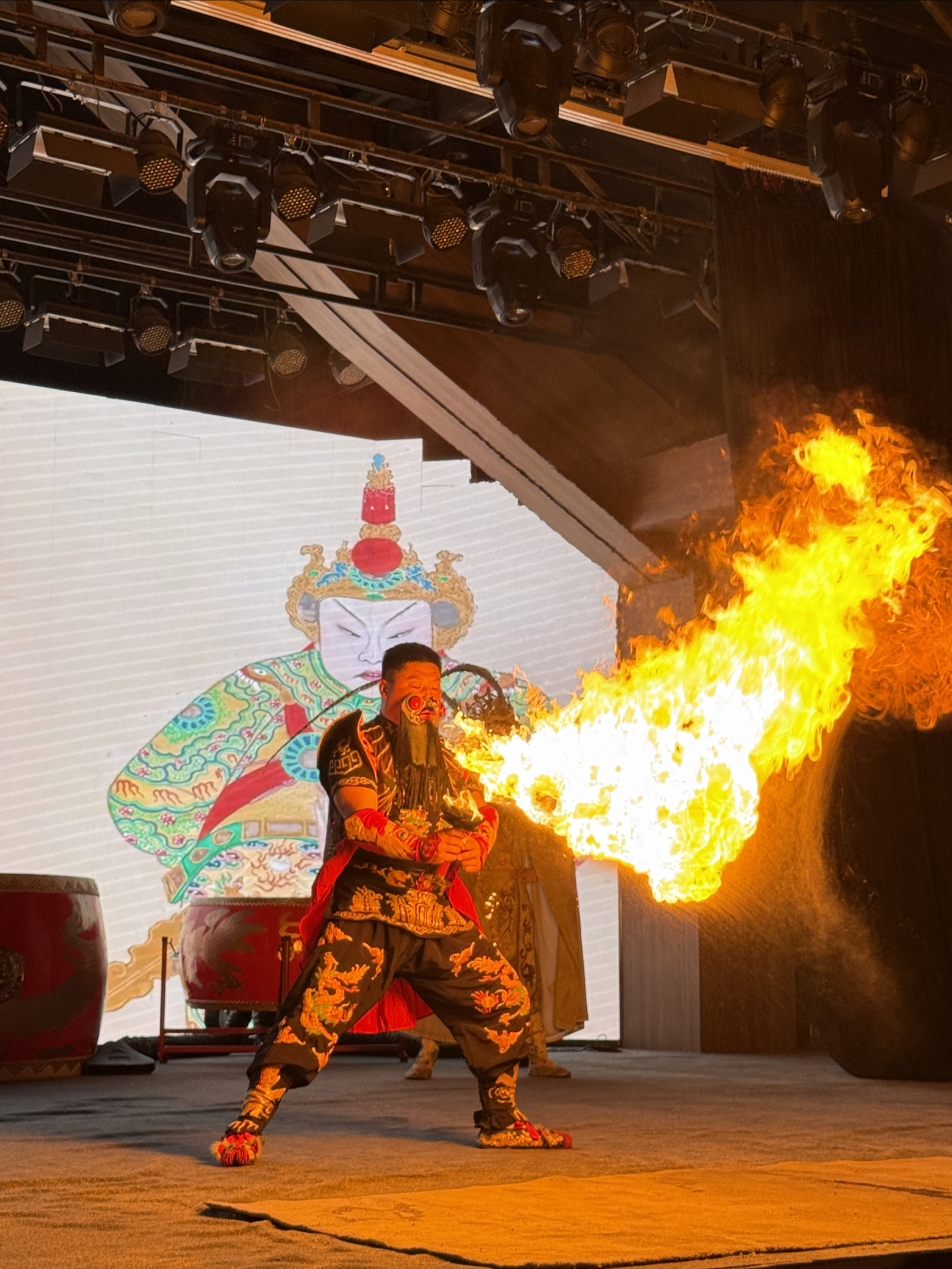
Xi’an Intangible Cultural Heritage Theater(North Square of Big Wild Goose Pagoda)
Xi’an Intangible Cultural Heritage Grand Theater is located in the ancient capital of Xi’an, which has a profound cultural heritage. It is an art palace that showcases the charm of intangible cultural heritage. The theater has a unique architectural style, integrating traditional and modern elements, highlighting Xi’an’s unique historical charm and contemporary atmosphere.There are a wide variety of intangible cultural heritage performances here, from the high-pitched and passionate Qinqiang, whose unique singing style and performance routines fully demonstrate the heroic style of the Guanzhong land; to the lively and wonderful shadow play, where artists skillfully manipulate behind the scenes to interpret all kinds of worldly affairs; and the simple and vigorous Huayin Laoqiang, which roars out a thousand years of vicissitudes and power.Xi’an Intangible Cultural Heritage Theater not only provides a display platform for local intangible cultural heritage inheritors, but also allows tourists from all over the world to immerse themselves in the essence of Xi’an’s intangible cultural heritage. It has become an important window and bright business card for inheriting and promoting Xi’an’s intangible cultural heritage, and continues to radiate dazzling cultural brilliance over the years.
-
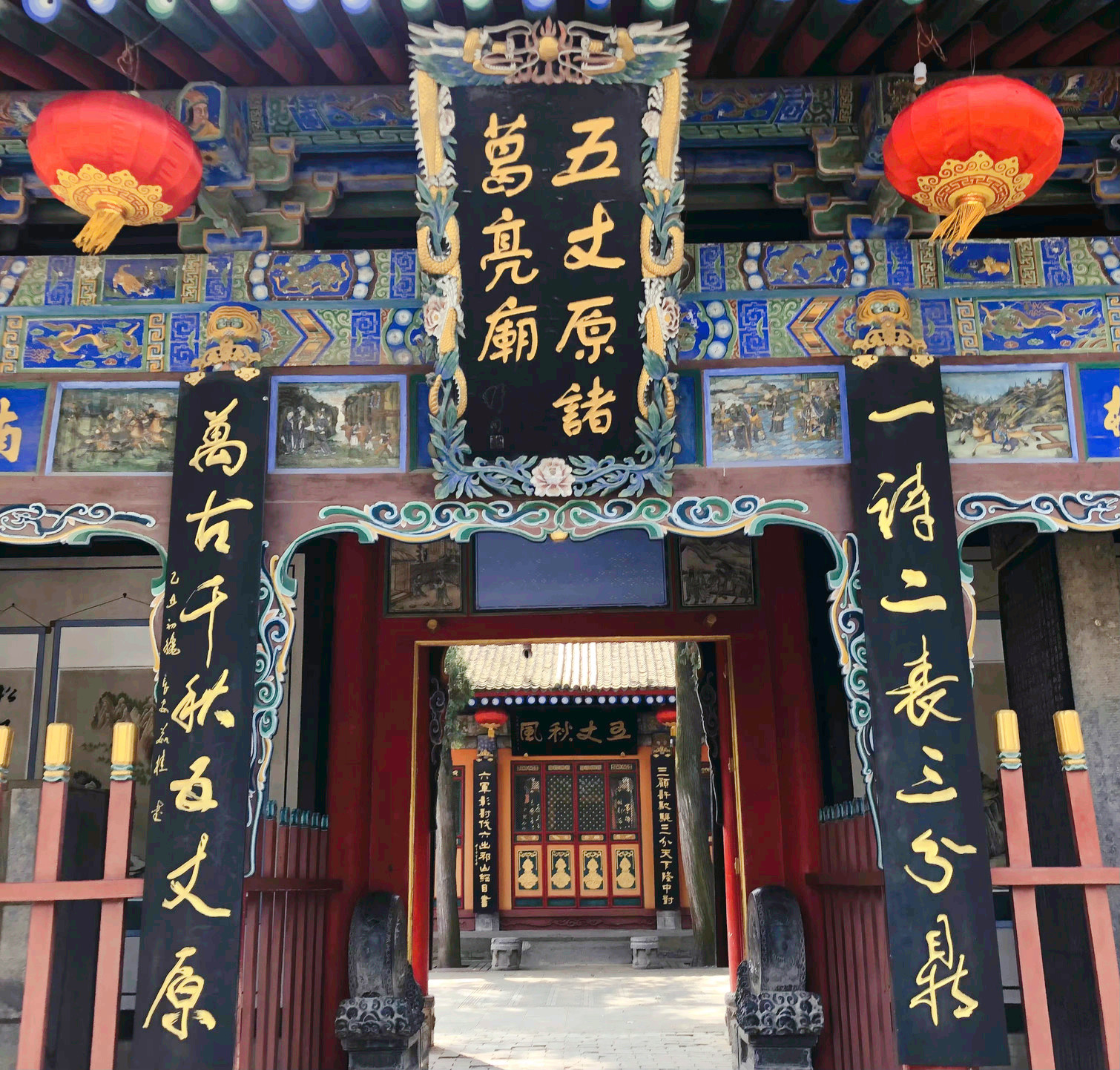
Wuzhangyuan Zhuge Liang Temple
The Wuzhangyuan Zhuge Liang Temple is located on the Wuzhangyuan Terrace in the south of Qishan County, Baoji City. The temple gate is gorgeous and spectacular with a vertical wooden inscription above the gate denoting the name of the temple. According to records, Zhuge Liang Temple was built in the early Yuan Dynasty, and repeatedly renovated and improved during the Ming and Qing dynasties. Most of the existing buildings were built in the Qing Dynasty. These include the temple door, Peifang Building and both of the Xiangfang Buildings. On the east and west sides of the entrance hall, replicas of Shu generals Wei Yan and Ma Wei stand guard. Inside the temple, Zhuge Liang’s “Chu Shi Biao” stone carving stands on exhibition, and there is also a stone carving of the founding emperor Zhu Yuanzhang’s commentary on Zhuge Liang.
-
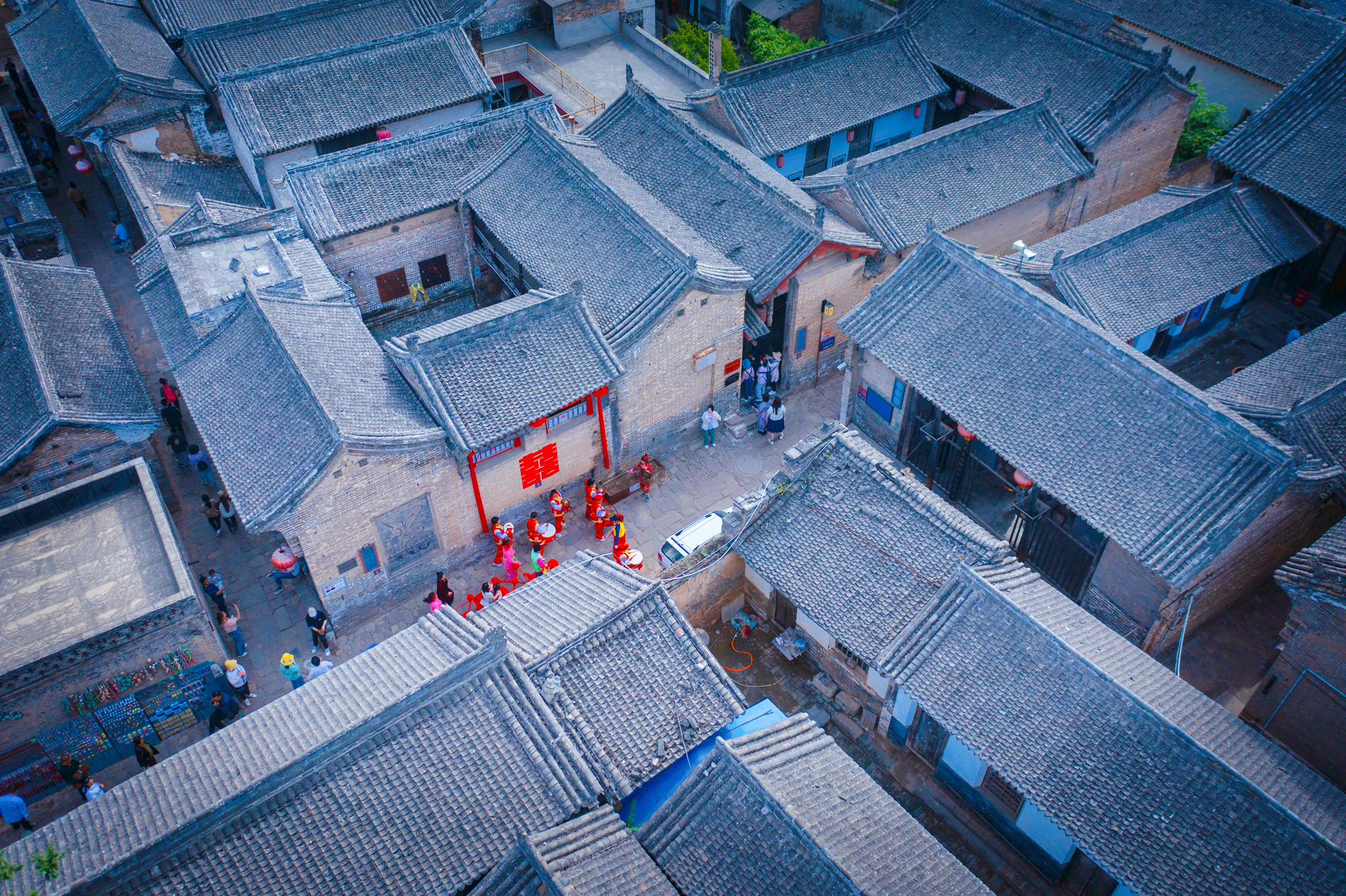
Dang Jia Village
Dangjia Village is located in Xizhuang Town in the northeast of Hancheng City. It is a well-preserved architectural village of the Ming and Qing Dynasties. It is known as a “living fossil of the ancient traditional residences of Eastern mankind.” Its stone-built alleys are tall and splendid, elegant courtyard doors are particularly eye-catching, the inscriptions prominently reflect the owner’s status and beliefs, and the layout of the village lanes is even more interesting.
-
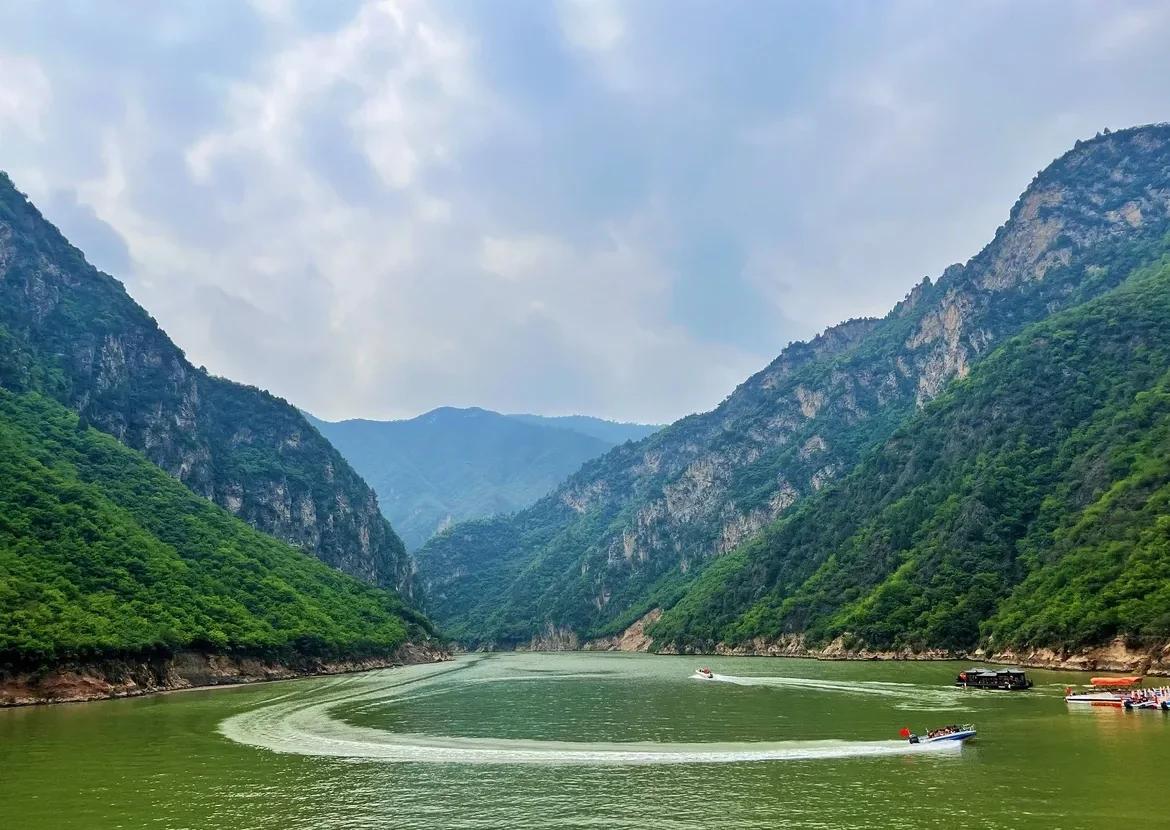
Zhengguo Canal Scenic Area
Located in northwest of Wangqiao Town, Jingyang County, Xianyang City, the Zhengguo Canal Scenic Spot is divided into five zones: Jinghe River Geological Park, Jinghe River Canyon Sightseeing Area, Heigouqi Gorge Area, Wenjing Lake Resort and Beizhong Mountain Tourist Area. Located in the scenic spot, the Zhengguo Canal site is a large irrigation project built by the Qin State during the Warring States Period and is one of the three largest water conservancy projects, along with Sichuan’s Dujiangyan Irrigation System and Guangxi’s Lingqu Canal.