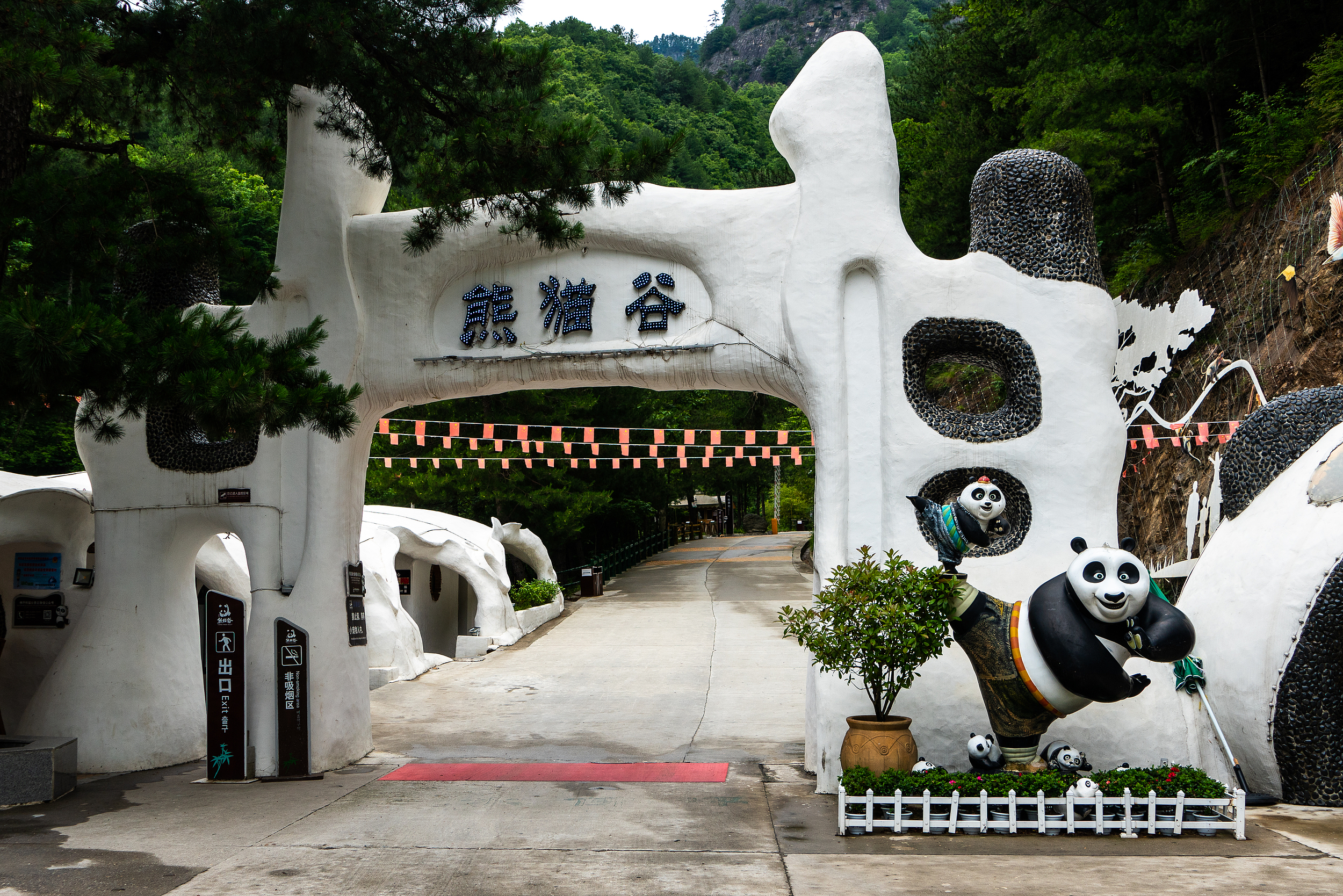
Foping Panda Valley is located 20 km north of the county town, beside National Highway 108, within the Qinling Panda Corridor and Guanyin Mountain Nature Reserve, boasting exceptionally rich wildlife resources. The attraction features layered peaks, crystal-clear streams, mystical rocks, lush forests, and blooming mountain flowers. Visitors can admire stone-reflecting pools, cascading waterfalls, steep cliffs, and winding paths. The soothing sounds of babbling brooks and birdsong create a serene atmosphere. Natural wonders like Three-Step Waterfall, Twin Dragons Playing with Pearl, Daughter’s Beach, and Twin Heart Pools blend seamlessly with majestic formations such as Three Saints Peak, Mother-Daughter Peak, and Cloud-Resting Peak. The Qinling Panda Rewilding Base showcases adorable giant pandas in their natural habitat. Combining the tranquility, beauty, and uniqueness of Qinling’s landscape with rare flora and fauna, this “Window to Qinling, Home of Pandas” offers ideal opportunities for spring outings, leisure, summer retreats, wellness, photography, and recreation.
归档: Attractions
-
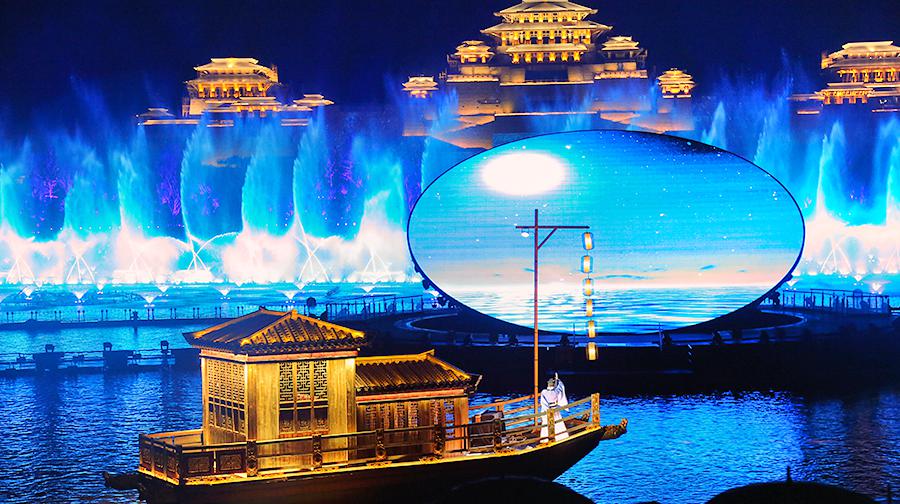
Legend Of The Han Dynasty
Tianhan Legend is a large-scale live-action water performance. Through a series of water-related creative forms such as water projection, underwater modeling, water performances, water arrays, and underwater installations, more than 200 actors perform passionately on the surface of Hanyuan Lake. In addition, with the help of modern high-tech large-scale fountain arrays, large-scale real-life fire effects, lasers, and variable fan-shaped water curtains, it presents tourists with a moving legendary picture of Han culture.
-
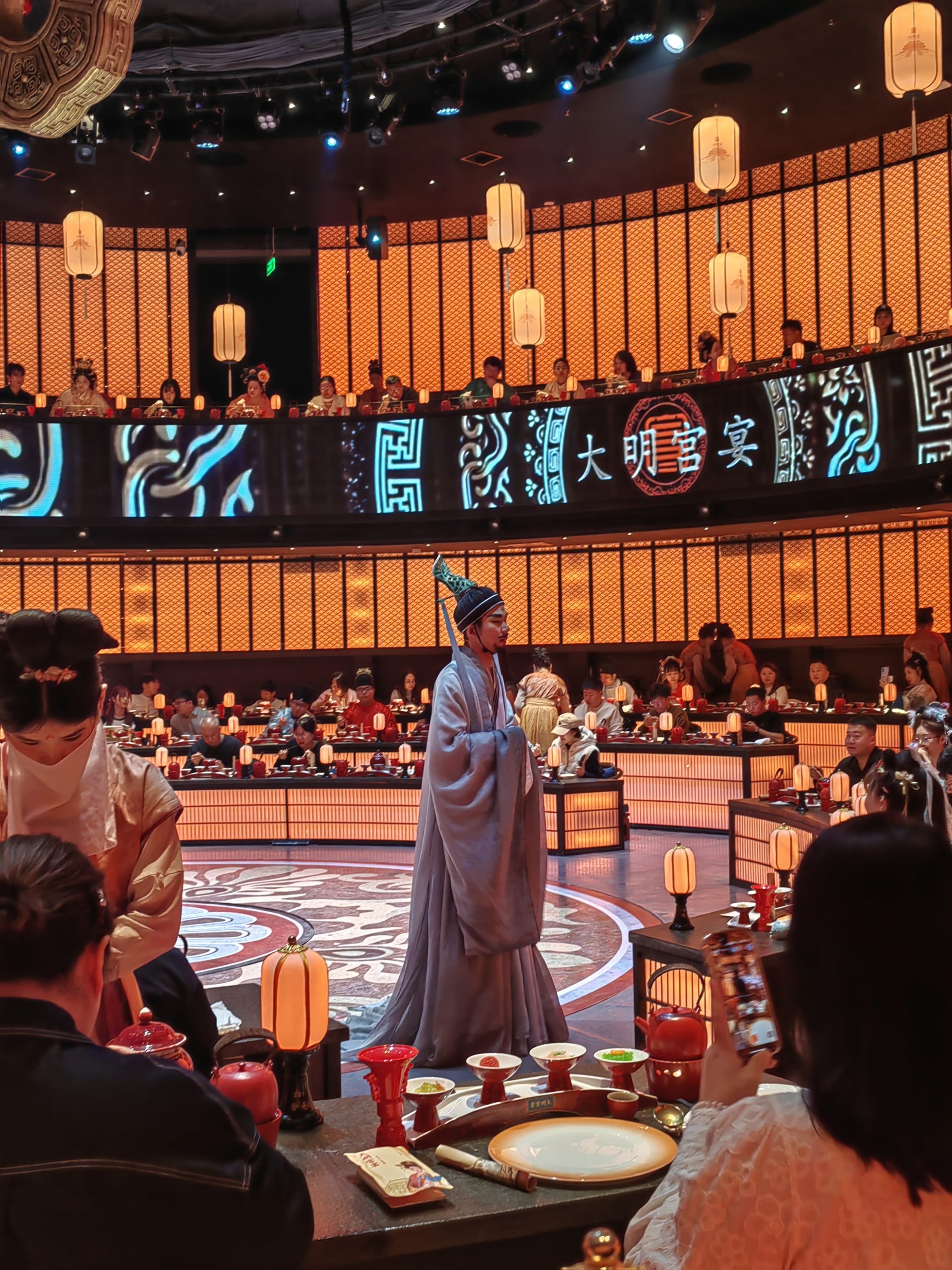
Daming Palace Banquet (A panoramic immersive Tang Dynasty cultural dining experience)
Daming Palace Banquet (A panoramic immersive Tang Dynasty cultural dining experience) uses the Daming Palace as its backdrop and the glorious Tang era as its banquet setting. It not only recreates the magnificent scene of “envoys from all nations paying homage to the imperial court,” but also serves as a vivid testament to the economic revitalization of the train station-Daming Palace district driven by Ziqiang Road in the new urban area. From a single banquet to an entire city, from one building to a whole district, a narrative of cultural revival, commercial integration, and urban renewal is quietly unfolding here. This is far more than just a meal—it’s an immersive cultural journey across time and space. Inspired by the Daming Palace complex, the banquet features eight thematic scenes including “Vermilion Phoenix Welcomes Guests,” “Thousand Palaces’ Silken Robes,” and “Melodies of All Nations,” paired with imperial cuisine innovated from ancient Tang recipes, recreating the grand dining rituals of the Tang Dynasty. Guests can experience Tang-style makeup and attire, holding silver chopsticks while toasting and reciting poetry, becoming “figures within the banquet’s living painting.”
-
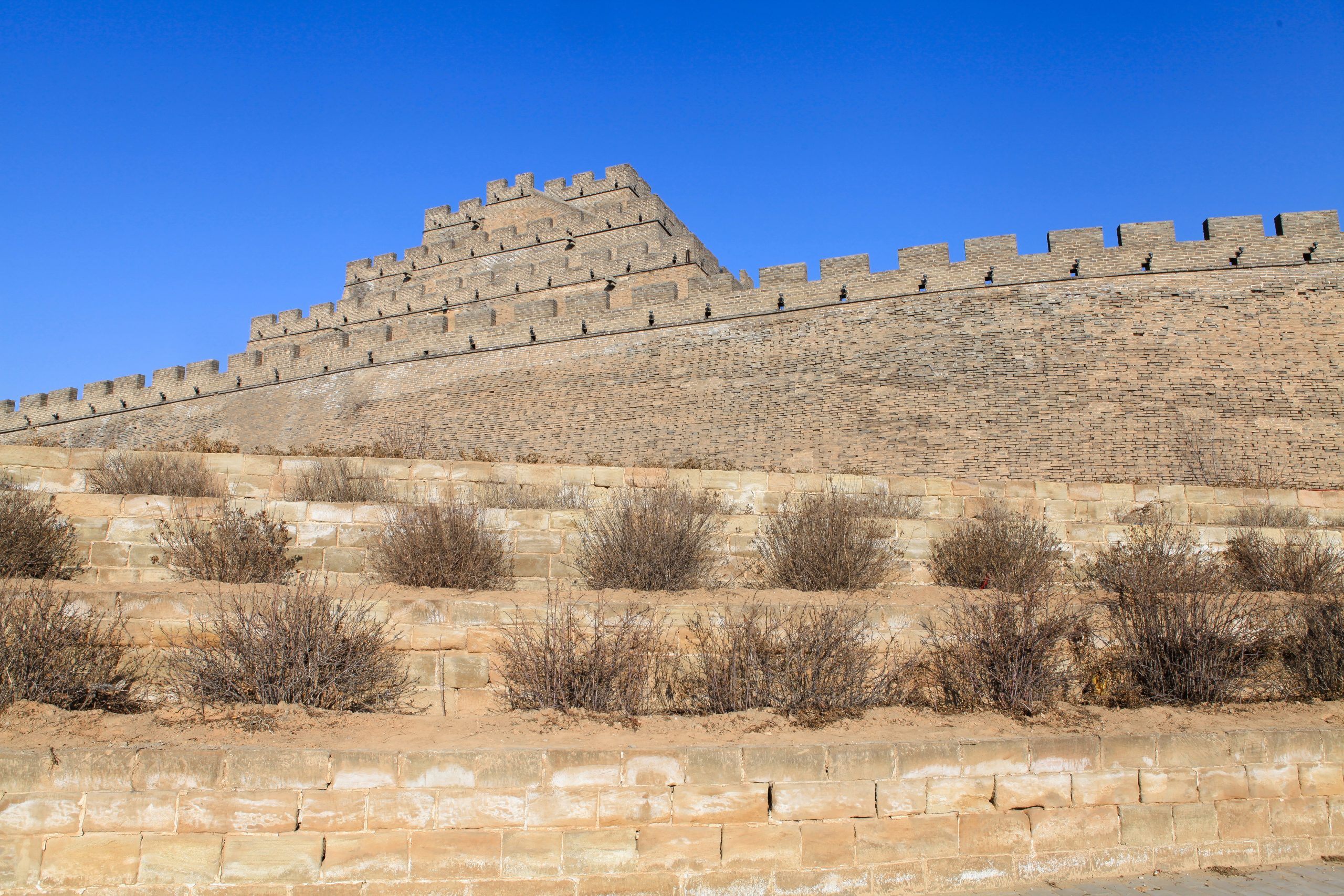
Zhen Bei Tai
Zhenbeitai is located on the top of Hongshan Mountain in the north of Yulin City. It is about 7 kilometers away from Yulin City and about 2 kilometers away from the scenic spot Hongshi Gorge. Many tourists visit these two scenic spots on the same day. Zhenbeitai was originally an observation post of the Great Wall of the Ming Dynasty, and it was also the place where Mongolian and Han people negotiated. This is the largest existing beacon tower in the ancient Great Wall. Zhenbei Terrace, built in 1607 AD, is the witness of the border gate “Mongolian and Han family, peaceful mutual market”. Immediately below Taipei, there is a small square brick city called “King Gong City”. It was the place where Mongolian and Han officials received and negotiated and held tribute ceremonies. The newly built “Great Wall Museum” is also under the stage. The museum is mainly based on pictures, and there are some cultural relics on display. Visitors can pay more attention to the “Gold, Wood, Water, Fire and Earth” five-element wall tiles. Tourists can visit here before going on the stage to play, so that they can have a general understanding of the historical situation of the scenic spot and the surrounding landforms. The Zhenbeitai that tourists see today is the newly renovated Zhenbeitai, with less historical vicissitudes, but when you board the Zhenbeitai, which is about four stories high, you can still feel the relics of the beacon tower in the distance. to its majesty and the vastness of the surrounding land. Standing on the high Zhenbei Terrace, a few kilometers to the south is the ancient city of Yulin, and to the north is the legendary desert outside the Great Wall. To the east and west of Zhenbeitai is the Ming Great Wall. If the weather is clear, you can vaguely see the ruins of six beacon towers. Many tourists will visit Zhenbeitai together with the surrounding Hongshi Gorge. It is recommended to visit Hongshi Gorge first and then go to Zhenbeitai. After the tour, you can take bus No. 11 directly back to Yulin City before entering Zhenbeitai.
-
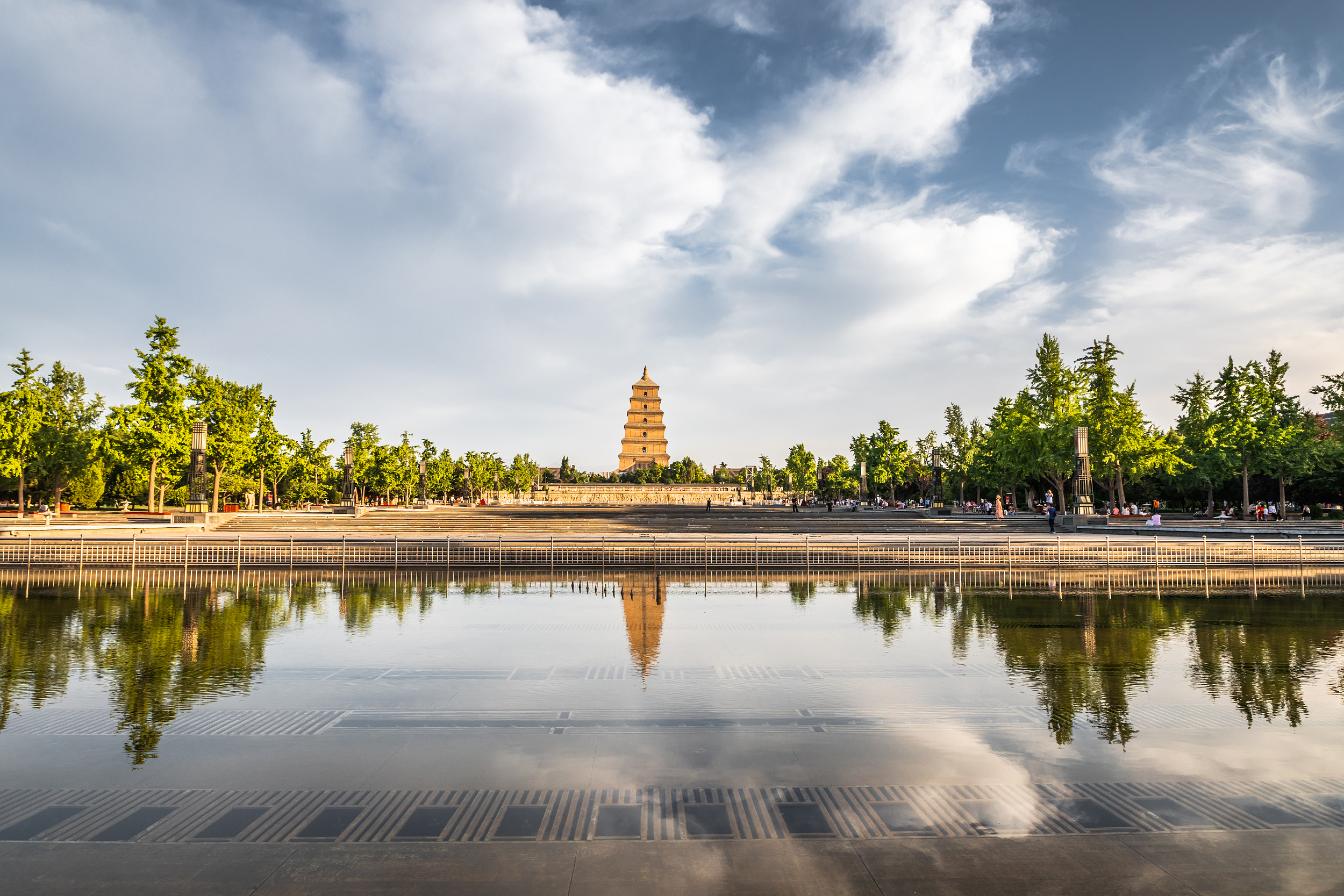
Big Wild Goose Pagoda North Square Music Fountain
The Big Wild Goose Pagoda North Square Musical Fountain, also known as the Xi’an Musical Fountain, is located on the central axis of the Big Wild Goose Pagoda North Square. The Music Fountain Square is composed of a water fountain, a cultural square, a garden, a cultural corridor and other facilities. It is one of the well-known Tang Cultural Squares in China. There are a large number of sculptures and statues in the square. While enjoying the musical fountains, you can also view some of these beautiful sculptures.
-
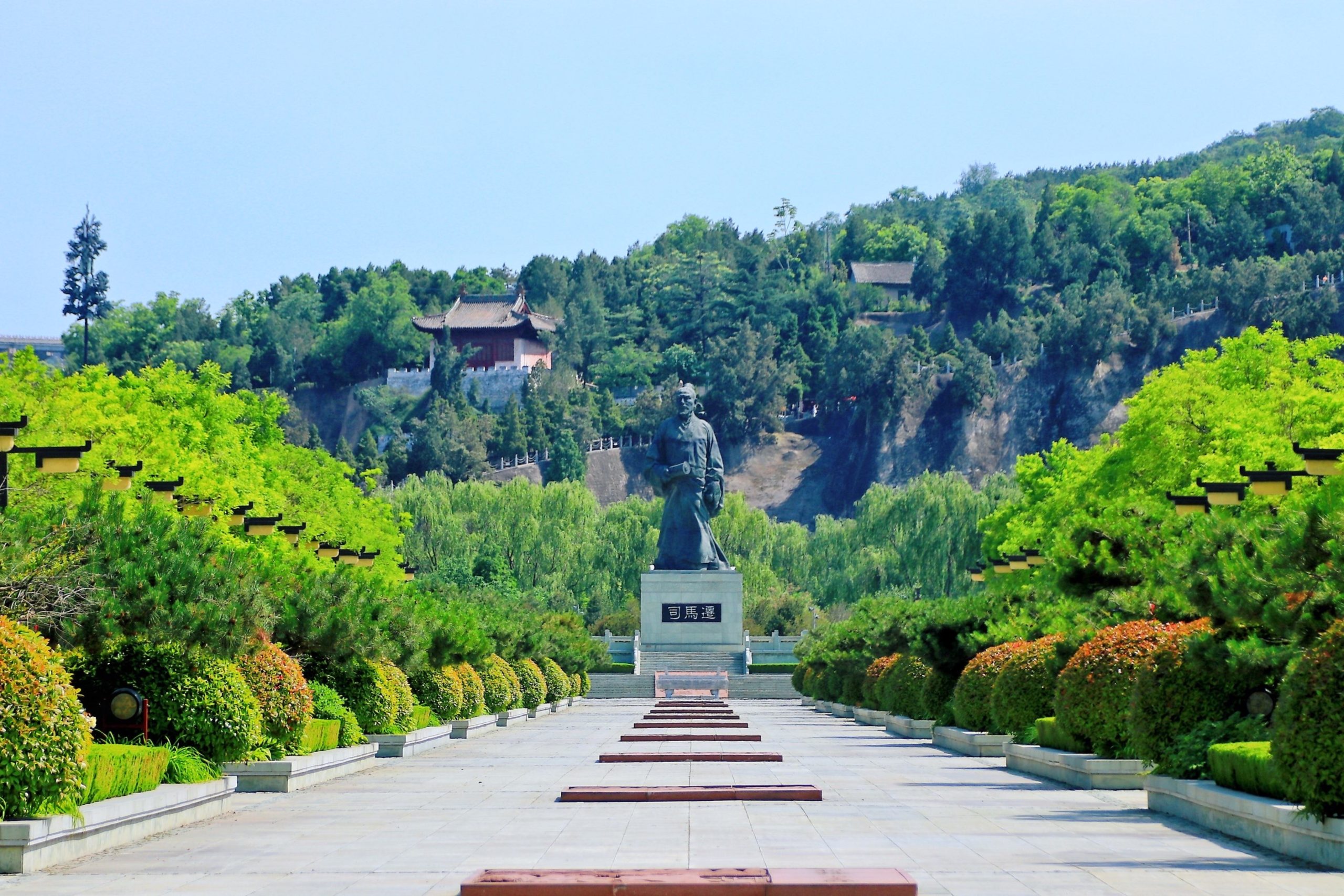
Sima Qian Memorial Temple
Sima Qian Ancestral Hall is located on the cliff of Hankangpo in Nanzhichuan Town, Hancheng City. It was built in the Yongjia of the Western Jin Dynasty for 4 years and is now a national key cultural relic protection.Ascend to the summit, you can look east to the Yellow River, Xiqiao Liangshan, south to the ancient Wei Great Wall, and north to Zhishui.
-
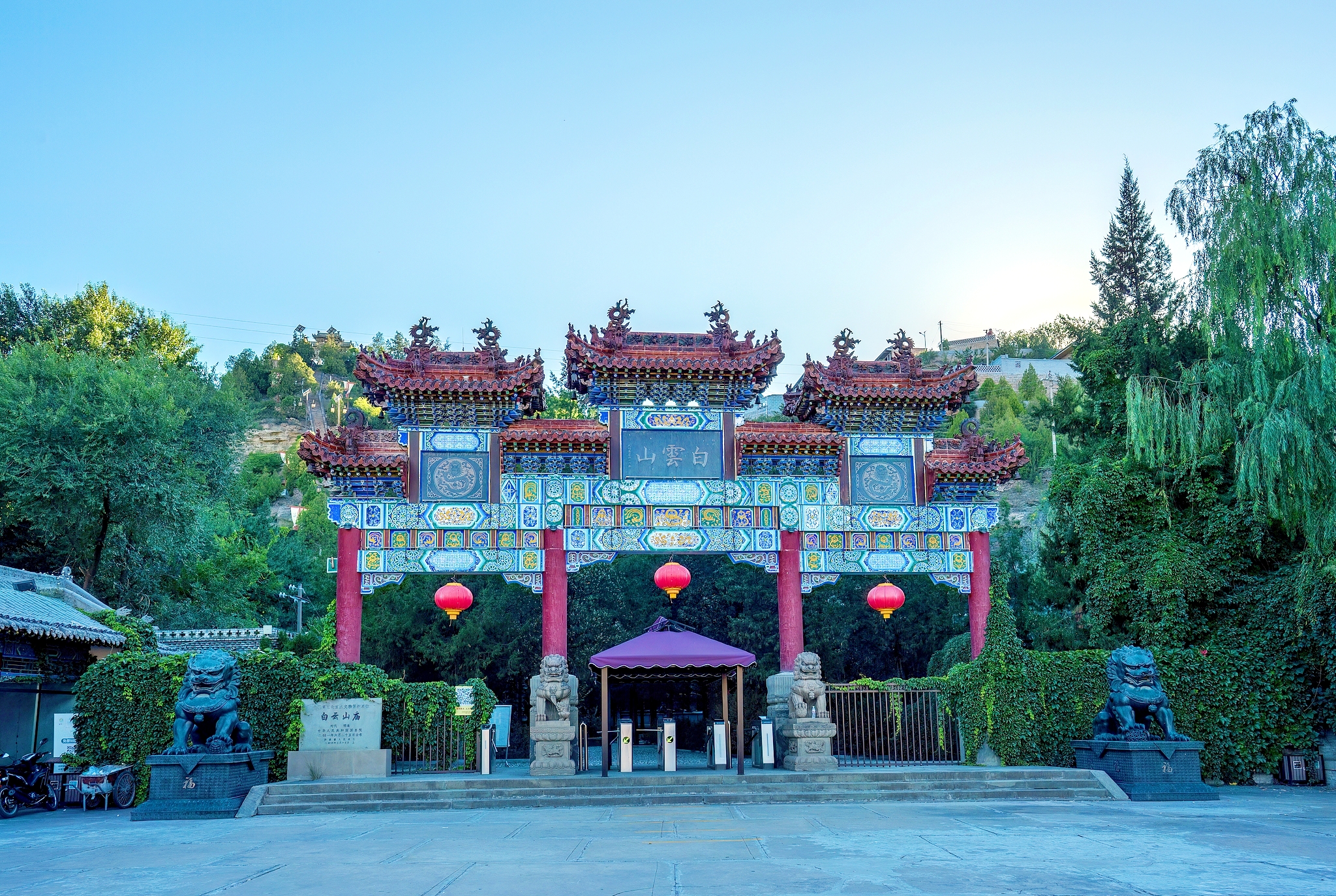
Baiyun Mountain
Baiyun Mountain is located about 5 kilometers south of Jia County in Yulin City on the edge of the Yellow River. As it is often shrouded in white clouds, the mountain is named ‘Baiyun’ (Chinese for white cloud) mountain. Amongst the mountainous scenery, there is a Taoist temple named Baiyun Temple. It is said that Li Yufeng, a Taoist scholar from Zhongnan Mountain, came to Baiyun Mountain to collect medicine for the treatment of diseases and to help all living beings, and built Baiyun Temple on the mountain. The mainly Taoist architecture sits alongside Buddhist and Confucian temples and also contains culturally exquisite sculptures, paintings and calligraphy.
-
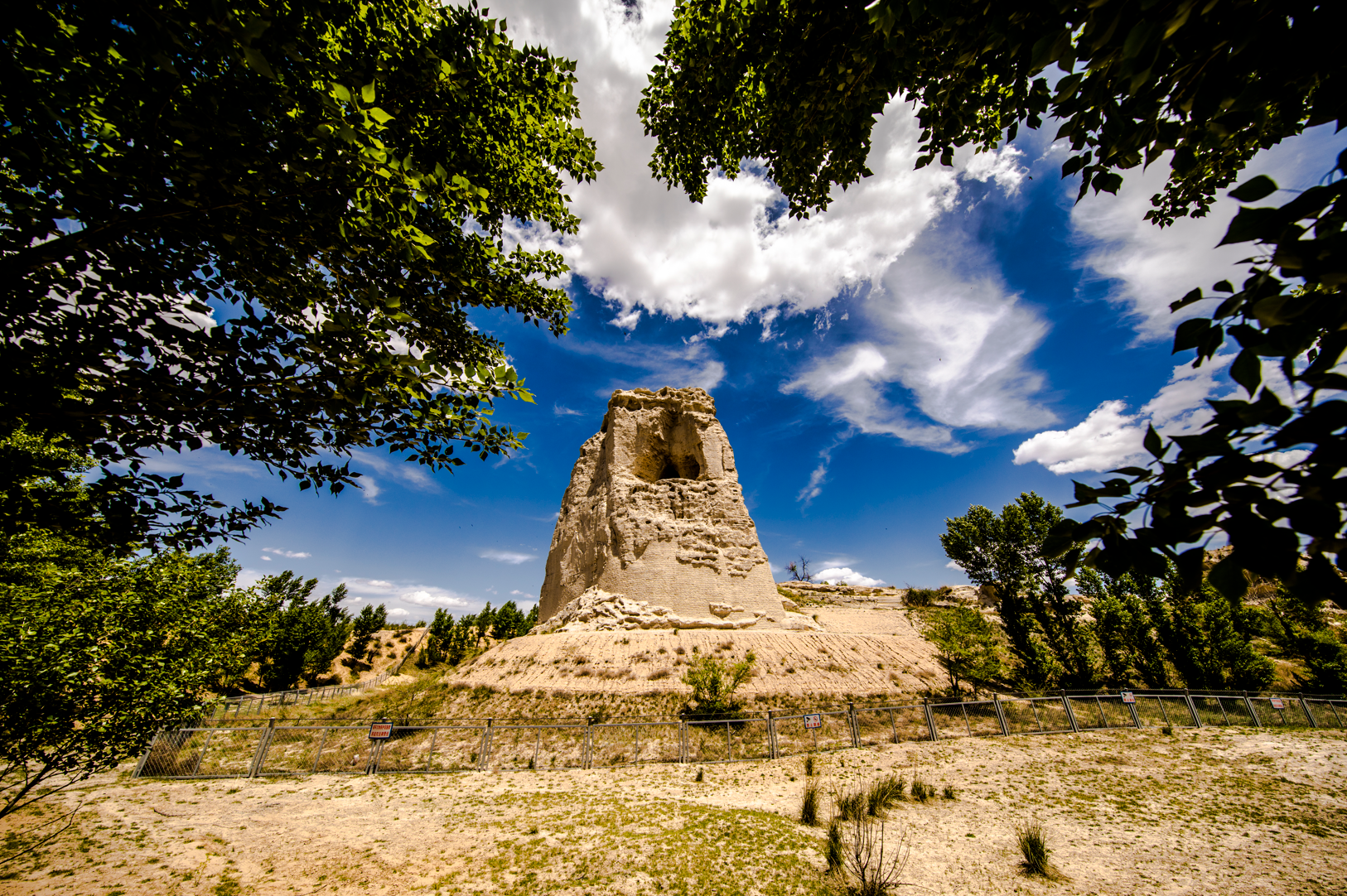
Tongwancheng Archaeological Site Park
Tongwancheng is located about 60 kilometers north of Jingbian County, Yulin City. Because the city wall is made of large sand, clay and lime, the walls are white, and the locals call it Baichengzi. And because it was built by the Southern Xiongnu “Helian Bobo” during the Eastern Jin Dynasty (founded in 413 AD), it is also known as Helian City. Most of this 1,600-year-old ancient city has been buried by yellow sand. What tourists see is only the ruins, and the public transportation to get here is not very convenient, so most of the people who can come here to play are Tourists very interested in history and frontiers. If you are also interested in historical attractions or frontier attractions, you can take the shuttle bus bound for Batu Bay in Inner Mongolia from Jingbian County, get off at Baicheng and walk for 15-20 minutes to reach the scenic spot. It should be noted that Baicheng probably did not have a shuttle bus back to the county seat in the afternoon (the bus back to the county seat in the afternoon would sometimes be cancelled), and only the next morning would there be a shuttle bus back to Jingbian County. Tongwancheng is the only relic of the capital of the Huns in history. The whole city consists of the inner city and the outer city, and the inner city is divided into the east city and the west city. All the existing ruins are the remains of rammed earth buildings. At that time, the materials for building the city were mainly three-compound soil composed of large sand, clay, lime and glutinous rice water. According to legend, the city of Tongwan was in charge of Gugan Ali, who was very brutal. If he could use an awl to penetrate the city wall by an inch, he would kill the builders. The city built with these raw materials has already stood in the Mu Us Desert in Saibei. for over a thousand years. When tourists come here, they can circle the city from the southeast corner, with a total length of about 5 kilometers. At present, the part that is higher than the ground and has not been buried by yellow sand is mostly in the southern section of the city wall. In the southern section of the city wall, if you walk from east to west, you can see the ruins of many enemy platforms. There is a high platform near these enemy platforms. This is the commanding height of the city, and it is also the Yong’an platform where “Helian Bobo” handled the state affairs. Going west from Yong’an Terrace, you can see a pier. The pier is about 30 meters high. It has become a paradise for birds. Many birds build their nests on the pier. It is said that the application for the World Cultural Heritage has already begun, and the Xiongnu Cultural Square is also planned to be built. If you like the original Tongwan City, it is recommended to visit it as soon as possible. There are no decent hotels near Tongwan City, you can stay in the homes of the surrounding villagers. The service facilities around the scenic spot are not very complete, and tourists can bring some drinking water and dry food by themselves.
-
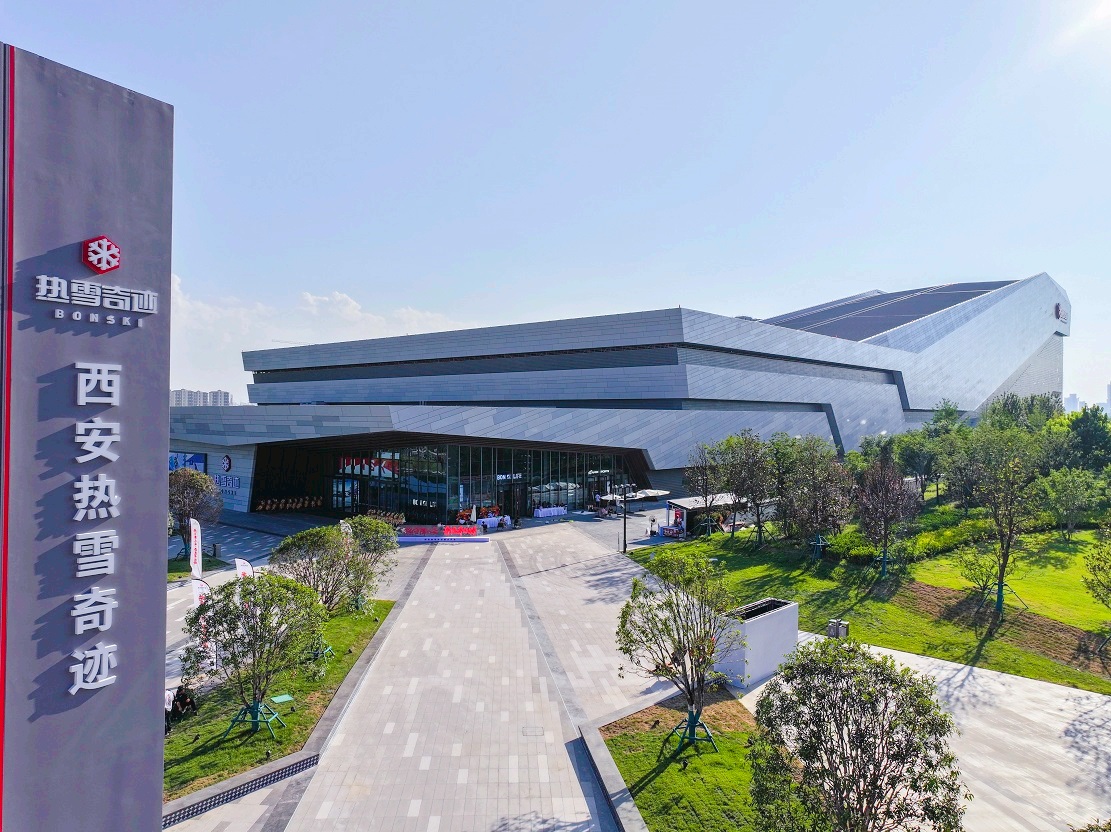
Xi’an BONSKI
Xi’an Hot Snow Miracle Four Seasons Ski Resort fills the gap of high-quality indoor professional ice and snow sports venues in Northwest China, and opens a new chapter of 365-day ice and snow carnival. It has 2 professional ski slopes, 1 high-speed chairlift, 4000 square meters of snow park, 3 fast magic carpets, 16 snow-making equipment, snow layer thickness of 40cm, and constant temperature of -6℃ all year round. Xi’an’s first 4000 square meters of super large snow park, 18 major snow entertainment projects, 9 fun snow play entertainment, take you to unlock Xi’an’s new landmark for snow play! The first three combined snow ring roads in Northwest China, five themed fantasy snow houses, snow rescue operations, snow adventure treasure hunts and other entertainment projects, snow play, parent-child, dating are all unlocked in one stop!
-
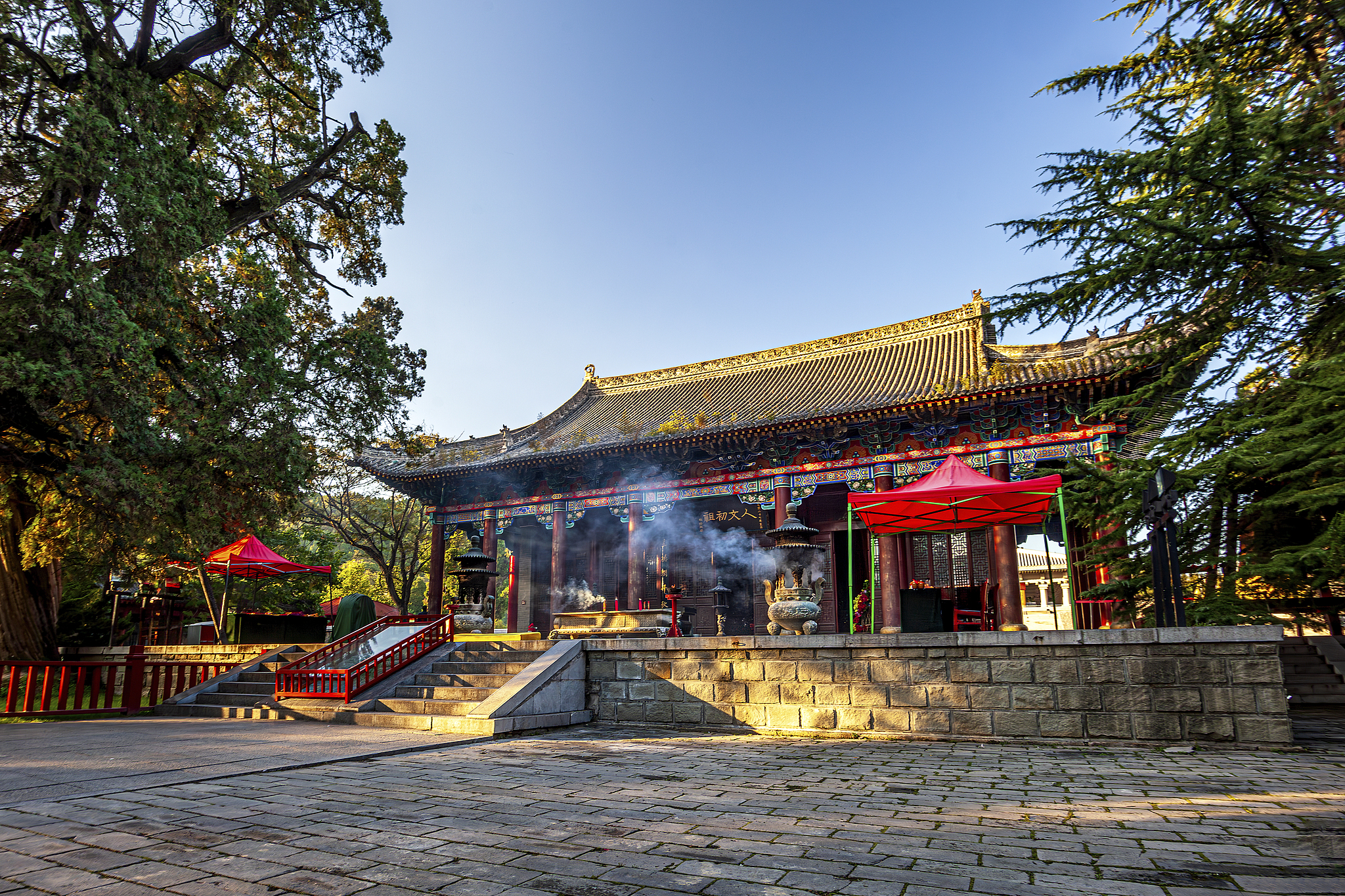
Huangdi Mausoleum Xuanyuan Temple
Xuanyuan Temple, also known as the Yellow Emperor Temple, was built in the Han Dynasty. The Xuanyuan Temple is built on the mountains and beside the water, facing the south and the Xuanyuan Temple. The Hall of the First Ancestors of Humanities was built in the Ming Dynasty, with seven rooms wide and three rooms deep. On the forehead of the door hangs the four characters of “The First Ancestor of Humanity” inscribed by Mr. Cheng Qian when he sacrificed to the mausoleum in 1938. On the east side of Xuanyuan Temple is the Stele Gallery, which stores more than 50 ancient and modern stone tablets. The most famous one in the Xuanyuan Temple is the Yellow Emperor’s Hand Planting Cypress, which is located 2 meters on the left side of the Xuanyuan Temple gate. According to legend, it was planted by Xuanyuan Huangdi himself. It is more than 5,000 years old and is the oldest cypress in the world. The cypress tree is more than 20 meters high and 11 meters in diameter at breast height. The worship hall was newly built in 2004. In the middle of the eaves of the main hall hangs three big characters “Xuanyuan Hall” in the official script written by the famous calligrapher Huang Miaozi. The front of the main hall is paved with granite, and there are “Three Mountains and Five Sacred Mountains” stones on display. Around the square are 9 pairs of bronze ox tripods with a height of 2 meters.