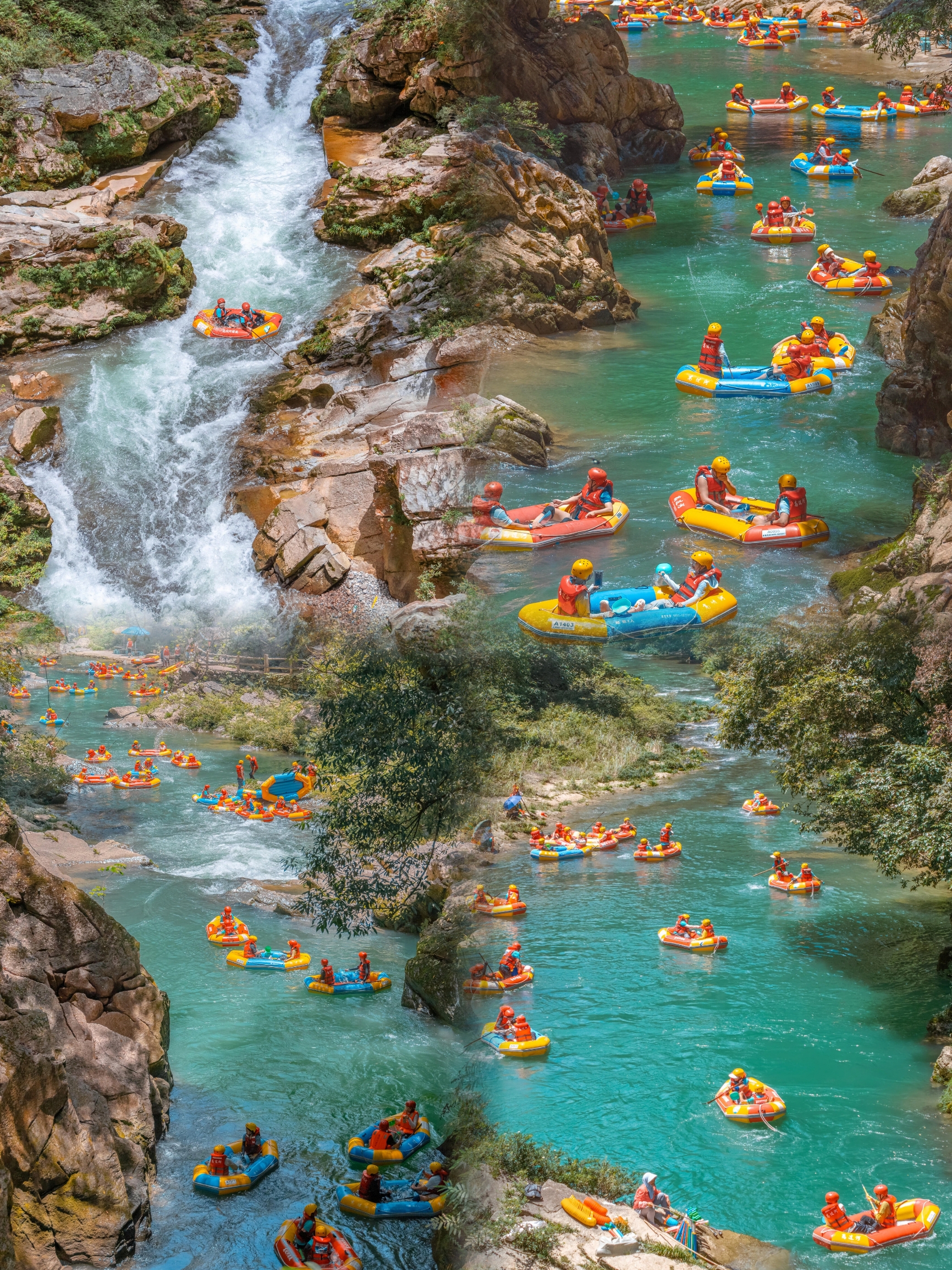
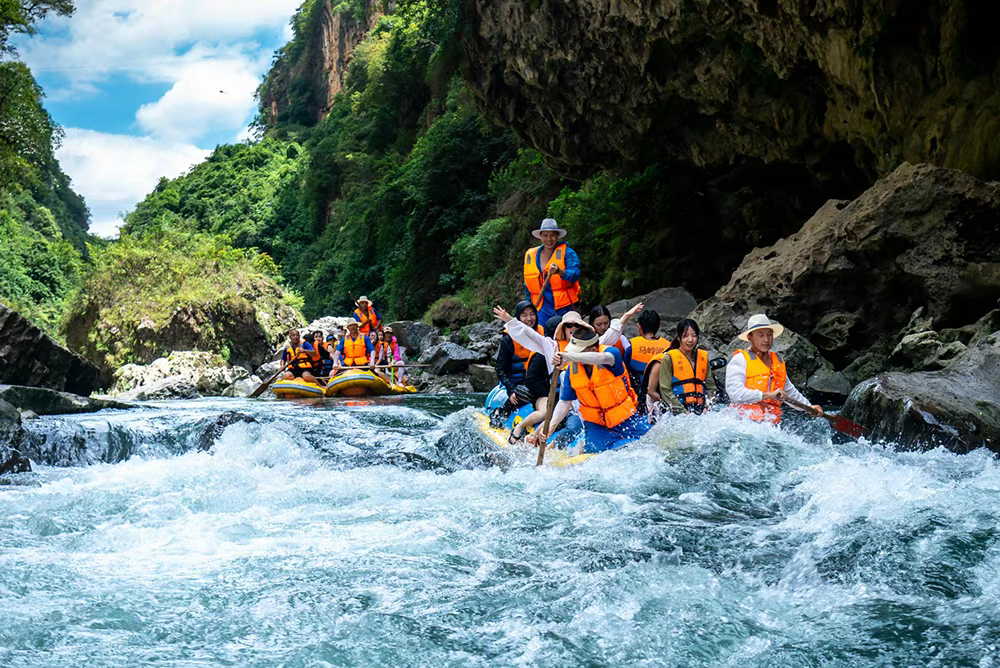
The whole rafting process not only allows you to experience the excitement brought by rafting, but also allows you to appreciate the scenery on both sides of the river from a different angle as the boat moves. At the same time, you can also get in close contact with rapids, slow beaches, waterfalls and flying mist.
归档: Attractions
-
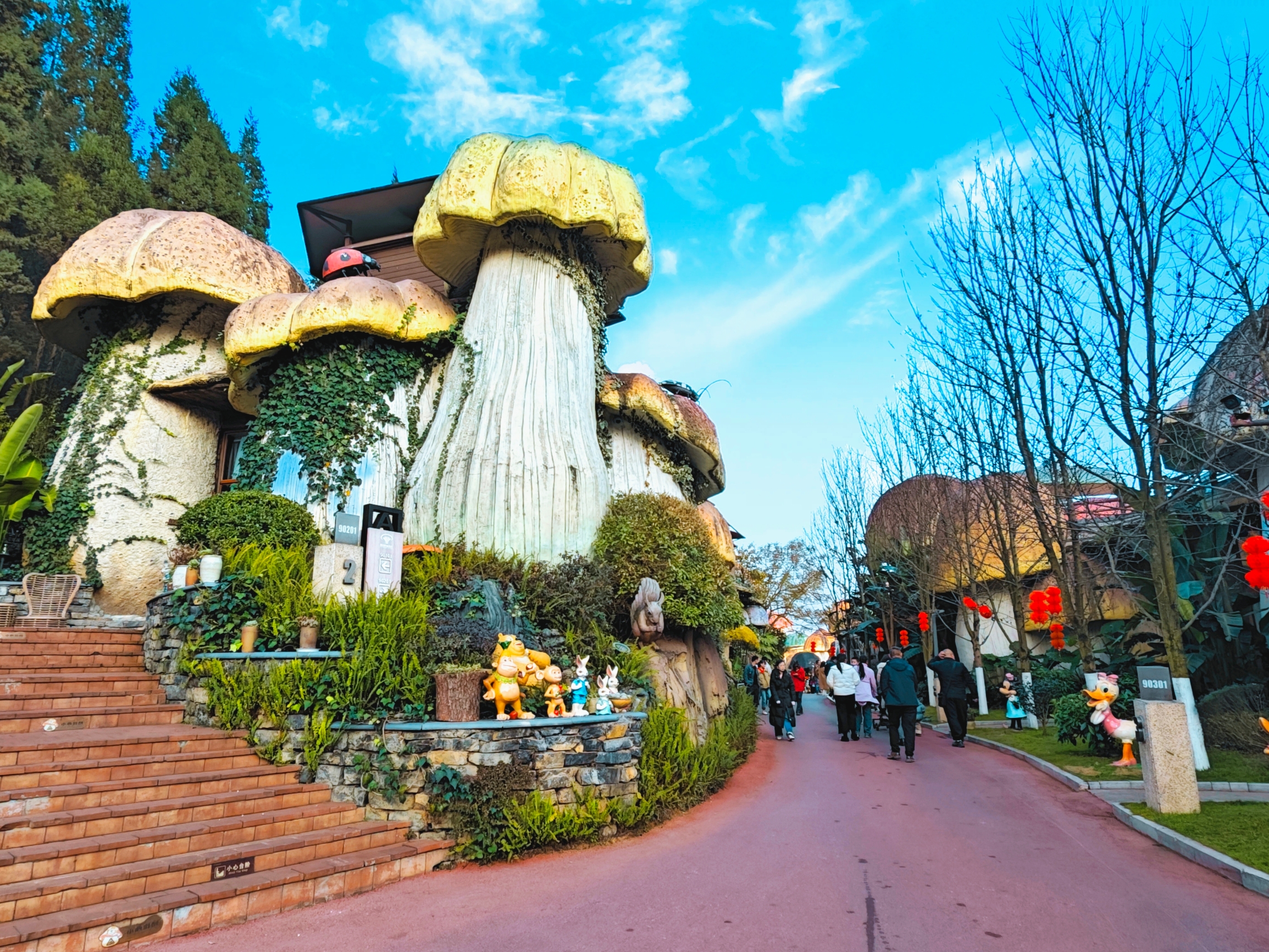
Sunshine Valley Tourist Resort
Sunshine Valley Tourist Resort was founded in 1991. It is an affiliated industrial park of the former Guizhou Chun Liquor Factory. It was completed and officially opened to the public in 2001. The resort has a very rich business layout, which is arranged in accordance with the six elements of “food, accommodation, travel, entertainment, shopping and learning”. It includes the Sunshine Dream Kingdom Amusement Park, the National Culture Food Park, go-karts, mountain bikes, pedal boats, special snack streets and the Enjoy Time Music Bar.
-
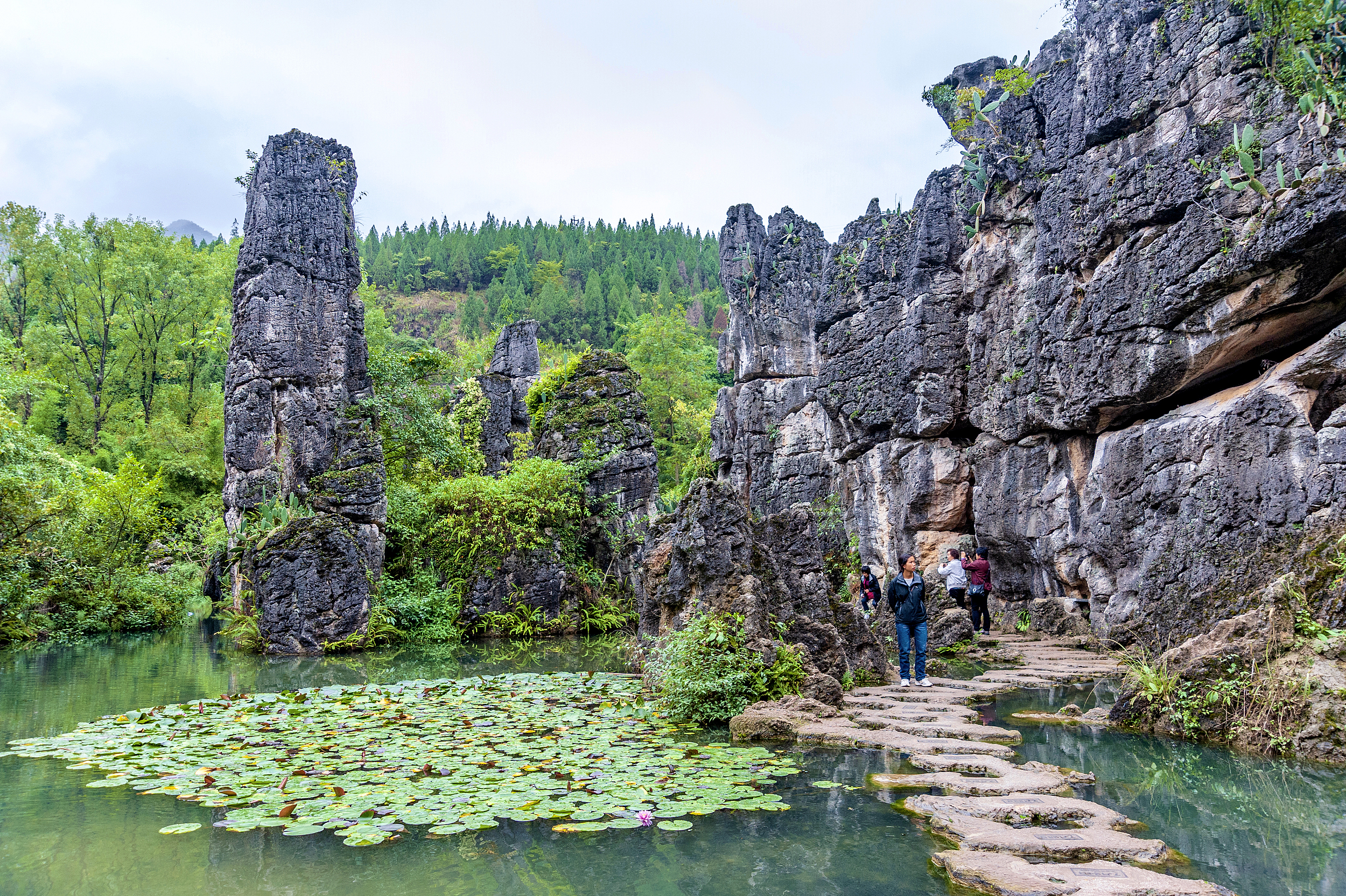
Shu Sheng Bu
It is said that the water level in the bonsai area is fixed, and the stones in the water are naturally formed.Some stones are processed and paved into roads,surfaced for tourists to walk on, which isShengbu.
-
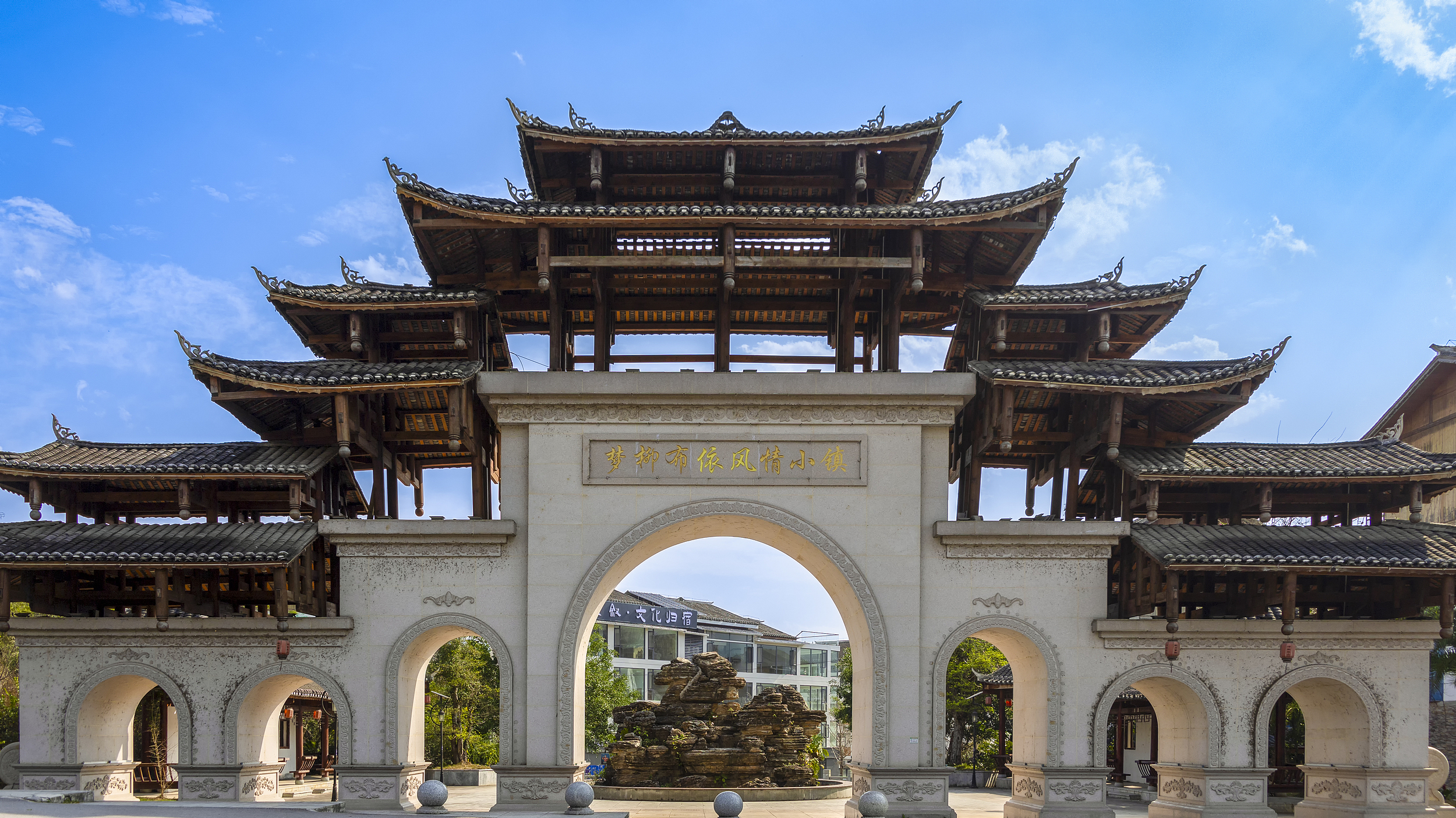
Mengliubuyi Customs Town
Located near the Libo Big and Small Seven-hole Scenic Area, Mengliu Buyi Town is a purpose-built town integrating accommodation and dining. The town’s buildings are dotted with a variety of murals introducing the customs and origins of the local Buyi ethnic minority. The town’s small bridges, flowing water, and spacious squares embody the local folk customs.
-
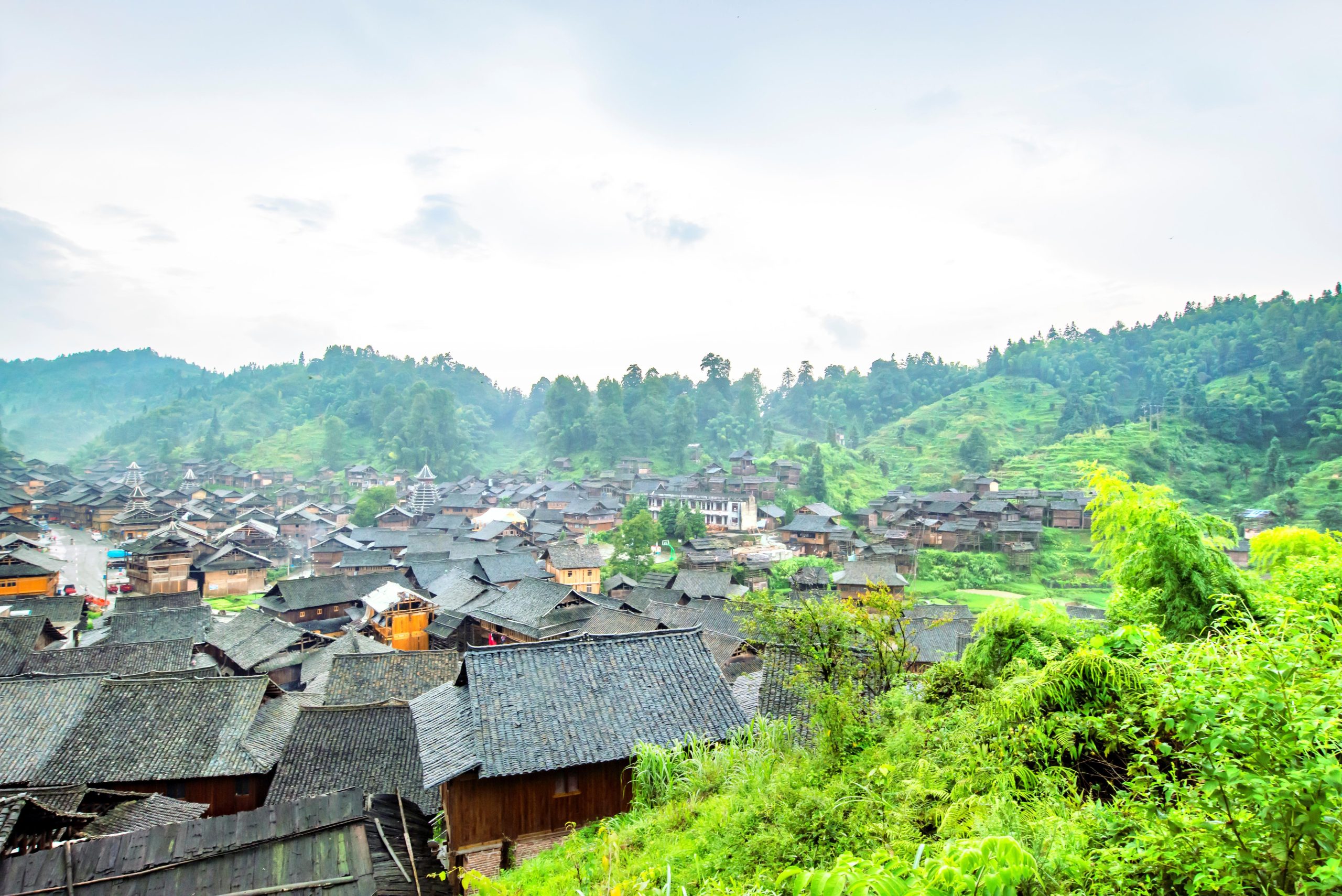
Huanggang Dong Village
Huanggang Dong Village is located in Shuangjiang Township, on the border of Congjiang and Liping counties, 33 kilometers from Congjiang County. Hidden in the mountains, it’s a relatively unknown Dong village. Its Dong folk songs, customs, and scenery are among the best in Congjiang. (Image: With just over 300 households, Huanggang Dong Village surprisingly boasts five drum towers. A single, over ten-meter-tall drum tower amidst a sea of two-story buildings is already a standout, let alone five. Drum towers serve as gathering places for the unified ethnic group. Legend has it that the ancestors who fell drunk in Huanggang were five brothers. Later, the brothers each multiplied and gave rise to five large ethnic groups, leading to the construction of five drum towers. A unique feature of Huanggang’s drum towers is that each features a wooden board inscribed with the twenty-four solar terms, allowing residents to track the seasons. Each tower also features two lifelike dragons. Huanggang is a Dong village that celebrates the “Sky Shouting Festival.” Also known as the Rain-Praying Festival, it’s called “Xie Sa Xiang” in the Dong language, meaning “to worship the Thunder Goddess.” The magical aspect of the Sky Shouting Festival is that if it’s sunny before the ceremony, it’s guaranteed to rain after; and if it’s rainy before, it’s guaranteed to sunny after. This tradition has been practiced for years, with unwavering success. Afterward, long tables are set up for toasts. In the evening, Dong folk songs begin, creating a lively atmosphere.
-
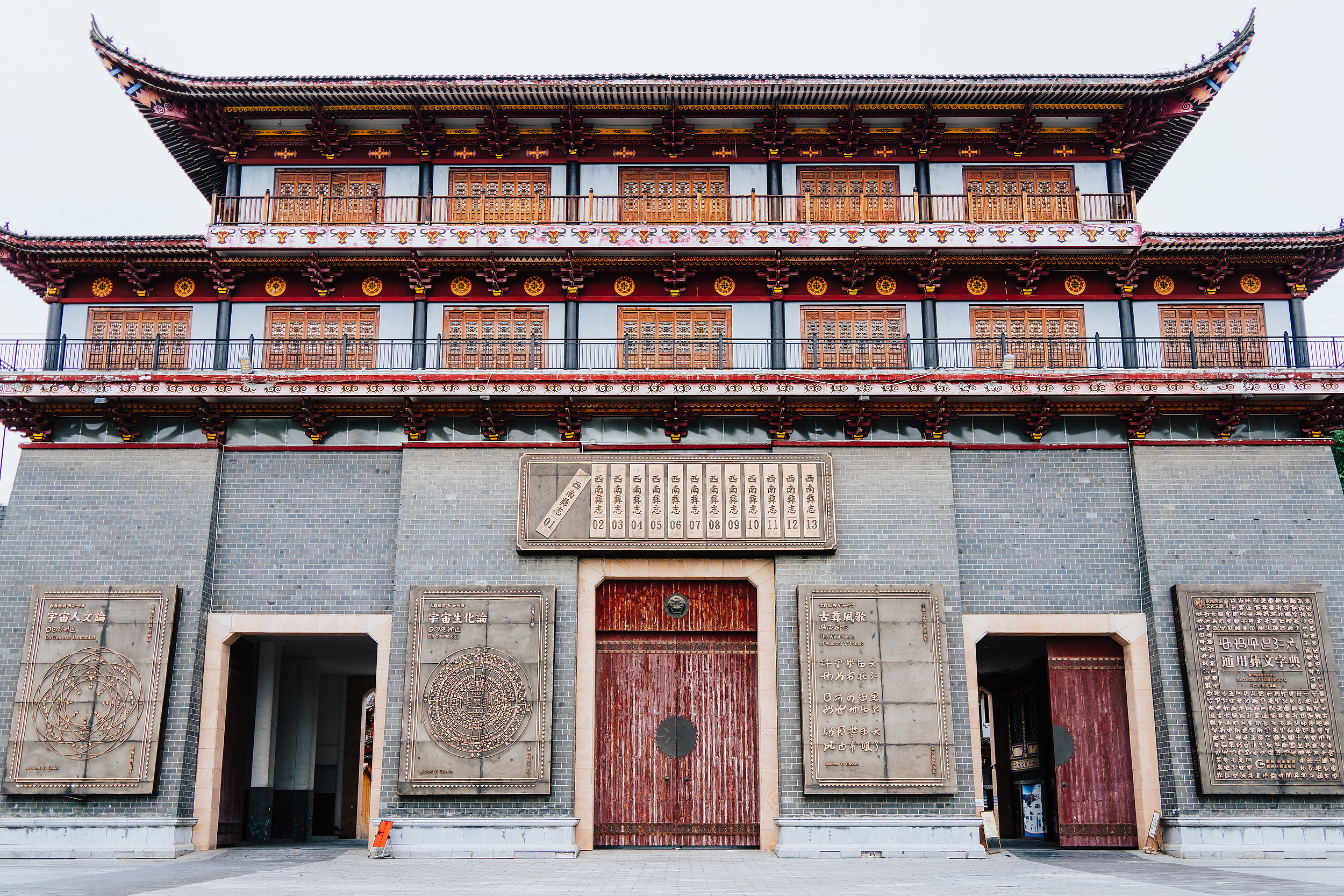
Muege Old Town
As a national tourist attraction, Muege Old Town has Shexiang Tomb, a major historical and cultural site under the protection of the national level, and its protection and management agency Shexiang Museum, and Muege Castle Site, a major historical and cultural site under the protection of the provincial level. Shexiang Tomb was built by referring to the tombs of a grade-three official recorded in the history of Ming Dynasty and combining with the features and styles of tomb of a person with upper rank from the Yi nationality.
-
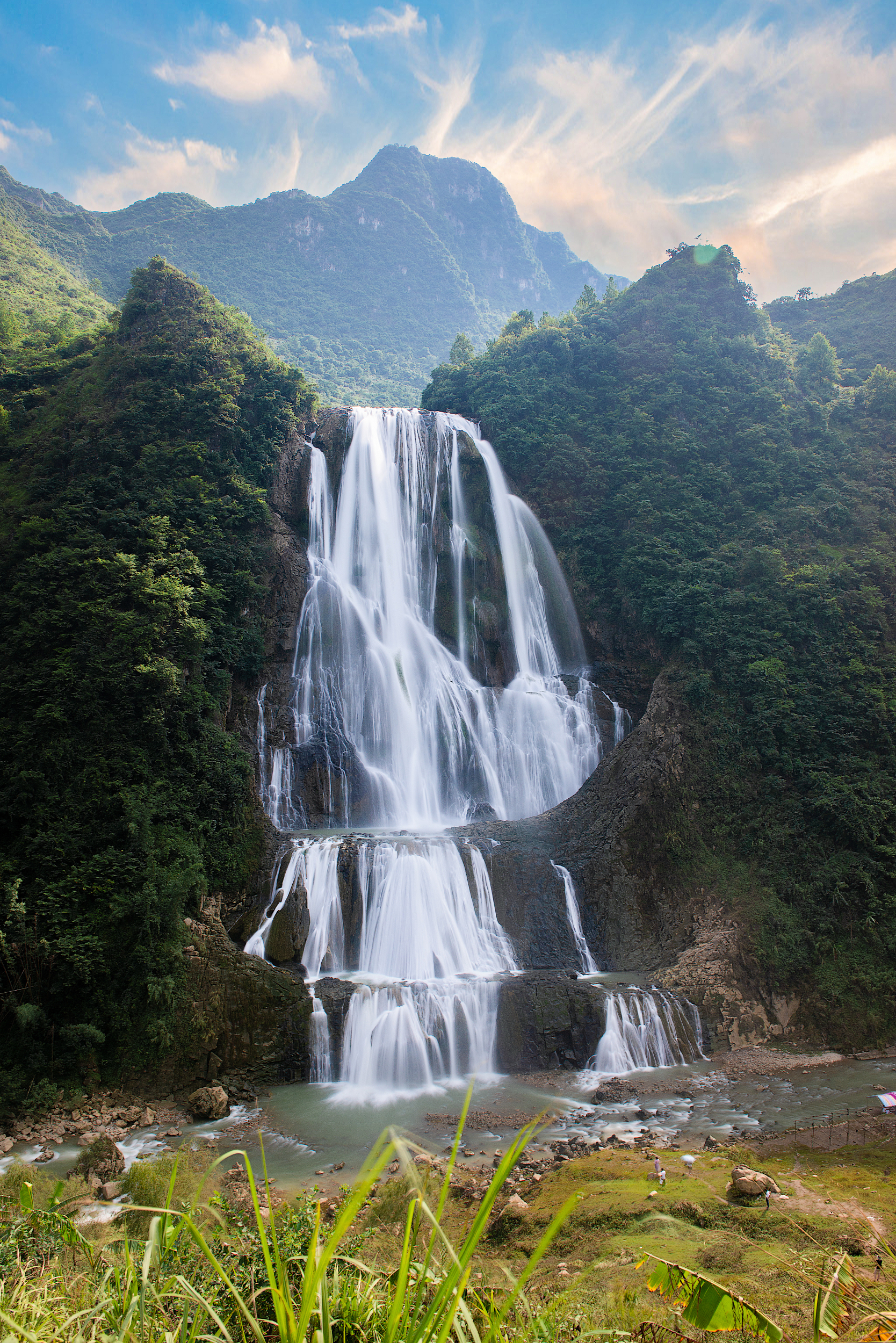
Dishuitan Waterfall Scenic Area
Dishuitan Waterfall consists of three waterfalls: the upper one is called Liantian Waterfall, the middle one is Chongkeng Waterfall, and the lower one is Gaotan Waterfall.
-
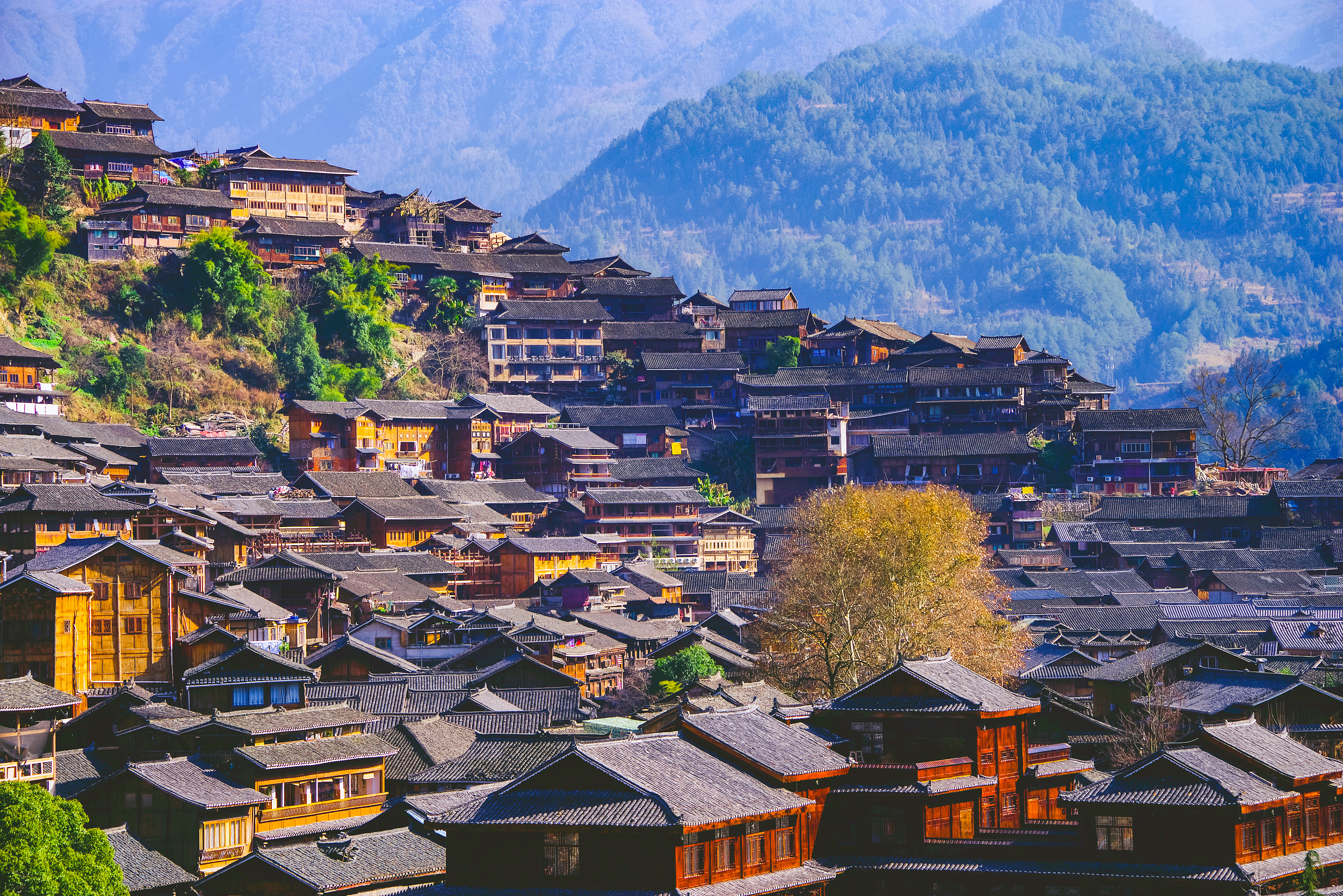
Xijiang Miao Village – Century-old Stilted Buildings
Xijiang Qianhu Miao Village is located in Leishan County, Qiandongnan Miao and Dong Autonomous Prefecture, Guizhou Province, China. The ethnic buildings in the village are the century-old stilt houses. These wooden houses are built on the mountain, layer by layer, along the mountain, and are continuous and magnificent, showing the wisdom and diligence of the Miao people. The stilt houses are built by the mountains and rivers. The latter part is built on a hillside with a large inclination, and the former part uses wooden pillars as support points to form distinctive stilt columns. These buildings mostly adopt the through-beam hip roof structure and are built of wood. They reflect the superb woodworking skills of the Miao people and are highly practical and ornamental. In Xijiang Qianhu Miao Village, tourists can stroll among the ancient stilt houses and feel the strong ethnic customs. At night, the stilt houses are more charming under the light. Going up to the observation deck, you can overlook the entire Miao village and feel the unique charm of this thousand-year-old village.
-
Maling River Gorge Rafting
The total length of the rafting is 13.8 kilometers, and the time is about 1.5 hours. It is suitable for rafting all year round. There are big waters with big waters and small waters with small waters. On this rafting line, there are 18 beaches, 20 bays, and 30 pools. It can be said that the scenery changes with every step. The “murals” on both sides of the rift valley are more than 300,000 square meters, which complement the flowing water and waterfalls. There are also cultural landscapes such as ancient temples, ancient bridges, ancient villages, ancient camps, ancient battlefields, ancient post roads, ancient stone tablets, thousand-year-old banyan trees, and ancient human sites on the towering Danxia Red Cliffs on both sides of the rift valley.Take a rubber boat from upstream to downstream, in order: enter the welcoming gate, rush to the wild horse beach, cross the tiger shore, jump the rhinoceros ridge, cross the Longteng Pass, enter the happiness pond, and arrive at the water-stepping dock. On the 13.8-kilometer rafting line, the reasonable distribution of natural landscapes constitutes a unique wonder in the world. Rafting is suitable for all seasons. In winter and spring, the water is clear and the valley is beautiful, and the climate is warm; in summer and autumn, Surfing and flying beaches are exciting and thrilling, which is deeply loved by tourists. People who are familiar with it will choose Maling River Canyon rafting.Rafting tips, routes and precautions:Navigate directly to the “Maliang River Canyon Rafting Area”. ① After buying a ticket at the “Rafting Ticket Office”, take a shuttle bus (Complimentary, 15 kilometers takes about 25 minutes) to the upstream Maling Pier and drift to the 150-meter upstream of the “Wanma Pentium Waterfall” in the canyon Attraction. Go ashore to end the rafting (the total length is 13.8KM, the drifting time on the boat is about 55-75 minutes, and the whole process from ticket purchase to the end of rafting and returning to the north gate exit takes about 2.5 hours). ② Tips: Your clothes will get wet during the rafting process, so you can prepare a set of short-sleeved shirts, shorts and plastic slippers to change into. After changing at the starting point, pack the clothes. Our staff will transport the clothes to the downstream. After getting off the boat and going ashore, you can pick up the clothes and change into dry clothes after walking about 50 meters. Then, walk along the tourist trail (1.6 kilometers, which takes about 25 minutes) and exit from the north gate (Dachaiwo) of the canyon Attraction. ③ Note: Children over 1.2 meters tall and Seniors under 65 years old can go rafting; people with heart disease, high blood pressure (especially high), people who have undergone heart bypass surgery, intracranial surgery, pregnant women and other people who are not suitable for strenuous exercise are not allowed to participate in rafting④Tip: A boat can hold 10-12 people, and at least 4 people are required to float.
-
Zhaoxing Dong Village – Drum Tower Complex
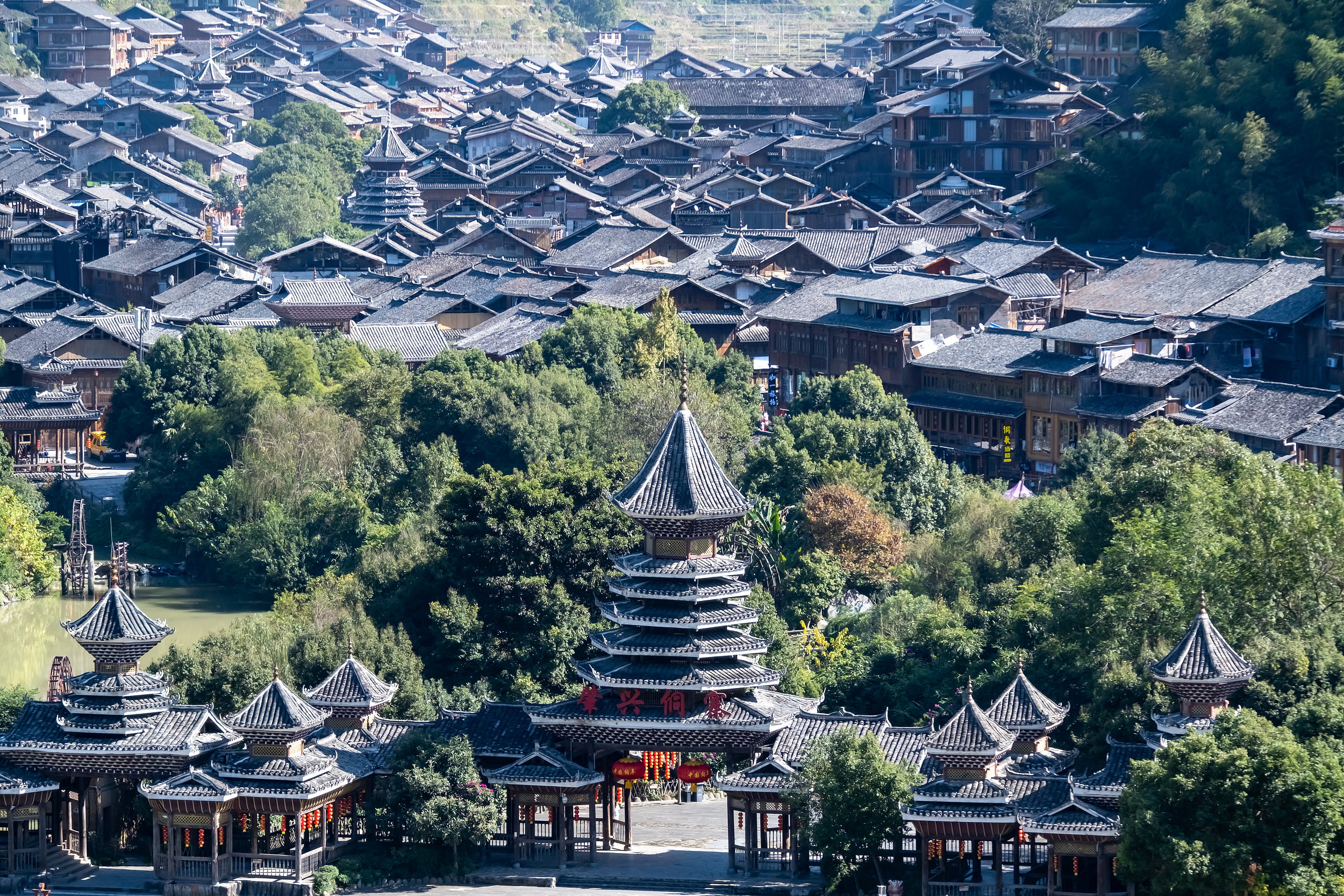
As a symbol of the Dong village, the Drum Tower has a rigorous architectural structure and exquisite craftsmanship. The Drum Tower integrates the tower, the pavilion and the pavilion, with the majesty of the pagoda, the beauty of the pavilion, and the elegance of the pavilion. There is usually a drum hanging on the Drum Tower. In the past, when the stockade encountered an invasion by foreign enemies, caught fire, discussed important matters in the stockade, or had other urgent matters to call upon villagers and villagers, they would climb the building and beat the drum, hence the name of the Drum Tower. The Drum Tower was built by the villagers who contributed materials and raised funds. The whole building was entirely made of Chinese fir, and was designed and built by the skilled craftsmen of the Dong nationality. There are no drawings for the entire building, and the dimensions of hundreds of beams, fangs, and columns are all calculated by heart. This kind of skilled craftsman is especially common in Liping, Guizhou. The Dong drum towers built in Beijing, Shanghai, Shenzhen and Japan all come to Liping to hire craftsmen. There is a big drum hanging on the top of each drum tower, and the drum is in charge of the old man. It is like a fire alarm, a robbery alarm, etc., and he is ordered to go to the tower to beat the drum. When the drum sounds, the villagers will come out and gather in the drum tower. Throughout the year, the villagers sit around the fire hall and talk about the interesting stories of the farmhouse in their spare time. Every festival, men, women and children wear festive costumes to carry out entertainment such as singing halls, “carrying officials”, “races of reeds”, and singing Dong operas. Activity. In the folklore of the Dong nationality, the Drum Tower originated from the natural worship of the cedar tree by the Dong family, and is a concrete form of worship of nature. Ancient documents recorded that the ancestors of the Dong nationality “buried a giant tree to build a building, several feet high, and singers would sleep on it at night.”