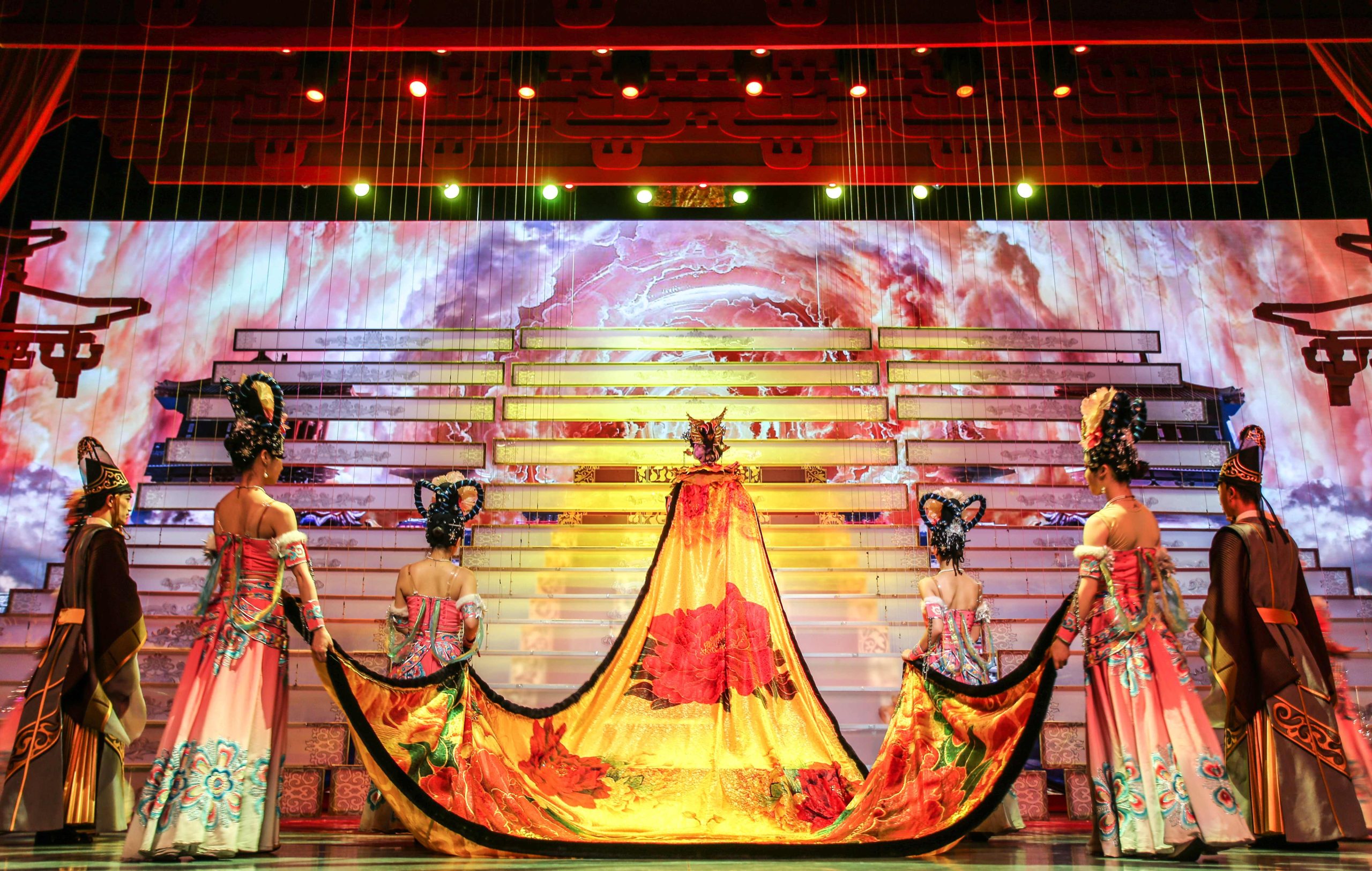
The Tang Music Palace “The Empress of the Tang Dynasty” is inspired by the dual meanings of “five sounds and eight music” and “happy palace” in the Tang Dynasty, among which the famous Tang Music Palace (Xi’an Tang Music Palace) is famous at home and abroad. Its sumptuous wine and food, gorgeous and enthusiastic imitation Tang songs and dances bring Chinese and foreign guests back to the dreamy Tang Dynasty era. Tang music and dance are a symbol of the cultural heyday of the Tang Dynasty, fully reflecting the heyday of the Tang Dynasty and the integration of ethnic groups. Tang music and dance are magnificent, the scene is spectacular, the music is high-pitched and melodious, and the movements are stretched and smooth. Today, while enjoying the carefully choreographed performance, there are also delicious flavor banquets to choose from. There are eight programs of imitation Tang music and dance: “Long Live Music”, “White Silk Dance”, “Da Nuo”, “Feathered Garment Dance”, “Qin Wang Breaking the Formation Music”, “You Chun Tu”, “Spring Warbler”, and “Stepping Song”, among which the flute “Spring Oriole” performed by the Chinese music master Gao Ming is famous.
归档: Attractions
-
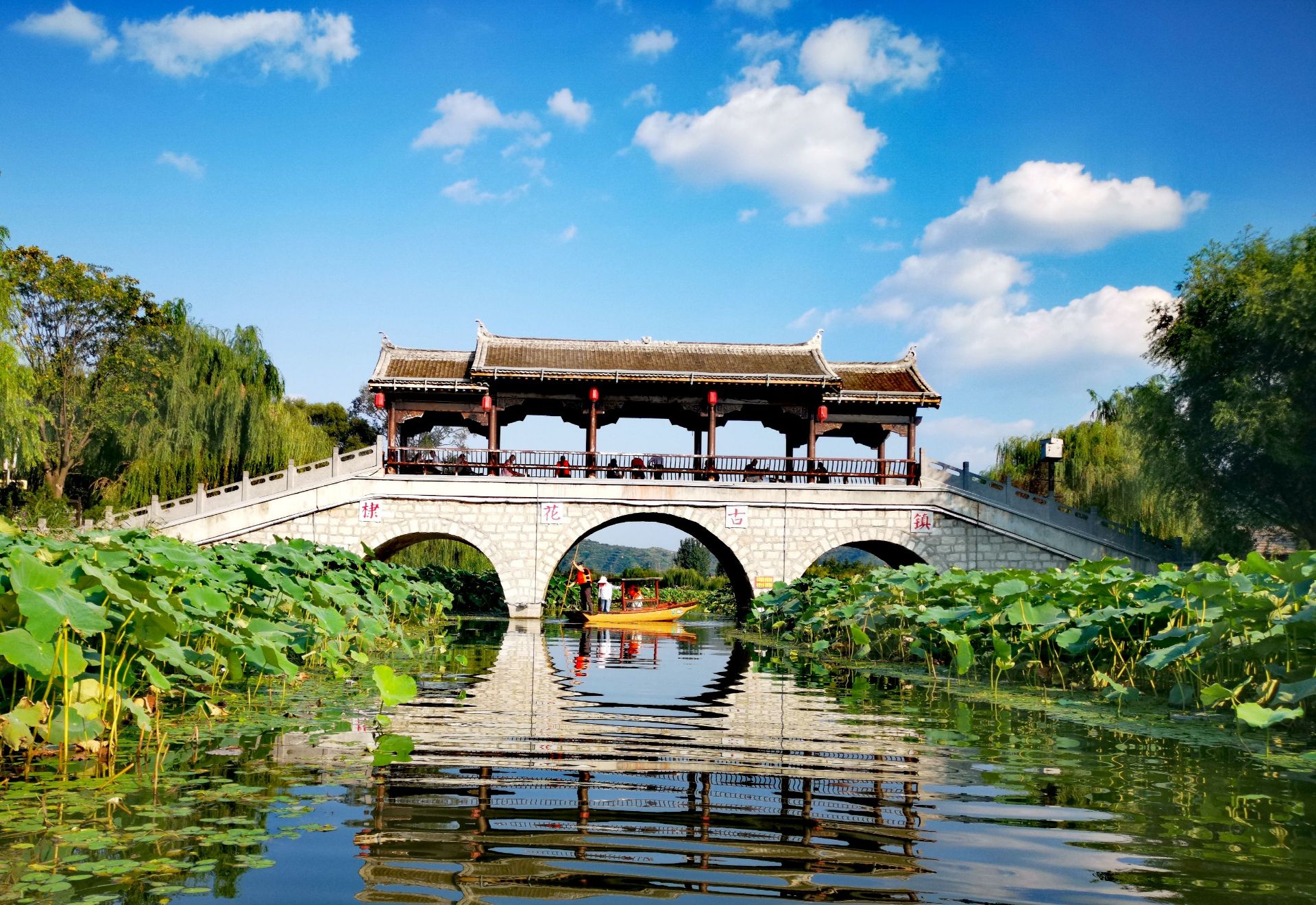
Di Hua Ancient Road
Dihua Ancient Town is the prototype of Jia Pingwa’s novel “Qin Opera”, and Qingfeng Old Street is located here. It was named after the abundance of Ditang flowers in the early years.
-

Maowusu Desert
The Maowusu Desert is located between Yulin City, Shaanxi Province and Ordos (Ikezhao League), Inner Mongolia Autonomous Region, covering an area of 42,200 square kilometers. The Great Wall runs through the southern edge of the desert from east to west. According to research, in ancient times, this area was a good pasture with fertile water plants and pleasant scenery. Later, due to climate change and war, the ground vegetation was completely lost, and sand was formed on the spot, forming the later desert (sand). There was a story of “Three Relocations to Yulin”. Today is not what it used to be, and now Yulin has become a “famous city”. There has been sand accumulation since the Tang Dynasty, and a vast desert has been formed in the Ming and Qing Dynasties. One of the big sand areas in China. It is located at 37°27.5′~39°22.5′ north latitude and 107°20′~111°30′ east longitude. It includes southern Ordos in Inner Mongolia Autonomous Region, northern sandy area in Yulin City, Shaanxi Province, and northeastern Yanchi County in Ningxia Hui Autonomous Region, with a total area of 39,800 square kilometers. The place name originated from Maowusu Village, Haizetan Township, Jingbian County, northern Shaanxi. The continuous sand belt from Mengjiashawo in Dingbian to Gaojiagou Township in Jingbian is called the small Mu Us sand belt, which is the range of Mu Us at the beginning. Since the sandy land along the Great Wall in northern Shaanxi is continuously distributed with the sandy land in the south of Ordos (Ikezhao League) in Inner Mongolia, the sandy land in the southeastern Ordos Plateau and along the Great Wall in northern Shaanxi is collectively referred to as “Mu Us Sand Land”.
-
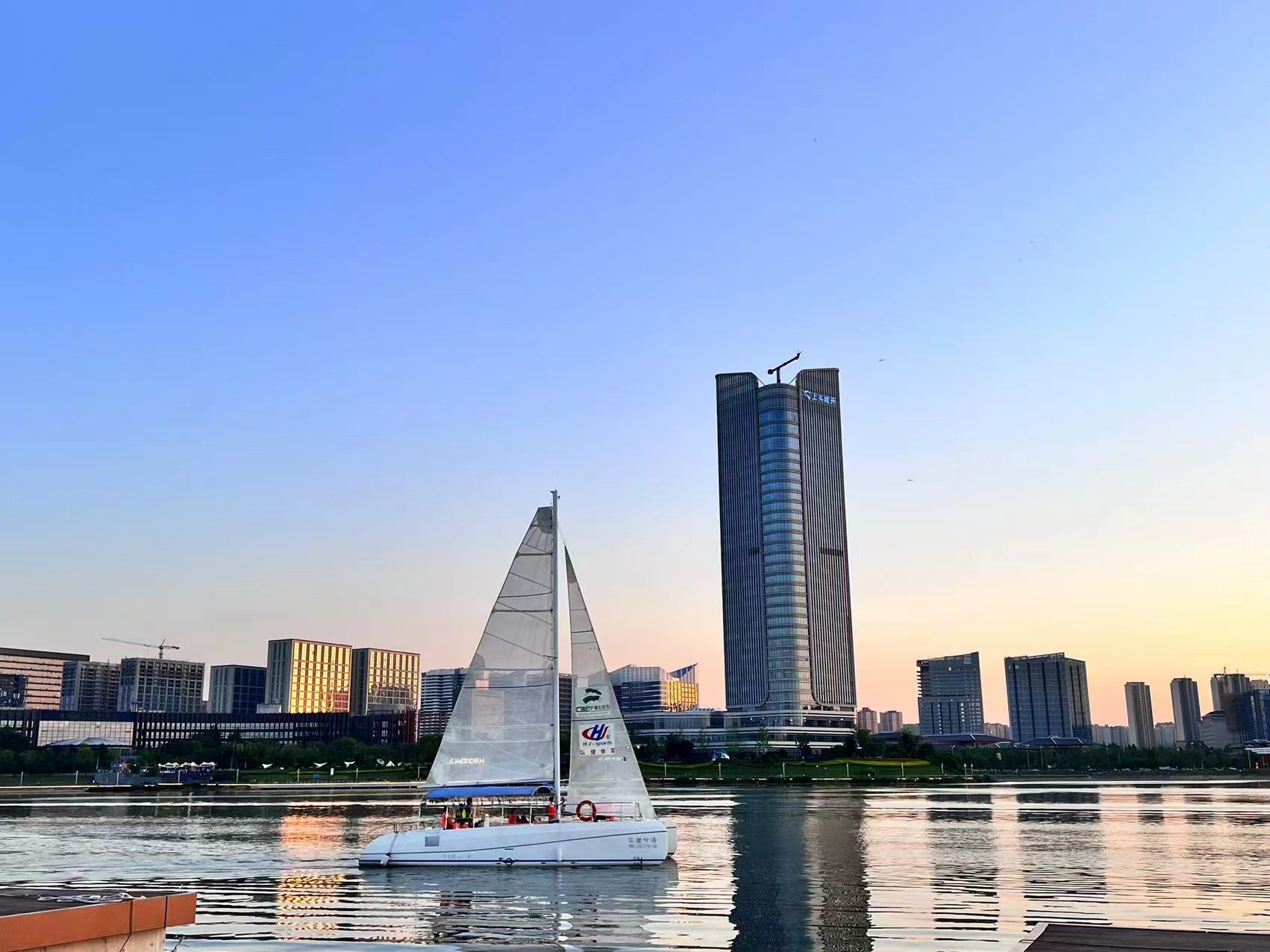
Xi’an Houhai
Xi’an Houhai is located in the Ba River water area between Eurasia Avenue and Guangyuntan Park within the Chanba Ecological Zone. The surrounding facilities include Xi’an Holiday Resort by Huaxia Culture and Tourism, Xi’an International Convention and Exhibition Center, Le Méridien Hotel, Jinjiang International Hotel, and Guangyuntan Park. Leveraging the high-quality ecological resources and historical-cultural background of Chanba and the Ba River, the center deeply explores the ecological, tourism, economic, and cultural values of water. It offers water-based leisure and sightseeing activities such as catamaran sailing boats and speedboating, promoting the development of Chanba’s “waterfront economy” and revitalizing the river. Currently, the center has become a new landmark for leisure and sightseeing for residents of Xi’an and its surrounding merchandise.
-
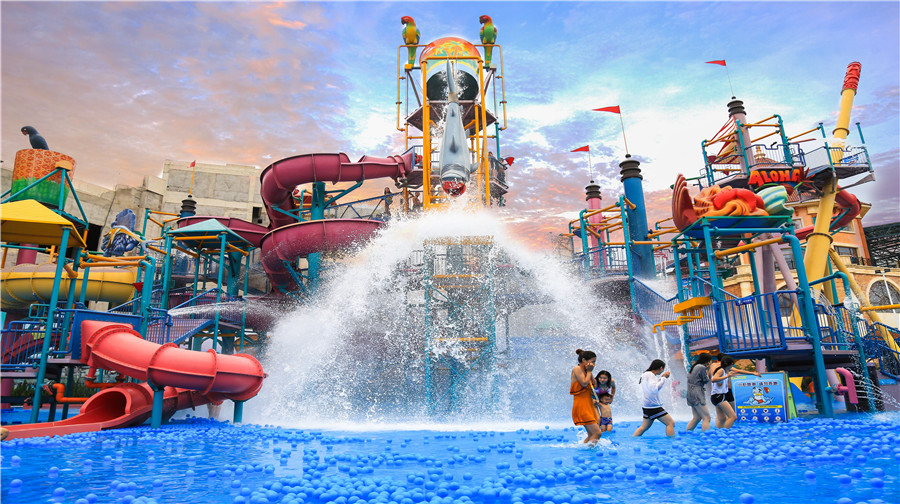
Lewa City 88°C Spring Water World
Lehua City 88°C Hot Spring Park is divided into outdoor and indoor venues. The outdoor part has themed areas such as the Underwater World, Caribbean Pirates, Sea World, and Tropical Rainforest, among which Sea Worl id for children. The indoor part is based on the Kingdom of Atlantis and consists of four floors, including the Atlantis Playground in the parent-child interaction area, the spa area, and the Korean-style sauna area.
-
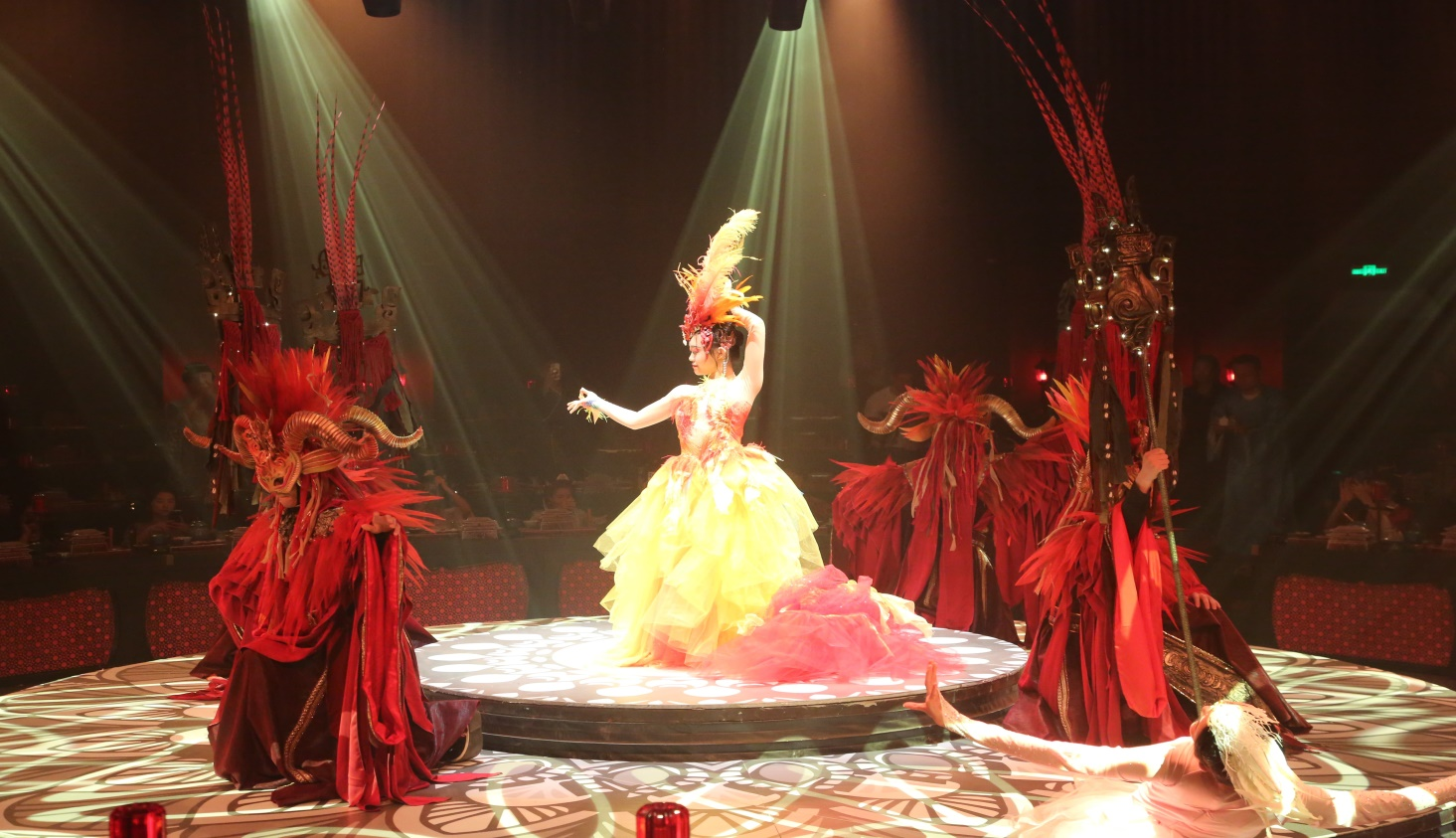
WuHuang Banquet (Datang Nightless City Branch)
Experience the grandeur of the Tang Dynasty through dance and music.Savor the essence of history with every sip and bite.The Empress Banquet is an immersive cultural dining experience that blends imperial feasts, stage performances, Hanfu culture, and more.The signature performance “Empress Wu’s Grand Banquet” recreates the imperial banquet rituals of the Tang Dynasty, inspired by Empress Wu Zetian’s coronation ceremony. Centered around the theme of feasting, this spectacular show interweaves the majestic “Music of the King of Qin Breaking the Formation,” the ethereal “Song of Rainbow and Feather Garments,” along with traditional Tang Dynasty tea ceremonies, incense arts, and floral arrangements.Guests can don custom Tang-style robes while holding replica ancient wine cups, immersing themselves in the recreated Linde Hall scene of the Daming Palace. Here, they’ll admire the agility of the Hu Xuan Dance and the vigor of the Sword Dance, while savoring replicated imperial delicacies. The performance employs cutting-edge sound, light, and projection technology to recreate the starry skies of the High Tang era, allowing audiences to experience both the majesty and romance of Empress Wu’s reign. This multisensory journey through the golden age of international diplomacy offers a cultural feast for the eyes, palate, and ears.
-
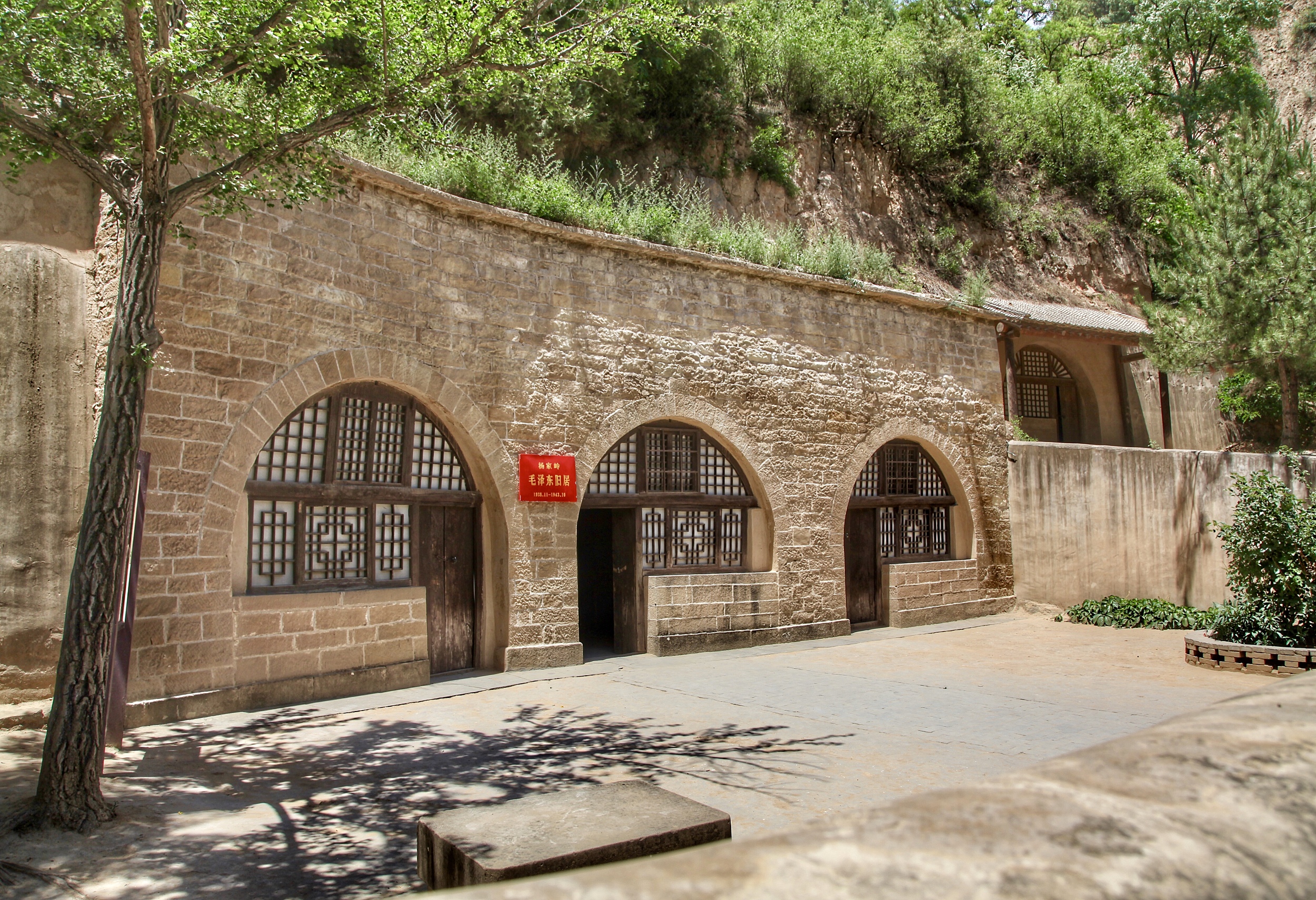
Chairman Mao’s Former Residence
The former residence of Chairman Mao in Yangjialing is a row of three-hole earthen caves connected to the stone mouth. The Chairman lived here from November 1938 to May 1943. During this period, the Chairman wrote important works such as “On New Democracy”, “Reforming Our Study”, “Rectifying the Party’s Style”, and “Economic and Financial Issues”. The Chairman met with American journalist Anna Louise Strong at the small stone table in front of the Yangjialing cave. In response to the “fear of the United States” that was popular at the time, he made a famous statement. In October 1943, the Chairman moved from here to Zaoyuan one after another. The Yangjialing Revolutionary Site where the attraction is located is located in Yangjialing Village, 3 kilometers northwest of Yan’an, Shaanxi, covering an area of 101 acres. The old site preserves the Central Auditorium, the former residence of celebrities, etc., with a total of 18 stone caves, 19 earthen caves connected to the stone mouth, 23 bungalows, and dozens of earthen caves.
-
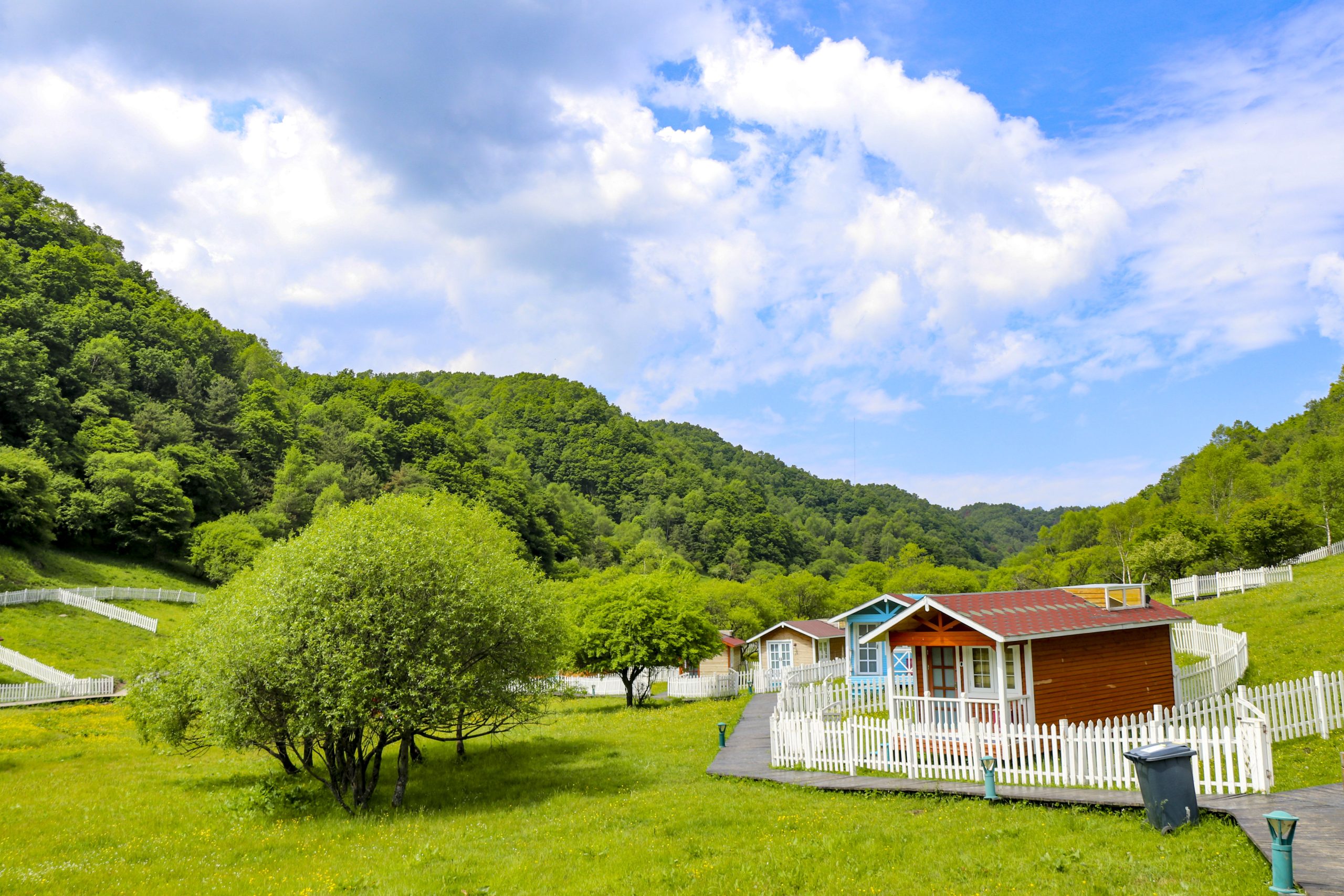
Dashuichuan
Dashuichuan is an original alpine meadow, which was once the gateway to the ancient Silk Road and—for many dynasties—a royal horse farm. The scenic area has a wide variety of different plants, along with many kinds of animals. For hundreds and even thousands of years, as the Royal Horse Garden, Dashuichuan was the place where countless pedigreed horses were born and bred. Throughout the year, the temperature is fairly stable, making it an eminent destination for tourists to come and ride horses, practice archery, go hunting, escape the summer heat and relax.
-
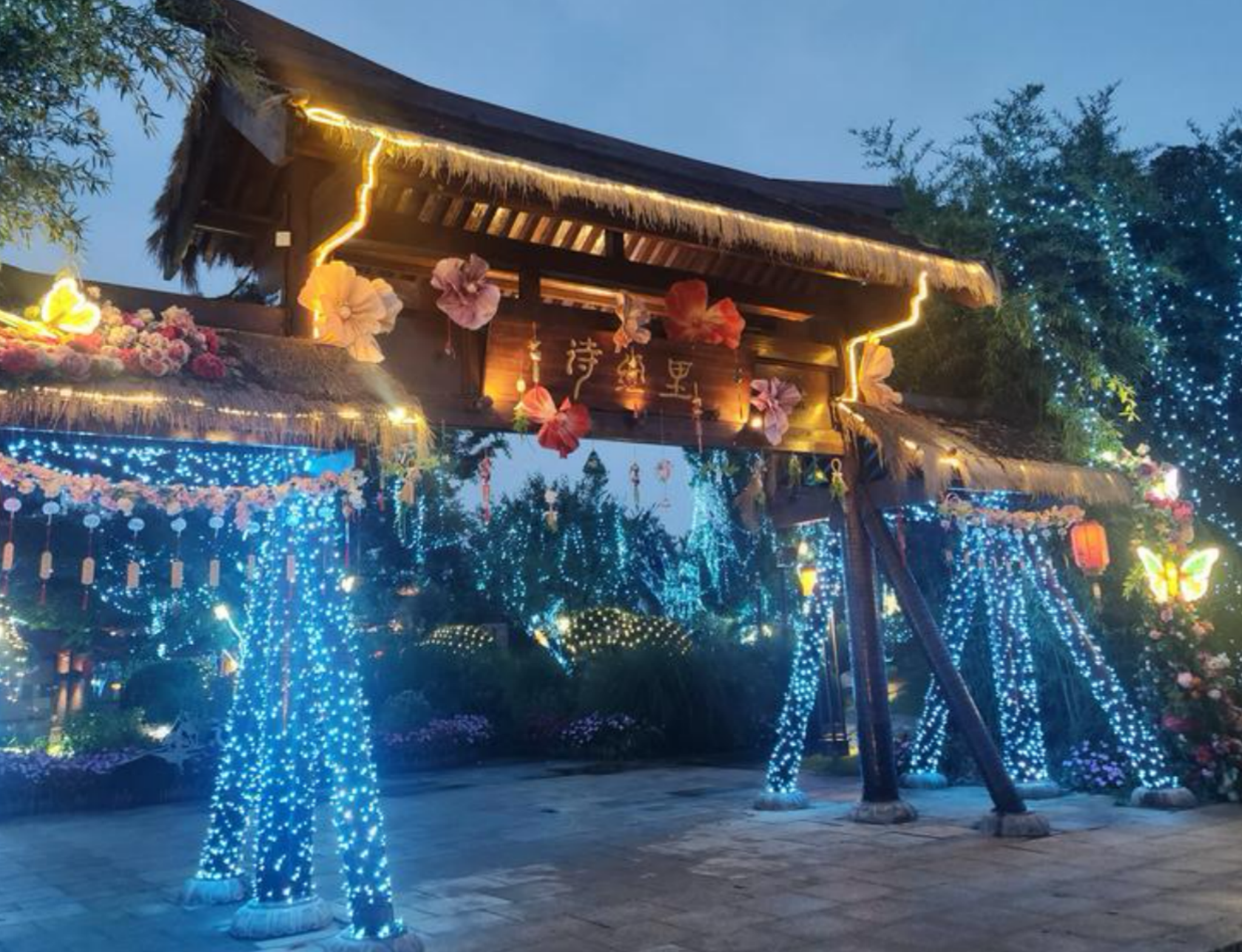
Shijingli Town
Shijingli is an antique town located in the remote Fengdong New City. It has a Shaanxi folk style. It is the birthplace of the Book of Songs, which is the theme of the Book of Songs in China. It is known as the Little Kyoto of Xi’an. It is exquisite, leisurely, and comfortable. All beautiful words can be used to describe this peaceful town deep in the city. If you are also a fairy who dreams of traveling through time, please put on a set of exquisite Hanfu and come here to find the Chang’an in your dreams.
-
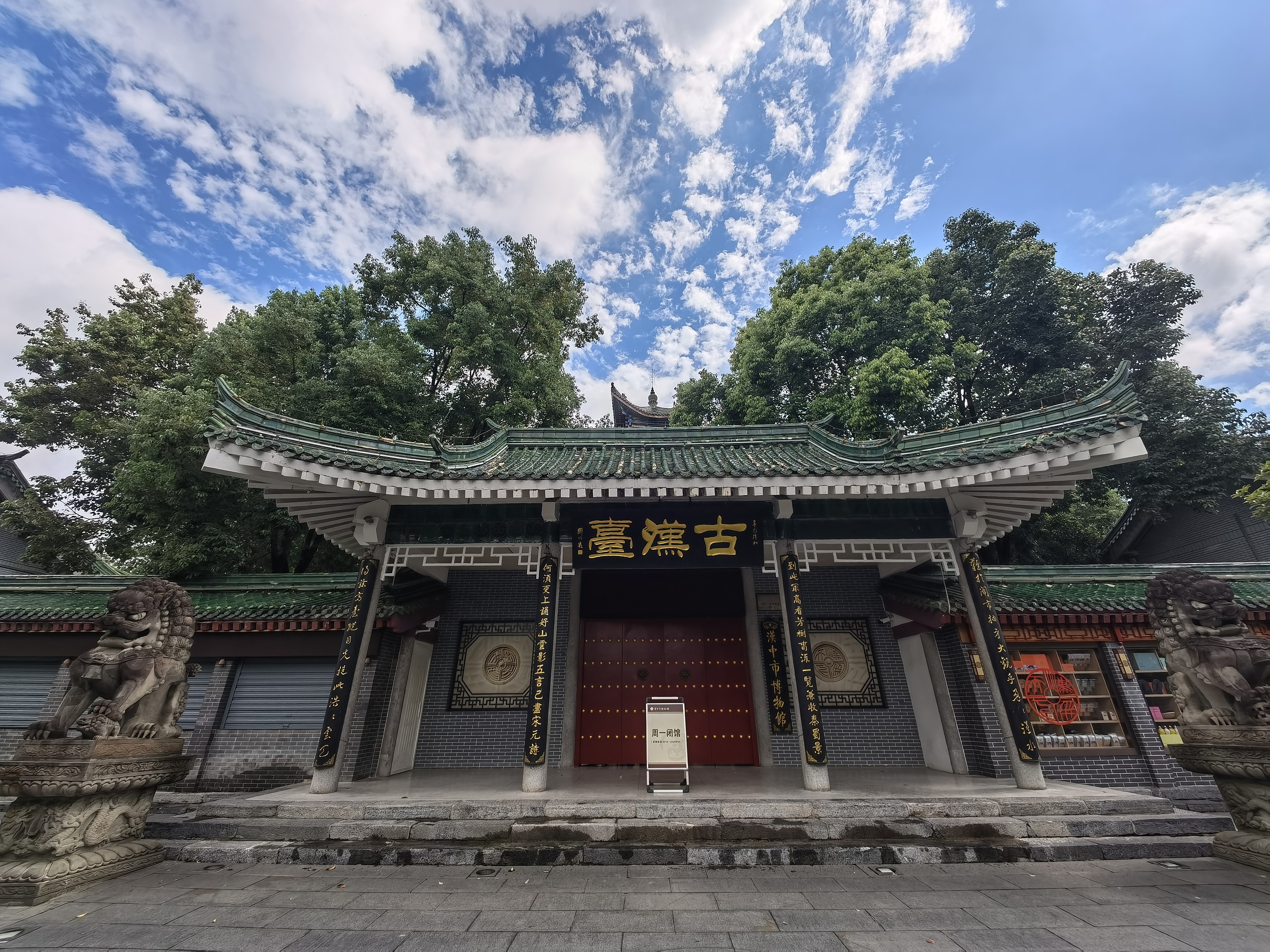
Ancient Han Terrace
Gu Han Terrace is located in Hanzhong City, Shaanxi Province, China. It is an ancient building with profound historical heritage and cultural value. As one of the important landmarks of Hanzhong City, Gu Han Terrace not only displays a long history, but also carries rich cultural connotations, attracting many tourists and history enthusiasts to visit. Gu Han Terrace was built in the Western Han Dynasty. After being repaired and expanded by successive dynasties, the building still retains its simple and elegant style, showing the charm of ancient Chinese architecture. The architectural layout of Gu Han Terrace is rigorous and unique in style. The base is towering, surrounded by ancient trees and gardens, and the environment is quiet. The buildings on the stage are mainly wooden structures, with carved beams and painted buildings, reflecting the exquisite skills of ancient craftsmen. Walking in Gu Han Terrace, tourists can feel the strong historical atmosphere and cultural charm. In addition to the building itself, Gu Han Terrace also attracts tourists with its rich historical stories and cultural activities. Every year, Hanzhong City holds various cultural festivals, such as the Han Culture Festival and Liu Bang Sacrifice, which attract many tourists to participate. These activities not only enrich the cultural life of local residents, but also provide tourists with opportunities to participate and experience.