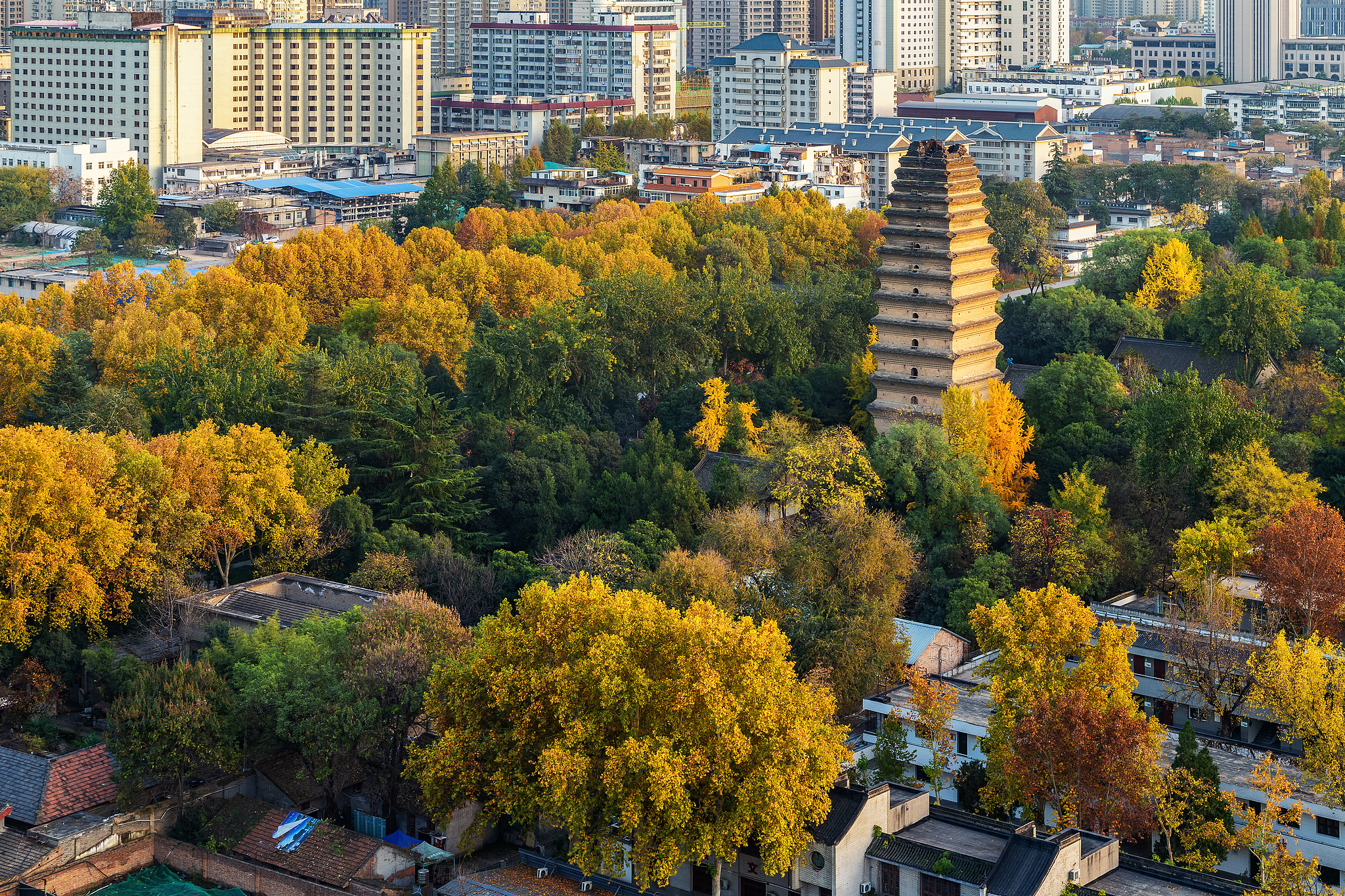
The site of Jianfu Temple within the Small Wild Goose Pagoda Heritage Park forms the core component and outdoor area of Xi’an Museum. It earned its name because its pagoda shape resembles the Giant Wild Goose Pagoda but is smaller. Compared to the bustle of the Giant Wild Goose Pagoda, this place offers much more tranquility. At the base of the pagoda, exquisite stone carvings from various dynasties are displayed outdoors, including Buddhist statues, stone lions, stone horses, and hitching posts—a must-see for visitors who appreciate folk artifacts. This multi-eaved brick pagoda originally had 15 stories but now stands with 13, reaching about 43.4 meters in height. With its elegant and slender silhouette and smooth contour lines, it is a classic example of Tang Dynasty square multi-eaved pagodas. As one of Xi’an’s important symbols of its ancient capital heritage, it holds the prestigious title of “Morning Bell at the Wild Goose Pagoda,” one of the “Eight Scenic Wonders of Guanzhong.” Jianfu Temple was originally built in 684 AD during the first year of Emperor Ruizong’s reign in the Tang Dynasty, initially dedicated to honoring Emperor Gaozong. Later, between 707–710 AD during Emperor Zhongzong’s reign, a pagoda was constructed within the temple to house Buddhist scriptures and statues brought back from India by the eminent monk Yijing.This is the tower named for its distinctive shape.Therefore, it is inseparable from the Jianfu Temple and serves as a physical witness to the temple’s former glory and a landmark structure. After enduring the vicissitudes of time, most of the Jianfu Temple’s halls and buildings no longer exist.But thisPrecious Tang Dynasty architectural relics have been preserved to this day.
归档: Attractions
-
Guanshan Grasslands
The Guanshan Grasslands are located in Long County near Baoji City. The area is known for its beautiful alpine landscape with pristine forests, meadows, rivers, mountains, and valleys. The famous Han dynasty military leaders Wei Qing and Huo Qubing passed through here on their way to launch a campaign against the Xiongnu nomadic tribes.
-
Cuihua Mountain·Qinling Zhongnanshan Unesco Global Geopark
Cuihua Mountain is located in the northern part of the Qinling mountain range, in the south of Xi’an. Here you can see steep cliffs and sharp peaks, boulders and caves, barrier lakes and other natural landscapes formed by landslides, hence it is known as the natural museum of landslides. Cuihua Mountain is made up of three scenic areas, Bishan Lake area, Heaven Lake area and Ruins of landslide area. Many successive generations of scholars have left behind multiple stone carvings.
-
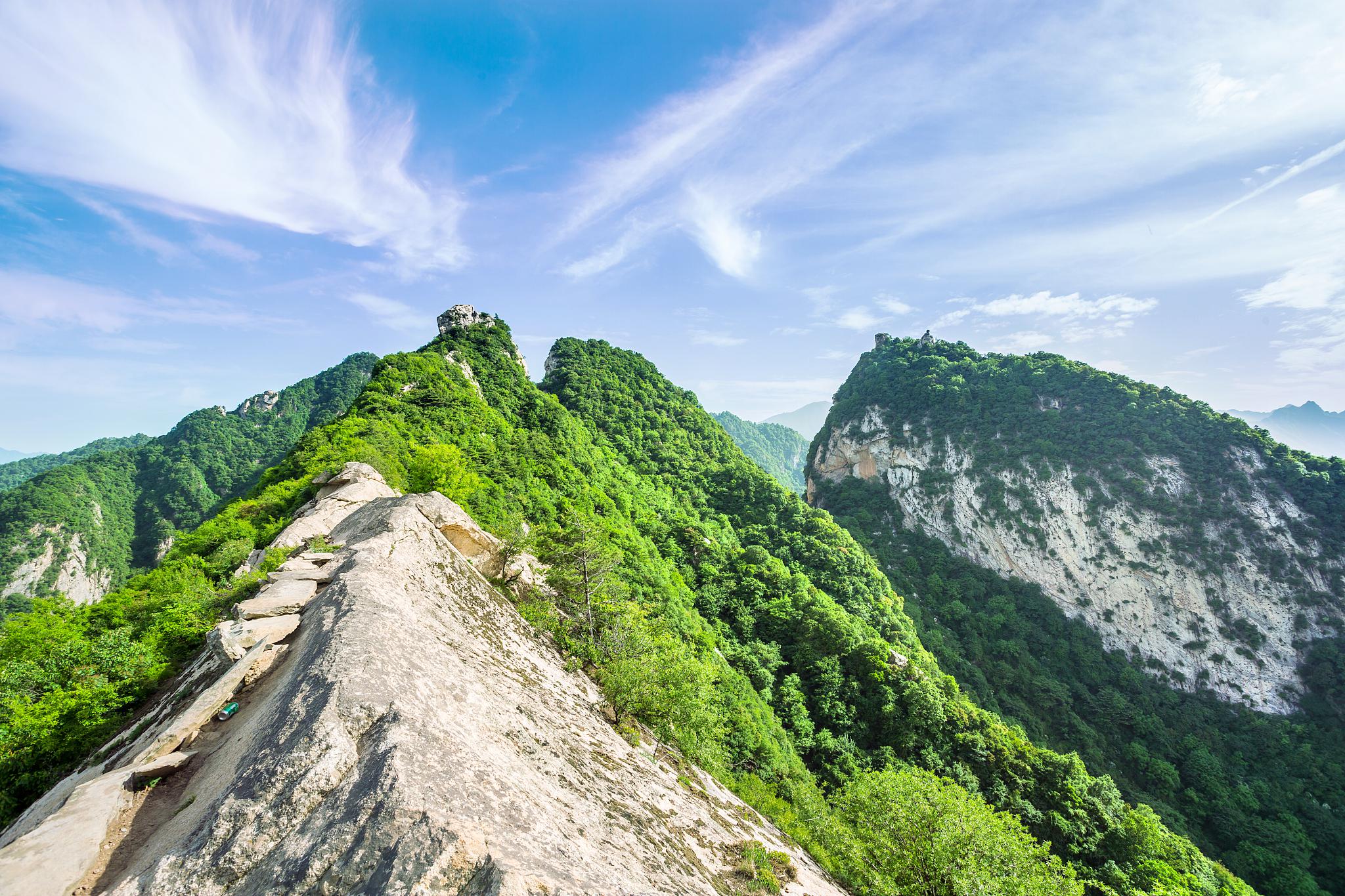
Zhongnan Mountain
Zhongnan Mountain belongs to a section of the Qinling Mountains, from Mei County in Baoji City to Lantian County in Xi’an City in the east. It consists of scenic spots such as Nanwutai, Cuihuashan and Louguantai. Zhongnanshan is the main truth of Taoism. The people who have read Mr. Jin Yong’s martial arts novels must remember the phrase “The end of the Nanshan Mountain, the tomb of the dead, the gods and heroes, and the extinction of the rivers and lakes”. Because of this, Zhongnanshan is even more mysterious. Many martial arts fans are also curious about it. They want to find the tomb of the dead and the Chongyang Palace in the book.
-
Baiji Bronze Ware Museum
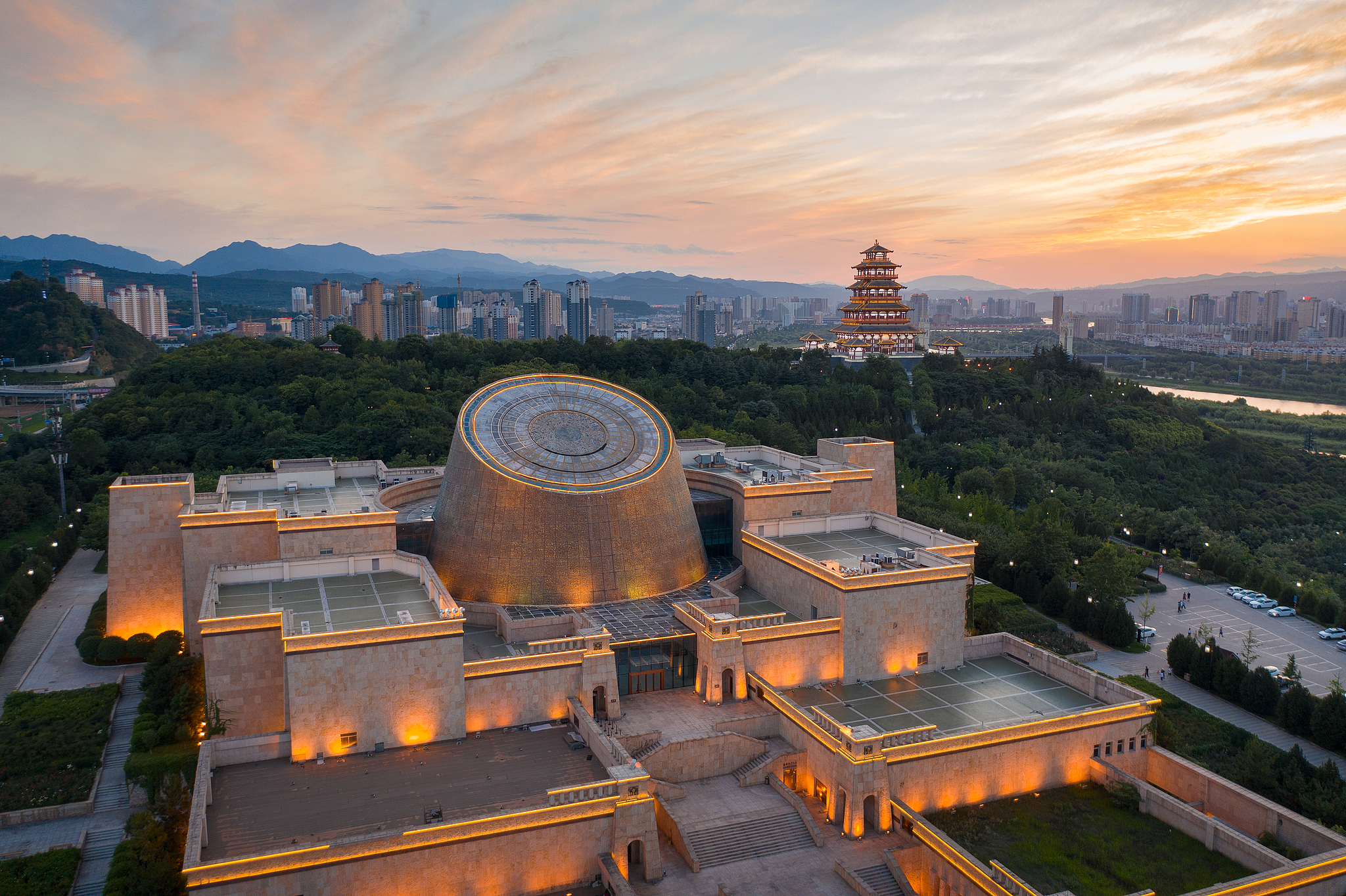
The Baoji Bronzeware Museum is in the Chinese Shi-ku Garden of Baoji City, “the hometown of bronzeware.” The museum has four exhibition halls, and Halls 1 and 2 are the focuses of the tour. The museum displays high quality bronzeware, such as the Hu gui from the period of King Li of Zhou and the treasures of Qin Duke Bo. The He zun, which is inscribed with the words “Here in China I dwell,” is kept here.
-
Hongjiannao Wetland
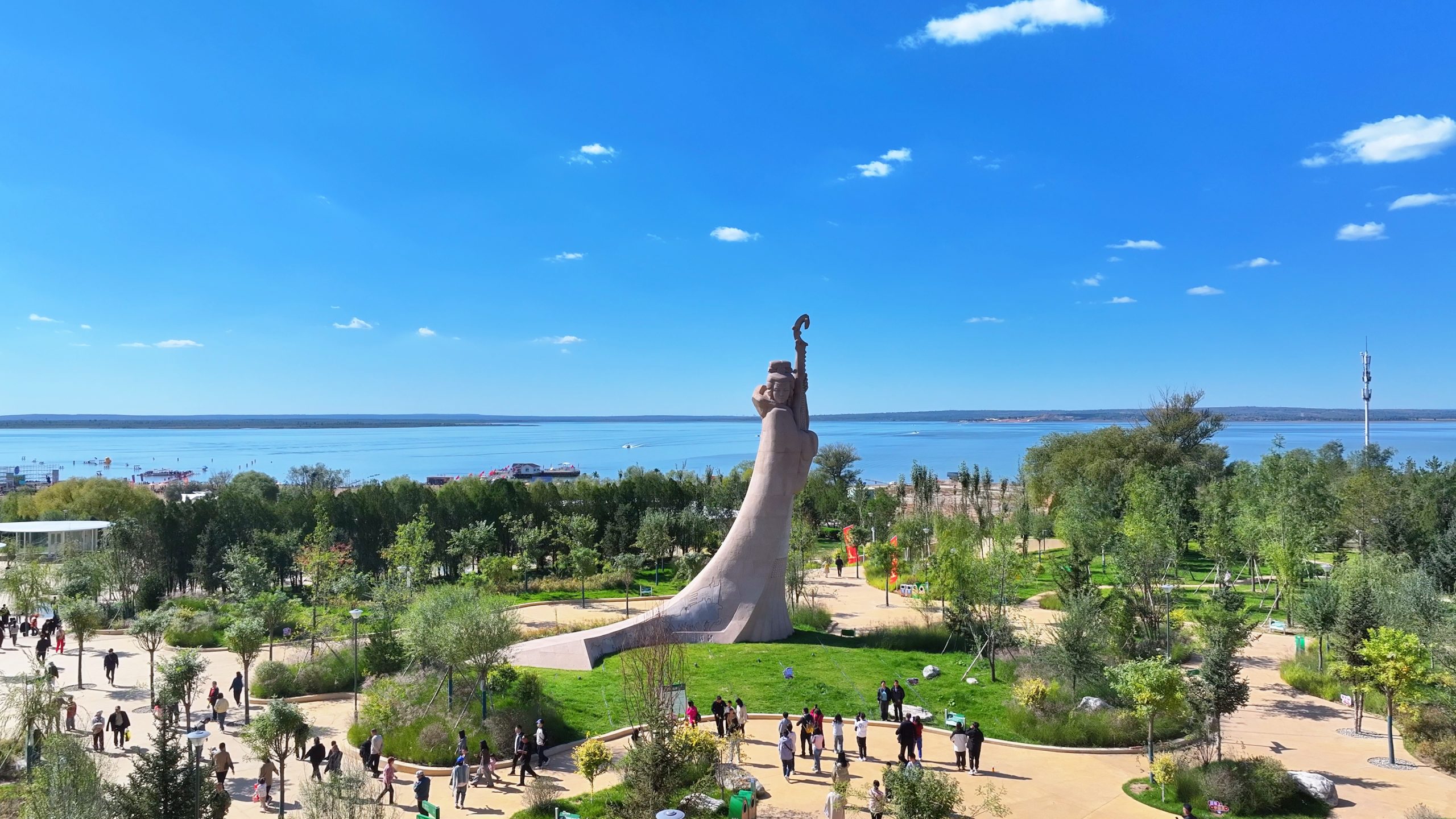
Hongjiannao Wetland is in the northeast corner of Erlingtu Town, Shenmu County, Yulin City. It is a large inland freshwater lake in Shaanxi Province and is known as the “Pearl in Sand Sea.” Visitors enjoy sunshine and watch gulls, geese and fish stocks in the lake of this picturesque wetland. On the southwest bank, there is a peninsula where you can find many wild psammophyte plants thriving in the sands. It’s a must-go spot.
-
The Guangren Lama Temple
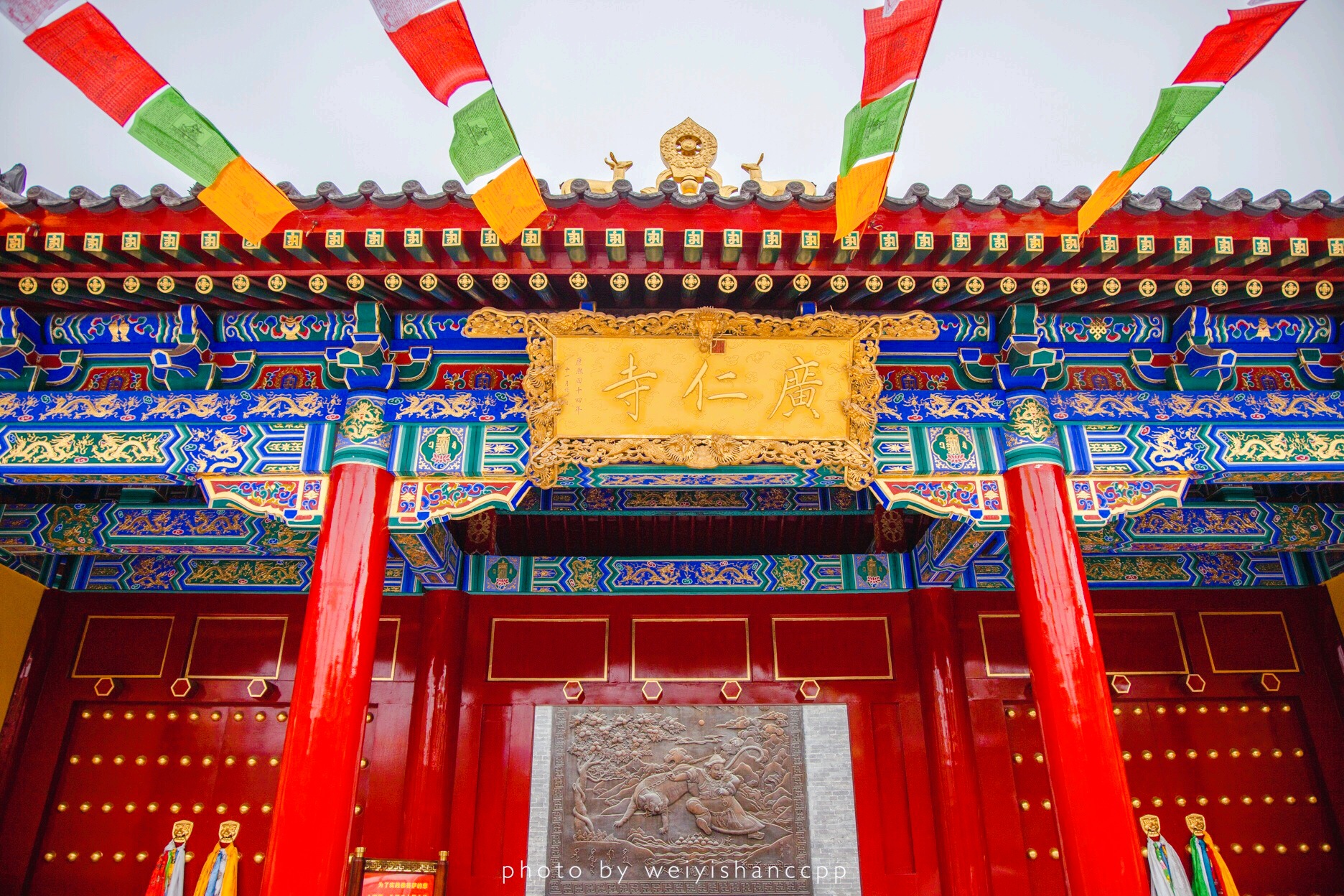
Guangren Temple in Xi’an is the only Tibetan Yellow Sect (Gelug sect) in Shaanxi. It was built in 1703 by Emperor Kangxi, the sage of the Qing Dynasty, and the plaque “Guangren Temple” was personally inscribed. After Guangren Temple was built, living Buddhas and Lamas from Tibet, Mongolia, Qinghai, Gansu and other regions all stayed at the temple to pay their respects when passing through Shaanxi. Guangren Temple is also the only main dojo of “Green Tara” in China. Green Tara is said to be the incarnation of Guanyin Bodhisattva in Lamaism. After entering the gate of Guangren Temple, there are buildings such as the Daxiong Hall, the Hall of Tibetan Scriptures, and the Triple Hall of the Fatang on the central axis. When you step into the Mahavira Hall, you will find that what is enshrined in the hall is not the common Sakyamuni Buddha statue, but a 2-meter-high gilded bronze statue of Tara, a majestic and exquisite gilt bronze statue. To the left of the green Tara is The statue of the goddess in wooden bun and the wooden giant light statue on the right are all cultural relics of the Tang Dynasty. The whole hall is surrounded by 40 prayer reels, full of Tibetan Buddhist monastery style. Although Guangren Temple is not big, there are many things to see. In addition to the Green Tara Buddha statue in the Mahavira Hall, you can also see the “Imperial Guangren Temple Stele” in the temple. The inscription on the inscription was written by Kangxi and recorded the process of building the temple; The original has been preserved for more than 300 years. The rice paper has turned yellow for a long time, but the handwriting is clear and dignified, and it is a masterpiece of calligraphy. In front of the second hall in the temple, you can see a white marble lotus jar, which is carved from a piece of white marble. The outside of the jar is carved with brocade, and the inside of the jar has an inscription in official script carved during the Qianlong period, commonly known as “Qianlong orchid jar”. In front of the scripture hall, there is also a “lotus throne carved from white marble”. Legend has it that the Buddha statue of Sakyamuni on the throne was brought to Tibet by Princess Wencheng. In addition, there are also a pair of Nanmu dragon lanterns presented to Guangren Temple by the Empress Dowager Cixi when she traveled west, the plaque of “Ciyun Xiyin” inscribed by Emperor Kangxi, the plaque of “Dharma Xiang solemn” inscribed by Cixi’s imperial inscription (hanging in the Thousand Buddhas Hall), There are a number of precious plaques such as the plaque of “Buddhist Holy Land” inscribed by Qianlong and the plaque of “Solemn Buddha Land” inscribed by Kang Youwei.
-
Han Yangling National Archaeological Site Park
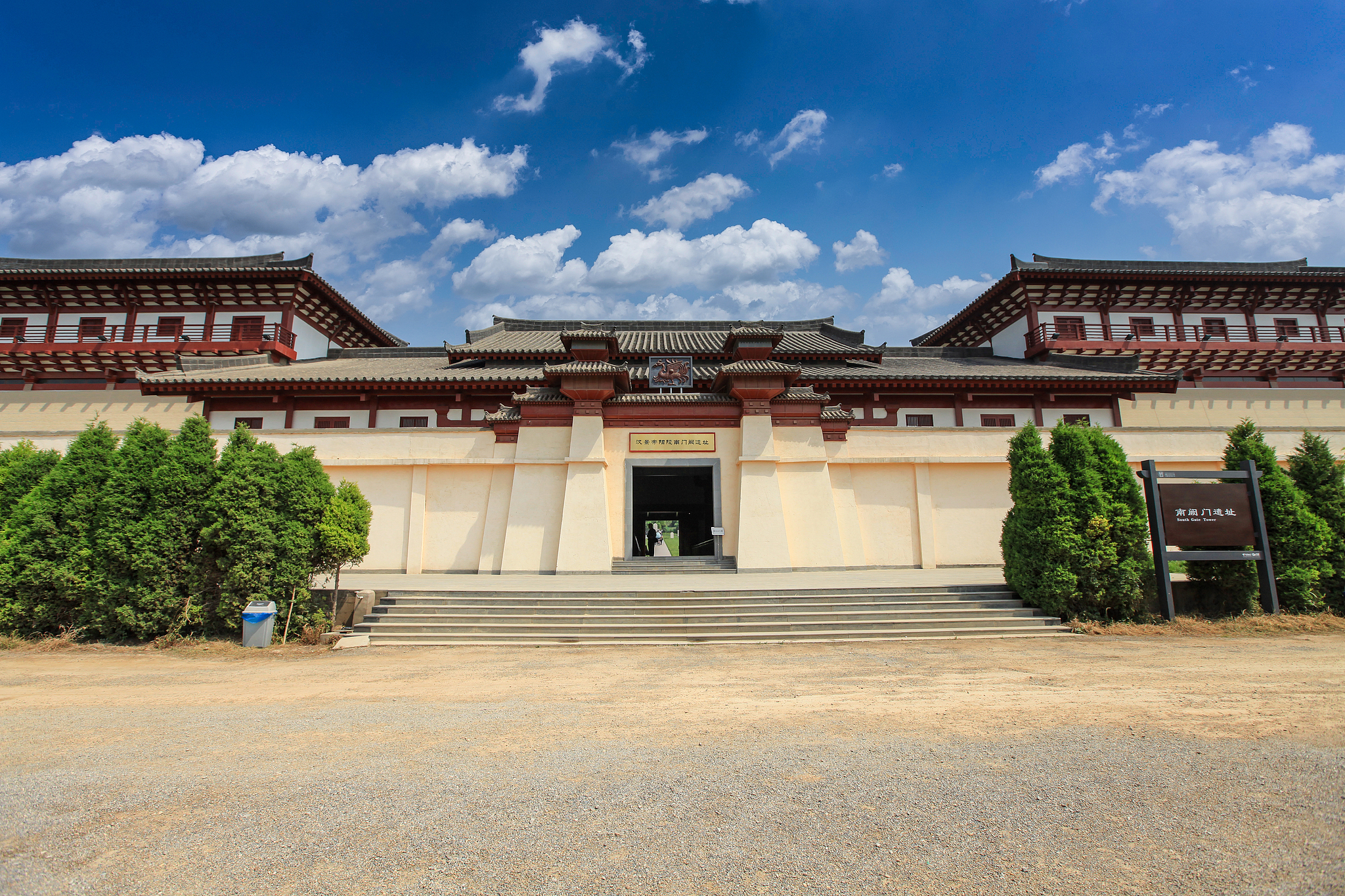
The Yangling Museum of Emperor Jing of Han Dynasty is located on the bank of Wei River in the northern suburbs of Xi’an. It is an archaeological site museum built based on the Yangling of Han Dynasty, a national key cultural relic protection unit. It was officially completed and opened in 1999. It is now a national first-class museum, a national archaeological site park, and a national AAAA-level tourist Attraction. 1. Main attractionsAs a large-scale site protection and display museum, Hanyang Mausoleum was rated as one of the top ten archaeological discoveries of the year and listed in the top 100 archaeological discoveries in China in the 20th century for its rich archaeological results, complete site preservation and complete protection and display system. It is China’s first underground site museum that allows immersive experience. It is also one of the largest site museums in China with an area of more than 3,000 acres. It is famous both at home and abroad for its advanced and unique cultural relics protection concepts and display methods.Four basic exhibition halls have been built, including the Hanyang Mausoleum Archaeological Exhibition Hall, the Imperial Mausoleum Outer Storage Pit Site Protection and Exhibition Hall, the Nanquemen Site Protection and Exhibition Hall, and the Deyang Temple Site Protection and Exhibition Area, as well as natural landscapes such as the blooming rose garden, the colorful cherry blossom forest, and the swaying hundred-acre ginkgo forest.Here, you can not only feel the majestic and profound Han culture, appreciate the beautiful garden scenery, but also get a rare experience of the authenticity of the archaeological site, which can trigger Unlimited historical imagination.The Imperial Mausoleum’s Outer Storage Pit Site Protection Exhibition HallThe outer storage pits are an important part of the imperial mausoleum, with 81 pits surrounding the imperial mausoleum. The Imperial Mausoleum Outer Storage Pit Protection Exhibition Hall is the world’s first fully underground site museum using advanced cultural relic protection technology, built on 10 outer storage pits in the northeast of the imperial mausoleum. The hollow coated electrically heated glass curtain wall and passages in the museum separate the cultural relics and tourists in two completely different temperature and humidity environments. Under the premise of scientifically protecting the cultural relics, tourists can appreciate the archaeological excavation site and related relics from close range and from multiple angles in a mysterious environment. It is a model of the perfect combination of modern technology and heritage protection.In addition, the holographic imaging program uses internationally advanced film and television imaging technology to interpret the real historical events of the year, traveling through time and space, immersing tourists’ thoughts in the colorful court life of the former Western Han emperors. Hanyangling Archaeological Exhibition HallThe Hanyang Mausoleum Archaeological Exhibition Hall is a comprehensive exhibition hall with a unique architectural style and novel display methods. The unique exterior structure of the ruins is consistent with the overall ancient historical environment of the mausoleum, creating a sense of historical vicissitudes.The exhibition halls on the upper and lower floors are based on the historical background, archaeological discoveries and protection and inheritance of Han Yang Mausoleum. Nearly a thousand fine cultural relics are exhibited. Through beautiful pottery figurines, simple and elegant utensils, and seals that follow etiquette and regularity, etc., the exhibition strives to present the history of the Han Dynasty, the archaeology of Han Yang Mausoleum, and the results of protection, display and utilization from multiple angles. The design that combines the sense of history with modern elements makes the elements of Han culture perfectly fit with the connotation of the site. It wipes off the dust of history and walks into the era that was later revered as the “Reign of Wen and Jing” with the audience, appreciates the scene of governance that has been passed down for thousands of years, touches the memory of Han culture that is deeply rooted in the blood of the nation, and appreciates the stories behind the cultural relics. Nanquemen Site Protection Exhibition HallNanque Gate is the southern gate of the four gates of the imperial mausoleum, also known as Zhuque Gate. It consists of two groups of symmetrically connected “three-que” buildings. It is the earliest, highest-level and largest imperial mausoleum que building site discovered so far. The Nanque Gate Site Protection and Exhibition Hall looks like a Han-style que gate building, which not only protects the existing site completely, but also shows tourists the majestic and tall style of the “three-que” building that only the emperors of the Han Dynasty could enjoy. Deyang Temple Ruins Protection and Exhibition AreaThe Deyang Temple Ruins are extremely important architectural ruins in the Yangling Mausoleum, covering an area of 60,000 square meters. The plane is a “U”-shaped double corridor structure, with a regular shape and a large scale, comparable to the ritual architecture in the southern suburbs of Chang’an City in the Han Dynasty. It is the best-preserved imperial mausoleum temple architectural ruins discovered so far. In terms of protection and display techniques, the original state of the ruins is combined with partial restoration and elevation, and large-scale greening is adopted, so that this precious ruins can be effectively protected and tourists can appreciate the grand momentum of the Western Han Dynasty ancestral temple architecture. Park sceneryIn order to further promote China’s excellent traditional culture, promote the integration of culture and tourism, realize the consensus that culture is the soul of tourism and tourism is the carrier of culture, and strengthen the international competitiveness of China’s cultural and tourism industries. Our institute uses green landscape as the site identification system and creates characteristic landscapes such as “Rose Garden”, “Cherry Blossom Garden” and “Ginkgo Forest”. Among them, the “Ginkgo Forest” has held nine consecutive unique “Hanyang Mausoleum Golden Autumn Ancient” Ginkgo Festival series activities since 2014, in November every year when the ginkgo leaves enter the viewing period. Since then, when talking about the “Ginkgo Forest”, it is necessary to go to Hanyang Mausoleum. Self-driving route 1. Visitors from Xi’an can drive north from Weiyang Road, take the Xitong Expressway, cross the Weihe River Bridge and drive onto the Airport Highway to arrive. 2. Visitors from Xi’an (Xi’an Ring Road) and Xi’an Xianyang International Airport can take the Qinhan New City exit of the airport expressway and drive eastward toward Lanchi Avenue, then follow Lanchi Avenue, Zhengyang 3rd Road, and Lanchi 3rd Road to the South Gate of Hanyang Mausoleum; or drive eastward along Lanchi Avenue via County Road 101 to the airport highway. 3. From Xianyang, drive east on Lanchi Avenue, then take Zhengyang 3rd Road and Lanchi 3rd Road to the South Gate of Hanyang Mausoleum; or drive east on Lanchi Avenue and take County Road 101 to the Airport Highway. (Note: Due to the progress of road maintenance, it is recommended to refer to the navigation results.) Kind tips 1.The airport highway entrance is the recommended entrance to the Attraction. 2. Visitors can enter the park with their valid ID card and reservation QR code. 3. People over 65 years old, the disabled, pregnant women and other people with mobility difficulties can be given priority for inspection and entry into the park under the guidance of security staff. Minors, the elderly and Seniors with mobility difficulties must be accompanied by their family members when visiting. 4.If you have any questions after reading this guide, please call the consulting service hotline: 029-62657530, 029-62657569. Thank you for your understanding and cooperation, and wish you a pleasant visit!
-
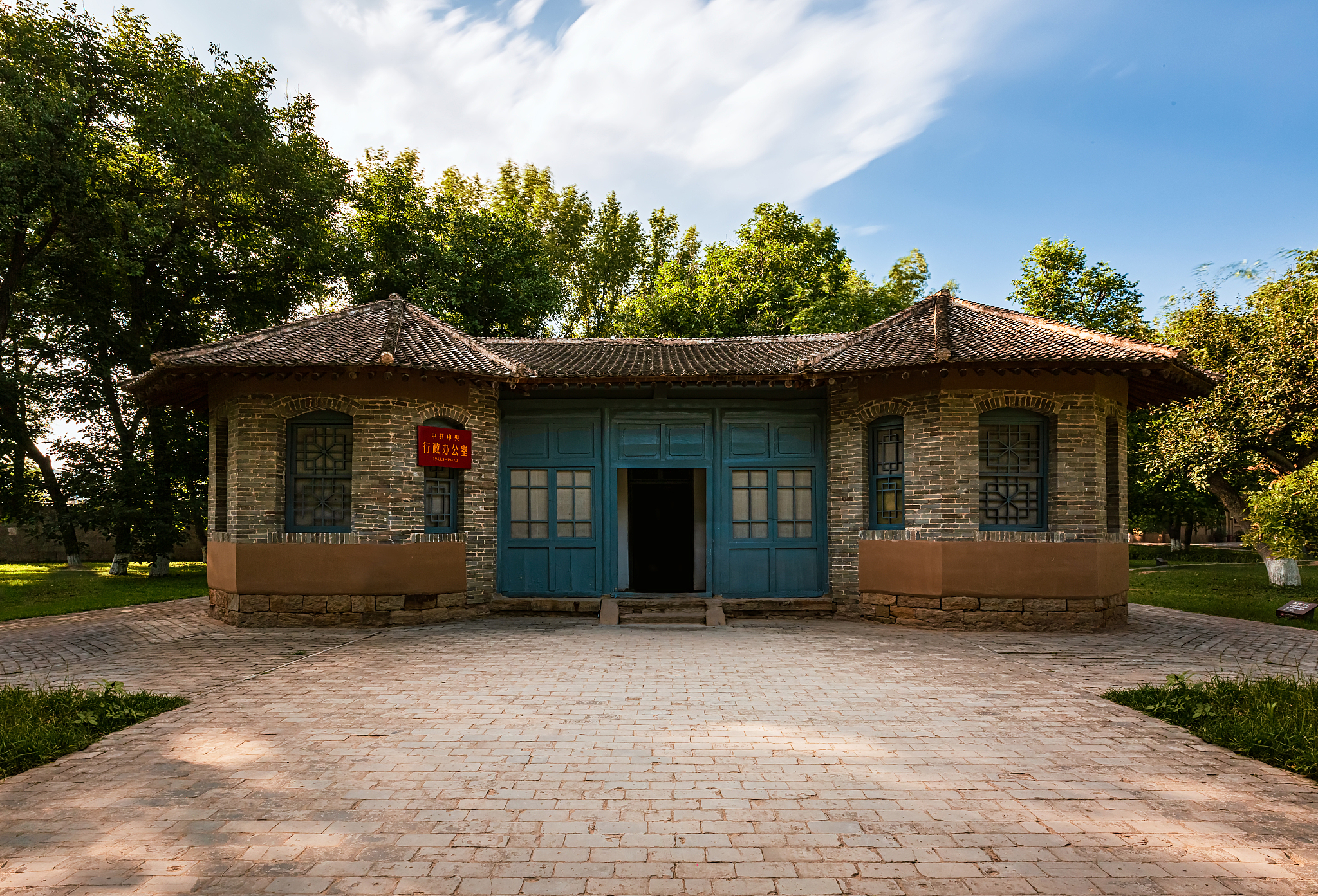
Zaoyuan Revolutionary Site
The Zaoyuan Revolution Former Site was previously the manor of a landlord. After the CPC Central Committee moved to Yan’an, it became the site of the former CPC Central Committee Investigation Department. The site was renamed “Yan Yuan,” and there are Chinese characters “Yan Yuan” written by Kang Shu on both sides of the stone pillars at the gate of the site. The site now comprises the small hall of the Secretariat of the CPC Central Committee and the former residence of Mao Zedong, Zhou Enlai and Liu Shaoqi. It is also a garden-style revolution commemoration site and a major base for providing traditional revolutionary education in China, attracting countless travelers throughout the year.
-
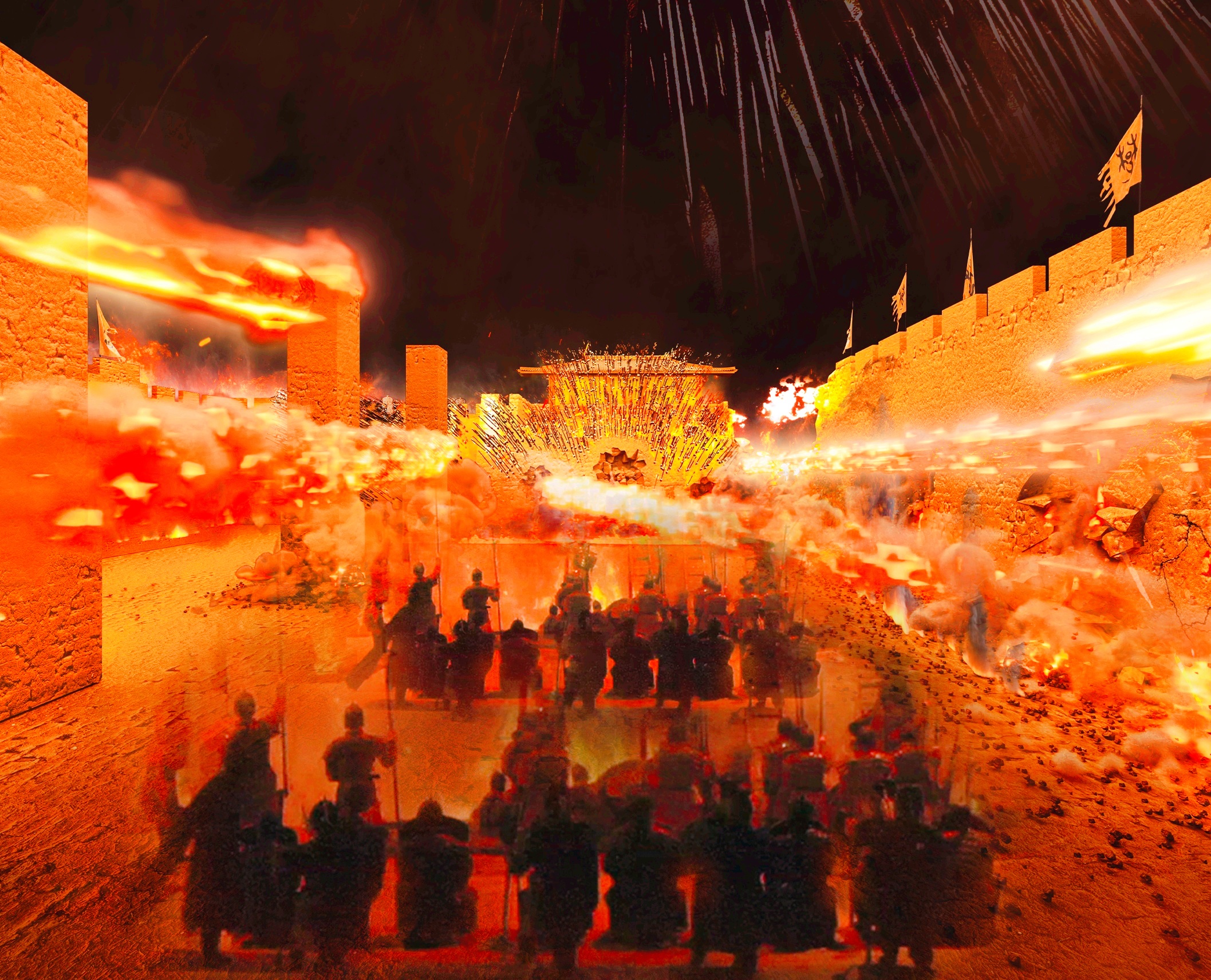
An Army Reborn
The performance of “The Resurrected Legion” is a Chinese real-scene immersive multimedia war epic drama, directed by the Chinese director Mr. Jin Tiemu, and performed in Lintong, the hometown of Terracotta Warriors and Horses. The play consists of four acts and ten scenes. Through court discussions, conscription, mobilization, family letters, siege, sacrifice and other dramas, family letters are worth ten thousand dollars, children travel thousands of miles, mother worries, newlyweds and other emotions, so that tourists can be personally moved The feelings of family and country, war can end the war, and can open up the spirit of iron and blood to strengthen the country of eternal peace. Through repertoires such as sculpting the terracotta warriors, resurrection, and ending, the guests who came to visit the terracotta warriors and horses clearly understand that the terracotta warriors and horses, the eight wonders of the world, are the soul and blood of the Great Qin Dynasty. , Only then can there be Daqin. The Qin Terracotta Warriors standing in the Qinling Museum today are the monuments of countless unsung heroes. These ordinary Qin people created the unified Qin State. Our characters come from the Qin people. Our territory is the continuation of the Qin Empire. We are unified The Chinese nation began to take shape during the Qin Empire. They are in our blood…