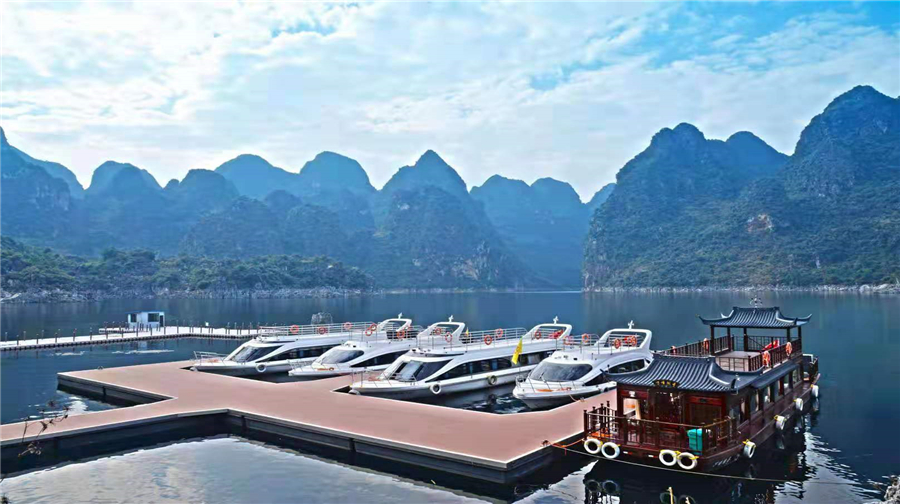
Wanfeng Lake Tourist Wharf is located in Xingyi City, Qianxinan Prefecture, Guizhou Province, about 30 kilometers away from Xingyi City. You can take a Cruise from the wharf to enjoy the beautiful scenery of Wanfeng Lake. The Cruise route is: Tourist Wharf – Water Stone Forest – Hongchun Wharf – Jilong Fort – Water Stone Forest – Small Three Gorges – Tourist Wharf (this route is for reference only, please refer to the actual Cruise route). The scenery of lakes and mountains along the way is natural, and the unique Caster cone-shaped peaks are like mighty soldiers guarding this lake.
归档: Attractions
-
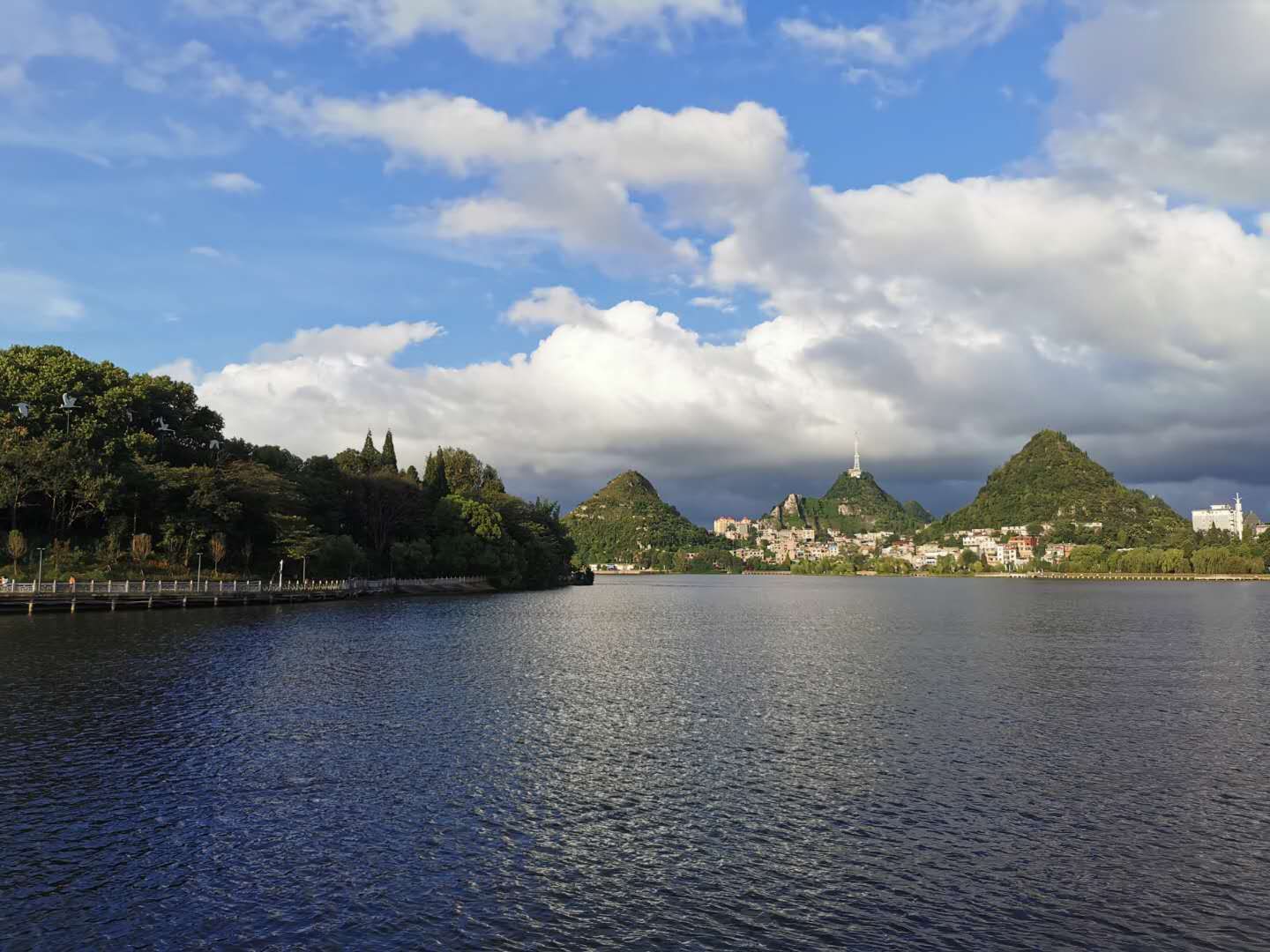
Hongshan Lake
Hongshan Lake Park, located in Xixiu District, Anshun City, Guizhou Province, is a shining ecological gem in the city center, renowned for its beautiful lake and mountain scenery and pleasant environment, earning it the title of Anshun’s “city living room.” Formerly the Hongshan Reservoir, an artificial lake, the park’s core area includes a lakeside greenway, a nine-arch bridge, Lion Mountain Park, and wetland landscapes, integrating leisure, entertainment, and ecological functions. It is a national 4A-level tourist attraction. The park’s design emphasizes interaction between people and nature, incorporating the “sponge city” concept, with a layered spatial layout that blends open and closed spaces. Rain gardens and pavilions surround the lake, reflecting native trees and creating a tranquil atmosphere. With comprehensive facilities including boats, fitness trails, and a multi-functional plaza, it supports concerts and light shows. The air is fresh, and the paths are clean, making it an ideal spot for locals to jog, dance, and for tourists to take photos. Hongshan Lake Park is not only an ecological model but also a cultural tourism landmark of Anshun, a bridge connecting the city and nature, and well worth exploring in depth.
-
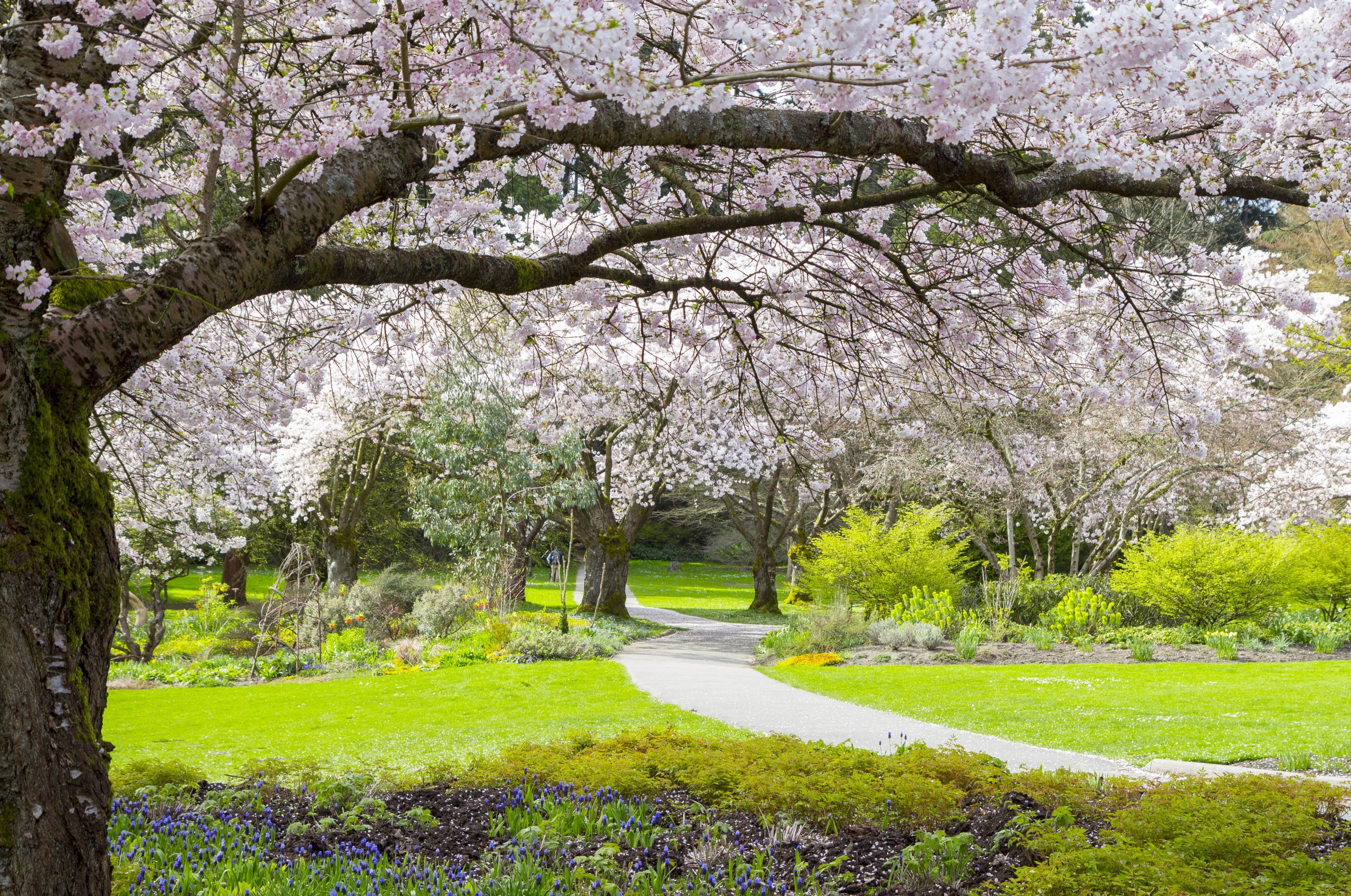
Guiyang Forest Park
Guiyang Forest Park is located in the southeast of Guiyang urban area. It is a large-scale forest tourism area very close to the urban area. All kinds of trees in the park are lush and leafy. Walking on the trail, there are towering trees that block the sky and the sun. You can also see There are many free-ranging macaques playing in the forest, and various flowers are released in spring, and the ecological environment is good. Guiyang Forest Park was originally an experimental forest farm of the Guizhou Academy of Forestry. There are many species of trees and a vast area. After it was opened as a park, it was once known as “one of the eight scenic spots in Guiyang”. Guiyang Forest Park has now become a good place for Guiyang citizens to go out and hike, and it is also a very suitable place for summer escape and camping.
-
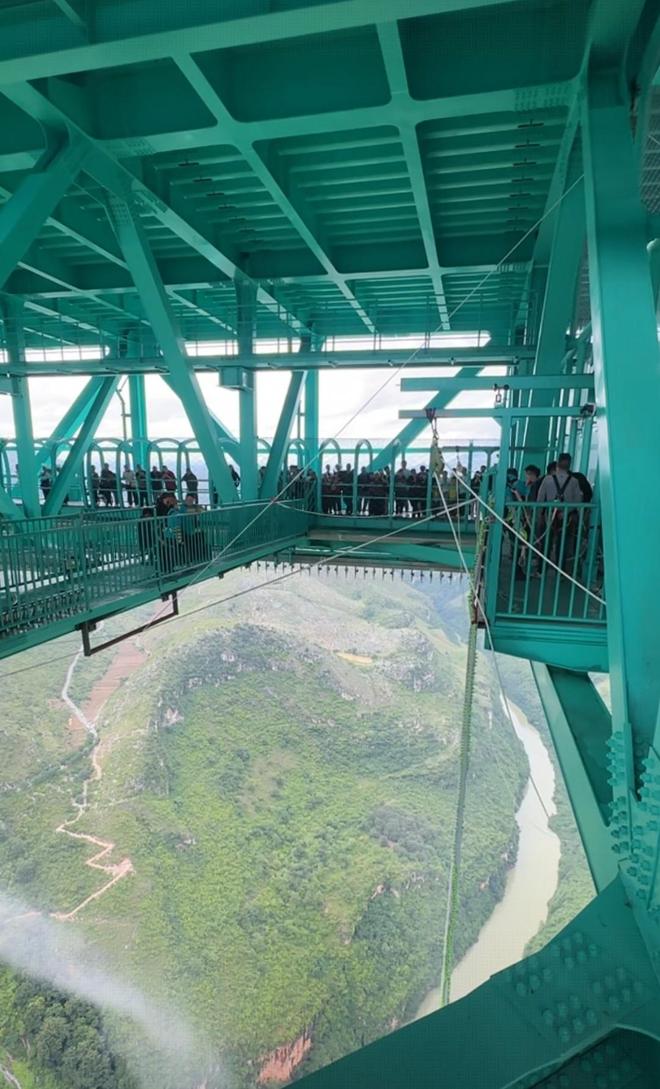
Bungee Jumping from the Huajiang Grand Canyon Bridge
Located next to the Huajiang Gorge Bridge in Guizhou, the bungee jumping experience combines high-altitude scenery with an extreme experience, attracting many adventurous travelers. Leveraging the natural topography of the canyon, this unique high-altitude jumping experience features a dramatic vertical drop from the river surface. From the platform, visitors can overlook the sweeping karst peaks and winding river, while the canyon breeze whips past, offering a direct sense of height. The majestic scenery of Huajiang Gorge provides a breathtaking backdrop for bungee jumping. Surrounded by lush green waters and towering peaks, the canyon offers a sense of immersion in nature. Beyond bungee jumping, the natural beauty of Huajiang Gorge itself is also worth exploring. The canyon’s clear streams contrast strikingly with the lush green forests, making it an ideal spot for nature lovers to relax and explore.
-
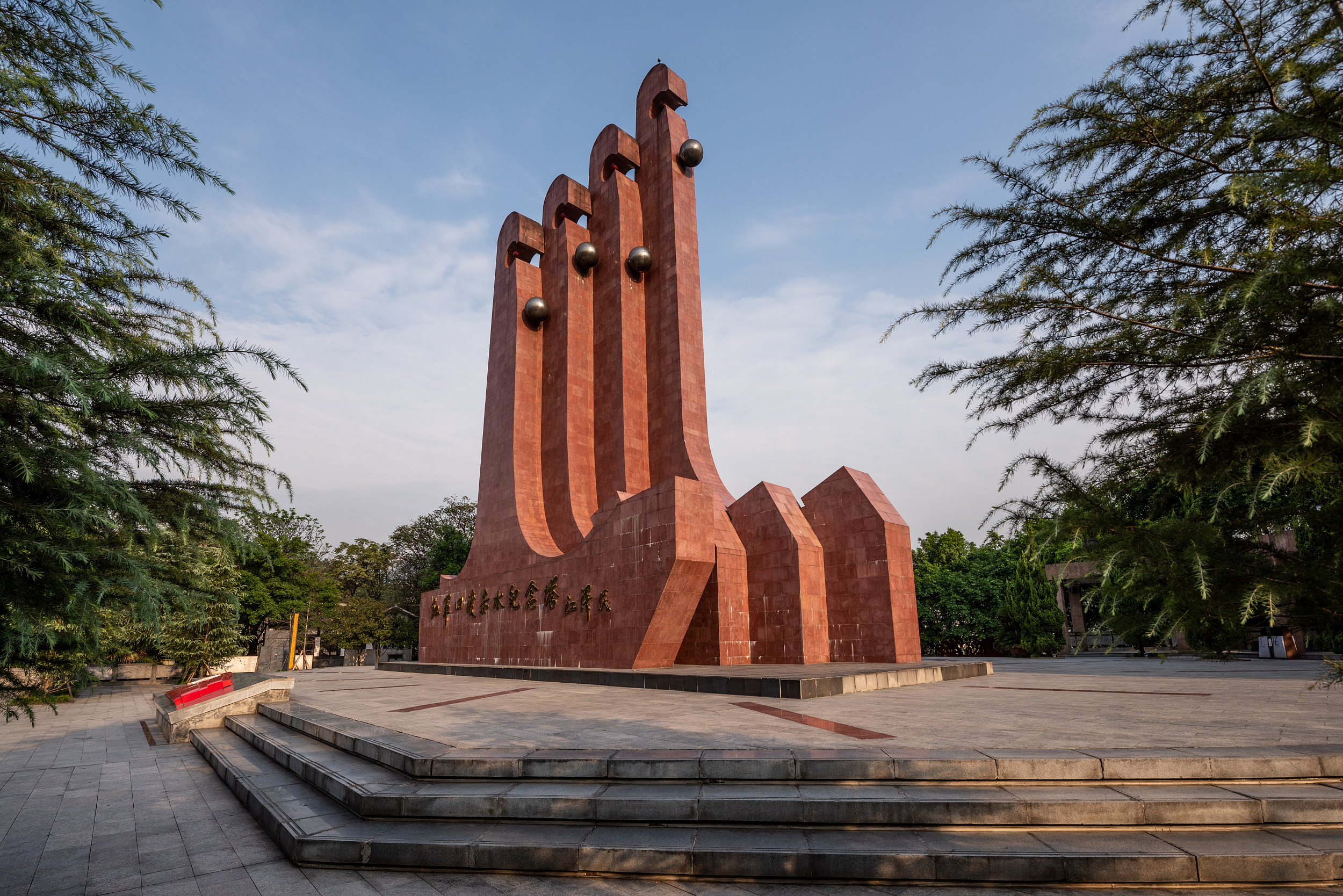
Red Army Sidu Chishui Memorial Park
This is an open park, you can see the panoramic view of Maotai Town when you climb up, and the night view is very beautiful.
-
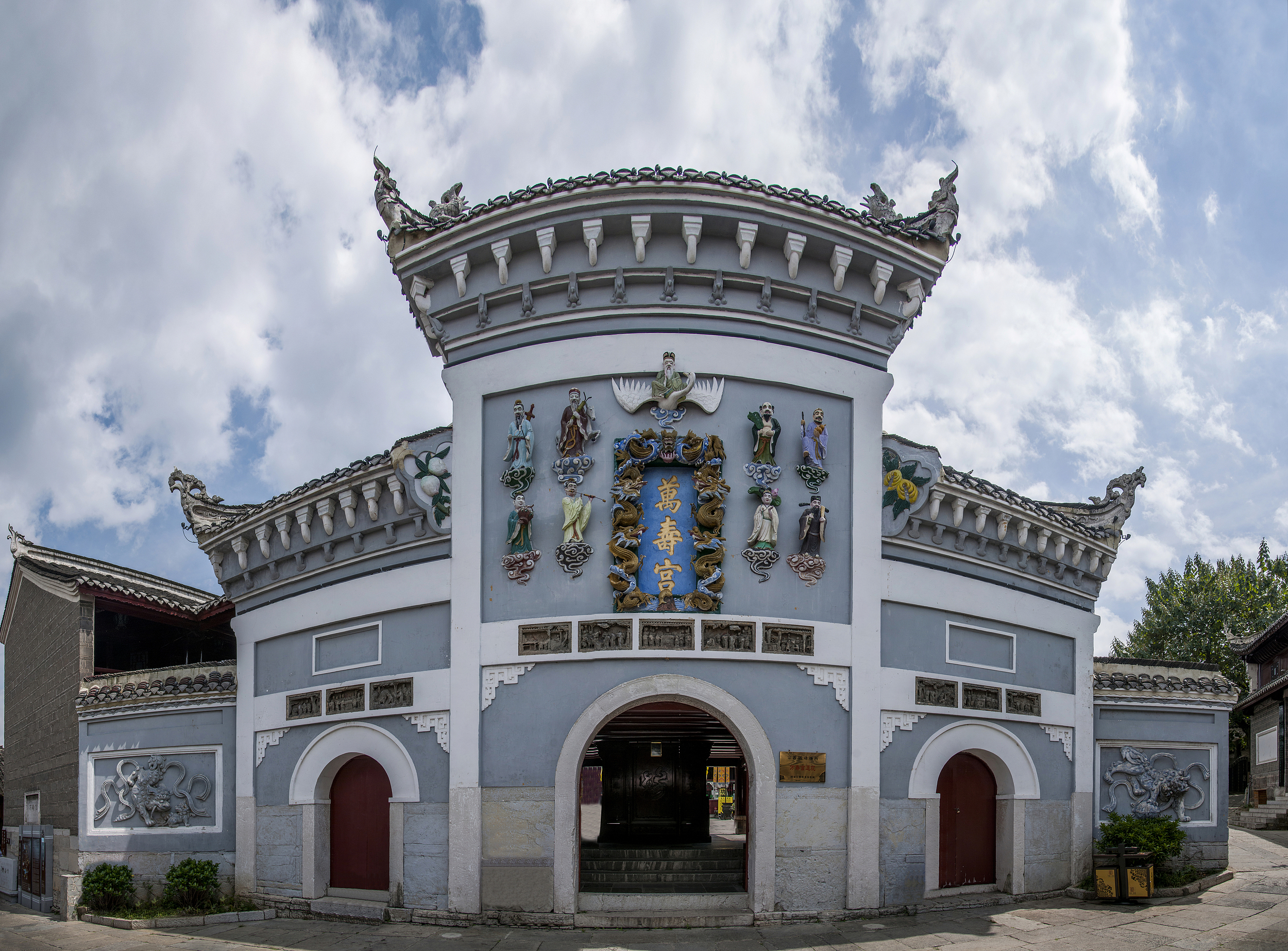
Wanshou Palace
Wanshou Palace is located at No. 3 West Street, Qingyan Ancient Town, adjacent to Ciyun Temple. Built during the reign of Emperor Kangxi of the Qing Dynasty and rebuilt in 1798 (the third year of the Jiaqing reign), it was originally not a Taoist temple but a Jiangxi guild hall, serving as a meeting place for merchants traveling between the north and south. Later, it was converted into a Taoist temple. The entire palace complex consists of a main hall, side halls, a west wing, a theater stage, and living quarters, facing west. Most of the buildings were destroyed during the Cultural Revolution and were subsequently rebuilt. The most noteworthy feature is the theater stage, with its exquisite wood carvings. On the wooden beam to the right of the theater stage, a group of high-relief figures depict scenes such as “The Feast at Hongmen,” “Ambush from Ten Sides,” and “Surrounded by Enemies,” showcasing a strong military cultural character.
-
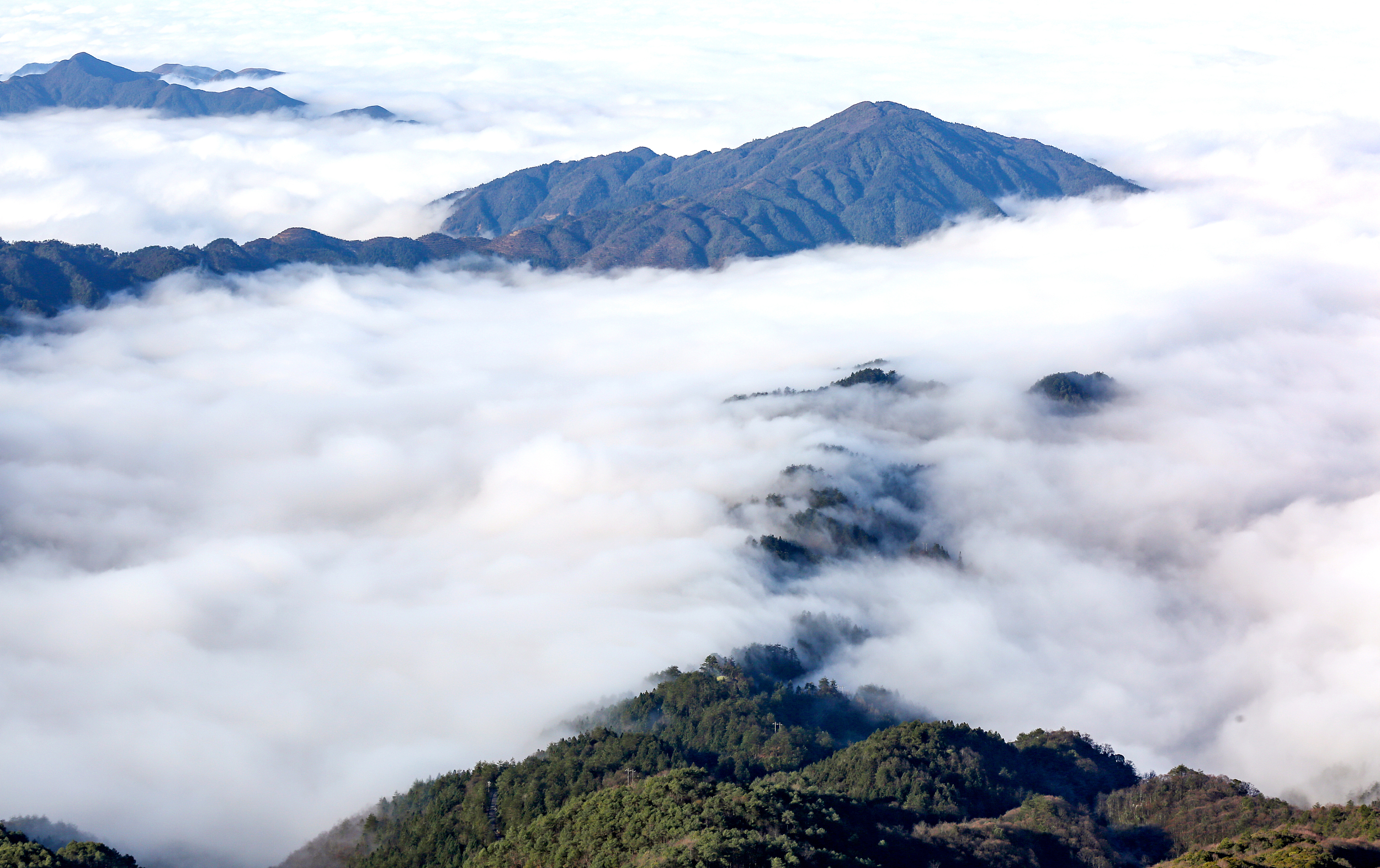
Leigong Mountain
Leigong Mountain is located in the southeastern part of Qiandongnan Prefecture, Guizhou Province, with an altitude of 2178.8 meters. Its main peak is 28 kilometers from Leishan County. The area is rich in biological resources. It is a precious natural heritage of humankind and a magnificent treasure of the Chinese nation. Leigong Mountain is majestic and imposing, with lush forests, crystal-clear streams, and waterfalls cascading vertically with breathtaking power. Everywhere you look, there is the sounds of birds and the fragrance of flowers. When the red, white, and purple magnolias are in full bloom, the scenery is breathtaking. At the foot of the mountain, there are scattered Miao villages, where you can experience the charming Miao culture. From the main peak, you can watch the sunrise and sunset, shrouded in clouds and mist, a picturesque scene that is truly refreshing and invigorating. Leigong Mountain, preserving the traditional and authentic Wei-Jin dynasty songs and dances, Tang dynasty hairstyles, Ning dynasty clothing, and Ming-Qing dynasty architecture, protects its pristine vegetation and precious flora and fauna resources. It is a high-quality natural and cultural tourism area, featuring a layout of one mountain (Leigong Mountain) and two villages (Langde Upper Village and Xijiang Qianhu Miao Village), attracting an increasing number of domestic and foreign tourists and possessing significant development potential.
-
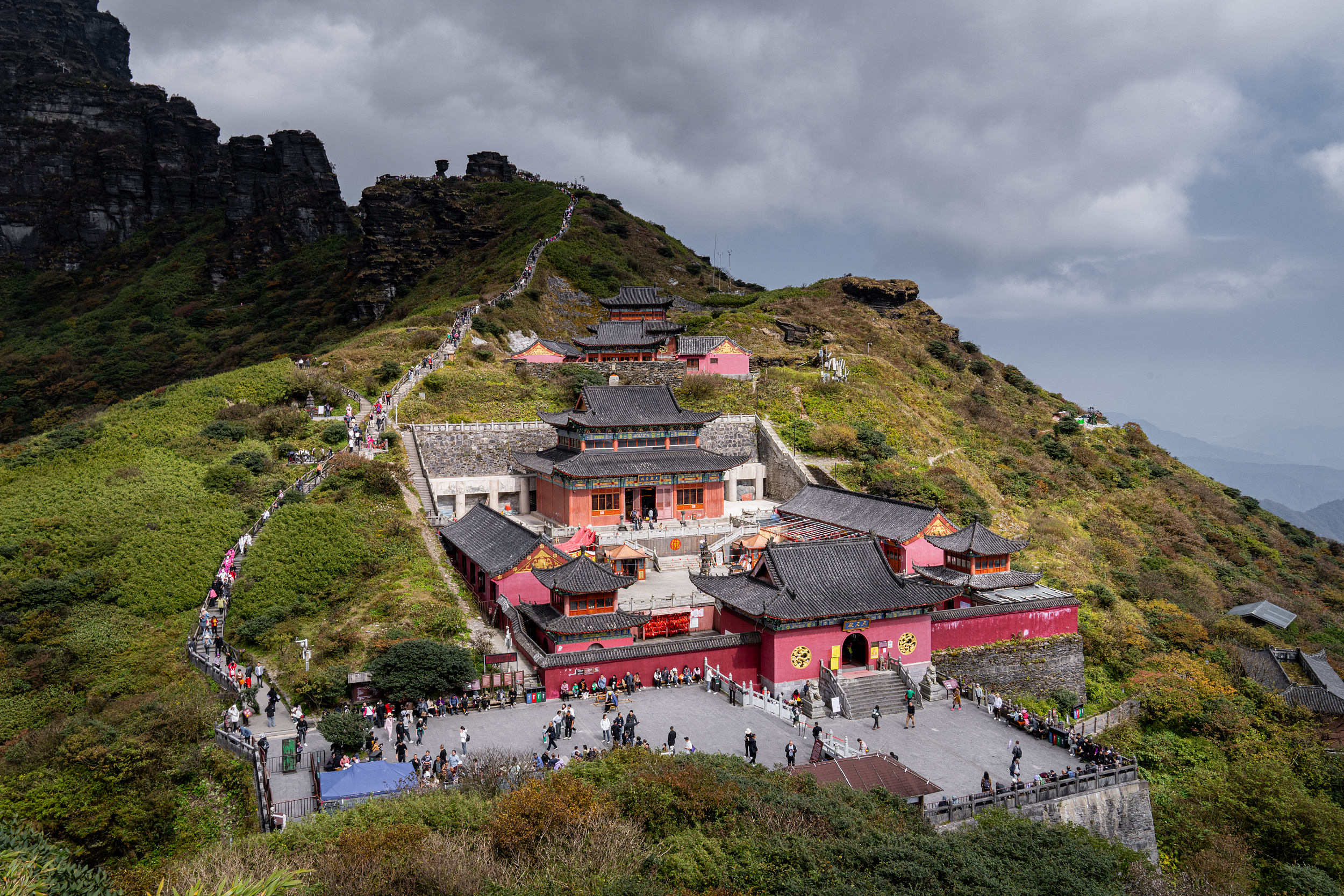
Cheng’en Temple
Cheng’en Temple is located in the Fanjing Mountain Scenic Area in Jiangkou County, Tongren City, Guizhou Province, China. It is located on the ridge between the New Golden Summit and the Old Golden Summit. It is the core building of the temple complex on the top of Fanjing Mountain. The temple was built in the early Ming Dynasty and was originally named “Shangcha Temple”. It was rebuilt on the original site in 2009 and completed in 2011. It is now an important rest and pilgrimage place for tourists on the way to climb the Golden Summit. The overall architectural style of Cheng’en Temple is solemn and simple. It is built according to the mountain terrain. It is surrounded by mountains, surrounded by clouds and mist, and the environment is quiet. There is a wide square in front of the temple for tourists to rest and view the scenery. There are simple refreshment stalls around it to provide convenience for climbers. Because it is located in the core area of Fanjing Mountain, Cheng’en Temple is not only a holy place for Buddhist believers to worship, but also attracts a large number of tourists to stop and visit. Its unique geographical location and profound cultural heritage make it one of the attractions that cannot be missed on the trip to Fanjing Mountain.
-
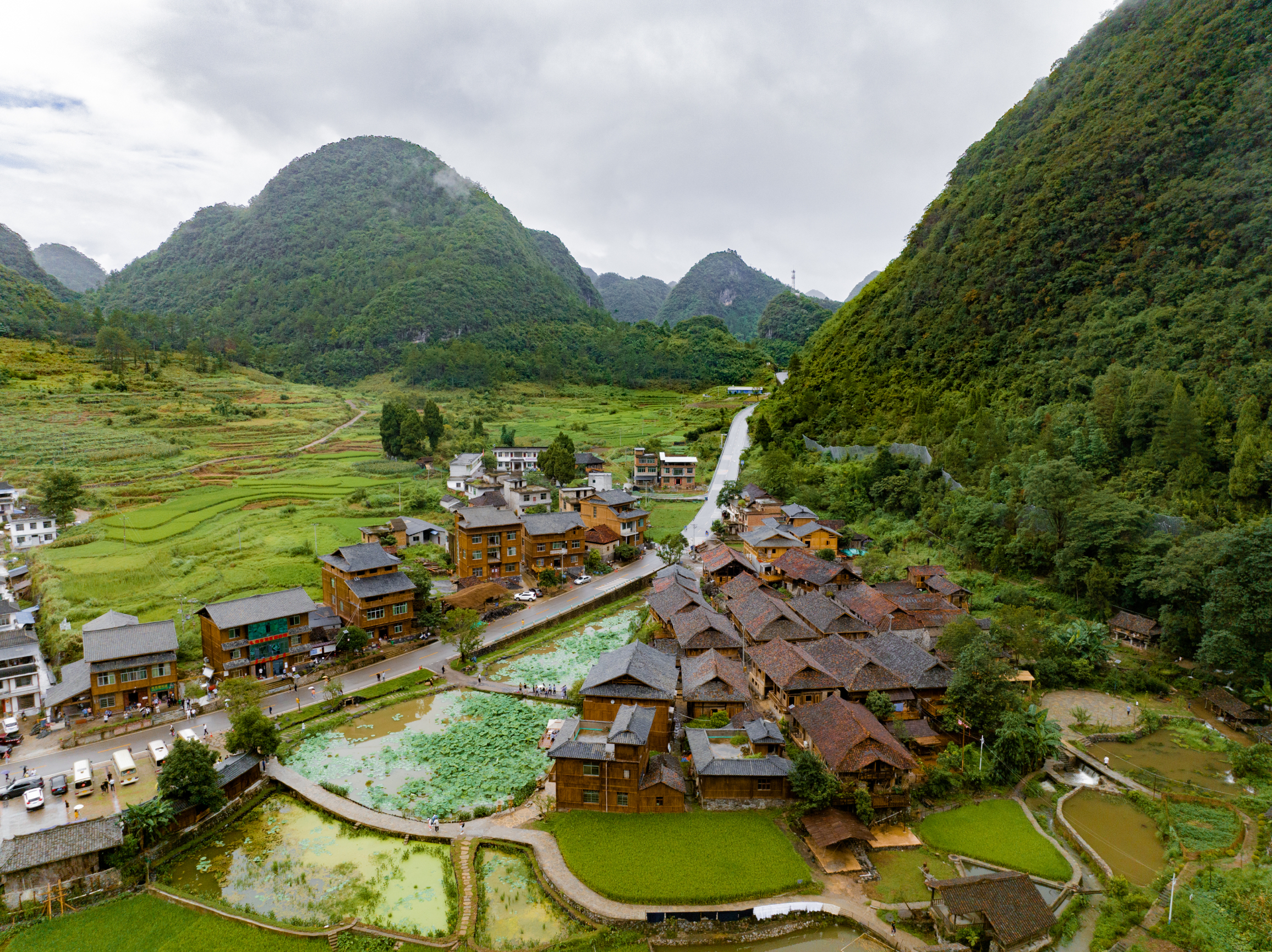
Yaogu Bouyei Village
In 2009, the villagers of Yaogu Village invested in establishing the first rural tourism professional cooperative in Libo County and the province—the “Yaogu Village Tourism Professional Cooperative”—using their Buyi-style architecture and ethnic cultural resources. They also formed folk dance and Nuo opera performance teams, enriching the village’s cultural heritage. The houses here are stilted buildings in the Buyi style, commonly known as “diaojiaolou” (stilted houses). Ethnic festivals include “April 8th,” “June 6th,” and “July 15th.” Yaogu Village’s self-run Nuo opera exhibition hall is one of the best in the county, displaying primitive and unique Nuo opera masks. During major festivals, the villagers spontaneously organize performances to showcase their diverse Nuo opera skills to tourists.