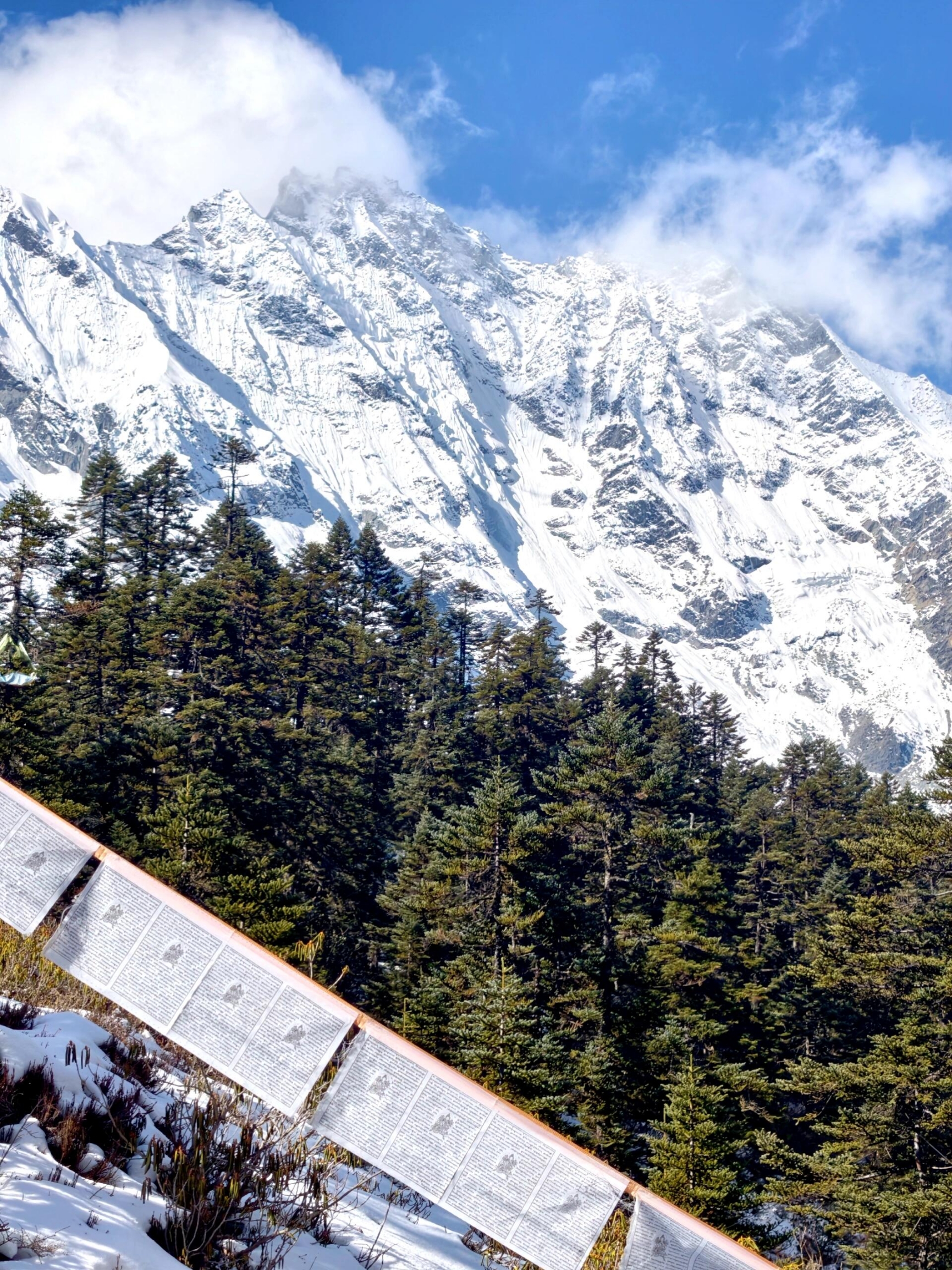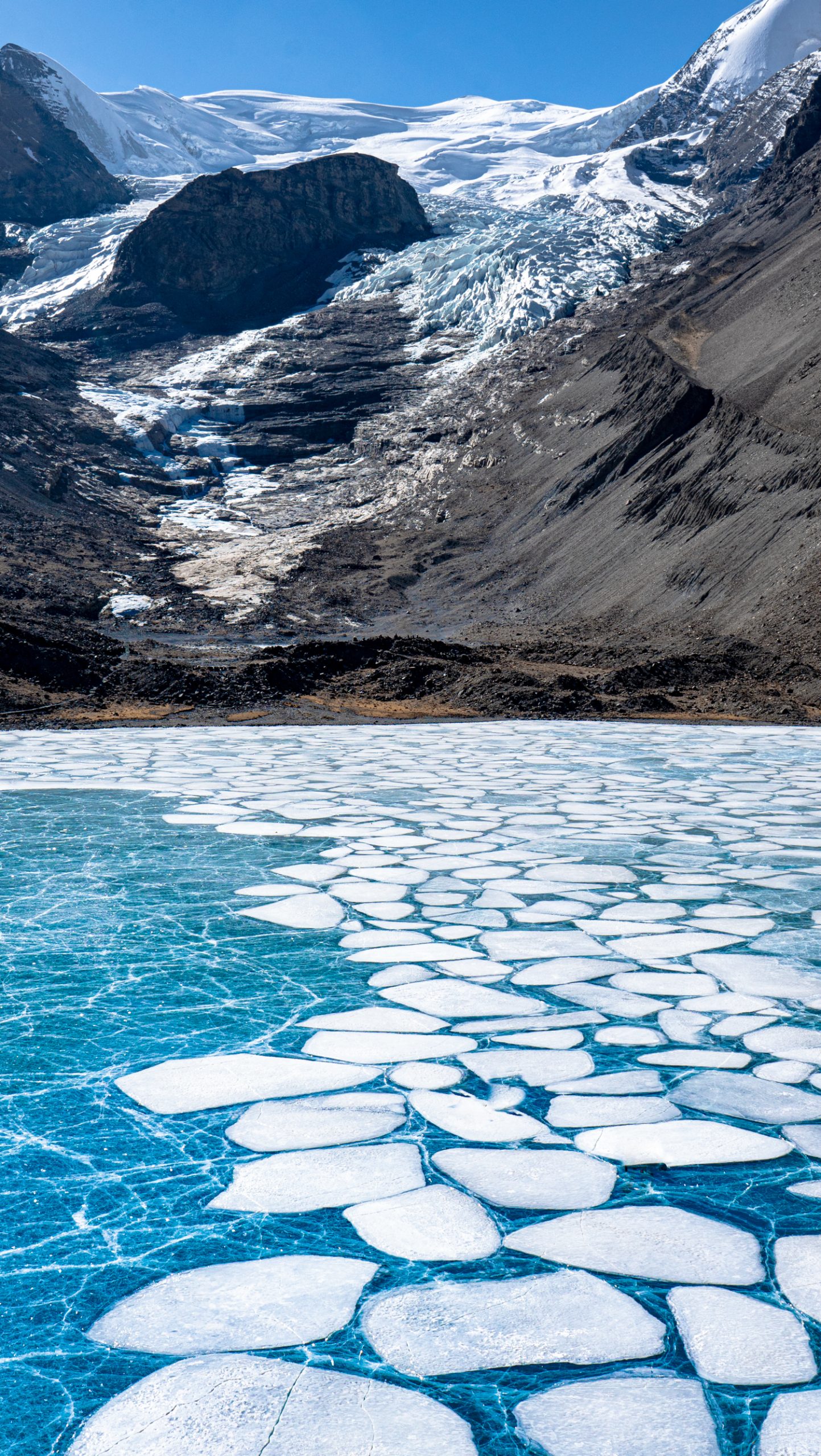
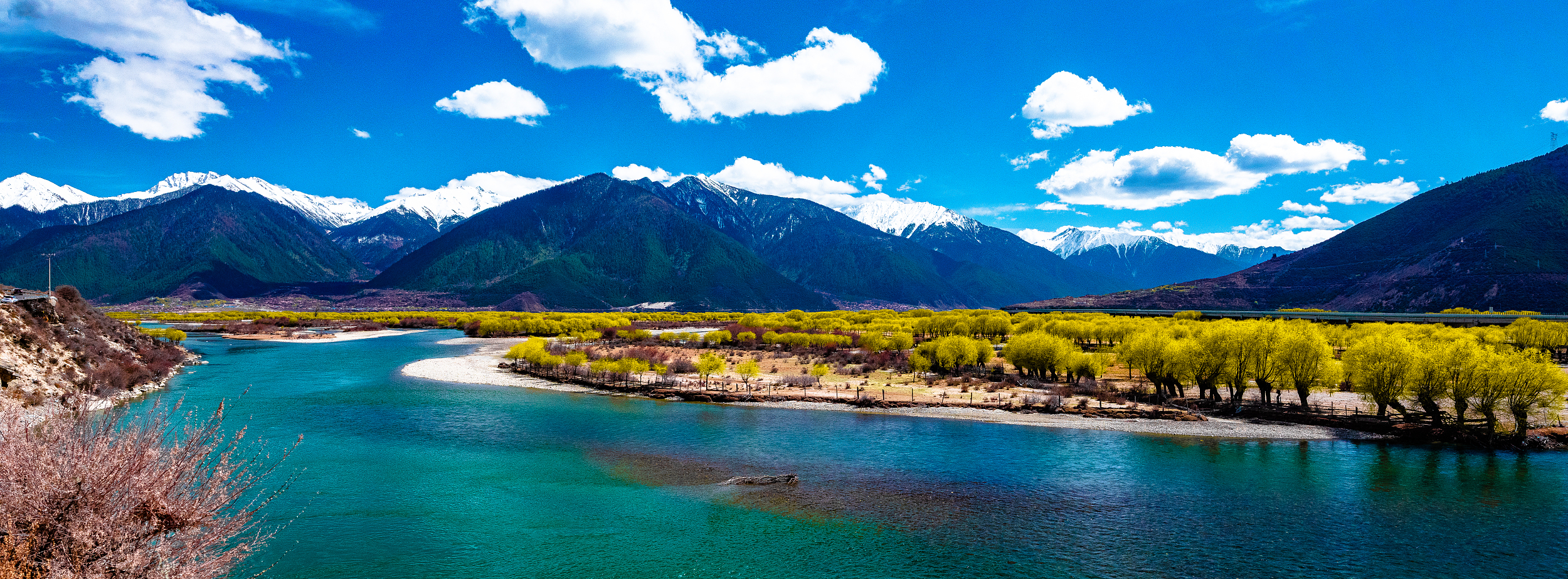
The ancient culture nurtured by the Yarlung Zangbo River has a long history. The Neolithic culture in its basin is represented by Linzhi and Medog. Stone tools, pottery fragments, axes, adzes, chisels and other relics have been collected in Linzhi County and Medog County.
归档: Attractions
-
Namjagbarwa Viewing Platform
The Namjagbarwa Observation Deck is located in Milin County, Tibet, and is an ideal place to enjoy the magnificent view of Namjagbarwa. Namjagbarwa is known as the “Paradise in the Clouds”. Its main peak is 7,782 meters above sea level and is one of the highest peaks in the eastern end of the Himalayas. The observation deck has a superior geographical location and a wide view, attracting photography enthusiasts and nature lovers all year round. The observation deck is surrounded by beautiful environment, rich vegetation and fresh air, making it an ideal place to relax. Early morning and evening are the recommended time to view Namjagbarwa, with the sun shining on the peak, presenting a magnificent golden scene. Visitors can experience the shock and tranquility of nature here. The transportation to the observation deck is convenient, and the scenery along the way is beautiful. Visitors can choose to drive or take local transportation. There are basic tourist service facilities near the observation deck, providing convenience for eating and resting. Whether it is a short stop or a long stop, the Namjagbarwa Observation Deck can bring visitors an unforgettable travel experience.
-
Ali Shenshan Shenghu Tourist Area
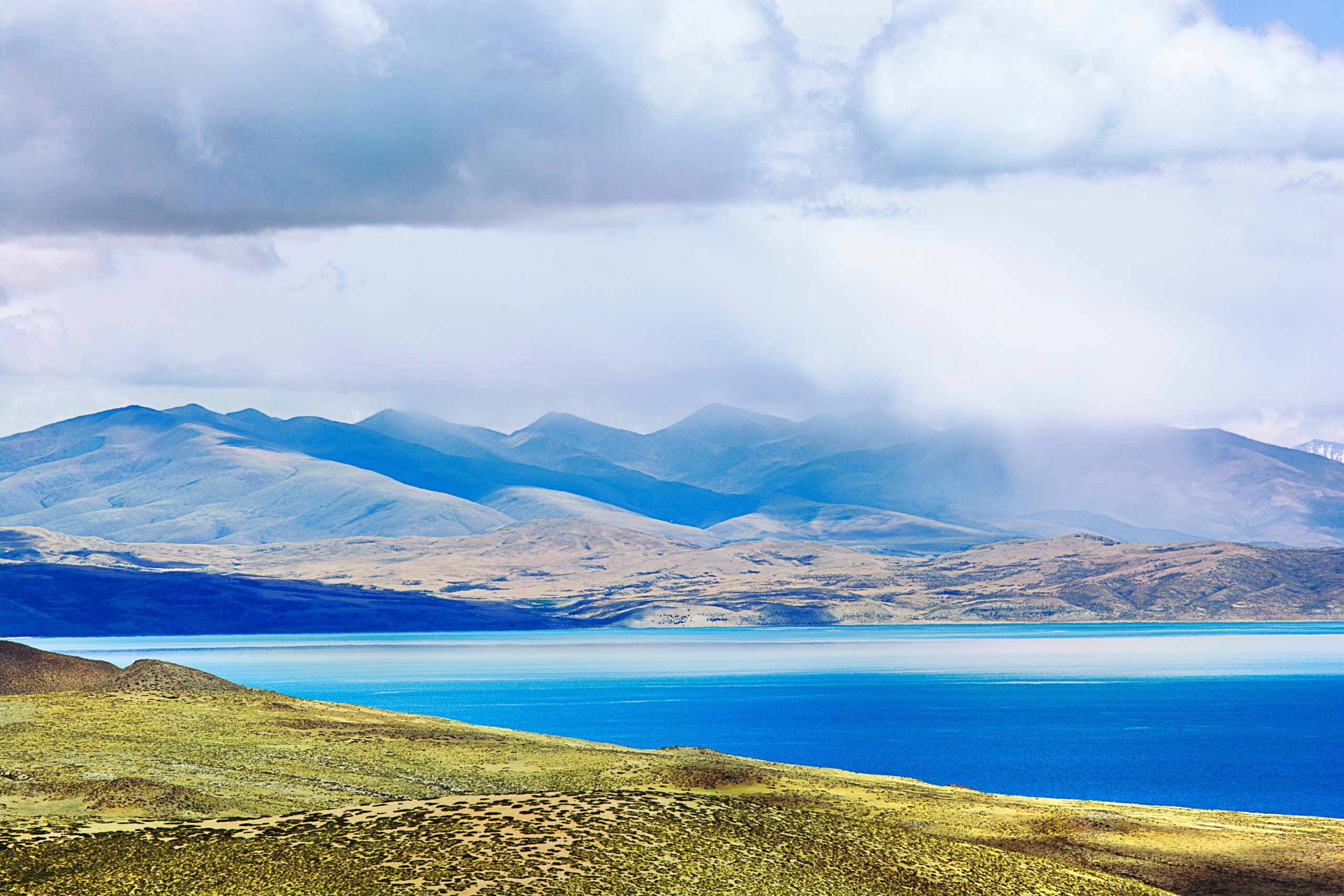
Sacred Mountain and Holy Lake The sacred mountains and lakes are located in the heartland of the Gangdise cultural sphere, the birthplace of the ancient and enduring indigenous religion of Xizang, Bon. To this day, the sacred mountains and lakes region remains jointly revered by Bon, Tibetan Buddhism, Hinduism, and Jainism.”The “Center of the World.” Every year, countless devoted pilgrims from all directions still make arduous journeys to this sacred site. The unique natural landscape where towering holy mountains mirror sacred lakes on the Tibetan Plateau, combined with its legacy as a cradle of ancient civilizations and spiritual pilgrimage destination, elevates this sacred mountain-lake region to unparalleled heights—both physically and spiritually.The majestic sacred mountain, Mount Kailash, is hailed as the pantheon of deities;The sacred Lake Manasarovar, with its purifying eight-virtue waters, can cleanse all sins. Here, the mighty forces of nature and spiritual faith unite to create a pinnacle of devotion.IfAri is known as the roof of the world’s roof,The Sacred Mountains and Holy Lakes are the crown jewels of Ngari. Here, the Himalayas and Gangdise Mountains reflect each other’s grandeur, four mighty rivers originate from the beautiful holy lakes, and vast grasslands dotted with cloud-like herds stretch endlessly. Drive along the shores of these majestic lakes and the foothills of sacred peaks on the Xinjiang-Tibet Highway—the world’s highest-altitude road—through this paradise for outdoor enthusiasts.
-
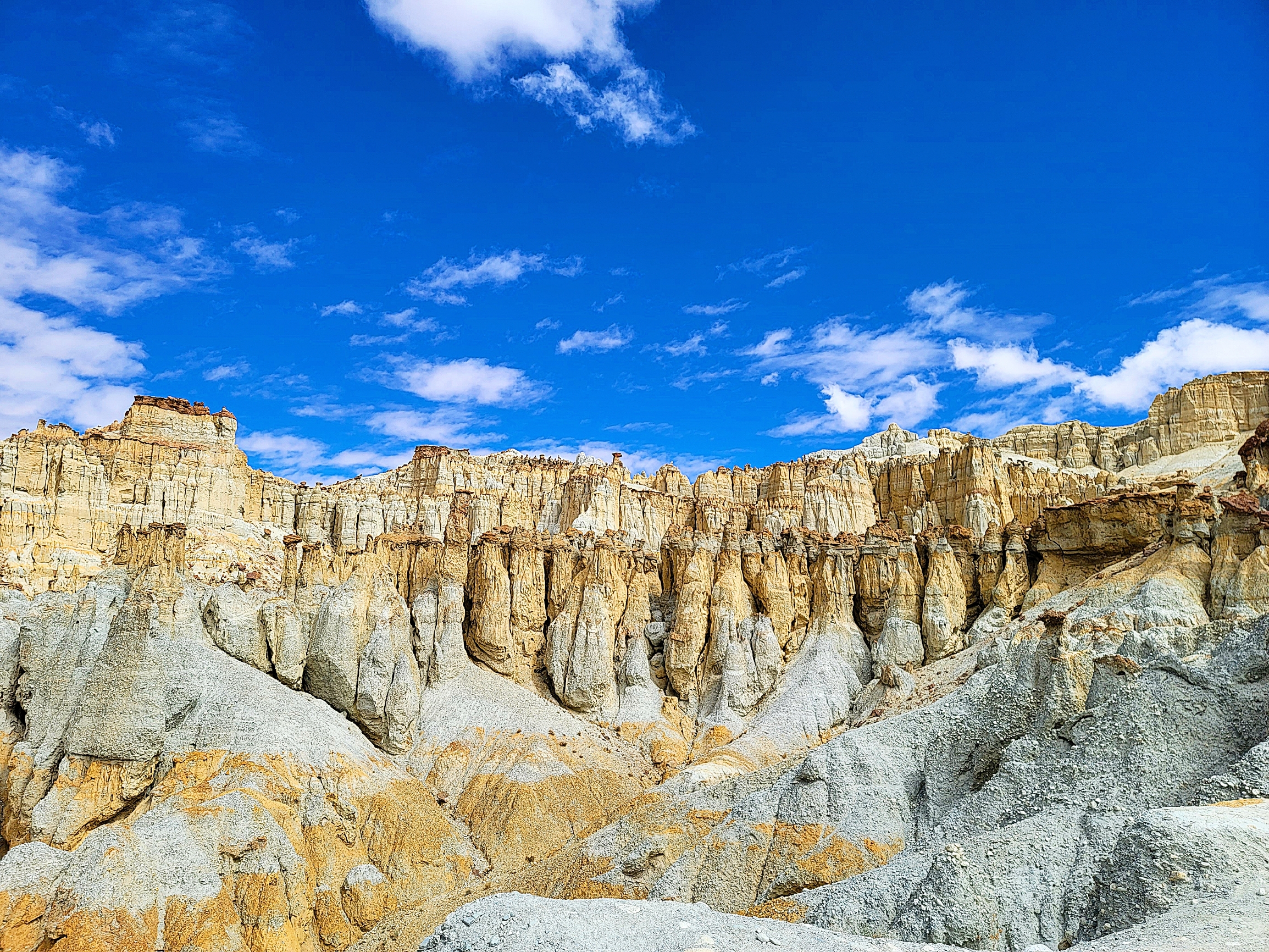
Zhada Xiayigou Earth Forest Scenic Area
The scenic spot is about 5 kilometers long and has dozens of small gullies distributed on both sides, presenting a well-arranged and colorful earth forest landform.
-
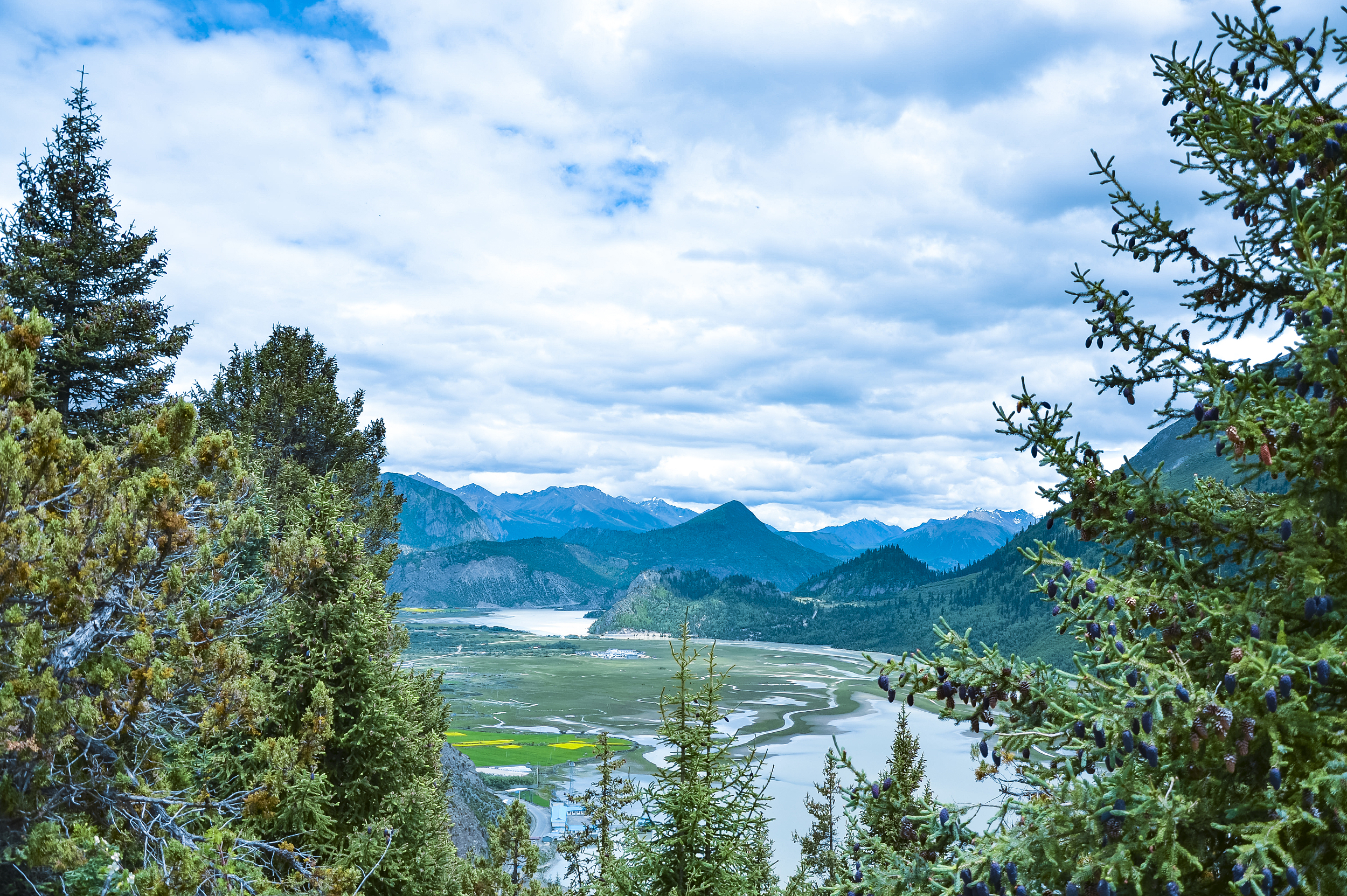
Ranwuzhen
Ranwu Town is a town under the jurisdiction of Baxoi County, Changdu City, Tibet Autonomous Region. It administers 12 village committees: Waba Village, Ranwu Village, Ranna Village, Zhongba Village, Kangsha Village, Laigu Village, Kadui Village, Maiba Village, Yaka Village, Ari Village, Yaze Village, and Daba Village. Located in western Baxoi County, Changdu City, Tibet Autonomous Region, it is about 90 kilometers from the county seat. Major tourist attractions include Ranwu Lake, Laigu Glacier, and the Demula Pass on the Ranwu-Chayu Highway. Ranwu Lake: A very beautiful sight in Ranwu. Ranwu Lake is a high-altitude lake nestled among towering mountains, with a surface elevation of about 3800 meters. It is about 89 kilometers southwest of Baxoi County, and the Sichuan-Tibet Highway passes by its shore. It is the source of the Parlung Tsangpo River, and the climate here is humid and rainy in summer. Ranwu Lake provides Ranwu Town with clean and abundant water. There are grasslands and farmland along the lake, and in the distance, there are snow-capped peaks and ancient sand willows that have grown naturally for thousands of years. Staying for a few days is definitely worthwhile. It’s only 1 kilometer from Ranwu onto the Rancha Highway to reach the shore of Ranwu Lake, where snow-capped peaks rise, offering beautiful scenery. The Lagu Glacier is located on the north side of Ranwu Lake.
-
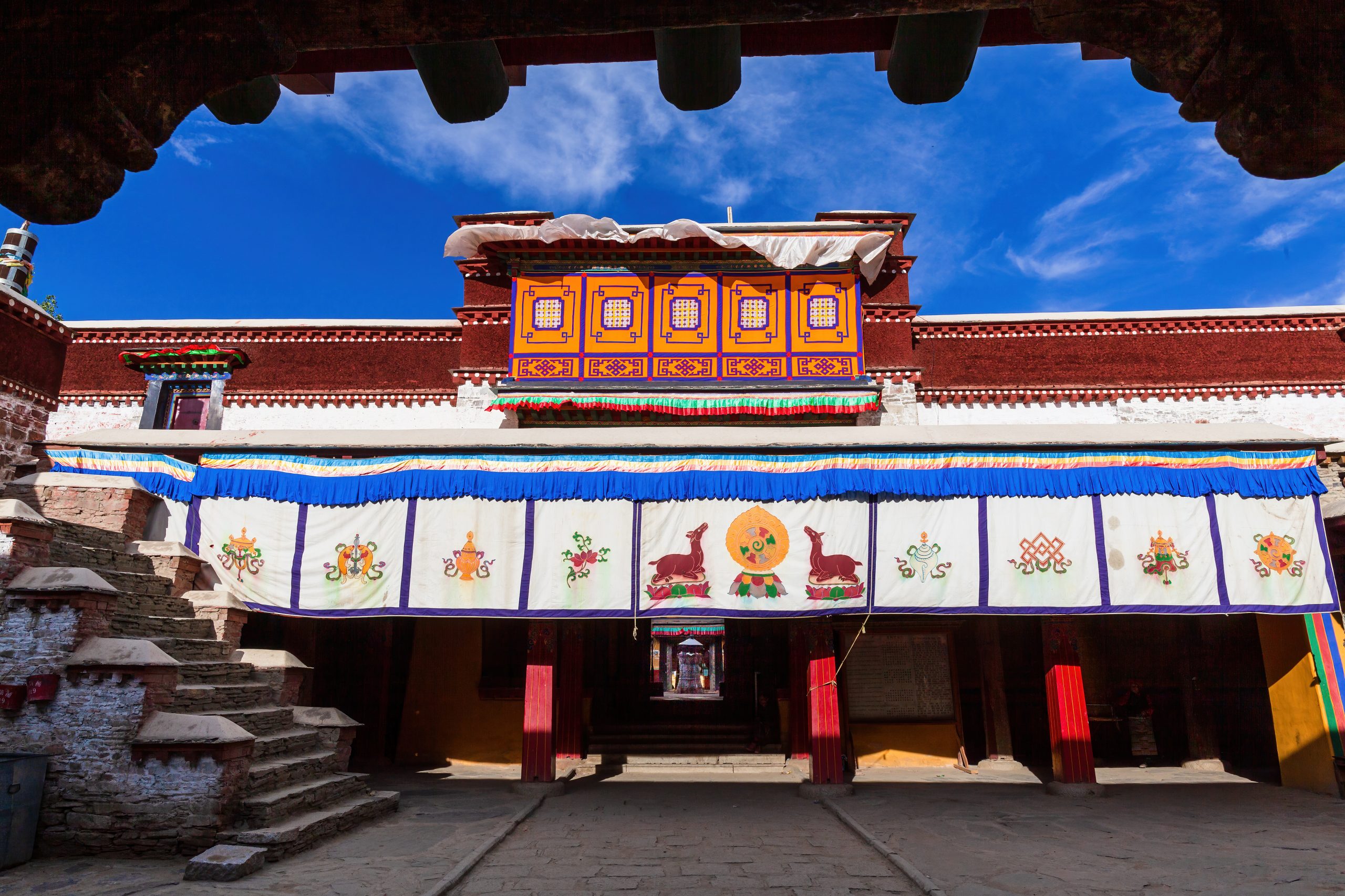
Tradruk Temple
In Tibetan, “Chang” means eagle or hawk, and “Zhu” means dragon. Legend has it that before the temple was built, a vicious dragon lurked here, which was subdued by Songtsen Gampo in the form of a Garuda, thus allowing the temple to be built, hence the name. It is said that famous figures in Tibetan Buddhist history, such as Padmasambhava and Milarepa, practiced around Changzhu Temple, and the remaining ruins of their practice sites are sacred sites for Buddhist pilgrims. According to legend, the temple was built in the 7th century under the supervision of the Tibetan king Songtsen Gampo, and later renovated and expanded by Phagmodrupa Da Situ Juequ Jiancan. It is said that Princess Wencheng once stayed and practiced at the temple, leaving behind relics. During the Phagmodrupa regime, Changzhu Temple underwent large-scale repairs and expansions. In its later period, Changzhu Temple belonged to the Gelug school. The layout and form of the lower level of the main hall of Changzhu Temple are similar to the main hall of the Jokhang Temple in Lhasa. The temple originally preserved a large number of ancient murals and statues of Songtsen Gampo, Princess Wencheng, Princess Bhrikuti of Nepal, and Minister Gar Tongtsen, among others, all with simple and vivid styles. The pearl thangka of Changzhu Temple is its most prized possession, depicting the image of Gyaltsen Avalokiteshvara (a Bodhisattva at rest). The entire thangka is 2 meters long and 1.2 meters wide, using 26 taels of pearls (29,026 pieces in total), inlaid with one diamond, two rubies, one sapphire, 0.55 taels of amethyst, 0.91 taels of turquoise (185 pieces), 4.1 taels of coral (1,997 pieces), and 15.5 grams of gold. It attracts many believers and tourists to visit and worship daily.
-
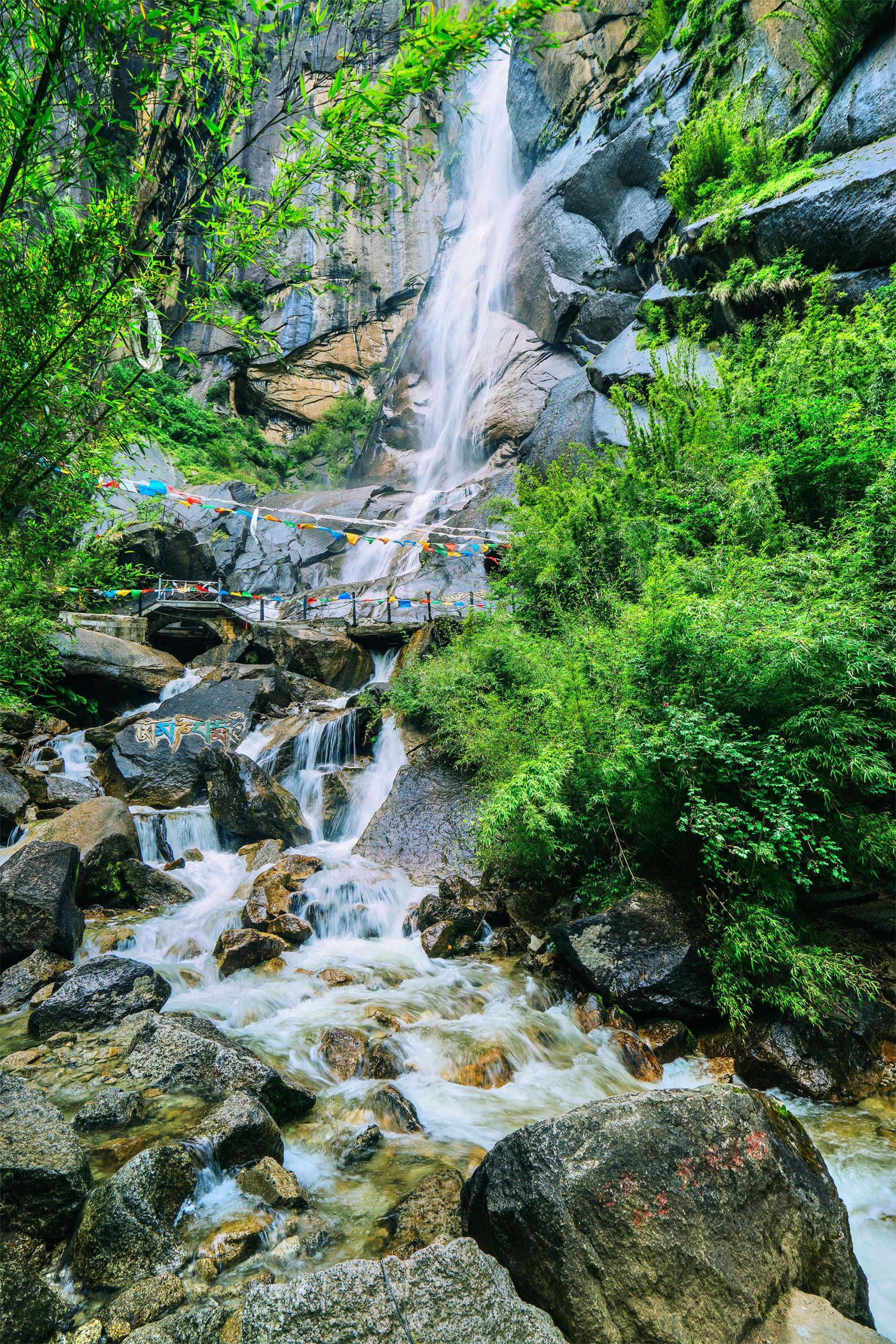
Kadinggou Tianfo Waterfall
Kading Tianfo Waterfall is located in Kadinggou Scenic Area, 24 kilometers away from Bayi Town on National Highway 318. A waterfall with a drop of nearly 200 meters rushes down. On the rock wall behind the waterfall, there is a naturally formed Buddha with a kind face, which appears and disappears in the waterfall from time to time, hence the name of Tianfo Waterfall. Along the steps laid in the Kadinggou Scenic Area, walk up to the viewing platform, and the silver chain-like water flows on the cliff, which is very spectacular. When the water level of the waterfall is small, it is like a silver chain floating down, and when the water level is large, it is majestic and thrilling. There is a naturally formed Buddha statue on the rock wall behind the waterfall. It is said that this is the patron saint of Tibetan compatriots in Linzhi area. The face is clear, as if it was artificially carved. There are male and female guardians on both sides of the Buddha statue, and they are also solemn and lifelike. The female guardian Bandan Lhamo on the right is about 100 meters tall. It can be vaguely seen that she is wearing a veil, a ribbon around her waist, and holding Buddhist beads. Her image is lifelike; on the left is Jigong worshiping Buddha, and the image is equally lifelike.
-
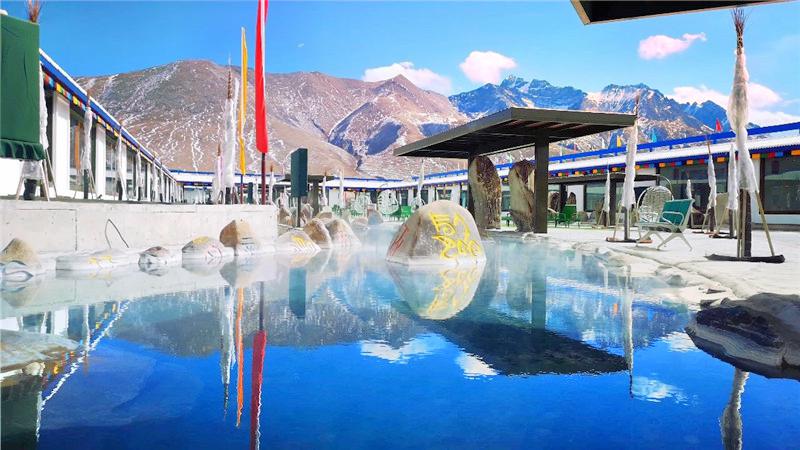
Blue Paradise Yangbajing Geothermal Tourist Area
The geothermal resources near Lhasa are very rich. The Yangbajing geothermal hot spring is famous. The geothermal temperature in Yangbajing is basically constant. There are large-scale fountains and geysers, hot water lakes, etc. There are also rare explosion springs and intermittent hot springs. Every morning, due to the relatively cold air, there is always a white mist in the area around Yangbaijing. The huge steam generated by the geothermal field rises from the lake. If you are fortunate enough to run into a hot spring eruption, you can even see the hot springs rush from the spring to the sky,which is very spectacular.