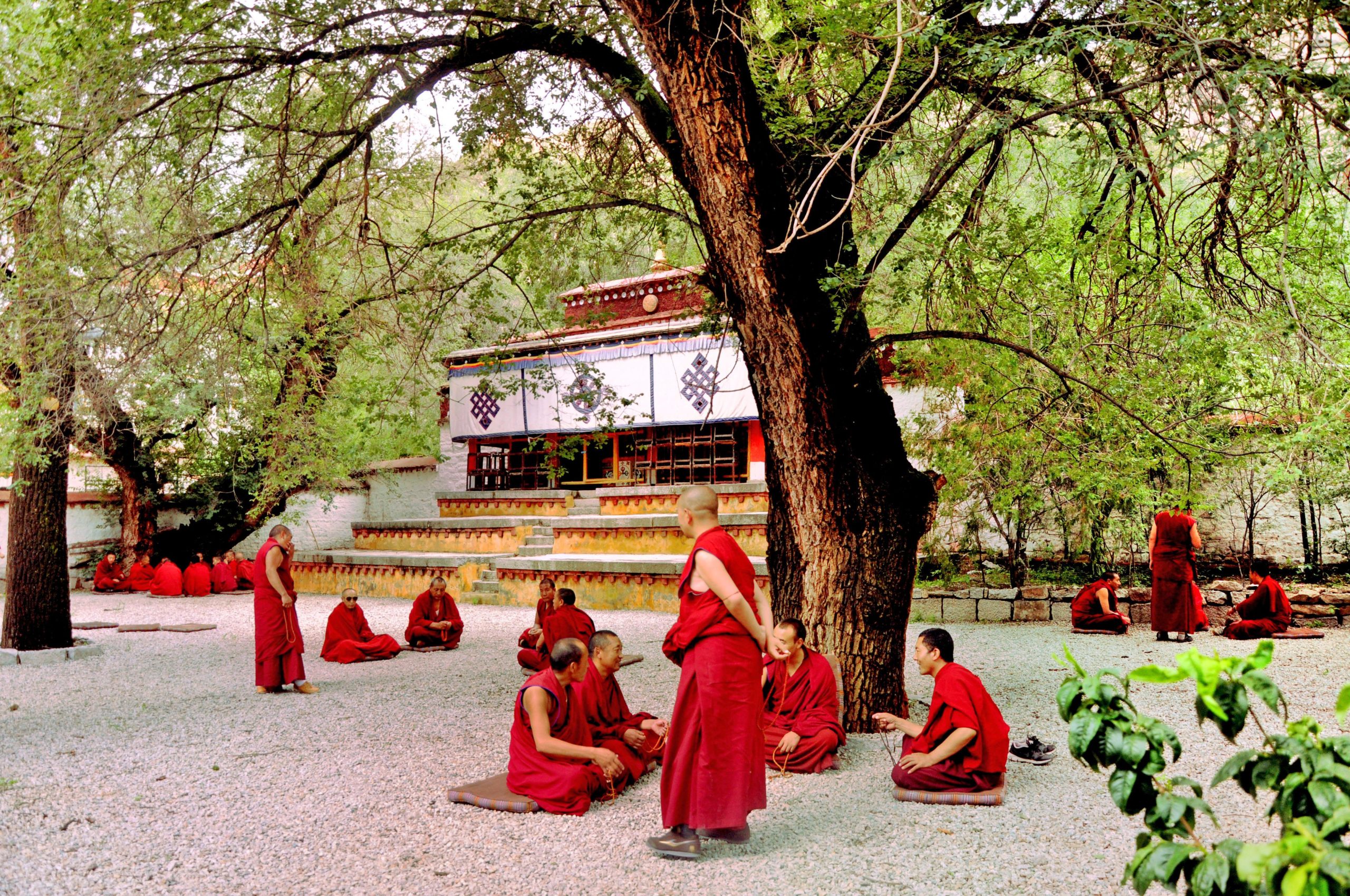
The debates at Sera Monastery have always been famous in the Tibetan area, and are also the focus of the Sera Monastery tour. The debate ceremony of Sera Monastery is held in the debate field in the north of the monastery. After entering the gate of the monastery, you can reach it by walking straight along the wide road for about a kilometer. You don’t need to buy a ticket to enter the debate field. There is no need to worry about the extremely strong sun in the afternoon in Tibet, because the many towering trees in the debate field block the dazzling and hot sunlight on the plateau, making it a fresh and cool stage for religious activities. It starts at 3 pm every day and lasts until 5 pm. There are no debates on Sundays and special holidays, so please pay attention. During the debate, the monks often sit on the ground and the other stands opposite. The debates on the scriptures with exaggerated movements are very interesting. The standing monk asks questions in Tibetan, and the sitting monk answers in Tibetan. The debate topics cover all aspects of Tibetan Buddhism. Once a question is asked, the sitting monk must respond without thinking, refute or answer. As the debate deepened, distinctive scenes began to emerge. The standing participants faced each other, using a variety of gestures and rich body movements, even glaring, waving prayer beads, standing on one foot and clapping vigorously to show their power. When asking questions, they raised their arms and chopped down; or pulled the Buddhist beads to show that they would defeat the opponent with the power of faith.
归档: Attractions
-
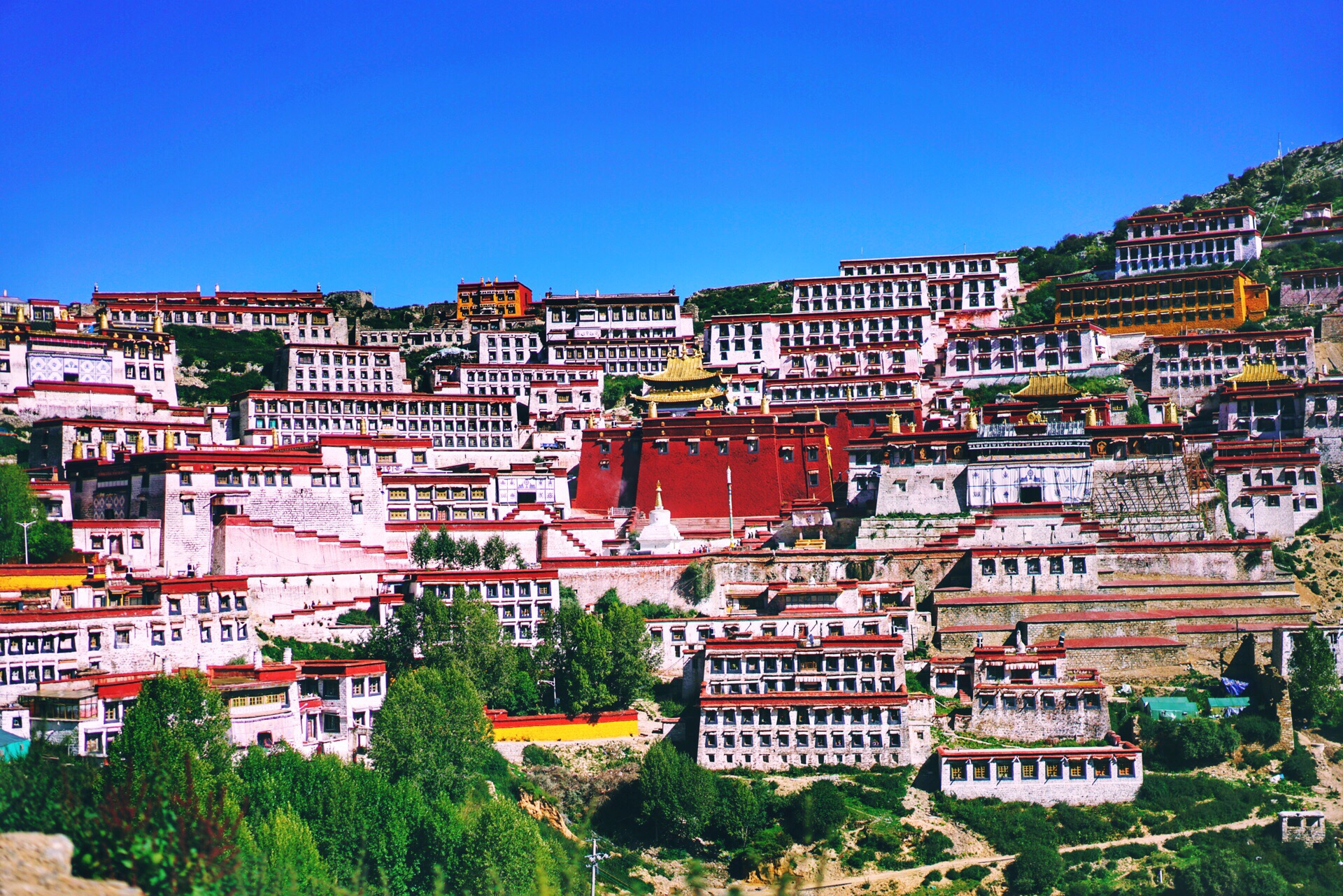
Ganden Temple
The Ganden Monastery consists of more than 50 buildings, mainly including the Tsongkhapa Hall, the Tsongkhapa Dorm, the Yangbajian Sutra House, the Tsongkhapa Lingta Temple, Jiangzi Dratsang, Xiazi Dratsang and 23 Kang villages, 20 It consists of a rice village. Among the 23 Kang villages, each Kang has a scripture hall. Most of them are two-story buildings. They are built along the mountain, layer upon layer. From a distance, they occupy the entire half of the mountain. The scale is grand and spectacular. The main hall of Cuoqin (meaning Dajing Hall, namely Daxiong Hall) was built in 1409. There are 108 large columns, which can accommodate 3300 monks chanting sutras at the same time. The main offering in the hall is the future Buddha Jampa Buddha, and later offerings to Tsongkhapa and other gilded bronze Buddhas. There are five golden lions in the hall, named “Gandan Picking Red”, which is the seat after Tsongkhapa founded the Yellow Sect. There is a very strange pillar in the main hall. It is a palm-thick distance from the ground. People who come to the Ganden Monastery to worship Buddha must touch the bottom of the pillar to pray for good luck. On the left side of the Cuoqin Hall is the Yangbajian Academy, which is four stories high. It is said that it cost 900 taels of silver to cast, and the pagoda is decorated with a large number of precious jewels, which is magnificent. The Ling Pagoda is covered with a yurt-like sandalwood tent with a curtain inside, and the top of the pagoda is covered with an umbrella, which is very beautiful. There are two major Zhacangs in Ganden Monastery, Xiazi Zhacang and Jiangzi Zhacang. Jiangzi Zhacang (meaning “North Summit Monastery”) is the dormitory of Gandan Tribac’s master and his daily retreat. Xiazi Dratsang (meaning “Dongding Monastery”) was built by Tsongkhapa personally passed on to Sherpa Rinchen Gyaltsen. The murals and sculptures in the halls of Ganden Monastery are very exquisite, and there are many cultural relics and treasures in the temple. Among them, in 1757, Emperor Qianlong of the Qing Dynasty bestowed the temple with armors inlaid with gold and silver jewels, the armor in four languages of Han, Manchu, Mongolian and Tibetan, and the complete set of “Ganjur” in the Tibetan “Tripitaka” written by pure gold Khan. Buddhist scriptures, as well as many beautifully made silk “Thangkas”, Tsongkhapa’s seat and the meditation bed at his death. There are 24 thangkas gifted by Emperor Yongle of Ming Dynasty, and cushions of Gushi Khan, all of which are rare treasures. All this is enough to show the long history of Ganden Monastery and the lofty religious status. Twenty-four of the thangkas are displayed to the monks and believers every year for three weeks, and the annual “Gandan Embroidery Tang Festival” is also formed.
-
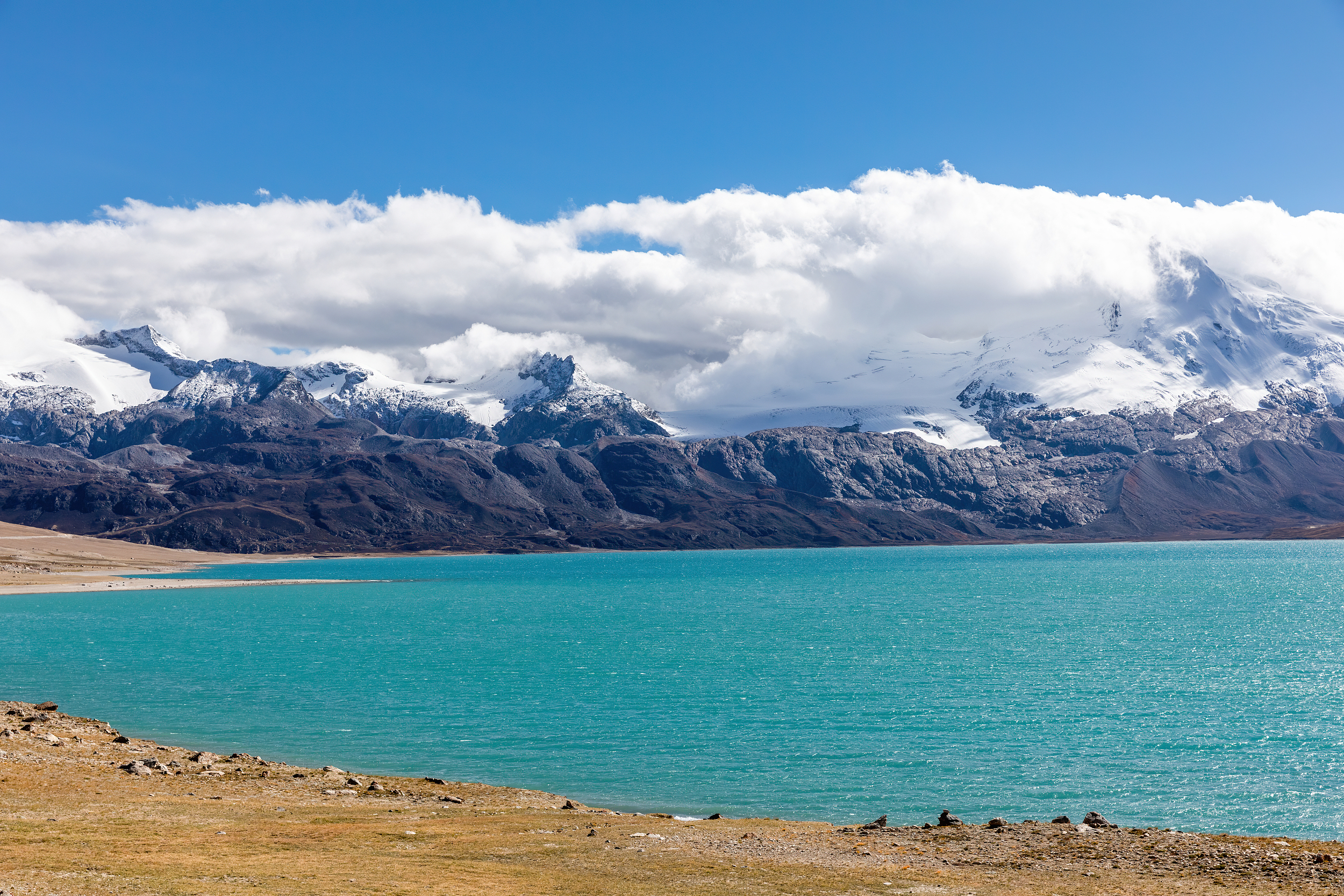
Chongba Yongcuo Lake
Chongba Yumco Scenic Area is located in Kangma County. It is a beautiful and magical freshwater lake, backed by the massive Himalayas. Melting snow and ice have formed the lake. Under the blue sky and white clouds, the surrounding snow-capped mountains are reflected in the lake, creating a picturesque and breathtaking scene.
-
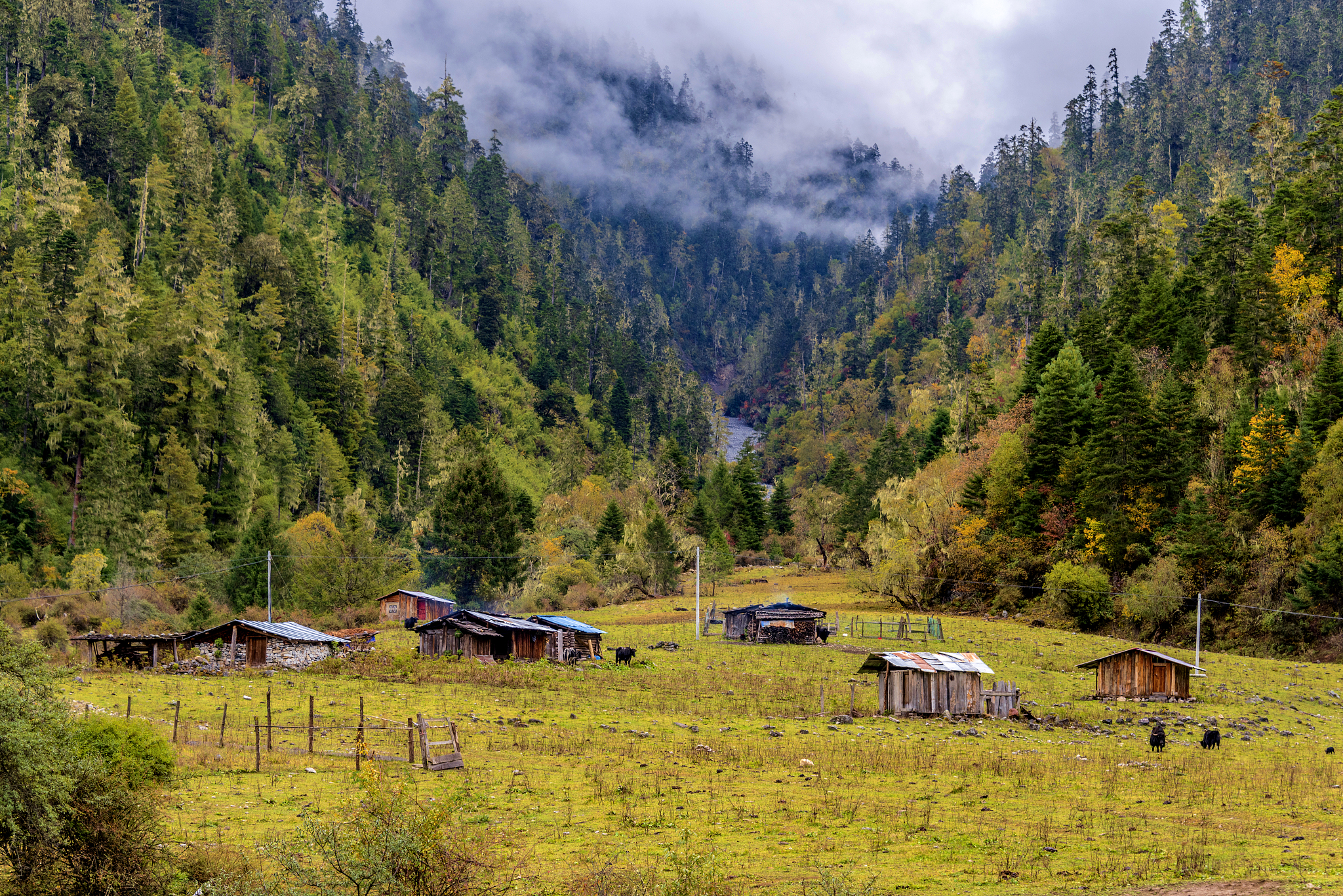
Lulang Town
Lulang Scenic Area is located in Lulang Town, Bayi District, Nyingchi City. The main attractions include Lulang Flower Sea, Lulang Pasture, Sejila Forest Park, Rhododendron Flower Sea, rural scenery and the folk-style Zhaxigang Village. Lulang is about 3,700 meters above sea level. The green mountains on both sides rise from low to high, and bushes, dense spruce and pine trees form the “Lulang Forest Sea”. The scenery here is different in each season. Rhododendrons are the main flowers in May and June, summer in July and August, and snow scenery in late October.
-
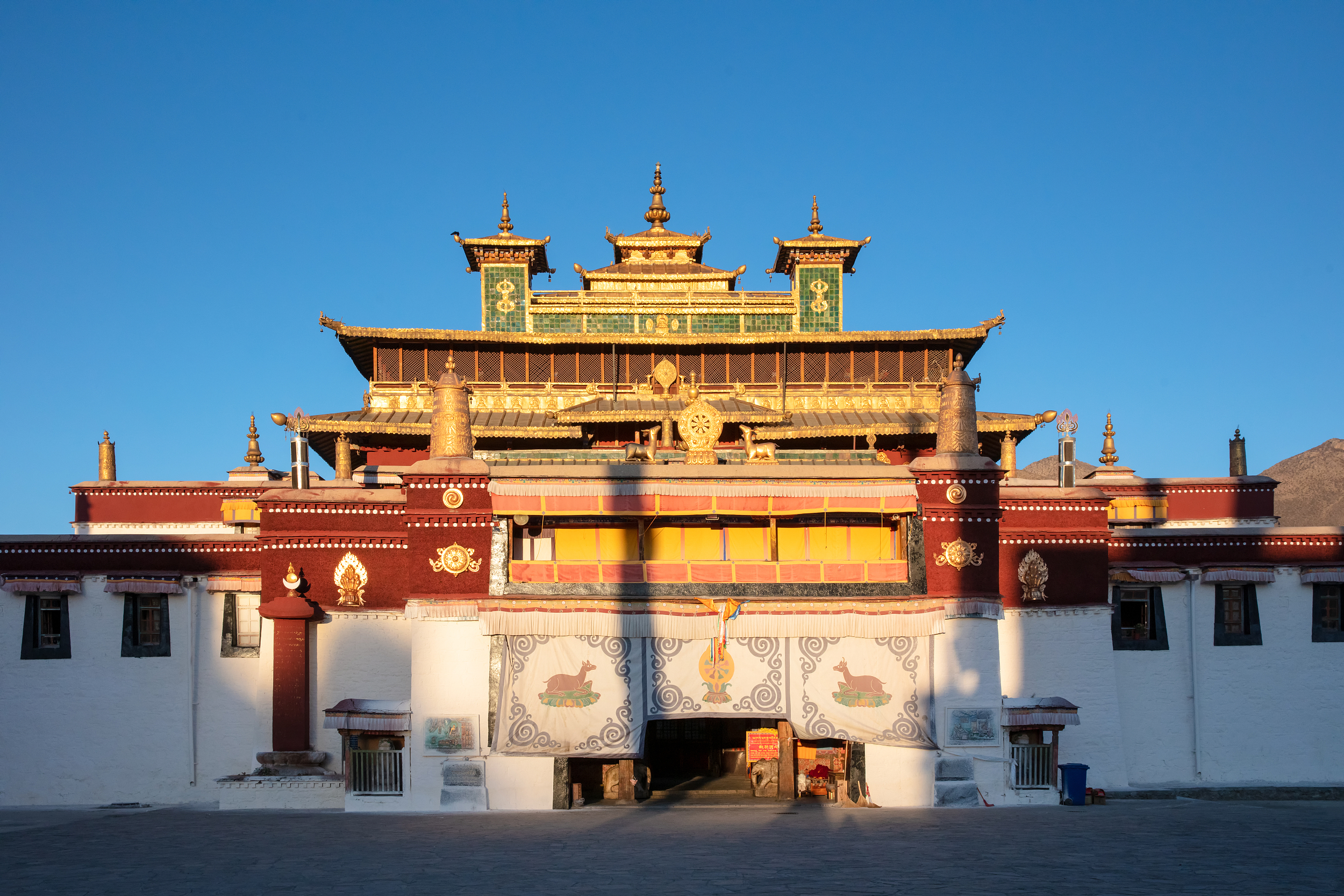
Samye Temple
Located at the foot of the sacred Habur Mountain in Zhanang County, Shannan Prefecture, Samye Monastery is the first monastery in Tibet where monks were ordained. It is also the first monastery in the history of Tibetan Buddhism that has all the “Buddha, Dharma, and monks”. It is known as “a masterpiece in the history of architecture”. The temple architecture is laid out according to the Buddhist cosmology. The main hall has three styles: Tibetan, Han, and Indian. Therefore, Samye Monastery is also known as the Three-style Temple. Samye Monastery is based on the Udapo Monastery built by the ancient Indian Brahma Dynasty in Magadha. It was led by Guru Padmasambhava and took 12 years to build. Legend has it that when it was first built, Trisong Detsen was eager to know what it would look like after it was built, so Padmasambhava conjured up an illusion of the temple from his palm. After seeing it, Trisong Detsen couldn’t help but exclaimed “Samye” (meaning “unexpected” and “unimaginable”), and later used this exclamation as the name of the temple. After generations of expansion and renovation, Samye Monastery covers an area of more than 4,900 square meters. The main hall is surrounded by eight small islands, the Sun and Moon Hall, and four towers in white, black, green and red. In the morning or evening, you can climb to the top of the sacred mountain Habu Ri next to Samye Monastery to overlook the panoramic view of Samye Monastery and the Yarlung Zangbo River. The scenery is endless. The entire temple of Samye Monastery faces south and consists of two major parts: the central hall and the surrounding corridors. The layout of the temple is designed according to the structural layout of the “Great World” in the Buddhist scriptures and built according to the mandala of Tantric Buddhism. The main body of the Wuzi Hall represents Mount Xumi, the center of the world. The four halls around the hall represent the four continents and eight small continents in the four salt seas. The Sun and Moon Halls symbolize the Sun and Moon Halls in the universe, and the temple walls symbolize the Iron Mountain outside the world. Four red, white, green and black towers are built around the main hall to subdue all evil spirits and demons and prevent natural disasters and man-made disasters. There is a gate on each side of the wall, and the east gate is the main gate. The Wuzi Hall and the corridors are full of murals. In addition to conventional themes, there are also well-known “History of Tibet” murals on the middle corridor of the wall. The paintings record the ancient legend of the Rakshasa woman and the monkey god who gave birth to the Tibetans, and Tsongkhapa founded the Gelug Sect. The mural is 92 meters long, magnificent and magnificent, and is known as the “History of Painting” in Tibet. In addition, there are “History of Samye Monastery” on the first and second floors of the main hall, and “Biography of Padmasambhava” and other murals on the south side of the second floor, all of which are exquisite and cannot be missed. On the south side of the east gate, there is a square columnar stone stele erected during the reign of Trisong Detsen. It is simple in style and has no patterns or other decorations. This is the famous “Samye Xingfo Zhengjian Stele”. The inscriptions are all in ancient Tibetan, recording the oath made by Trisong Detsen in 779 AD to support Samye Monastery. In the porch of the main hall, there is also a large bell cast by Trisong Detsen’s wife and prince. The temple is surrounded by lush trees, lush forests, lingering rivers and canals, and black-necked cranes leisurely foraging. It can be said to be a fairyland and a plateau oasis.
-
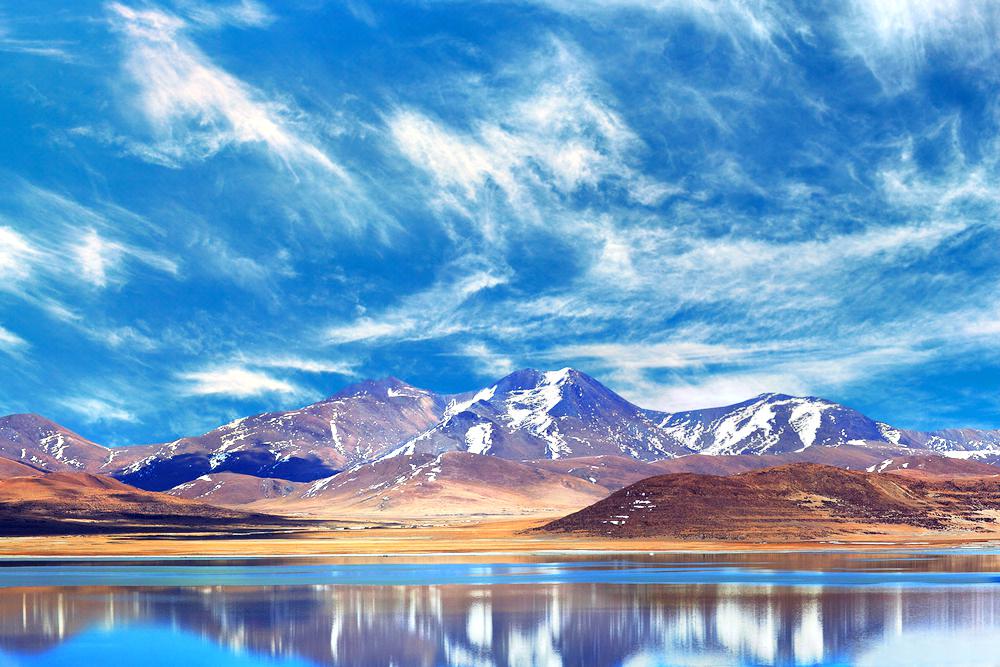
Paiku Co
Peku Co is a large lake in Shigatse, covering an area of more than 300 square kilometers. The lake is surrounded by mountains on three sides, with open terrain and rich fish resources. Wild horses, Tibetan wild donkeys, Tibetan antelopes, cranes, yellow ducks, gray ducks and other activities can be found on the lakeshore.With the reflection of Shishapangma Peak (60 kilometers to the south of the lake) and the sound of the Yarlung Zangbo River (40 kilometers to the north of the lake), Peku Co, a gourd-shaped alpine lake representing good luck, has a reason for people to be moved and stop.
-
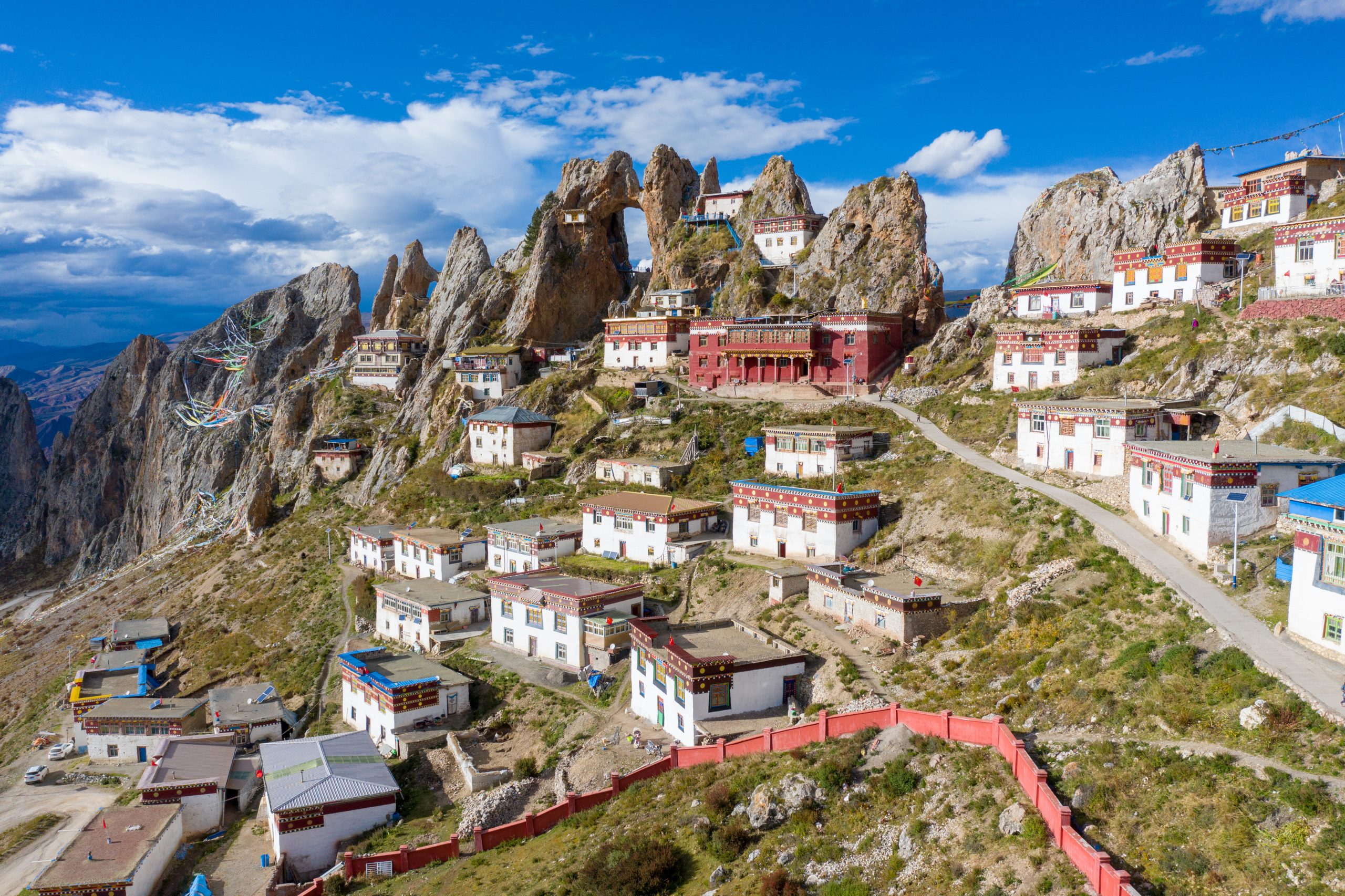
Zizhu Temple
“Zizhu” is a literal translation of Tibetan pronunciation, meaning the top of six mountains, and religiously symbolizes the sixth degree of Paramita. It is said that the Zizhu Temple was founded by the Tibetan king Muchizanpo. In the era of the living Buddha Luodan Nyinpo, the Zizhu Temple was expanded once, and the scriptures were engraved and the Buddha statues were shaped, and the Zizhu Temple began to take shape. Entering the era of Lama Gawanglanga, the monastery’s esoteric and esoteric study system was further standardized and institutionalized. Under the hard work of the living Buddhas and masters of the Zizhu Temple in the past dynasties, the Zizhu Temple had an important impact on the later religious development in Qamdo in terms of building scale, number of monks, system of learning scriptures and style of dancing gods. Especially after Buddhism dominated most of Tibetan areas, Bon religion survived in the area centered on Zizhu Temple, which made Zizhu Temple enjoy a high reputation among Bon temples. Until now, most of the residents in this area still believe in Bon religion, and Zizhu Temple has also become a special holy place for Bon culture.
-
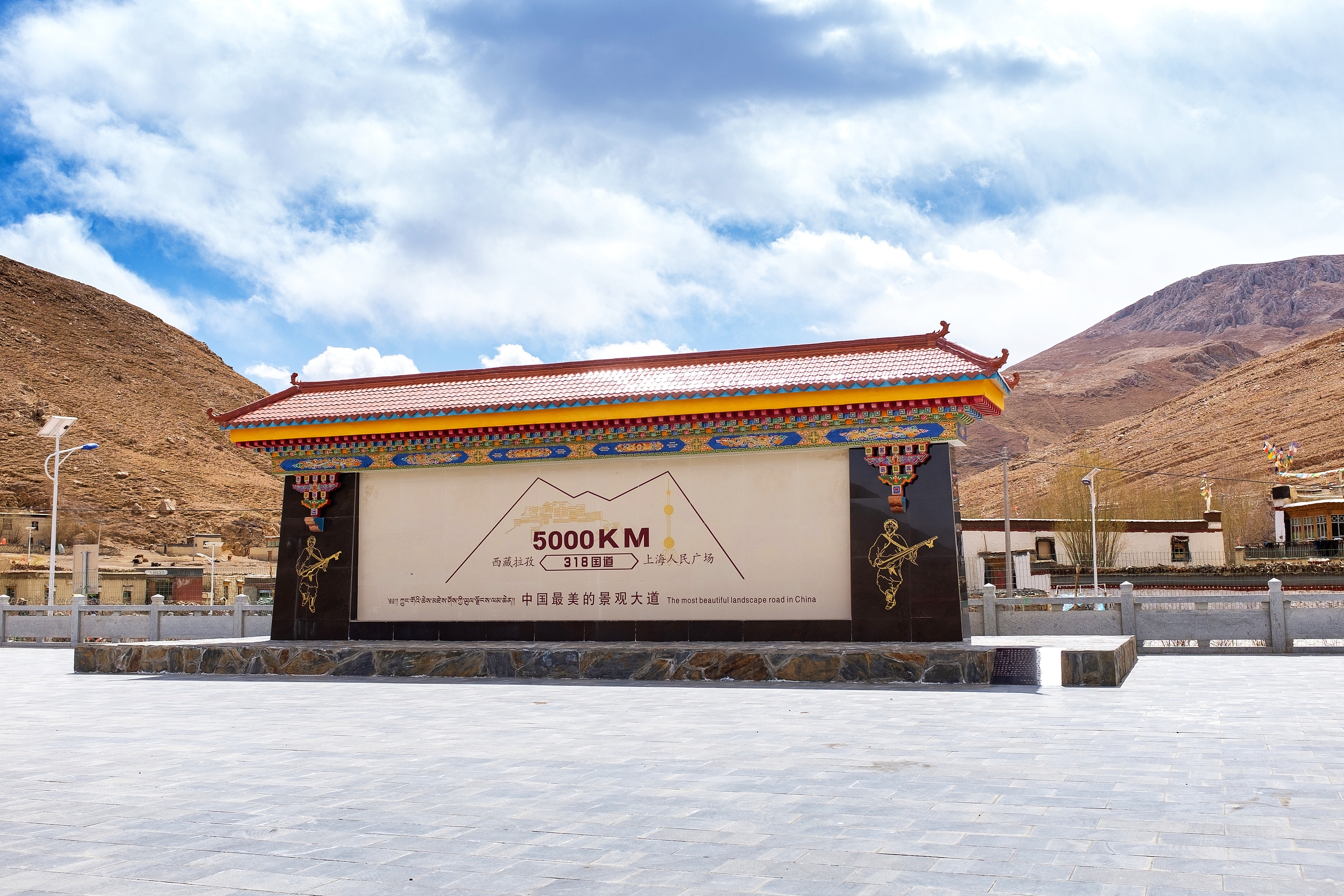
318 National Road 5,000 km Monument
The 5000km monument on National Highway 318 is an important landmark that attracts many travelers and cycling enthusiasts. National Highway 318 is known as the “Chinese Scenic Avenue”. It spans from eastern to western China, with magnificent scenery along the way, and the 5000km monument marks an important milestone on this journey.The monument is located in Lhazi County, surrounded by vast plateau scenery, with blue sky and white clouds and distant mountains complementing each other, providing a good background for tourists to take photos. This is not only a good place to take photos and check in, but also an ideal place for travelers to rest and adjust. Visitors can stop here to enjoy the surrounding natural scenery and feel the tranquility and vastness of the plateau.The monument is located along National Highway 318 and is suitable for self-driving tourists. The road conditions along the way are good, but due to the high altitude, it is recommended that tourists prepare for altitude sickness in advance. There are some small catering and accommodation facilities around, providing basic services. The 5000km monument in Lhazi is a worthwhile attraction on National Highway 318.
-
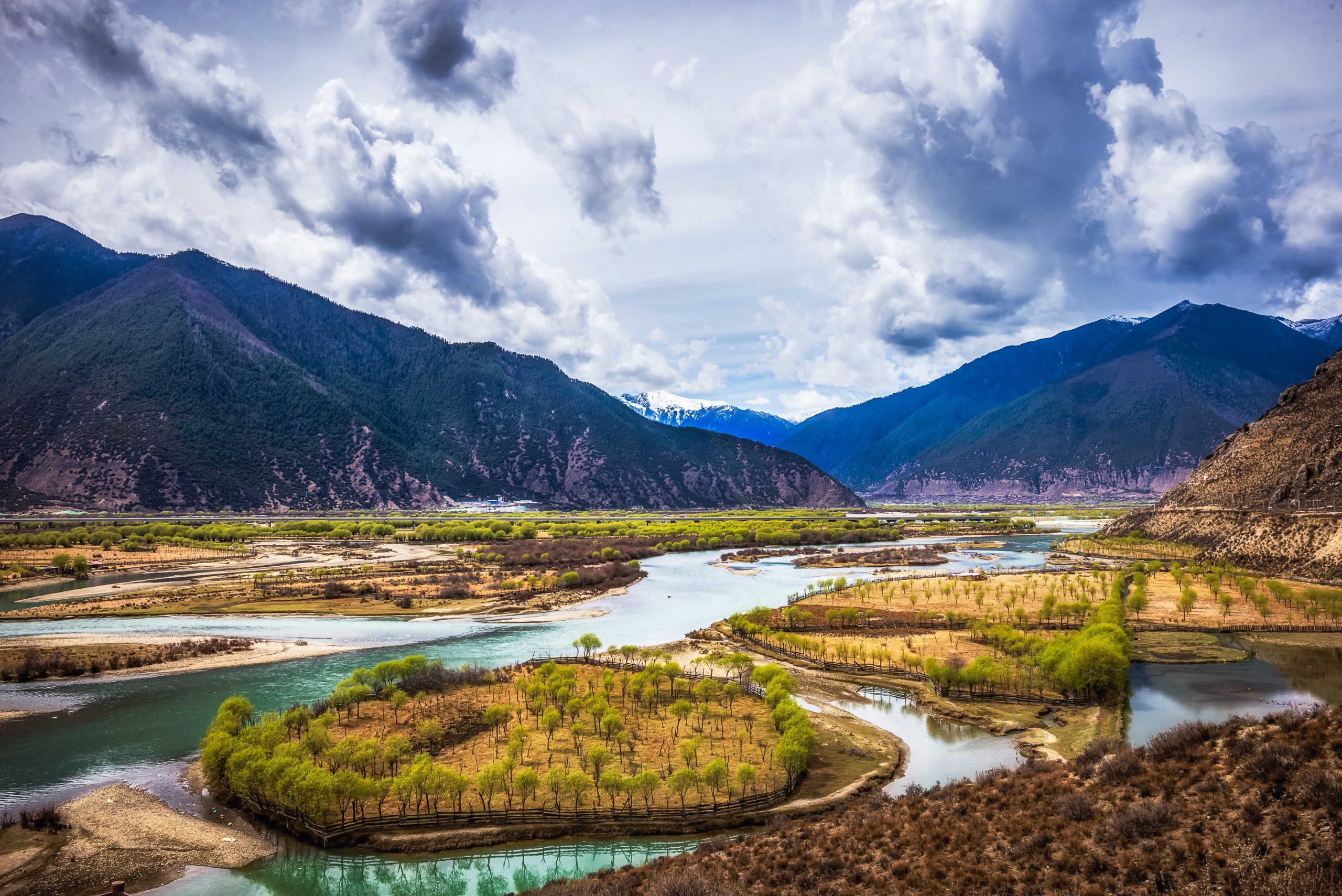
Niyang Scenery
The Niyang River flows through Nyingchi, with abundant water. The vegetation here is rich, the trees are lush, the scenery is beautiful, and many wild birds can be seen.
-
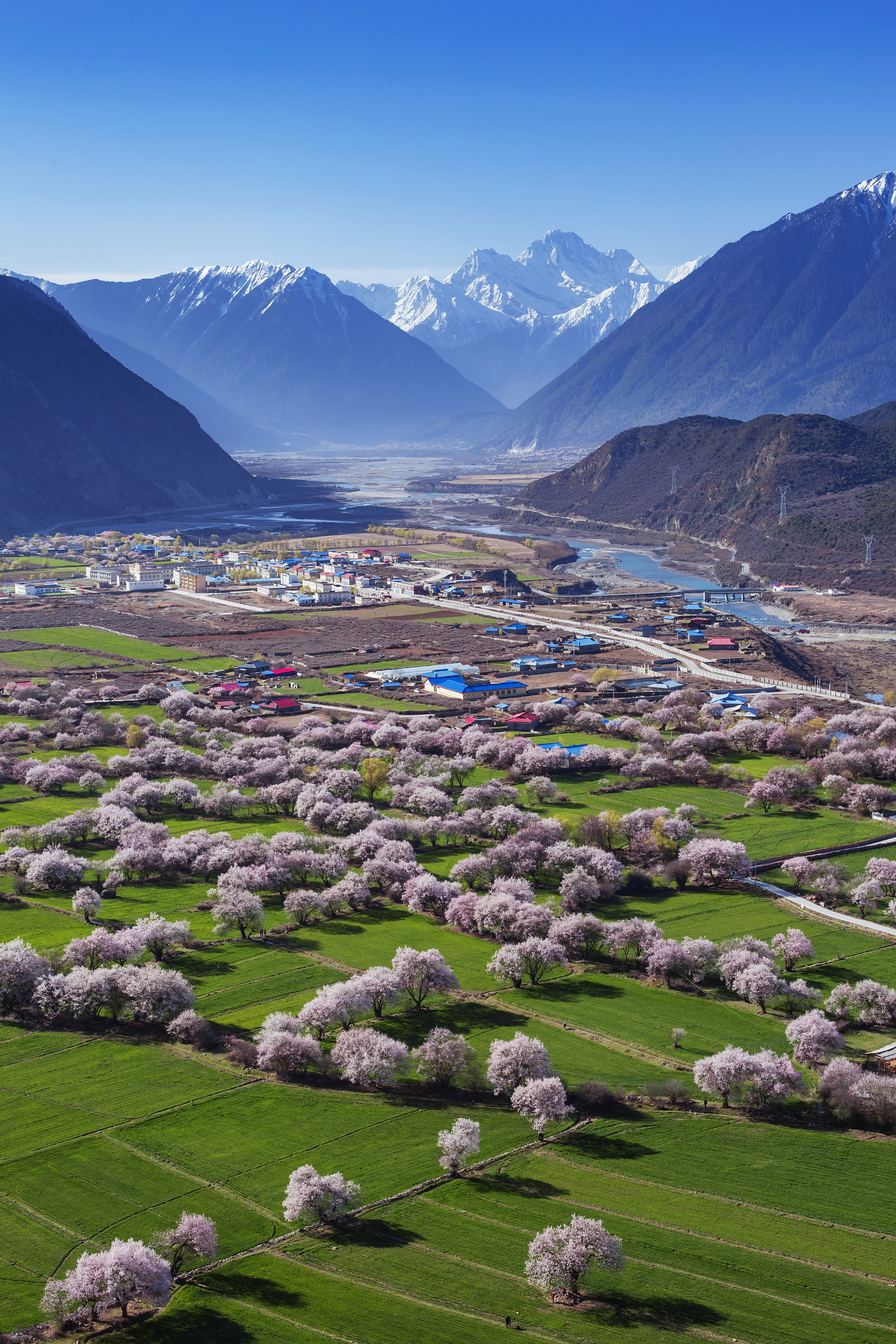
Bomi Peach Blossom Valley
When talking about Peach Blossom Valley in Linzhi, many people think of the vast peach blossoms near Donggala Village in Bayi Town. However, there is also a Peach Blossom Valley in Bomi that is just as beautiful. Taohuagou Scenic Area is located near Galang Village along National Highway 318, stretching for nearly 30 kilometers. Its peach blossoms bloom slightly earlier than those in Bayi Town. Every March, clusters of pink blossoms adorn the roadside, making it a great spot for photography. Upon entering the valley, the scenery gradually improves as you approach the blooming peach trees.